
Table of Contents
Introduction to Double Duty Ingredients
In skincare formulation, every ingredient should earn its place in the formula. This is where double-duty ingredients shine. These are ingredients that perform more than one functional role—for example acting as both a humectant and an emollient, or providing structure while improving skin feel.
Understanding double-duty ingredients helps you:
- Create simpler, more elegant formulas
- Reduce clutter and unnecessary additives
- Improve skin feel without overcomplicating recipes
- Make smarter substitutions when formulating at home
If you’re still learning the core roles ingredients play, start with Humectants, Occlusives, and Emollients Explained and What Each Ingredient Does in Skincare Formulation. This post builds directly on those foundations and shows how ingredient roles often overlap in real-world formulas.
What Are Double-Duty Ingredients?
Double-duty ingredients are materials that naturally perform more than one function in a skincare formula. Instead of fitting neatly into a single category, they bridge roles such as:
- Hydration + skin feel
- Softening + barrier support
- Structure + conditioning
For DIY formulators, these ingredients are especially valuable because they:
- Simplify beginner formulas
- Reduce the risk of imbalance
- Improve performance without increasing complexity
Rather than thinking in rigid ingredient “boxes,” experienced formulators think in terms of behavior—how an ingredient actually interacts with skin and the formula as a whole.
Humectant + Emollient Ingredients
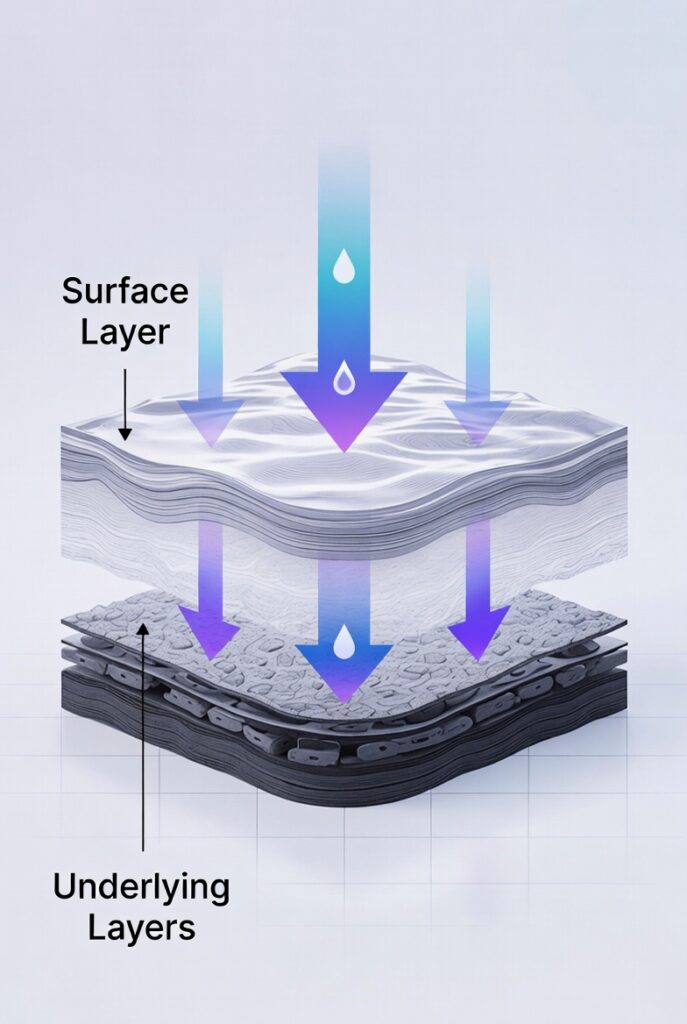
Some ingredients attract water and improve skin feel. These ingredients hydrate while also reducing tackiness or dryness.
Common examples:
- Glycerin – A powerful humectant that also improves slip and smoothness
- Propanediol – Humectant with penetration-enhancing and sensory benefits
- Aloe Vera – Hydration plus soothing and film-forming properties
- Honey – Humectant with emollient and skin-conditioning qualities (best in wash-off or preserved formulas)
These ingredients are especially useful in lotions and creams, where hydration and texture (Humectants and Emollients) must work together.
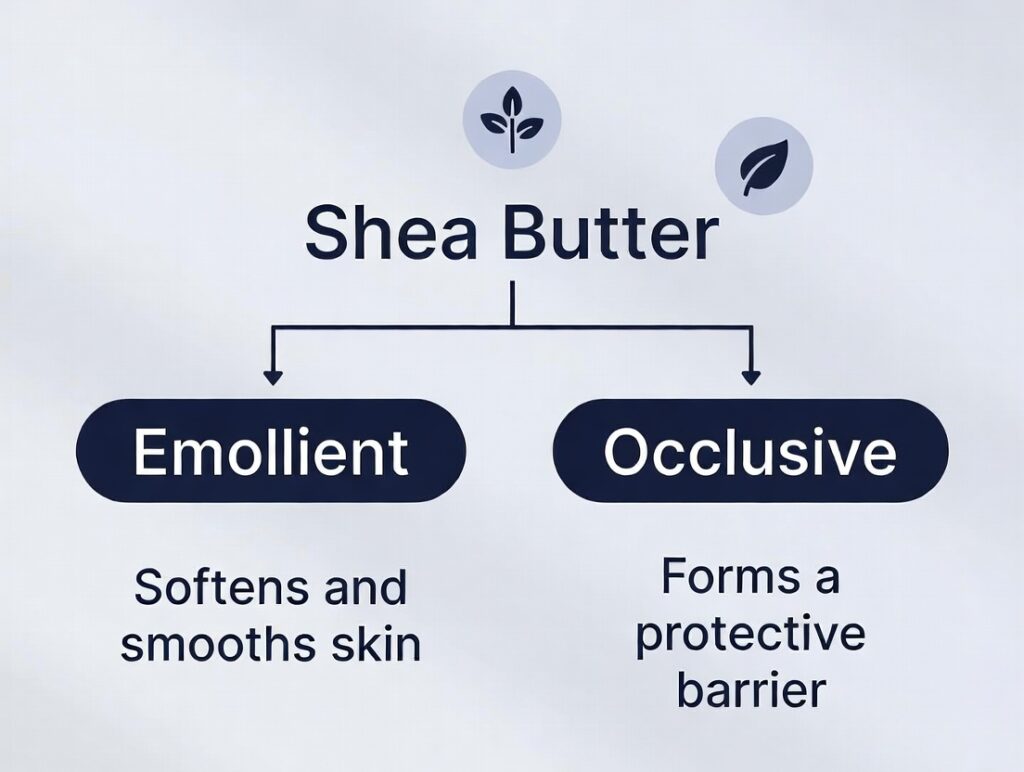
Emollient + Occlusive Ingredients
Many butters and waxes soften the skin and help seal in moisture. These ingredients are often misunderstood as being “too heavy,” when the real issue is formulation balance.
Common examples:
- Shea Butter – Softens skin while reinforcing the moisture barrier
- Cocoa Butter – Occlusive with strong emollient properties
- Mango Butter – Lightweight feel with barrier support
- Lanolin – Highly effective emollient-occlusive hybrid (with sensitivity awareness)
These ingredients are foundational in body butters and intensive treatments, but they must be balanced correctly to avoid greasiness.
Emulsifiers That Do More Than Emulsify
Some emulsifiers contribute far more than just oil-and-water stability. They influence texture, glide, absorption, and even conditioning.
Examples:
- Glyceryl Stearate SE – Emulsifies while adding body and softness
- Olivem 1000 – Creates lamellar structures that mimic skin lipids
- BTMS 50 – Emulsifier with strong conditioning properties
These ingredients are ideal for beginner formulations because they support both structure and skin feel. You create these emulsions in DIY Lotions, Creams & Body Butters.
When Double-Duty Ingredients Aren’t Enough
While double-duty ingredients are powerful, they are not magic solutions.
You still need:
- Preservatives for water-based products
- Chelators for stability and shelf life
- Dedicated actives when targeting specific skin concerns
A common beginner mistake is assuming that one ingredient can replace proper formulation structure. It is important to know What Each Ingredients Does in Skincare Formulations. Understanding ingredient roles prevents unsafe or unstable products.
How to Use Double-Duty Ingredients Strategically
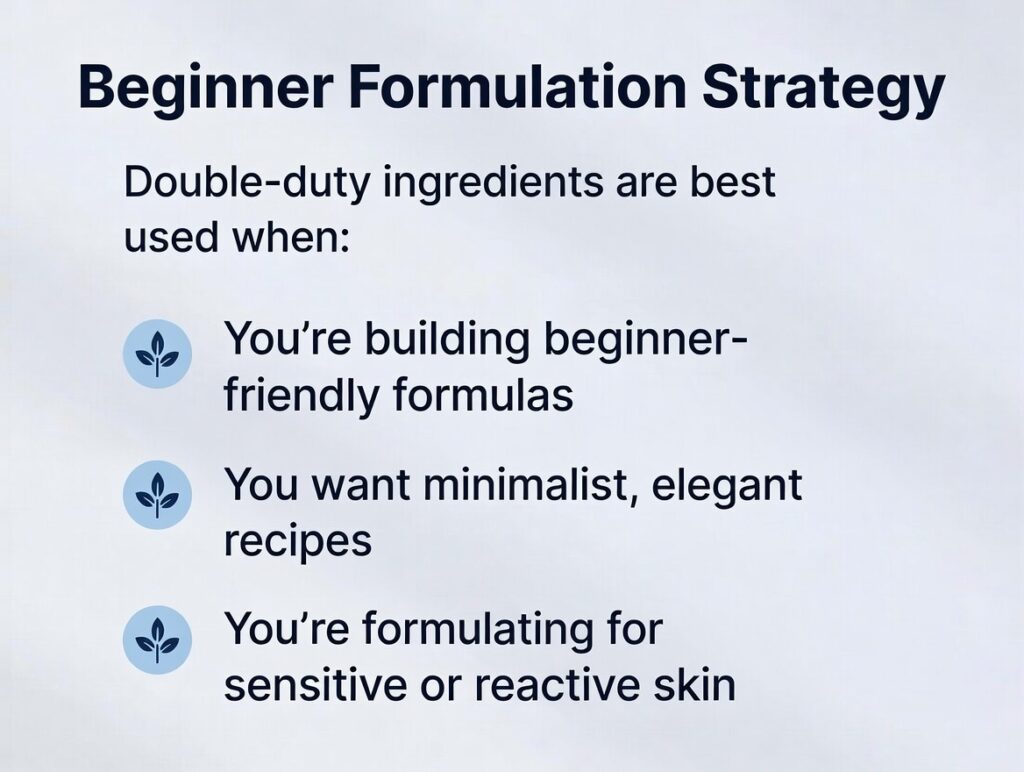
Double-duty ingredients are best used when:
- You’re building beginner-friendly formulas
- You want minimalist, elegant recipes
- You’re formulating for sensitive or reactive skin
They allow you to focus on function first, instead of chasing long ingredient lists.
Conclusion
Double-duty ingredients are one of the most powerful tools in skincare formulation. They simplify recipes, improve performance, and help you formulate with intention rather than guesswork.
As you continue learning, you’ll start to see formulations not as ingredient lists—but as systems working together.
For more learning, be sure to check out:
One thought on “Double-Duty Ingredients in Skincare Formulation (And Why They Matter)”
Comments are closed.