
Beginner-friendly guide to understanding ingredient roles so you can confidently formulate effective DIY skincare products.
Skincare formulation for beginners
Why Ingredients Matter More Than Recipes
One of the biggest mistakes beginners make in DIY skincare is following recipes without understanding why each ingredient is included. True skincare formulation is not about memorizing formulas — it’s about understanding ingredient function.
When you understand what each ingredient does, you can:
- Customize products for your skin type
- Fix texture or performance issues
- Swap ingredients safely
- Build your own formulations from scratch
This guide breaks down the core ingredient categories used in skincare formulation, explains how they work, and shows how they interact inside a formula.
Some links on this website are affiliate links, meaning I may earn a small commission if you click and make a purchase. This comes at no additional cost to you.
The Main Functional Ingredient Categories in Skincare
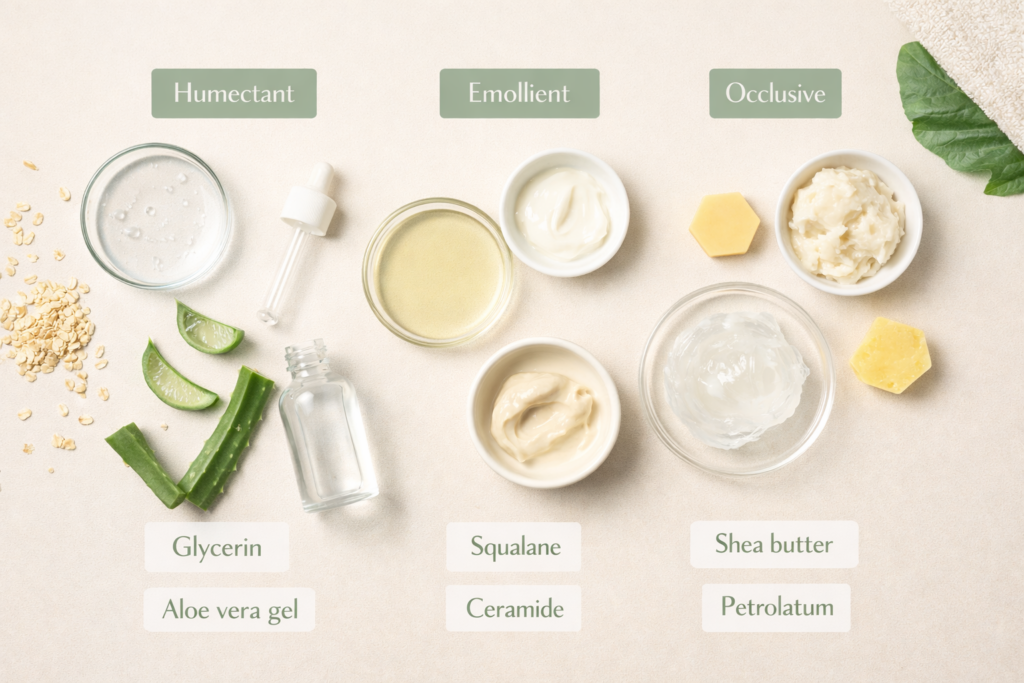
Most skincare ingredients fall into functional groups based on the job they perform. While many ingredients can serve more than one role, understanding these core categories is the foundation of formulation.
Humectants: Ingredients That Attract Moisture
Humectants, occlusives, and emollients explained
What Humectants Do
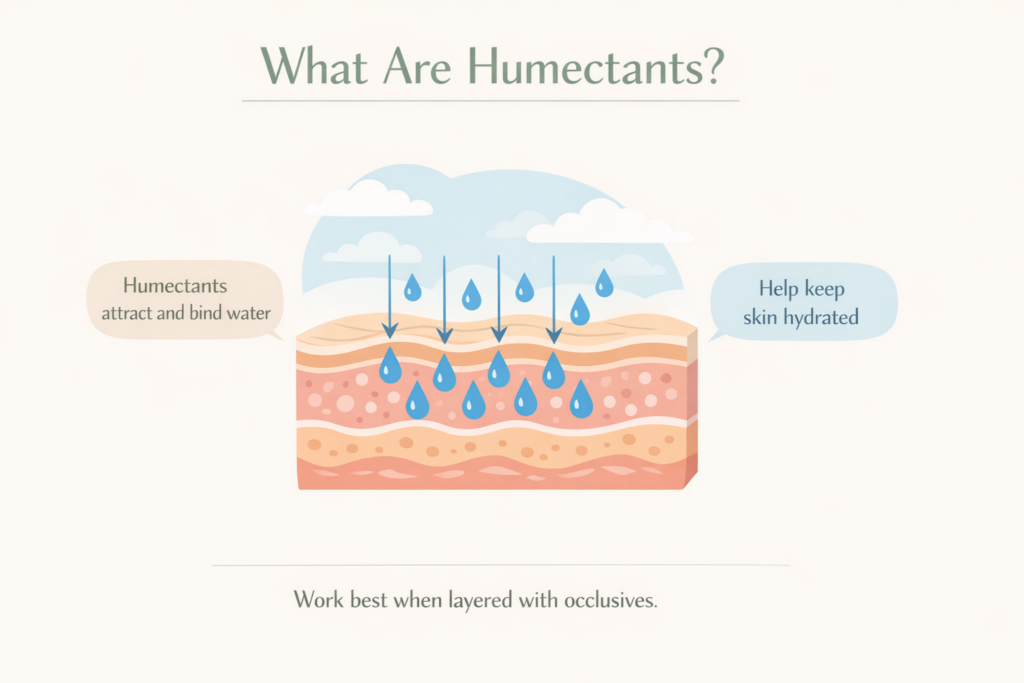
Humectants are ingredients that attract and bind water to the skin. They help increase hydration by drawing moisture from the air or from deeper layers of the skin to the surface.
Humectants are essential in products designed for dry, dehydrated, or compromised skin — especially lotions, creams, serums, and masks.
Common Humectants
- Glycerin
- Aloe vera
- Honey
- Panthenol (Vitamin B5)
- Propylene glycol
Important Formulation Note
Humectants on their own often feel sticky and can actually increase dryness if not properly balanced. This is why they are almost always paired with emollients and occlusives.
Emollients: Ingredients That Soften and Condition Skin
What Emollients Do
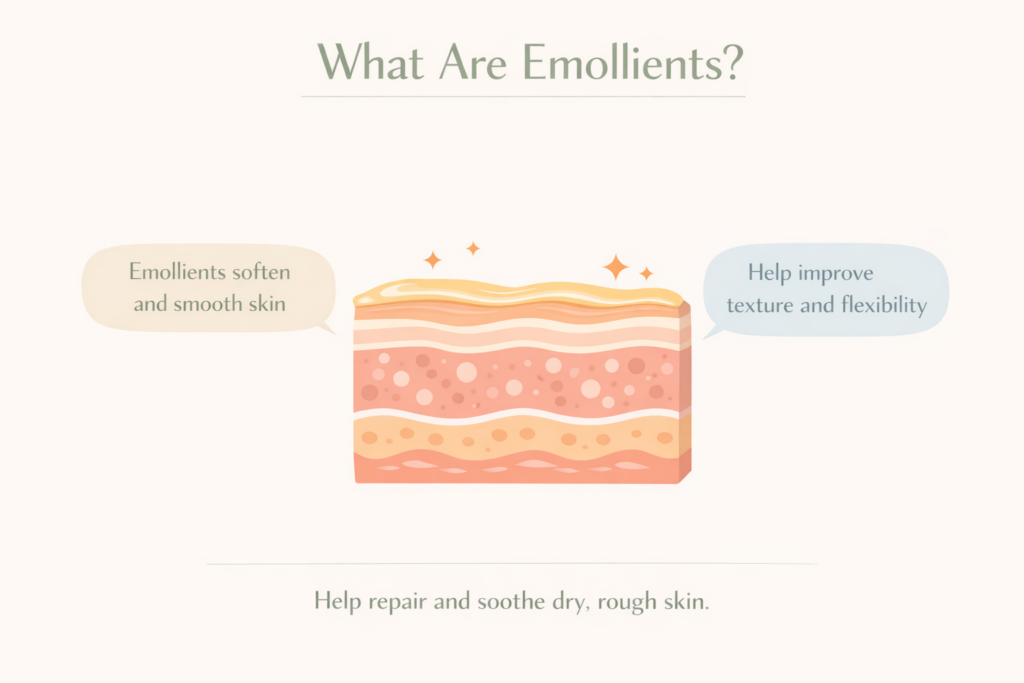
Emollients work by filling in the gaps between skin cells, smoothing the skin’s surface and improving softness and flexibility.
These ingredients are typically oils, butters, or esters and are responsible for the silky, luxurious feel of a product.
Common Emollients
Why Emollients Matter in Formulation
Without emollients, skincare products would feel watery, tight, or uncomfortable on the skin. Emollients also help reduce transepidermal water loss (TEWL) and improve skin barrier function.
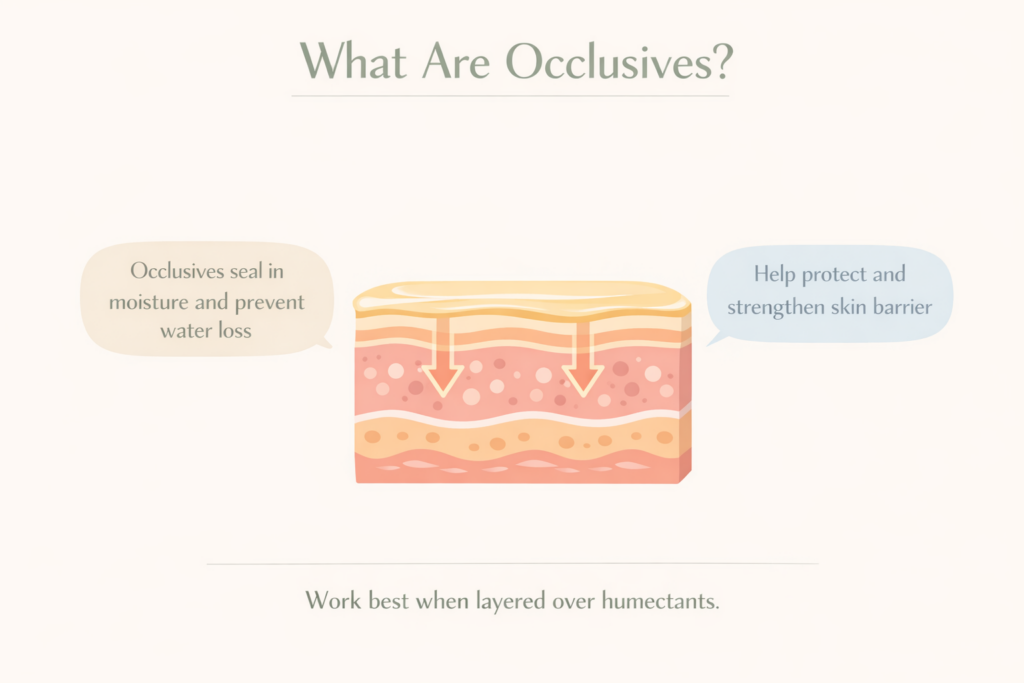
Occlusives: Ingredients That Lock Moisture In
What Occlusives Do
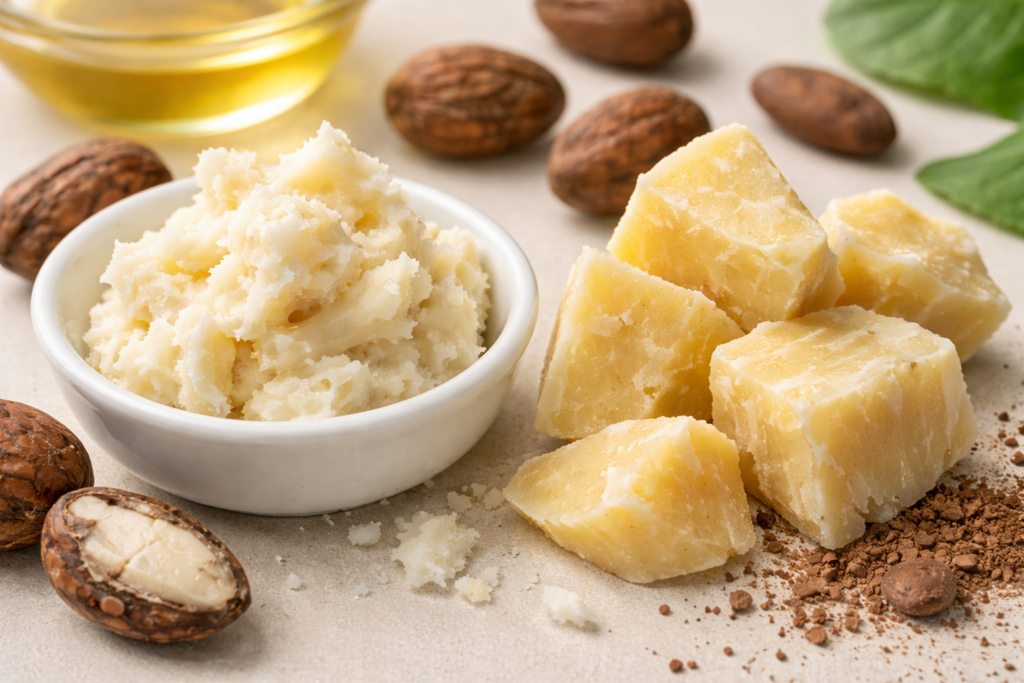
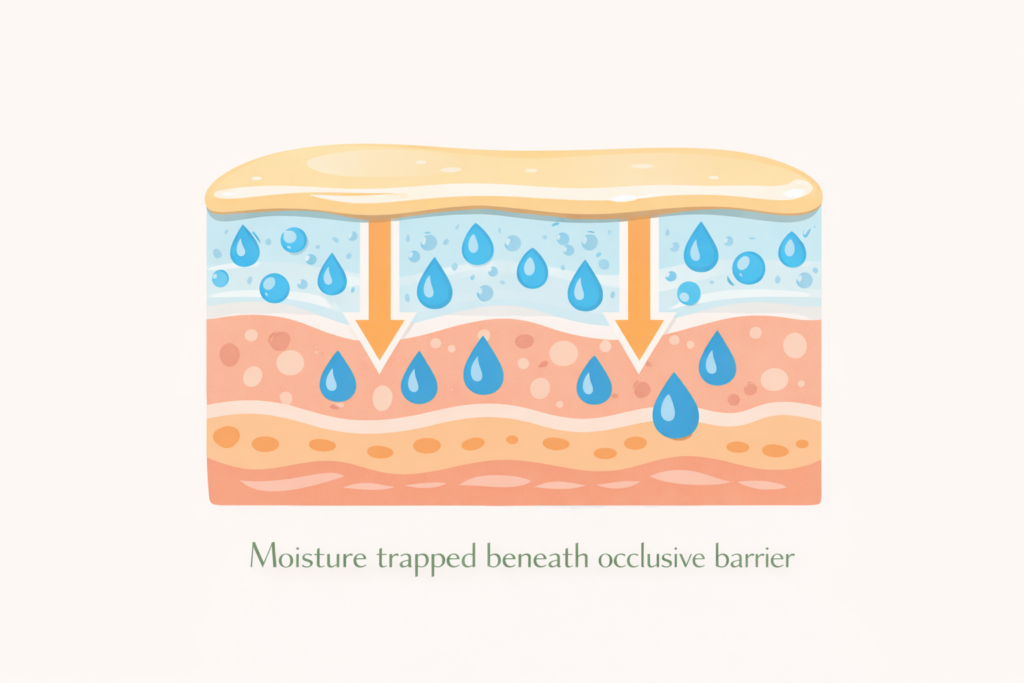
Occlusives create a physical barrier on the surface of the skin that slows water evaporation. Their primary role is moisture retention, not hydration.
Occlusives are especially important in:
- Dry climates
- Winter skincare
- Barrier repair products
Common Occlusives
- Beeswax
- Cocoa butter
- Lanolin
- Petrolatum
Occlusives and Skin Feel
Because occlusives sit on top of the skin, they can feel heavy or greasy if overused. Formulators typically use them in small amounts to balance performance with comfort.
Emulsifiers: Ingredients That Hold Oil and Water Together
What Emulsifiers Do
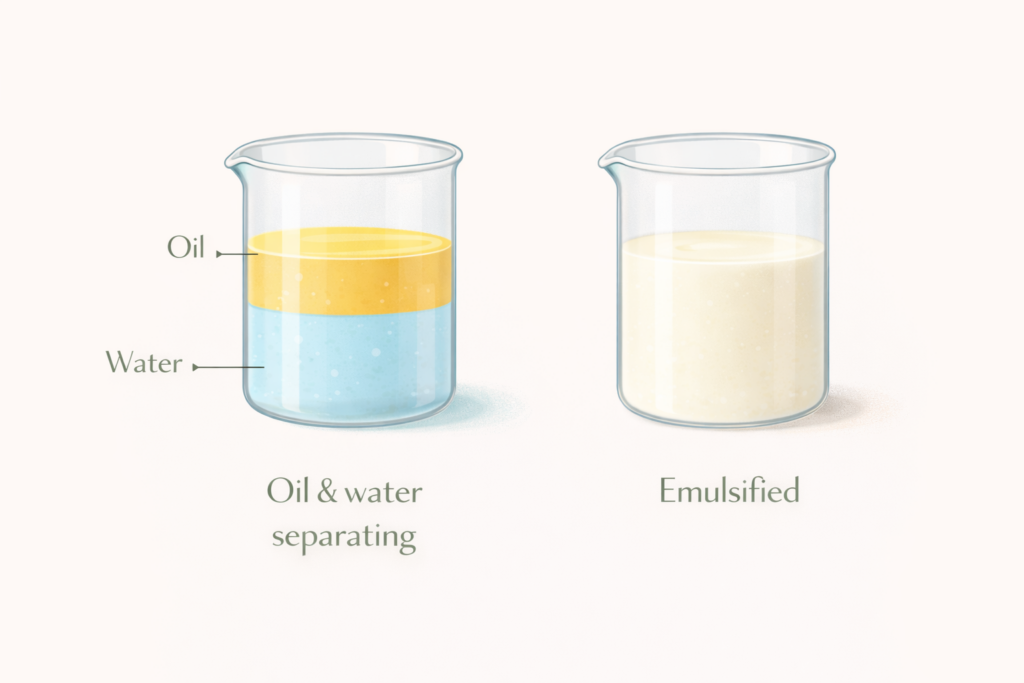
Emulsifiers allow oil and water to mix into a stable product. Without them, lotions and creams would separate.
If a product contains both water and oil, an emulsifier is not optional.
Common Emulsifiers
Why Emulsifiers Matter
Emulsifiers determine:
- Product thickness
- Stability
- Skin feel
Poor emulsification is one of the most common beginner formulation failures.
Preservatives: Ingredients That Protect Your Product
What Preservatives Do
Preservatives prevent the growth of bacteria, yeast, and mold in water-containing products.
Any product with:
must be preserved.
Common Preservatives
- Optiphen
- Liquid Germall Plus
- Phenoxyethanol blends
🚨 Natural does not mean self-preserving.
Thickeners & Stabilizers: Ingredients That Improve Texture
What They Do
These ingredients adjust viscosity, suspend particles, and improve product consistency.
Examples
They help transform a runny mixture into a luxurious, user-friendly product.
How Ingredients Work Together in a Formula
A well-formulated skincare product uses multiple ingredient categories working together:
- Humectants attract moisture
- Emollients soften skin
- Occlusives seal hydration
- Emulsifiers stabilize
- Preservatives protect
This balance is what separates a good product from a great one.
Common Beginner Ingredient Mistakes
- Using humectants without occlusives
- Skipping preservatives
- Overloading oils “for moisture”
- Choosing ingredients based on trends instead of function
Understanding ingredient roles prevents these issues before they happen.
Learn Skincare Formulation the Right Way
If you want to move beyond recipes and start formulating with confidence, understanding ingredient function is non-negotiable.
This knowledge allows you to:
- Create products tailored to your skin
- Adjust and troubleshoot formulas
- Build stable, effective DIY skincare
Next in this series: How to Choose Ingredients for Dry vs Oily Skin