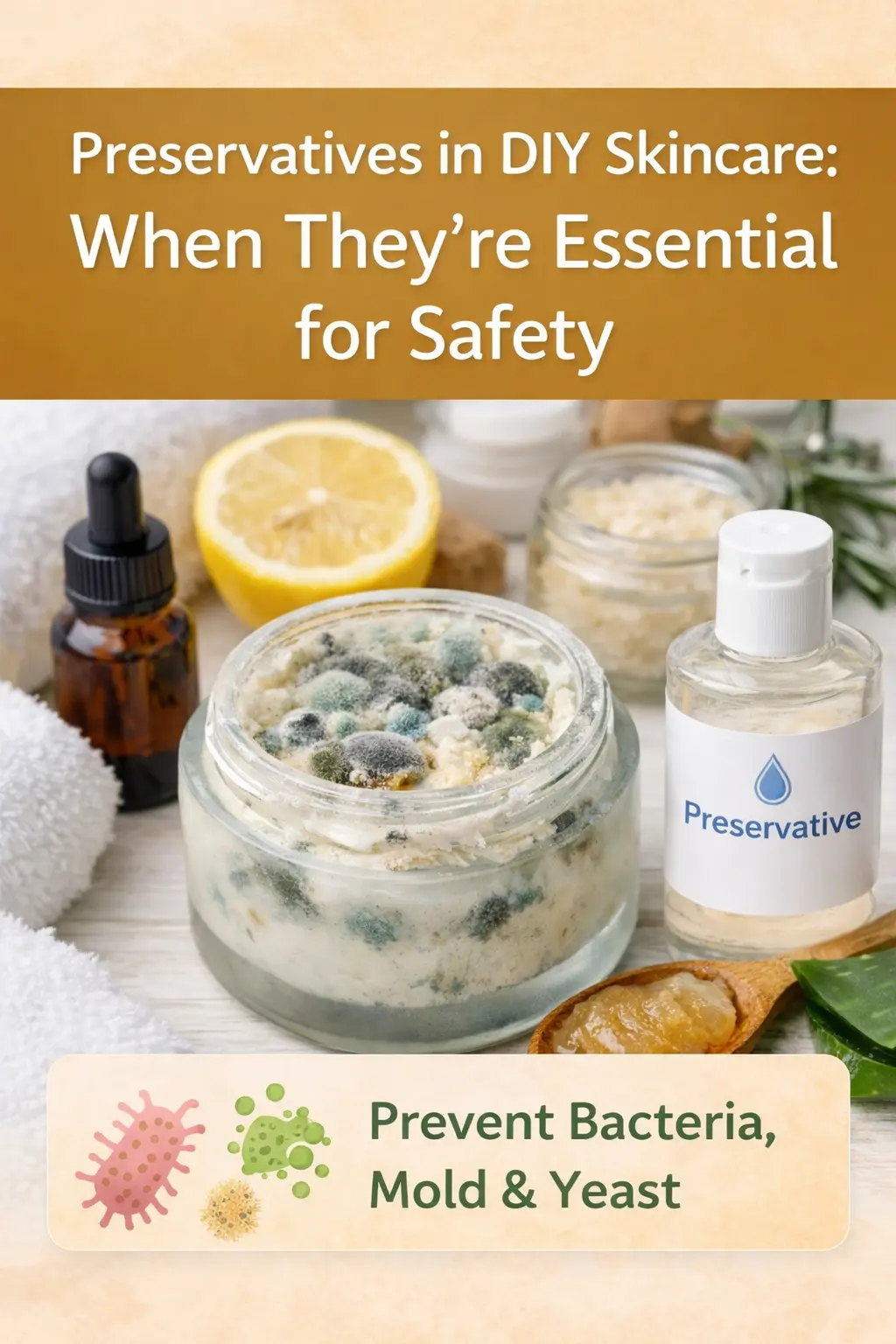
If you make your own lotions, scrubs, or masks, preservatives aren’t optional — they’re essential for safety. Many DIY skincare recipes online skip preservatives, but any product that contains water can grow bacteria, mold, and yeast within days.
Understanding when and why preservatives matter will help you make safer, longer-lasting skincare products.
This guide explains when preservatives are required, how they work, and how they fit into beginner skincare formulation.
Skincare Formulation for Beginners: How to Make Effective DIY Skincare Products
Table of Contents
What Are Preservatives?
Preservatives are ingredients that prevent the growth of:
- Bacteria
- Mold
- Yeast
They keep skincare products safe to use over time.
Without preservatives, products containing water can spoil quickly — sometimes within a few days.
Preservatives don’t make products last forever, but they significantly extend shelf life and reduce contamination risk.
Why Preservatives Matter
When water and organic ingredients are combined, they create an environment where microorganisms thrive.
This includes:
- Lotion
- Cream
- Scrubs with water
- Face masks
- Shampoo bars with water
- Aloe-based products
Even if a product looks fine, it may contain harmful bacteria.
Preservatives help:
- Prevent spoilage
- Extend shelf life
- Keep products safe
- Prevent mold growth
- Prevent bacteria growth
The Biggest Myth About Preservatives
One of the most common myths in DIY skincare is:
“If I use natural ingredients, I don’t need preservatives.”
Unfortunately, natural ingredients often spoil faster.
Ingredients like:
- Milk
- Honey
- Aloe
- Hydrosols
- Tea
- Fruit
- Floral water
All require preservatives when mixed into skincare products.
When You NEED a Preservative
You need a preservative any time your product contains water.
This includes:
- Water
- Aloe
- Hydrosols
- Tea
- Milk
- Juice
- Floral water
If water is present, a preservative is required.
Preservatives are especially important in products like lotions and emulsions, where water and oil are combined.
Products That Require Preservatives
These always need preservatives:
- Lotion
- Cream
- Body butter with water
- Liquid soap
- Scrubs with water
- Hair products
- Face masks with water
Products That Usually Don’t Need Preservatives
Some products don’t need preservatives because they don’t contain water.
These include:
- Oil-based body butter
- Oil serums
- Bath oils
- Wax balms
- Solid salves
However, even these products can benefit from antioxidants to prevent rancidity.
Antioxidants are not preservatives — they only slow oil spoilage.
What Happens Without Preservatives
Without preservatives, products can develop:
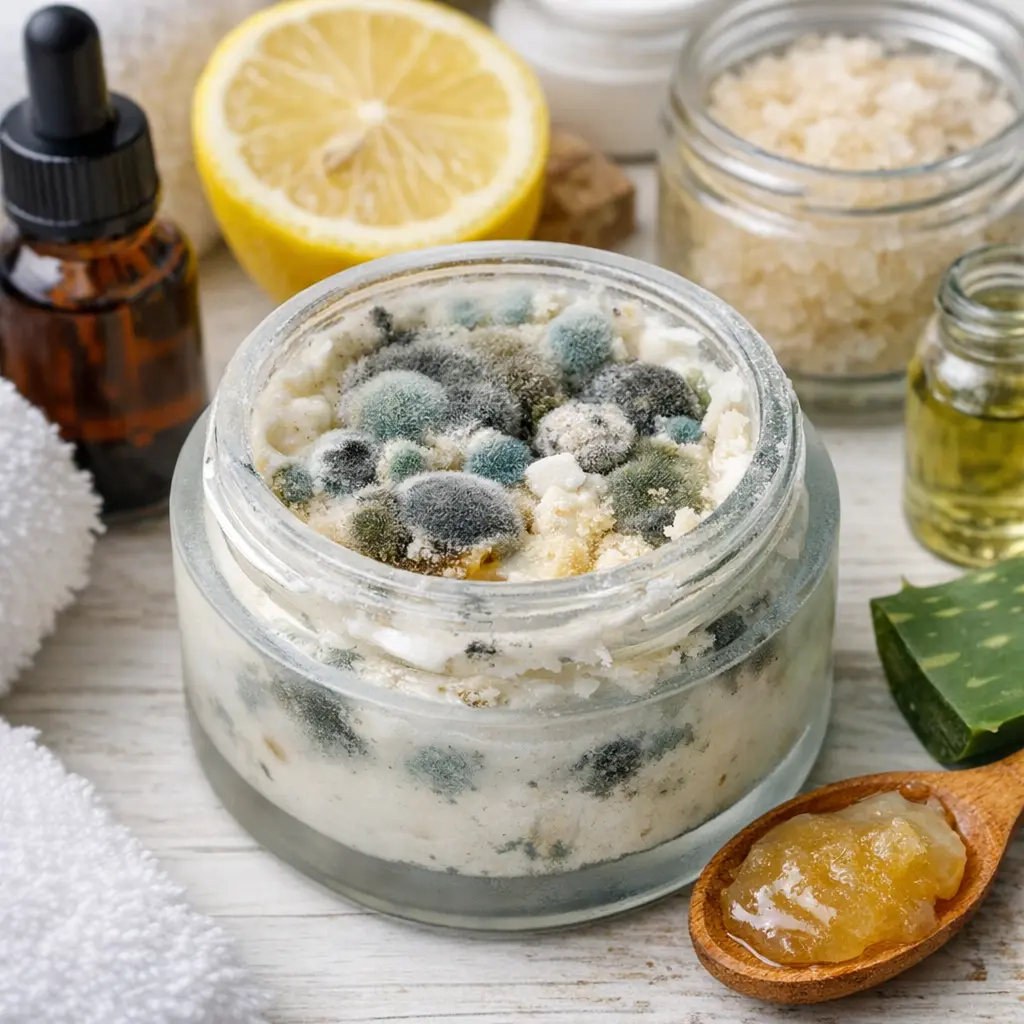
- Mold
- Bacteria
- Yeast
- Odor
- Discoloration
- Separation
- Texture changes
Sometimes contamination isn’t visible, which makes preservatives especially important.
Why Refrigeration Isn’t Enough
Some people store DIY skincare in the refrigerator to extend shelf life.
While refrigeration slows microbial growth, it does not stop it.
Even refrigerated products can grow bacteria and mold.
Preservatives are still necessary for water-based products.
Common Beginner Mistakes
Many beginners skip preservatives because:
- They want “natural” products
- They assume refrigeration is enough
- Recipes online don’t include them
- They only make small batches
Even small batches need preservatives if they contain water.
Preservatives vs Antioxidants
This is one of the biggest beginner confusions.
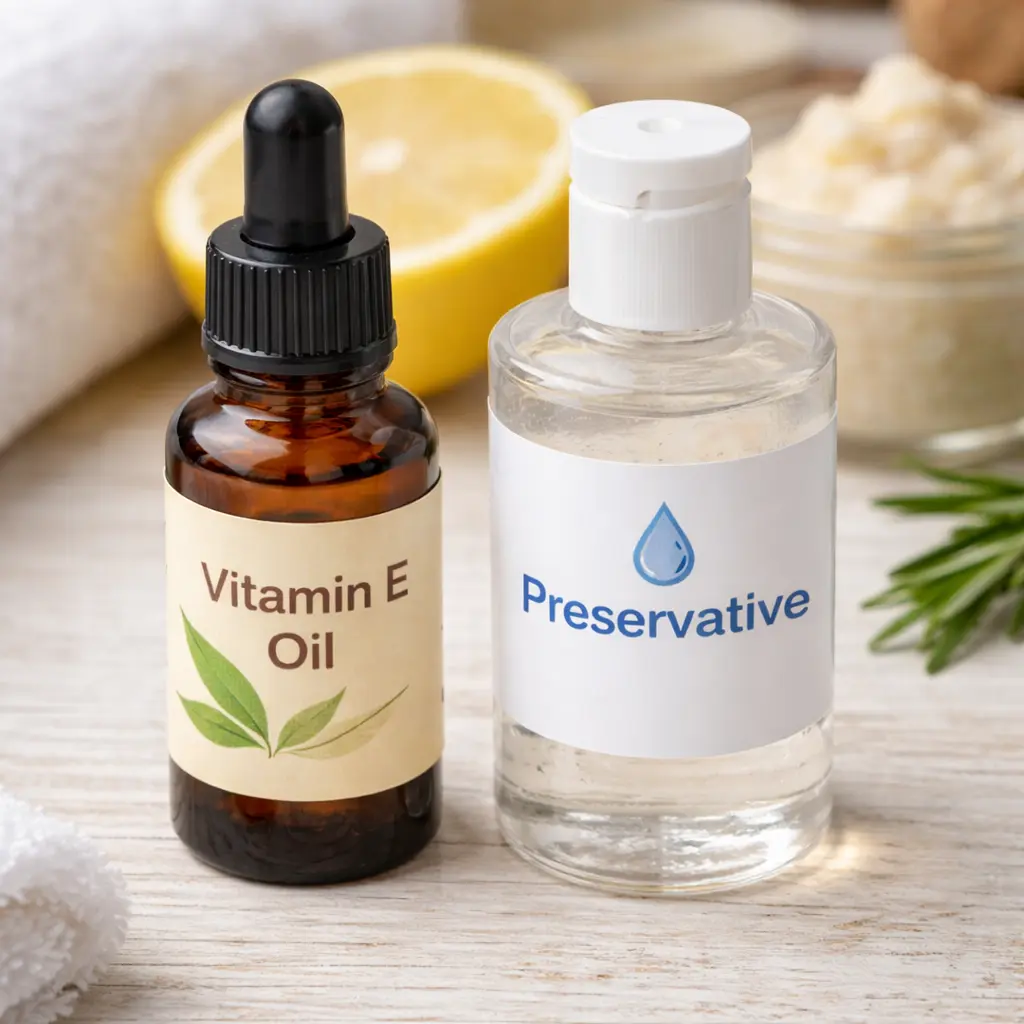
Preservatives prevent bacteria and mold.
Antioxidants prevent oils from going rancid.
Examples of antioxidants:
- Vitamin E
- Rosemary extract
Antioxidants do NOT replace preservatives.
How Preservatives Fit Into Formulation
Preservatives are usually added at low percentages.
Most preservatives are used at:
0.5% – 1%
They are typically added during the cool-down phase of formulation.
Many preservatives are measured in percentages to make recipes easier to scale.
Shelf Life With Preservatives
Preservatives extend shelf life but don’t make products last forever.
Typical shelf life:
Water-based products:
1–3 months (homemade)
Oil-only products:
6–12 months
Shelf life depends on:
- Ingredients
- Storage
- Cleanliness
- Packaging
Signs a Product Has Gone Bad
Throw away products if you notice:
- Mold
- Sour smell
- Color change
- Gas buildup
- Texture changes
When in doubt, throw it out.
Preservatives and Beginner Formulators
If you’re just starting out with DIY skincare, preservatives are one of the most important ingredients to learn about.
They help ensure your products are safe and stable.
Understanding preservatives is a key part of learning formulation.
If you’re new to formulation, start with my guide to skincare formulation for beginners.
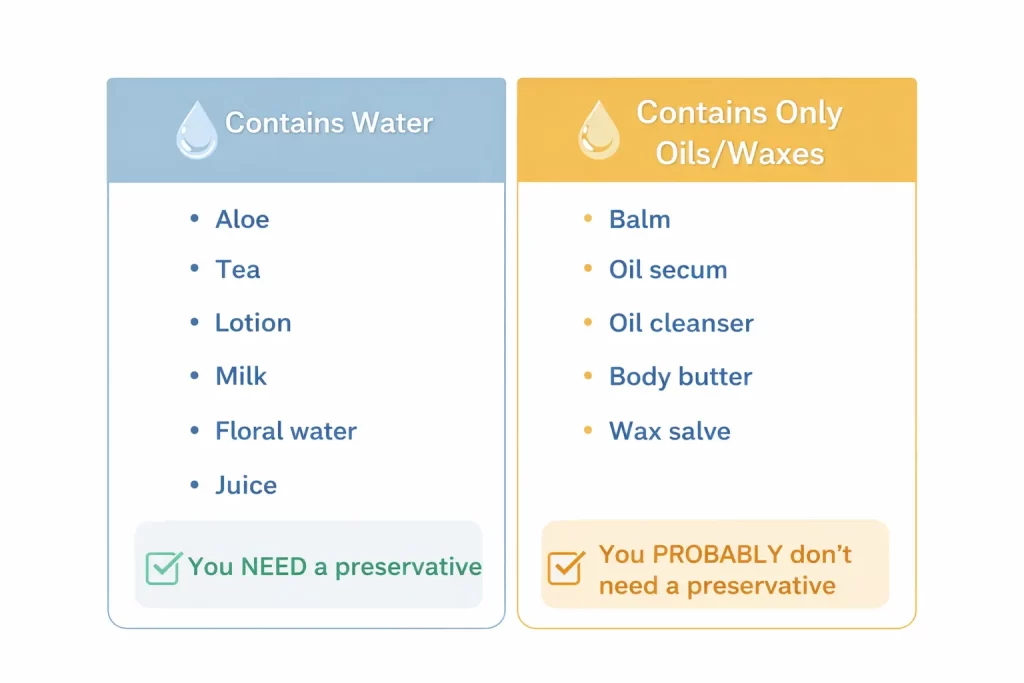
Quick Preservative Rule
If your product contains water:
You need a preservative.
If it contains only oils and waxes:
You probably don’t.
Conclusion
Preservatives are essential for safe DIY skincare. Any product containing water should include a preservative to prevent microbial growth.
Learning how and when to use preservatives will help you create safer, more effective skincare products.
Understanding preservatives is one of the most important steps in becoming confident in skincare formulation.