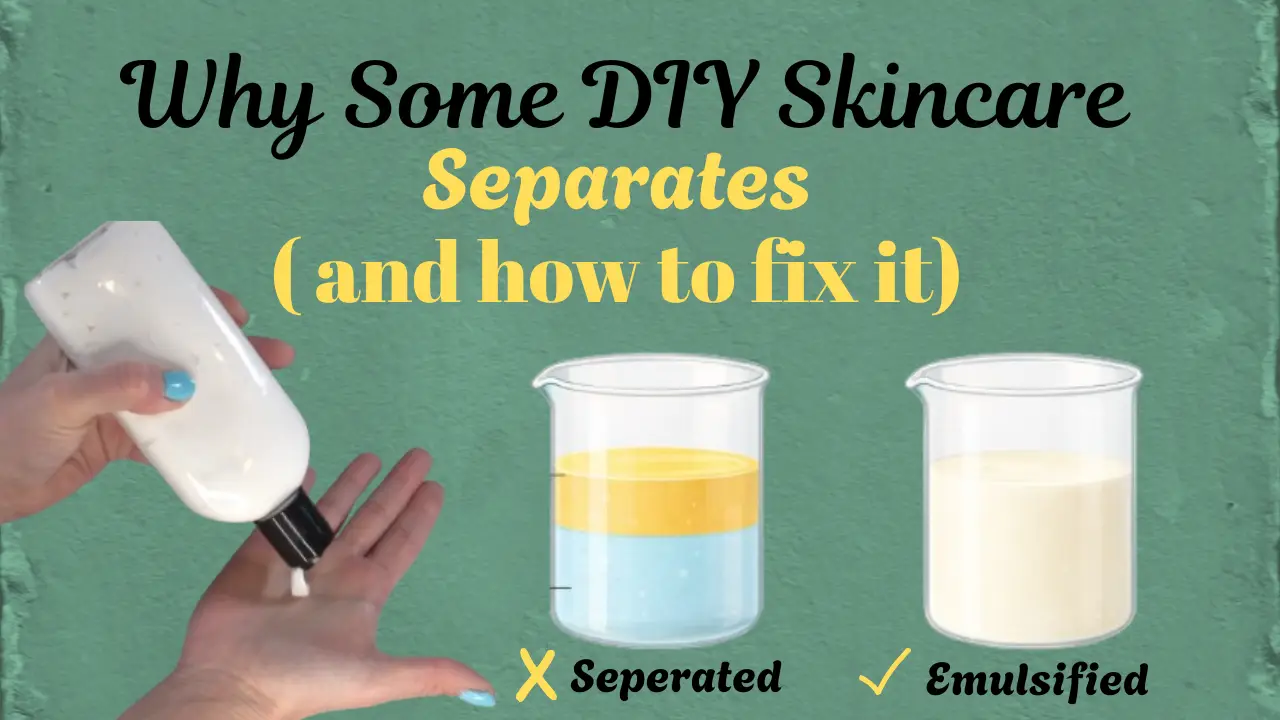
If you’ve ever opened a lotion to find liquid pooling on top, grainy texture, or layers forming in the jar, you’re not alone. Separation is one of the most common problems in DIY skincare — and it’s almost never random.
When a product separates, it’s your formula telling you something important about balance, structure, or technique. Understanding why separation happens is the key to fixing it — and preventing it in future formulations.
This post explains the real reasons DIY skincare separates, how to identify the cause, and what to change so your products stay stable.
Table of Contents
What Does “Separation” Actually Mean?
Separation happens when the different parts of a formula stop working together as a system.
You might see:
- Watery liquid separating from lotion
- Oil rising to the top
- Grainy or broken texture
- A product that looks fine at first but breaks later
Most separation issues come down to emulsion failure, ingredient imbalance, or process errors — not bad luck.
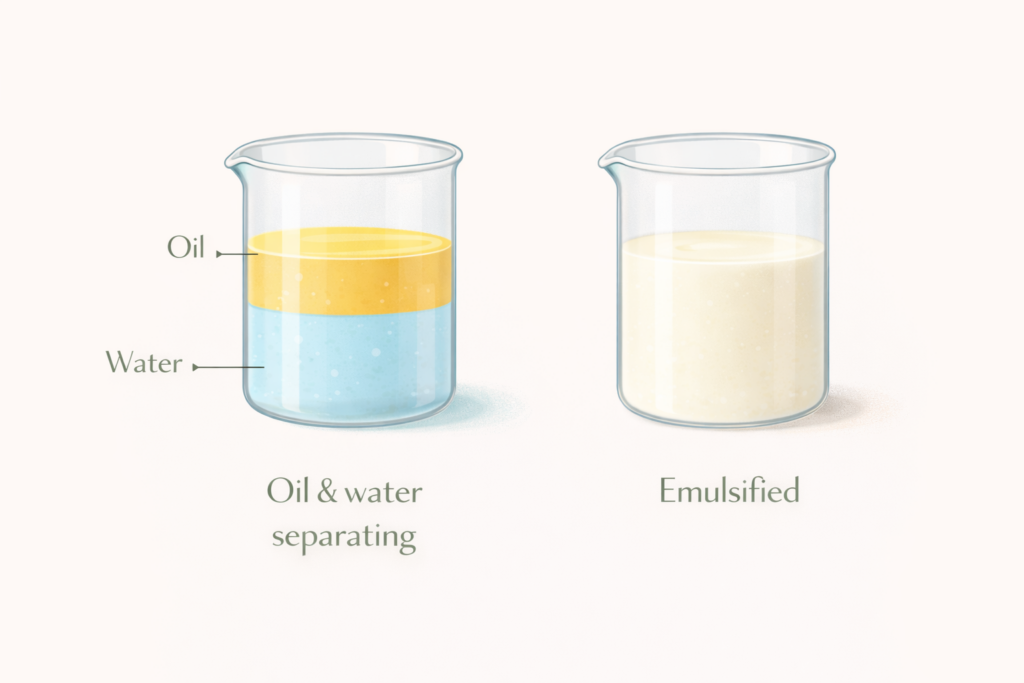
The #1 Reason DIY Skincare Separates: Emulsion Problems
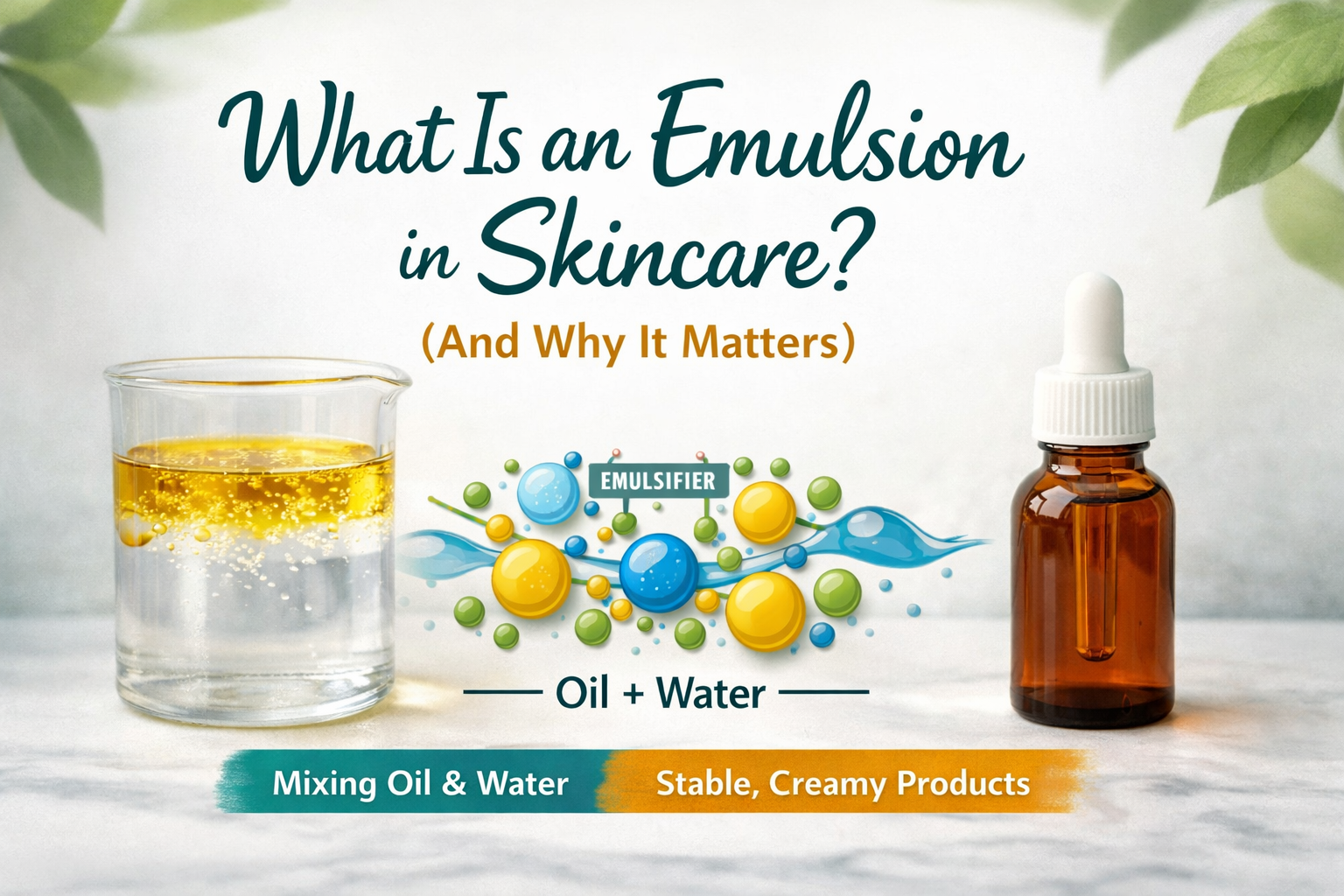
If your product contains both oil and water, it relies on a stable emulsion. When that emulsion fails, separation is inevitable.
Common emulsion-related causes include:
- Too little emulsifier
- Incorrect emulsifier type
- Skipping proper heating of phases
- Poor mixing or cooling technique
An emulsifier doesn’t just bring oil and water together — it has to hold them together over time.
Ingredient Imbalance (Too Much of One Thing)
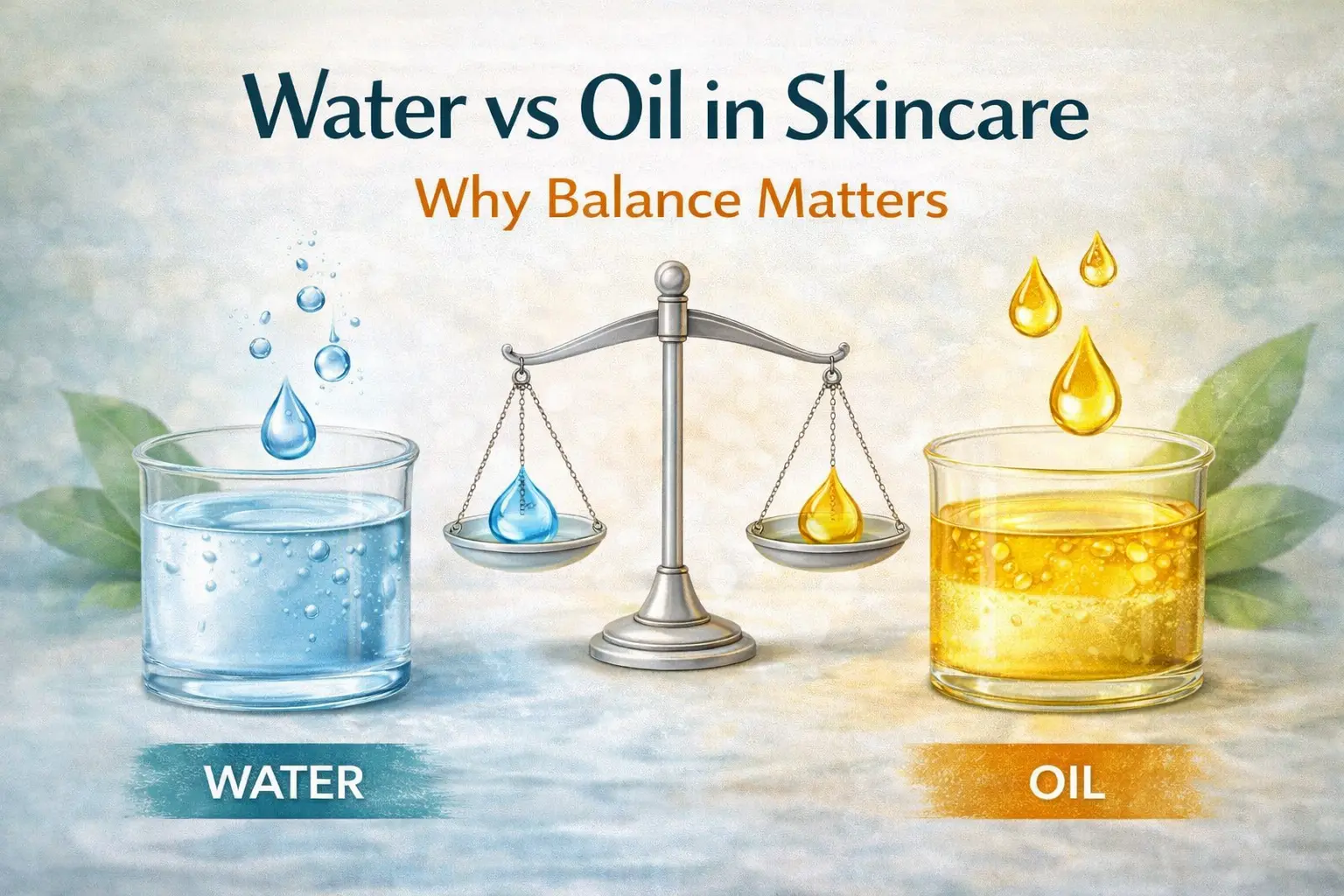
Even with the right emulsifier, a formula can separate if the ingredient ratios are off.
Common imbalance issues:
- Too much oil for the emulsifier to support
- High levels of butters or waxes without structure
- Overloading humectants, causing weeping
This is where double-duty ingredients can help — they reduce strain on the formula by performing multiple roles.
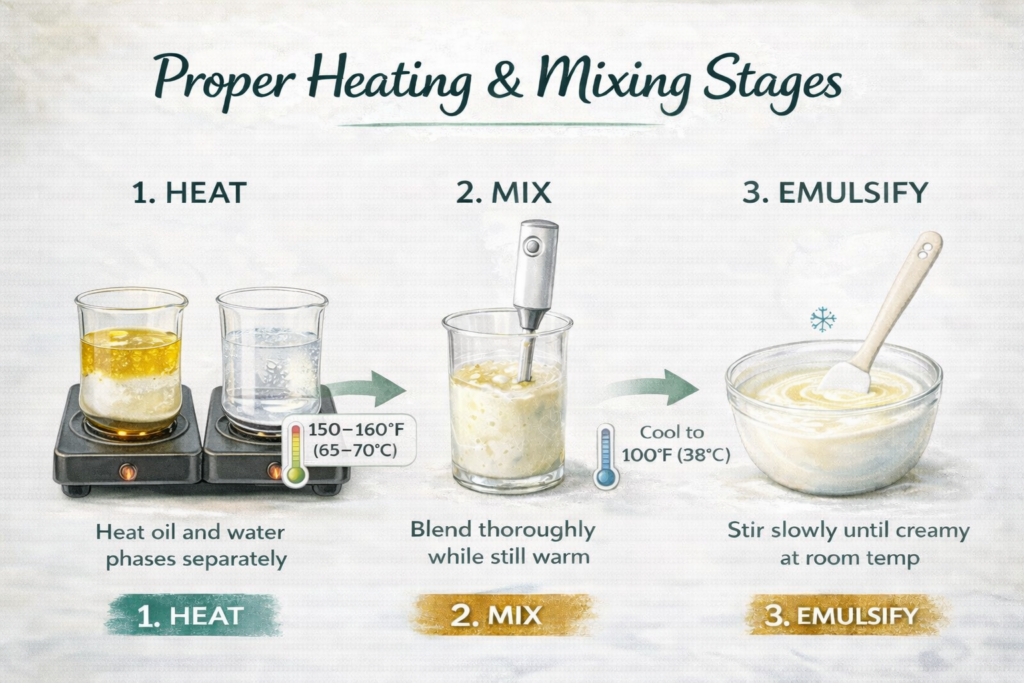
Temperature & Process Mistakes
Separation isn’t always about ingredients — technique matters.
Common process-related causes:
- Oil and water phases not heated to the same temperature
- Pouring phases together too early
- Inadequate mixing or blending
- Cooling too quickly without continued mixing
Small process mistakes can weaken an otherwise good formula.
Preservation & Stability Issues
In water-based products, lack of preservation doesn’t always cause immediate separation — but it does weaken the formula over time.
Preservatives help maintain:
- Microbial safety
- Formula integrity
- Long-term stability
If a product separates after days or weeks, preservation may be part of the problem.
Products That Don’t Need to Be Emulsified
Not all separation is a failure.
These products do not require emulsions:
Understanding when separation is expected prevents unnecessary troubleshooting.
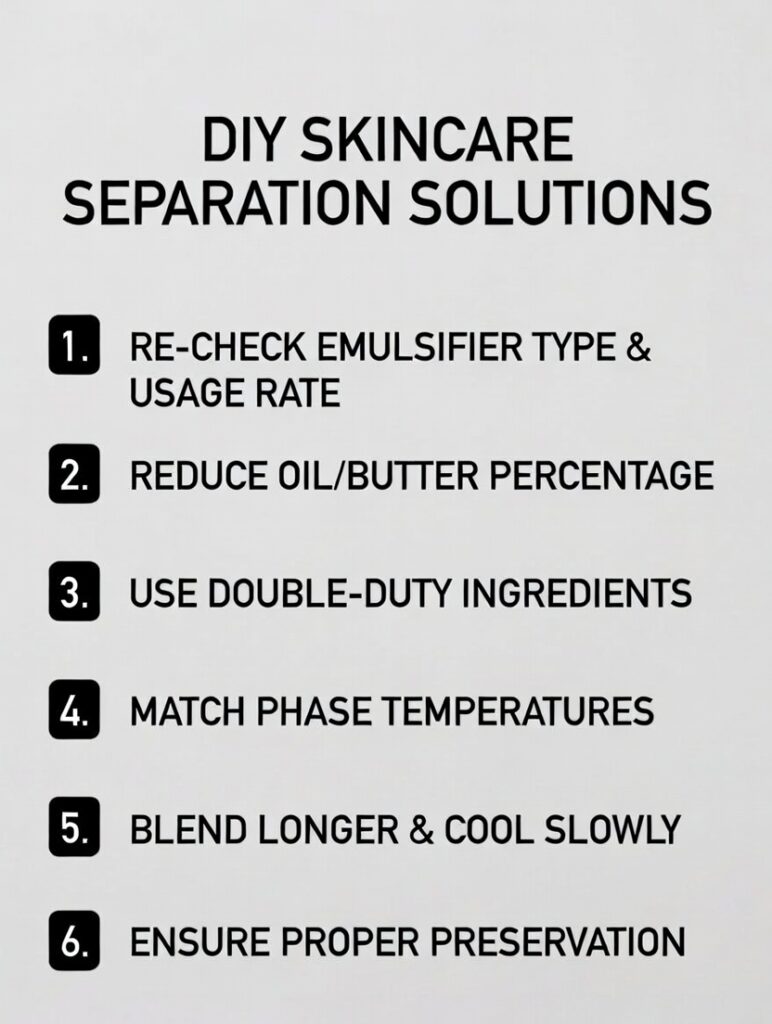
How to Fix Separation (Quick Checklist)
If your DIY skincare separates:
- Re-check emulsifier type and usage rate
- Reduce oil or butter percentage
- Use double-duty ingredients where possible
- Match phase temperatures
- Blend longer and cool slowly
- Ensure proper preservation
Most fixes involve small adjustments, not total reformulation.
How This Connects to Lotion & Cream Making
Separation issues show up most often in lotions and creams, which is why understanding formulation basics is essential before experimenting.
Once you understand emulsions and balance, lotion making becomes predictable instead of frustrating.
Conclusion
DIY skincare separation isn’t failure — it’s feedback.
When you understand emulsions, ingredient roles, and formulation balance, separation becomes a solvable problem instead of a mystery.
This knowledge is what turns trial-and-error into confident formulation.
Dont Forget to check these posts out: