
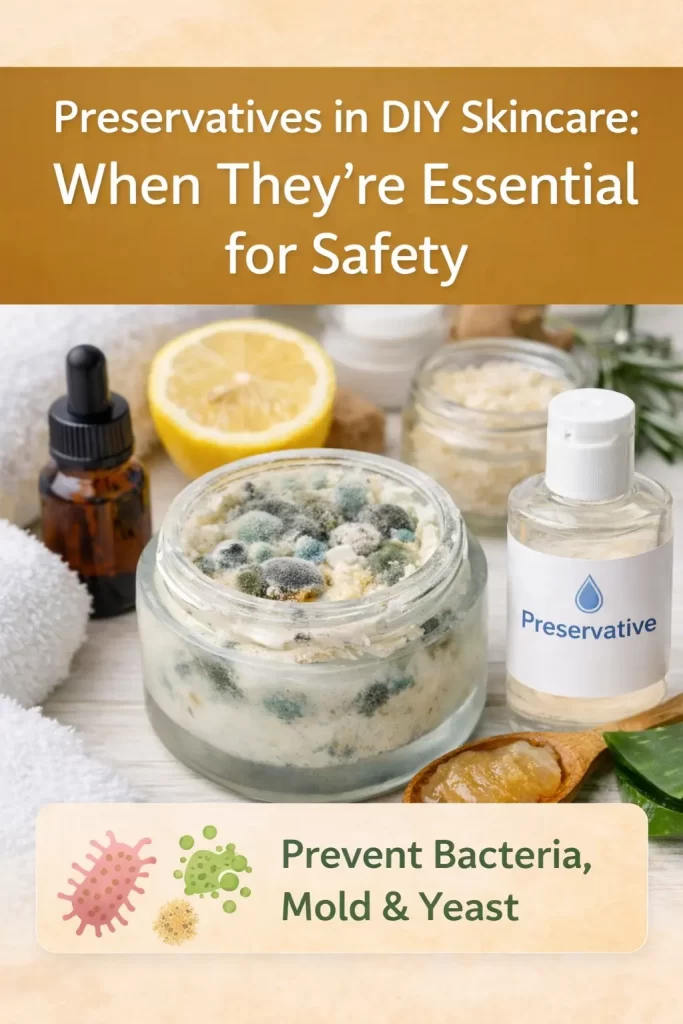
If you make your own lotions, creams, body washes, scrubs, masks, or other skincare products, understanding preservatives is one of the most important parts of learning how to formulate safely.
Whenever a product contains water or other water-based ingredients, microorganisms such as bacteria, yeast, and mold can potentially grow. A product can look and smell completely normal and still have microbial contamination.
But preservation is more complicated than simply adding a preservative to a recipe.
You need to choose a preservative that is appropriate for your formula, use it at the manufacturer’s recommended rate, formulate within its effective pH range, and follow the supplier’s processing instructions.
In this guide, I’ll explain:when preservatives are needed, what they do, what they don’t do, and the common mistakes beginners make when preserving homemade skincare.
What Is a Preservative?
A cosmetic preservative is an ingredient or preservation system used to help control the growth of microorganisms in a product.
Depending on the preservative system, this can include:
- Bacteria
- Yeast
- Mold
Preservatives are particularly important in products containing water because water makes it possible for microorganisms to grow.
Examples include:
- Lotions
- Creams
- Body washes
- Liquid cleansers
- Shampoos
- Conditioners
- Water-based serums
- Many emulsified scrubs
- Water-containing masks
A preservative doesn’t make a product sterile, and it doesn’t make a product last forever.
Instead, an appropriate preservation system helps protect the finished product from microbial growth when the formula is properly designed, manufactured, packaged, and stored.
Why Do Water-Based Products Need Preservation?
Water is one of the biggest factors that changes the preservation requirements of a skincare formula.
A product doesn’t have to contain plain distilled water to have a microbial-growth concern.
Water can come from ingredients such as:
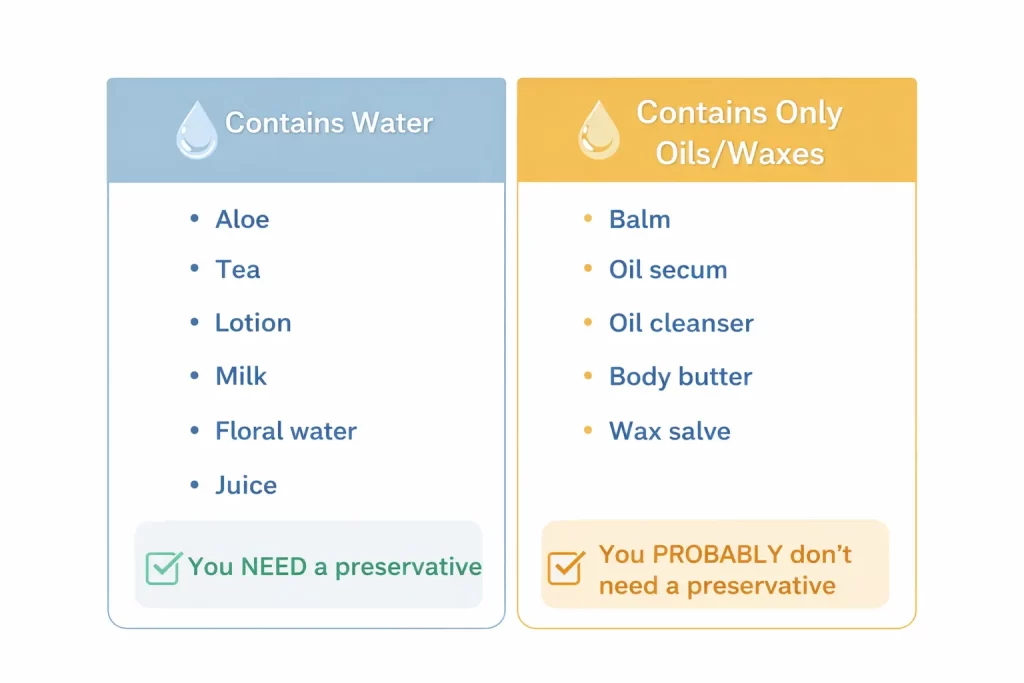
- Aloe vera
- Hydrosols
- Floral waters
- Milk
- Tea
- Fruit or vegetable juices
- Water-based extracts
- Other aqueous ingredients
Once water is part of the finished formula, you need to consider microbial preservation.
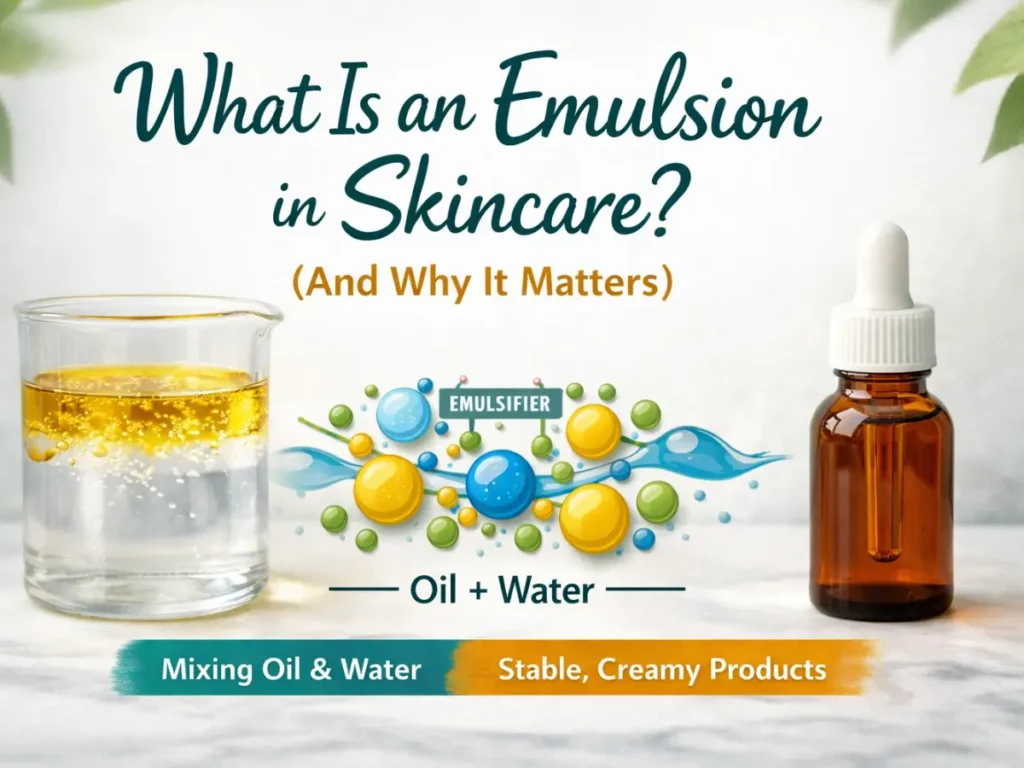
This is especially important with emulsions because an emulsion combines water and oil into one product.
If you’re new to emulsions, you can learn more in my guide to What Is an Emulsion in Skincare and Why It Matters.
Does Every Product Containing Water Need a Preservative?
This is where I want to make an important distinction.
A water-containing cosmetic product generally requires an appropriate preservation system.
But that does not mean you can simply choose any preservative and add it to any formula.
The preservative must be compatible with the product.
Things that can affect preservation include:
- The product’s pH
- The preservative being used
- The preservative’s recommended usage rate
- The ingredients in the formula
- The amount of water available to microorganisms
- Packaging
- Manufacturing practices
- Storage conditions
- The intended use of the product
This is why learning formulation is so important.
Preservation isn’t an ingredient you can treat as an afterthought.
What Products Usually Need Preservation?
Products containing water or other aqueous ingredients generally need a properly designed preservation system.
Examples include:
Lotions and Creams
These are emulsions containing water and oil, so preservation is an important part of the formulation.
Liquid Cleansers and Body Washes
Products such as body washes, facial cleansers, shampoos, and liquid hand washes commonly contain significant amounts of water.
Conditioners
Hair conditioners are usually water-based emulsions and need appropriate preservation.
Water-Based Scrubs
A scrub that contains water or water-containing ingredients has different preservation requirements from a completely anhydrous scrub.
Face Masks
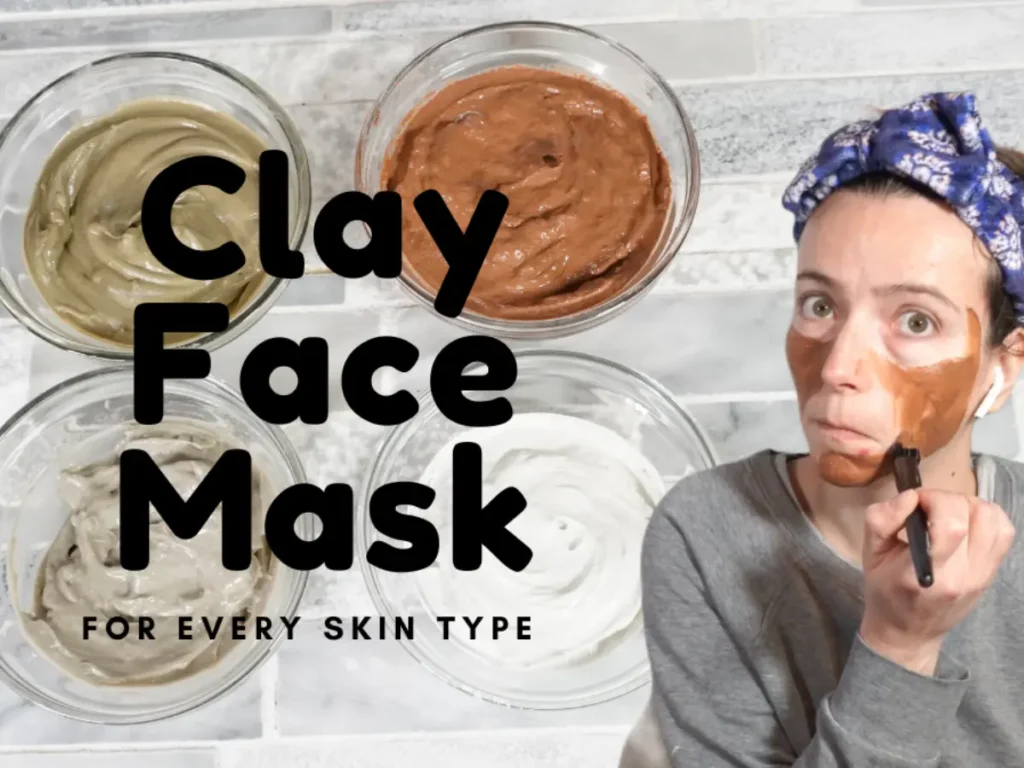
A clay mask or other product may seem simple, but once water or other aqueous ingredients are incorporated, microbial preservation becomes an important consideration. I typically wait to add any liquids to clay masks, as they are harder to preserve.
Aloe-Based Products
Aloe-containing products can require preservation because aloe preparations may contribute water to the formula.
What About Products That Don’t Contain Water?
Anhydrous products are different.
An anhydrous product is formulated without water.
Examples can include:
- Oil-based serums
- Body oils
- Some lip balms
- Some salves
- Oil-and-wax balms
- Anhydrous body butters
These products generally don’t require a traditional broad-spectrum cosmetic preservative simply because they contain oils and waxes rather than water.
However, that does not mean they are automatically immune to spoilage.
Anhydrous products can still have problems with:
- Oxidation
- Rancidity
- Contamination
- Water introduced during use
- Poor manufacturing practices
And some products that appear to be anhydrous may actually contain ingredients that introduce water.
So you need to evaluate the finished formula, not just the product name.
Preservatives vs. Antioxidants
This is one of the most important distinctions for beginners.
Preservatives and antioxidants do different jobs.
Preservatives
Preservatives are used to help control microbial growth.
They are concerned with organisms such as:
- Bacteria
- Yeast
- Mold
Antioxidants
Antioxidants help slow oxidation.
Oxidation can cause oils and other ingredients to become rancid or develop off odors and other changes.
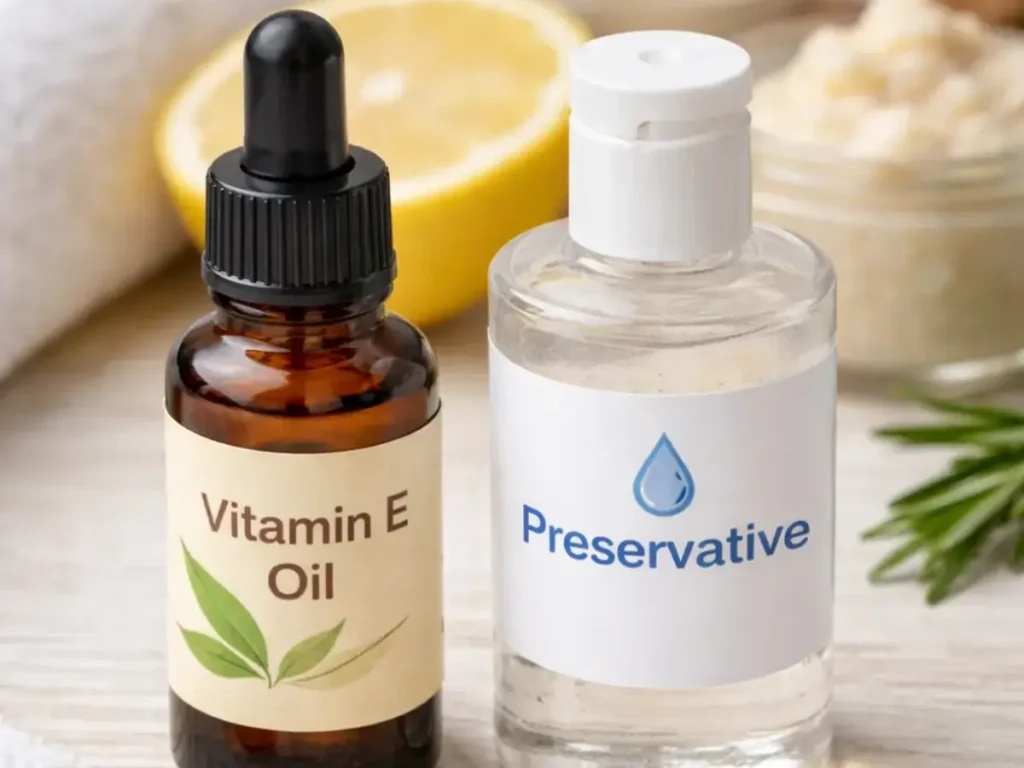
Vitamin E is a common example of an antioxidant used in oil-based formulations.
But here’s the important part:
Vitamin E is not a substitute for a broad-spectrum preservative in a water-containing product.
Adding vitamin E to a lotion does not properly preserve the lotion.
What About “Natural” Skincare?
One common misconception is:
“If I use natural ingredients, I don’t need a preservative.”
That’s not how preservation works.
Microorganisms don’t care whether an ingredient is natural or synthetic.
In fact, ingredients such as:
- Milk
- Aloe
- Hydrosols
- Tea
- Fruit
- Floral waters
can introduce water and nutrients that make preservation an important consideration.
The question isn’t simply whether an ingredient is natural.
The question is:
What does the finished formula require to remain microbiologically stable?
Can I Just Put My Product in the Refrigerator?
Refrigeration can slow microbial growth, but it should not be treated as a replacement for an appropriate preservation system in a water-containing cosmetic.
A refrigerator isn’t a substitute for proper formulation.
Temperature, repeated opening of the container, handling, contamination during use, and the formulation itself can all affect product stability.
If a formula requires preservation, refrigeration doesn’t eliminate that requirement.
Does Making a Small Batch Mean I Don’t Need a Preservative?
No.
Making a 30-gram batch instead of a 300-gram batch doesn’t automatically make a water-containing product safe without preservation.
The amount of product doesn’t eliminate the possibility of microbial growth.
A small batch can still become contaminated.
If you’re making a water-containing cosmetic, preservation needs to be considered regardless of whether you’re making a tiny test batch or a large batch.
How Do I Choose a Preservative?
This is where formulation becomes more important than simply following a recipe.
There isn’t one preservative that works perfectly for every cosmetic formula.
When choosing a preservative, look at the manufacturer’s documentation for that specific product.
Pay attention to:
Recommended Usage Rate
Use the preservative within the supplier’s recommended range.
More is not automatically better.
Adding extra preservative doesn’t necessarily make a formula safer and can create formulation or skin-tolerance problems.
Effective pH Range
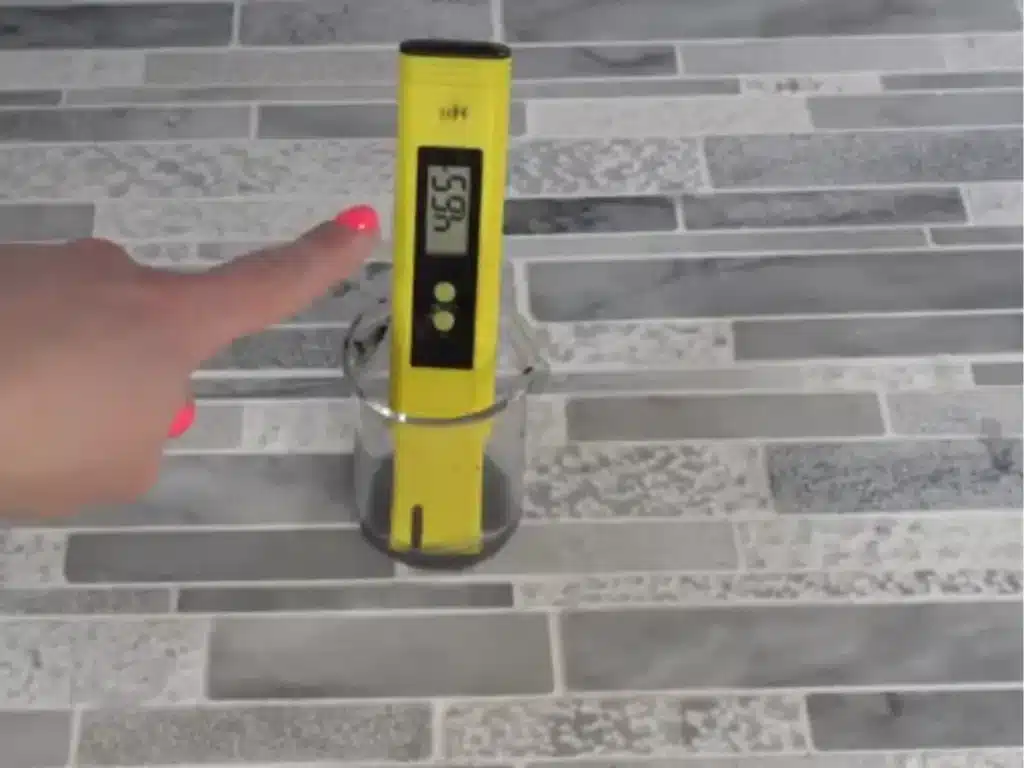
Some preservatives work only within certain pH ranges.
This means you can’t choose a preservative first and ignore the finished product’s pH.
You may need to formulate and adjust the product’s pH appropriately.
Compatibility
The other ingredients in your formula can affect how well a preservative system works.
This is one reason why copying a preservative from another recipe isn’t always appropriate.
Processing Instructions
Different preservatives have different processing requirements.
Some can tolerate heat better than others.
Some are added during a particular phase or temperature range.
Always follow the supplier’s instructions for the specific preservative you’re using.
When Should I Add My Preservative?
There isn’t one universal answer.
You’ll often hear that preservatives should always be added during the cool-down phase.
That’s not accurate for every preservative. It is a pretty common that this is the phase they go in.
Some preservatives are suitable for addition during cool-down, while others have different processing requirements.
The correct answer is:
Follow the manufacturer’s recommended processing temperature, phase, pH range, and usage rate for the specific preservative you’re using.
This is one reason I don’t recommend memorizing a rule such as:
“All preservatives go in at cool-down.”
Instead, learn how to read the supplier’s technical information.
Preservatives Are Part of the Formula
When you’re creating a skincare formula, your preservative shouldn’t be an afterthought.
For example, if you’re making a 100-gram lotion, you shouldn’t simply make your formula and then decide to throw in a little preservative at the end.
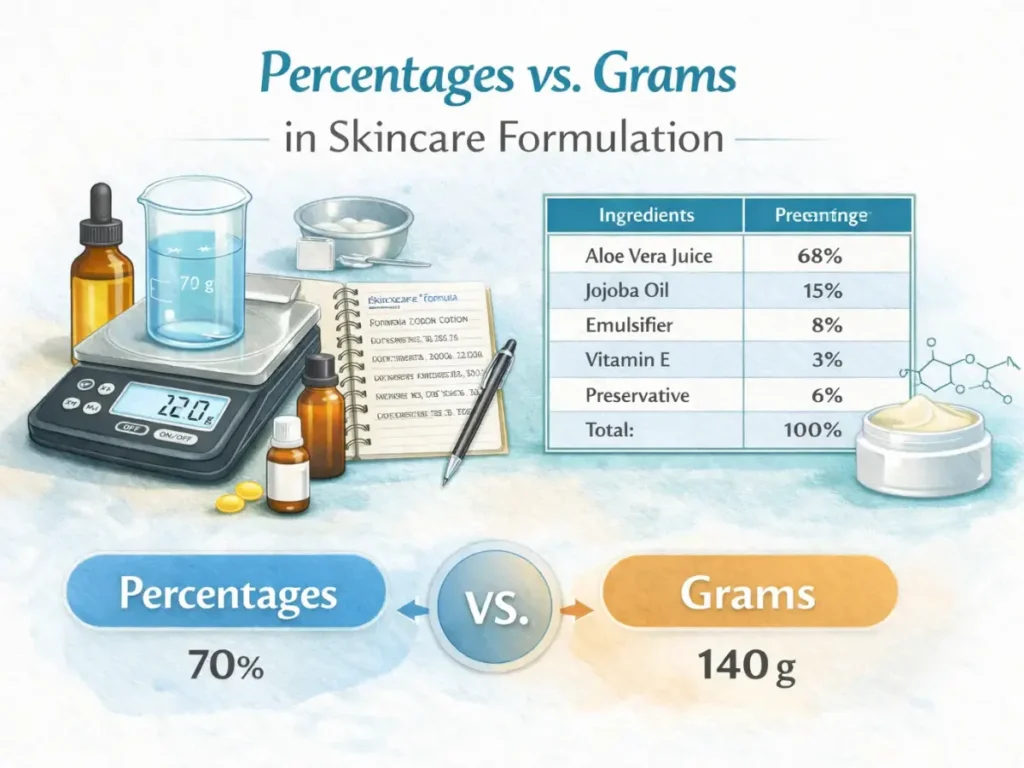
The preservative needs to be included as part of the formula’s percentages.
This is one reason cosmetic formulators work in percentages.
If you’re learning how to convert recipes into formulas and scale your batches, see my guide:
Percentages vs. Grams in Skincare Formulation.
Preservation Is More Than Just the Preservative
This is a concept I really want beginners to understand.
A preservative isn’t the only thing protecting a cosmetic product.
The overall preservation strategy can involve:
- The preservative system
- pH
- Formula composition
- Manufacturing hygiene
- Packaging
- Storage
- Ingredient quality
- Processing
- Water activity and other formulation characteristics
For example, a product packaged in a pump bottle may have a different contamination risk during use than a product repeatedly exposed to fingers in a wide-mouth jar.
That doesn’t mean one package automatically makes a product safe.
It means packaging is part of the preservation strategy.
Does a Preservative Guarantee My Product Is Safe?
No.
This is another important distinction.
Adding a preservative to a formula does not automatically prove that the finished product is microbiologically safe.
The preservative needs to be appropriate for the formula and used correctly.
Professional cosmetic development may also involve testing such as:
- Stability testing
- Microbial testing
- Preservative efficacy/challenge testing
These tests help determine whether a finished formula and its preservation system are performing as expected.
For home formulators, this is one reason to be cautious about assigning a specific shelf life to a homemade cosmetic simply because it contains a particular preservative.
How Long Will My Preserved Product Last?
This is where I want to correct a very common DIY skincare misconception.
There is no universal rule that says a preserved homemade lotion lasts exactly 1–3 months.
Likewise, you can’t automatically say:
“This oil product lasts 6–12 months.”
The shelf life of a finished cosmetic depends on the specific formulation, ingredients, packaging, storage conditions, manufacturing practices, and testing.
A preservative helps protect against microbial growth, but it does not automatically establish a shelf life for the finished product.
For more information about this, read:
How Do You Determine the Shelf Life of Homemade Cosmetics?
What About Homemade Products That Look Fine?
This is one of the biggest reasons preservation matters.
You cannot reliably determine microbial safety simply by looking at a product.
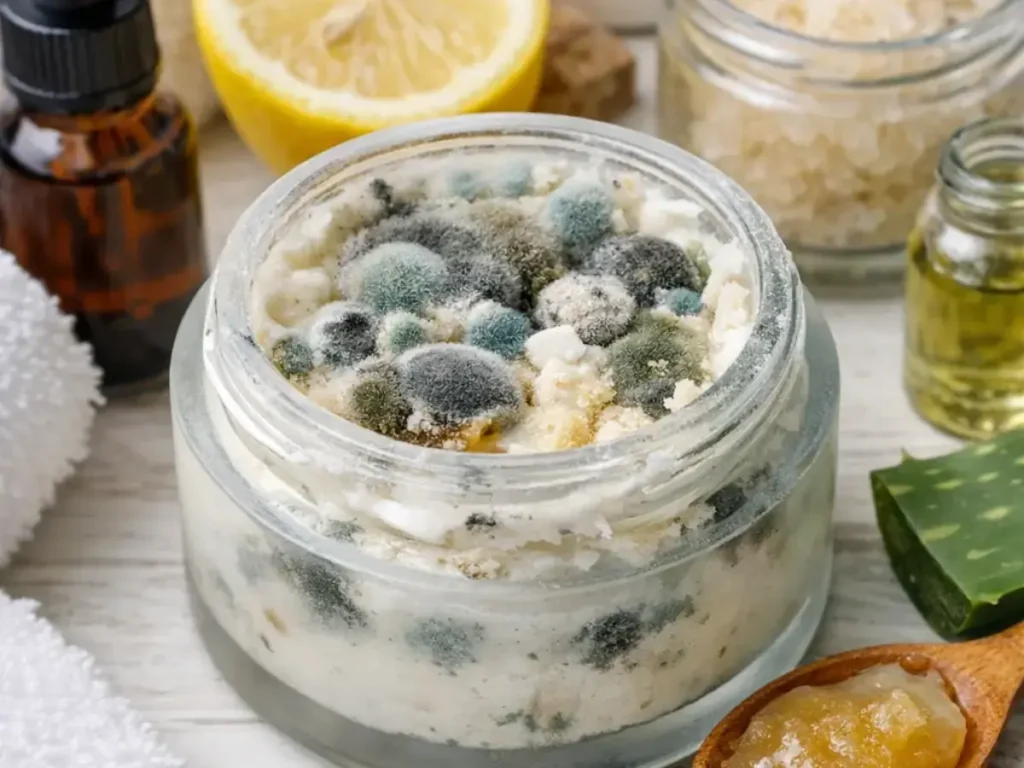
A contaminated product may show obvious signs such as:
- Mold
- Discoloration
- Unusual odor
- Gas production
- Texture changes
But the absence of these signs doesn’t prove that a product is microbiologically safe.
That’s why:
“It looks fine” isn’t a preservation test.
Common Beginner Preservation Mistakes
Here are some of the most common mistakes I see when people begin making skincare.
Mistake #1: Assuming Small Batches Don’t Need Preservation
A smaller batch can still become contaminated.
Mistake #2: Using Vitamin E Instead of a Preservative
Vitamin E is an antioxidant, not a broad-spectrum cosmetic preservative.
Mistake #3: Assuming Refrigeration Solves the Problem
Refrigeration can slow microbial growth but isn’t a substitute for appropriate preservation.
Mistake #4: Choosing a Preservative Without Checking Its Instructions
Every preservative has its own requirements.
Check the supplier’s information for:
- Usage rate
- pH range
- Temperature limitations
- Compatibility
- Recommended processing
Mistake #5: Adding “A Little Extra” Preservative
More isn’t automatically better.
Follow the manufacturer’s recommended usage range.
Mistake #6: Giving Every Product the Same Shelf Life
A lotion, body oil, sugar scrub, and shampoo don’t automatically have the same shelf life.
Mistake #7: Assuming a Preservative Makes Poor Hygiene Okay
Preservation doesn’t replace good manufacturing practices.
Start with clean equipment, clean containers, appropriate handling, and a well-designed formula.
A Simple Way to Think About Preservation
When you’re learning skincare formulation, don’t think:
“Does this recipe have a preservative?”
Think:
1. Does my finished formula contain water or other ingredients that create a microbial-growth concern?
2. What preservation system is appropriate for this formula?
3. What pH does my preservative require?
4. What usage rate does the manufacturer recommend?
5. How and when should it be incorporated?
6. How will the product be packaged and used?
7. How will I evaluate the finished product’s stability and shelf life?
That is the mindset of a formulator rather than simply following a recipe.
Final Thoughts
Preservatives can seem intimidating when you’re first learning how to make skincare, but understanding them is an important step toward becoming a better formulator.
The biggest thing to remember is that preservation isn’t simply about adding an ingredient to a recipe.
A properly preserved product depends on the whole formulation and manufacturing process.
If your product contains water, learn about preservation before making the product.
If your product is anhydrous, don’t assume that means it is immune to spoilage.
And never assume that a particular preservative, usage rate, or shelf-life number automatically works for every formula.
The more you understand about ingredients, percentages, pH, emulsions, preservation, and formulation, the better you’ll become at creating your own skincare products safely and confidently.
If you’re just getting started, my Skincare Formulation for Beginners guide is a good place to continue learning
Pingback: Carrier Oils in Skincare: How to Choose the Right Oil for Your Skin - Summer Rain
Pingback: Percentages vs Grams in Skincare Formulation (Beginner Guide) - Summer Rain
Pingback: Thickeners in Skincare: What They Are and How They Work - Summer Rain