
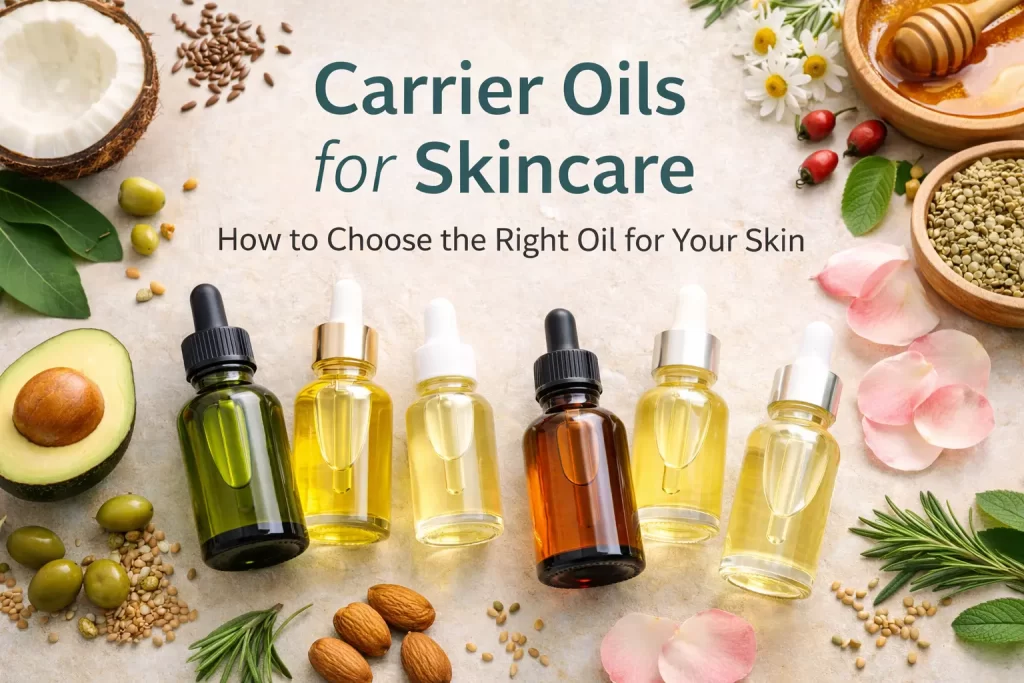
Carrier oils are one of the most important ingredients in skincare formulations. They provide moisture, deliver nutrients to the skin, and form the base of many DIY products such as facial oils, body butters, lotions, and scrubs.
If you’re making your own skincare, understanding carrier oils can dramatically improve the quality of your formulas.
Different oils behave very differently on the skin. Some absorb quickly and feel lightweight, while others provide rich moisture and help strengthen the skin barrier.
Choosing the right oil depends on several factors, including skin type, fatty acid composition, and how the oil functions within a formula.
If you’re new to formulation, start with my complete beginner guide:
Skincare Formulation for Beginners
What Are Carrier Oils?
Carrier oils are plant-derived oils used in skincare to moisturize the skin and carry other ingredients within a formulation.
They are called “carrier oils” because they help deliver active ingredients such as essential oils, vitamins, and botanical extracts.
Carrier oils are commonly used in products like:
- facial oils
- body butters
- sugar scrubs
- lotions and creams
- cleansing oils
These oils are rich in fatty acids, antioxidants, and vitamins that support healthy skin.
In many formulations, carrier oils form the oil phase of an emulsion.
If you’re unfamiliar with how oil and water combine in skincare products, see my guide:
What Is an Emulsion in Skincare and Why It Matters

Why Carrier Oils Matter in Skincare Formulation
Carrier oils do much more than simply moisturize the skin.
They influence the texture, absorption, and stability of a skincare product.
For example:
Light oils create fast-absorbing facial serums.
Heavier oils produce richer creams and body butters.
Carrier oils also help protect the skin barrier by reducing moisture loss.
Many oils contain beneficial nutrients such as:
Vitamin E
Essential fatty acids
Antioxidants
These compounds support healthy skin and help protect against environmental stress.
Carrier oils are also often combined with other ingredients that support skin function.
Learn more about ingredient roles in formulations here:
What Each Ingredient Does in Skincare Formulation
Understanding Fatty Acids in Carrier Oils
One of the biggest differences between oils comes from their fatty acid composition.
Fatty acids determine how an oil behaves on the skin.
The two most common fatty acids in skincare oils are:
Oleic acid
Oleic acid is highly moisturizing and nourishing. Oils high in oleic acid tend to feel richer and heavier on the skin.
These oils work well for dry or mature skin.
Linoleic acid
Linoleic acid is lighter and absorbs more quickly. Oils high in linoleic acid are often better for oily or acne-prone skin.

Absorption Speed of Carrier Oils
Carrier oils vary widely in how quickly they absorb into the skin.
Absorption speed affects how a product feels after application.
Fast Absorbing Oils
These oils feel lightweight and absorb quickly.
Examples include:
- grapeseed oil
- sunflower oil
- hemp seed oil
These oils are often used in facial products designed for oily or combination skin.
Medium Absorbing Oils
These oils provide moisture without feeling overly heavy.
Examples include:
- sweet almond oil
- apricot kernel oil
- argan oil
They work well in most skincare formulas.
Slow Absorbing Oils
These oils feel richer and sit longer on the skin.
Examples include:
- avocado oil
- olive oil
- castor oil
These oils are commonly used in body care products.
Carrier Oils by Skin Type
Choosing the right carrier oil for your skin type helps create more effective skincare products.
Best Carrier Oils for Dry Skin
Dry skin benefits from oils that provide deep nourishment and reinforce the skin barrier.
Recommended oils include:
Avocado oil
Sweet almond oil
Argan oil
Olive oil
These oils contain higher levels of oleic acid, which helps soften and moisturize dry skin.
Best Carrier Oils for Oily Skin
Oily skin often responds better to lightweight oils that absorb quickly.
Good options include:
Grapeseed oil
Hemp seed oil
Sunflower oil
Jojoba oil
Jojoba oil is unique because its structure closely resembles the skin’s natural sebum.
Best Carrier Oils for Sensitive Skin
Sensitive skin usually benefits from simple, gentle oils.
Recommended oils include:
Jojoba oil
Sunflower oil
Sweet almond oil
These oils are generally well tolerated and unlikely to cause irritation.
Best Carrier Oils for Acne-Prone Skin
Acne-prone skin often benefits from oils high in linoleic acid.
Examples include:
Hemp seed oil
Rosehip oil
Grapeseed oil
These oils tend to be lightweight and less likely to clog pores.
Carrier Oil Comparison Table

| Carrier Oil | Skin Type | Absorption Speed | Key Benefits |
|---|---|---|---|
| Jojoba Oil | All | Fast | Mimics natural sebum |
| Grapeseed Oil | Oily | Fast | Lightweight, high linoleic acid |
| Sweet Almond Oil | Dry | Medium | Nourishing and softening |
| Avocado Oil | Very Dry | Slow | Rich fatty acids |
| Sunflower Oil | Sensitive | Fast | Gentle and lightweight |
| Rosehip Oil | Mature | Fast | Rich in antioxidants |
Shelf Life of Carrier Oils
Carrier oils can eventually oxidize and go rancid.
Most oils last between 6 months and 2 years, depending on the oil type and storage conditions.
Approximate shelf life examples:
Grapeseed oil – 6–12 months
Sweet almond oil – 12 months
Jojoba oil – 2+ years
To extend shelf life:
Store oils in cool dark places
Keep bottles tightly sealed
Avoid heat and sunlight
When formulating products that contain water, preservatives are also necessary.
Learn why preservatives matter here:
Why Preservatives Matter in DIY Skincare
Carrier Oils in Skincare Formulations
Carrier oils appear in many DIY skincare products.
Examples include:
Facial oils
Body butters
Sugar scrubs
Lotions and creams
When water is included in a formula, oils must be combined with emulsifiers to prevent separation.
If an emulsion breaks, oil and water layers will separate.
Learn how to troubleshoot this problem here:
Why Some DIY Skincare Separates and How to Fix It
Tips for Choosing the Right Carrier Oil
When selecting a carrier oil for skincare, consider the following:
Skin type
Absorption speed
Fatty acid composition
Shelf life
Testing small batches can help determine which oils work best in your formulas.
Over time, many formulators develop a small set of preferred oils they use regularly.
FAQ
What is a carrier oil in skincare?
A carrier oil is a plant-derived oil used to moisturize the skin and deliver other ingredients within a skincare formula.
What is the best carrier oil for the face?
The best oil depends on skin type. Lightweight oils like jojoba, grapeseed, and rosehip are commonly used for facial products.
Are carrier oils good for oily skin?
Yes. Some lightweight oils such as grapeseed and hemp seed oil can work well for oily skin because they absorb quickly and do not feel heavy.
Do carrier oils clog pores?
Some oils have higher comedogenic ratings and may clog pores for certain skin types. Lightweight oils are generally less likely to cause breakouts.
Pingback: How to Make Solid Perfume Without Beeswax (Vegan, 3-Ingredient Recipe - Summer Rain
Pingback: What Is an Emulsifier in Skincare? (Beginner Guide + Formula Examples) - Summer Rain
Pingback: Percentages vs Grams in Skincare Formulation (Beginner Guide) - Summer Rain
Pingback: Sugar Scrub Recipes: How to Make & Customize Body Scrubs - Summer Rain
Pingback: How to Make Homemade Lotion: Beginner Friendly DIY Lotion Recipe - Summer Rain
Pingback: DIY Dead Sea Salt Body Scrub - Summer Rain
Pingback: Thickeners in Skincare: What They Are and How They Work - Summer Rain
Pingback: Emulsified Sugar Scrub Recipe - Summer Rain
Pingback: DIY Pink Himalayan Salt Body Scrub: Easy Salt Scrub Recipe - Summer Rain
Pingback: Making Lotion From Scratch - Summer Rain
Pingback: Coconut Oil: How to Use it In DIY Skincare - Summer Rain