
Activated charcoal is one of those ingredients that can make a DIY recipe look instantly different. Its deep black color makes it popular in face masks, soap, shampoo bars, and dry shampoo, while its porous structure gives it useful adsorbent properties.
But activated charcoal can also be a little tricky to work with. The powder is extremely fine, it does not dissolve in water, and a small amount can make a surprisingly large mess.
In this guide, I’ll explain what activated charcoal is, how it works, how to use it in DIY skincare and haircare, and a few tips that make it easier to formulate with.
Activated Charcoal at a Glance
| Activated Charcoal | |
|---|---|
| INCI Name | Activated Carbon |
| Ingredient Type | Powder / adsorbent |
| Appearance | Fine black powder |
| Solubility | Insoluble in water |
| Skin Feel | Absorbent; can leave skin feeling less oily |
| Common Uses | Face masks, soap, shampoo bars, dry shampoo and cleansing products |
| Oil Phase | No |
| Typical Use Rate | Formula dependent; 0.1 – 10% |
| Odor | Generally odorless, although some varieties may have a slight characteristic odor |
| Best Known For | Adsorbing oils and other substances and adding a deep black color |
What Is Activated Charcoal?
Activated charcoal is a form of carbon that has been specially processed to create a highly porous structure.
That is what makes it different from ordinary charcoal. The activation process creates a large surface area with many tiny pores where certain substances can attach.
You may also see activated charcoal referred to as activated carbon. The INCI name commonly used for the ingredient is Activated Carbon.
Activated Charcoal vs. Regular Charcoal
Activated charcoal is not the same thing as the charcoal you would use in a barbecue.
Do not use barbecue or fuel charcoal in skincare or haircare products.
When purchasing activated charcoal for DIY formulations, choose an ingredient intended for cosmetic, pharmaceutical, or another appropriate application. Always check the supplier’s product information before using it in a formula.

How Does Activated Charcoal Work?
The key to activated charcoal is its porous structure.
If you could look at a particle of activated charcoal under a microscope, you would see a network of tiny pores. These dramatically increase the amount of surface area available for other substances to attach to.
This process is called adsorption.
Adsorption vs. Absorption
The words absorption and adsorption sound almost identical, but they describe different processes.
Absorption happens when something is taken into another substance, like water being absorbed by a sponge.
Adsorption happens when molecules attach to the surface of another material.
Activated charcoal primarily works through adsorption. Its porous structure gives it a large surface area where certain oils and other substances can attach.
This is why it is useful in products designed for oily skin, oily scalps, cleansing, and wash-off applications.
What Is Activated Charcoal Used For?
Activated charcoal is commonly used in:
- Face masks
- Facial cleansers
- Scrubs
- Soap
- Shampoo bars
- Dry shampoo
- Body cleansers
- Other wash-off products
It can also be used when you want to give a formula a deep black or dark gray color.
Because activated charcoal is so dark, you usually don’t need much when your main goal is adding color.

How Much Activated Charcoal Should You Use?
There isn’t one use rate that works for every type of product.
The amount you need depends on the formula, the type of activated charcoal you’re using, and what you’re trying to accomplish. It can vary from 0.1 – 10% of the formula.
For example, a small amount may be enough when you’re using charcoal primarily for color, while a charcoal mask may require more.
When formulating, always follow the recommended usage rate from your ingredient supplier.
If you’re unsure how much to use, start on the lower end of the supplier’s recommended range and adjust your formula from there.
Activated Charcoal in Skincare
Activated charcoal is especially common in wash-off skincare products.
Its adsorbent properties make it useful in formulas designed for oily skin or products intended to remove excess oil and surface impurities.
Activated Charcoal Face Masks
Face masks are one of the most popular ways to use activated charcoal.
It can be combined with clays and other ingredients to create a wash-off mask for oily or combination skin.
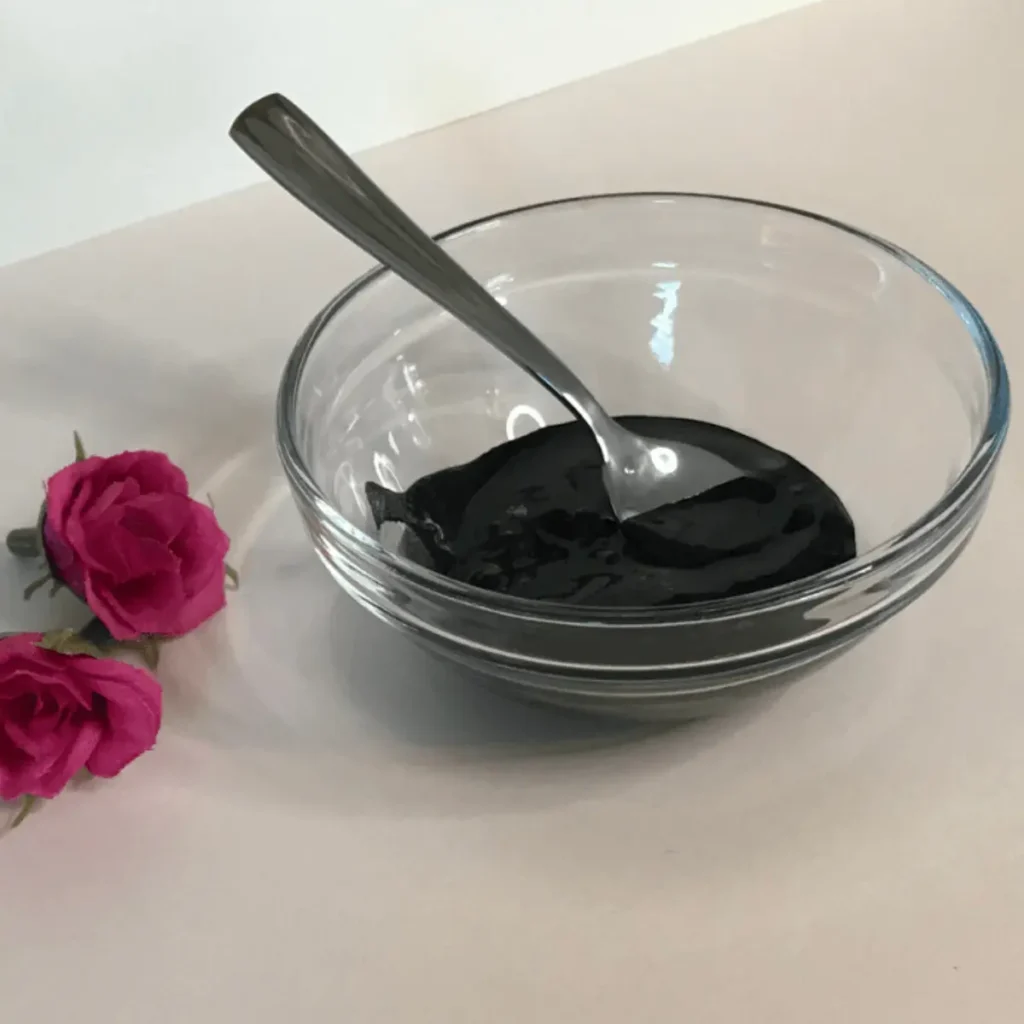
I use activated charcoal in my Detoxifying Activated Charcoal & Rose Petal Face Mask.
If you’re working with charcoal for the first time, this is also a good example of how a very small amount of an extremely dark powder can change the appearance of an entire formula.
Activated Charcoal in Soap
Activated charcoal is also popular in both melt-and-pour and cold-process soap.
One of the biggest reasons to use it in soap is its dramatic black or dark gray color. It can also contribute its adsorbent properties to the finished bar.
I use activated charcoal in my French Green Clay & Activated Charcoal Detox Soap.
How to Mix Activated Charcoal Into Soap
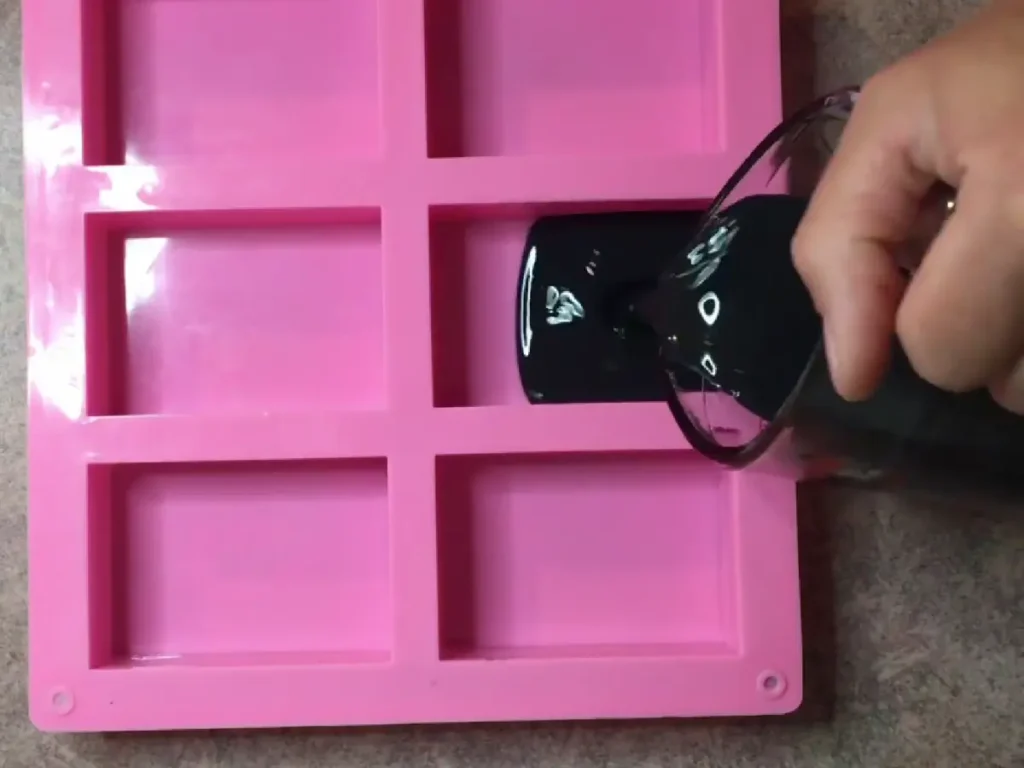
You can add activated charcoal directly to soap, but I prefer to pre-disperse it first.
Because the powder is so fine, adding it directly can result in clumps that are difficult to break apart.
To pre-disperse activated charcoal:
- Measure the amount of charcoal needed for your recipe.
- Place it in a small container.
- Add a small amount of rubbing alcohol.
- Mix until you have a smooth slurry.
- Add the slurry to your soap and mix thoroughly.
You only need enough rubbing alcohol to wet the charcoal and make it easy to mix.
I learned this technique while making my French Green Clay & Activated Charcoal Detox Soap.
Activated Charcoal in Shampoo Bars
Activated charcoal can also be used in haircare products, particularly formulas made for oily scalps or hair with product buildup.
I use it in my DIY Activated Charcoal Detox Shampoo Bar.
This recipe is a syndet shampoo bar, not traditional soap. The charcoal is combined with surfactants and conditioning ingredients to create a solid shampoo bar.
Activated Charcoal in Dry Shampoo
Activated charcoal can be useful in dry shampoo for two reasons.
First, it can help absorb oil. Second, its dark color can help prevent a powder-based dry shampoo from leaving a noticeable white or gray cast on darker hair.
A small amount can be used to adjust the color of a dry shampoo formula.
You can see this in my DIY Dry Shampoo for Light and Dark Hair.
I also have a newer DIY Dry Shampoo for All Hair Colors that shows how the formula can be adjusted for different hair colors.
Is Activated Charcoal Water Soluble?
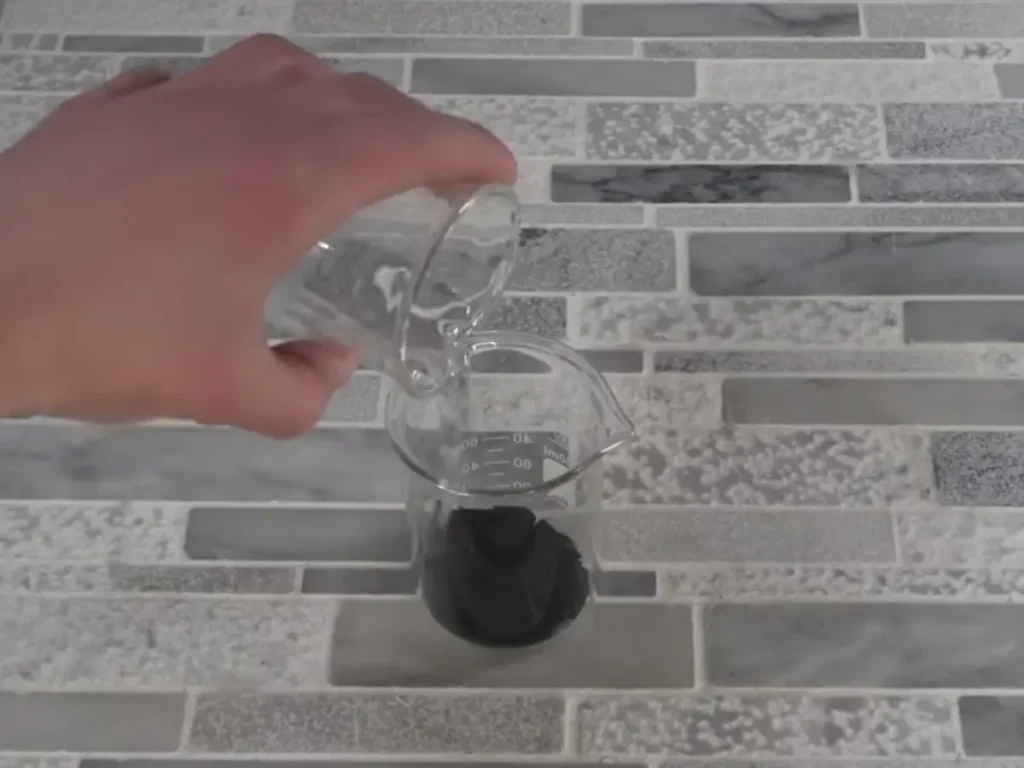
No. Activated charcoal does not dissolve in water.
Instead, the particles remain dispersed throughout the product.
This distinction is important when you’re formulating because you need to think about dispersion, rather than trying to dissolve the charcoal.
Simply stirring charcoal into a water-based formula can result in clumps or uneven distribution.
How Do You Disperse Activated Charcoal?
The best method depends on the type of product you’re making.
For soap, I like to pre-mix the charcoal with a small amount of rubbing alcohol before adding it to the formula.
Other formulations may require a different dispersing method, so always follow the method specified for the particular recipe rather than assuming the same technique will work everywhere.
Can Activated Charcoal Be Used to “Detox” Your Skin?
You’ll often see activated charcoal described as a detoxifying ingredient.
I prefer to focus on what the ingredient actually does in a cosmetic formula.
Activated charcoal can adsorb certain substances on its surface, including oils and other materials. That makes it useful in wash-off products designed to remove excess surface oil and impurities.
A charcoal face mask should not be thought of as literally pulling unspecified “toxins” out of your body.
For DIY skincare, I prefer descriptions such as adsorbent, oil-absorbing, and cleansing rather than making broad detox claims.
Is Activated Charcoal Good for Oily Skin?
Activated charcoal can be useful in products formulated for oily skin because of its ability to adsorb excess surface oil.
It is especially common in wash-off products such as masks, cleansers, soap, and scrubs.
However, more absorption isn’t necessarily better.
The finished product depends on the entire formulation, not just the charcoal. If you’re combining activated charcoal with other highly absorbent ingredients such as clay, the product may feel drying or tight on some skin types.
Can Activated Charcoal Dry Out Your Skin?
It can contribute to a drying skin feel, particularly when it is combined with other absorbent ingredients.
If you’re making a charcoal product for dry or sensitive skin, consider the entire formula rather than simply increasing the amount of charcoal.
A product containing activated charcoal does not need to be extremely drying to be useful.
Handling Activated Charcoal
If you’ve worked with activated charcoal before, you already know one thing:
It is messy! VERY VERY messy!
The powder is extremely fine and can easily spread across your workspace. Because it is black, even a small amount can be very noticeable.
A few simple habits make working with it much easier:
- Work slowly when measuring.
- Avoid creating unnecessary dust.
- Keep fans turned off while measuring and mixing.
- Avoid working near an open window when there is a breeze.
- Use small containers when measuring.
- Use dedicated or easy-to-clean equipment when possible.
- Avoid shaking or dumping the powder from a height.
- Clean your workspace when you’re finished.
Cleaning Up Activated Charcoal
If you spill charcoal, avoid immediately wiping it around with a dry cloth. That can spread the powder over an even larger area.
Instead, carefully collect the loose powder first and then clean the remaining residue with a damp disposable towel or an appropriate cleaning method for the surface.
Keeping your workspace organized and using small containers for measuring makes cleanup much easier.
How Should Activated Charcoal Be Stored?
Store activated charcoal in a tightly sealed, airtight container.
Keep it in a cool, dry place away from moisture and contamination.
Because activated charcoal is highly adsorbent, leaving it exposed to the air can allow it to pick up moisture and other substances from its surroundings. Over time, this can contribute to clumping and make the powder more difficult to work with.
A sealed container also keeps the fine black powder from getting into the rest of your ingredient storage area.
Does Activated Charcoal Expire?
Activated charcoal is generally a stable ingredient, but the shelf life can vary depending on the specific product.
Always follow the shelf-life or best-before information provided by your supplier.
Proper storage is important. Keep the container tightly closed and protect the charcoal from moisture and contamination.
If your supplier provides a specific expiration date, use that information rather than assuming every activated charcoal product has the same shelf life.
Choosing Activated Charcoal for DIY Formulations
Not every black powder labeled as charcoal is necessarily the same ingredient.
When purchasing activated charcoal for skincare or haircare, check the supplier’s information for:
- The ingredient name
- INCI name
- Intended use
- Recommended usage rate
- Particle size, if provided
- Storage instructions
- Shelf life
For products that will be used on the skin or hair, make sure you’re purchasing an ingredient intended for an appropriate cosmetic application.
Frequently Asked Questions
What is activated charcoal used for?
Activated charcoal is commonly used in skincare, haircare, soap, and cleansing products because of its porous structure and ability to adsorb oils and other substances. It can also be used to add a deep black color to DIY products.
Is activated charcoal the same as barbecue charcoal?
No. Barbecue or fuel charcoal should not be used in skincare or haircare products. Use activated charcoal intended for an appropriate cosmetic or other suitable application.
Is activated charcoal soluble in water?
No. Activated charcoal does not dissolve in water. It needs to be dispersed throughout the formulation.
What is the INCI name for activated charcoal?
The INCI name commonly used for activated charcoal is Activated Carbon.
How do you mix activated charcoal into soap?
Pre-mixing activated charcoal with a small amount of rubbing alcohol can create a smooth slurry that is easier to incorporate into soap. This can help reduce clumping and improve distribution.
Can you use activated charcoal in shampoo?
Yes. Activated charcoal can be used in shampoo bars and other haircare products, particularly formulas intended for oily scalps or product buildup.
Can you use activated charcoal in dry shampoo?
Yes. Activated charcoal can help absorb oil and can also darken a dry shampoo powder, making it useful for darker hair colors.
How should activated charcoal be stored?
Keep activated charcoal in a tightly sealed container in a cool, dry place. Protect it from moisture and contamination.
Is activated charcoal good for oily skin?
It can be useful in products designed for oily skin because it can adsorb excess surface oil. The rest of the formulation also plays an important role in how the finished product feels on the skin.
Can activated charcoal remove toxins from your body?
Activated charcoal in a cosmetic product should not be thought of as removing toxins from your body. In skincare, its useful property is its ability to adsorb certain substances on the surface of the charcoal.
DIY Recipes Using Activated Charcoal
Ready to try activated charcoal in a DIY project?
Here are a few of my recipes that use it:
- Detoxifying Activated Charcoal & Rose Petal Face Mask
- French Green Clay & Activated Charcoal Detox Soap
- DIY Activated Charcoal Detox Shampoo Bar
- DIY Dry Shampoo for Light and Dark Hair
- Oreo Cookie Melt & Pour Soap
Final Thoughts
Activated charcoal is a simple ingredient, but understanding how it behaves makes it much easier to formulate with.
Its porous structure gives it a large surface area for adsorption, which is why it is useful in products designed to absorb excess oil and remove surface impurities. It also happens to be an incredibly effective way to add a deep black color to a DIY formula.
The main things to remember are:
- Use activated charcoal, not barbecue charcoal.
- Activated charcoal is insoluble in water.
- It works primarily through adsorption.
- A little can go a long way when you’re using it for color.
- Pre-dispersing it can help prevent clumps.
- Work carefully because the powder is extremely fine and messy.
- Store it in a tightly sealed container in a cool, dry place.
- Follow the supplier’s recommended usage rate for your specific ingredient.
- Focus on its actual adsorbent properties rather than broad “detox” claims.
Once you understand how activated charcoal behaves, it is a surprisingly versatile ingredient to have in your DIY skincare and haircare ingredient collection.