
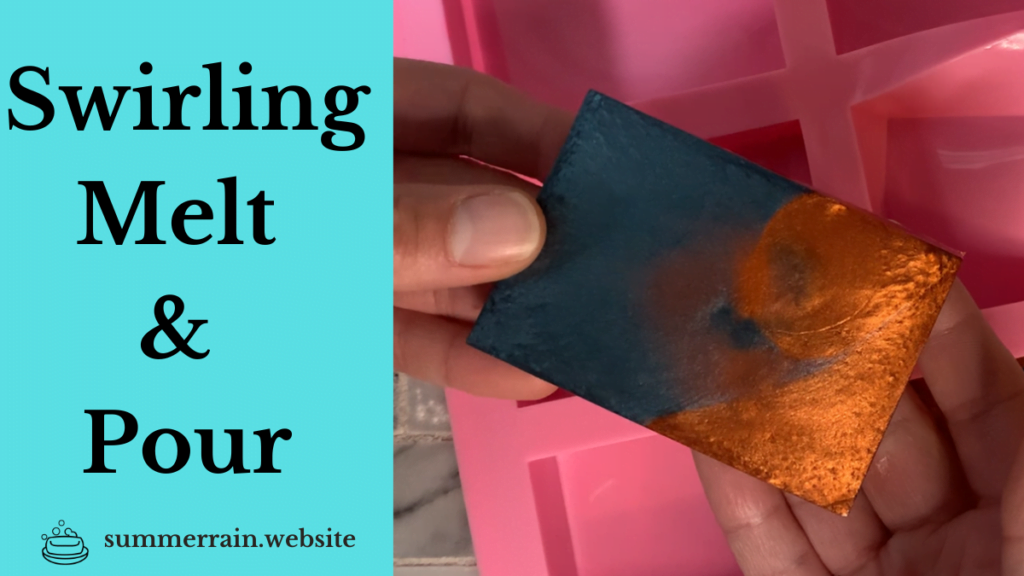
Melt and pour soap is one of the easiest ways to create beautiful handmade soap, and this marbled swirl technique makes a simple bar look anything but ordinary. The colors are swirled together while the soap is still liquid, creating a flowing pattern that you can see right on the surface of the finished bar. It’s a simple technique, but getting those distinct, defined swirls comes down to knowing when to pour and how much to swirl.
The trick is temperature.
Melt and pour soap needs to be fluid enough to pour, but if it is too hot, your colors can blend together and you will lose the defined swirl. Let it cool slightly and become thicker, and the colors will stay more distinct as they move through the mold.
In this tutorial, I’ll show you how I made this marbled soap using two colors and a simple swirling technique. I’ll also explain how the type of soap base, temperature, and pouring method affect the finished design so you can experiment with your own combinations.
If you are completely new to melt and pour soap, I recommend starting with my Beginner’s Guide to Making Melt and Pour Soap first. Once you understand the basics, swirling is a fun way to take your soap designs a step further.
Prefer to watch this project instead of reading it?
Some of the links are affiliate links, because I am an associate and I earn a small commission on them. There is no additional cost to you, I earn a commission if you click through and make a purchase.
What Makes Swirled Melt and Pour Soap Work?
A swirl sounds simple: melt two colors of soap, pour them together, and swirl.
But there is a little more to it.
Melt and pour soap becomes thicker as it cools. That change in viscosity is what makes the swirling technique possible.
If the soap is very hot and fluid, the two colors can quickly mix together. Instead of a defined marbled pattern, you may end up with one muddy color.
If the soap is allowed to cool too much, it can become difficult to pour and may start setting before you have a chance to create your design.
For this project, I aim for around 120°F. At this temperature, the soap has cooled enough to start thickening while still being fluid enough to pour.
You may need to adjust this slightly depending on the soap base you use and the temperature of your workspace.
Choosing a Melt and Pour Soap Base
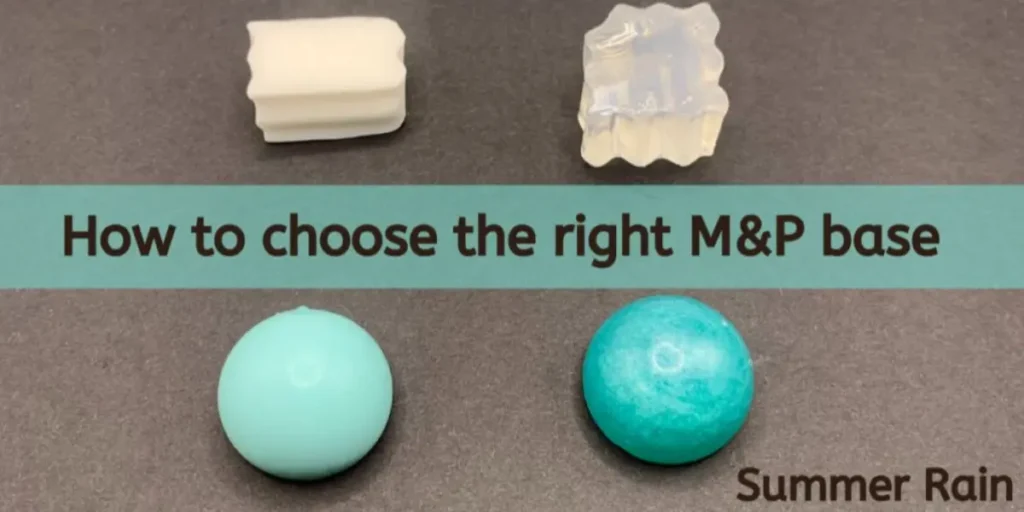
The type of melt and pour soap base you choose will have a big effect on the finished soap. Watch the Video Tutorial on Choosing Your Soap Base.
White Melt and Pour Soap Base
White soap base gives you a soft, opaque finish. Mica colors tend to look lighter and more pastel against the white background.
This is a good choice if you want a softer, more muted marbled soap.
Clear Melt and Pour Soap Base
Clear melt and pour soap creates a much more transparent, glossy appearance.
Colors tend to look brighter and more saturated, and the finished swirl can have a completely different look from the same design made with white soap.
If you enjoy experimenting with soap designs, it can be fun to make the same swirl with both clear and white bases and compare the results.
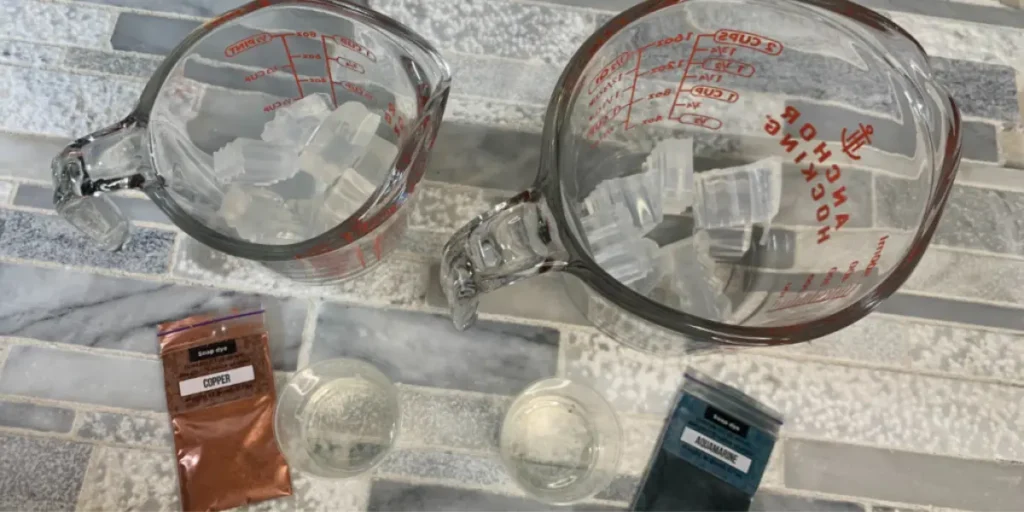
Marbled Melt and Pour Soap Recipe
Copper Soap
| Ingredient | Amount |
|---|---|
| Melt and Pour Soap | 3 oz |
| Fragrance Oil | 0.18 oz |
| Copper Mica Powder | As needed |
Aquamarine Soap
| Ingredient | Amount |
|---|---|
| Melt and Pour Soap | 3 oz |
| Fragrance Oil | 0.18 oz |
| Aquamarine Mica Powder | As needed |
Equipment
- Scale
- Microwave-safe containers
- Silicone spatula
- Soap mold
- Infrared thermometer, optional
- Skewer or similar tool
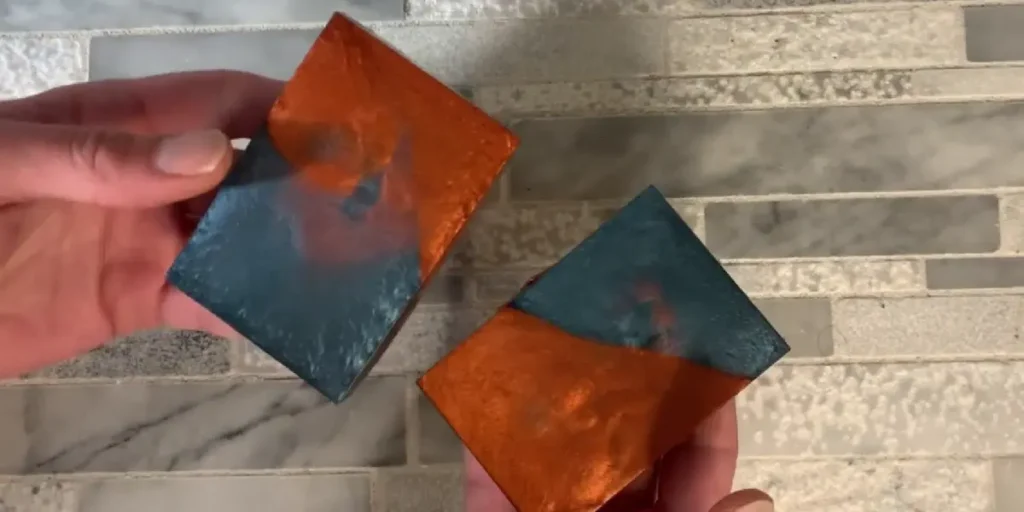
How to Make Swirled Melt and Pour Soap
Step 1: Divide the Soap Base
Divide your melt and pour soap base into two portions.
For this recipe, each color uses 3 ounces of melt and pour soap.
Cut the soap into small, fairly even pieces so it melts consistently.
Step 2: Melt the Soap
Place the first portion of soap into a microwave-safe container.
Heat it in short intervals, stirring between each interval, until the soap is completely melted.
Repeat with the second portion.
Avoid overheating melt and pour soap. You only need enough heat to melt the base, and excessive heat can create other problems such as bubbles or an unpleasant texture.
If you are new to working with melt and pour soap, my Beginner’s Guide to Making Melt and Pour Soap goes into more detail about melting and working with the base.
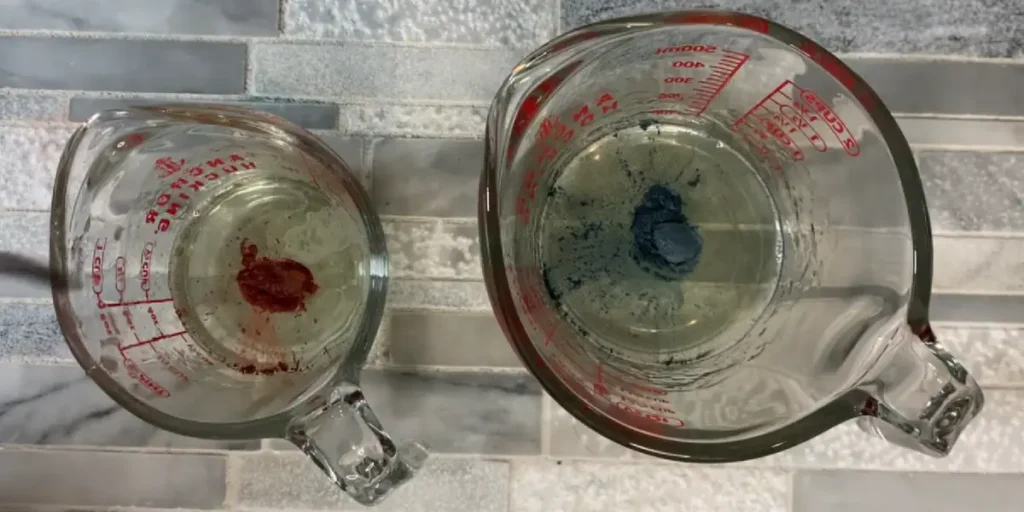
Step 3: Add the Fragrance and Color
Add the fragrance oil and mica powder to each portion of melted soap.
Stir gently until everything is evenly incorporated.
Try not to aggressively stir the soap. The more you stir, the more air you can introduce into the mixture.
Step 4: Let the Soap Cool
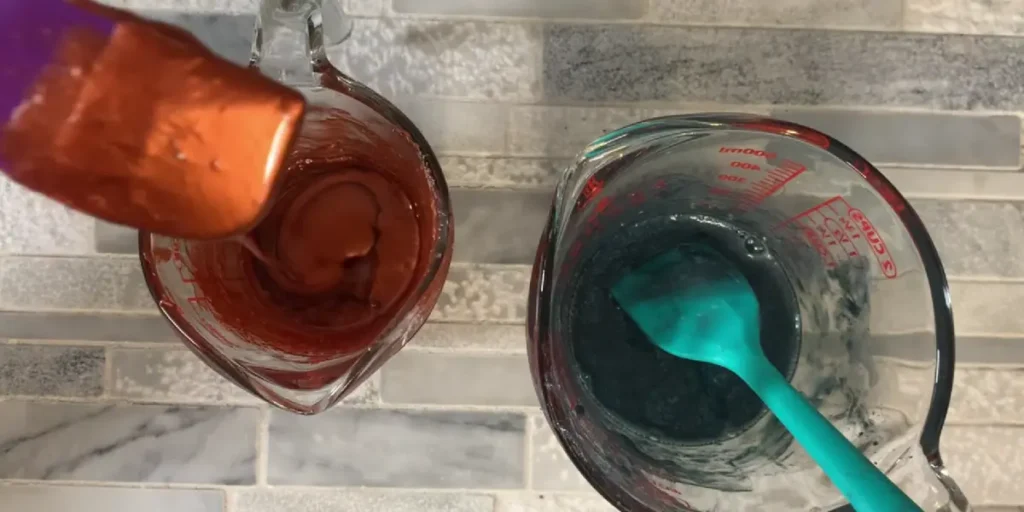
This is the step that makes the difference between a defined swirl and muddy colors.
Allow both colors to cool until they reach approximately 120°F.
The soap should still be completely liquid, but it should have started to thicken slightly.
If one color is cooling faster than the other, you can give it a few seconds of gentle reheating to bring the two portions closer together in temperature.
Step 5: Pour the Colors
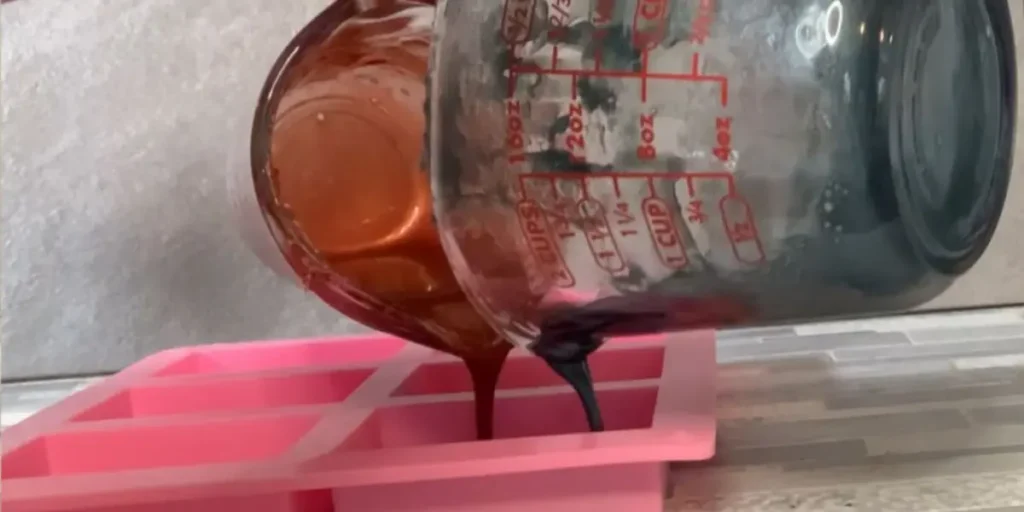
Pour the copper and aquamarine soaps into the mold at the same time.
Move the containers around as you pour so the colors travel through different areas of the mold.
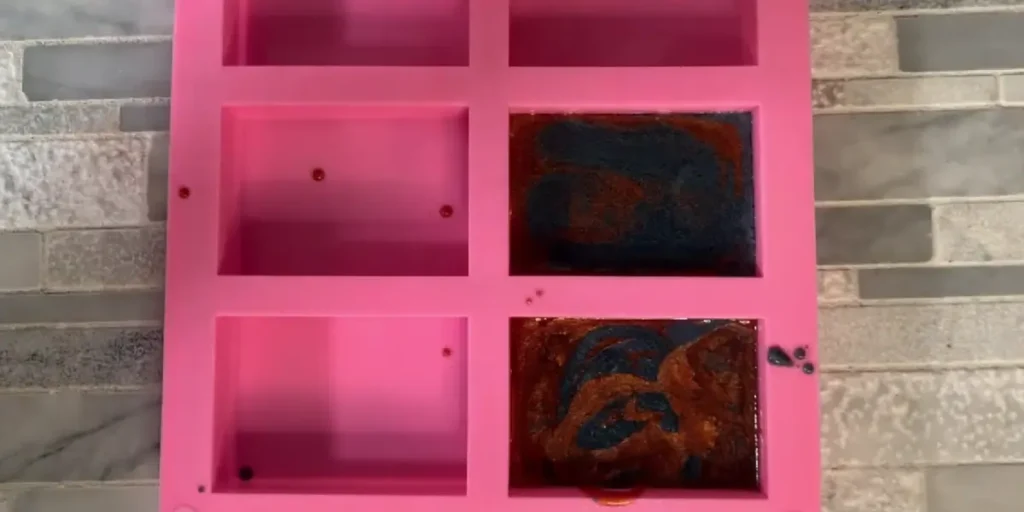
Don’t worry about making the pour perfect. Part of the fun of marbling is that you won’t know exactly what the pattern will look like until you cut the soap.
Step 6: Let the Soap Harden
Allow the soap to cool completely before removing it from the mold.
Melt and pour soap does not require the same cure time as cold process soap. Once it has completely hardened, it can be unmolded and used.
Step 7: Wrap the Soap
Melt and pour soap can develop glycerin dew, sometimes called soap sweating, when it is exposed to moisture in the air.
If you are not using the soap immediately, wrap it well to help protect the surface.
You can read more about this in my guide to Soap Sweating or Glycerin Dew.
If you want to level up, you can shrink wrap it. It really does make a difference with the finished / polished look.
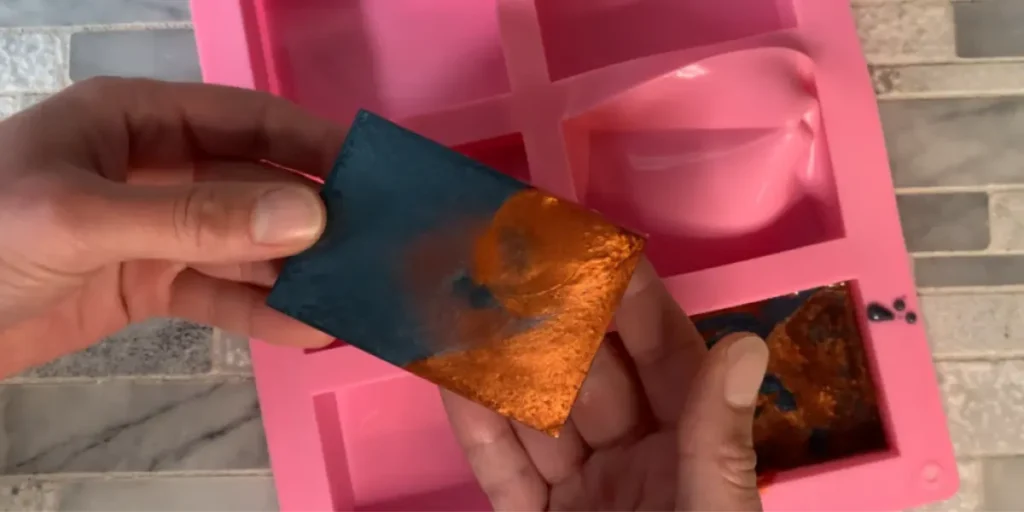
Why Temperature Matters When Swirling Soap
Temperature is probably the most important part of this technique.
When melt and pour soap is freshly melted, it is very thin and fluid. That is useful when you need to pour it, but it is not necessarily what you want for a defined swirl.
As the soap cools, it becomes thicker.
That thicker consistency helps the two colors stay separate long enough to create visible ribbons and patterns.
For this recipe, I let the melted soap cool to approximately 120°F before pouring.
The exact temperature is not a magic number, though. Your goal is to find the point where the soap is:
- Completely melted
- Still easy to pour
- Beginning to thicken
- Not so hot that the colors immediately blend together
If your swirl looks muddy, try allowing the soap to cool a little longer before pouring.
If the soap is becoming difficult to pour or starts setting in the container, it has cooled too much.
How the Pour Changes the Swirl
One of the fun things about making marbled melt and pour soap is that there isn’t just one correct way to pour it.
The way you move the two colors through the mold will change the pattern.
You can pour the colors:
- In alternating lines
- Back and forth across the mold
- In a zigzag
- In small circles
- From different areas of the mold
- In one color followed by another
After pouring, you can use a skewer or other thin tool to gently move through the soap and exaggerate the design.
The important word here is gently.
You are trying to move the colors together, not completely mix them.
A few passes can create beautiful movement. Too much swirling can turn a marbled design into a single color.
Mica Powder for Melt and Pour Soap
Mica is one of my favorite ways to add color to melt and pour soap.
For this project, I used copper and aquamarine mica to create the contrasting colors.
When adding mica, make sure you are using a colorant that is intended for use in soap.
You also want to mix the mica thoroughly into the melted soap before pouring.
If you notice little specks of mica that are not dispersing, a light mist of rubbing alcohol can help break up surface bubbles and help the mica disperse.
Adding Fragrance Oil
I used fragrance oil in both portions of this soap.
Because fragrance oils can behave differently in melt and pour soap, always check the supplier’s recommended usage rate and make sure the fragrance is skin safe and approved for soap.
I recommend weighing fragrance oil rather than measuring it by volume. This makes it much easier to consistently reproduce a recipe.
If you are new to weighing ingredients for DIY recipes, my guide on percentages vs. grams explains why I prefer working by weight.
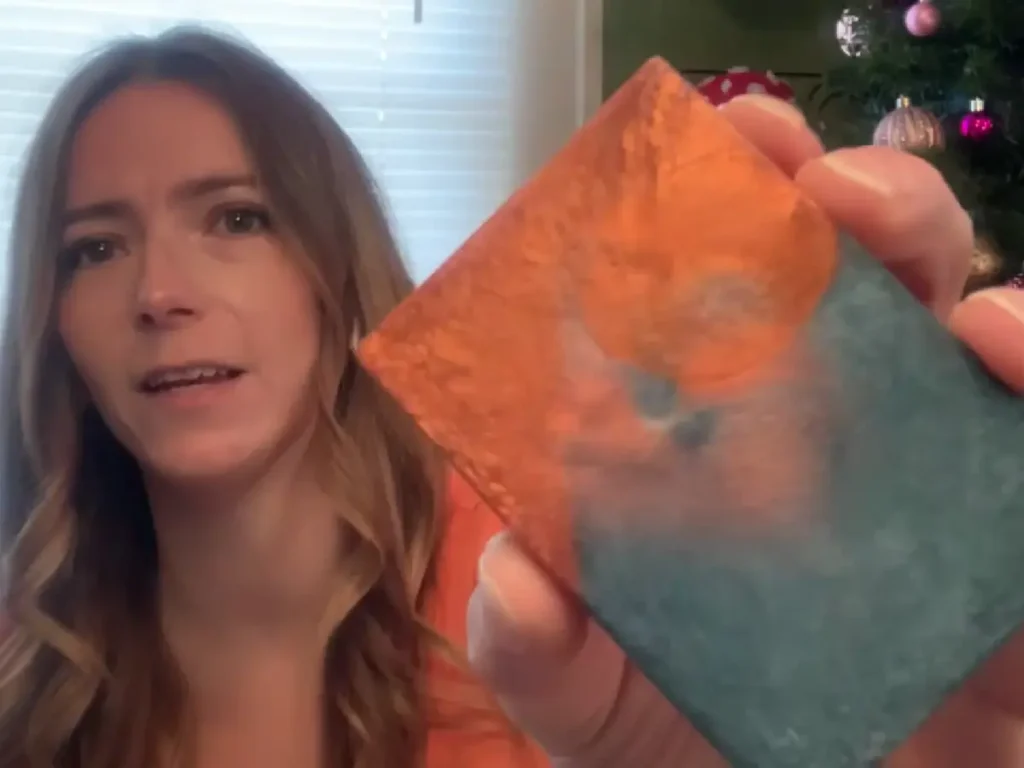
Tips for Getting Better Melt and Pour Soap Swirls
Let the soap cool before pouring
If your colors are blending together too much, temperature is the first thing I would look at.
Try allowing the soap to cool a little more before pouring.
Don’t over-swirl
It is tempting to keep moving the skewer through the soap to make the pattern more dramatic.
Stop sooner than you think.
The colors will continue to move slightly as the soap settles, and too much movement can eliminate the contrast between them.
Use contrasting colors
A swirl is much easier to see when the colors are noticeably different.
You can use complementary colors for a bold design or colors from the same family for a softer, more subtle effect.
Work fairly quickly
Melt and pour soap starts to cool as soon as it leaves the microwave.
Have your mold, colorants, fragrance, and tools ready before you begin so you can concentrate on the design once the soap reaches the right temperature.
Don’t worry if every bar looks different
That’s one of the best parts of making marbled soap.
Even if you use the same recipe, the exact pattern can change depending on how you pour and swirl the soap.
Why Did My Melt and Pour Soap Swirl Turn Muddy?
If your finished soap doesn’t have the defined marbled pattern you were hoping for, there are a few things to check.
The soap was too hot.
This is the most likely reason. Very fluid soap allows the colors to mix too easily.
You swirled too much.
A few movements can create a beautiful pattern, but too much swirling can blend the colors together.
The colors were too similar.
A subtle color combination can be pretty, but it may be harder to see the swirl.
The soap started setting before you finished.
If the soap became thick before you could pour it, it may have cooled too much. A few seconds of gentle reheating can bring it back to a pourable consistency.
More Melt and Pour Soap Projects
Once you get comfortable with basic melt and pour soap, there are so many techniques you can try.
If you are just getting started, my Beginner’s Guide to Making Melt and Pour Soap is a good place to start.
Want to experiment with layers? Take a look at How to Layer Melt and Pour Soap.
You can also try combining techniques. My Succulent Melt and Pour Soap uses embeds and layering, while my Massage Soap on a Rope shows how the marbling technique can be adapted to a completely different soap design.
And if you like unusual melt and pour projects, there are plenty more soap-making projects to explore.
Printable Recipe – Marbled Soap
Swirling melt and pour soap is one of those techniques that looks complicated but becomes much easier once you understand what is happening inside the mold.
The biggest thing to remember is temperature.
You want the soap fluid enough to pour, but cool enough that the colors don’t immediately combine. From there, the pour and the amount of swirling you do will determine the final pattern.
Once you understand that balance, you can change the colors, base, fragrance, mold, and pouring technique to create completely different bars from the same basic method.
And that’s what makes marbled melt and pour soap so much fun—you can make the technique your own.
Marbled Dreams: Swirled Melt and Pour Soap
Equipment
- Scale
Ingredients
Copper Soap
- 3 ounce Melt and pour soap
- 0.18 ounce Fragrance Oil
- Copper Mica Powder
Aquamarine Soap
- 3 ounce Melt and pour soap
- 0.18 ounce Fragrance Oil
- Aquamarine Mica Powder
Instructions
- Add melt and pour into a microwave safe container. Heat in 10 second intervals in the microwave until it is completely melted.
- Add mica powder and fragrance oil.
- Allow melt and pour soap to cool down until it starts to thicken slightly, approximately 120°F.
- Pour both soaps into the mold at the same time. The type of pour that you do will determine the final swirl look.
- Allow to cool completely. Remove from mold and cover in plastic wrap until you are ready to use.