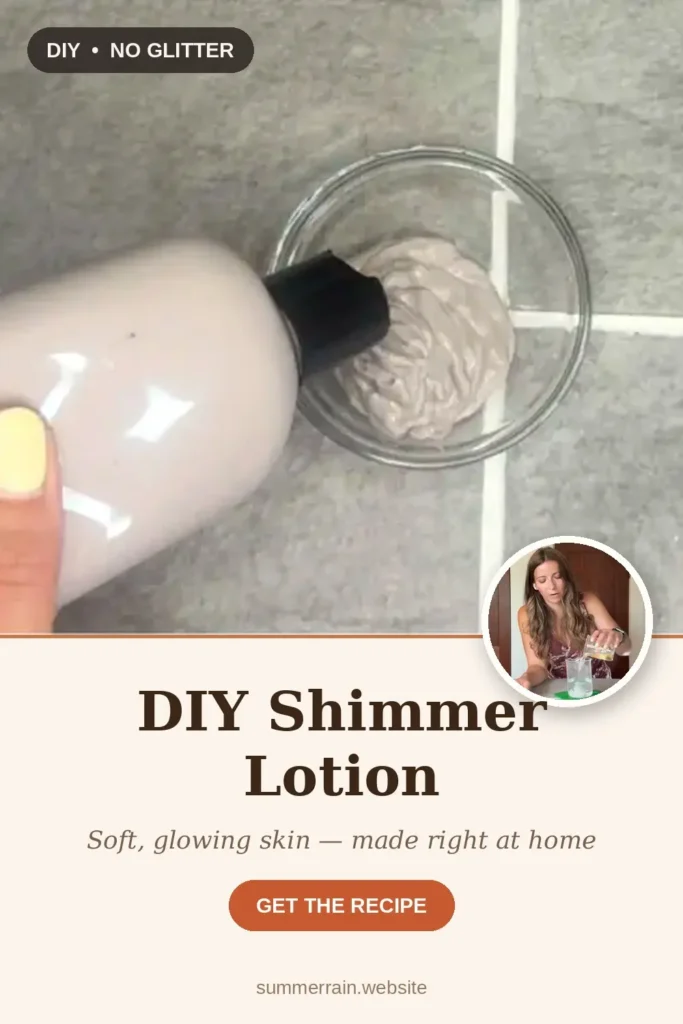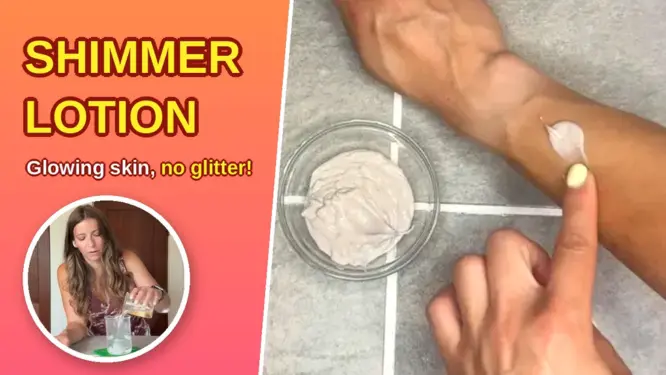
There is a particular kind of pleasure in a lotion made well — one that softens the skin, catches the light just so, and feels, somehow, like a small daily luxury rather than an afterthought. This is that lotion. Nourishing butters and oils come together in a silky emulsion, finished with a whisper of shimmer for a soft, all-over glow. No glitter mess. No sticky residue. Just beautifully soft, luminous skin, and the quiet satisfaction of having made it yourself.
In this post, I’ll take you through every ingredient — what it does, why it earns its place in the formula, and what you might use instead if you’d like to make it your own. Then, we’ll walk through the process together, step by step, so that even if you’ve never made a lotion before, you’ll finish with something lovely.
Prep time: 15 minutes | Total time: About 1 hour (including cooling) | Yield: 300 g — two 4 oz (120 ml) bottles or one 10 oz jar | Difficulty: Beginner-Intermediate
Prefer to Watch the Video Tutorial on How to Make Shimmer Lotion
Some links on this website are affiliate links, meaning I may earn a small commission if you click and make a purchase. This comes at no additional cost to you.
A quick note before you begin: This is an oil-in-water emulsion, and a bit of precision goes a long way. Weigh your ingredients in grams on a kitchen scale, rather than measuring by cup or spoon — it truly does make all the difference in the final result. If you’d like a refresher on why that balance matters so much, I go into it further in Water vs Oil in Skincare Formulation.
On shimmer: This base recipe is left plain, so you can add your own shimmer exactly to your liking. More on that below.
Why Make Your Own Lotion?
There’s nothing at all wrong with a lotion from the store — but making your own means knowing precisely what goes onto your skin, choosing a scent that feels like yours, and achieving a soft shimmer without the synthetic glitter particles found in so many drugstore body shimmers (which, as it happens, are very often a form of microplastic). It is a small thing, made well, and that is always worth doing.
New to formulating your own skincare? My Beginner’s Guide to DIY Skincare is a lovely place to start, and Humectants, Occlusives and Emollients Explained will help the ingredient list below make even more sense.
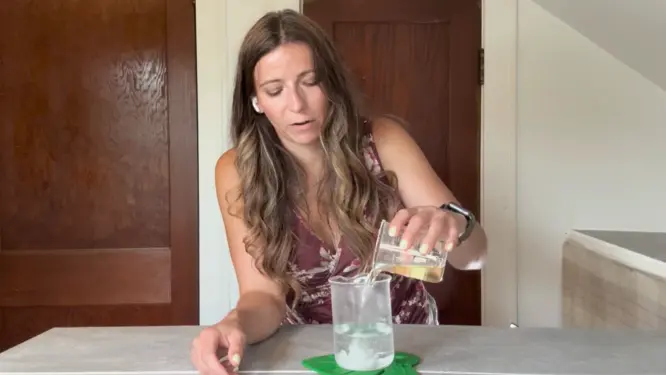
Shimmer Lotion Ingredients
This recipe makes a lovely 300 g batch — enough to fill two 4 oz (120 ml) bottles, or one generous 10 oz jar for the vanity.
| Ingredient | Percentage | Weight |
|---|---|---|
| Distilled Water | 74% | 222 g |
| Vegetable Glycerin | 4% | 12 g |
| Hazelnut Oil | 6% | 18 g |
| Mango Butter | 5% | 15 g |
| Emulsifying Wax NF | 5% | 15 g |
| Cetearyl Alcohol | 4% | 12 g |
| Fragrance Oil | 1.5% | 4.5 g |
| Liquid Germall Plus (preservative) | 0.5% | 1.5 g |
| Total | 100% | 300 g |
Adding your own shimmer? A lovely starting point is 1–3% cosmetic-grade mica, subtracted from the water percentage above.
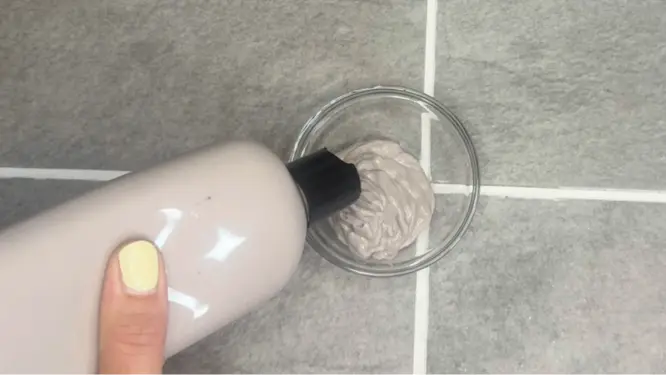
Distilled Water
Why it’s used: Water is the foundation here, making up most of the formula, and distilled water is worth insisting upon. Tap water carries minerals and microorganisms that can undo a good preservative system and shorten the life of your lotion — a small detail, but an important one.
Substitutes: A hydrosol — rose water or witch hazel are lovely choices — can replace some or all of the distilled water, lending a delicate natural scent and a few extra skin benefits besides. Simply keep the total liquid weight the same.
Vegetable Glycerin
Why it’s used: Glycerin is what’s known as a humectant — it draws moisture from the air straight into the skin. It’s the reason this lotion feels hydrated for hours, rather than simply sitting on the surface. (For more on how humectants, emollients, and occlusives each play their part, see Humectants, Occlusives and Emollients Explained.)
Substitutes: Propanediol or sodium lactate both make fine 1:1 replacements. A touch of honey can work as well, though it won’t offer quite the same shelf stability, and may affect how well your preservative performs.
Hazelnut Oil
Why it’s used: A light, quickly absorbed oil, rich in vitamin E and fatty acids, with a faint, pleasant nuttiness of its own. It softens the skin beautifully without a trace of greasiness, and helps the shimmer distribute evenly.
Substitutes: Sunflower oil, apricot kernel oil, or grapeseed oil are all lovely alternatives with a similar feel. For more on choosing the right oil for your skin, see my Carrier Oils in Skincare guide. And do choose a substitute instead if you or anyone using this lotion has a tree nut allergy — hazelnut oil is, after all, a nut oil.
Mango Butter
Why it’s used: Softer and lighter than shea butter, mango butter lends richness and a silky finish without ever feeling heavy. It also helps the shimmer cling just a little longer to the skin.
Substitutes: Shea butter or cocoa butter both work nicely — though cocoa butter will bring its own natural chocolate scent along with it, and shea butter leans a touch heavier.
Emulsifying Wax NF
Why it’s used: This is what holds the entire lotion together — quite literally. It binds the oil and water phases into one stable, creamy whole, rather than letting them separate. Without it, I’m afraid, you’d have no lotion at all.
Substitutes: I wouldn’t recommend substituting this one without reworking the whole formula. Other emulsifiers, such as Olivem 1000 or Ritamulse SCG, require different water percentages entirely. Best to stay with e-wax NF unless you’re ready to formulate from scratch.
Cetearyl Alcohol
Why it’s used: A fatty alcohol — nothing at all like the drying alcohols you might be picturing — that thickens the lotion beautifully and lends it a smooth, silky glide. It also helps stabilize the emulsion alongside the e-wax.
Substitutes: Cetyl alcohol will do in a pinch, though it gives a slightly lighter texture.
Cosmetic Mica Powder — Optional Add-In
Why it’s used: This is what transforms an ordinary lotion into something truly special — a shimmer lotion. Mica gives a soft, diffused glow rather than the chunky sparkle of glitter, disappearing invisibly into the lotion until it catches the light on skin. It isn’t part of the base recipe above; add it yourself once the lotion has begun to thicken, which helps it stay beautifully suspended rather than settling to the bottom. (If you’d like to try shimmer elsewhere too, my DIY Shimmer Lip Gloss uses the same idea.)
Substitutes: Any cosmetic-grade mica — never craft-grade — will serve you well. Choose a shade to suit your skin tone or the finish you’re after: gold and bronze micas lend a warm glow, while a pearl or champagne mica offers something a bit more universal and subtle. Begin around 1% of your total batch weight for something barely-there, or go as high as 3% for a more visible shimmer, subtracting that amount from the water percentage to keep your total at 100%.
Shop cosmetic-grade mica: [add your supplier name and link here]
Fragrance Oil
Why it’s used: Simply for the pleasure of scent — a lovely finishing touch that has no bearing on how the lotion performs.
Substitutes: Skin-safe essential oils may be used instead, though usage rates and safety data vary quite a bit from oil to oil, so do look into your particular choice. Or, leave it out entirely for a fragrance-free version.
Important: Always check the IFRA (International Fragrance Association) usage rate for your specific fragrance oil before adding it. Some are perfectly safe up to 2% in a leave-on lotion; others call for a good deal less.
Liquid Germall Plus (Preservative)
Why it’s used: Any product containing water simply must have a broad-spectrum preservative, or it will, in time, grow bacteria and mold — often without a single visible sign of it. This isn’t a matter of natural versus not; it’s a non-negotiable safety measure whenever water enters a formula.
Substitutes: Other broad-spectrum preservatives, such as Optiphen or Geogard Ultra, may be used, though each comes with its own use rate and pH requirements — do check the manufacturer’s data sheet before making a swap.
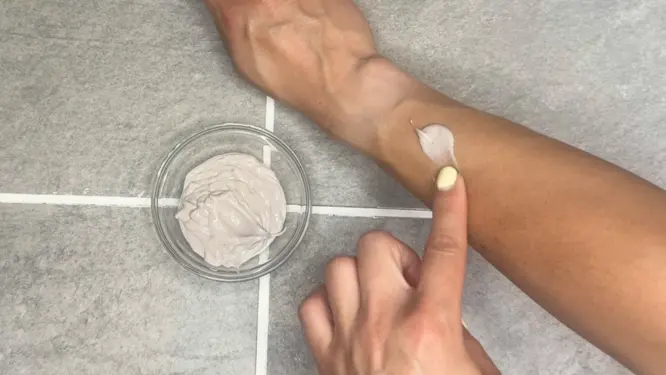
Supplies You’ll Need
- A digital kitchen scale (grams, please — not ounces)
- Two heatproof glass measuring cups or beakers
- A double boiler
- An immersion blender or whisk
- A thermometer
- A small spatula
- Bottles or jars for storing your finished lotion (sanitized, of course)
Shop my go-to tools: Amazon Shop
Step-by-Step Instructions
Step 1: Prepare your workspace Sanitize all tools and containers with isopropyl alcohol — a clean start makes for a beautiful finish. Weigh out each ingredient into its proper phase (water phase, oil phase, cool-down phase) before you begin heating anything at all.
Step 2: Mix water phase Combine the distilled water and vegetable glycerin in a heatproof container, and heat gently over a double boiler.
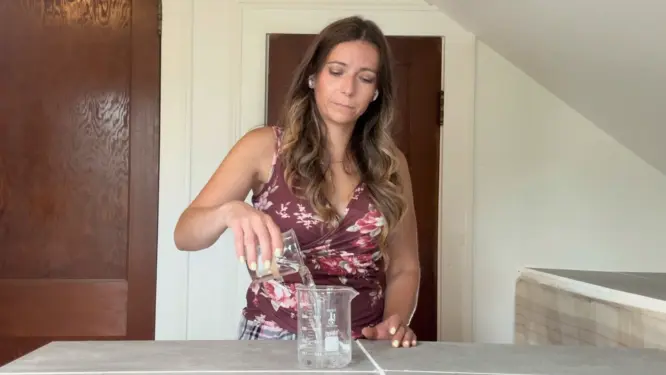
Step 3: Heat the oil phase In the same double boiler – but in a separate container, combine the hazelnut oil, mango butter, emulsifying wax NF, and cetearyl alcohol. Heat over the double boiler until fully melted. Heating them both on the same double boiler ensures they are roughly the same temperature. (Which is very important when making lotion).
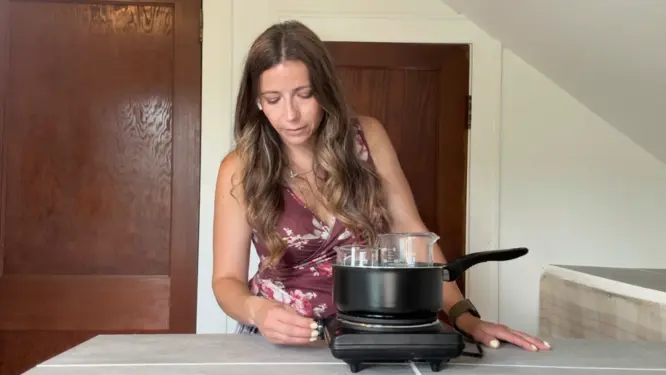
Step 4: Combine Once your oil phase is fully melted, pour it slowly into the water phase. Immediately blending continuously with your immersion blender. Blend for a minute or two, until the mixture turns opaque and creamy — a lovely transformation to watch. It will not be thick yet, that happens as it cools down.
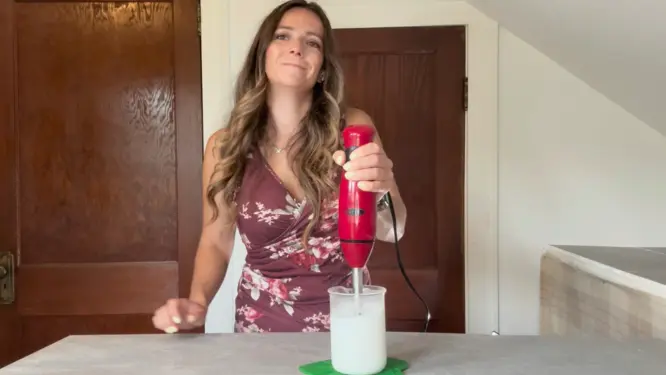
Step 5: Let it cool Allow the mixture to cool, stirring every so often, until it drops below 122°F (50°C). This step is worth the patience — adding preservative or fragrance while the lotion is still too warm can compromise both.
Step 6: Add the cool-down phase Once below 122°F (50°C), mix in the fragrance oil and Liquid Germall Plus, blending until fully incorporated.
Step 7: Add your shimmer Once the lotion has noticeably thickened, mix in your mica powder. Adding it here, rather than earlier when the lotion is still thin, is precisely what keeps it beautifully suspended rather than settling at the bottom of the jar.
Step 8: Bottle it up After the mica is mixed in, transfer it into your sanitized bottles or jars. Let it cool and set fully before sealing. It can be difficult to get into the bottle once thickened, I suggest using a pipping bag. Saves sooooo much time!
Step 9: Label and let it set. Label each bottle with the date it was made, and let the lotion rest for 24–48 hours before its first use, so the emulsion has time to fully settle into itself. Leave the lid off the lotion until it is fully cooled.
Printable Shimmer Lotion Recipe
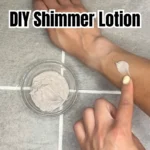
Homemade Shimmer Lotion (Bronze Recipe)
Equipment
- Scale
Ingredients
- 222 grams Distilled Water
- 12 grams Vegetable Glycerin
- 18 grams Hazelnut Oil
- 15 grams Mango Butter
- 15 grams Emulsifying Wax NF
- 12 grams Cetearyl Alcohol
- 1.5 grams Liquid Germall Plus (preservative)
- 4.5 grams Fragrance Oil
- Cosmetic Mica Powder
Instructions
- Mix water phase Combine the distilled water and vegetable glycerin in a heatproof container, and heat gently over a double boiler.
- Heat the oil phase In the same double boiler – but in a separate container, combine the hazelnut oil, mango butter, emulsifying wax NF, and cetearyl alcohol. Heat over the double boiler until fully melted. Heating them both on the same double boiler ensures they are roughly the same temperature. (Which is very important when making lotion).
- Combine Once your oil phase is fully melted, pour it slowly into the water phase. Immediately blending continuously with your immersion blender. Blend for a minute or two, until the mixture turns opaque and creamy — a lovely transformation to watch.
- Add the cool-down phase Once below 122°F (50°C), mix in the fragrance oil and Liquid Germall Plus, blending until fully incorporated.
- Add your shimmer Once the lotion has noticeably thickened, mix in your mica powder. Adding it here, rather than earlier when the lotion is still thin, is precisely what keeps it beautifully suspended rather than settling at the bottom of the jar.
- Bottle it up After the mica is mixed in, transfer it into your sanitized bottles or jars. Let it cool and set fully before sealing. It can be difficult to get into the bottle once thickened, I suggest using a pipping bag. Saves sooooo much time!
Video
Storage & Shelf Life
Keep your lotion somewhere cool, dry, and out of direct sunlight. Made with a properly used broad-spectrum preservative, it should keep beautifully for 6–12 months. Should you ever notice separation, an off scent, or any change in color or texture, it’s best to part with that batch and begin again.
Tips for Best Results
- Always do a patch test before applying any new lotion more broadly.
- If you intend to sell this lotion, have it professionally challenge tested to confirm the preservative performs well in your exact formula.
- Adding your own shimmer? Begin with 1% cosmetic-grade mica and work up to 3% for a stronger glow.
- If the lotion feels a touch too thick next time, reduce the cetearyl alcohol slightly. Too thin, and a small increase will set it right.
Frequently Asked Questions
What should I use for the shimmer? Cosmetic-grade mica is by far the best choice. I’d steer clear of craft or cosmetic glitter — it’s often plastic-based, not meant for skin contact in a leave-on product, and can feel gritty against the skin. Finely milled mica, by contrast, blends smoothly for a soft, diffused glow.
Is this lotion suitable for sensitive skin? Every skin responds differently, so a patch test is always a good idea. A fragrance-free version — simply omit the fragrance oil — is a lovely option for more delicate skin.
Why weigh ingredients rather than measure by cup? Lotion-making is, at its heart, a precise craft — even a small shift in emulsifier or water can cause a batch to separate or fail entirely. Weighing in grams is what keeps each batch consistent, reliable, and altogether lovely, time after time.
Have you tried this recipe? I’d love to see how your shimmer lotion turned out — do tag your photos, and leave a rating and comment below.
Looking for more? Browse all of my DIY Lotions, Creams & Body Butters for more recipes like this one.