
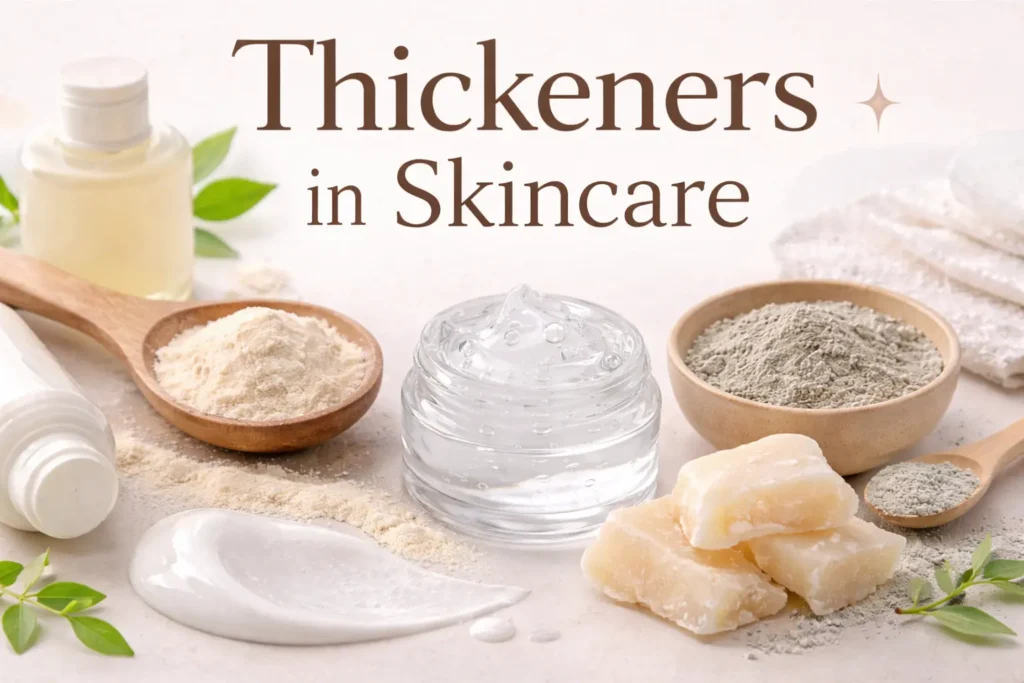
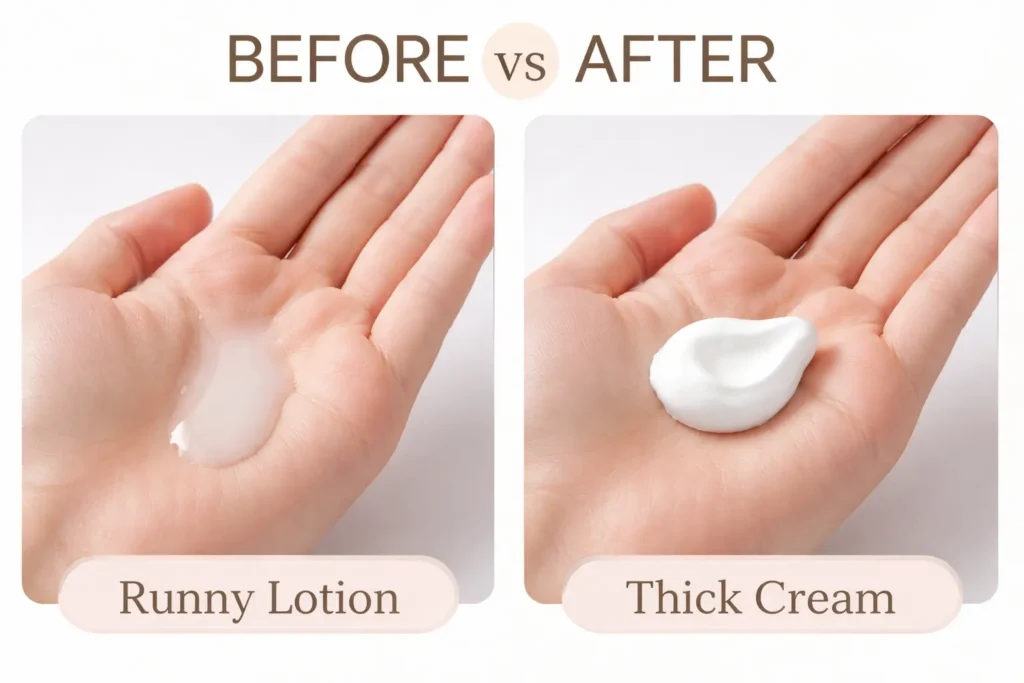
If you’ve ever made a lotion, serum, or cleanser and thought, “Why is this so runny?” — you’re not alone.
That’s where thickeners come in.
Thickeners are one of the most important (and often overlooked) parts of skincare formulation. They control texture, improve stability, and help create the luxurious feel people expect from a finished product.
In this guide, you’ll learn what thickeners are, how they work, and how to choose the right one for your formula.
What Are Thickeners in Skincare?
Thickeners are ingredients used to increase the viscosity (thickness) of a product.
Without them, most formulations would be:
- Too watery
- Difficult to apply
- Unstable over time
They are used in:
- Lotions and creams
- Gels and serums
- Cleansers and body washes
- Haircare products
Why Thickeners Are Important in Skincare
Thickeners do much more than just make products thicker.
1. Improve Texture
They give products a smooth, rich, or gel-like consistency.
2. Enhance Stability
They help keep ingredients evenly distributed and prevent separation.
3. Control Application
A properly thickened product:
- Spreads evenly
- Stays where you apply it
- Feels more luxurious
4. Influence Absorption & Feel
Different thickeners create different skin feels:
- Light and watery
- Silky and smooth
- Rich and creamy
How Thickeners Work
Thickeners work by interacting with water, oils, or surfactants to create structure.
There are a few main mechanisms:
1. Water Binding
Some thickeners absorb water and swell, creating a gel-like texture.
2. Network Formation
Others form a structure that traps liquid inside, increasing viscosity.
3. Emulsion Support
Some thickeners help stabilize oil and water mixtures. Learn more about How Emulsifiers work in my Emulsifiers in Skincare Post.
Types of Thickeners in Skincare
Understanding the different types is key to choosing the right one.
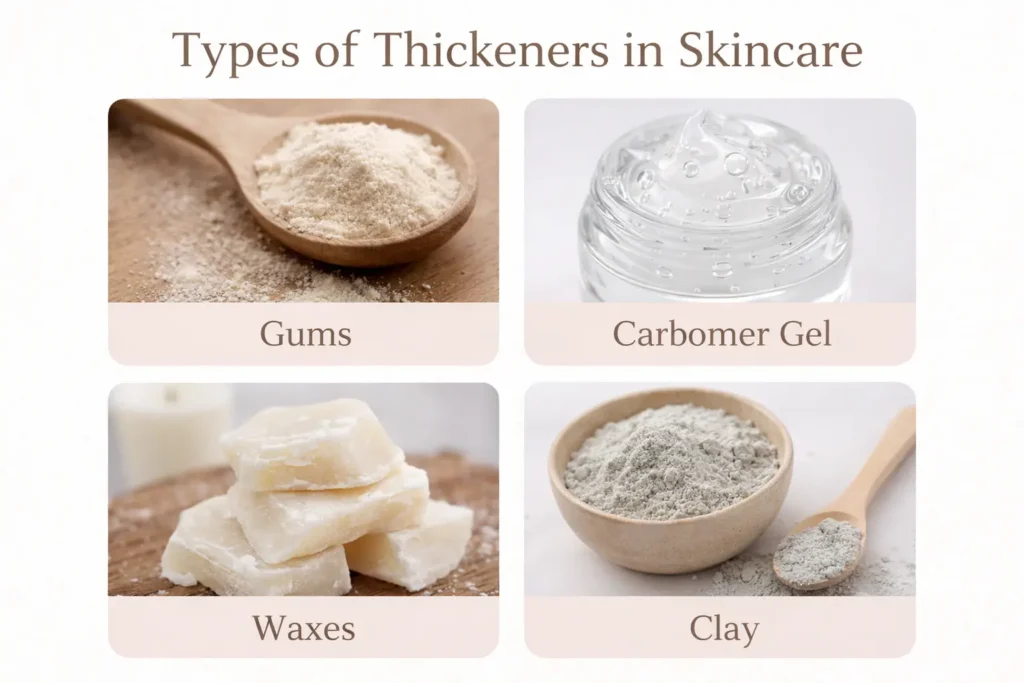
1. Natural Gums (Water-Based Thickeners)
Examples:
- Xanthan gum
- Guar gum
How they work:
They absorb water and swell to form gels.
Best for:
- Serums
- Gel products
- Natural formulations
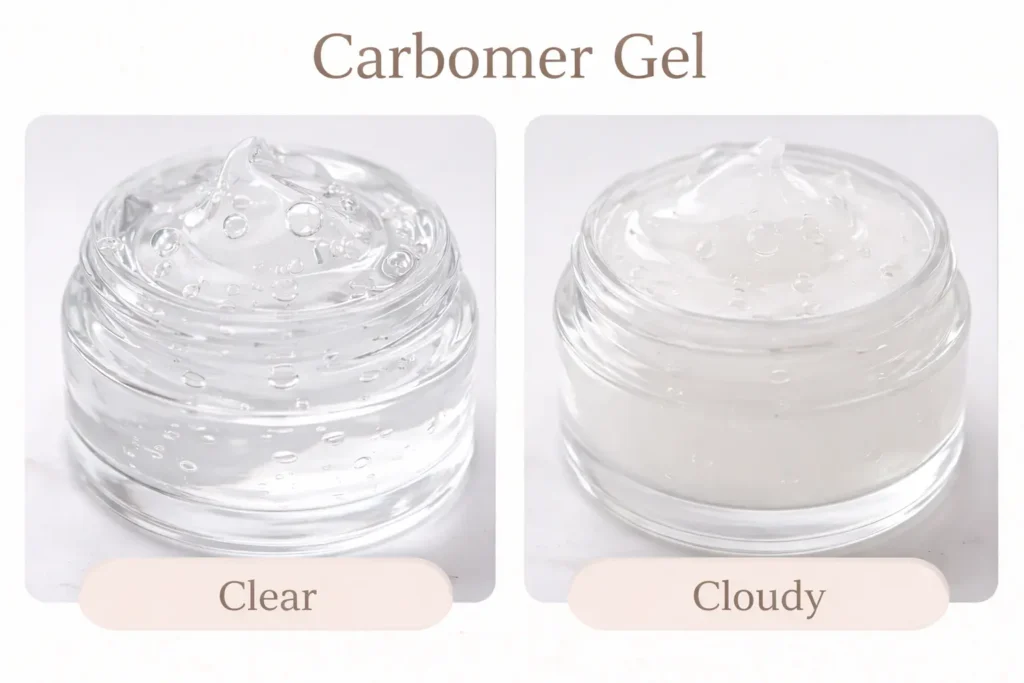
2. Carbomers (Synthetic Gel Thickeners)
Example:
- Carbomer (Carbopol)
How they work:
They swell in water and require neutralization to thicken.
If you want to know about pH and how to adjust I cover it all in my PH in Skincare.
3. Fatty Alcohols & Waxes (Oil-Phase Thickeners)
Examples:
- Cetyl alcohol
- Cetearyl alcohol
- Beeswax
Best for:
- Lotions
- Creams
- Balms
For information on oils, check out this Carriers in Skincare post.
4. Clay-Based Thickeners
Examples:
- Kaolin clay
- Bentonite clay
Best for:
- Masks
- Cleansers
5. Surfactant-Based Thickeners
Used mainly in cleansers and shampoos. Learn more about Surfactants in Skincare in my new post.
How to Choose the Right Thickener
For Lotions & Creams
Use:
- Fatty alcohols
- Waxes
For Gels & Serums
Use:
- Xanthan gum
- Carbomer
For Cleansers
Use:
- Salt
- Surfactant-compatible thickeners
For Natural Formulas
Use:
- Gums
- Clays
Common Thickening Mistakes
❌ Using Too Much
❌ Choosing the Wrong Type
❌ Not Accounting for pH
❌ Ignoring Compatibility
Final Thoughts
Thickeners are what transform a basic mixture into a product that actually feels like skincare.
They:
- Improve texture
- Increase stability
- Enhance user experience
Up Next in Your Formulation Journey
FAQ
How do you thicken lotion naturally?
Use ingredients like xanthan gum or beeswax depending on your formula type.
What is the best thickener for skincare?
It depends on the product—carbomer for gels, fatty alcohols for creams, and gums for natural formulas.
Why is my lotion too runny?
Your formula may be missing a thickener or using the wrong type.