
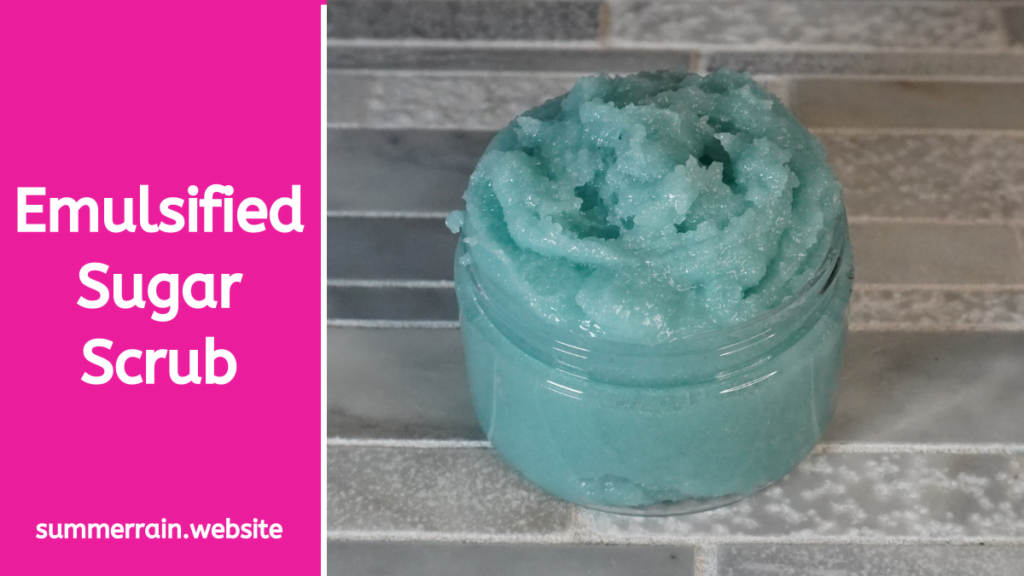
Making your own sugar scrub at home is a simple way to create a personalized exfoliating treatment. But if you’ve ever made a traditional sugar scrub, you may have noticed that it can leave an oily film on your skin or make your shower floor feel slippery.
That’s where an emulsified sugar scrub is different.
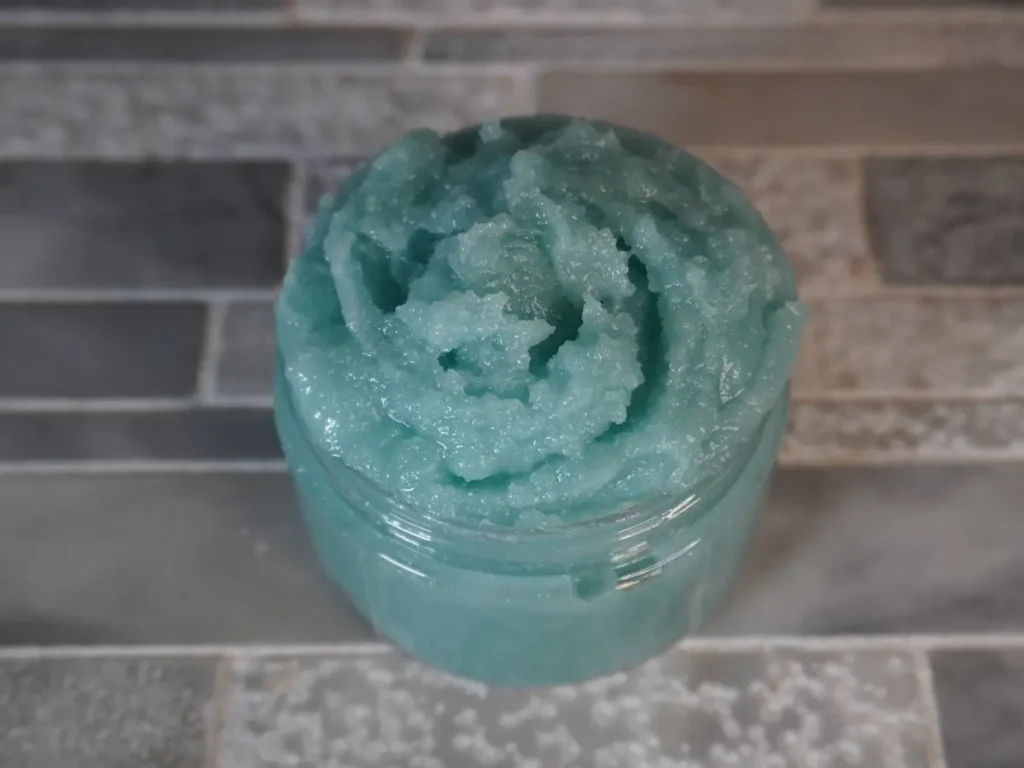
Instead of simply combining sugar with oils and butters, this recipe uses an emulsifier to create a creamy scrub that transforms into a milky lotion when you add water. It exfoliates your skin while allowing the oils and butters to rinse away more easily, leaving your skin feeling soft and conditioned without the heavy, greasy finish of a traditional oil-based scrub.
This Coconut Lime Verbena Emulsified Sugar Scrub combines kokum butter, hazelnut oil, BTMS-50, and granulated sugar to create a thick, scoopable scrub. It’s easy to customize with your favorite fragrance and color, making it a lovely DIY project for yourself or to give as a homemade gift.
If you’re new to making your own bath and body products, don’t worry. I’ll walk you through what each ingredient does, how emulsified scrubs work, and how to make your own batch at home.
Prefer to Watch This Project Instead of Reading It?
Watch the video tutorial to see how I make this Coconut Lime Verbena emulsified sugar scrub.
Some of the links are affiliate links, because I am an associate and I earn a small commission on them. There is no additional cost to you, I earn a commission if you click through and make a purchase.
What Is an Emulsified Sugar Scrub?
An emulsified sugar scrub is a sugar-based exfoliant made with oils, butters, and an emulsifier. Unlike a traditional sugar scrub, which is primarily a mixture of sugar and oil, an emulsified scrub contains ingredients that help the oils disperse when they come into contact with water.
The result is a scrub with a creamy, almost lotion-like consistency.
When you scoop some out and begin massaging it onto wet skin, the emulsifier helps combine the oil-based ingredients with the water. This creates a temporary milky emulsion that makes the scrub easier to spread and rinse away.
There are a few reasons I prefer this type of sugar scrub over a traditional oil-based version:
- Creamier consistency: The emulsifier and fatty alcohol give the scrub more body, making it easier to scoop and spread.
- Better rinse-off: The oils disperse when water is added, so you’re not left with the same heavy oily coating.
- Less mess: The scrub is easier to wash off your skin and shower surfaces than a simple oil-and-sugar mixture.
- Conditioning feel: The oils and butters help leave your skin feeling soft after exfoliation.
One thing worth understanding is that this isn’t a water-based lotion. The recipe is anhydrous (water-free) until you use it. Water is introduced during application, which is when the emulsifying ingredients help the oils rinse away.
If you’re interested in learning more about how emulsifiers work, I also have a guide explaining what emulsions are and how they work.
What Makes an Emulsified Sugar Scrub Different?
The biggest difference is the addition of an emulsifier.
A traditional sugar scrub usually contains sugar, carrier oils, and sometimes butter. While these ingredients can make a lovely exfoliating product, the oils don’t naturally mix with water. This means they can be harder to rinse off.
An emulsified sugar scrub contains an ingredient that helps the oils disperse when water is introduced.
In this recipe, I’m using BTMS-50. It helps create that creamy texture and allows the oil-based ingredients to rinse away more easily.
It’s important to understand that the emulsifier isn’t just there to help with rinsing. It also contributes to the consistency and overall feel of the finished scrub.
Choosing Ingredients for a Moisturizing Sugar Scrub
The ingredients you choose will determine how your sugar scrub feels, how thick it is, and how easily it spreads across your skin.
For this recipe, I’m combining a rich butter, a lightweight carrier oil, an emulsifier, and a fatty alcohol. Granulated sugar provides the exfoliation, while a few finishing ingredients help protect the formula and customize the scent.
Kokum Butter
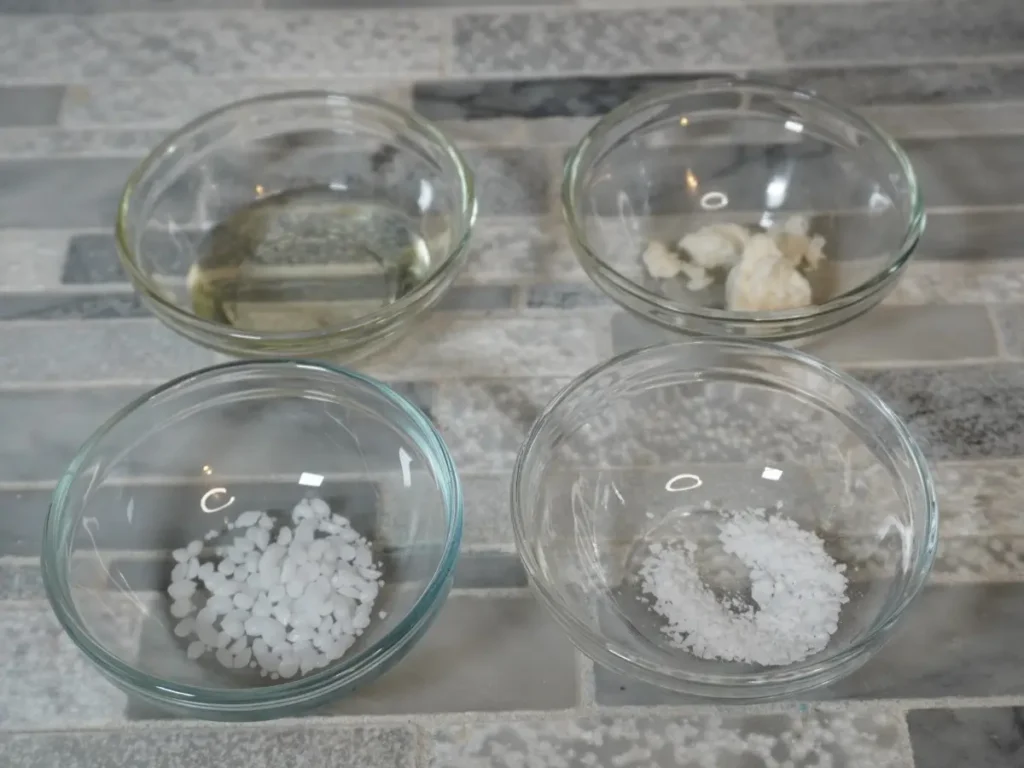
I use kokum butter as the primary butter in this recipe. Kokum butter is a firm vegetable butter extracted from the seeds of the kokum fruit.
It’s rich in fatty acids and gives the scrub a more substantial, creamy consistency. It also contributes emollient properties that help soften the skin.
Kokum butter is relatively firm at room temperature, which makes it useful in products where you want a little more structure without relying entirely on liquid oils.
It is also a nice alternative to softer butters when you’re looking for a scrub that holds its shape in the jar.
Hazelnut Oil
Hazelnut oil is the liquid carrier oil in this recipe. It helps soften the texture of the scrub and makes it easier to spread over your skin.
You can substitute another liquid carrier oil if you prefer. Since this is a rinse-off product, I generally save my more expensive specialty oils for leave-on skincare products.
Some alternatives include sweet almond oil, sunflower oil, and jojoba oil. Keep in mind that changing the oil can slightly change the finished texture and skin feel.
BTMS-50: The Emulsifier
BTMS-50 is the ingredient that makes this an emulsified sugar scrub rather than a traditional oil-based scrub.
It is a conditioning emulsifier that helps oils disperse in water. When you use the scrub on wet skin, it helps create that creamy, milky consistency that rinses away more easily.
BTMS-50 is made from behentrimonium methosulfate and cetyl alcohol. Despite the word sulfate in its name, it is not a sulfate-based cleansing surfactant like SLS.
I like using BTMS-50 in this recipe because it contributes both emulsifying and conditioning properties. It also helps give the scrub a richer, creamier feel.
Cetyl Alcohol: Improving Texture
Cetyl alcohol is a fatty alcohol that helps thicken the scrub and improve its consistency.
It gives the finished product more body and contributes to a smoother, creamier texture.
Don’t let the word alcohol confuse you. Cetyl alcohol is very different from rubbing alcohol or drying alcohols. It’s a fatty alcohol that is commonly used as an emollient and thickener in skincare formulations.
It also helps improve the spreadability of the scrub, making it easier to massage over your skin.
Granulated Sugar: The Exfoliant
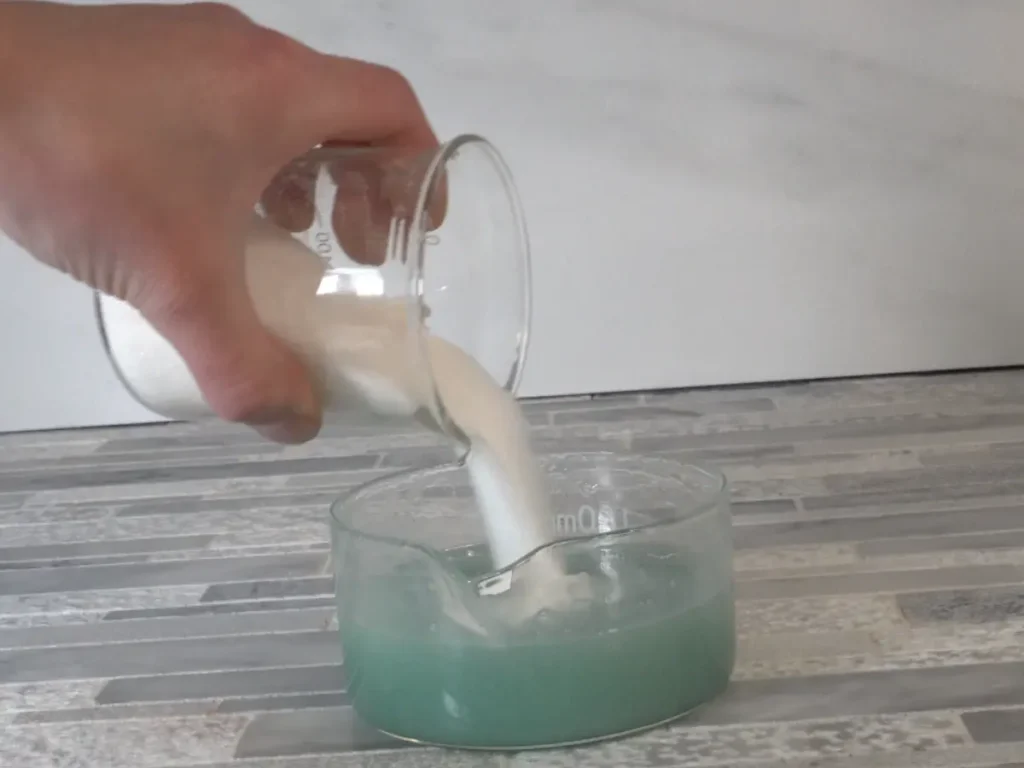
Granulated white sugar is the exfoliating ingredient in this recipe.
The sugar granules help physically remove loose dead skin cells from the surface of your skin while you massage the scrub over your body.
I prefer regular granulated white sugar because it provides noticeable exfoliation without being excessively coarse for most body skin.
The sugar also gradually dissolves when exposed to water, making it easier to rinse away.
Is Sugar a Good Exfoliant?
Yes! Sugar is one of my favorite ingredients for making homemade body scrubs.
It provides physical exfoliation, meaning the granules help loosen and remove dead skin cells as you massage the product over your skin.
Sugar is also water-soluble, which is helpful in a scrub that is designed to rinse away with water.
Another popular exfoliant is salt. However, I generally prefer sugar because salt can sting if you have small cuts, scratches, or irritated skin.
Which Sugar Should You Use?
Not all sugar has the same texture. The size of the granules will affect how much exfoliation you get.
| Sugar | Texture | Best Use |
|---|---|---|
| Granulated white sugar | Medium/coarse | General body exfoliation |
| Brown sugar | Fine/soft | Gentler body scrubs |
| Caster sugar | Fine | Areas where you prefer a finer scrub |
Granulated white sugar: This is my preferred choice for this recipe. It gives you a noticeable exfoliating texture that gradually softens as the sugar dissolves.
Brown sugar: Brown sugar generally has smaller, softer-feeling granules and can be a good option if you prefer a gentler scrub.
Caster sugar: Caster sugar has finer granules than regular granulated sugar. It can be useful when you want a less abrasive texture.
I recommend using sugar scrubs on your body rather than sensitive facial skin. Avoid using them on broken, irritated, or freshly shaved skin.
How to Customize Your Sugar Scrub With Fragrance and Color
One of my favorite things about making DIY bath and body products is being able to customize them.
You can leave this scrub unscented and uncolored, or choose a fragrance and color combination that suits your preferences.
For this recipe, I’m using Coconut and Lime Verbena fragrance oil.
It’s a lovely combination of tangy citrus, pineapple, and warm sandalwood. It gives the scrub a fresh, tropical scent.
For color, I chose Black Sea mica.
I know coconut and lime might make you think of bright yellow or lime green, but I decided to go in a different direction. The blue gives the finished scrub a beautiful appearance without making it look too much like a food product.
Do You Need a Preservative in Sugar Scrub?
Yes! I strongly recommend using a preservative in any sugar scrub intended for use in the bath or shower.
Although this recipe doesn’t contain water when you make it, that doesn’t mean water won’t get into the container during use.
Think about how you use a sugar scrub. You take it into the shower, scoop some out, and often dip your wet fingers back into the jar. That introduces water into a product that would otherwise be water-free.
Water contamination can create an environment where bacteria, yeast, and mold can grow.
For this recipe, I’m using Liquid Germall Plus, a broad-spectrum preservative suitable for many personal care formulations.
Follow the supplier’s usage instructions and temperature guidelines when adding your preservative. It is important to distribute it evenly throughout the finished product.
What About Vitamin E Oil?
I also include Vitamin E oil in this recipe.
Vitamin E is an antioxidant, not a preservative. It helps slow the oxidation of oils, which can cause them to develop an unpleasant rancid smell over time.
However, it does not protect against bacteria, yeast, or mold.
That’s why I use both Vitamin E and a proper preservative. They serve two completely different purposes.
If you want to understand more about this distinction, read my guide on why preservatives matter in DIY skincare.
Coconut Lime Verbena Emulsified Sugar Scrub Recipe
| Ingredient | Phase | Percentage | Weight (g) |
|---|---|---|---|
| Kokum Butter | Heated | 11.5% | 23 g |
| Hazelnut Oil | Heated | 29% | 58 g |
| BTMS-50 | Heated | 6% | 12 g |
| Cetyl Alcohol | Heated | 2% | 4 g |
| Liquid Germall Plus | Cool Down | 0.5% | 1 g |
| Vitamin E Oil | Cool Down | 1% | 2 g |
| Coconut Lime Verbena Fragrance Oil | Cool Down | 4% | 8 g |
| Granulated White Sugar | Cool Down | 46% | 92 g |
| Total | 100% | 200 g |
How to Make Coconut Lime Verbena Emulsified Sugar Scrub
Now that we’ve covered the ingredients, let’s make the scrub!
This is a relatively easy formulation to put together. You’ll melt the butter, oil, emulsifier, and cetyl alcohol together before adding the cool-down ingredients and sugar.
One thing to remember is that the scrub will thicken as it cools and rests. Don’t worry if it initially seems thinner than you expected.
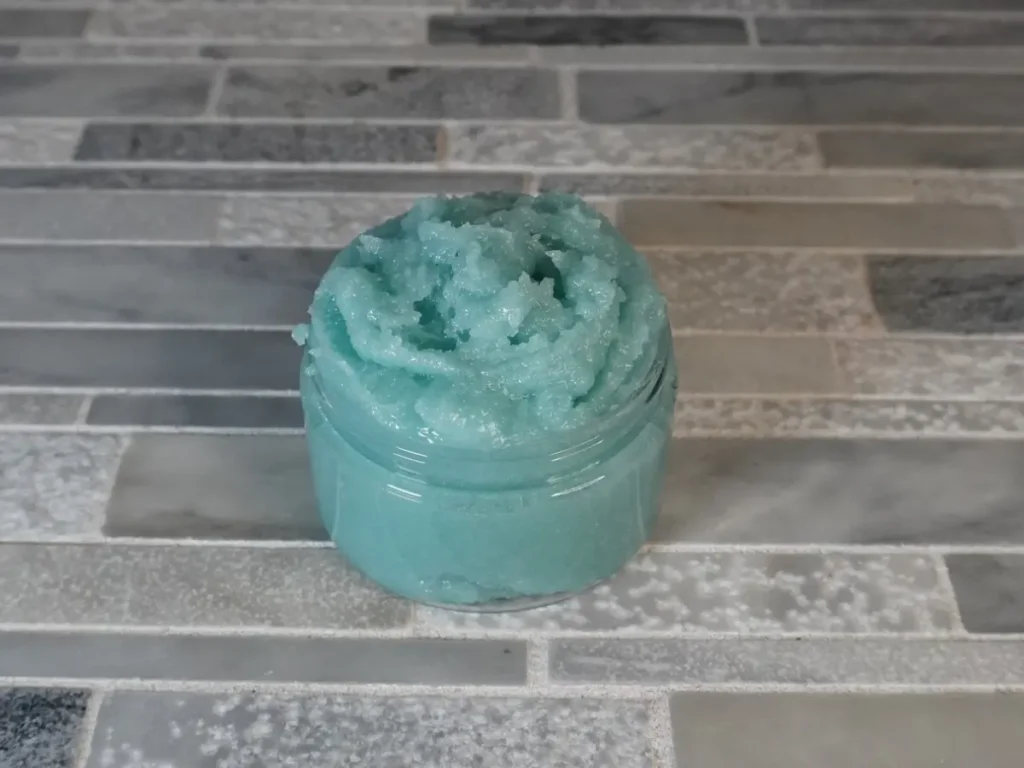
Equipment You’ll Need
- Digital scale
- Heat-safe mixing bowl
- Double boiler
- Silicone spatula
- Mixing spoon
- Clean storage container
Step 1: Melt the Heated Ingredients
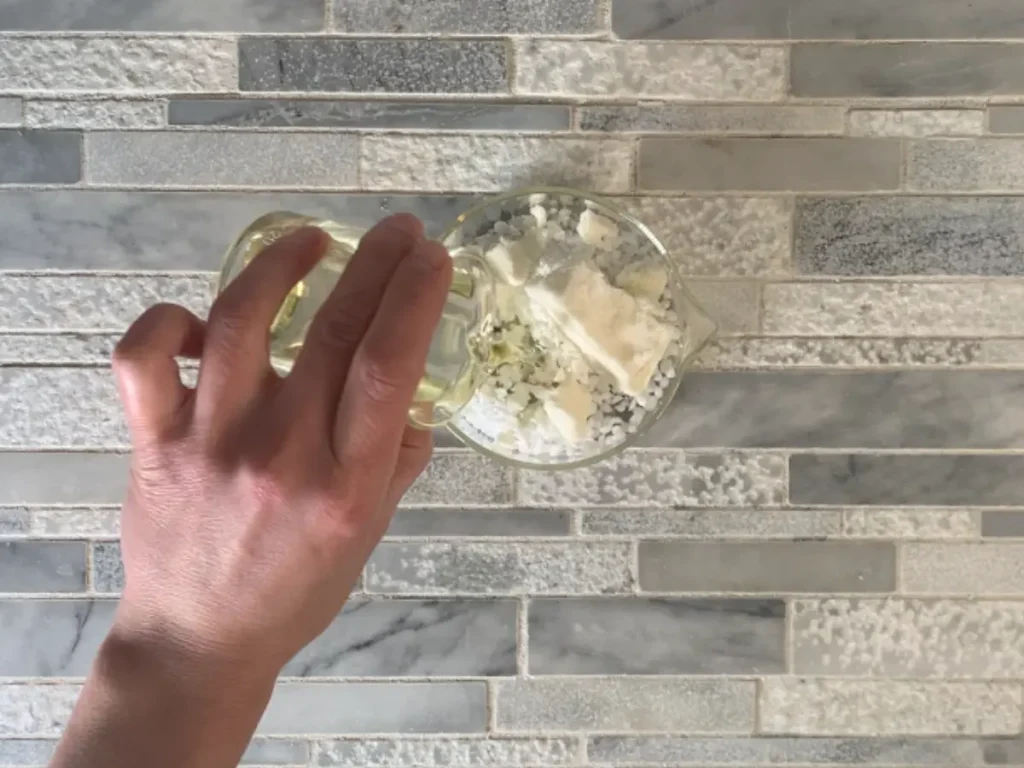
Add the kokum butter, hazelnut oil, BTMS-50, and cetyl alcohol to a heat-safe bowl.
Place the bowl over a double boiler and heat gently until everything has completely melted.
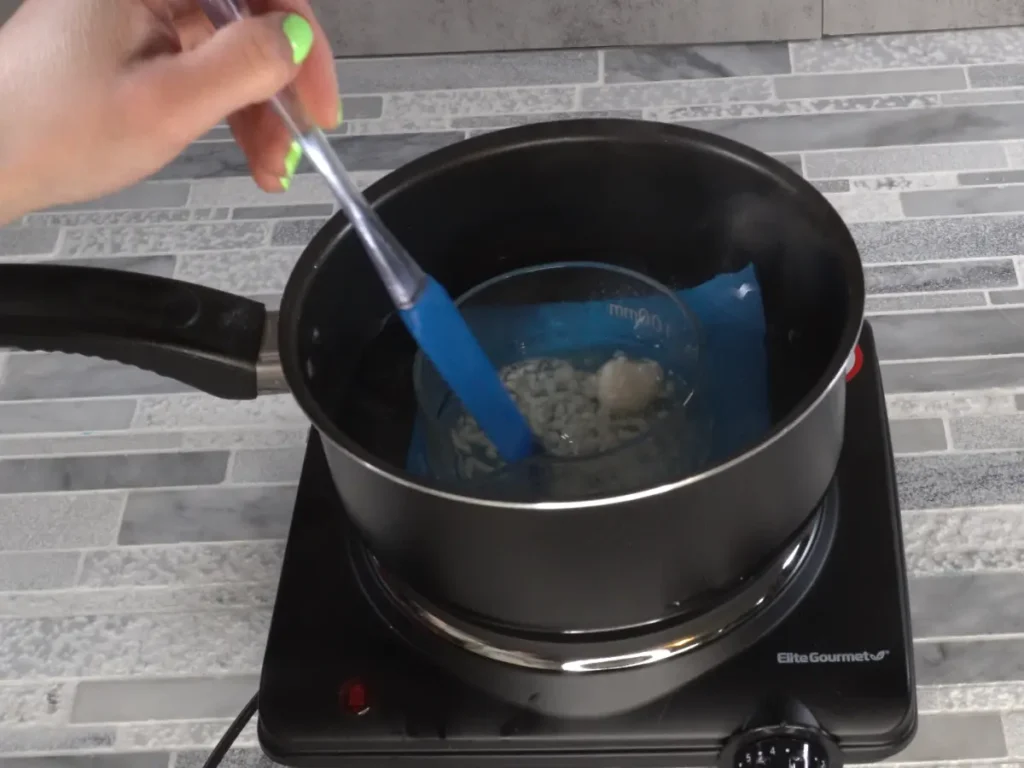
Stir occasionally to help the ingredients combine evenly.
Once melted, remove the bowl from the heat. Carefully dry the outside of the container so no water accidentally gets into your mixture.
Step 2: Add the Cool-Down Ingredients
Allow the melted mixture to cool for a few minutes.
You don’t want the mixture to be so hot that it compromises your preservative or fragrance. Follow the supplier’s temperature recommendations for your specific ingredients.
Add the Vitamin E oil, Liquid Germall Plus, and Coconut Lime Verbena fragrance oil.
If you’re using mica powder, add a small amount at this stage and mix thoroughly until the color is evenly distributed.
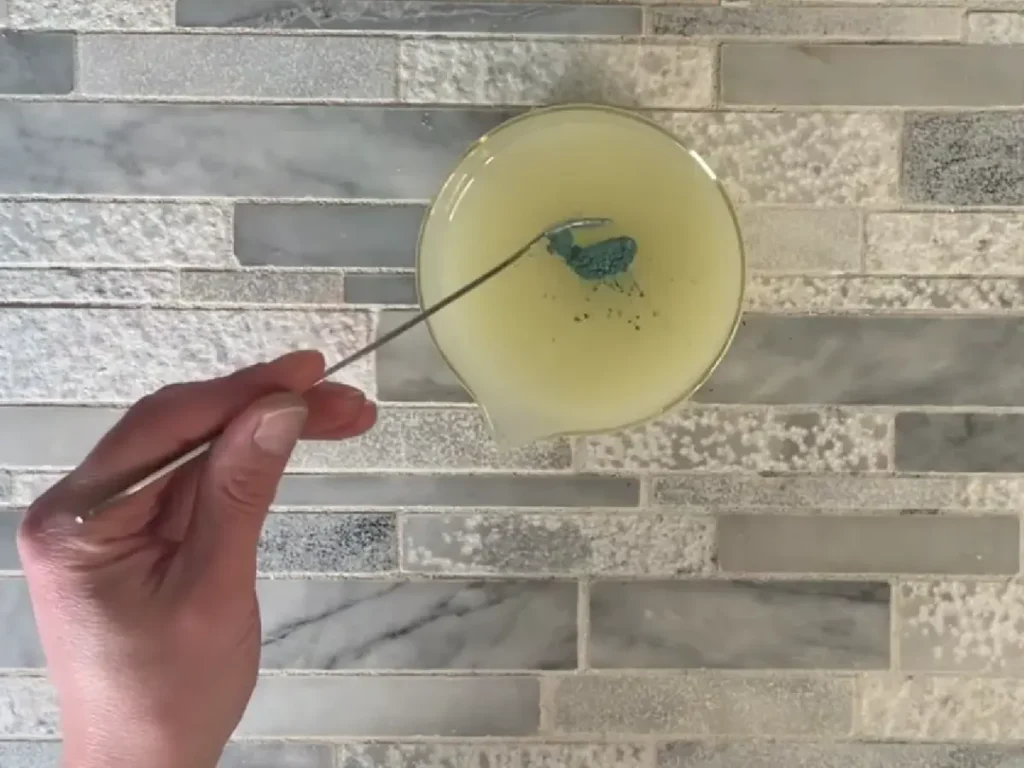
Stir until everything is combined.
Step 3: Add the Sugar
Add the granulated sugar to your melted mixture.
Stir thoroughly, making sure the sugar is evenly distributed throughout the oils and emulsifier.
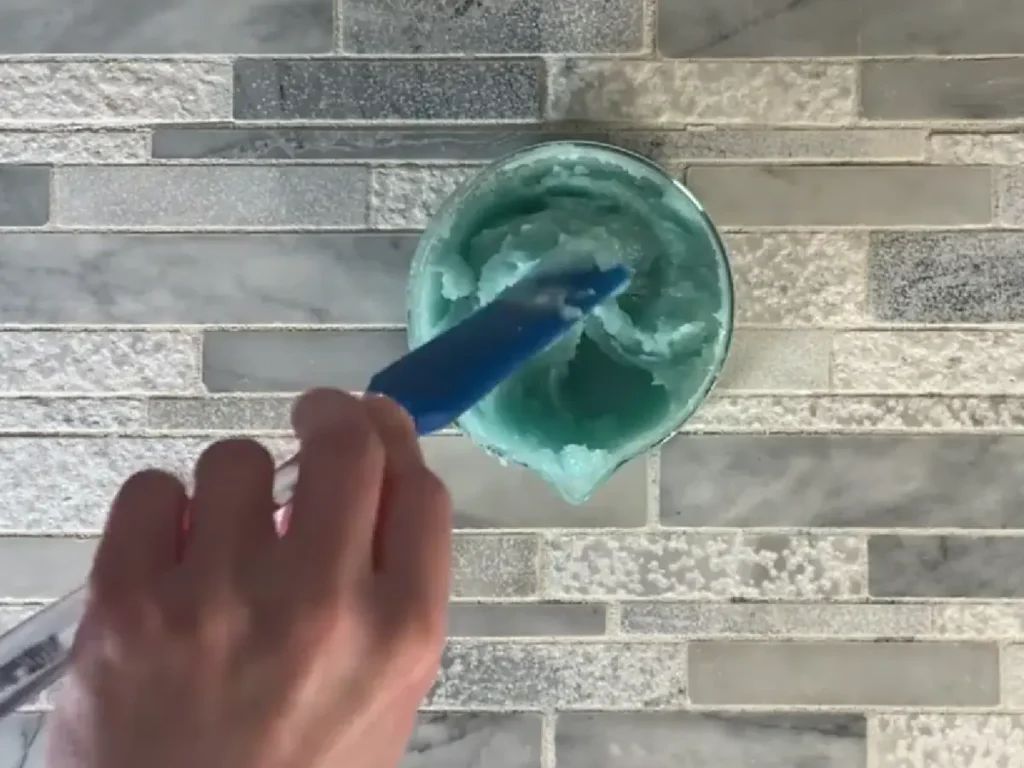
You should end up with a thick, grainy mixture that resembles a traditional sugar scrub but has a creamier consistency.
Step 4: Allow the Scrub to Thicken
Transfer the scrub to a clean, dry container.
As the mixture cools completely, the kokum butter, BTMS-50, and cetyl alcohol will help the scrub develop its final consistency.
It may seem softer or thinner immediately after mixing. Give it time to cool and thicken before deciding whether the texture needs adjusting.
Once completely cool, your emulsified sugar scrub is ready to use!
How to Use Emulsified Sugar Scrub
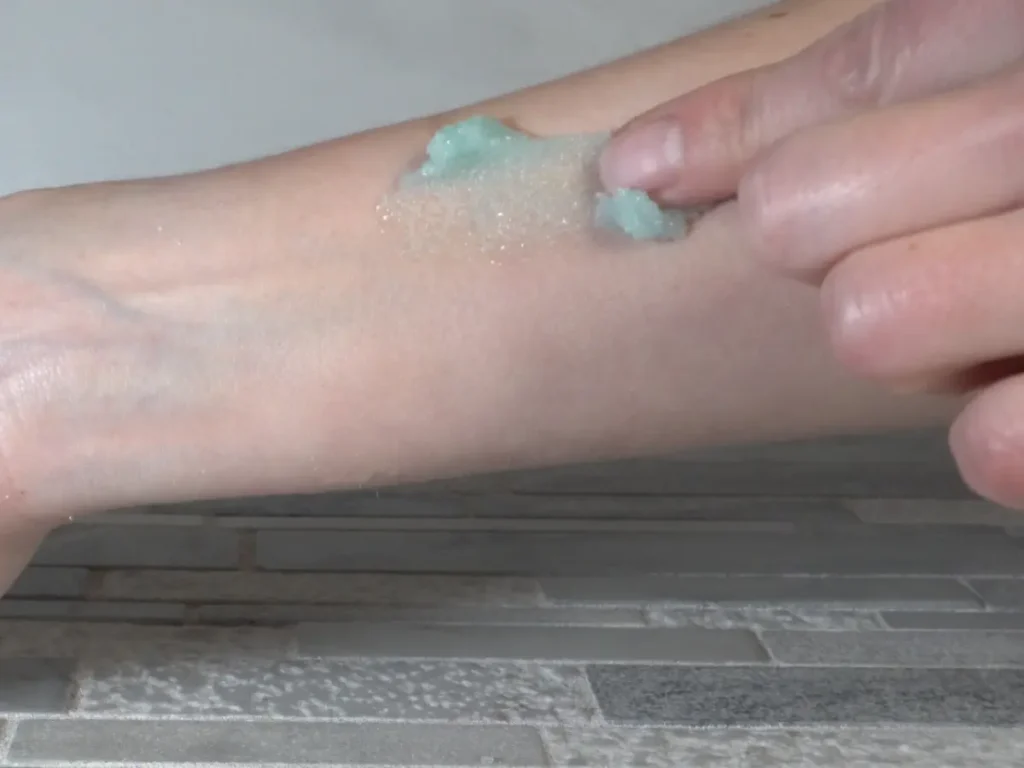
To use your homemade sugar scrub, scoop a small amount into your hands and massage it over wet skin using gentle circular motions.
As you add water, the scrub will begin to turn into a creamy, milky consistency. This is the emulsifier doing its job.
Rinse thoroughly with warm water.
You should be left with skin that feels soft and conditioned without the heavy oily residue that can come with traditional sugar scrubs.
A few tips:
- Use gentle pressure when massaging the scrub over your skin.
- Avoid your face and other sensitive areas.
- Don’t use on broken, irritated, or freshly shaved skin.
- Be careful when using any scrub in the shower, as oils can make surfaces slippery.
- Always use clean, dry hands or a clean scoop when removing product from the jar.
How to Store Your Emulsified Sugar Scrub
Store your finished scrub in a clean, airtight container away from direct sunlight and excessive heat.
Because this formula contains oils and butters, heat can soften the product and change its consistency. Keeping it somewhere cool and dry will help maintain its texture.
Although the formula contains a preservative, it’s still important to avoid introducing unnecessary water or contamination.
I recommend making a small batch initially so you can evaluate how the product performs over time.
For more information about determining the shelf life of homemade skincare products, see my guide: How Do You Determine the Shelf Life of Homemade Cosmetics?.
Frequently Asked Questions
What is the difference between an emulsified sugar scrub and a regular sugar scrub?
A traditional sugar scrub combines sugar with oils and butters. An emulsified sugar scrub also contains an emulsifier, which helps the oils disperse when water is added. This creates a creamy texture that rinses away more easily.
Why is my emulsified sugar scrub too runny?
The scrub may still be warm and hasn’t fully cooled. Kokum butter, BTMS-50, and cetyl alcohol contribute to the final consistency, so give the product time to cool completely before evaluating its thickness.
Can I use a different butter?
Yes. You can experiment with other butters, such as shea or mango butter. However, different butters have different melting points and consistencies, so the finished scrub may feel slightly different.
Can I substitute BTMS-50 with emulsifying wax?
Not without reformulating. Different emulsifiers have different properties and usage requirements. Substituting another emulsifier may change the texture, conditioning feel, and rinse-off properties.
Do I have to use a preservative?
For a product intended for use in the shower, I strongly recommend one. Water can enter the jar during use, creating conditions for microbial growth. Vitamin E is not a substitute for a preservative.
How long does homemade emulsified sugar scrub last?
The shelf life depends on the freshness of your ingredients it is about 6 months. That depends on sanitation, packaging, preservative performance, and storage conditions.
More DIY Bath and Body Projects
If you enjoyed making this emulsified sugar scrub, you might also enjoy these other homemade skincare projects:
- DIY Overnight Foot Cream for Cracked Heels
- DIY Lotion Dots: Easy Mini Lotion Bars
- How to Make and Customize a Basic Lotion Formula
You can also explore more of my body and skincare DIY projects.

Coconut Lime Verbena Emulsified Sugar Scrub
Equipment
- Scale
Ingredients
Heat Phase Ingredients
- 1.04 ounce | 11.5% Kokum Butter
- 2.61 ounce | 29% Hazelnut Oil
- 0.54 ounce | 6% BTMS 50
- 0.18 ounce | 2% Cetyl Alcohol
Cool Down Ingredients
- 0.05 ounce | 0.5% Germall Plus Preservative
- 0.09 ounce | 1% Vitamin E Oil
- 0.36 ounce | 4% Coconut and Lime Verbena Fragrance Oil
- 4.14 ounce | 46% Granulated White Sugar
Instructions
- Place the kokum butter, hazelnut oil, BTMS 50, and cetyl alcohol into a heat-safe bowl. Put the bowl on a double boiler over low heat until everything is fully melted. It's important to heat it slowly on a low heat to preserve the integrity of the ingredients.
- After the ingredients have melted, remove them from the heat. Dry the outside of your heat-safe container
- Allow the mixture to cool for a few minutes until the container is not hot to the touch.
- Add the vitamin E oil, Germall Plus, Coconut and Lime Verbena Fragrance Oil, and mica powder. Mix everything together until fully combined.
- Add the sugar and mix thoroughly. Allow it to rest; it will thicken as it sits.