
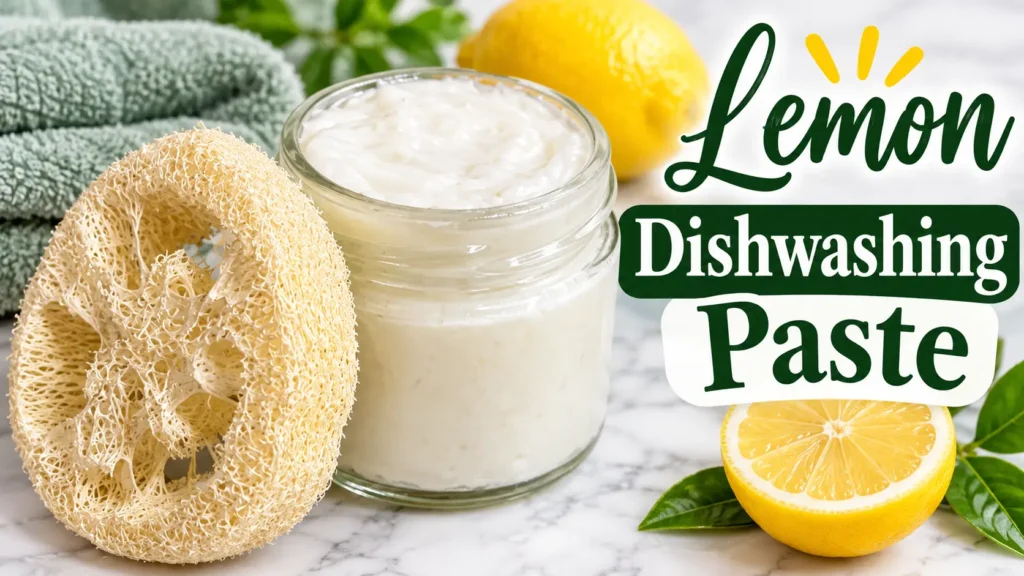
If you enjoy making your own household cleaning products, this DIY Lemon Dishwashing Paste is a fun alternative to conventional liquid dish soap. It’s a concentrated paste made with two cleansing surfactants and D-limonene, which helps tackle greasy messes while adding a fresh citrus scent.
Instead of making a liquid dish soap, I chose to make this formula as a paste. One reason was to avoid adding water to the formulation, which means I didn’t need to add a conventional preservative to this particular recipe. It also makes the finished product compact and easy to store in a reusable jar.
A small amount is all you need to get started washing dishes. Pair it with a reusable dish brush or natural loofah sponge for a lower-waste dishwashing setup.
In this tutorial, I’ll walk you through the ingredients, explain how the surfactants work, and show you how to make and package your own lemon dishwashing paste at home.
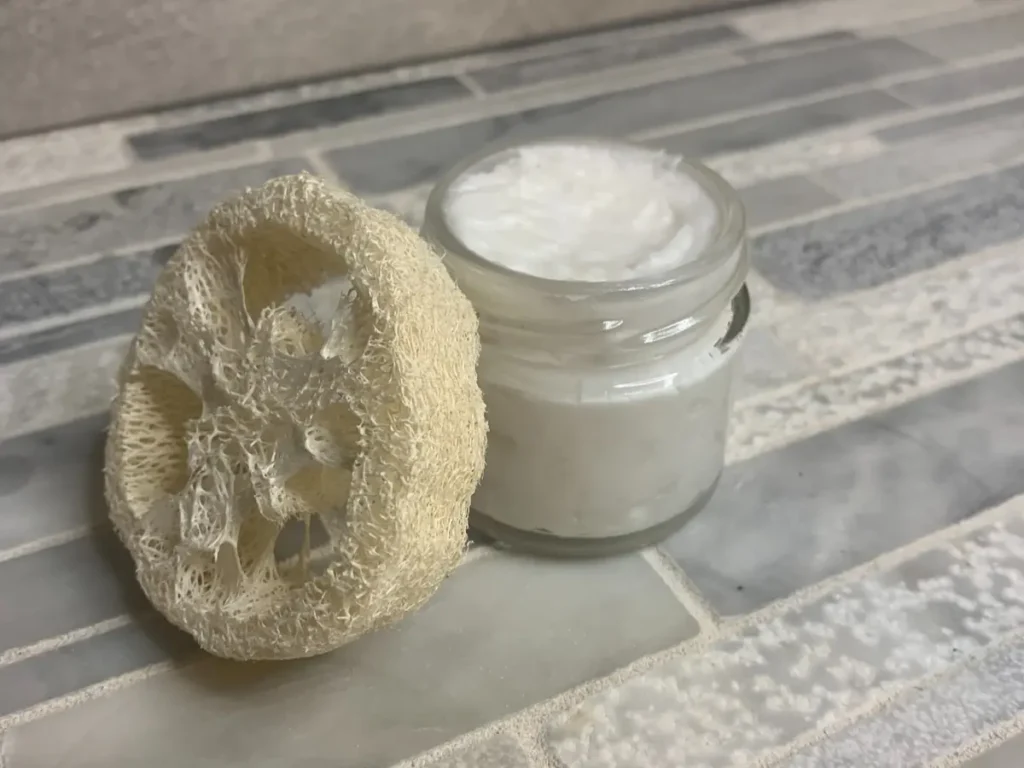
Why Make Dishwashing Paste Instead of Liquid Dish Soap?
Most homemade liquid dishwashing recipes contain a significant amount of water. While water makes a product easier to dispense and use, it also creates an environment where bacteria, yeast, and mold can grow.
That means water-based cleaning products generally need an appropriate preservative system to help keep them safe during storage and use.
This dishwashing paste takes a different approach. By leaving added water out of the formula, we can make a concentrated product without adding a conventional water-soluble preservative.
There are a few other advantages:
- Concentrated formula: You don’t need a large bottle of diluted dishwashing liquid.
- Reusable packaging: Store the paste in a glass jar instead of a disposable plastic bottle.
- Simple ingredient list: The formula uses two surfactants and D-limonene.
- Easy to make: There are only a few ingredients and a relatively straightforward preparation process.
Keep in mind that water-free doesn’t automatically mean contamination-proof. Always use clean, completely dry utensils when handling the paste, and avoid introducing water into the storage jar.
Prefer to watch this project instead of reading it?
Ingredients for Lemon Dishwashing Paste
This formula uses three ingredients. Each one has a different job, from lifting grease to producing foam.
Sodium Cocoyl Isethionate (SCI)
Sodium Cocoyl Isethionate is a mild anionic surfactant derived from coconut fatty acids.
It’s commonly used in solid cleansing products, shampoo bars, facial cleansers, and other personal care formulations.
For this dishwashing paste, SCI provides the primary cleansing action. It helps loosen oils and food residue so they can be rinsed away with water.
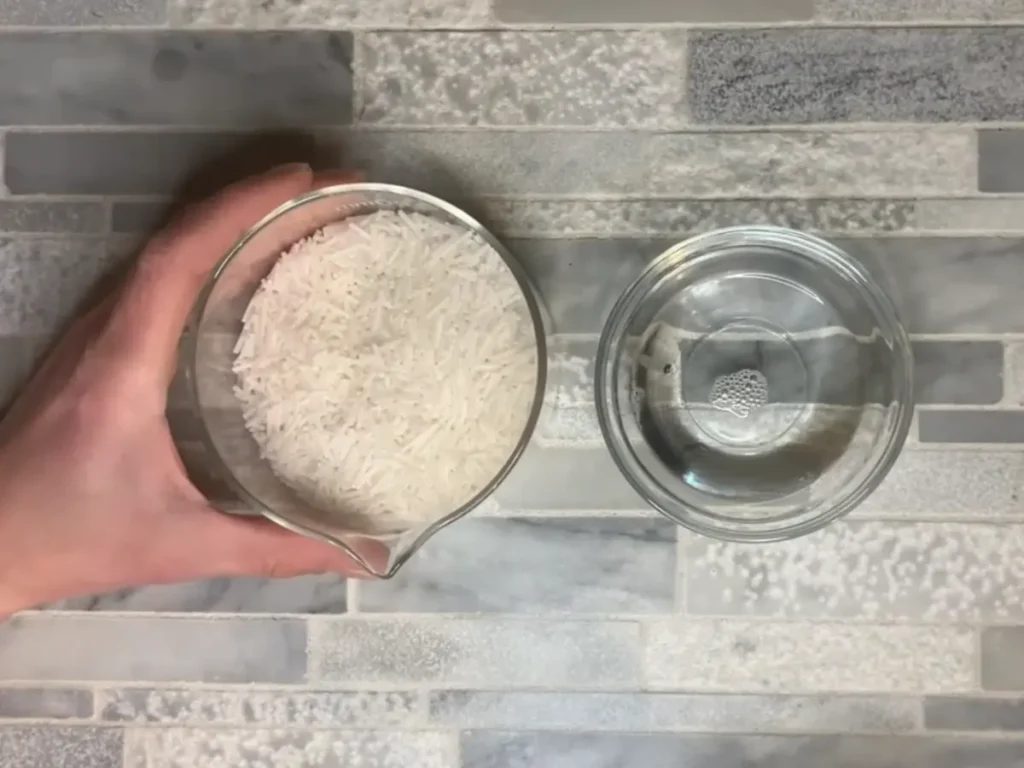
SCI is available in different forms, including powder, noodles, and flakes. The form you purchase can affect how easily it incorporates into a formula.
Although SCI is often described as a mild surfactant, it can still cause irritation, particularly when handled as a fine powder. Avoid breathing in the dust when measuring and mixing it.
Cocamidopropyl Betaine
Cocamidopropyl Betaine is an amphoteric surfactant commonly used in shampoos, body washes, hand washes, and household cleaning formulations.
It works well alongside anionic surfactants like SCI.
In this recipe, Cocamidopropyl Betaine helps improve the cleansing system and contributes to foam production. It also helps create a workable paste consistency.
Combining different surfactants can improve the overall performance of a cleansing formula because each surfactant contributes different properties.
D-Limonene
D-limonene is a naturally occurring compound found in citrus peel oils. It is responsible for much of the familiar orange and lemon-like scent associated with citrus.
D-limonene is also used as a solvent in cleaning products because of its ability to help dissolve oily and greasy residues.
In this dishwashing paste, it serves two purposes:
- Adds a fresh citrus fragrance.
- Helps with the removal of greasy residue.
A note about handling: D-limonene is concentrated and can irritate skin. It can also oxidize with exposure to air, potentially increasing its sensitizing properties. Use fresh material, keep the container tightly closed, and follow the supplier’s safety information. Wear suitable gloves when making the formula.
How Do Surfactants Clean Dishes?
Before making the recipe, it helps to understand why surfactants are so important in cleaning products.
Think about what happens when you spray plain water onto a greasy surface. Water doesn’t always spread evenly over the surface, and it doesn’t readily dissolve oil.
Surfactants help solve this problem.
A surfactant molecule has two different ends:
- A hydrophilic end that is attracted to water.
- A lipophilic end that is attracted to oils and grease.
When surfactants are added to water, they help loosen oily residue and keep it dispersed so it can be carried away during rinsing.
This is why surfactants are used in everything from dishwashing liquids and laundry detergents to shampoo and body wash.
If you want to learn more about how these ingredients work, take a look at my Surfactants Explained Post.
Lemon Dishwashing Paste Recipe
| Ingredient | Percentage | Weight |
|---|---|---|
| Sodium Cocoyl Isethionate (SCI) | 62% | 124 g |
| Cocamidopropyl Betaine | 24% | 48 g |
| D-Limonene | 14% | 28 g |
| Total | 100% | 200 g |
Equipment
- Digital scale
- Heat-safe mixing container
- Double boiler
- Silicone spatula
- Thermometer (recommended)
- Clean, dry storage jar
- Gloves and suitable dust protection when handling SCI
How to Make Lemon Dishwashing Paste
This recipe is relatively simple, but there are a few things to keep in mind when working with SCI.
SCI can be difficult to incorporate if it isn’t heated sufficiently. It is important to work slowly and use gentle heat rather than trying to rush the process.
Step 1: Weigh the Ingredients
Weigh the SCI and Cocamidopropyl Betaine into a heat-safe container.
Mix them together carefully until the SCI is evenly coated with the liquid surfactant.
Avoid creating dust when handling the SCI powder.
Step 2: Heat the Surfactant Mixture
Place the container over a double boiler.
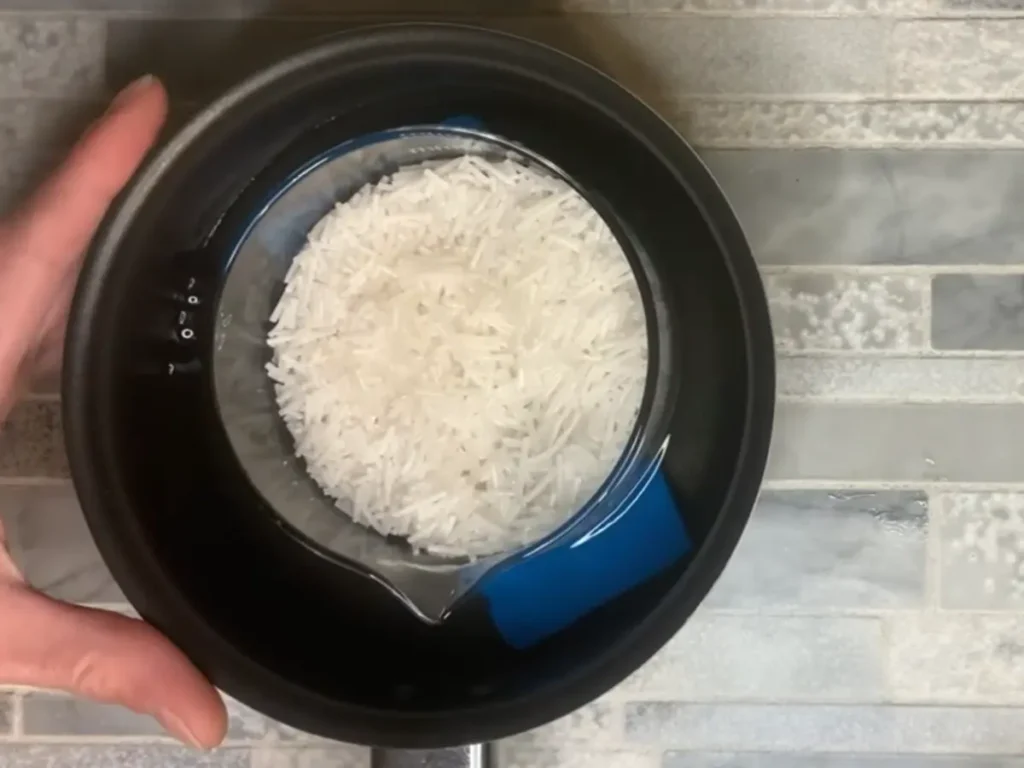
Heat gently, stirring occasionally, until the SCI has softened and incorporated into the Cocamidopropyl Betaine as much as possible.
SCI does not necessarily melt into a completely clear liquid. Depending on the form of SCI you’re using, the finished mixture may remain thick or have some texture.
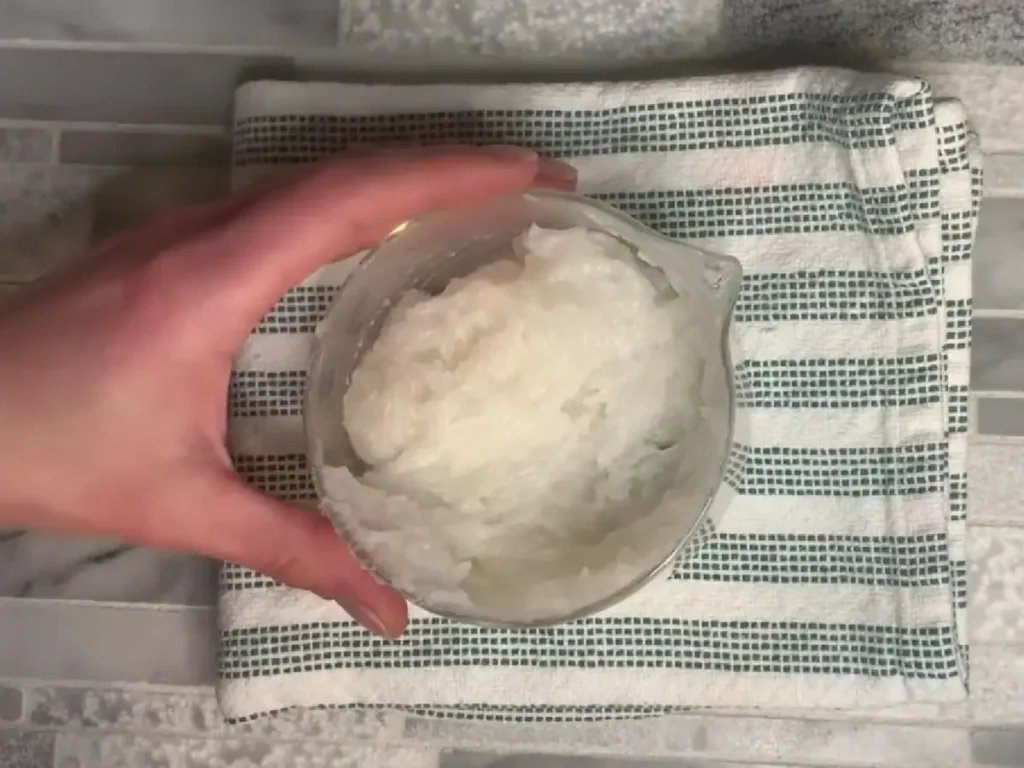
Step 3: Add the D-Limonene
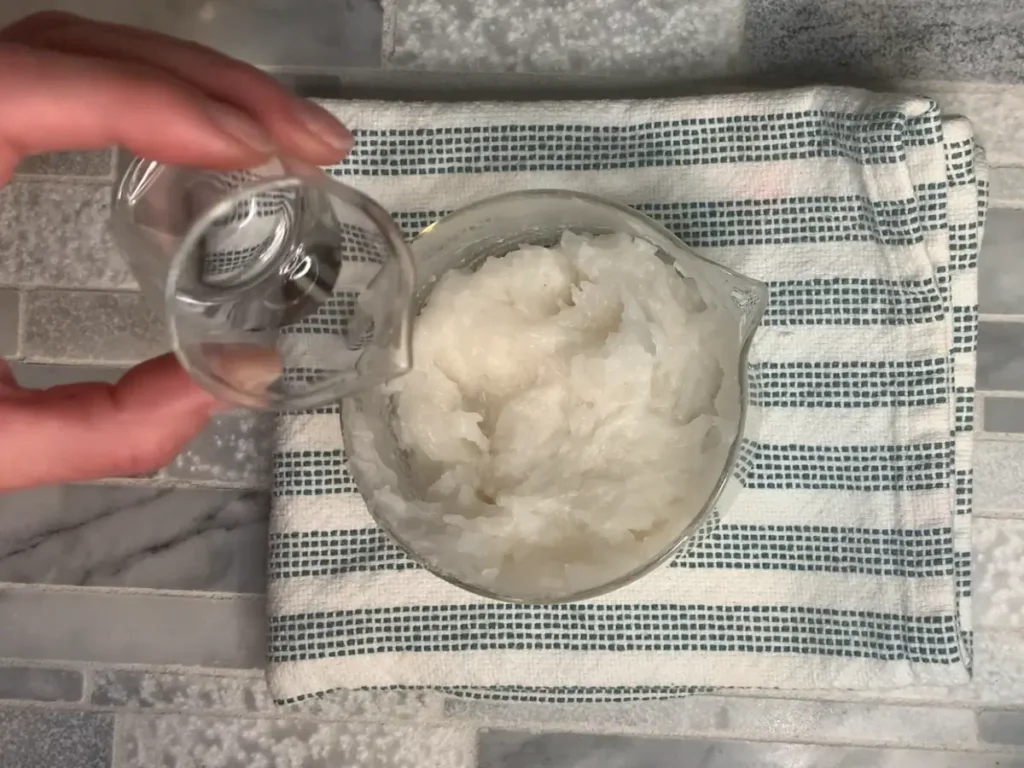
Remove the container from the heat.
Allow the mixture to cool somewhat before adding the D-limonene. Stir thoroughly until it is evenly distributed.
Because D-limonene is volatile, avoid unnecessary prolonged heating.
Step 4: Package the Dishwashing Paste
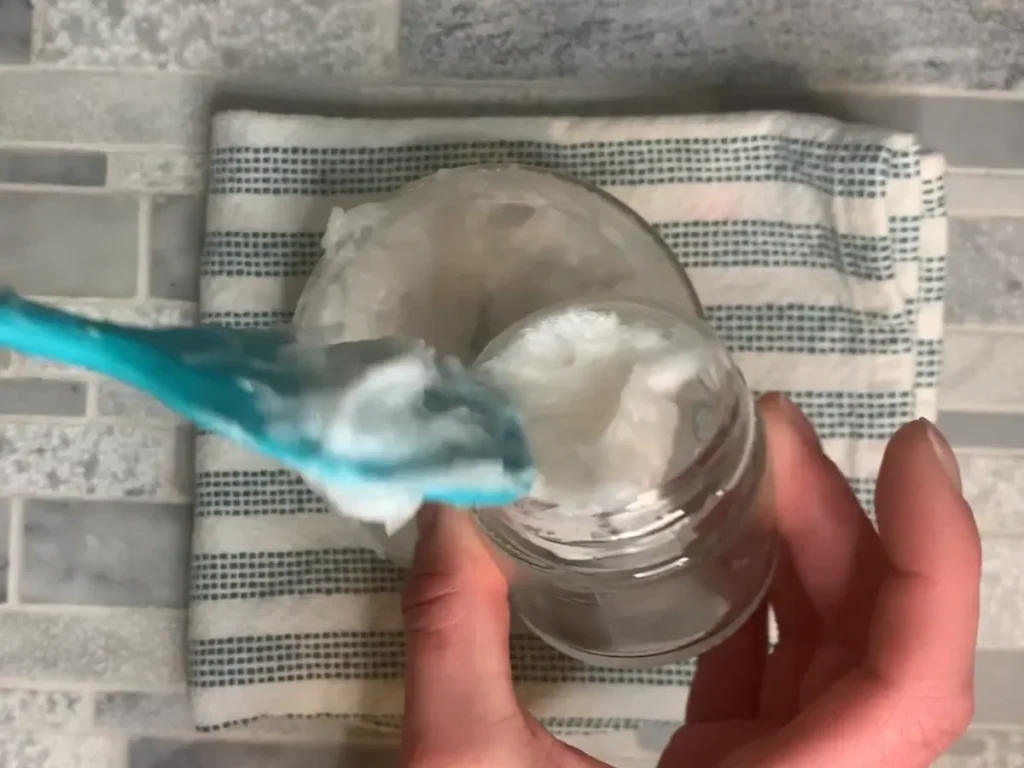
Transfer the finished paste into a clean, completely dry glass jar.
Allow it to cool before securing the lid.
Store the jar somewhere cool and dry, away from direct sunlight and sources of heat.
Packaging a Natural Dishwashing Paste
I like using a reusable glass jar for this dishwashing paste.
Since this is a concentrated formula, you don’t need a large container. A small jar works well and makes it easy to keep the paste near the kitchen sink.
A wide-mouth jar is particularly convenient because you can easily reach inside with a small dish brush or sponge.
There is one important thing to remember: keep water out of the jar. Rather than dipping a wet sponge directly into the container, scoop out a small amount using a clean, dry utensil.
This helps prevent water from being introduced into the product during everyday use.
Washing Dishes with a Luffa Sponge
One of my favorite ways to use this dishwashing paste is with a natural luffa sponge.
Unlike synthetic kitchen sponges, natural luffas come from the dried fibrous interior of the luffa gourd, a member of the cucumber and squash family.
Once the fruit has matured and dried, the outer skin and seeds are removed, leaving behind the fibrous material we use as a sponge.
I wanted to try a luffa as a lower-waste alternative to conventional dish sponges, and I was pleasantly surprised by how well it worked for everyday dishwashing.
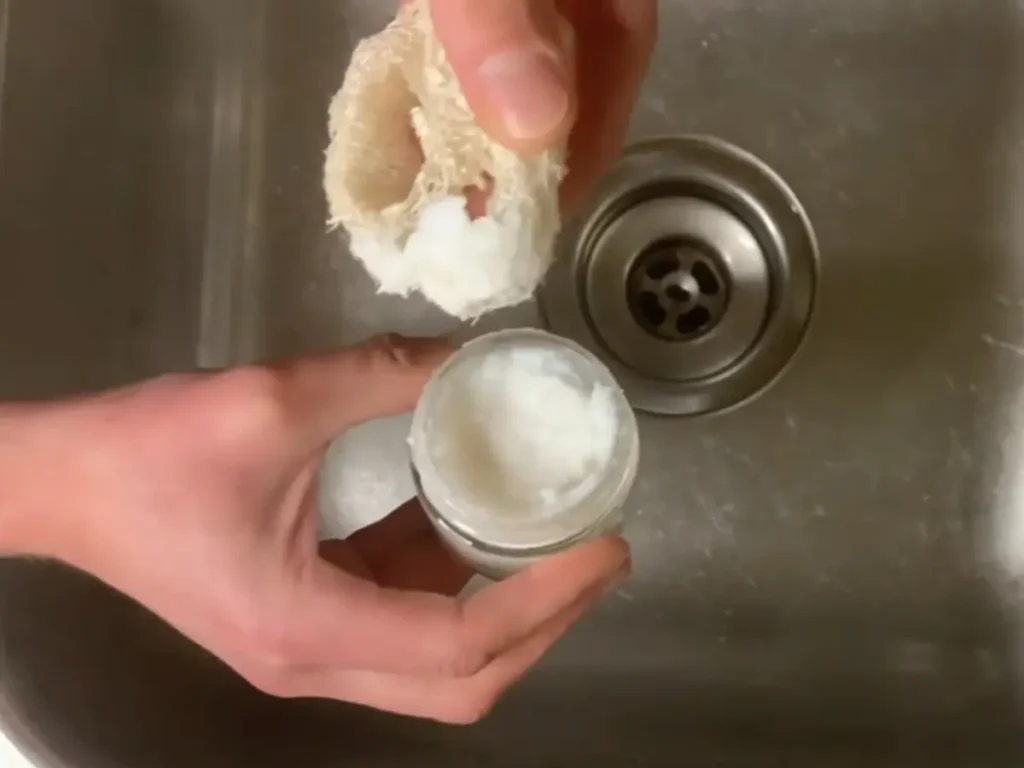
How to Use the Dishwashing Paste
- Scoop a small amount of dishwashing paste onto a clean, damp luffa sponge or dish brush.
- Wet the sponge and work the paste into a lather.
- Wash your dishes as usual.
- Rinse the dishes thoroughly with clean water.
You may need a little more paste for particularly greasy dishes.
As with any homemade cleaning product, test it on an inconspicuous area first if you’re unsure whether it is suitable for a particular item.
Avoid using abrasive sponges on delicate finishes, nonstick cookware, or surfaces that can scratch easily.
How to Care for Your Luffa Sponge
Like any kitchen sponge, a natural luffa needs proper care.
Because it is regularly exposed to food residue and moisture, it’s important to clean it and allow it to dry between uses.
Here are a few simple tips:
- Rinse after every use: Remove food particles and any remaining dishwashing paste.
- Allow it to dry completely: Place it somewhere with good airflow rather than leaving it sitting in a puddle of water.
- Clean it regularly: Follow the care instructions provided by the manufacturer. Some luffas may tolerate machine washing or boiling, but check first.
- Replace when necessary: If your luffa develops an unpleasant odor, visible mold, or begins to break down, replace it.
I personally prefer to replace my kitchen luffa regularly rather than keep using it indefinitely. When it is made from untreated natural plant fibers, it may be suitable for composting, depending on your local composting guidelines.
Storage and Shelf Life
Because this dishwashing paste does not contain added water, it does not require the same type of preservation system as a water-based dishwashing liquid.
However, that doesn’t mean it has an unlimited shelf life.
The ingredients can change over time, particularly D-limonene, which is susceptible to oxidation when exposed to air, light, and heat.
For best results:
- Store in a tightly sealed container.
- Keep away from direct sunlight and heat.
- Use clean, dry utensils when scooping out the paste.
- Avoid introducing water into the jar.
- Discard the product if you notice an unusual change in odor, color, or consistency.
I would recommend making small batches and using fresh ingredients rather than assuming the paste will remain unchanged indefinitely. A specific shelf-life claim would require stability testing of the finished formulation.
Frequently Asked Questions
Is this dishwashing paste the same as regular dish soap?
Not exactly. This recipe uses synthetic surfactants, rather than traditional soap made through saponification. Surfactants are effective cleansers that help lift grease and food residue so they can be rinsed away.
Why make dishwashing paste instead of liquid dish soap?
A paste allows you to make a concentrated, water-free formulation. Since no water is intentionally added, you don’t need to add a conventional preservative to the recipe. It also makes storage in a reusable jar convenient.
Does this dishwashing paste need a preservative?
The formula does not contain intentionally added water, so it does not require the same preservation approach as a water-based product. However, it is important to prevent water from entering the jar during use. This is not a guarantee of sterility or indefinite shelf stability.
Can I use this paste with a regular dish sponge?
Yes. You can use it with a regular dish sponge, a dish brush, or a natural luffa. Apply a small amount to the damp cleaning tool and work it into a lather.
Is this dishwashing paste completely natural?
The formula uses ingredients that have plant-derived origins, including coconut-derived surfactants and citrus-derived D-limonene. However, plant-derived does not automatically mean completely natural, non-irritating, or environmentally harmless. The processing and environmental profile of each ingredient also matter.
How much dishwashing paste should I use?
Start with a small amount on your damp sponge or dish brush. Because this is a concentrated paste, you can add more as needed depending on how many dishes you’re washing and how greasy they are.
Final Thoughts
Making your own dishwashing paste is a simple way to experiment with homemade household cleaning products.
I like that this formula is concentrated, easy to package in a reusable glass jar, and made without intentionally adding water.
Pair it with a natural luffa sponge and a reusable dish brush, and you have a practical alternative to some of the disposable products commonly found in the kitchen.
If you enjoy making your own products at home, you might also enjoy exploring more of my homemade cleaning and DIY formulation projects.
Lemon Dishwashing Paste – Plant Based – Sustainable – Super Concentrated
Equipment
- Scale
Ingredients
- 2.48 ounce | 62% Sodium Cocoyl Isethionate
- 0.96 ounce | 24% Cocoamidopropyl Betaine
- 0.56 ounce | 14% D limonene
Instructions
- Mix the SCI and Cocomidopropyl Betain together in a heat safe container.
- Place on a double boiler until the SCI is melted and remove from heat.
- Add d limonene and mix well.
- Package in a glass container.