
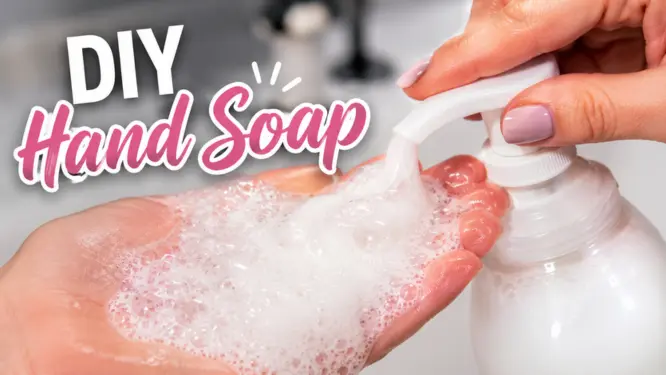
Creating your own hand soap can be a truly rewarding experience, especially when you end up with something that looks and feels just as lovely as a store-bought product.
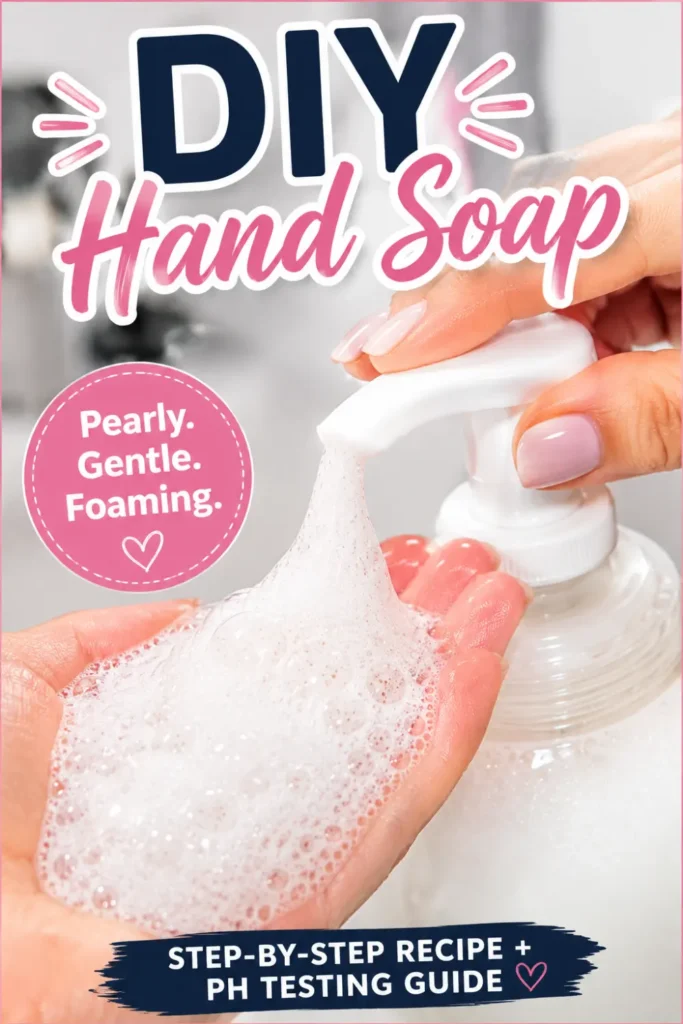
In this post, I’ll show you how to make a pearly liquid hand soap with a smooth texture, rich foam, and a clean, polished finish. This is the exact process I use to create consistent, beautiful results—and once you try it, you’ll see just how delightful homemade soap can be.
You’ll also learn how to properly test and adjust pH using a 10% solution, an essential step that helps ensure your soap is gentle and skin-friendly.
Whether you’re just getting started or refining your skills, this recipe will guide you in making a hand soap that not only works well—but feels wonderful to use every day.
Watch the Video Tutorial On Making Hand Soap
Some links on this website are affiliate links, meaning I may earn a small commission if you click and make a purchase. This comes at no additional cost to you.
Why This Recipe Works
This formula uses a balanced surfactant system for effective but gentle cleansing, combined with a pearling agent for a more professional finish.
If you’re newer to DIY formulations, you may also like this guide on How to Make Dry Shampoo or this one on Making Lip Gloss
If you’ve ever made DIY hand soap and it felt too drying or just didn’t look right, this recipe is going to fix that.
This is a simple, beginner-friendly pearly hand wash that gives you:
✔️ Rich foam
✔️ Gentle cleansing
✔️ A smooth texture
✔️ A pearly, store-bought look
And most importantly—you’ll learn how to properly test and adjust pH, which is where most DIY recipes go wrong.
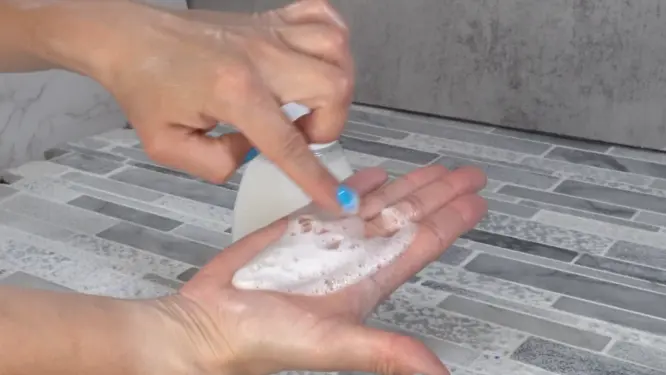
DIY Pearly Hand Soap Recipe (250 g Batch)
| Ingredient | % | Weight (g) |
|---|---|---|
| Distilled Water | q.s. | 175.37 g |
| Glycerin | 3% | 7.50 g |
| Guar Gum | 0.25% | 0.63 g |
| Disodium Laureth Sulfosuccinate | 12% | 30.00 g |
| Cocamidopropyl Betaine | 7% | 17.50 g |
| Lauramine Oxide | 2.5% | 6.25 g |
| Glycol Distearate | 2% | 5.00 g |
| Sweet Almond Oil | 0.8% | 2.00 g |
| Polysorbate 80 | 1.3% | 3.25 g |
| Fragrance Oil | 0.5% | 1.25 g |
| Liquid Germall Plus | 0.5% | 1.25 g |
Ingredient Breakdown + Substitutions
Understanding why each ingredient is used will help you customize this formula and help you if you are missing an ingredient.
Distilled Water
What it does:
- Main solvent (base of the formula)
- Dissolves and carries all other ingredients
Why it’s used:
Water makes up the bulk of the hand wash and allows the surfactants to function properly.
Substitutions:
- Aloe vera liquid (replace up to 20–30%)
- Herbal infusions (short shelf life unless preserved properly)
Glycerin
What it does:
- Humectant (draws moisture to the skin)
- Helps disperse guar gum
Why it’s used:
Prevents the formula from feeling overly drying after washing.
Substitutions:
- Propanediol
- Sorbitol
- Honey (can make formula sticky and harder to preserve)
Guar Gum
What it does:
- Thickens the formula
- Creates gel-like texture
Why it’s used:
Provides viscosity without needing salt or synthetic thickeners.
Substitutions:
- Xanthan gum (slightly different texture, more “snotty”)
- Hydroxyethylcellulose (more professional feel, less drag)
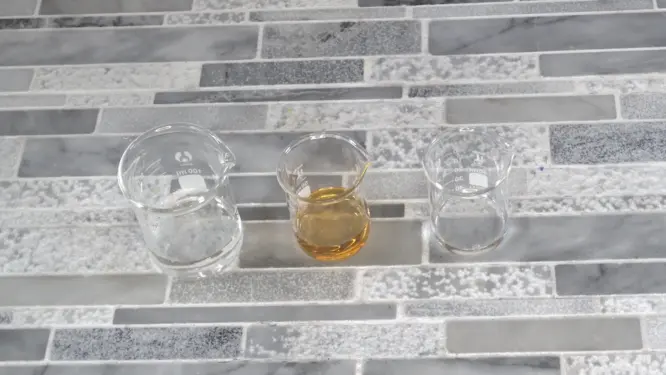
Disodium Laureth Sulfosuccinate
What it does:
- Primary cleanser
- Removes dirt and oils
Why it’s used:
It’s a gentle, sulfate-free surfactant that still provides good cleansing.
Substitutions:
- Sodium Lauroyl Sarcosinate
- Sodium Cocoyl Isethionate (liquid form only)
Cocamidopropyl Betaine
What it does:
- Secondary surfactant
- Reduces irritation
- Boosts foam
Why it’s used:
Balances the formula to make it milder and more skin-friendly.
Substitutions:
- Coco Betaine
- Lauryl Betaine
Lauramine Oxide
What it does:
- Foam booster
- Helps thicken surfactant systems
Why it’s used:
Improves lather and gives the formula a richer feel.
Substitutions:
- Cocamide MIPA (less mild)
- Additional CAPB (not a direct replacement, but helps)
Glycol Distearate
What it does:
- Pearling agent (creates milky appearance)
- Adds creaminess and body
Why it’s used:
Gives the hand wash a luxury, store-bought look and feel.
Substitutions:
- Opacifying agents (like EGDS blends)
- Omit for a clear formula
- Omit for no heat formula
Sweet Almond Oil
What it does:
- Light conditioning
- Improves after-feel
Why it’s used:
Adds a small amount of softness without making the formula greasy.
Substitutions:
- Jojoba oil (lighter, more stable)
- Sunflower oil (budget-friendly)
Polysorbate 80
What it does:
- Solubilizer (keeps oil mixed in water)
Why it’s used:
Prevents separation and keeps the formula stable.
Substitutions:
- Polysorbate 20 (better for fragrance, weaker for oils)
- PEG-40 Hydrogenated Castor Oil
Fragrance Oil
What it does:
- Adds scent
Why it’s used:
Improves user experience and makes the product more enjoyable.
Substitutions:
- Essential oils (use at safe levels)
- Fragrance-free option
Liquid Germall Plus
What it does:
- Broad-spectrum preservative
Why it’s used:
Prevents mold, yeast, and bacterial growth.
Substitutions:
- Optiphen
- Geogard ECT
- Phenoxyethanol blends
**Always check usage rates and compatibility.
Citric Acid
What it does:
- Adjusts pH
Why it’s used:
Keeps the formula within a skin-friendly pH (5–5.5).
Substitutions:
- Lactic acid
Final Tip
If you substitute ingredients, always:
- Re-check pH
- Watch for changes in thickness
- Test stability over time
Small changes can significantly affect the final product.
How to Make DIY Pearly Hand Soap
Step 1: Make a Guar Gum Slurry
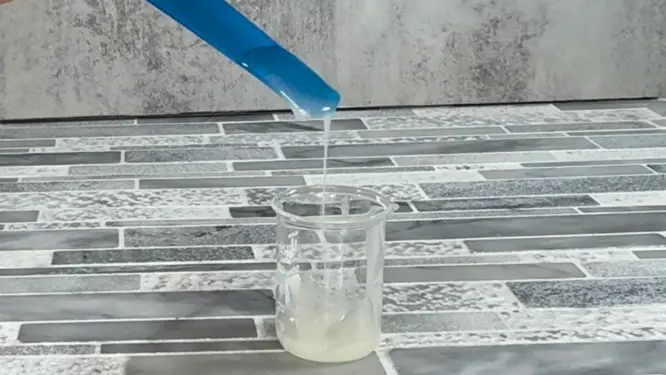
Start by mixing your guar gum and glycerin together until smooth.
This step prevents clumping and helps the gum disperse evenly in water.
Set this aside.
Step 2: Prepare the Water Phase
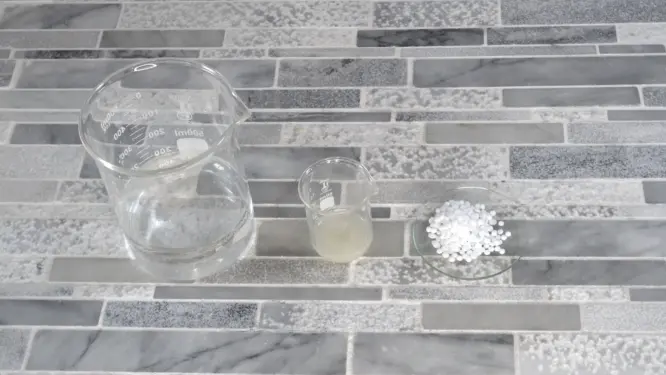
In a heat-safe container, combine:
- Distilled water
- Your glycerin + guar gum slurry
- Glycol distearate
Each ingredient has a role:
- Water → base of the formula
- Glycerin → hydration + helps texture
- Guar Guar→ helps thicken
- Glycol distearate → gives that pearly, creamy look
Step 3: Heat Until Fully Melted
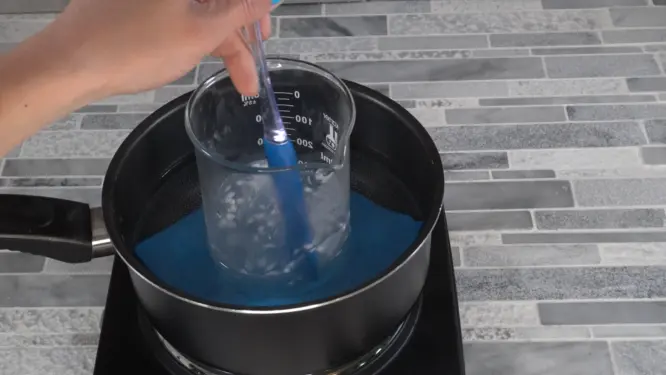
Place your container into a double boiler.
Heat on medium heat, stirring occasionally.
Continue heating until the glycol distearate is completely melted and the mixture is uniform.
Remove from heat once fully melted.
Step 4: Add Surfactants
In a separate container, combine:
- Disodium Laureth Sulfosuccinate
- Cocamidopropyl Betaine
- Lauramine Oxide
Each one does something different:
- Cleansing
- Mildness
- Foam boosting
Add this mixture into your warm water phase and stir gently.
** Avoid overmixing to prevent bubbles.
** If your mixture looks slightly clumpy, you can place it back on heat for a few minutes until smooth.
Step 5: Add Cool Down Ingredients
Add the:
- Polysorbate 80
- Sweet almond oil
- Fragrance oil
Polysorbate 80 is essential—it allows the oils to mix into the water instead of floating on top.
- You’ll notice we use about the same amount of polysorbate as the total oil + fragrance.
Step 6: Combine
Add your oil mixture into the main batch.
At first, you’ll see the oil sitting on top.
As you mix, it will fully incorporate into the formula.
Step 7: Cool to Room Temperature
Allow the mixture to cool completely before moving on.
This is important because pH changes depending on temperature.
How to Test pH (10% Solution Method)
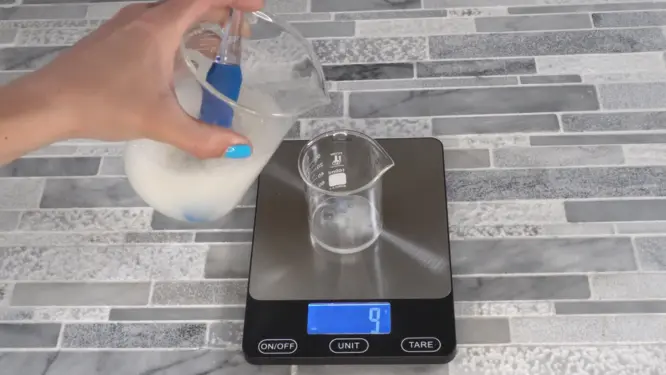
Step 1: Make a 10% Solution
- 1 g hand soap
- 9 g distilled water
Mix gently.
Step 2: Test pH
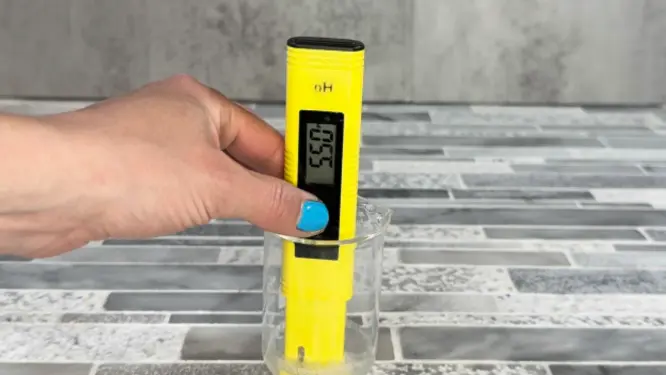
Use pH strips or a digital meter.
✔️ Target: pH 5 – 5.5
How to Adjust pH
If your pH is too high:
- Use a diluted citric acid solution
- Add a small amount
- Stir well
- Wait a few minutes
- Test again
Repeat as needed until you reach a skin-safe range.
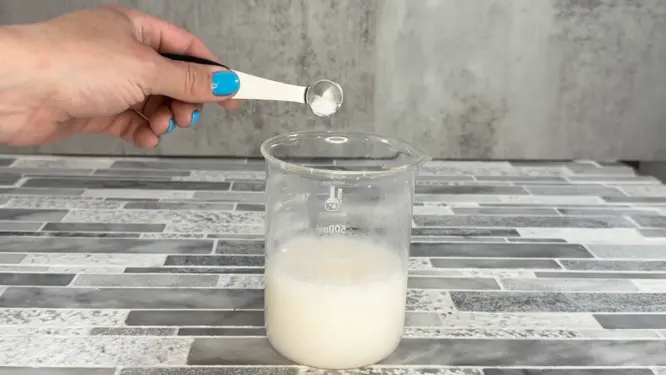
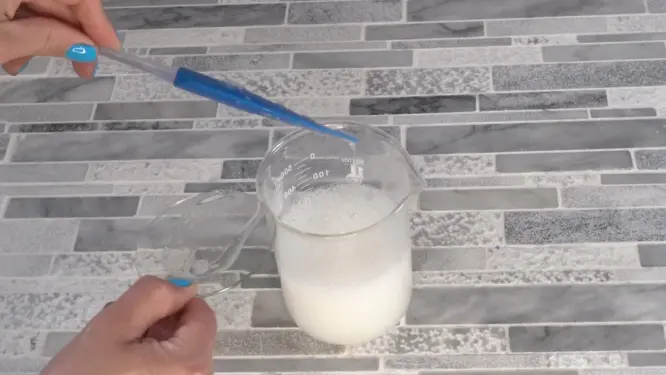
Step 8: Add Preservative
Once your pH is within range, add your preservative.
I’m using Liquid Germall Plus.
Mix well.
Learn more about preservatives in my What Are Preservatives post.
Step 9: Bottle Your Hand Soap
Pour into a foaming pump bottle.
This formula is too thin for a regular pump.
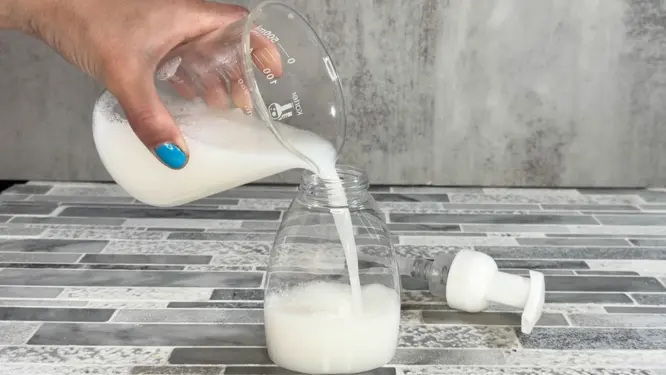
** Do not fill all the way to the top—leave space for the lid.
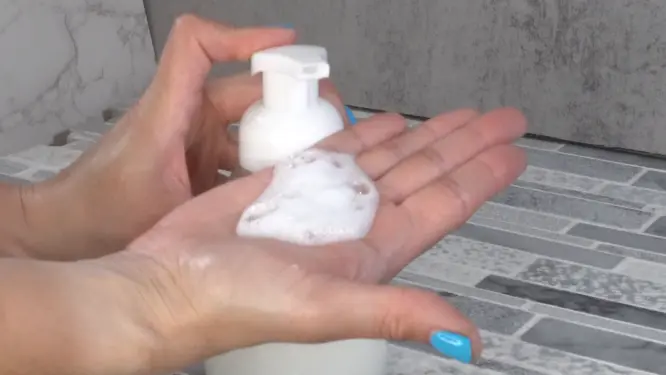
Step 10: Use and Enjoy
Pump and enjoy that light, fluffy foam.
Troubleshooting
Too thick → reduce guar gum
Too thin → increase slightly
Oil separating → increase polysorbate 80
Feels drying → increase oil slightly
Printable Recipe for DIY Hand Soap
DIY Pearly Hand Soap Recipe
Ingredients
- 175.37 grams Distilled Water
- 7.5 grams Glycerin
- 0.63 grams Guar Gum
- 30 grams Disodium Laureth Sulfosuccinate
- 17.5 grams Cocamidopropyl Betaine
- 6.25 grams Lauramine Oxide
- 5 grams Glycol Distearate
- 2 grams Sweet Almond Oil
- 3.25 grams Polysorbate 80
- 1.25 grams Fragrance Oil
- 1.25 gramds Liquid Germall Plus
Instructions
- Start by mixing your guar gum and glycerin together until smooth.This step prevents clumping and helps the gum disperse evenly in water.Set this aside.
- In a heat-safe container, combine:Distilled water, Your glycerin + guar gum slurry and Glycol distearate
- Place your container into a double boiler.Heat on medium heat, stirring occasionally.Continue heating until the glycol distearate is completely melted and the mixture is uniform.Remove from heat once fully melted.
- In a separate container, combine:Disodium Laureth Sulfosuccinate, Cocamidopropyl Betaine and Lauramine OxideAdd this mixture into your warm water phase and stir gently.** Avoid overmixing to prevent bubbles.** If your mixture looks slightly clumpy, you can place it back on heat for a few minutes until smooth.
- Add the Polysorbate 80, Sweet almond oil and Fragrance oil
- Cool and adjust pH.
- Add preservative.