
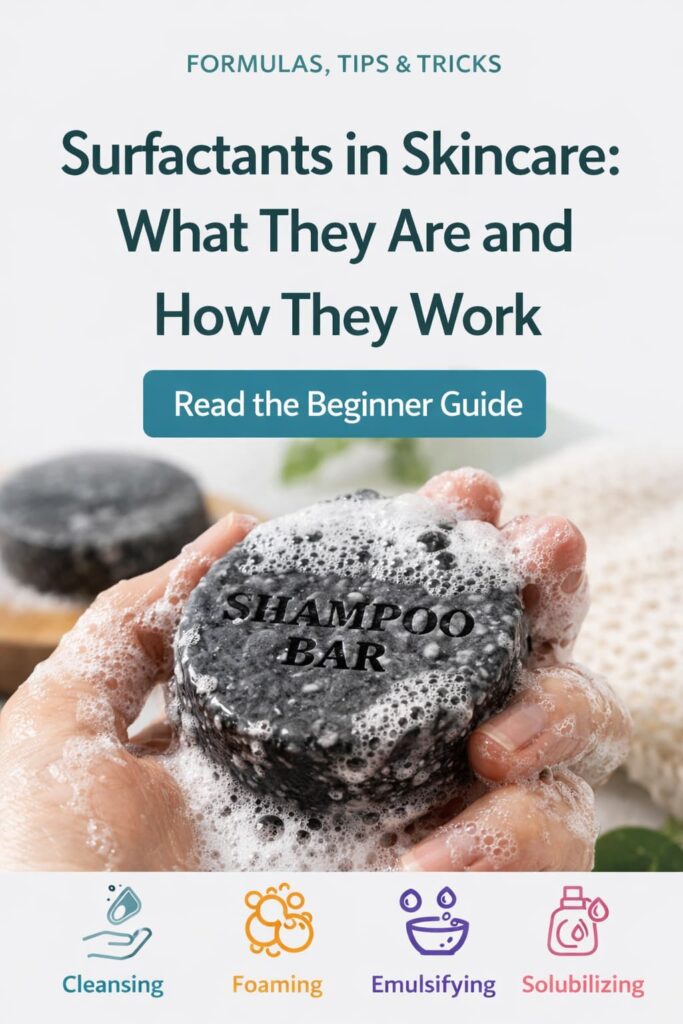
Surfactants are one of the most important ingredients used in skincare and haircare products. They are responsible for cleansing the skin, removing oil and dirt, and helping products rinse away easily with water.
If you’ve ever used a facial cleanser, shampoo, or body wash, you’ve already experienced the effects of surfactants.
Despite how common they are, many DIY formulators are unsure how surfactants actually work or how to choose the right one for their products.
Understanding surfactants is especially important if you want to create products like:
facial cleansers
body washes
shampoos
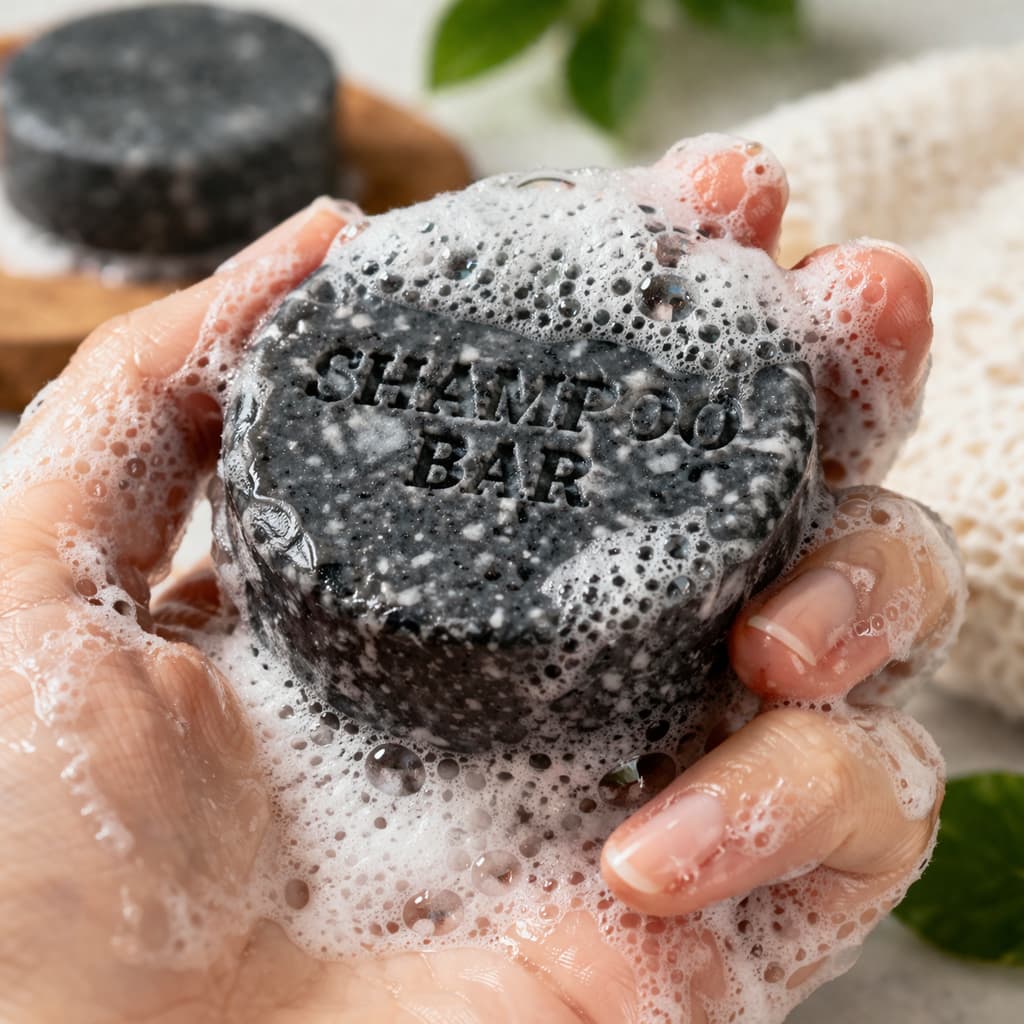
shampoo bars
syndet bars
If you’re new to formulation, start with my beginner guide:
Skincare Formulation for Beginners
What Is a Surfactant?
The word surfactant is short for surface-active agent.
A surfactant is a type of ingredient that reduces the surface tension between substances that normally do not mix well together.
In skincare, this usually means helping oil and dirt mix with water so they can be rinsed away.
Without surfactants, water alone cannot effectively remove oils from the skin or hair.
How Surfactants Work
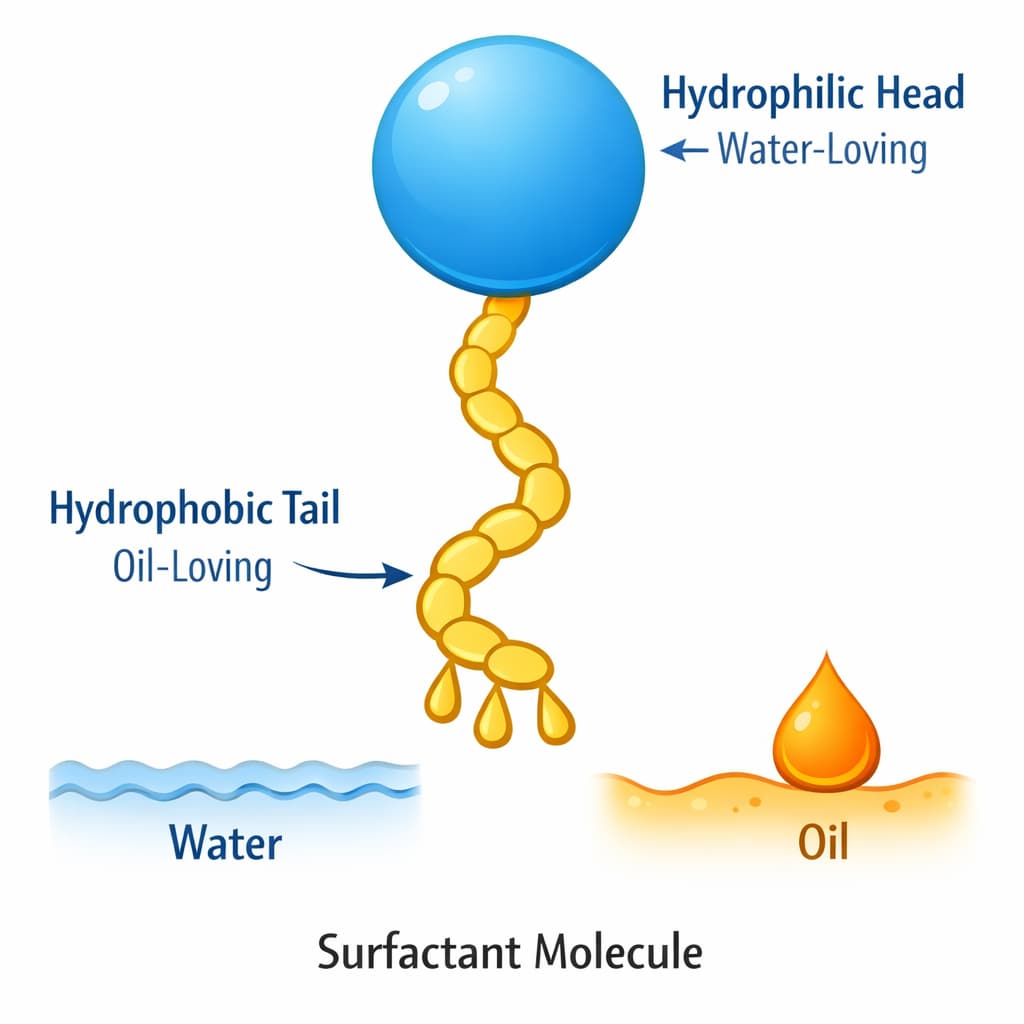
Surfactant molecules have two different parts.
One end is hydrophilic, which means it is attracted to water.
The other end is lipophilic (or hydrophobic), meaning it is attracted to oils and fats.
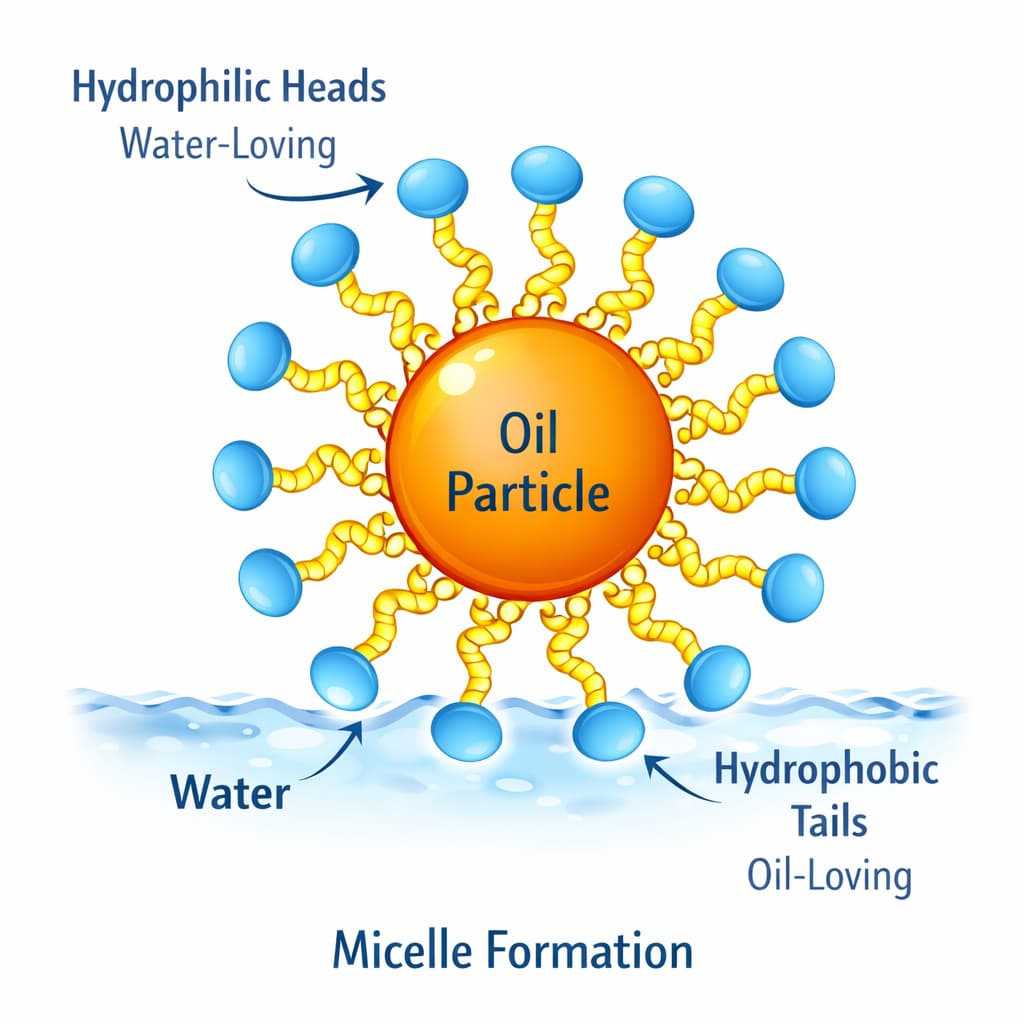
When a cleanser is applied to the skin, surfactants surround oil and dirt particles.
The oil-loving portion attaches to oils, while the water-loving portion interacts with water.
When the product is rinsed off, the oil and dirt are carried away with the water.
This process is known as emulsification and micelle formation.
Why Surfactants Are Important in Skincare
Surfactants provide several important functions in cosmetic products.
Cleansing
Their primary role is removing oil, dirt, and impurities from the skin or hair.
Foaming
Many surfactants create foam, which improves the user experience of cleansers and shampoos.
Foam itself does not clean better, but consumers often associate foam with effective cleansing.
Emulsifying
Some surfactants also help oil and water mix together.
You can learn more about emulsions here:
What Is an Emulsion in Skincare and Why It Matters
Solubilizing
Certain surfactants help dissolve small amounts of oils or fragrance into water-based formulas.
Types of Surfactants
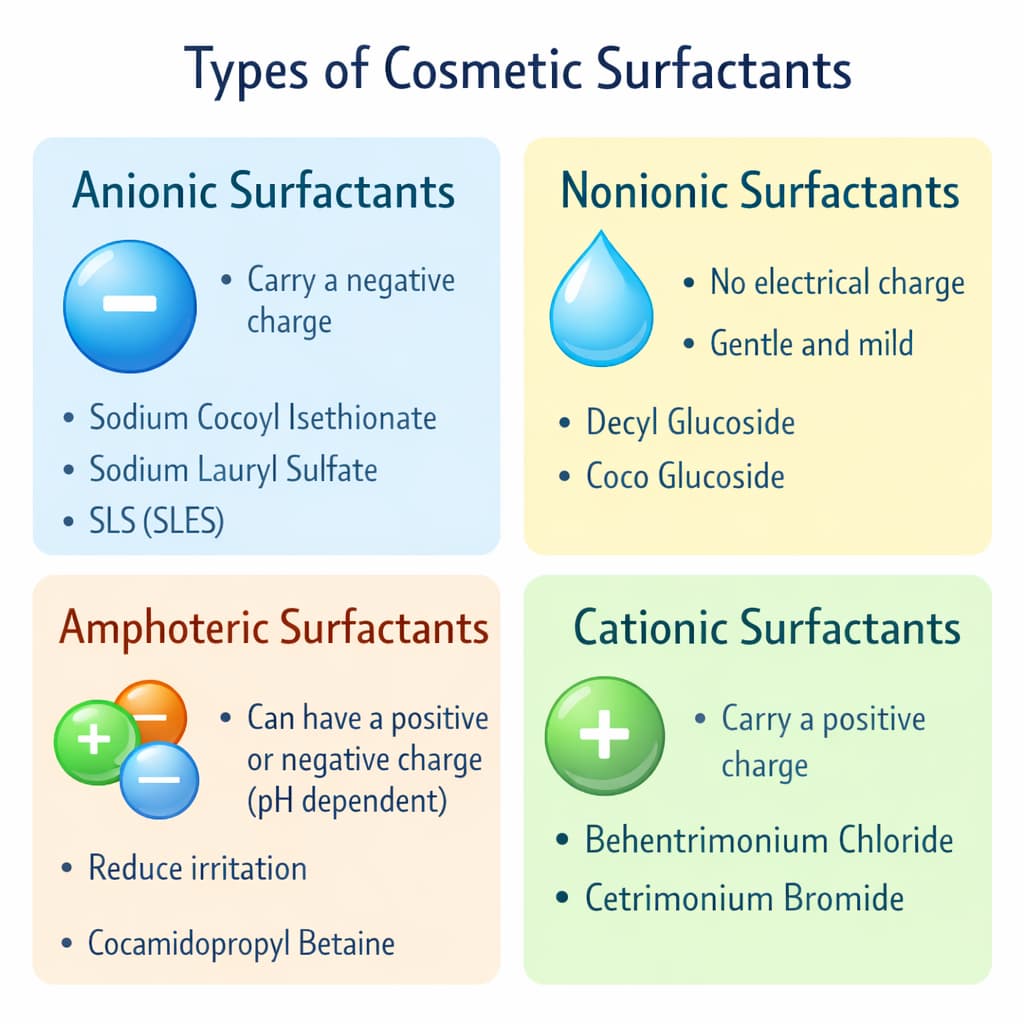
Surfactants are typically classified based on the electrical charge of their molecules.
Each category behaves differently in skincare products.
Anionic Surfactants
Anionic surfactants carry a negative charge.
They are known for strong cleansing ability and good foaming properties.
These surfactants are commonly used in:
shampoos
body washes
cleansing bars
Examples include:
Sodium Cocoyl Isethionate
Sodium Lauryl Sulfate
Sodium Laureth Sulfate
Some anionic surfactants can be harsh, which is why modern formulations often combine them with milder surfactants.
Nonionic Surfactants
Nonionic surfactants have no electrical charge.
They tend to be much gentler and are commonly used in mild skincare formulas.
They are often found in:
baby products
facial cleansers
micellar waters
These surfactants are valued for their mildness and compatibility with sensitive skin.
Amphoteric Surfactants
Amphoteric surfactants can carry both positive and negative charges, depending on the pH of the formula.
They are often used to make cleansers milder and reduce irritation.
One common example is:
Cocamidopropyl Betaine
Amphoteric surfactants are frequently combined with stronger surfactants to create balanced cleansing formulas.
Cationic Surfactants
Cationic surfactants carry a positive charge.
Unlike other surfactants, they are usually not used for cleansing.
Instead, they are used as conditioning agents in haircare products.
They help reduce static and improve hair softness.
Surfactants in Shampoo Bars and Syndet Bars
Surfactants are the primary ingredients in syndet bars, which are solid cleansing bars made from synthetic detergents.
These bars are different from traditional soap.
Soap is made through a chemical reaction between oils and lye.
Syndet bars, on the other hand, use surfactants as the cleansing ingredient.
Syndet bars are often preferred because they:
are milder than soap
have a lower pH
work well for hair and facial cleansers
If you want to learn how these bars are made, see:
DIY Activated Charcoal Detox Shampoo Bar (Syndet Bar) for Oily & Build-Up Prone Hair
Common Surfactants Used in DIY Formulation
Several surfactants are popular in handmade skincare and haircare products.
Sodium Cocoyl Isethionate (SCI)
One of the most common surfactants used in shampoo bars.
It produces a creamy foam and is considered relatively gentle.
Cocamidopropyl Betaine
A mild amphoteric surfactant that boosts foam and reduces irritation.
Often used in combination with stronger surfactants.
Decyl Glucoside
A very mild nonionic surfactant derived from sugar and coconut oil.
Common in natural and gentle cleansers.
Sodium Lauroyl Sarcosinate
A mild anionic surfactant often used in facial cleansers.
Choosing the Right Surfactant
Different surfactants are suited to different types of products.
Facial Cleansers
Use very mild surfactants such as:
Decyl glucoside
Coco glucoside
These are less likely to irritate delicate facial skin.
Shampoo
Hair requires stronger cleansing to remove oil and styling products.
Common surfactants include:
SCI
SLSA
Cocamidopropyl Betaine
Body Wash
Body washes usually combine surfactants to balance cleansing and mildness.
Surfactant Blends
Most professional formulas combine multiple surfactants.
This improves product performance by balancing:
cleansing power
foam quality
skin mildness
A single surfactant often cannot provide the best balance of these properties.
Why Surfactant pH Matters
pH plays a major role in how surfactants behave in a formula.
Skin typically has a slightly acidic pH of around 4.5–5.5.
Using products with a pH close to this range helps maintain the skin barrier.
If you want to learn more about pH in formulation, see:
Understanding pH in Skincare Formulation
Common Problems with Surfactant Formulas
Cleansers That Feel Too Harsh
This usually happens when strong surfactants are used without milder supporting surfactants.
Low Foam
Some gentle surfactants naturally produce less foam.
Foam boosters like amphoteric surfactants can help improve this.
Product Separation
If oils are added without proper solubilizers, the product may separate.
You can learn more about this issue here:
Why Some DIY Skincare Separates and How to Fix It
Surfactants vs Soap
Many people assume surfactants and soap are the same thing, but they are different.
Soap
Made from oils and lye
Higher pH (often 9–10)
Traditional cleansing method
Surfactants
Synthetic or plant-derived detergents
Can be formulated at skin-friendly pH
Often milder than soap
Because of their lower pH, surfactant cleansers are often better suited for modern skincare formulations.
Safety Considerations When Working with Surfactants
Some powdered surfactants can become airborne during formulation.
When working with ingredients like SCI or SLSA, it is recommended to:
wear a dust mask
work in a well-ventilated space
avoid inhaling fine powders
These precautions help prevent irritation during product formulation.
FAQ
Are surfactants bad for skin?
Not necessarily. Some surfactants can be harsh, but many modern surfactants are formulated to be gentle and skin-friendly.
What is the mildest surfactant?
Decyl glucoside and coco glucoside are among the mildest surfactants commonly used in skincare products.
Do surfactants dry out skin?
Strong surfactants can strip natural oils, but balanced formulas using mild surfactants can cleanse without excessive dryness.
Why do shampoo bars use surfactants?
Shampoo bars rely on surfactants for cleansing instead of soap, allowing them to maintain a hair-friendly pH and produce rich foam.
Final Thoughts
Surfactants are essential ingredients in modern skincare and haircare products.
They allow cleansers to remove oil, dirt, and impurities while still being gentle enough for regular use.
Understanding how surfactants work will make it much easier to create effective products such as facial cleansers, body washes, and shampoo bars.
As you continue learning formulation, surfactants will become one of the most important tools in your ingredient toolkit.
To learn how other ingredients function in cosmetic formulas, see:
What Each Ingredient Does in Skincare Formulation