
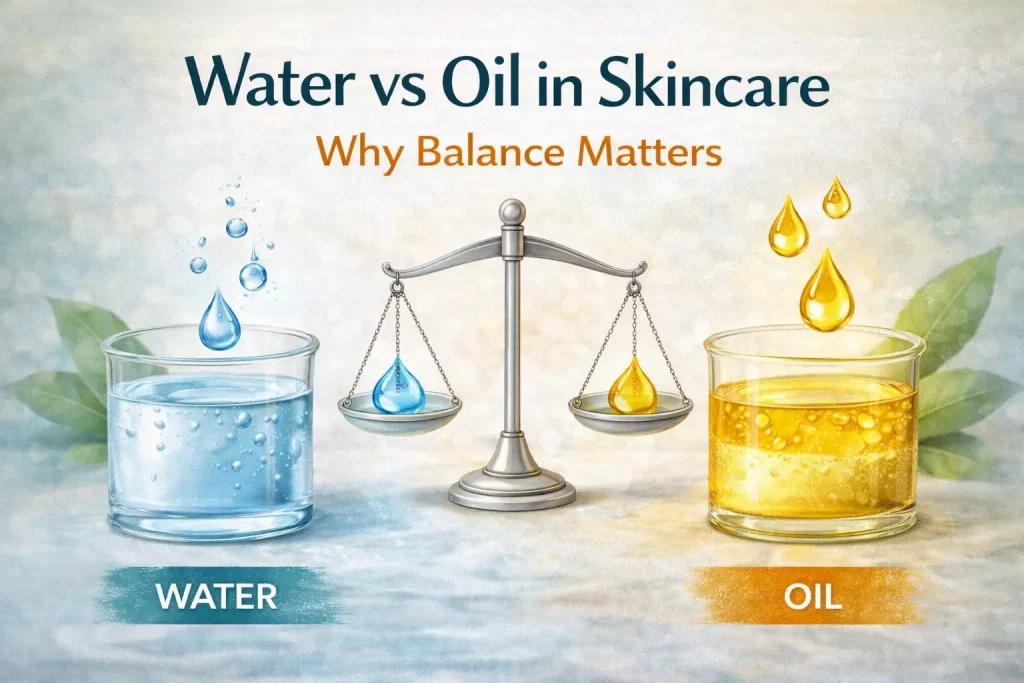
One of the biggest lightbulb moments in DIY skincare is realizing that water and oil don’t play the same role — and they’re not interchangeable.
If you’ve ever wondered:
- Why a product feels light or heavy
- Why some formulas hydrate while others just sit on the skin
- Why lotions behave differently than body butters
…it all comes back to water vs oil.
Understanding how these two phases work — and how they work together — is foundational to confident skincare formulation.
What Is the Water Phase in Skincare?
The water phase includes anything water-soluble:
- Distilled water
- Hydrosols
- Aloe vera juice
- Glycerin
- Water-soluble actives
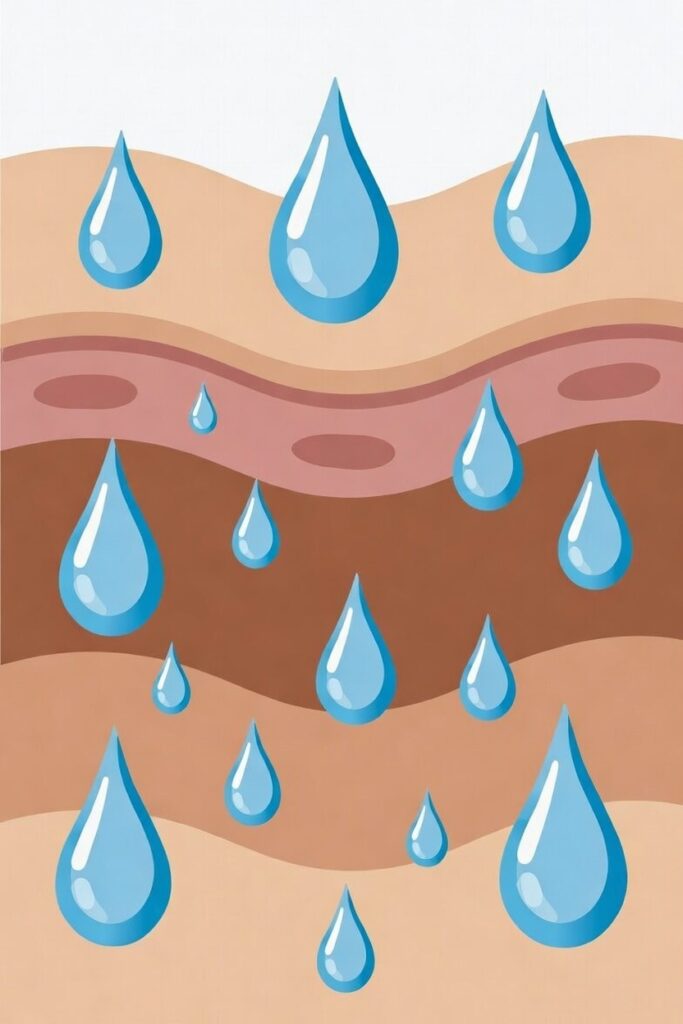
Water’s primary job is hydration.
It delivers moisture into the skin and carries ingredients that need water to function properly.
Without water, products may feel rich but won’t hydrate in the same way.
What Is the Oil Phase in Skincare?
The oil phase includes:
- Carrier oils
- Butters
- Waxes
- Oil-soluble actives
Oil’s main role is moisture retention, not hydration.
Oils:
- Slow down water loss
- Soften and condition skin
- Improve barrier function
This is why oil-only products feel nourishing but don’t replace water-based hydration.
Why Water and Oil Need Each Other
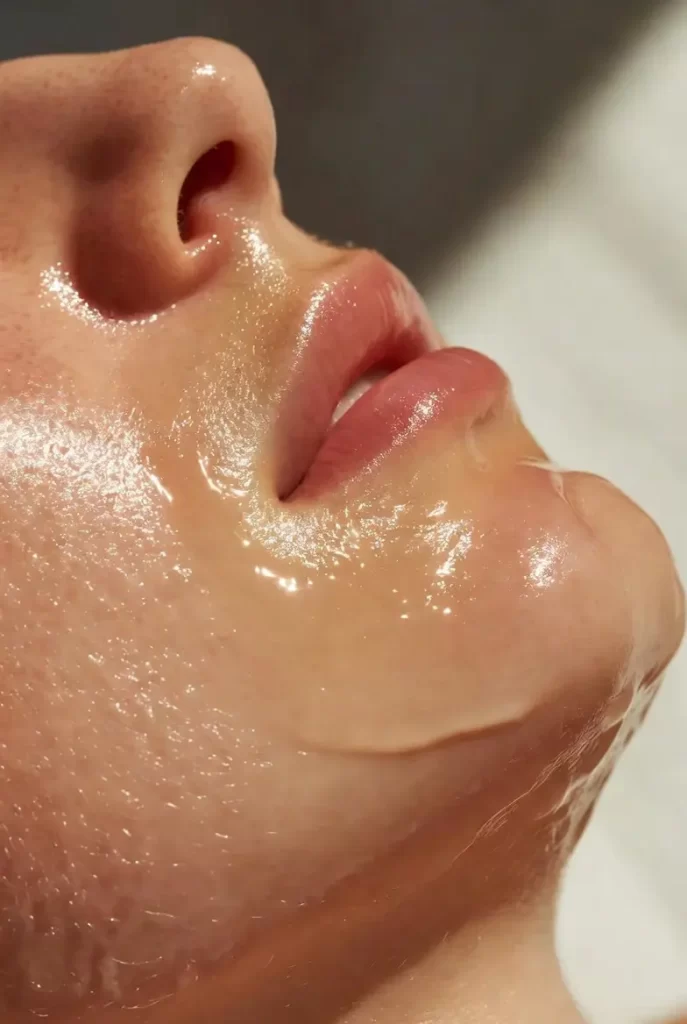
Water hydrates. Oil protects.
The most effective skincare uses both, which is why lotions and creams exist.
When combined properly:
- Water hydrates the skin
- Oil seals that hydration in
- The product feels balanced instead of greasy or drying
This relationship is what makes emulsions so important.
Water-Based Products (When Oil Isn’t Needed)
Some products rely almost entirely on water:
- Toners
- Mists
- Gel serums
These products:
- Absorb quickly
- Feel lightweight
- Require preservatives
However, without oil or occlusives, hydration may evaporate quickly.
Oil-Based Products (When Water Isn’t Included)
Oil-only products include:
- Body butters
- Facial oils
- Balms and salves
These products:
- Do not hydrate
- Do not require emulsifiers
- Do not need preservatives
They work best on damp skin or layered over water-based products.
Lotions & Creams: The Best of Both Worlds
Lotions and creams combine water and oil into a stable system.
This allows you to:
- Hydrate
- Nourish
- Protect
But combining them requires structure.
That structure comes from emulsifiers.
What Happens When Balance Is Off
Problems arise when water and oil aren’t balanced properly.
Too much oil:
- Heavy feel
- Greasy residue
- Emulsion instability
Too much water:
- Thin texture
- Poor skin feel
- Increased risk of separation
This is one of the main reasons DIY skincare separates.
Choosing the Right Ratio for Your Product
There is no single perfect ratio — it depends on the product.
General guidelines:
- Lotions: higher water, lower oil
- Creams: balanced water and oil
- Body butters: all oil
Understanding this lets you design formulas intentionally instead of guessing.
How This Fits Into Beginner Formulation
Once you understand water vs oil, everything else starts to click:
- Ingredient roles
- Emulsifier selection
- Texture control
- Troubleshooting issues
This is why water vs oil is a cornerstone concept in skincare formulation.
Conclusion
Water hydrates. Oil protects.
When you understand how they work together, skincare formulation stops feeling confusing and starts feeling logical.
This balance is the foundation of lotions, creams, and effective DIY skincare.
Pingback: How to make DIY Activated Charcoal Detox Shampoo Bar (Syndet Bar) - Summer Rain
Pingback: DIY Shimmer Lotion Recipe - Summer Rain