

If you’ve ever wanted to make a body butter that feels rich and creamy without feeling quite as heavy as some traditional butters, mango butter is an ingredient worth getting to know.
Mango butter is a popular plant butter used in body butters, lotions, balms, lip products, scrubs and other DIY skincare formulas. It has a smooth texture, is relatively firm at room temperature, and is often chosen by formulators who want the benefits of a solid butter without the distinctive aroma of natural cocoa butter.
But here’s the thing about mango butter:
It’s not just a substitute for shea butter.
Mango butter has its own texture, firmness and melting characteristics, and changing the butter in a formula can change the finished product more than you might expect.
So what exactly does mango butter do? How much should you use? Is mango butter better than shea butter? Can you whip it? And why might you want to keep it in your DIY formulation stash?
Let’s break it down.
Mango Butter at a Glance
| Ingredient | Mango Butter |
|---|---|
| INCI Name | Mangifera Indica (Mango) Seed Butter |
| Ingredient Type | Plant butter / emollient |
| Appearance | Firm to semi-solid butter |
| Solubility | Oil soluble; insoluble in water |
| Skin Feel | Smooth, rich and conditioning |
| Common Uses | Body butter, lotion, cream, balm, lip products, scrubs |
| Oil Phase | Yes |
| Natural Aroma | Generally mild |
| Best Known For | Richness, smooth texture and structure |
| Shelf Life | 1-2 years |
Mango butter is derived from the seed kernel of the mango fruit, Mangifera indica. Cosmetic suppliers commonly identify it using the INCI name Mangifera Indica (Mango) Seed Butter.

What Is Mango Butter?
Mango butter is a plant-derived fat obtained from the seed kernel of the mango.
And despite its name, mango butter isn’t made from the juicy part of the mango you eat.
It’s produced from the kernel inside the mango seed.
Once processed for cosmetic use, mango butter becomes a firm, creamy ingredient that can be incorporated into a wide range of skincare formulations.
It’s generally much less aromatic than natural cocoa butter, which makes it attractive when you want the properties of a plant butter without adding a strong scent to your finished product.
What Does Mango Butter Do in Skincare?
Mango butter is primarily used as an emollient.
In a formulation, it can help:
- Soften and condition the skin
- Add richness to a product
- Increase the body and structure of an anhydrous formula
- Improve the texture of body butters and balms
- Create a creamy, smooth skin feel
- Add a solid butter component to the oil phase
- Help create a more substantial finished product
One of the reasons formulators like mango butter is its versatility.
You can use it in a simple homemade body butter or incorporate it into a more complex emulsion.
Is Mango Butter a Moisturizer?
You’ll often see mango butter described as a moisturizer.
From a formulation perspective, it’s more useful to describe mango butter as an emollient.
Emollients help soften and condition the skin and contribute to the sensory properties of a finished product.
Mango butter isn’t a humectant like glycerin.
It isn’t an emulsifier like emulsifying wax.
It doesn’t preserve a lotion.
It has a different job.
Think about it this way:
Mango butter = Emollient + texture + structure
Glycerin = Humectant
Emulsifying wax = Emulsifier
Preservative = Microbial protection
Once you start thinking about ingredients according to their function, formulation becomes much easier to understand.

Why Is Mango Butter Popular for DIY Skincare?
1. It has a smooth, creamy feel
Mango butter is popular in formulas where you want a rich product without relying entirely on harder butters.
It can work especially well in:
- Body butters
- Creams
- Lotions
- Balms
- Lip products
- Massage products
2. It adds structure without being extremely hard
Mango butter is a solid butter at room temperature, so it can contribute structure to an anhydrous formula.
But compared with some harder ingredients, it can create a different balance between firmness and spreadability.
That makes it particularly interesting for body butter formulations.
3. It has a relatively neutral scent
One of mango butter’s biggest advantages is that it generally has a mild aroma.
That means your fragrance can be the star of the finished product.
This is particularly useful when you’re making:
- Floral body butter
- Citrus products
- Dessert-inspired skincare
- Fragrance-heavy lotions
- Products where you don’t want the raw ingredients competing with the fragrance
How Much Mango Butter Should You Use?
There isn’t one percentage that works for every formulation.
The amount of mango butter you use depends on:
- The type of product you’re making
- The desired firmness
- The amount of liquid oil
- Other butters in the formula
- Waxes or fatty alcohols
- Your desired skin feel
A body butter, lip balm and lotion have completely different formulation goals.
Instead of asking:
“How much mango butter should I use?”
Ask:
“What job do I want mango butter to perform in this formula?”
Do you want it to be one of the primary structural ingredients?
Are you using it as part of the oil phase in a lotion?
Do you want to soften a formula containing a harder butter?
The answer will influence the percentage you choose.
How to Use Mango Butter in Formulations
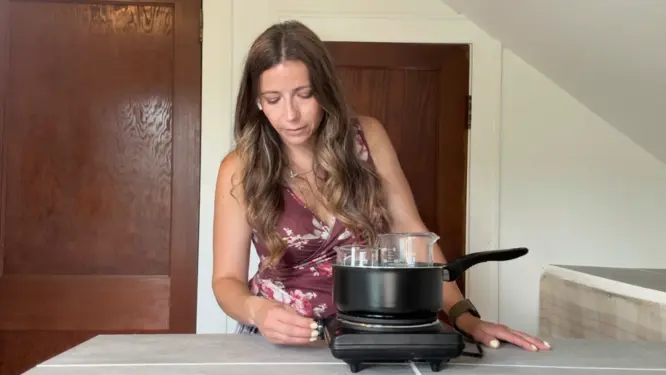
Mango butter is an oil-phase ingredient.
Because it is solid at room temperature, it generally needs to be melted before being incorporated into a formula.
Using Mango Butter in an Anhydrous Formula
For products such as body butter, balm or lotion bars:
- Weigh all ingredients accurately.
- Add the mango butter to the heated oil phase.
- Melt until completely liquid.
- Combine with the remaining ingredients according to your formula.
- Cool using the appropriate process for your formulation.
- Whip, pour or otherwise process the product as directed.
Mango Butter in Lotion
Yes, mango butter can be used in lotion.
Because lotion contains both water and oil, mango butter would generally be incorporated into the oil phase.
But mango butter doesn’t emulsify the lotion.
You still need an appropriate emulsifier to help combine and stabilize the oil and water phases.
And because water-containing products are susceptible to microbial growth, the finished formulation also needs an appropriate preservation system.
Think of the jobs separately:
Mango butter: richness + emollience
Emulsifier: helps stabilize the oil/water emulsion
Preservative: protects the water-containing product from microbial growth
This is one of the most important concepts to understand when moving from simple DIY recipes into cosmetic formulation.
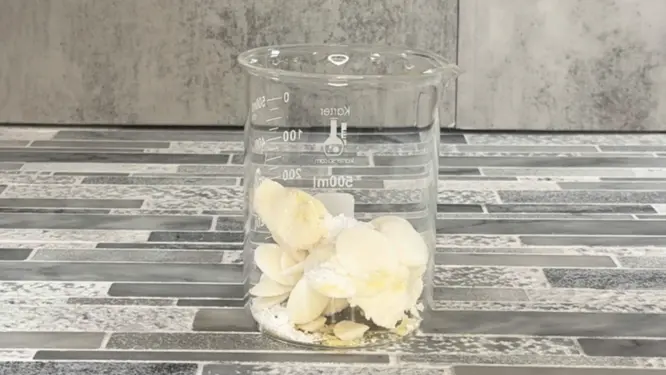
Mango Butter in Body Butter
Body butter is one of the best places to experiment with mango butter.
Mango butter can contribute:
- Richness
- Creaminess
- Structure
- A smooth skin feel
- A relatively neutral aroma
It can also be combined with other plant butters to create a custom texture.
For example:
Mango butter + shea butter
Can give you a rich, creamy butter with a different balance of softness and structure.
Mango butter + cocoa butter
Can give you more structure while maintaining a rich butter base.
Mango butter + liquid oils
Can help create a softer, more spreadable body butter.
This is where formulation gets fun.
You’re not limited to one butter.
You can use several ingredients to build the exact texture you’re looking for.
Can You Whip Mango Butter?
Yes, mango butter can be incorporated into whipped body butter formulations.
However, mango butter behaves differently from softer butters, so your entire formula matters.
The amount of:
- Mango butter
- Liquid oil
- Other butters
- Waxes
- Fatty alcohols
can all influence whether the final product is soft and fluffy, firm and scoopable, or somewhere in between.
If you’re creating a whipped body butter, don’t judge the formula immediately after whipping.
The product’s texture can continue to change as it cools and sets.
Why Did My Mango Butter Become Grainy?
Graininess is a common frustration with homemade body butters.
When you’re working with plant butters, changes in temperature can affect how the fats crystallize.
If your mango butter formula develops a gritty or grainy texture, it doesn’t necessarily mean the ingredient was bad.
It may be a crystallization and cooling issue.
Things that can influence texture include:
- How thoroughly the butter was melted
- Cooling speed
- Temperature fluctuations
- Storage conditions
- The combination of butters and oils in the formula
If you’re making whipped body butter, controlled cooling can be especially helpful.
Mango Butter vs. Shea Butter
This is probably the comparison you’ll see most often.
Both are popular plant butters, but they’re not identical.
Mango Butter
- Generally firm
- Smooth texture
- Mild aroma
- Useful for body butters and creams
- Can add structure
- Works well with other butters and liquid oils
Shea Butter
- Rich and creamy
- Typically softer than cocoa butter
- Distinctive natural aroma when unrefined
- Extremely versatile
- Popular in body butters, lotions and balms
Which is better?
Neither.
It depends on your formula.
If you want a relatively neutral-smelling butter with a smooth feel, mango butter can be a great choice.
If you want the rich characteristics of shea butter, use shea.
And if you can’t decide?
Use both.
Blending butters is a great way to fine-tune texture.
Mango Butter vs. Cocoa Butter
Cocoa butter is generally harder and has a much more recognizable aroma when natural and non-deodorized.
Mango butter is typically chosen when a formulator wants:
- A milder aroma
- A different texture
- A less chocolate-forward product
- A versatile solid butter
Cocoa butter can be especially useful when you need additional firmness.
Mango butter can help provide richness and structure while allowing you to create a different sensory profile.
Can You Substitute Mango Butter for Shea Butter?
Sometimes—but don’t assume the finished product will be identical.
Even though both ingredients are plant butters, they have different physical characteristics.
A 1:1 substitution may change:
- Firmness
- Melting behavior
- Spreadability
- Skin feel
- Whipability
- Final appearance
If you’re making a small personal batch:
Experiment.
That’s part of the fun.
If you’re making products to sell:
Treat the substitution as a reformulation.
Test the finished product for texture, stability, appearance and performance before putting it into production.
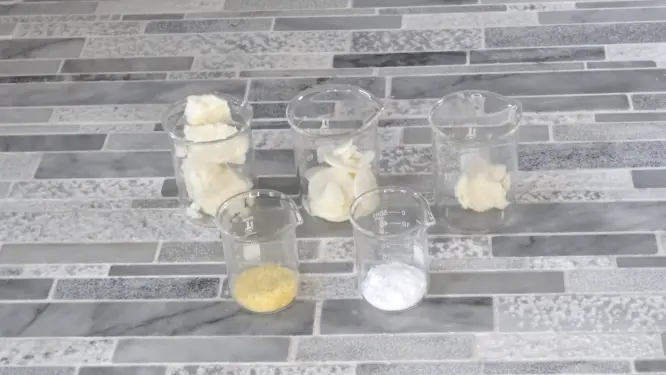
What Ingredients Work Well With Mango Butter?
Mango butter works well with many other cosmetic ingredients.
Liquid Oils
Try pairing it with:
- Jojoba oil
- Sweet almond oil
- Sunflower oil
- Avocado oil
- Apricot kernel oil
- Fractionated coconut oil
- Castor oil
Liquid oils can help create a softer and more spreadable product.
Other Butters
Mango butter can be blended with:
- Shea butter
- Cocoa butter
- Kokum butter
Each one can change the final texture.
This is one of my favorite ways to experiment with body butter.
Start with a basic formula, then make small adjustments and see how the finished product changes.
Waxes & Structuring Ingredients
For balms and solid products, mango butter can be combined with ingredients such as:
- Beeswax
- Candelilla wax
- Cetyl alcohol
- Stearic acid
These ingredients can provide additional structure and alter the final feel.
Mango Butter in Lip Balm
Mango butter can be a lovely addition to lip balm.
It can contribute:
- Creaminess
- Emollience
- Richness
- A smooth feel
However, mango butter alone generally won’t give you the firmness needed for a traditional lip balm stick.
That’s where waxes and other structuring ingredients come in.
A lip balm might combine mango butter with:
- Beeswax
- Candelilla wax
- Cocoa butter
- Shea butter
- Castor oil
- Other liquid oils
The exact balance determines how firm and glidey the finished balm becomes.
Mango Butter in Lotion Bars
Mango butter is also a useful ingredient for solid lotion bars.
A typical lotion bar is an anhydrous product, meaning it doesn’t contain water.
A formula might contain a combination of:
- Mango butter
- Shea butter
- Cocoa butter
- Beeswax
- Liquid oils
Mango butter contributes richness and structure while the wax helps create the solid form. Here is a Vegan Lotion Dot Recipe.
The finished product should soften slightly with the warmth of your skin so it can glide across the body.
Mango Butter in Body Scrubs
Mango butter can also be incorporated into anhydrous body scrubs.
It can make a scrub feel richer and creamier while contributing emollience.
This can be particularly useful when you’re trying to create a scrub that leaves the skin feeling conditioned rather than simply oily.
Does Mango Butter Need a Preservative?
Pure mango butter does not require a broad-spectrum preservative simply because it is a cosmetic butter.
It is an anhydrous, oil-soluble ingredient.
But the finished product determines whether preservation is needed.
Anhydrous example:
Mango butter + oils + wax
No water phase.
Water-containing example:
Mango butter + oils + water
Now you have a water-containing cosmetic formulation that requires appropriate preservation and microbial control.
Does Mango Butter Go Bad?
Mango butter can eventually deteriorate, just like other natural fats.
Typically it is good for 1-2 years.
How long it remains usable depends on factors such as:
- Processing
- Packaging
- Storage
- Exposure to heat
- Exposure to air
- Supplier specifications
Always follow the storage and shelf-life information provided by your supplier.
Store mango butter:
- In a tightly closed container
- In a cool, dry place
- Away from excessive heat
- Away from direct sunlight
- Away from moisture and contamination
Pay attention to changes in:
Smell
Color
Texture
Overall appearance
If the butter develops a clearly rancid or otherwise unusual odor, don’t use it in a finished product.
Refined vs. Unrefined Mango Butter
You’ll often encounter different descriptions when shopping for mango butter.
Processing can affect the ingredient’s:
- Color
- Odor
- Appearance
- Natural components
- Consistency
If you’re making a highly fragranced product or want a neutral-looking finished formula, a refined mango butter may be appealing.
The important thing:
Don’t assume that “unrefined” automatically means better.
And don’t assume that “refined” means inferior.
Choose the version that makes sense for your formulation.
Mango Butter for Beginner Formulators
Mango butter is an excellent ingredient for learning the basics of formulation.
It teaches you that a butter isn’t simply something you add because it’s “good for your skin.”
It has a job.
Mango butter can provide:
Emollience
Structure
Richness
Texture
Firmness
And its behavior changes depending on what you combine it with.
That means you can start experimenting.
Try changing one thing at a time.
Make a body butter with mango butter.
Then make another version using a little more liquid oil.
Compare them.
Try combining mango butter and shea butter.
Then try mango butter and cocoa butter.
Pay attention to:
- How easily the product spreads
- How quickly it melts
- How firm it feels
- How it feels after application
- How it changes after a few days
This is how you start learning formulation rather than simply following recipes.
Common Mango Butter Mistakes
Mistake #1: Assuming it’s identical to shea butter
They’re both plant butters, but they have different characteristics.
A substitution can change the finished product.
Mistake #2: Thinking more butter automatically means better skincare
More mango butter can make a formula richer or firmer, but that doesn’t mean the finished product will necessarily feel better.
Formulation is about balance.
Mistake #3: Ignoring the cooling process
The way an anhydrous product cools can affect its final texture.
If you’re dealing with graininess, don’t automatically blame the ingredient.
Look at your processing method too.
Mistake #4: Forgetting about fragrance
Mango butter is generally mild-smelling, which can be an advantage.
But always evaluate the aroma of your actual ingredient because natural ingredients can vary.
Frequently Asked Questions
Is mango butter good for dry skin?
Mango butter is commonly used in rich, emollient skincare products intended for dry-feeling skin because it helps provide a soft, conditioned skin feel.
Is mango butter oil soluble?
Yes. Mango butter is an oil-soluble ingredient and is generally incorporated into the oil phase of a formulation.
Is mango butter made from mango fruit?
Mango butter is made from the seed kernel of the mango rather than the edible fruit pulp.
Does mango butter smell like mango?
No.
Unlike a mango fragrance oil or mango flavor, cosmetic mango butter generally has a relatively mild aroma and doesn’t necessarily smell like ripe mango fruit.
Can I use mango butter directly on my skin?
Mango butter is commonly used as a cosmetic skin-conditioning ingredient, including in anhydrous products. Individual skin sensitivities vary, so consider testing a small area when trying a new ingredient.
Can I use mango butter in lotion?
Yes. Mango butter can be incorporated into the oil phase of a lotion or cream.
Because lotion contains water, you’ll also need an appropriate emulsifier and preservation system.
Can I whip mango butter?
Yes, mango butter can be incorporated into whipped body butter formulations.
The final texture depends on the entire formula and processing method.
Why is my mango butter grainy?
Temperature changes and crystallization can affect the texture of plant-butter formulations.
Controlled melting and cooling can help reduce unwanted graininess.
Can I substitute mango butter for shea butter?
Sometimes, but the finished product may have a different firmness, texture and melting behavior.
Treat significant substitutions as formulation changes.
Does mango butter clog pores?
Mango butter in Non-Comedogenic. Meaning it does not typically clog pores.
The behavior of a finished cosmetic depends on the entire formulation and the person using it.
For facial products, evaluate the complete formula rather than judging it solely by one ingredient.
Does mango butter need to be refrigerated?
Usually not. Follow the storage recommendations from your ingredient supplier. A cool, dry location away from excessive heat and direct sunlight is generally appropriate.
DIY Recipes Using Mango Butter
Now that you know what mango butter can do, it’s time to put it to work.
DIY Whipped Body Butter
Mango butter is a beautiful ingredient to experiment with when you’re making rich, whipped body butter.
Get the Whipped Body Butter Recipe
DIY Lotion
Use mango butter as part of the oil phase in a rich homemade lotion.
Get the DIY Face Lotion Recipe
Get the DIY Shimmer Lotion Recipe
DIY Lip Balm
Mango butter can contribute richness and a creamy feel to homemade lip products.
DIY Lotion Bars
Combine mango butter with oils and waxes to create a solid moisturizer-style bar.
DIY Body Scrubs
Add mango butter to an anhydrous scrub when you want a richer, more conditioning experience.
Ready to Formulate With Mango Butter?
Mango butter is one of those ingredients that becomes much more interesting once you stop thinking about it as simply a “natural moisturizer.”
It’s a formulation tool.
You can use it to change:
- Texture
- Firmness
- Richness
- Spreadability
- Skin feel
- Structure
And you can combine it with other ingredients to create completely different products.
A soft whipped body butter.
A rich cream.
A firm balm.
A creamy lip product.
A solid lotion bar.
That’s what makes formulation so much fun.
Want to Learn More About Skincare Formulation?
If you’re ready to move beyond following recipes and actually understand why ingredients are included in a formula, check out my Skincare Formulation for Beginners guide.
You’ll learn how emollients, humectants, occlusives, emulsifiers, preservatives and other formulation ingredients work together to create finished skincare products.
Start the Skincare Formulation for Beginners Guide
More Ingredient Guides
Butters & Waxes
Shea Butter
Learn how this versatile butter works in body butters, lotions, balms and more.
Cocoa Butter
A firm, rich butter that’s especially useful for balms, lip products and solid skincare.