
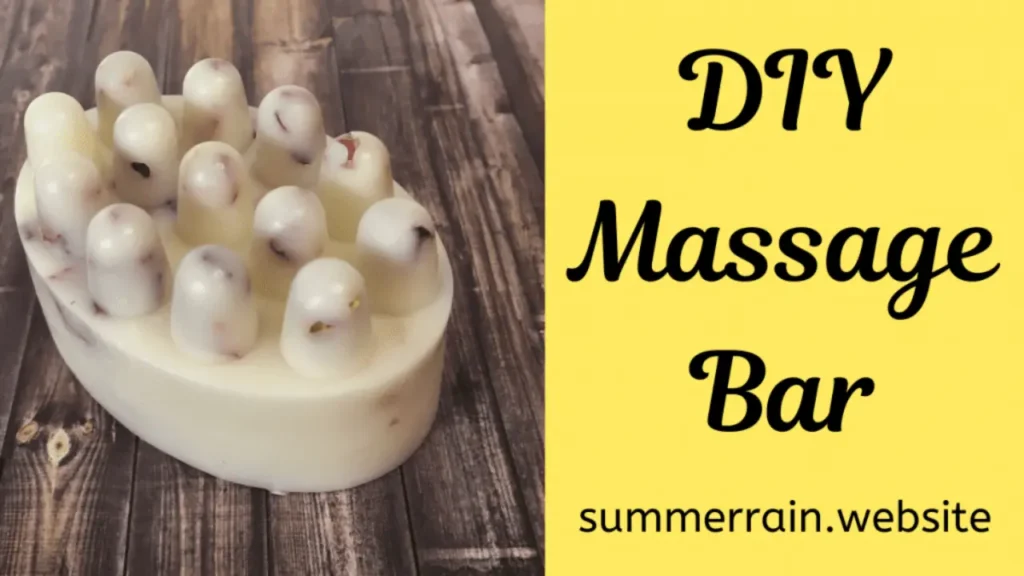
If you love the idea of turning your everyday body-care routine into something that feels a little more like a spa treatment, these DIY massage bars are a fun place to start.
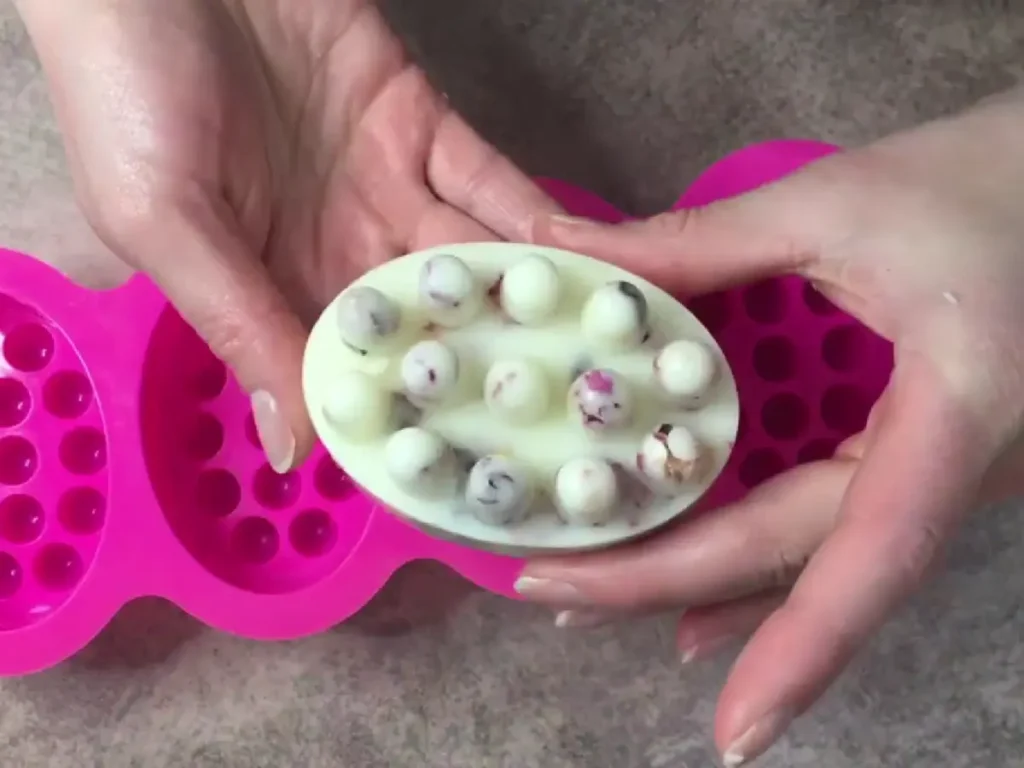
A massage bar is a solid, oil-based body-care product that softens when it comes into contact with warm skin. Instead of scooping lotion from a bottle, you simply glide the bar over your skin, allowing a small amount of the oils and butters to melt onto the surface.
Unlike a traditional lotion, there is no water in this formula. That is what makes the finished product solid at room temperature while still allowing it to soften with body heat.
For this version, I combined beeswax, mango butter, shea butter, and grapeseed oil with a relaxing essential oil blend and dried rose petals. The result is a simple solid massage bar that looks beautiful, smells wonderful, and is easy to customize.
The trick to making a good massage bar is getting the balance right. Too much beeswax and the bar can feel hard and waxy. Too much liquid oil and it may become too soft to hold its shape.
So let’s look at how the formula works and how you can make these rose petal massage bars at home.
Prefer to Watch This Project Instead of Reading It?
If you prefer watching the process, the video walks through making these massage bars from start to finish.
Affiliate disclosure: This post may contain affiliate links. If you purchase something through one of these links, I may earn a small commission at no additional cost to you. These commissions help support Summer Rain and allow me to continue creating free tutorials and recipes.
What Is a Massage Bar?
A massage bar is essentially a solid oil-based body product designed to soften from the warmth of your skin.
Instead of applying a liquid massage oil or lotion, you hold the bar against warm skin and gently glide it over the area you want to massage. The warmth of your skin softens the surface of the bar and deposits a thin layer of oils and butters.
You can then massage the product into the skin using your hands.
Massage bars can be especially convenient for:
- Massage
- Dry areas of the skin
- Hands and feet
- Elbows and knees
- A relaxing bedtime body-care routine
- Anyone who enjoys solid body-care products
Because this is an anhydrous formula, there is no water phase in the recipe.
That distinction is important because it affects preservation, storage, and how you use the finished product.
Massage Bar vs. Lotion Bar: What’s the Difference?
Massage bars and lotion bars can look very similar because both are solid at room temperature.
The biggest difference is really how you intend to use them.
A lotion bar is generally designed to be rubbed over the skin and leave behind a concentrated layer of oils and butters. A massage bar is formulated with the same basic idea but is particularly suited to gliding over the skin during massage.
That means the balance of wax, butters, and liquid oil matters.
If the bar is too hard, it won’t release enough product onto the skin.
If it is too soft, it may melt too quickly or be difficult to handle.
The goal is a middle ground: firm enough to remain a bar at room temperature, but soft enough to glide across warm skin and release a small amount of product.
Massage Bar Formula
This recipe makes approximately 4 ounces, or 113 grams, of massage bars.
| Ingredient | Percentage | Ounces | Grams |
|---|---|---|---|
| Beeswax | 28% | 1.12 oz | 31.75 g |
| Mango Butter | 5% | 0.20 oz | 5.67 g |
| Shea Butter | 28% | 1.12 oz | 31.75 g |
| Grapeseed Oil | 38% | 1.52 oz | 43.09 g |
| Relax Essential Oil Blend | 1% | 0.04 oz | 1.13 g |
| Dried Rose Petals | — | As desired | As desired |
The percentages add up to 100% for the oil, butter, wax, and essential oil portion of the formula. The dried rose petals are decorative and are not included in the percentage calculation.
One of the reasons I like looking at this formula in percentages is that it makes the recipe much easier to understand and scale.
If you wanted to make a larger or smaller batch, you can calculate each ingredient from the total batch size rather than relying only on the ounce measurements.
If you’re new to working with percentages, my guide on percentages vs. grams in skincare formulation is a helpful place to start.
What Makes a Good Massage Bar?
A good massage bar should feel firm when you pick it up but begin to soften after a few seconds against warm skin.
It shouldn’t require heavy pressure to release product, but it also shouldn’t immediately melt into a large amount of oil.
That balance comes from the formula.
Beeswax provides structure. The butters add richness and help control the hardness of the finished bar, while the liquid oil contributes glide and makes it easier for the bar to release product onto the skin.
Room temperature also matters.
A massage bar that feels perfectly firm in a cool room may become noticeably softer in a warm bathroom or during hot weather.
This is why making a solid body-care product is really about finding the right balance between structure, softness, glide, and melting behavior.
Why the Hardness of the Massage Bar Matters
This is one of the most important parts of making a solid massage bar.
You need enough structure to keep the product solid at room temperature, but you also need enough soft oils and butters to allow the bar to soften when it touches warm skin.
Think about the ingredients on a spectrum.
Beeswax provides a lot of structure. Shea butter is much softer. Mango butter falls somewhere between very hard waxes and softer butters, while grapeseed oil is liquid at room temperature.
That means each ingredient is doing something different in the formula.
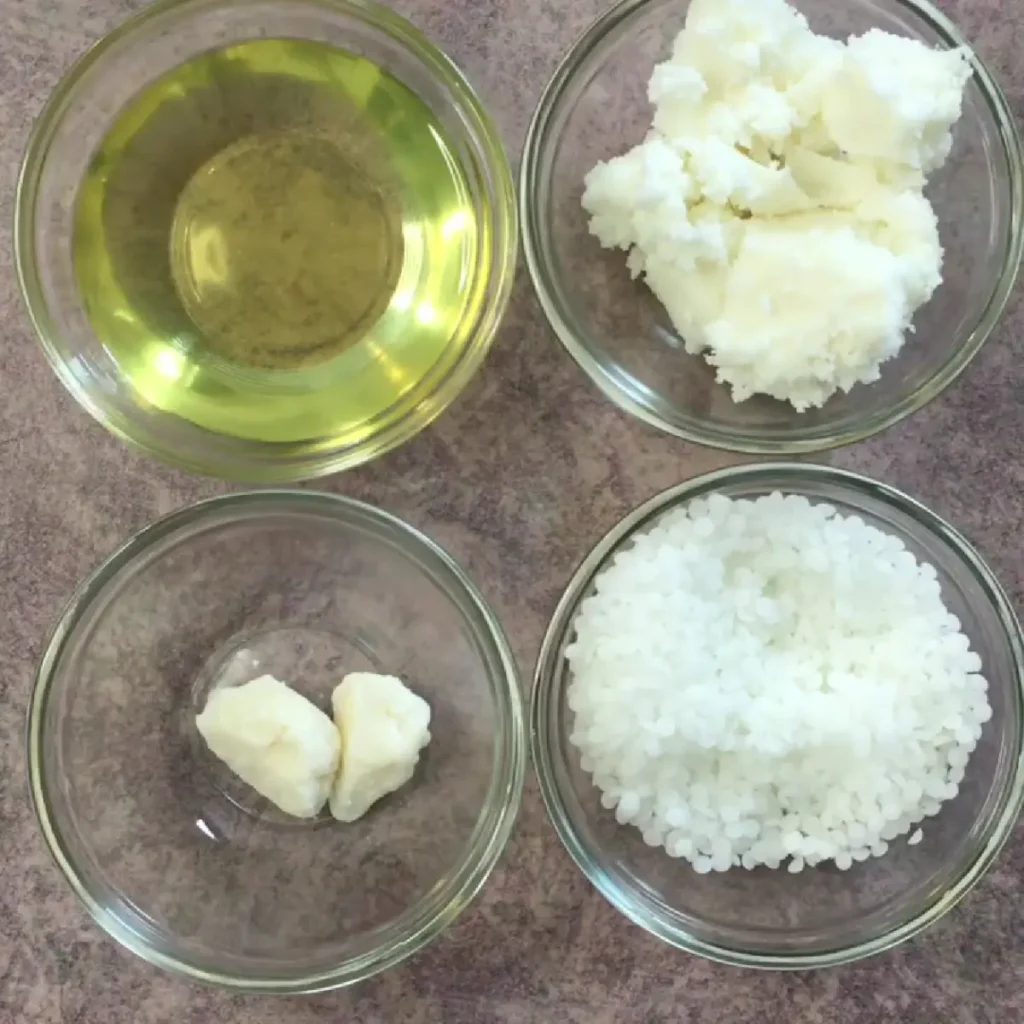
Beeswax
Beeswax is the main structural ingredient in this recipe.
It helps the finished massage bar stay solid and gives it the firmness needed to hold its shape outside the container.
It also contributes to the feel of the finished product by leaving a protective, emollient layer on the skin.
If you dramatically reduce the beeswax without adjusting the rest of the formula, the finished bar will become softer.
Mango Butter
Mango butter helps provide structure while still giving the bar a smoother, softer feel than a formula made primarily from wax.
It is a useful middle ground in a solid body-care formula.
Only 5% is used here, so it isn’t responsible for most of the bar’s hardness. Instead, it contributes to the overall butter phase of the formula.
Shea Butter
Shea butter is softer than beeswax and gives the massage bar a creamier feel.
It also helps keep the finished bar from becoming overly hard or waxy.
One important thing to remember when working with shea butter is that it doesn’t behave like beeswax. If you build a formula around too much soft butter and not enough structure, you can end up with something that doesn’t behave like a bar at all.
Grapeseed Oil
Grapeseed oil is the largest ingredient in this formula at 38%.
Unlike the wax and butters, grapeseed oil is liquid at room temperature. That makes it an important part of the glide of the massage bar.
It helps the bar release product as you rub it over the skin rather than feeling like you are simply rubbing a hard piece of wax across your body.
Because it makes up such a large percentage of the formula, changing the liquid oil can noticeably change the finished texture and skin feel.
Relax Essential Oil Blend
The essential oil blend adds fragrance and is part of what gives these bars their spa-like character.
The blend used in this recipe contains a blend of Lavender, Sweet Marjoram, Mandarin, Patchouli, Egyptian Geranium, and Roman Chamomile.
If you substitute another essential oil or fragrance, don’t automatically assume that the same usage rate is appropriate. Always check the supplier’s recommended usage rate and applicable IFRA information for the intended body product.
The fragrance is only 1% of this formula, so it is also worth weighing it rather than trying to measure such a small amount with drops.
Dried Rose Petals
The dried rose petals are primarily here for appearance and the overall spa-inspired experience.
They make the finished bar look special without needing to add colorants.
I like the natural look of the petals against the creamy color of the massage bar, but you can also leave them out if you prefer a completely smooth bar.
For a massage bar that will be rubbed directly over the skin, I recommend using very small pieces of dried petals rather than large pieces. Large or sharp pieces may feel rough against the skin.
If you have sensitive skin or simply prefer a smoother massage experience, leave the petals out entirely.
Do Massage Bars Need a Preservative?
This recipe does not contain water, which makes it an anhydrous formula.
Preservatives are primarily used to control microbial growth in products where water is available. Since there is no water phase in this formula, a traditional broad-spectrum preservative is not included in this recipe.
However, anhydrous does not mean contamination-proof.
You can learn more about why this matters in Why Preservatives Matter in DIY Skincare.
How to Make Massage Bars
1. Weigh Your Ingredients
Because this is a formulated product, I recommend using a digital scale rather than measuring by volume.
Weigh the beeswax, mango butter, shea butter, grapeseed oil, and essential oil separately.
Accurate weighing is especially important when you’re making changes to a formula because even small percentage changes can affect the final texture.
2. Melt the Beeswax, Mango Butter, and Grapeseed Oil
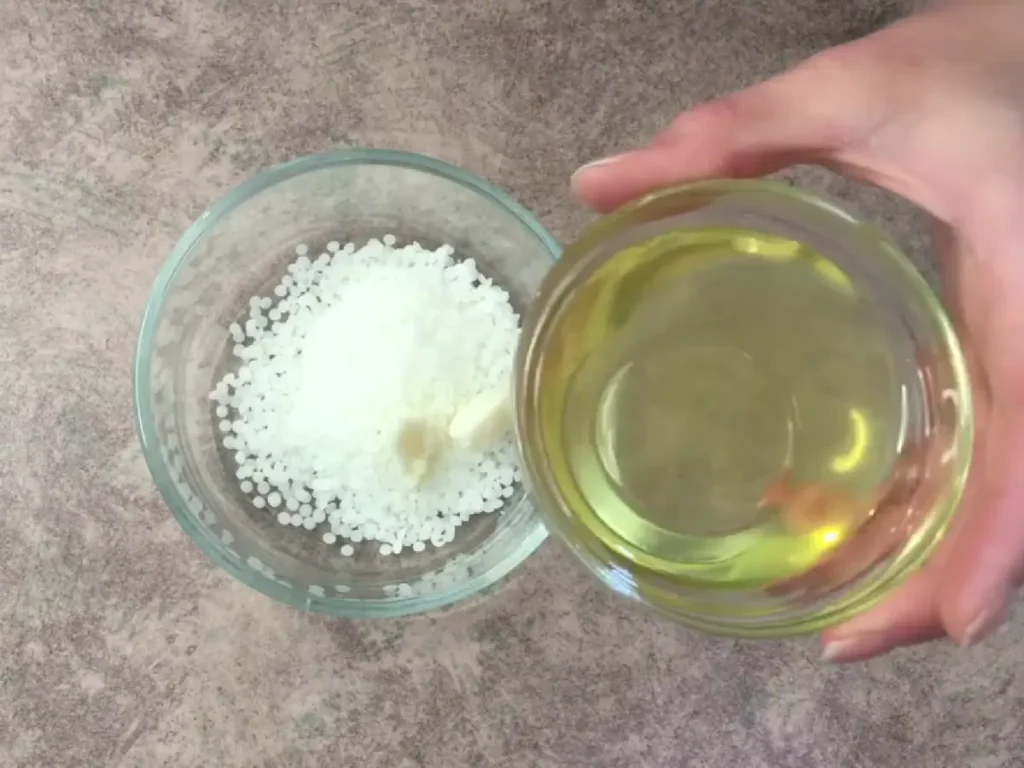
Add the beeswax, mango butter, and grapeseed oil to a heat-safe container.
Place the container in a double boiler and gently heat until the beeswax and mango butter have completely melted.
Stir occasionally as everything melts.
3. Remove From the Heat
Once everything is fully melted, remove the mixture from the double boiler.
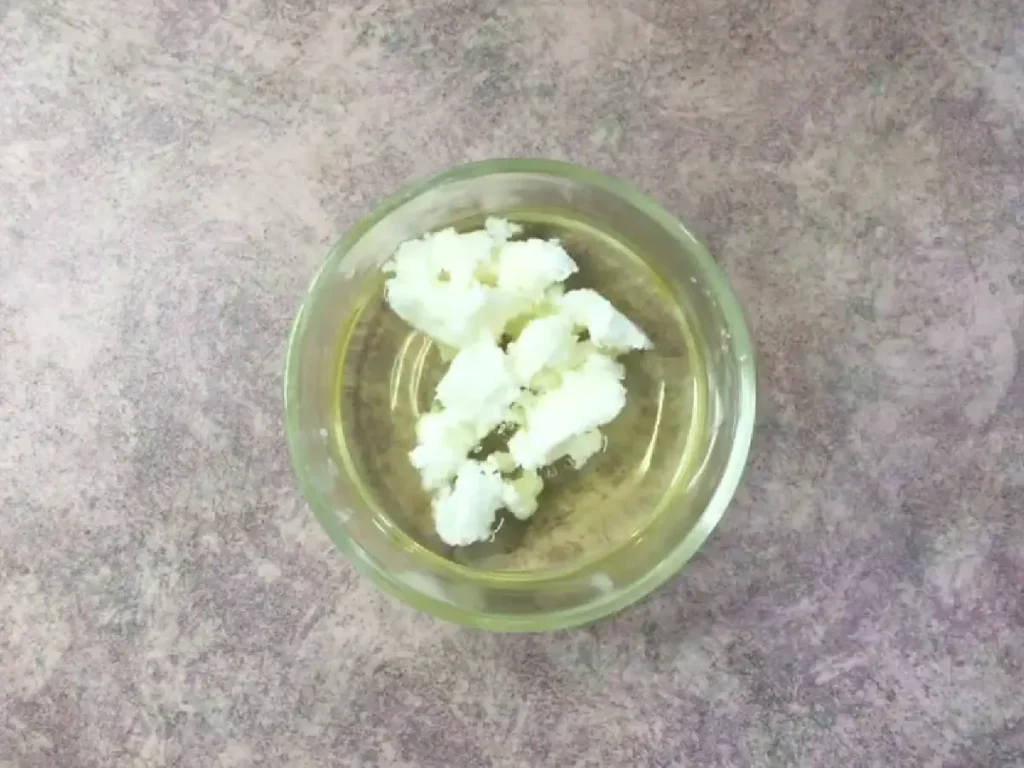
4. Add the Shea Butter
Once the beeswax and mango butter are melted, add the shea butter.
Stir until the shea butter is completely melted and the mixture is uniform.
You don’t want pieces of unmelted butter remaining in the mixture before you pour your bars.
5. Add the Essential Oil
Add the essential oil blend and stir thoroughly.
Make sure the fragrance is evenly distributed throughout the melted oils and butters.
6. Prepare Your Mold
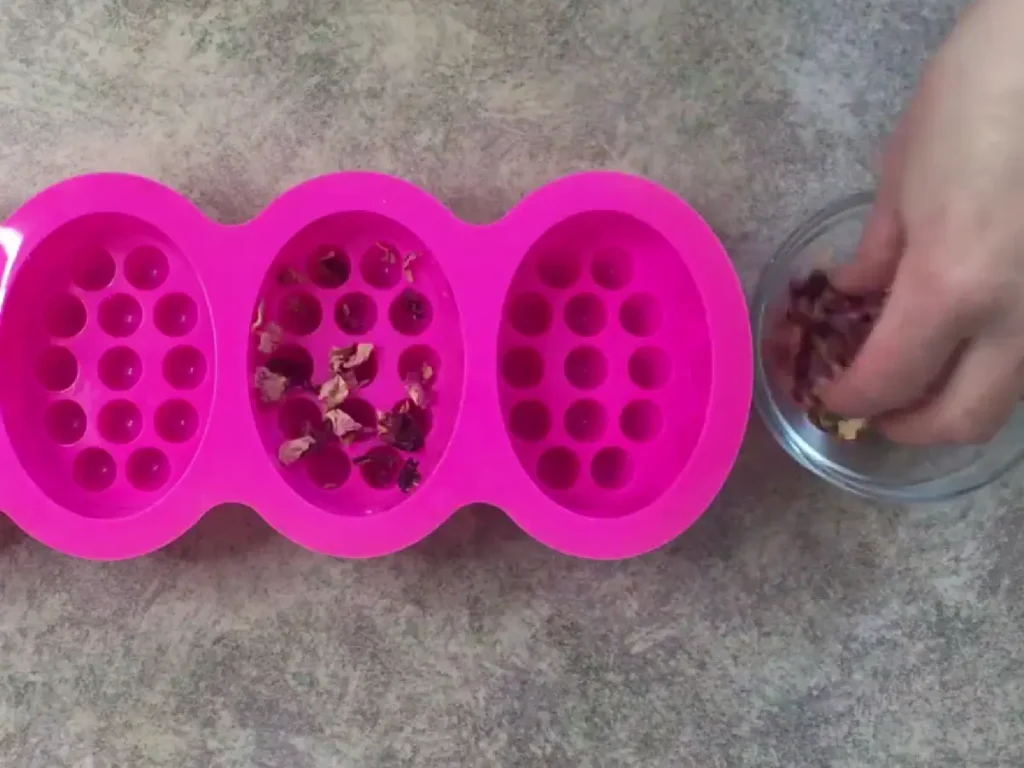
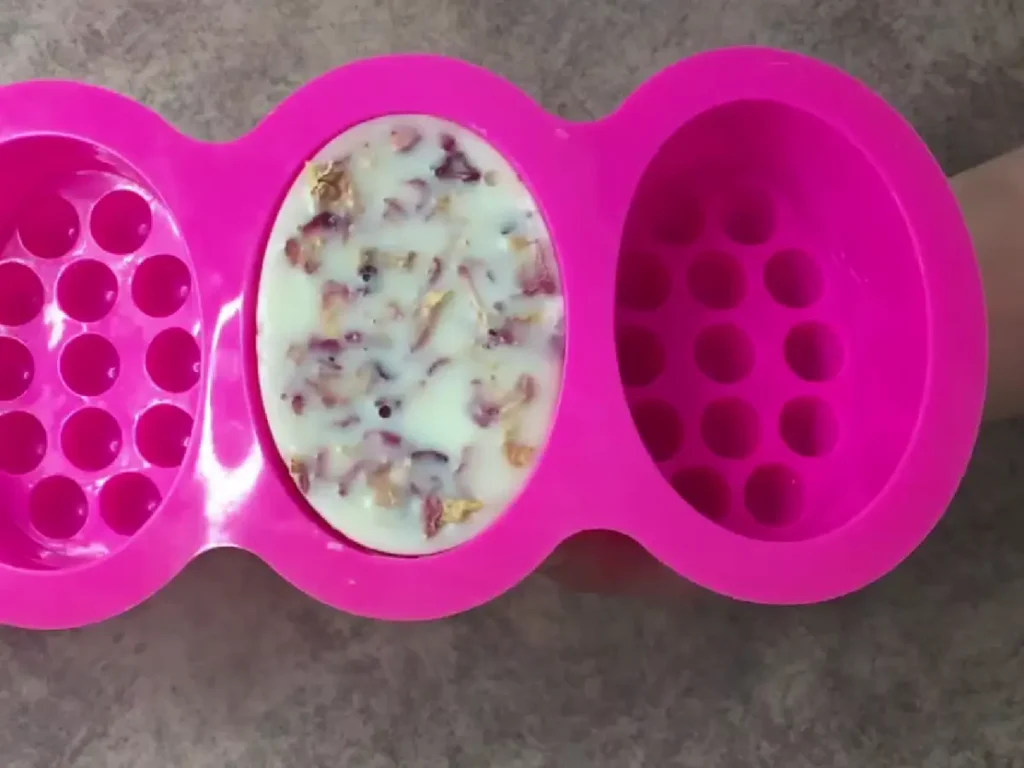
Sprinkle some of the dried rose petals into the bottom of your silicone mold.
You don’t need a thick layer. A small amount is enough to give the finished bars a decorative floral look.
7. Pour the Massage Bars
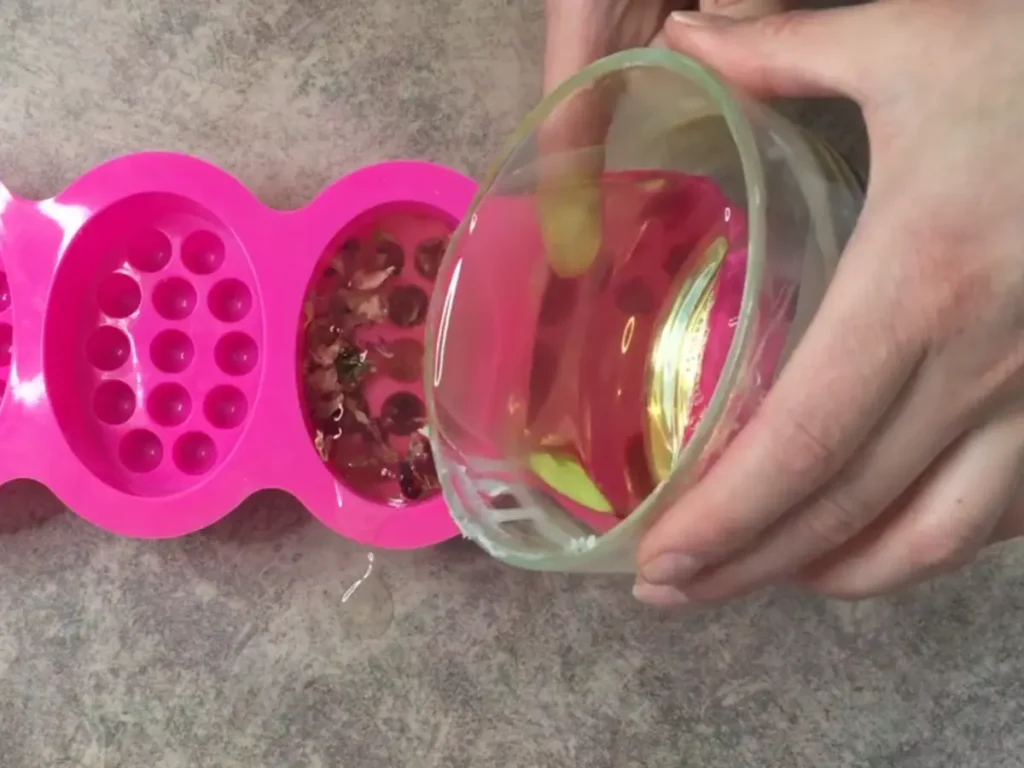
Slowly pour the melted mixture into the silicone mold.
8. Add Additional Rose Petals
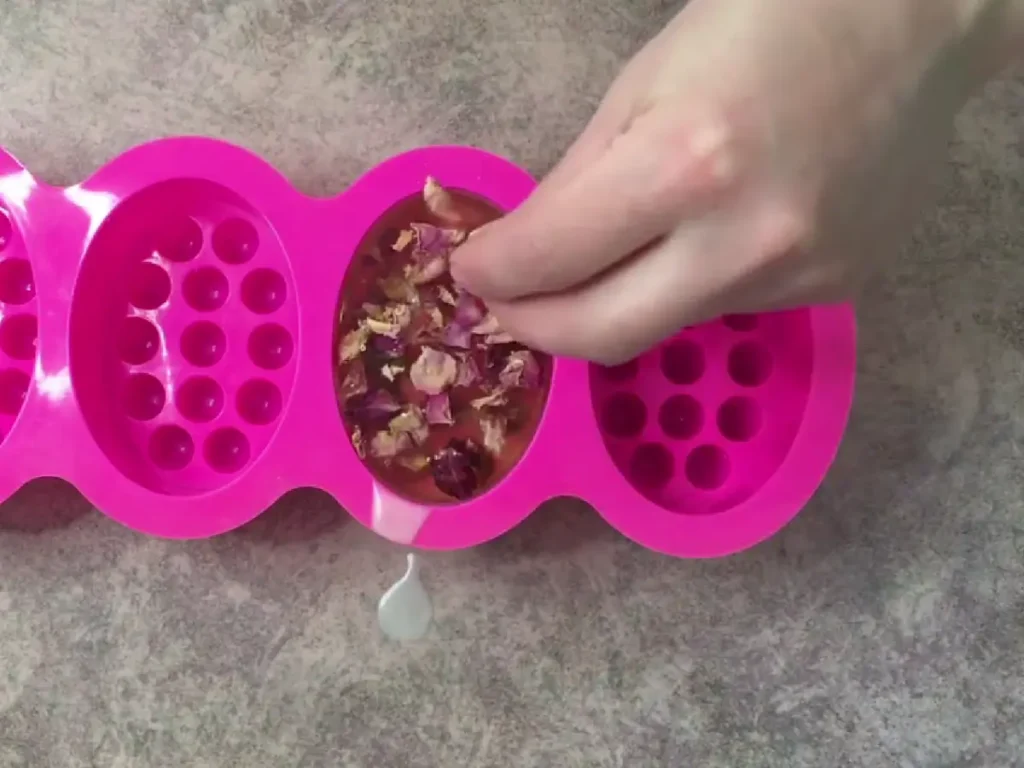
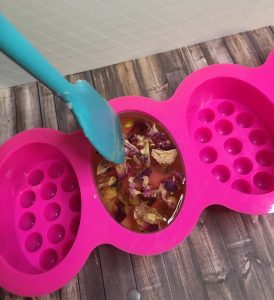
Add a few more small rose petals to the surface if desired.
If the petals are floating where you don’t want them, use a clean spatula or similar tool to gently move them into place.
9. Allow the Bars to Cool Completely
Leave the mold undisturbed until the massage bars are completely solid.
You want the entire bar to set before removing it from the mold.
Once completely hardened, gently remove the bars from the silicone mold.
How to Use a Massage Bar
Using a massage bar is simple.
Hold the bar directly against warm skin and gently glide it over the area you want to massage.
You don’t need to press hard. The warmth of your skin will soften the surface of the bar and release a small amount of the oils and butters.
You can then massage the product into the skin using your hands.
If the bar feels too hard to glide easily, try warming it between your hands for a few seconds first.
If it feels too soft or melts extremely quickly, use less pressure and keep the bar in a cooler location between uses.
Because massage bars contain oils and butters, they can make the skin and surrounding surfaces slippery. Use extra care when applying them to your feet or when walking on hard floors afterward.
How Much Massage Bar Should You Use?
This is one of the advantages of a solid massage bar: you can control how much product you apply.
Start with a small amount.
Glide the bar over the skin once or twice and then massage the product in. If you want more slip, you can apply another pass.
It is much easier to add more product than to start with too much.
Why Is My Massage Bar Too Hard?
If your finished massage bar is harder than you expected, the formula may contain too much structure for the way you want to use it.
Beeswax is particularly important here because it is much harder than the liquid oil.
A harder bar isn’t necessarily a failed batch. It may simply be better suited to warmer environments or people who prefer a firmer product.
For a softer massage bar, you would generally look at the balance between beeswax, butter, and liquid oil rather than simply adding more of one ingredient after the fact.
Remember that temperature can also affect how hard the bar feels.
Why Is My Massage Bar Too Soft?
The opposite problem can happen too.
If there isn’t enough structure relative to the softer ingredients and liquid oils, the bar may become very soft.
Temperature also matters.
A massage bar that feels perfectly firm in a cool room can become noticeably softer in a warm bathroom.
This is why formulation is always about balance rather than finding one ingredient that makes a product “hard” or “soft.”
Can I Change the Oil?
Yes, you can experiment with different liquid oils, but remember that changing an ingredient can change the finished texture and skin feel.
Grapeseed oil is used here because it provides a relatively light-feeling liquid oil for the formula.
If you substitute another oil, consider its consistency and how you want the finished massage bar to feel.
And when you’re experimenting with formulations, make one change at a time. That makes it much easier to figure out what caused a change in the finished product.
Can I Leave Out the Rose Petals?
Absolutely.
The rose petals are not necessary for the structure of the massage bar.
They are primarily a decorative addition, so you can leave them out if you want a completely smooth bar.
You could also experiment with another dried botanical, provided it is appropriate for the intended cosmetic use and doesn’t create an uncomfortable texture against the skin.
Can I Add Color to Massage Bars?
You can, but you don’t need to.
I actually like the natural appearance of this formula with the dried rose petals.
If you decide to add a colorant, make sure it is specifically suitable for the intended cosmetic use and oil-based formulation. Not every colorant is appropriate for every type of product.
How Should I Store Massage Bars?
Store your finished massage bars somewhere cool and dry.
Because these are solid oil-based products, heat can soften them considerably.
A bathroom that becomes very warm may not be the best place to store them, especially during warmer months.
If you live in a hot climate, you may find that the bars need a cooler storage location to maintain their shape.
A tin, box, or other suitable container can also help protect the bars between uses.
How Long Do Homemade Massage Bars Last?
Because this is an anhydrous formula, there is no water phase for a typical preservative system to control.
However, that doesn’t mean you should assume an exact shelf life without considering the individual ingredients, packaging, storage conditions, and potential contamination.
The oils in the formula can oxidize over time, so using fresh ingredients and storing the finished bars properly is important.
If the bar develops an unusual odor, noticeable changes in color or texture, or other signs of deterioration, discard it.
For more information about determining the shelf life of homemade cosmetics, see How Do You Determine the Shelf Life of Homemade Cosmetics?.
A Few Tips for Better Massage Bars
Weigh Everything
A digital scale gives you much more control than measuring oils and waxes by volume.
Don’t Rush the Cooling Process
Allow the bars to cool completely before removing them from the mold.
Be Careful With Rose Petals
Small pieces can make a pretty finish. Large pieces may be less comfortable when the bar is rubbed directly against the skin.
Make a Small Test Batch When Changing the Formula
If you want to experiment with different waxes, butters, or oils, test a small batch first.
That way you can evaluate hardness, glide, melting behavior, and skin feel before making a large batch.
What Makes These Massage Bars Feel Spa-Like?
For me, it isn’t just one ingredient.
The experience comes from combining the solid format, the way the bar softens against warm skin, the aroma of the essential oil blend, and the dried rose petals.
You can also make the experience your own by choosing a different scent or leaving the petals out for a cleaner-looking bar.
The important part is understanding that the sensory experience starts with the formula.
The wax determines structure, the butters contribute richness and softness, and the liquid oil gives the bar its glide.
Once you understand that balance, you can start creating your own versions instead of simply following a recipe.
Frequently Asked Questions
Are Massage Bars the Same as Lotion Bars?
They are very similar because both are solid, anhydrous body-care products. The main difference is how they are intended to be used. Massage bars are designed to soften with body heat and provide enough slip for massage.
Do Massage Bars Melt on Your Skin?
They soften and release oils when warmed by your skin. How quickly they melt depends on the formula, room temperature, and how much pressure you apply.
Do Massage Bars Need a Preservative?
This particular formula does not contain water, so a preservative is not included. However, you should still keep water out of the finished product and store it properly.
Can I Use a Different Essential Oil?
Yes, but check the recommended usage rate and safety information for the specific essential oil or fragrance you choose.
Can I Make These Without Beeswax?
You can experiment with other waxes, but beeswax contributes significantly to the firmness of this particular formula.
Replacing it is not necessarily a one-for-one substitution because different waxes have different characteristics and can produce very different textures.
Why Did My Massage Bar Become Soft?
Temperature and formula balance are the two biggest things to consider.
A warm environment can soften the bar, while too much liquid oil or not enough structural ingredients can also produce a softer bar.
How Do I Make a Harder Massage Bar?
The formula can be adjusted toward more structure, but make changes carefully.
Increasing the wax or reducing the liquid oil will affect not only hardness but also how the bar glides and melts on the skin.
Can I Use These Massage Bars on My Face?
This formula was designed as a body-care product rather than a facial product.
The essential oil blend, fragrance level, and overall texture were chosen for body use, so I would keep these bars intended for the body.
Can I Use Massage Bars on My Feet?
Yes, but use care because the oils can make your feet and surrounding surfaces slippery.
Apply a small amount and allow the product to absorb before walking on hard floors.
More Body-Care Formulas to Try
If you enjoy making solid and formulated body-care products, you may also want to explore:
- How to Make Lotion Dots (Mini Lotion Bars)
- How to Make Professional Lotion at Home
- Emulsified Body Butter
- How to Make an Emulsified Sugar Scrub
Printable Massage Bar Recipe
How to Make Massage Bars
Equipment
- Double boiler
- Scale
- Spatula
- Silicone mold
Ingredients
- 1.12 ounce | 28% Beeswax
- 0.20 ounce | 5% Mango Butter
- 1.12 ounce | 28% Shea Butter
- 1.52 ounce | 38% Grapeseed Oil
- 0.04 ounce | 1% Relax Essential Oil Blend
- Dried Rose Petals
Instructions
- Weigh all your ingredients.
- Place the beeswax, mango butter and grapeseed oil in a heat safe container. Place mixture on a double boiler.
- Leave on heat until fully melted, stirring regularly.
- After the oils are melted add in your shea butter. Stir well.
- If the shea butter does not melt completely, pop the mixture back on the double boiler.
- While on the double boiler, stir it continuously until the shea butter is melted.
- Remove from heat.
- Add essential oils and mix well.
- Sprinkle dried rose petals in the bottom of the massage bar mold.
- Pour the hot oils into the mold.
- After it is poured, add a few rose petals to the top of it.
- Use your spatula to spread the petals around the massage bar.
- Allow to cool completely.
- Remove from silicone mold and enjoy your massage bar!