
If you’ve ever wondered why some skincare products feel rich while others feel light, or why some lotions stay smooth while others separate, the answer comes down to formulation basics.
Understanding how ingredients work together is what turns DIY skincare from guesswork into something predictable and repeatable. Whether you’re making lotions, balms, scrubs, or creams, the same core principles apply.
This guide covers the essential concepts every beginner should understand, including ingredient roles, emulsions, and how oil and water work together in skincare.
If you’re new to formulation, start here — this page will connect everything together.
How Skincare Formulation Works
Every skincare product is made from a combination of ingredients that each serve a purpose. Some ingredients hydrate, some protect, and some hold everything together.
When these ingredients are balanced properly, a product feels smooth and stable. When they aren’t, products can feel greasy, thin, or unstable.
Understanding ingredient roles is the first step toward understanding formulation.
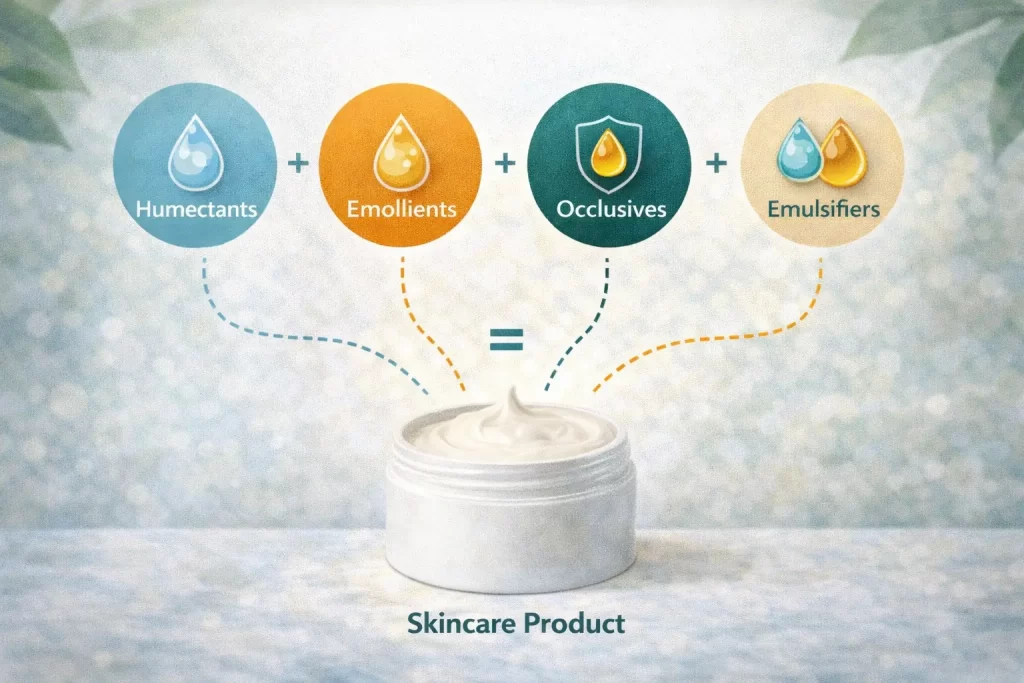
Understanding Ingredient Roles
Each ingredient in a formula has a job. Some ingredients hydrate the skin, some soften it, and others protect it from moisture loss.
The most common ingredient categories include:
- Humectants (draw water into skin)
- Emollients (soften skin)
- Occlusives (lock in moisture)
- Emulsifiers (hold oil and water together)
When these ingredients are balanced correctly, skincare products feel comfortable and effective.
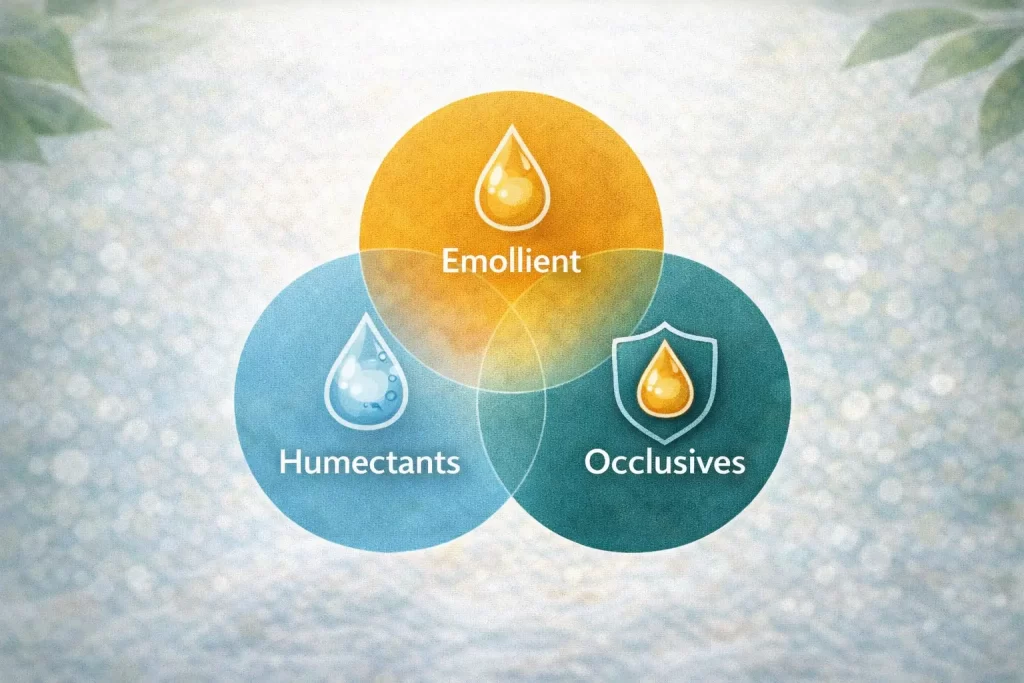
Water vs Oil in Skincare
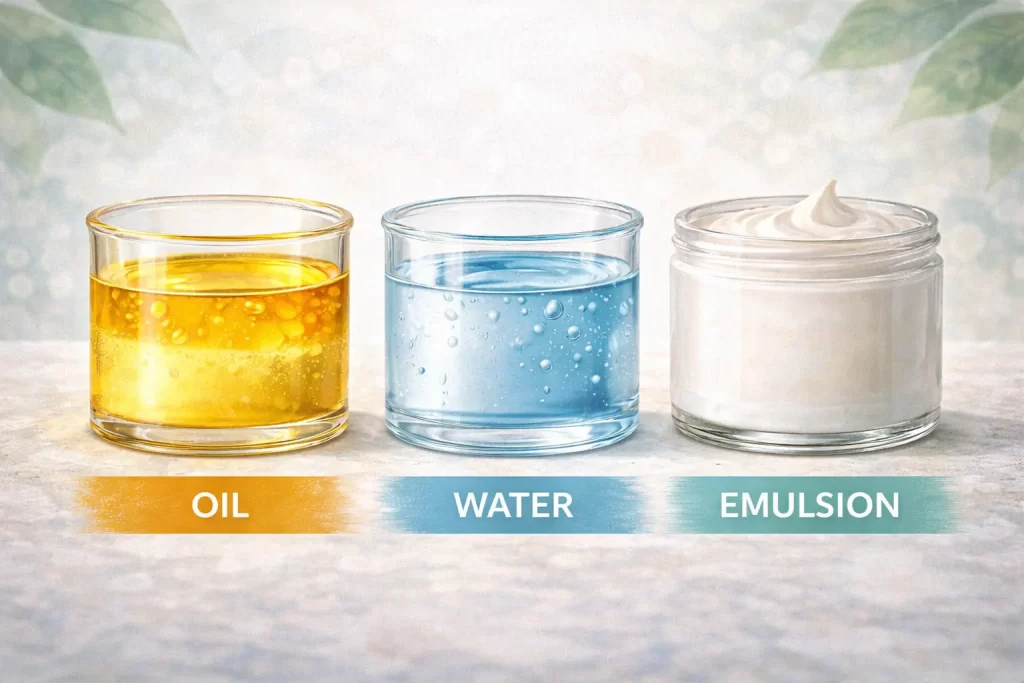
One of the most important formulation concepts is understanding the difference between water and oil.
Water hydrates the skin, while oil helps prevent moisture loss. Most effective skincare products use both.
Products that contain only oil can feel rich but won’t provide hydration the same way water-based products do. On the other hand, water-based products hydrate but may not lock in moisture.
Understanding how these two phases work together is key to creating balanced products.
What Is an Emulsion?
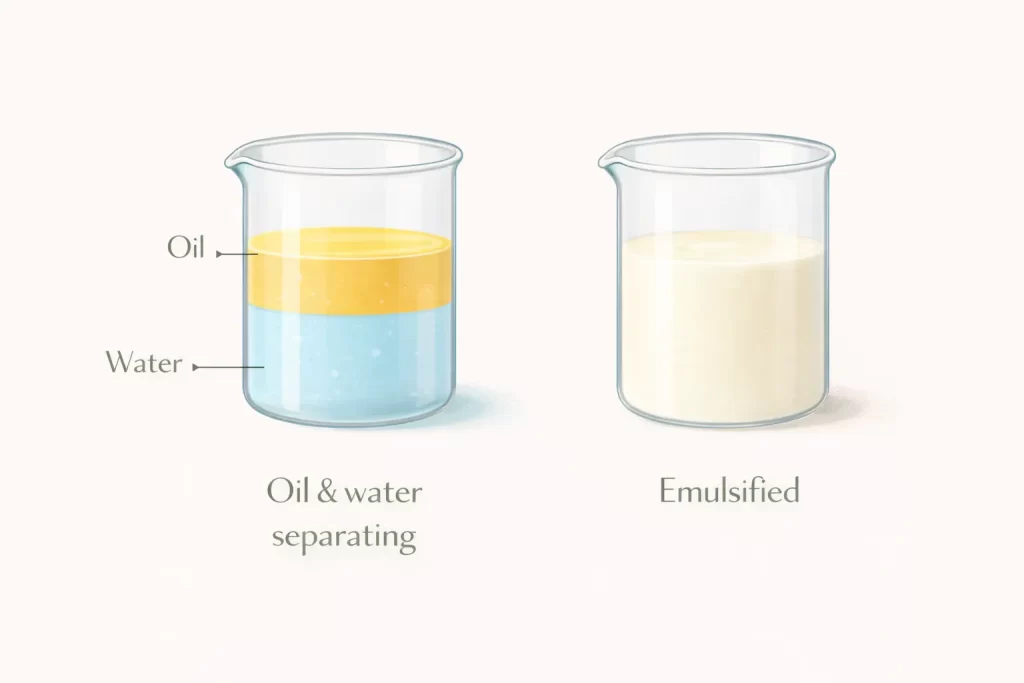
Many skincare products contain both water and oil. Because these don’t naturally mix, they require emulsifiers to stay combined.
An emulsion is a stable mixture of oil and water held together by an emulsifier.
This is what makes lotions and creams possible.
Without emulsifiers, oil and water will separate over time.
Why DIY Skincare Separates
Separation is one of the most common issues in DIY skincare.
When a product separates, it usually means:
- The emulsifier is too low
- The oil phase is too high
- The formula isn’t balanced
- The mixing process wasn’t correct
Separation is usually fixable once you understand the cause.
Types of Skincare Products
Different types of skincare products rely on different formulation structures.
Oil-Based Products
These include:
- Body butters
- Balms
- Salves
They do not require emulsifiers and do not contain water.
Water-Based Products
These include:
- Toners
- Sprays
- Gel products
They require preservatives.
Emulsified Products
These include:
They require emulsifiers and preservatives.
Why Ingredient Balance Matters
Balanced formulations feel better and last longer.
Too much oil can make products greasy. Too much water can make products thin.
Using ingredients that serve multiple purposes can help create more stable formulas.
Beginner Formulation Tips
If you’re just getting started:
Start simple
Follow tested recipes
Measure carefully
Heat properly
Mix thoroughly
These small steps make a big difference in product stability.
Where to Go Next
If you want to understand formulation better, these guides will help:
Ingredient Basics
- What Each Ingredient Does in Skincare Formulation
- Humectants, Occlusives, and Emollients Explained
- Double-Duty Ingredients in Skincare