
Sweet almond oil is one of the most versatile carrier oils you can keep in your DIY skincare ingredients collection. It works well in body oils, lotions, creams, scrubs, lip products, hair care and more.
But what exactly does sweet almond oil do in a formula? And when should you choose it over another carrier oil?
Let’s take a closer look at this useful liquid oil and how to use it in your own formulations.
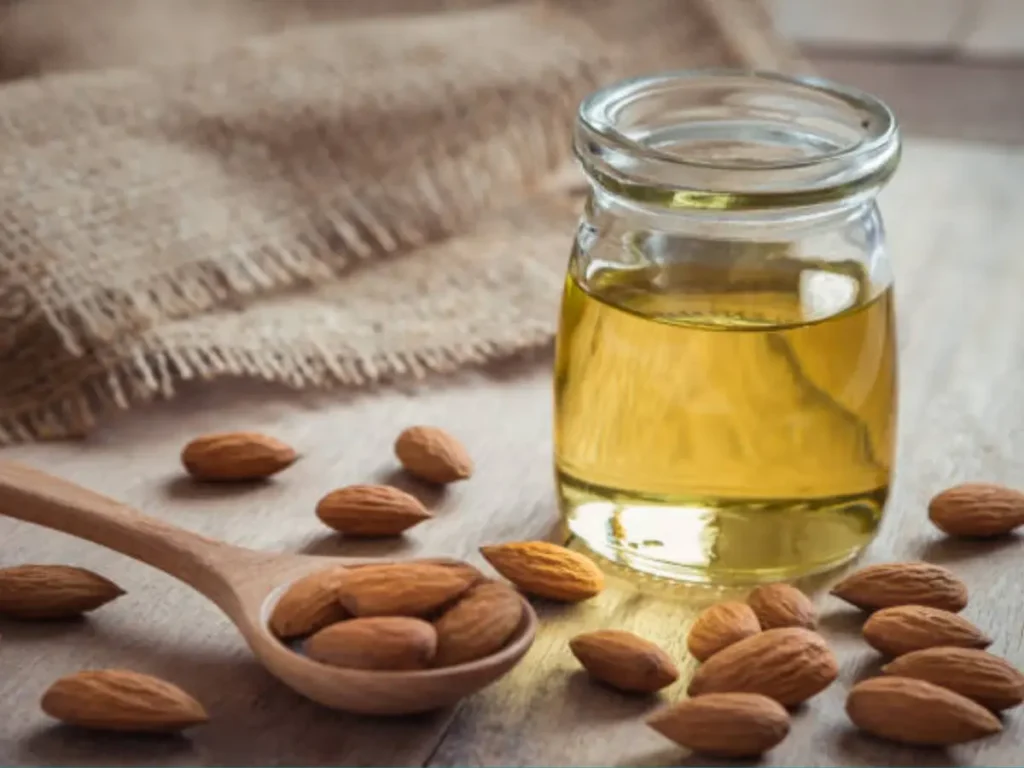
Sweet Almond Oil at a Glance
| Property | Sweet Almond Oil |
|---|---|
| INCI Name | Prunus Amygdalus Dulcis Oil |
| Ingredient Type | Liquid plant oil / emollient |
| Appearance | Clear to pale yellow liquid |
| Solubility | Oil soluble |
| Skin Feel | Soft, smooth and conditioning |
| Common Uses | Lotions, creams, scrubs, body oils, massage oils, lip products and hair care |
| Oil Phase | Yes |
What Is Sweet Almond Oil?
Sweet almond oil is a fixed vegetable oil made from the kernels of sweet almonds. Its INCI name is Prunus Amygdalus Dulcis Oil.
It is primarily used as an emollient in cosmetic formulations.
An emollient helps give a product a soft, smooth and conditioning feel on the skin. Sweet almond oil can also add slip and improve how easily a product spreads.
What Does Sweet Almond Oil Do in Skincare?
Sweet almond oil is useful because it can contribute several characteristics to a formula.
It provides emollience
Sweet almond oil helps give skincare products a soft, conditioning feel.
It adds slip
Sweet almond oil can make a product easier to spread across the skin, which is especially useful in body oils, massage oils, lotions and scrubs.
It can soften a formula
When combined with solid butters or waxes, sweet almond oil can help create a softer, more spreadable finished product.
It works well with other oils
Sweet almond oil can be used on its own or combined with other carrier oils to create the texture and characteristics you’re looking for.
Its fatty acid profile is primarily made up of oleic acid, with smaller amounts of linoleic, palmitic and stearic acids. The exact composition varies depending on the oil and supplier.
Is Sweet Almond Oil a Moisturizer?
You’ll often see sweet almond oil described as a moisturizer, but emollient is a more useful way to describe its role in formulation.
Sweet almond oil helps soften and condition the skin. It doesn’t perform the same job as a humectant such as glycerin, which attracts water.
This is why a well-designed lotion may contain several different types of ingredients.
For example:
- Humectants help attract and hold water.
- Emollients such as sweet almond oil help soften and condition the skin.
- Occlusives help reduce water loss from the skin.
These ingredients can work together, but they aren’t interchangeable. Learn more in my Humectants, Emollients and Occlusive Guide.
How Is Sweet Almond Oil Used in DIY Skincare?
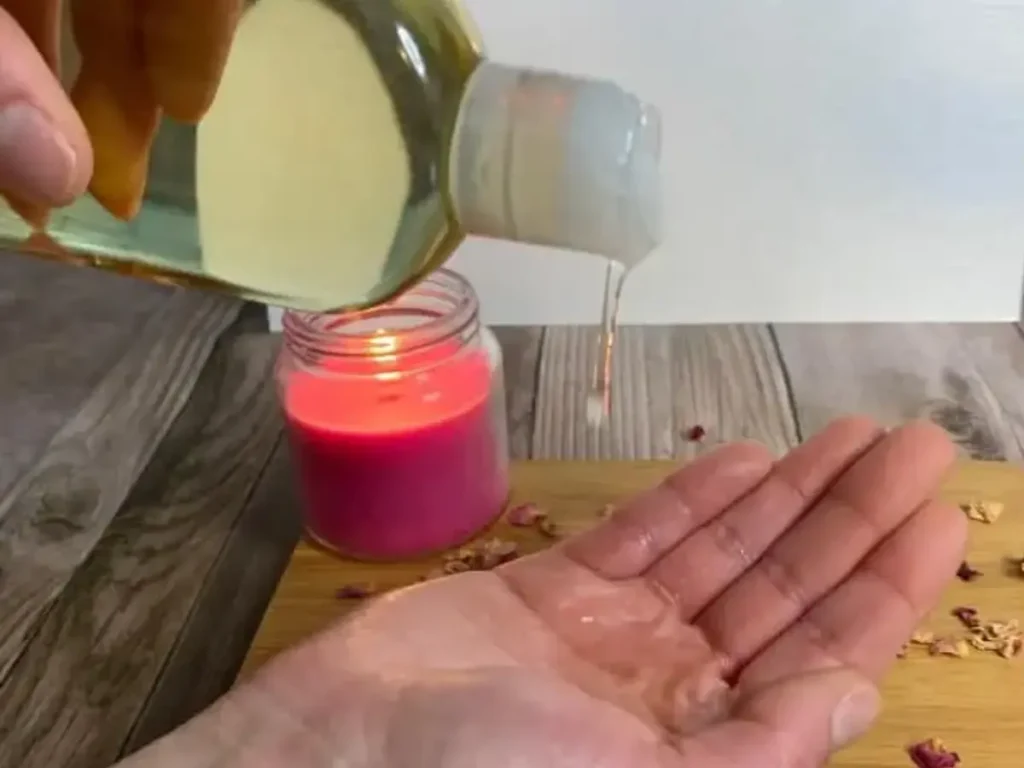
Sweet almond oil can be used in many different types of products.
Body Oils
Sweet almond oil works well as a primary carrier oil in body oils and massage oils.
You can use it alone or combine it with other oils to change the finished skin feel.
Sugar and Salt Scrubs
Sweet almond oil can be combined with sugar or salt to create an exfoliating scrub.
The oil provides the emollient portion of the formula while the sugar or salt provides the physical exfoliation.
Lotions and Creams
Sweet almond oil can be incorporated into the oil phase of a lotion or cream.
Because lotions contain water, you’ll also need an appropriate emulsifier and preservative system.
Sweet almond oil does not emulsify water on its own.
Body Butters
Sweet almond oil can be combined with solid butters such as shea, cocoa or mango butter.
The butter provides structure while the liquid oil helps soften the finished product and improve spreadability.
Lip Products
Sweet almond oil can be used in products such as lip balms, lip masks, lip oils and lip scrubs.
In a balm, the liquid oil works alongside ingredients such as waxes and butters to create the desired consistency.
Hair Care
Sweet almond oil is also used in hair oils, conditioners and other hair-care products where an emollient oil is desired.
How Much Sweet Almond Oil Should You Use?
There isn’t one percentage that works for every product.
The amount of sweet almond oil you use depends on the type of product you’re making and what you want the oil to contribute.
A body oil may contain a large percentage of sweet almond oil because the product is primarily oil.
A lotion may contain sweet almond oil as only part of its total oil phase.
A balm may contain sweet almond oil alongside waxes and butters.
Instead of asking how much sweet almond oil you can use, ask:
What job is sweet almond oil performing in this formula?
Once you know that, you can decide how much you need.
Sweet Almond Oil in the Oil Phase
Sweet almond oil belongs in the oil phase of a formulation.
Because it is already liquid at room temperature, it doesn’t need to be melted before use.
In a simple anhydrous product such as a body oil or scrub, it can be combined directly with your other oil-phase ingredients.
In a lotion or cream, it is incorporated into the oil phase before the oil and water phases are emulsified.
Understanding where an ingredient belongs in a formula is more useful than simply memorizing whether an ingredient is “good for skin.”
Does Sweet Almond Oil Need a Preservative?
Pure sweet almond oil does not need a broad-spectrum preservative simply because it is an oil.
However, that does not mean products containing sweet almond oil never need preservatives.
The difference is whether your finished product contains water.
For example:
Sweet almond oil + other oils:
Anhydrous formula. A broad-spectrum preservative is generally not required.
Sweet almond oil + water:
Water-containing formula. An appropriate broad-spectrum preservative is required.
Does Sweet Almond Oil Go Bad?
Yes.
Like other plant oils, sweet almond oil can oxidize over time. It is usually good for 6 months – 1 year.
Oxidized oil may develop an unpleasant or rancid smell.
How long your oil lasts depends on factors such as:
- The oil’s processing
- Fatty acid composition
- Antioxidant content
- Packaging
- Storage conditions
- Supplier specifications
For that reason, follow the shelf life provided by your supplier rather than assuming every bottle of sweet almond oil has the same lifespan.
How to Store Sweet Almond Oil
Keep sweet almond oil:
- Tightly closed
- Away from direct sunlight
- Away from excessive heat
- In a cool, dry location
Avoid getting water or other contaminants into the bottle.
If the oil develops a noticeably rancid smell, it’s time to replace it.
Sweet Almond Oil vs. Other Carrier Oils
| Carrier Oil | Skin Feel | Main Strength | Common Uses | Oxidation Stability* |
|---|---|---|---|---|
| Sweet Almond Oil | Soft, smooth, conditioning | Versatile all-purpose emollient | Lotions, scrubs, body oils, massage oils, lip products | Moderate |
| Jojoba Oil | Smooth, lightweight | Very oxidation-resistant and versatile | Facial oils, lotions, hair care, body oils | High |
| Apricot Kernel Oil | Light to medium, silky | Soft, conditioning feel | Facial care, lotions, body oils, massage oils | Moderate |
| Fractionated Coconut Oil (MCT) | Lightweight, dry, silky | Lightweight feel and good stability | Body oils, massage oils, scrubs, hair care | High |
| Avocado Oil | Rich, heavier | Rich emollience | Creams, body butters, dry-skin products | Moderate |
| Grapeseed Oil | Lightweight, less rich | Light skin feel | Facial oils, lotions, body oils | Low–Moderate |
| Sunflower Oil | Light to medium | Versatile and readily available | Lotions, creams, body oils, cleansing products | Moderate |
There isn’t one carrier oil that is best for every formula.
It is a good general-purpose option, but other oils may be better suited to a particular product.
Sweet Almond Oil vs. Jojoba Oil
Sweet almond oil is a triglyceride-based vegetable oil, while jojoba is technically a liquid wax ester.
Jojoba is also known for being particularly resistant to oxidation compared with many plant oils.
Sweet almond oil is often chosen when a soft, conditioning carrier oil is desired.
Sweet Almond Oil vs. Apricot Kernel Oil
Both are popular cosmetic carrier oils and can provide a soft, conditioning feel.
They can sometimes be substituted for one another in simple formulations, but they won’t necessarily produce exactly the same finished texture or stability.
Whenever you substitute an oil, test the finished product rather than assuming it will behave identically.
Sweet Almond Oil vs. Bitter Almond Oil
This is an important distinction.
Sweet almond oil and bitter almond oil are not the same ingredient.
For cosmetic sweet almond oil, look for the INCI name:
When purchasing ingredients for DIY skincare, always check the supplier’s ingredient information rather than relying only on the common name on the front of the package.
Is Sweet Almond Oil Comedogenic?
You’ll find different “comedogenic ratings” for sweet almond oil online.
I wouldn’t treat these numbers as a guarantee of how your skin will react.
Individual skin can respond differently, and the rest of the formulation matters too.
If you’re making a facial product, consider the complete formula rather than choosing an oil based solely on an online comedogenic rating.
Is Sweet Almond Oil Safe for Everyone?
Sweet almond oil is widely used in cosmetic products, but it is still important to consider individual sensitivities.
Almond is a tree nut, so anyone with a known almond or tree-nut allergy should consider whether a product containing sweet almond oil is appropriate for them.
If you’re making products for other people or selling them, make sure you’re following the labeling and safety requirements that apply to your products and location.
Common Sweet Almond Oil Mistakes
Using it as a replacement for butter
Sweet almond oil and plant butters don’t provide the same structure.
A direct substitution can dramatically change the consistency of a formula.
Assuming all almond oils are the same
Check the INCI name and supplier information before using an ingredient in your formula.
Using old or oxidized oil
If sweet almond oil smells rancid, don’t use it just because the bottle is still within its stated shelf life.
Treating every oil substitution as equal
Changing the oil can change the feel, stability and performance of a formula.
If you’re making a product to sell, substitutions should be properly tested.
Frequently Asked Questions
What is sweet almond oil used for?
Sweet almond oil is used as an emollient in products such as lotions, creams, body oils, scrubs, massage oils, lip products and hair-care products.
Is sweet almond oil a carrier oil?
Yes. Sweet almond oil is commonly used as a carrier oil for cosmetic formulations.
Is sweet almond oil an emollient?
Yes. Its primary cosmetic role is as an emollient, helping provide a soft and conditioning skin feel.
Can you use sweet almond oil by itself?
Yes. It can be used on its own as a simple body or massage oil.
Can sweet almond oil be used in lotion?
Yes. It can be included in the oil phase of a lotion or cream. Because lotion contains water, the finished product also requires an appropriate emulsifier and preservative system.
Can you use sweet almond oil in a sugar scrub?
Yes. Sweet almond oil is commonly used as the liquid oil portion of sugar scrubs.
Can sweet almond oil be used in body butter?
Yes. It can be combined with solid plant butters to create a softer, more spreadable body butter.
Does sweet almond oil expire?
Yes. Sweet almond oil can oxidize over time, typically lasts 6 months – 1 year. Follow your supplier’s recommended shelf life and storage instructions.
Is sweet almond oil the same as almond butter?
No. Sweet almond oil is a liquid plant oil. Almond butter is a different type of ingredient and should not automatically be substituted for sweet almond oil.
Is sweet almond oil the same as bitter almond oil?
No. Cosmetic sweet almond oil is generally identified by the INCI name Prunus Amygdalus Dulcis Oil.
Final Thoughts
Sweet almond oil is a simple, versatile ingredient that earns its place in a DIY skincare ingredient collection.
Its main job is straightforward: it is a liquid emollient that adds softness, conditioning and slip to a formula.
It can be used on its own in simple oil-based products or combined with butters, waxes, other oils and emulsified formulas.
The most important thing to remember is that sweet almond oil is an oil, not a butter. It can soften and improve the feel of a formula, but it doesn’t provide the same structure as a solid plant butter.
Once you understand what an ingredient actually contributes to a formula, choosing when and how to use it becomes much easier.