
Fractionated coconut oil is a lightweight, versatile carrier oil that is especially useful when you want a smooth, silky product without the heavier feel of some traditional plant oils.
You’ll often see it called MCT oil or caprylic/capric triglyceride, depending on the product. It is commonly used in body oils, massage oils, scrubs, hair products, lip products, and other oil-based formulations.
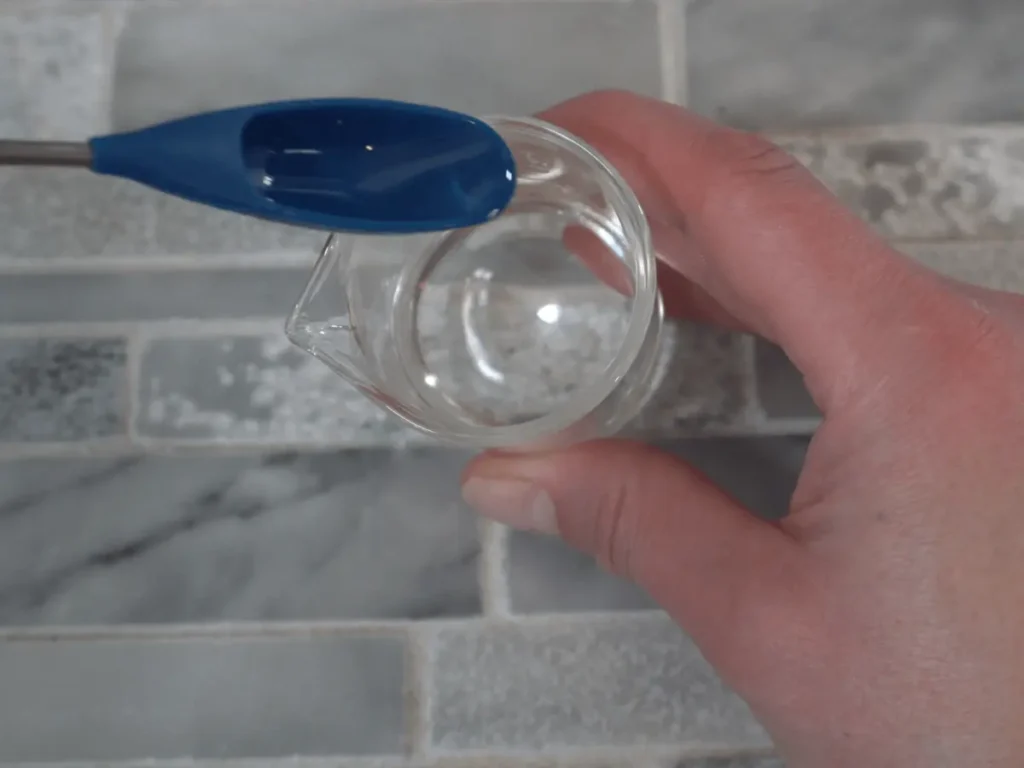
One important thing to understand is that fractionated coconut oil is not the same as regular coconut oil. Regular coconut oil is typically solid at room temperature, while fractionated coconut oil remains liquid.
Fractionated Coconut Oil at a Glance
| Property | Fractionated Coconut Oil |
|---|---|
| Common names | Fractionated Coconut Oil, MCT Oil |
| Common INCI name | Caprylic/Capric Triglyceride |
| Ingredient type | Liquid emollient |
| Skin feel | Lightweight, silky, dry |
| Main function | Emollient |
| Common uses | Body oils, massage oils, scrubs, lotions, hair care, lip products |
| Solubility | Oil-soluble |
| Room temperature | Liquid |
| Oxidation stability | High |
| Broad-spectrum preservative needed? | No, when used in an anhydrous formula |
What Is Fractionated Coconut Oil?
Fractionated coconut oil is made from coconut oil that has been processed to separate out certain components of the original oil.
The result is a lightweight liquid oil that stays liquid at room temperature.
Many products sold as fractionated coconut oil are primarily caprylic/capric triglyceride (CCT), also commonly referred to as MCT oil.
The exact composition can vary by supplier, so it’s always worth checking the product’s INCI name and specifications rather than assuming every product labeled “fractionated coconut oil” is identical.
Is Fractionated Coconut Oil the Same as Coconut Oil?
No.
This is probably the most important distinction to make when you’re shopping for ingredients.
Regular Coconut Oil
Regular coconut oil is a traditional vegetable oil that is generally solid at room temperature and melts as it warms.
It is commonly used in body butters, balms, soaps, and other formulations where its more substantial texture is useful.
Fractionated Coconut Oil
Fractionated coconut oil is processed so that it remains liquid.
It has a much lighter, silkier feel and is often chosen when you don’t want the finished product to feel as heavy or greasy.
If a recipe specifically calls for fractionated coconut oil, don’t automatically substitute regular coconut oil without considering how that change will affect the texture and finished formula.
What Does Fractionated Coconut Oil Do in Skincare?
Fractionated coconut oil is primarily used as an emollient.
It helps give skincare products a smooth, conditioned feel and can improve the spreadability of a formula.
It can help:
- Soften and condition the skin
- Improve glide and spreadability
- Create a lightweight skin feel
- Reduce the heavy or greasy feel of some oil-based products
- Carry oil-soluble ingredients
- Add slip to massage products
- Improve the texture of scrubs and body oils
It is particularly useful when you’re trying to create a product that feels silky rather than rich and heavy.
Is Fractionated Coconut Oil a Moisturizer?
Fractionated coconut oil is often called a moisturizer, but emollient is the more useful formulation term.
It doesn’t add water to the skin.
Instead, it helps soften and condition the skin and contributes to the overall feel of the finished product.
In a lotion or cream, fractionated coconut oil can be combined with humectants, other emollients, and occlusive ingredients to create a more complete moisturizing formula.
You can learn more about the different roles of these ingredients in Humectants, Occlusives and Emollients Explained.

How Is Fractionated Coconut Oil Used in DIY Skincare?
One of the biggest advantages of fractionated coconut oil is its versatility.
Body Oils
Fractionated coconut oil makes an excellent base for lightweight body oils.
It spreads easily over the skin and doesn’t have the same heavy feel as some richer carrier oils.
You can use it by itself or combine it with other carrier oils depending on the texture you’re trying to create.
Massage Oils
Its smooth glide makes fractionated coconut oil a popular choice for massage oils.
It can be used on its own or blended with other oils to adjust the feel and slip of the finished product.
Sugar and Salt Scrubs
Fractionated coconut oil works well in both sugar and salt scrubs.
It coats the exfoliant and helps create a smoother, more spreadable product.
Because it is relatively lightweight, it can be a good choice when you don’t want your scrub to leave an especially heavy oily residue.
Lotions and Creams
Fractionated coconut oil can be used as part of the oil phase in emulsions.
It can provide a lightweight emollient feel and can be combined with other oils and butters to balance the texture of the finished lotion or cream.
If you’re new to emulsions, see What Are Emulsions and How Do They Work?.
Body Butters
Fractionated coconut oil can be used in body butter formulas to soften the texture and make a butter easier to spread.
It can be particularly useful when a formula contains harder butters or waxes and needs a lighter liquid oil.
Lip Products
Fractionated coconut oil can be used in lip oils, lip balms, lip masks, and other anhydrous lip products when the complete formula is appropriate for the intended use.
Its lightweight texture can help create a smoother, less waxy product.
Hair Care
Fractionated coconut oil is also used in hair oils and other hair products.
Its lightweight feel can make it useful when you want some conditioning and slip without using a particularly heavy oil.
How Much Fractionated Coconut Oil Should You Use?
There isn’t one percentage that works for every product.
The appropriate amount depends on what you’re making and what you want the finished product to feel like.
In a simple body oil, fractionated coconut oil could make up a large portion or even most of the oil phase.
In a lotion or cream, it may be one of several emollients.
In a scrub, the amount depends on the ratio of oil to exfoliant and the texture you’re trying to achieve.
Rather than choosing a percentage based on the ingredient alone, consider the entire oil phase and the finished texture you want.
Fractionated Coconut Oil in the Oil Phase
Fractionated coconut oil is oil-soluble, so it belongs in the oil phase of an emulsion.
It can be combined with ingredients such as:
- Other carrier oils
- Butters
- Emulsifying wax
- Fatty alcohols
- Oil-soluble additives
The exact processing temperature and phase requirements depend on the rest of the formula.
If you’re building your own lotion or cream, remember that the oil phase is more than just the carrier oils. Every ingredient needs to be considered when calculating the total formula.
Does Fractionated Coconut Oil Go Bad?
One of the reasons formulators like fractionated coconut oil is its good oxidation stability.
It is generally much less prone to oxidation than many carrier oils that contain larger amounts of polyunsaturated fatty acids. It is typically 2-5 years.
That doesn’t mean it has an unlimited shelf life.
Heat, light, oxygen, contamination, and storage conditions can still affect cosmetic ingredients.
Always follow the shelf life and storage recommendations supplied with the specific product you’re using.
How to Store Fractionated Coconut Oil
To help maintain its quality:
- Keep the container tightly closed.
- Store it away from excessive heat.
- Keep it away from direct sunlight.
- Avoid introducing water or contaminants into the bottle.
- Follow the supplier’s recommended storage conditions.
Because it remains liquid at room temperature, you don’t need to warm it simply to make it usable.
Fractionated Coconut Oil vs. Regular Coconut Oil
The two ingredients may come from the same starting material, but they behave quite differently.
| Property | Fractionated Coconut Oil | Regular Coconut Oil |
|---|---|---|
| Room temperature | Liquid | Usually solid |
| Skin feel | Lightweight, silky | Richer |
| Texture | Thin liquid | Solid/semi-solid depending on temperature |
| Common uses | Body oils, scrubs, massage oils, lotions | Body butters, balms, soaps, creams |
| Oxidation stability | High | Relatively high |
| Effect on texture | Keeps formulas lighter | Adds more body and richness |
If a formula needs a liquid oil that remains fluid at room temperature, fractionated coconut oil is usually the more appropriate choice.
If you want a richer, more substantial texture, regular coconut oil may be more suitable.
Fractionated Coconut Oil vs. Other Carrier Oils
Different carrier oils bring different properties to a formulation.
| Carrier Oil | Skin Feel | Main Strength | Common Uses | Oxidation Stability* |
|---|---|---|---|---|
| Fractionated Coconut Oil | Lightweight, silky | Lightweight feel and good stability | Body oils, massage oils, scrubs, hair care | High |
| Jojoba Oil | Smooth, lightweight to medium | Excellent stability and versatility | Facial oils, lotions, body oils, hair care | High |
| Sweet Almond Oil | Soft, smooth, conditioning | Versatile all-purpose emollient | Lotions, scrubs, body oils, massage oils | Moderate |
| Apricot Kernel Oil | Light, silky | Soft conditioning feel | Facial care, lotions, body oils | Moderate |
| Avocado Oil | Richer, heavier | Rich emollience | Creams, body butters, dry-skin products | Moderate |
| Grapeseed Oil | Lightweight | Light skin feel | Facial oils, lotions, body oils | Low–Moderate |
*These are general comparisons. Actual stability can vary depending on the specific oil, processing, fatty acid profile, packaging, and storage conditions.
Fractionated Coconut Oil vs. Jojoba Oil
Both are lightweight, versatile ingredients, but they don’t feel exactly the same.
Fractionated coconut oil tends to have a very light, silky, almost dry feel.
Jojoba is also relatively lightweight but can feel a little more substantial and conditioning.
Both can work well in body oils, lotions, hair products, and other formulations where you don’t want a particularly heavy oil.
Fractionated Coconut Oil vs. Sweet Almond Oil
Sweet almond oil generally has a softer, richer feel than fractionated coconut oil.
Fractionated coconut oil is a good choice when you want a lighter finish.
Sweet almond oil can be useful when you want a more traditional carrier-oil feel and a little more richness.
Is Fractionated Coconut Oil Comedogenic?
You’ll often find oils assigned a “comedogenic rating” online.
These ratings aren’t a reliable way to predict exactly how an individual person’s skin will respond to an ingredient.
Skin type, the complete formulation, concentration, and other ingredients all matter.
Rather than choosing a carrier oil based entirely on a numerical comedogenic rating, consider the finished formulation and how your skin responds to it.
Is Fractionated Coconut Oil Safe for Everyone?
Fractionated coconut oil is widely used in cosmetic formulations, but individual sensitivities are always possible.
If you’re using a finished product containing fractionated coconut oil for the first time, especially on sensitive skin, introduce it cautiously and discontinue use if irritation occurs.
Also remember that the finished product contains more than just the carrier oil. If someone reacts to a formulation, the cause may be another ingredient.
Common Fractionated Coconut Oil Mistakes
Confusing it with regular coconut oil
This is the biggest mistake.
They have different physical properties and can create very different finished textures.
Assuming all fractionated coconut oils are identical
Products can vary.
Check the supplier’s INCI name and specifications so you know exactly what you’re purchasing.
Using it when you actually need a richer oil
Fractionated coconut oil is intentionally lightweight.
If your formula needs a rich, heavy emollient, replacing a richer oil with fractionated coconut oil may make the finished product feel too light.
Adding it to an oil-free water-based product
Fractionated coconut oil is oil-soluble.
If you want to incorporate it into a water-based formula, you need a properly formulated emulsion or another system that can accommodate the oil.
Assuming it preserves a product
It doesn’t.
Fractionated coconut oil can be used in anhydrous products without a broad-spectrum preservative, but it does not preserve water-containing products.
Frequently Asked Questions
Is fractionated coconut oil the same as MCT oil?
Often, the terms are used for closely related ingredients, particularly products primarily composed of caprylic and capric triglycerides. However, products can vary, so check the INCI name and supplier specifications rather than assuming they’re identical.
Is fractionated coconut oil good for dry skin?
It can help soften and condition dry-feeling skin as an emollient. For a more complete moisturizing product, it can be combined with humectants and other emollients or occlusives.
Is fractionated coconut oil good for oily skin?
Its lightweight, silky feel can make it appealing for people who prefer lighter-feeling products. However, individual skin can respond differently to any oil.
Can I use fractionated coconut oil directly on my skin?
Yes. It can be used by itself as an oil-based skin-conditioning product, provided your skin tolerates it.
Can I use fractionated coconut oil in lotion?
Yes. It can be incorporated into the oil phase of a properly formulated lotion.
Can I use fractionated coconut oil in sugar scrub?
Yes. It is a popular choice for sugar scrubs because it provides a lightweight oil feel and good spreadability.
Does fractionated coconut oil solidify?
Most fractionated coconut oil products remain liquid at normal room temperatures. The exact behavior can vary depending on the composition of the specific product.
Does fractionated coconut oil have a coconut smell?
Highly refined fractionated coconut oil is generally very low in odor compared with unrefined coconut oil.
Final Thoughts
Fractionated coconut oil is a useful carrier oil when you want lightweight texture, smooth spreadability, and good oxidation stability.
Its biggest advantage is its versatility. It works well in body oils, massage oils, scrubs, lotions, creams, lip products, and hair care without adding the heavier texture associated with some other oils.
Just remember that fractionated coconut oil isn’t the same as regular coconut oil. When you’re formulating, that difference matters.
Choose your carrier oil based on the texture, stability, and overall properties you want in the finished product rather than assuming one oil is best for everything.