
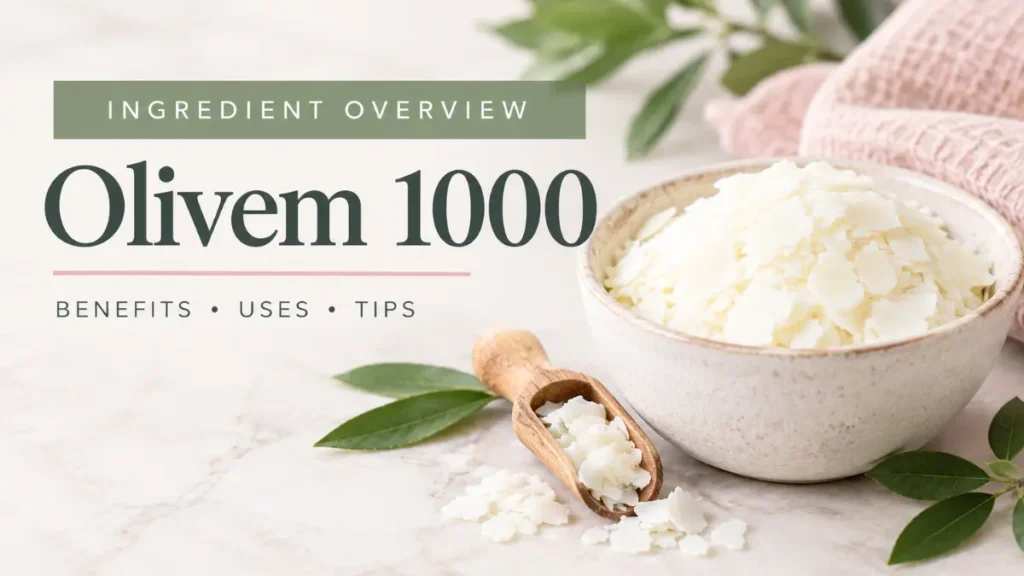
If you want to make your own lotions, creams, or emulsified body butters, you are going to come across Olivem 1000.
Olivem 1000 is an emulsifier used to combine water and oil into a stable emulsion. It is especially popular in DIY skincare because it can create lightweight, creamy formulas with a smooth skin feel.
But there is a little more to using Olivem 1000 than simply adding it to a recipe.
Understanding what Olivem 1000 does, where it belongs in a formulation, how much to use, and how it differs from other emulsifiers will help you make better lotions and creams.
If you are completely new to making your own skincare, you may also want to start with my DIY Skincare for Beginners: Start Here.
Olivem 1000 at a Glance
| Olivem 1000 | |
|---|---|
| INCI Name | Cetearyl Olivate (and) Sorbitan Olivate |
| Ingredient Type | Emulsifier |
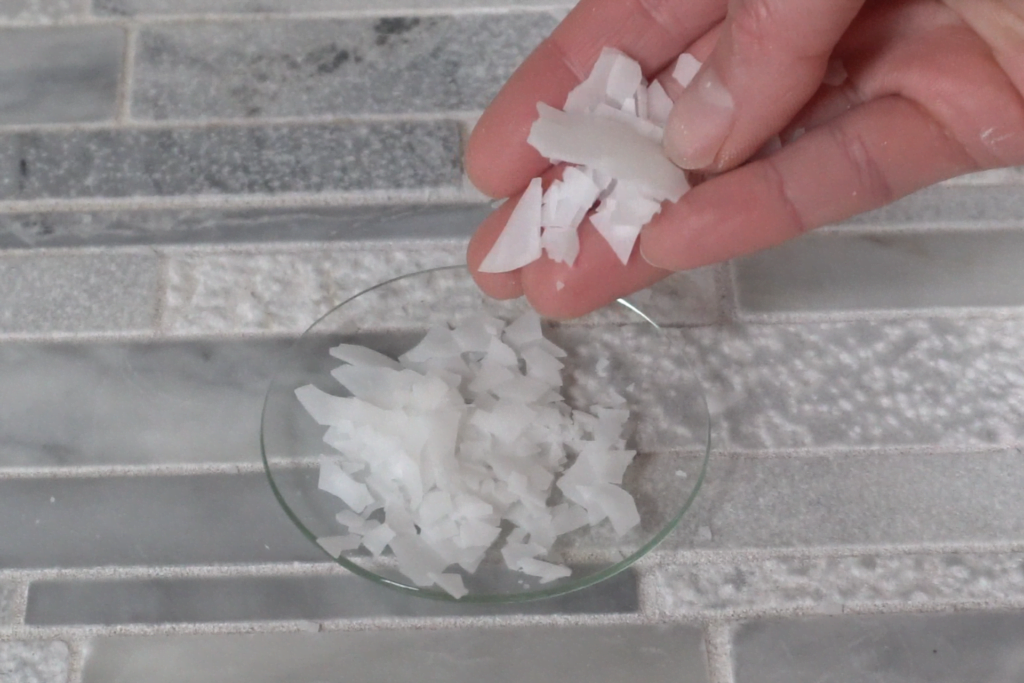
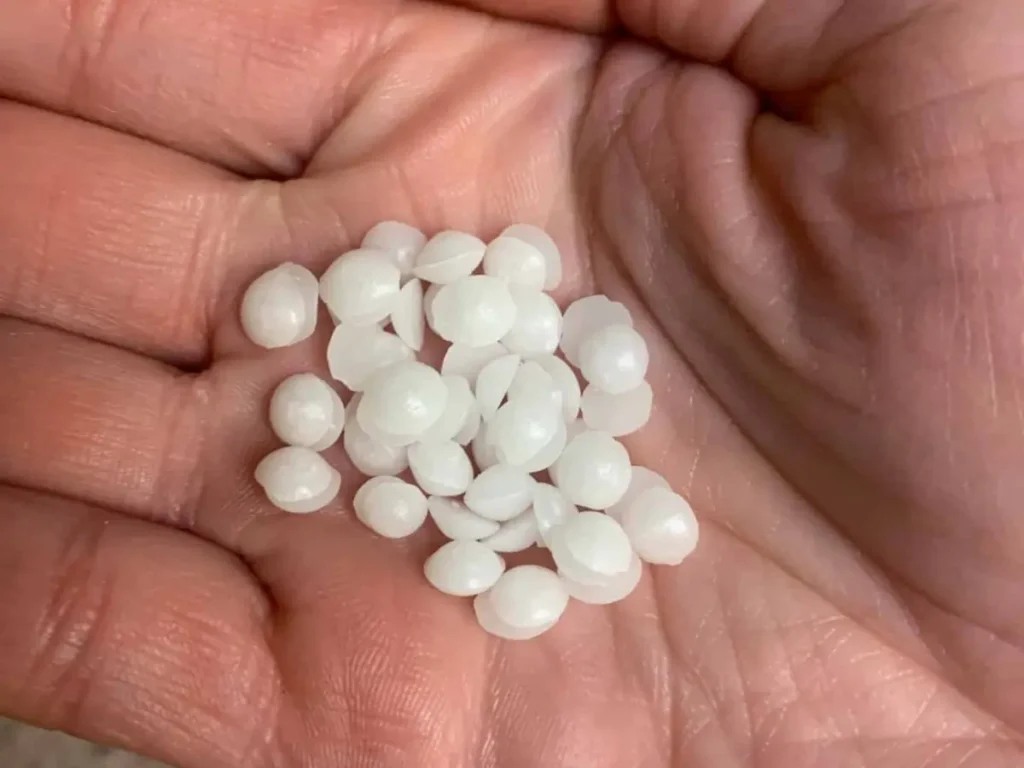
| Appearance | White to ivory waxy flakes or pellets |
| Solubility | Oil dispersible; insoluble in water |
| Skin Feel | Smooth, creamy and moisturizing |
| Common Uses | Lotion, cream, facial moisturizer and emulsified body butter |
| Oil Phase | Yes |
| Typical Usage Rate | 3–5% of the total formula |
| Melting Point | Approximately 70°C / 158°F |
| Best Known For | Creating smooth oil-in-water emulsions |
What Is Olivem 1000?
Olivem 1000 is a self-emulsifying, naturally derived emulsifier used primarily to make oil-in-water emulsions.
Its INCI name is:
Cetearyl Olivate (and) Sorbitan Olivate
It is supplied as small white to ivory-colored waxy flakes or pellets and is incorporated into the heated phase of a formulation.
The most important thing to understand is that Olivem 1000 is an emulsifier, not simply a wax or thickener.
When you make a lotion, you are trying to combine two ingredients that naturally want to separate:
- Water
- Oil
Olivem 1000 helps bring those two phases together and form an emulsion.
Without an appropriate emulsifier, your water and oil would eventually separate into different layers.
What Does Olivem 1000 Do?
The primary job of Olivem 1000 is to help create and stabilize an emulsion.
It can also contribute to the texture and feel of the finished product.
Olivem 1000 can help:
- Combine the water and oil phases
- Create a smooth, creamy lotion
- Provide structure to an emulsion
- Improve the spreadability of a product
- Give lotions and creams a pleasant skin feel
- Create a lightweight, moisturizing texture
One thing to keep in mind is that the emulsifier is only one part of a successful formulation.
The amount of water, oils, butters, thickeners, co-emulsifiers, preservative, mixing method, temperature, and cooling process can all affect the finished product.
That is why changing one ingredient in a lotion recipe can sometimes change the entire texture or stability of the formula.
What Is the INCI Name for Olivem 1000?
The INCI name for Olivem 1000 is:
Cetearyl Olivate (and) Sorbitan Olivate
INCI stands for International Nomenclature Cosmetic Ingredient. These standardized names are used when listing cosmetic ingredients.
You may see Olivem 1000 listed by its trade name when purchasing it from a supplier, while the finished product’s ingredient list would use the INCI names.
Is Olivem 1000 an Emulsifier?
Yes.
Olivem 1000 is an emulsifier.
This is its primary purpose in a lotion or cream.
An emulsifier helps keep oil and water distributed together rather than allowing them to separate into two layers.
This is different from a simple wax.
For example, beeswax can add hardness and structure to an oil-based product, but beeswax by itself is not an emulsifier capable of creating a stable lotion.
If you want to learn more about how emulsions work, see my guide on Emulsions: What Are They and How Do They Work?.
How Much Olivem 1000 Should You Use?
A common starting point for Olivem 1000 is 3–5% of the total formula.
The exact amount depends on the rest of your formulation and the texture you are trying to create.
For example, a lightweight lotion may require a different approach than a thick emulsified body butter.
When you are learning to formulate, I recommend starting with a proven formula rather than simply choosing an Olivem 1000 percentage and building everything else around it.
A Simple Starting Guide
| Olivem 1000 | General Use |
|---|---|
| 3% | Lightweight emulsions and formulas where additional structure comes from other ingredients |
| 4% | A useful middle ground for many lotion formulations |
| 5% | More structure and a richer formulation |
| Higher amounts | Should be evaluated as part of the complete formulation rather than automatically added for more thickness |
Important: More Olivem 1000 does not automatically mean a better or more stable lotion.
The emulsifier needs to be appropriate for the entire formula.
How Do You Use Olivem 1000?
Olivem 1000 is generally added to the heated oil phase of your formulation.
When making a lotion, you will typically have at least two phases.
Water Phase
This can contain ingredients such as:
- Distilled water
- Hydrosols
- Aloe vera
- Glycerin
- Other water-soluble ingredients
Oil Phase
This can contain:
- Carrier oils
- Butters
- Olivem 1000
- Cetyl alcohol
- Cetearyl alcohol
- Other oil-soluble ingredients
The Olivem 1000 is heated along with the oil phase until it has completely melted.
The water and oil phases are then brought to the appropriate temperature and combined.
Once combined, the mixture needs to be thoroughly emulsified.
For many of my lotion recipes, I use an immersion blender because high shear helps create a uniform emulsion.
Why Do You Need to Heat Olivem 1000?
Olivem 1000 is a solid ingredient at room temperature.
It needs to melt before it can properly incorporate into your formulation.
You don’t want to simply sprinkle solid Olivem 1000 into a finished cold lotion and expect it to emulsify everything.
Instead, incorporate it into the appropriate heated phase and make sure it has completely melted before combining your phases.
Always follow the specific supplier’s instructions for the ingredient you purchased because processing recommendations can vary.
Where Does Olivem 1000 Go in a Lotion?
For most of my formulations, Olivem 1000 goes into the oil phase.
For example:
Oil Phase
- Shea butter
- Jojoba oil
- Fractionated coconut oil
- Olivem 1000
The water phase is heated separately.
Once both phases are ready, they are combined and blended to create the emulsion.
You can see this process in my Natural Body Lotion recipe, which uses Olivem 1000 as the emulsifier.
Does Olivem 1000 Thicken Lotion?
It can contribute to the thickness and structure of a lotion, but it is not simply a thickener.
This distinction is important.
Olivem 1000 is primarily there to emulsify.
Other ingredients can be used to increase viscosity and improve the structure of the finished lotion.
For example, fatty alcohols such as:
- Cetyl alcohol
- Cetearyl alcohol
can provide additional body and improve the texture and stability of a lotion.
Other ingredients such as xanthan gum can also contribute viscosity.
So if your lotion is too thin, adding more Olivem 1000 isn’t necessarily the best solution.
You need to look at the formulation as a whole.
Olivem 1000 vs. Cetyl Alcohol
These two ingredients are sometimes confused because both can affect the texture of a lotion.
But they have different primary jobs.
Olivem 1000
Primary job: Emulsifier
It helps combine and stabilize the water and oil phases.
Cetyl Alcohol
Primary job: Thickener and texture modifier
Cetyl alcohol can add body, improve slip, and contribute to the structure and stability of an emulsion.
It does not replace an emulsifier in a typical water-and-oil lotion.
You can use both in the same formulation.
In fact, many lotion formulas use an emulsifier along with a fatty alcohol to create the desired texture.
Olivem 1000 vs. Cetearyl Alcohol
Cetearyl alcohol is another fatty alcohol that is commonly used in lotions and creams.
Like cetyl alcohol, it can:
- Increase viscosity
- Add body
- Improve texture
- Help support the structure of an emulsion
But it is not a direct replacement for Olivem 1000.
Think of it this way:
Olivem 1000 = emulsifier
Cetearyl alcohol = thickener/structuring ingredient
They can work together, but they are not interchangeable.
Olivem 1000 vs. Emulsifying Wax NF
This is one of the most important comparisons for beginners.
Both Olivem 1000 and Emulsifying Wax NF can be used to make lotions and creams, but they are different emulsifiers.
Can You Substitute Emulsifying Wax NF for Olivem 1000?
Not automatically.
You should not simply remove Olivem 1000 from a recipe and add the same amount of Emulsifying Wax NF.
Different emulsifiers have different characteristics and recommended usage rates.
Changing the emulsifier can change:
- Stability
- Thickness
- Texture
- Absorption
- Skin feel
- Appearance
- Overall performance
If you want to use a different emulsifier, treat it as a reformulation rather than a simple ingredient substitution.
Can You Substitute Olivem 1000 for Emulsifying Wax NF?
The same rule applies in reverse.
Don’t assume Olivem 1000 can be substituted 1:1 for Emulsifying Wax NF.
Even if both ingredients are used to make lotions, they don’t necessarily behave the same way in a formula.
This is one of the reasons I recommend following a tested recipe when you are first learning to make emulsions.
Once you understand how emulsions work, you can begin experimenting with your own formulations.
Does Olivem 1000 Need a Preservative?
If your finished product contains water, it generally needs a broad-spectrum preservative system.
Olivem 1000 does not preserve a lotion.
It is the emulsifier.
It does not replace a cosmetic preservative.
This is a very important distinction for anyone learning to make skincare at home.
A lotion containing distilled water, aloe, hydrosols, or other water-based ingredients can support microbial growth.
That means you need to formulate the product with an appropriate preservative at the correct usage rate.
For more information about the ingredients and process involved in making lotion, see my guide How to Make Lotion Like a Professional: All Ingredients Explained.
Olivem 1000 in Lotion Formulas
One of the easiest ways to understand Olivem 1000 is to see it in an actual formula.
My Natural Body Lotion uses 5% Olivem 1000 as the emulsifier.
The formula also contains shea butter and several lightweight oils, creating a lotion that is designed to absorb without leaving a heavy, greasy finish.
I also use Olivem 1000 in my Homemade Body Lotion recipe, where it is combined with other ingredients that help give the lotion its final texture.
These recipes are good examples of why the percentage of an emulsifier can’t be considered separately from the rest of the formula.
How to Make a Lotion With Olivem 1000
The general process looks like this:
1. Weigh Your Ingredients
Always weigh cosmetic ingredients with a digital scale rather than measuring by volume.
Formulating by percentage allows you to accurately scale a recipe up or down.
2. Prepare the Water Phase
Add your water-soluble ingredients to a heat-safe container.
3. Prepare the Oil Phase
Add your oils, butters, and Olivem 1000 to a second heat-safe container.
4. Heat Both Phases
Heat the phases according to the requirements of your formulation.
The Olivem 1000 needs to be completely melted.
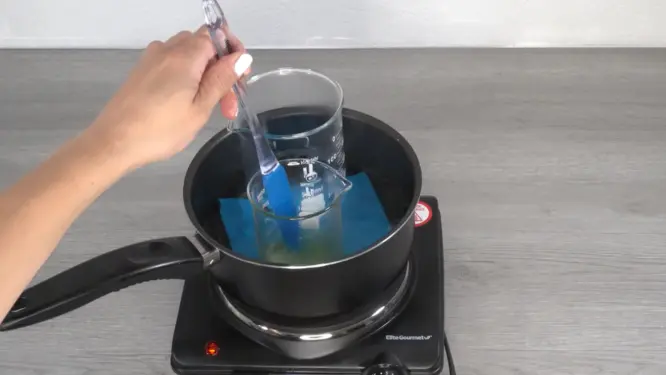
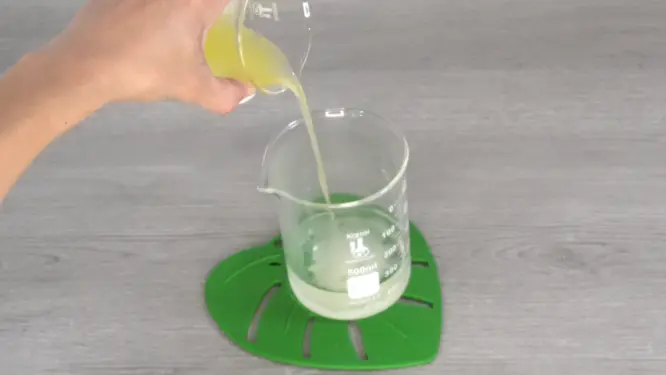
5. Combine the Phases
Once the phases are ready, combine them according to your formulation.
6. Emulsify
Use an immersion blender or another appropriate high-shear method to thoroughly emulsify the mixture.

7. Cool
Continue mixing as the emulsion cools.
8. Add Cool-Down Ingredients
Ingredients that are sensitive to heat, such as certain preservatives, fragrances, or active ingredients, may need to be added during the cool-down phase.
Follow the manufacturer’s recommended processing temperature for each ingredient.
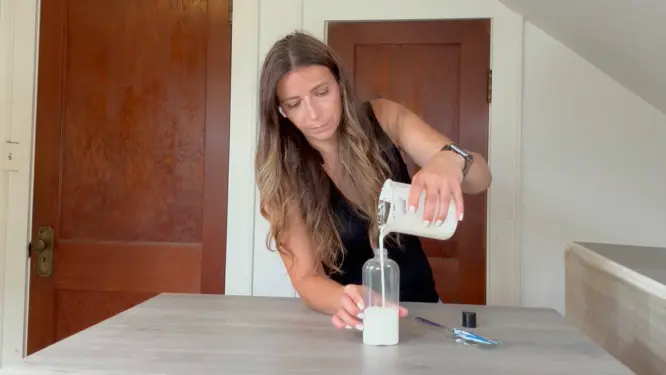
9. Check the Finished Product
Once your lotion has cooled, check its appearance and texture.
If you are developing your own formulas, stability testing is an important part of determining whether your formulation is actually successful.
Why Did My Lotion Separate?
If your lotion separates, don’t automatically assume that you need more Olivem 1000.
There are many possible causes.
Common reasons include:
- The phases were not heated properly
- The Olivem 1000 did not completely melt
- The phases were combined at an inappropriate temperature
- The mixture was not emulsified thoroughly
- The formulation contains an unsuitable oil-to-water ratio
- The emulsifier percentage is not appropriate for the formula
- The formula needs additional structure
- An ingredient is interfering with the emulsion
- The formulation has not been properly tested
This is why formulation is more than simply following a list of ingredients.
You are building a system in which all of the ingredients need to work together.
Why Is My Lotion Too Thick?
If your lotion is much thicker than you expected, look at the entire formula.
Possible contributors include:
- Too much emulsifier
- Too much cetyl or cetearyl alcohol
- A high percentage of butters
- A high percentage of other structuring ingredients
- Changes in the cooling process
Adding more water isn’t always the answer, either.
If you are changing a tested formula, make one change at a time so you can understand what caused the difference.
Why Is My Lotion Too Thin?
A thin lotion can have several causes.
The formulation may simply be designed to be lightweight, or it may need additional structure.
Possible factors include:
- Low emulsifier concentration
- Low oil-phase percentage
- Insufficient thickener or structuring ingredient
- The choice of oils and butters
- Mixing method
- Cooling process
Again, don’t automatically increase Olivem 1000.
A good formula balances the emulsifier, oil phase, water phase, and structural ingredients.
Is Olivem 1000 Good for Beginners?
Yes, but I recommend learning the basics of emulsions before trying to create your own lotion formulas from scratch.
If you’re brand new to DIY skincare, start with simpler products such as anhydrous body butters and scrubs before moving into emulsions.
Once you understand:
- Water vs. oil
- Emulsifiers
- Preservatives
- Percentages
- Oil and water phases
- Cool-down ingredients
you’ll have a much better understanding of what you’re doing when you make lotion.
My DIY Skincare for Beginners: Start Here guide walks through this progression.
Tips for Working With Olivem 1000
Always Weigh Your Ingredients
A digital scale is essential for making consistent skincare products.
Work in Percentages
Percentages make formulas much easier to understand and scale.
For example, if Olivem 1000 is 5% of a 100g batch, you need 5g.
For a 200g batch, you need 10g.
For a 500g batch, you need 25g.
The percentage stays the same even when the batch size changes.
Don’t Change Multiple Ingredients at Once
If you change the emulsifier, oil, thickener, preservative, and water percentage at the same time, you won’t know which change caused the result.
Don’t Assume Every Emulsifier Is Interchangeable
Even ingredients that serve the same general purpose can behave very differently.
Don’t Forget Preservation
If your formula contains water, your preservation system is an essential part of the formulation.
Follow Your Supplier’s Specifications
Different suppliers can provide different processing instructions and recommended usage rates. When in doubt, check the technical information supplied with the specific Olivem 1000 you purchased.
Frequently Asked Questions About Olivem 1000
What is Olivem 1000 used for?
Olivem 1000 is primarily used as an emulsifier in skincare products such as lotions, creams, and emulsified body butters. It helps combine the water and oil phases into a stable emulsion.
What percentage of Olivem 1000 should I use?
A common starting range is around 3–5% of the total formula, but the appropriate percentage depends on the complete formulation and desired texture.
Is Olivem 1000 an emulsifying wax?
Olivem 1000 is a self-emulsifying ingredient supplied in a waxy solid form, but it is more useful to think of it by its function: it is an emulsifier.
Is Olivem 1000 a thickener?
Olivem 1000 can contribute structure and viscosity, but its primary job is emulsification. Ingredients such as cetyl alcohol and cetearyl alcohol can be used when additional thickening or structure is needed.
Can I substitute Olivem 1000 for Emulsifying Wax NF?
Not as a simple 1:1 substitution. Different emulsifiers can require different percentages and formulation adjustments.
Does Olivem 1000 need to be heated?
Yes. Olivem 1000 is a solid ingredient and needs to be melted as part of the heated phase of the formulation.
What is the INCI name for Olivem 1000?
The INCI name is Cetearyl Olivate (and) Sorbitan Olivate.
Final Thoughts
Olivem 1000 is one of the ingredients that becomes much less intimidating once you understand what it is actually doing.
It isn’t simply there to make a lotion thicker.
Its primary job is to emulsify the water and oil phases, while the rest of your formulation determines the final texture, feel, stability, and performance.
For beginners, the most important things to remember are:
- Olivem 1000 is an emulsifier.
- It is commonly used around 3–5%, depending on the formulation.
- It is incorporated into the heated phase and needs to melt completely.
- It is not a direct 1:1 replacement for every other emulsifier.
- Fatty alcohols such as cetyl alcohol and cetearyl alcohol serve different purposes.
- Water-containing products require an appropriate preservative system.
- A successful lotion depends on the entire formulation, not one ingredient.
Once you understand how Olivem 1000 works, you can start looking at lotion formulas differently—not just as a list of ingredients, but as a carefully balanced system.
If you’re ready to start making your own lotions, try my Natural Body Lotion recipe or learn more about How to Make Body Lotion.