
Choosing a preservative is one of the most important decisions you will make when formulating homemade skincare. The right preservative helps protect your lotions, creams, body washes, and other water-based products from bacteria, yeast, and mold.
But with so many preservatives available, how do you know which one to use?
When I first started making skincare, I used Optiphen Plus in many of my recipes. Now, I reach for Liquid Germall Plus more often. Both have a place in skincare formulation, but they have different properties that make them better suited to certain products and formulations.
In this guide, we will look at how preservatives work, the differences between popular options, and how to choose one for the product you want to make. You will also learn why pH, formulation ingredients, and manufacturing temperatures matter when choosing a preservative.
Why Do Homemade Skincare Products Need a Preservative?
Any skincare product that contains water can support microbial growth if it is not properly preserved. This includes lotions, creams, facial cleansers, body washes, shampoos, toners, and many gels.
Water does not have to be listed as the first ingredient for a product to need preservation. Aloe vera juice, hydrosols, herbal teas, and other water-based ingredients can introduce water into a formulation, too.
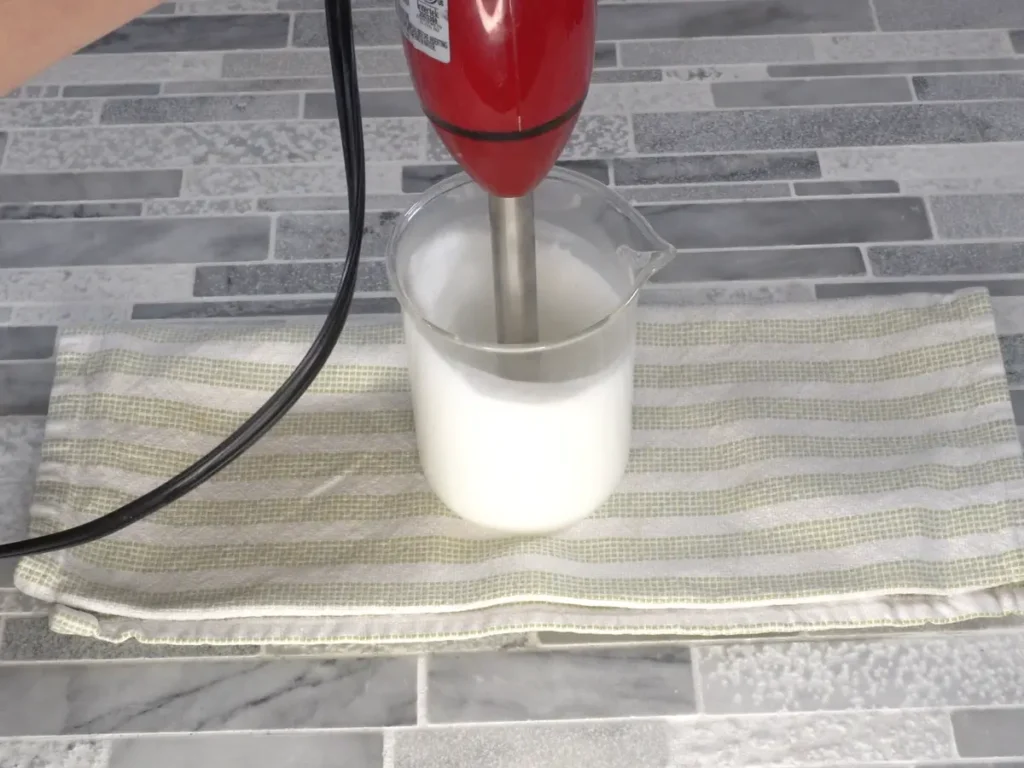
Microorganisms can also enter a product during manufacturing, through contaminated raw materials, or when someone repeatedly dips their fingers into a jar.
A product may look and smell perfectly normal even when it is contaminated. You cannot reliably determine whether a product is safe simply by looking at it.
A suitable preservative system helps protect the finished product against microbial growth throughout its intended shelf life and use.
What about vitamin E, rosemary extract, or essential oils?
These ingredients are sometimes confused with preservatives, but they do different jobs.
- Vitamin E: An antioxidant that helps slow the oxidation of oils. It does not preserve a water-based lotion against bacteria, yeast, and mold.
- Rosemary antioxidant extract: Helps protect oils from oxidation, depending on the specific extract. It is not a substitute for a broad-spectrum antimicrobial preservative.
- Essential oils: Some have antimicrobial properties under particular conditions, but they are not reliable replacements for a properly designed preservative system.
If you are making a lotion with water, adding vitamin E or essential oils does not eliminate the need for a suitable preservative.
For more information about keeping DIY skincare products safe, see my guide to skin care shelf life.
How to Choose a Skincare Preservative
Before choosing a preservative, look at the entire formulation rather than selecting one based on popularity or the ingredients you already have on hand.
Here are the main factors to consider.
1. Does the product contain water?
This is the first question to ask.
Products such as lotions, creams, toners, aloe gels, shampoos, conditioners, and body washes generally need a suitable preservative because they contain water or water-based ingredients.
Oil-only products, such as lip balms, lotion bars, and anhydrous body butters, generally do not need a conventional water-phase preservative when they are genuinely water-free and manufactured and packaged to prevent contamination.
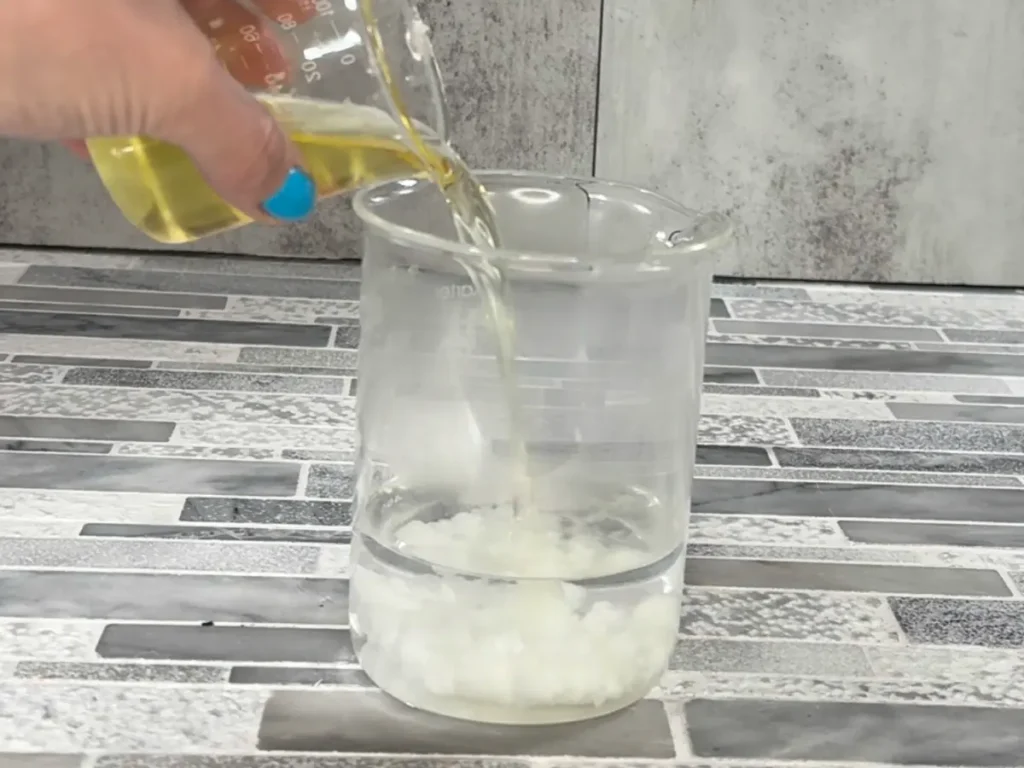
However, an oil-only product can become contaminated if water is introduced during use. An oil-based sugar scrub kept in a jar in the shower is a good example. Water can be carried into the jar on wet fingers or a scoop.
An anhydrous formula may benefit from an appropriate preservative strategy depending on its ingredients, packaging, and expected exposure to water. Do not assume that adding a preservative automatically makes a product safe if water gets into it.
2. What is the product’s pH?
Some preservatives work across a broad pH range, while others work best in more acidic formulations.
For example, Liquid Germall Plus is effective over a stated pH range of 3–8. Optiphen Plus performs best below pH 6, although supplier guidance notes that it can also be effective above that level.
This difference can influence which preservative is the better fit for a particular recipe.
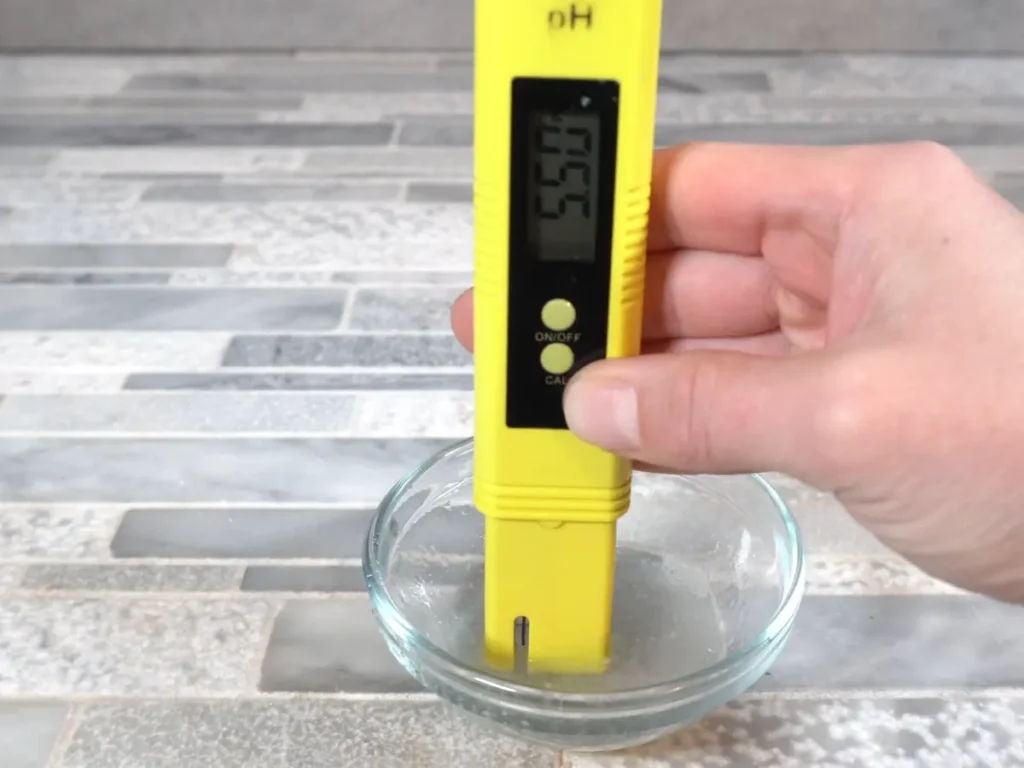
You should know the target pH of your finished product before deciding which preservative to use. Do not assume that every lotion, cleanser, or toner will have the same pH.
If you need help with this step, see my guide to how to test pH when making skincare.
3. Will the preservative work with the other ingredients?
A preservative can be suitable for one formulation and perform poorly in another.
Consider the emulsifier, surfactants, oils, botanical extracts, proteins, thickeners, and other ingredients in your recipe. Some preservatives have compatibility limitations, and some can affect the texture or stability of an emulsion.
For example, a preservative that works well in a simple lotion may not be the best choice for every hair conditioner or complex cleansing formula.
Always check the manufacturer’s technical information for your specific preservative and consider how it interacts with the complete formulation.
4. When does it need to be added?
Some preservatives are heat-sensitive and must be added during the cool-down phase. Others can tolerate higher processing temperatures or are intended for a different phase of production.
Liquid Germall Plus, for example, should be added when the formulation has cooled to 122°F (50°C) or below.
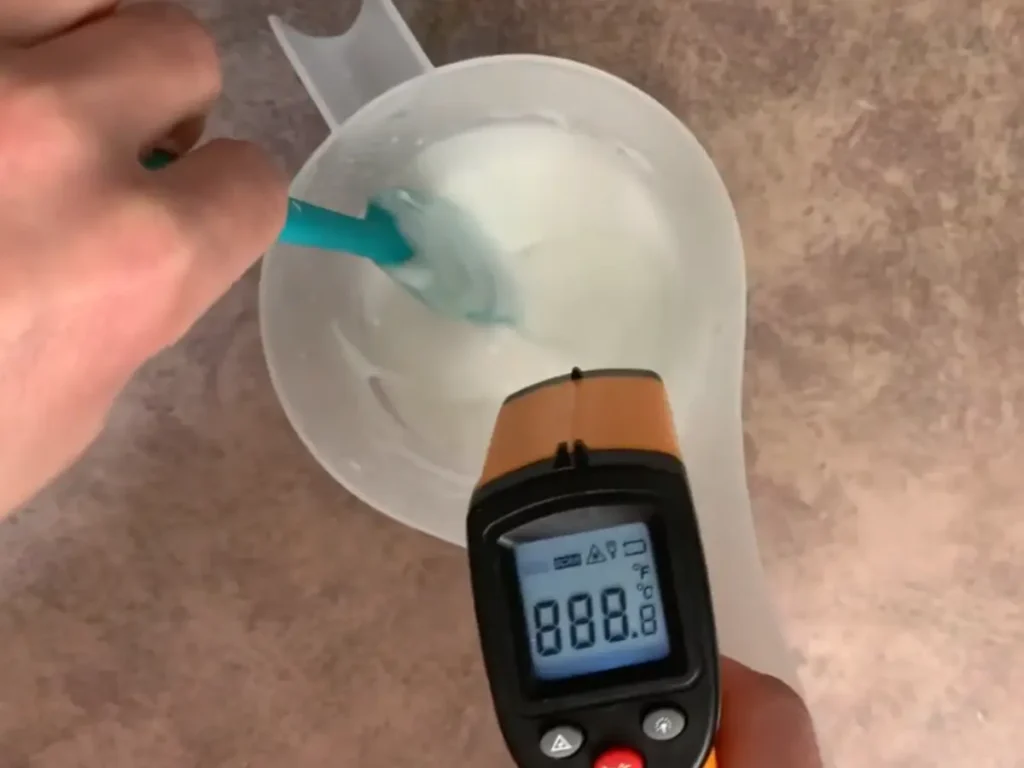
Optiphen Plus has different processing guidance and can tolerate higher temperatures according to supplier information. Even so, follow the instructions for the exact preservative you purchased.
This matters because adding a preservative at the wrong temperature can compromise its performance.
5. What is the recommended usage rate?
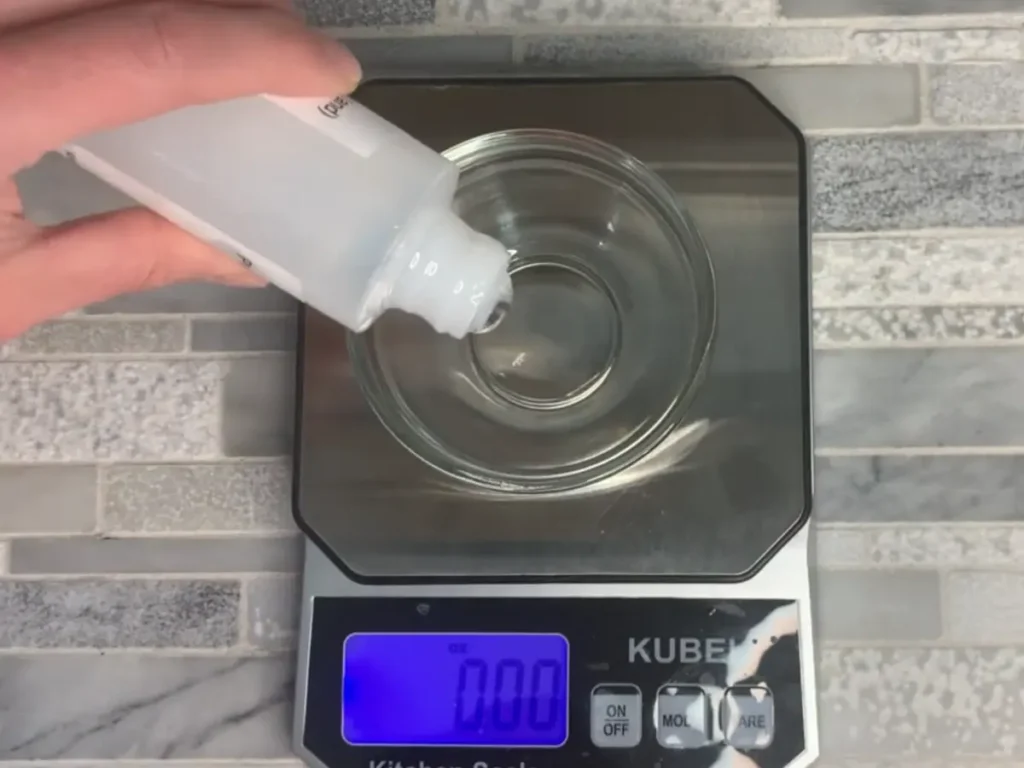
Every preservative has a specified usage range. You need to calculate the correct amount based on the total weight of your finished formulation, not just the water phase.
Using too little may leave your product inadequately protected. Using more than the recommended amount does not necessarily improve preservation and may create safety, compatibility, or regulatory problems.
Follow the supplier’s recommended usage rate and applicable restrictions.
Comparing Popular Skincare Preservatives
The following preservatives are worth understanding if you make skincare at home. They are not interchangeable, and each has its own strengths and limitations.
Liquid Germall Plus
Liquid Germall Plus is the preservative I reach for more often now.
It is a broad-spectrum preservative used in many water-based and emulsion formulations. Its relatively low recommended use level and broad pH range make it a practical option for many beginner-friendly lotions, creams, and other aqueous products.
Typical use level: 0.1–0.5%
Stated effective pH range: 3–8
Addition temperature: Add at 122°F (50°C) or below.
Best suited for: Many lotions, creams, gels, and other compatible water-based or emulsified skincare products.
One advantage is that you do not need a large amount to reach the recommended usage range. It is also compatible with many common cosmetic ingredients.
Liquid Germall Plus is also not a reason to skip pH testing, good manufacturing practices, or preservation testing.
For many of my lotion formulations, it is a convenient option because I can incorporate it during cool-down rather than exposing it to the full heating process.
Optiphen Plus
Optiphen Plus was a preservative I used frequently when I first started making skincare.
It contains phenoxyethanol, caprylyl glycol, and sorbic acid. It is designed to help protect cosmetic formulations against bacteria, yeast, and mold, with performance that depends on the complete formula.
Typical use level: 0.75–1.5%
Preferred pH: Below 6
Processing temperature: Follow the supplier’s instructions; product guidance permits addition at temperatures below 176°F (80°C).
Best suited for: Compatible lotions, creams, body washes, shampoos, and other formulations where the pH and ingredients fit its requirements.
The sorbic acid component makes pH particularly important when using Optiphen Plus. If you are formulating a product with a higher pH, I would compare other preservative options rather than assuming Optiphen Plus is the best choice.
Optiphen Plus can also affect emulsion stability or viscosity in some formulations. Review the preservative’s compatibility and addition procedure as part of troubleshooting.
I still consider Optiphen Plus a useful option. I simply prefer Liquid Germall Plus for many of the formulations I make now because its usage rate and pH range fit those recipes well.
Optiphen
Optiphen is a related but different preservative. It contains phenoxyethanol and caprylyl glycol, without the sorbic acid found in Optiphen Plus.
Typical use level: 0.5–1.5%
Stated effective pH range: 4–8
Best suited for: Compatible water-based products and emulsions, depending on the formulation.
Do not assume that Optiphen and Optiphen Plus have identical properties just because their names are similar. They have different compositions, so check the correct product’s technical data before using it.
Geogard ECT and other alternative preservative systems
If you prefer to explore alternatives to the preservatives above, you may come across Geogard ECT and other broad-spectrum preservative blends.
These products have their own ingredient compositions, recommended usage levels, pH requirements, and processing instructions. Some are marketed toward formulators looking for particular certification or ingredient profiles.
The important point is that a preservative marketed as natural, naturally derived, or suitable for natural formulations is not automatically more effective or safer for every recipe.
Before choosing one, verify its current technical documentation, permitted applications, pH range, and compatibility with your formula.
Phenonip
Phenonip is another preservative blend used in some cosmetic formulations. Unlike the water-soluble preservatives commonly added during cool-down, Phenonip is generally incorporated into the oil phase according to the supplier’s instructions.
It may be an option for compatible emulsions and certain oil-containing formulations, but you should not choose it solely because your recipe contains oils.
Check the exact product’s ingredient compatibility, usage restrictions, processing instructions, and suitability for the intended application. Do not assume it is appropriate for lip products or every anhydrous recipe.
For a beginner making a simple lotion, I would start by comparing Liquid Germall Plus and Optiphen Plus before exploring more specialized options.
Which Preservative Should You Use for Your Product?
Here is a practical starting point for common DIY skincare products.
| Product you are making | Recommended preservative to consider | Important considerations |
|---|---|---|
| Body lotion or facial moisturizer | Liquid Germall Plus | A practical starting point for many emulsions. Use at 0.1–0.5%, adding at 122°F (50°C) or below. Check ingredient compatibility and product restrictions. |
| Face cream | Liquid Germall Plus | Suitable for many compatible emulsions. Check the finished pH, ingredient compatibility, and intended application. |
| Facial toner or water-based serum | Liquid Germall Plus | Can work in compatible water-based formulas within its pH range of 3–8. Check compatibility with solvents, botanical extracts, and other ingredients. |
| Body wash or shampoo | Liquid Germall Plus or another surfactant-compatible preservative | Check compatibility with the surfactant system, finished pH, and rinse-off product restrictions. |
| Hair conditioner | A preservative specifically compatible with the conditioning system, such as Liquid Germall Plus where suitable | Conditioning agents and other ingredients can affect compatibility. Confirm suitability for the complete formula. |
| Aloe gel | Liquid Germall Plus | Can be considered for compatible gels within its pH range. Account for the aloe ingredient, thickener, and other additives. |
| Water-based sugar scrub | Liquid Germall Plus or Optiphen Plus | Either may be an option if the formula is compatible. Check pH, usage rate, and how the scrub will be exposed to water during use. |
| Oil-only lip balm or lotion bar | No conventional water-phase preservative is generally needed | This applies only when the product is genuinely anhydrous. Maintain good manufacturing practices and prevent water contamination. |
| Oil-based scrub used in the shower | No single preservative can be recommended without reviewing the formula and water-exposure risk | Water entering the jar changes the microbial risk. Consider packaging and product design, and do not rely on adding a preservative to make water contamination safe. |
How Much Preservative Should You Use?
Once you have selected a compatible preservative, calculate the amount using the total batch weight.
For example, suppose you are making 100 g of lotion and your chosen preservative has a recommended usage rate of 0.5%.
The calculation is:
100 g × 0.005 = 0.5 g preservative
You would use 0.5 g of preservative in a 100 g batch, provided that 0.5% is permitted for that specific product and is appropriate for your formulation.
For Liquid Germall Plus, the stated range is 0.1–0.5%. For Optiphen Plus, it is typically 0.75–1.5%.
Do not substitute one preservative at the same percentage as another without checking its recommended use level. Their concentrations, compositions, and performance are different.
When formulating by percentage, the entire recipe should total 100%. If you add a preservative, account for it in the formula rather than simply adding extra weight to a finished batch.
For a more detailed explanation, see my percentages vs. grams in skincare formulation.
How to Add a Preservative Correctly
Choosing the right preservative is only part of the process. You also need to incorporate it correctly.
For a typical lotion made with Liquid Germall Plus, the process looks like this:
- Prepare and heat your water and oil phases according to the formulation.
- Combine the phases and emulsify the lotion.
- Allow the emulsion to cool while mixing as needed.
- When the batch reaches 122°F (50°C) or below, add the correctly weighed amount of Liquid Germall Plus.
- Mix thoroughly so the preservative is distributed throughout the product.
- Measure and adjust the finished product’s pH if needed, using ingredients compatible with the formula.
- Package the lotion in clean, suitable containers.
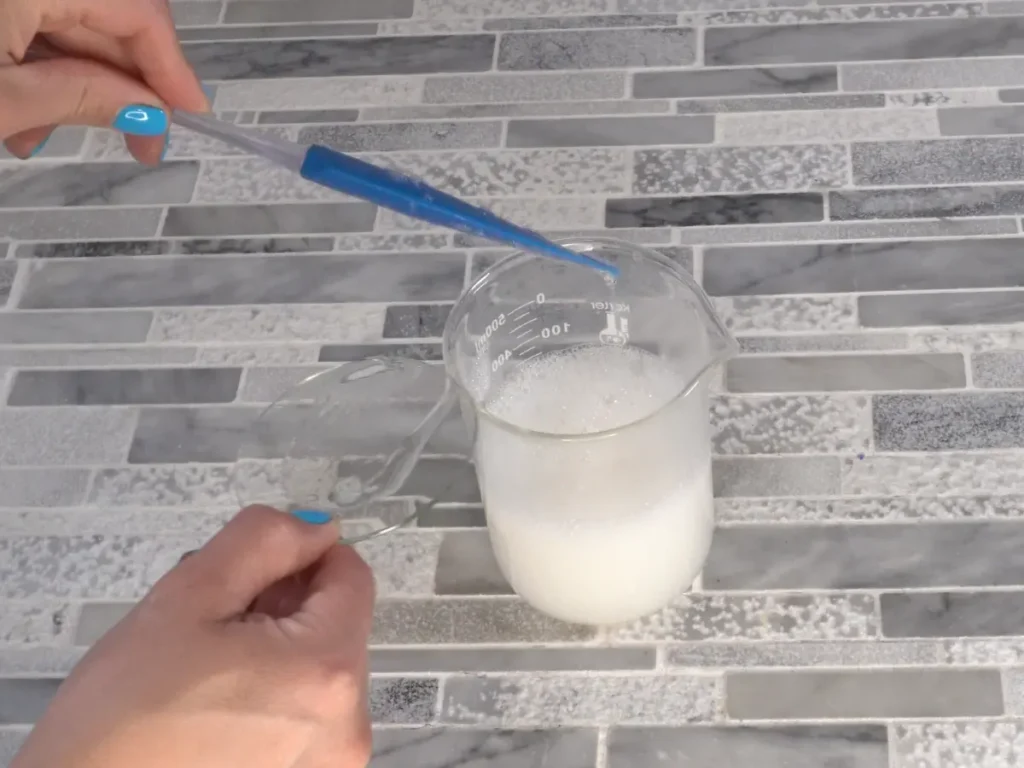
For Optiphen Plus, follow the temperature and addition instructions for the specific product you have. A supplier may recommend adding it during cool-down to help maintain emulsion stability.
You should also use clean equipment, suitable packaging, and good manufacturing practices throughout the process.
Does a Preservative Extend the Shelf Life of Skincare?
A preservative helps protect a product against microbial growth, but it does not automatically guarantee a particular shelf life.
Shelf life depends on more than the preservative. It can be affected by the formulation, manufacturing conditions, packaging, storage, pH, and the quality of the raw materials.
A product can also deteriorate through oxidation or other chemical changes even when microbial preservation is adequate.
For example, a lotion containing oils that oxidize easily may develop an off smell or changes in color over time. A preservative does not prevent all forms of deterioration.
For products intended for sale, preservation efficacy testing, such as a suitable microbial challenge test, is an important part of validating the preservative system. Stability testing and appropriate packaging evaluation are also needed to establish a defensible shelf life.
For personal projects, do not rely on appearance or smell alone to decide whether a product is safe to use.
Common Mistakes When Choosing a Preservative
Choosing a preservative because it is popular. A preservative that works in someone else’s lotion may not work in your formulation.
Ignoring pH. Some preservatives depend heavily on the pH of the finished product. Always verify that your final pH falls within the appropriate range.
Adding it at the wrong temperature. Heat-sensitive preservatives can lose effectiveness if they are added too early in the process.
Using too little or too much. Follow the recommended usage range and calculate the amount by weight.
Assuming vitamin E is a preservative. Antioxidants help protect oils from oxidation; they do not replace a broad-spectrum antimicrobial preservative in a water-based product.
Assuming a natural preservative is automatically better. What matters is whether the system can adequately protect the specific finished formulation.
Skipping preservation testing. A formula that looks stable is not necessarily microbiologically safe.
Assuming every preservative works in every product. Lip products, high-pH formulations, complex conditioners, and other specialized products may have restrictions that rule out an otherwise useful preservative.
Frequently Asked Questions
Can I substitute Liquid Germall Plus for Optiphen Plus?
Sometimes, but not automatically. Both can be used in compatible cosmetic formulations, but their recommended usage rates, temperature limits, ingredient compositions, and pH preferences differ. Review the formula and calculate the new preservative amount before making the substitution.
Can I use Liquid Germall Plus in every lotion?
No. It is suitable for many lotions, but the complete formulation must fall within its compatibility and application requirements. Check the pH, ingredients, usage restrictions, and processing instructions.
Do I need a preservative in an oil-only body butter?
A genuinely anhydrous body butter generally does not need a conventional water-phase preservative. However, water introduced during use can create a contamination risk, and the formula and packaging should be designed accordingly.
Is vitamin E enough to preserve homemade lotion?
No. Vitamin E is an antioxidant, not a broad-spectrum antimicrobial preservative. A lotion containing water needs a suitable preservation system.
Can I use essential oils instead of a preservative?
No. Essential oils are not reliable replacements for a properly formulated and validated broad-spectrum preservative system.
Do I need to test the pH after adding a preservative?
You should measure the finished product’s pH and confirm that it falls within the preservative’s appropriate range. Adding a preservative does not eliminate the need for pH testing.
Can I sell skincare made with Liquid Germall Plus?
The preservative may be suitable for some products, but using it does not by itself establish that a product is safe or compliant for sale. You need to consider applicable ingredient restrictions, manufacturing practices, product testing, labeling, and other regulatory requirements.
Final Thoughts
Choosing a preservative becomes much easier when you stop looking for one product that works for everything and start looking at the needs of the formula.
I used Optiphen Plus in many of my earlier recipes, and it remains an option for compatible formulations. These days, I reach for Liquid Germall Plus more often because its low use level and broad pH range make it a convenient choice for many of the lotions and water-based products I make.
Neither preservative is automatically the best choice for every recipe. The goal is to choose a preservative that works with your ingredients, fits your finished product’s pH, can be added correctly, and provides adequate protection in the final formulation.
Once you understand those basics, you can make more informed decisions about every skincare product you create.