
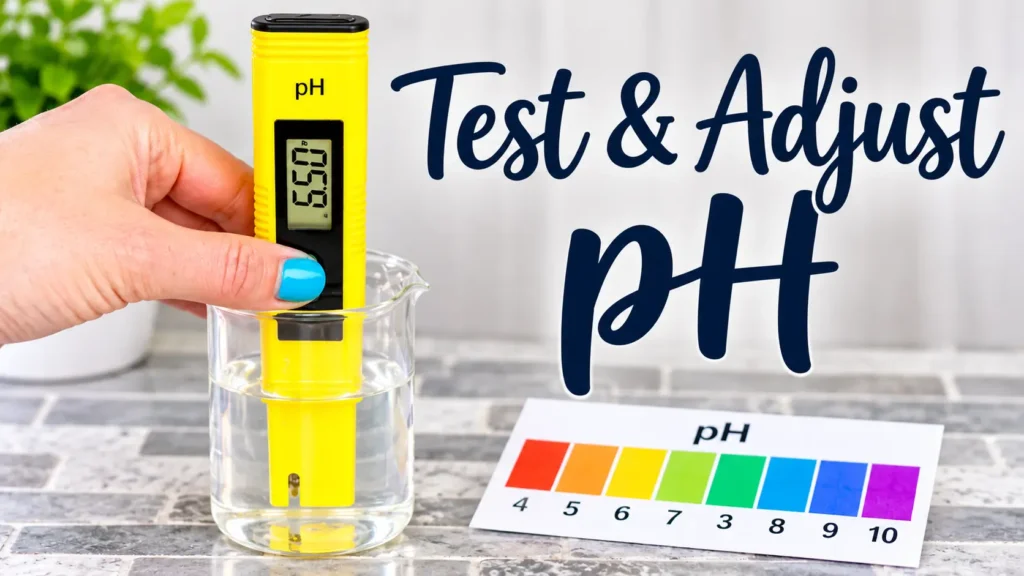
When you’re learning to make skincare products from scratch, understanding pH is an important part of creating stable, effective formulations. You might have a lotion that looks perfect, a toner that feels wonderful on your skin, or a serum made with carefully chosen ingredients. But how do you know if its pH is appropriate for the formula?
Testing pH helps you determine whether your product falls within the range needed for your ingredients and preservative system. It is especially important when making lotions, creams, toners, serums, and other water-based skincare products.
The good news is that testing pH doesn’t have to be complicated. Once you understand which tools to use, how to prepare a sample, and when to adjust your formula, it becomes a manageable part of your formulation routine.
In this guide, we’ll cover how to test pH in homemade skincare, how to interpret your results, how to adjust pH when necessary, and which products don’t need pH testing at all.
What Is pH, and Why Does It Matter in Skincare?
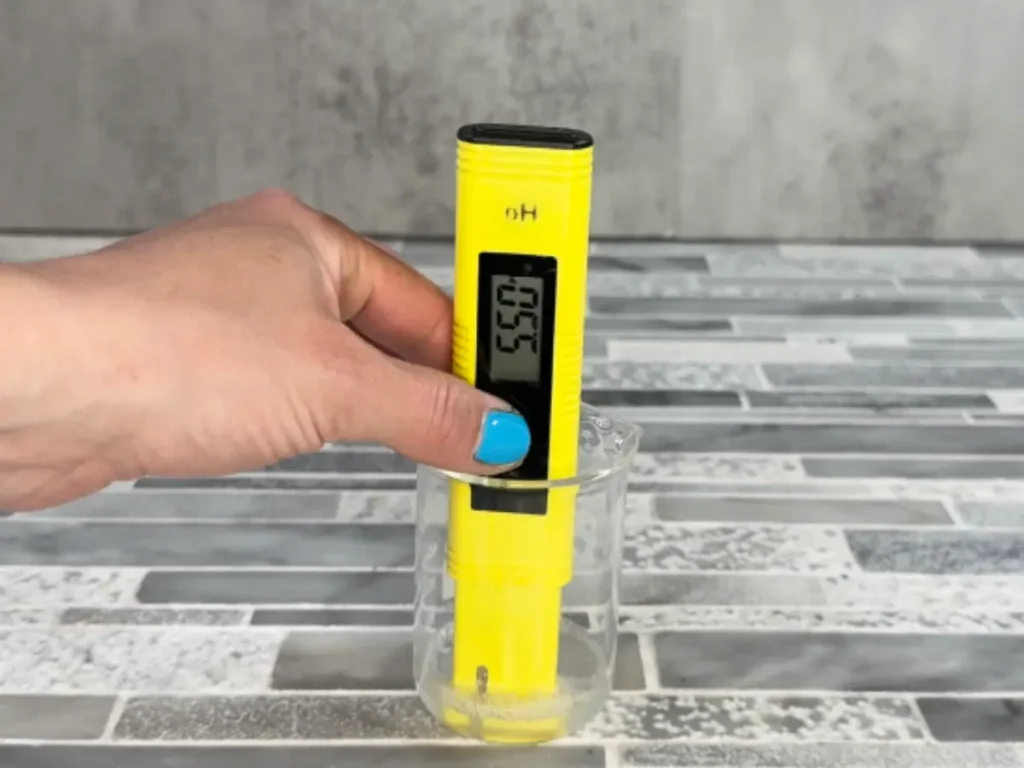
pH measures how acidic or alkaline an aqueous solution is. The scale generally runs from 0 to 14, with 7 considered neutral at approximately room temperature.
- Below pH 7: Acidic
- At pH 7: Neutral
- Above pH 7: Alkaline
Many skincare products are formulated to be mildly acidic, but there isn’t one ideal pH for every product. The appropriate range depends on the ingredients, the intended use, the product type, and the requirements of the preservative system.
For example, a facial toner containing certain exfoliating acids may have a different target pH than a basic moisturizing lotion. A formula containing a pH-sensitive ingredient may also require a narrower range than a simple moisturizer.
Testing pH matters for several reasons.
Your preservative may depend on pH
Preservatives are not interchangeable, and they don’t all work under the same conditions. Some preservatives have a defined pH range in which they are effective.
If your finished product falls outside that range, you cannot assume the preservative will protect it as intended.
pH can affect how ingredients perform
Some cosmetic ingredients work best within a particular pH range.
Certain exfoliating acids, for example, depend on formulation pH to achieve their intended performance. Some other ingredients can lose stability or change their behavior when the pH is too high or too low.
This doesn’t mean that every skincare ingredient requires an acidic formula. It means you need to understand the requirements of the ingredients you’re using before deciding on a target pH.
pH matters for skin compatibility
Healthy skin has a naturally acidic surface, often described as the skin’s acid mantle. Its pH varies depending on the person, body area, and other factors.
Formulating a product within an appropriate pH range can help support skin compatibility, but pH alone doesn’t determine whether a product is gentle or safe. The complete formula, ingredient concentrations, exposure, and intended use all matter.
The important takeaway: Choose a target pH based on your specific formula rather than assuming every skincare product should have the same reading.
What Do You Need to Test pH?
You don’t need an elaborate laboratory to begin testing your formulations, but you do need a suitable testing method.
There are two common options: a digital pH meter and pH test strips.
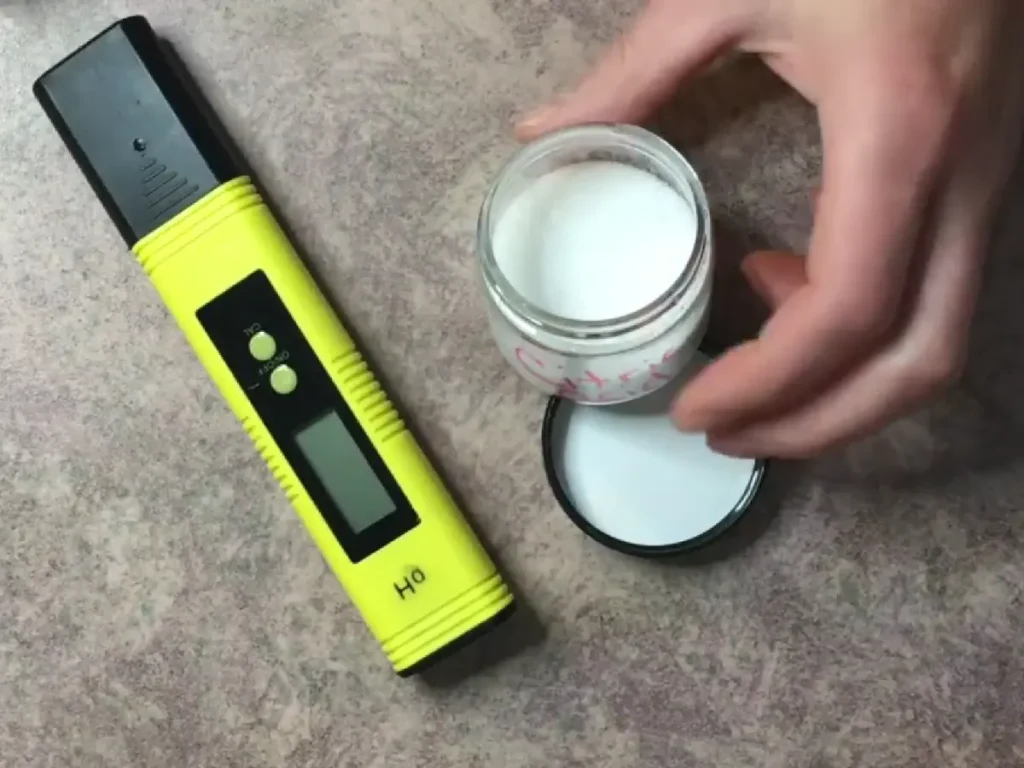
Digital pH meter
A digital pH meter is generally the better choice for cosmetic formulation because it provides a numerical reading instead of relying on color matching.
Look for a meter suitable for your type of samples. Some electrodes are designed for liquids, while others are better suited to creams, gels, or semisolid products.
A few things to keep in mind:
- Calibrate the meter using fresh, appropriate buffer solutions.
- Follow the manufacturer’s calibration instructions. A two-point calibration commonly uses pH 4.00 and pH 7.00 buffers.
- Rinse the electrode between samples with distilled or deionized water.
- Blot gently if instructed by the manufacturer rather than rubbing the sensitive electrode.
- Store the electrode in the recommended storage solution, not in distilled water unless the manufacturer specifically directs otherwise.
A meter that displays several decimal places isn’t necessarily accurate simply because it has a digital screen. Calibration, electrode condition, temperature, and the sample itself all affect the reliability of your reading.
pH test strips
pH strips are an inexpensive way to get a general indication of acidity or alkalinity.
However, they are less precise than a properly calibrated meter. Their accuracy depends on the strip type, the range it measures, and how clearly you can read the color change.
They can be especially difficult to interpret when testing products that are:
- Opaque or creamy
- Strongly colored
- Cloudy
- Thick or difficult to spread evenly over the strip
If you use strips, choose ones with a suitable range for your formulation. General-purpose strips that cover a very broad pH range may not be precise enough for a formula requiring a narrow target.
For example, if your target is around pH 5, a strip designed specifically for the acidic range may be more useful than one covering pH 0–14.
My recommendation: If you plan to make lotions, creams, toners, and other water-based products regularly, invest in a suitable digital pH meter and learn to calibrate and maintain it correctly.
How to Test pH in Different Skincare Products
The right testing method depends on the consistency and composition of your product. A thin toner is not handled in the same way as a thick lotion, and an oil-only body butter cannot be tested for pH in the same way as either one.
How to test the pH of lotions and creams
Lotions and creams are emulsions, meaning they contain water and oil held together by an emulsifying system.
Testing a thick emulsion can be challenging because the sample may not make consistent contact with a standard electrode. Oils, waxes, and other ingredients can also coat the electrode and make it more difficult to clean.
One practical approach is to prepare a diluted sample, provided this method is appropriate for your meter and formulation.
The 10% dilution method
For a 10% product dilution, you’ll need:
- 1 gram of finished lotion or cream
- 9 grams of distilled or deionized water
- A clean beaker or small glass container
- A calibrated pH meter
- A clean utensil for mixing
Here’s how to do it.
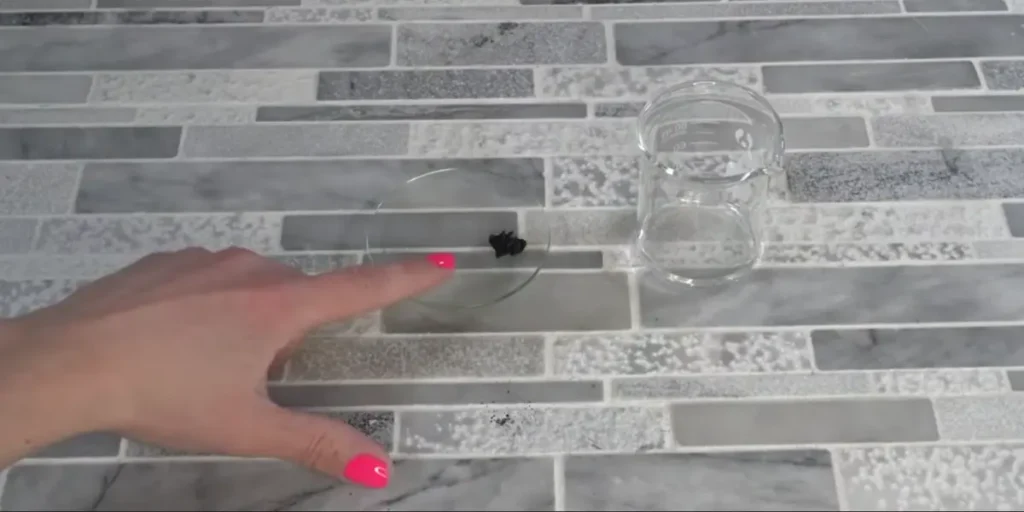
Step 1: Add the water.
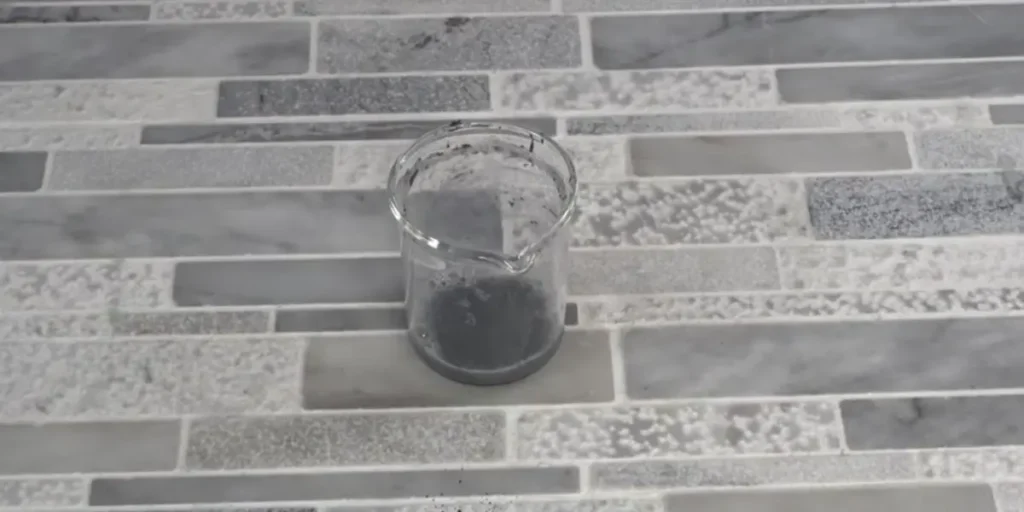
Place a clean container on your scale and tare it. Add 9 grams of distilled water.
Step 1: Add your Product
Add 1 gram finished product. This gives you 10 grams of sample containing 10% product by weight.
Step 3: Mix thoroughly.
Stir until the sample is evenly dispersed. Some emulsions won’t dissolve into a perfectly clear liquid, and that’s normal. The goal is a consistent sample, not necessarily a transparent one.
Step 4: Measure the pH.
Place the meter’s electrode into the prepared sample according to the manufacturer’s instructions. Avoid trapping air bubbles around the sensing area.
Wait for the reading to stabilize, following the meter’s guidance, and record the result.
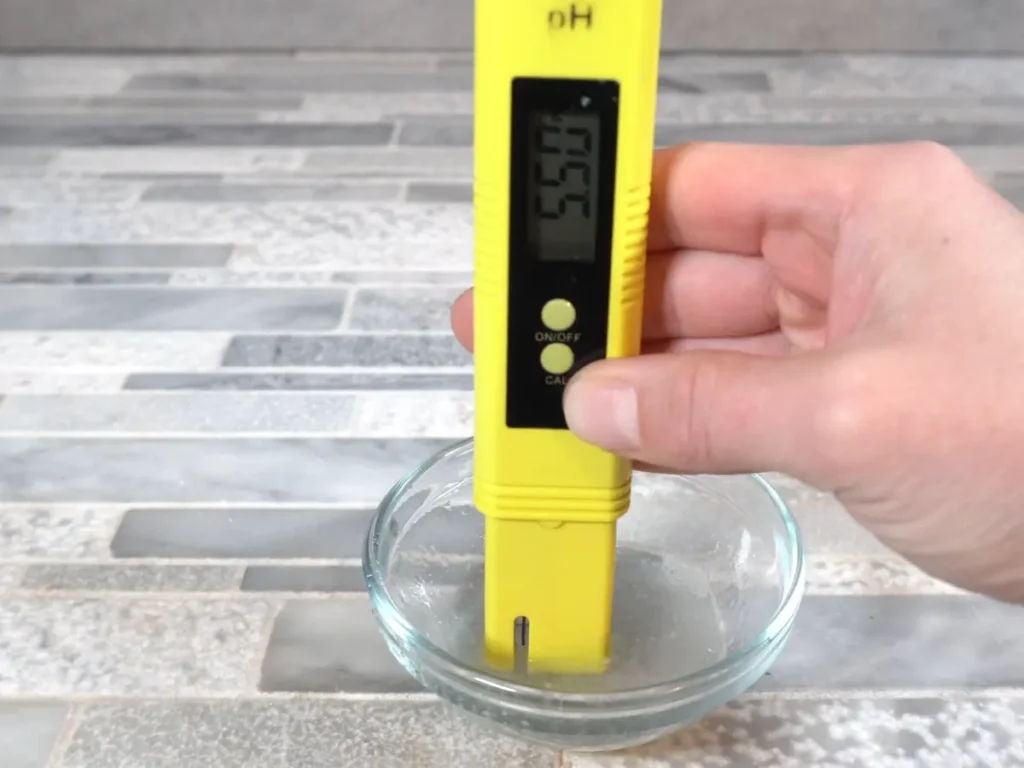
Step 5: Record your method and result.
Write down the dilution ratio, the pH reading, and any other relevant observations.
One important detail: a diluted sample does not always have the same pH as the undiluted lotion. Dilution can change the measured pH, particularly in formulations with limited buffering capacity or complex ingredient systems. Use a consistent, validated method and follow any specific testing instructions provided by your ingredient suppliers or laboratory.
If your meter has an electrode designed for emulsions or semisolids, direct testing may be possible instead. Always follow the electrode manufacturer’s recommendations.
How to test the pH of toners and liquid serums
Thin, water-based products are usually easier to test because the electrode can be placed directly into a representative sample.
You’ll need:
- A clean beaker
- A calibrated pH meter
- A small sample of your finished product
Pour enough product into the beaker to cover the electrode’s sensing area. Place the electrode in the sample and wait for the reading to stabilize.
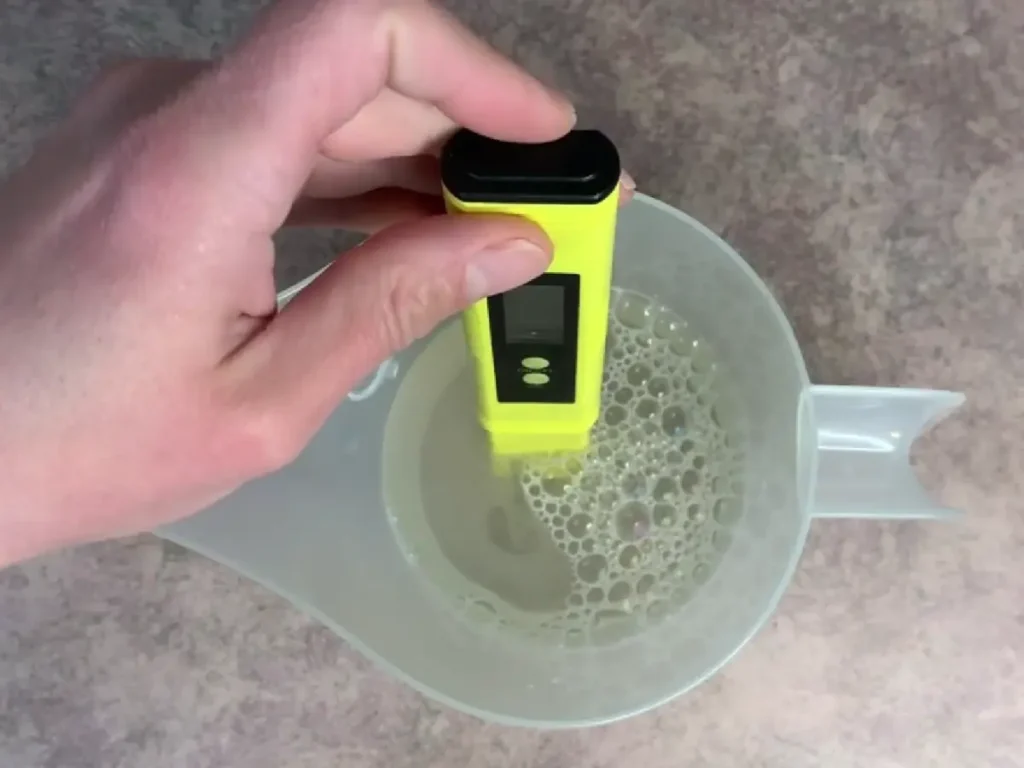
If you’re using strips, apply the sample according to the strip manufacturer’s directions and compare the resulting color with the reference chart.
Avoid testing directly in your main batch if you can take a small sample instead. This keeps the bulk product cleaner and reduces the risk of contamination.
If your serum is thick, contains a lot of suspended material, or has a complex formulation, check whether your testing equipment requires a different procedure.
How to test the pH of gels and other thicker products
Gels can be more difficult to measure than thin liquids because their viscosity may interfere with contact between the sample and the electrode.
Depending on the gel and your equipment, you may be able to test it directly with a suitable electrode or use a specified dilution method.
Don’t automatically apply the lotion dilution method to every gel. Follow the recommended procedure for your particular formulation and testing equipment, and record the method so you can compare results consistently.
Do body butters, facial oils, and salves have a pH?
Purely anhydrous products—those made without water—do not have a conventional measurable pH. Learn more about anhydrous products on my formulating guide.
pH describes hydrogen ion activity in an aqueous phase. Oils and waxes alone don’t provide the water-based environment needed for an ordinary pH measurement.
This means you don’t need to test the pH of a genuinely water-free formula such as:
- A body butter made only with oils and butters
- A facial oil
- An oil-based salve
- A wax-based massage bar
However, check the complete ingredient list before deciding that a product is anhydrous. Aloe juice, hydrosols, water-based extracts, and other water-containing ingredients can introduce an aqueous phase.
Also, an anhydrous product isn’t automatically immune to microbial contamination. Water can enter during manufacturing or use, and raw materials can introduce contamination. Appropriate ingredient selection, manufacturing practices, and packaging still matter.
What pH Should Your Skincare Product Be?
There is no universal target pH for homemade skincare. The right range depends on what you’re making.
Use the following table as a starting point for understanding what to consider—not as a substitute for a formulation-specific target.
| Product type | What to consider |
| Basic facial lotion | Skin compatibility, emulsifier requirements, and preservative limits |
| Body lotion | Intended use, ingredient stability, and preservative requirements |
| Facial toner | The ingredients used and their intended function |
| Exfoliating serum | The acid system, target performance, and ingredient stability |
| Gel moisturizer | The gelling agent, active ingredients, and preservative system |
| Anhydrous body butter | Conventional pH testing is not applicable if the formula contains no aqueous phase |
When developing a formula, identify the acceptable pH ranges for the ingredients that have specific requirements. Then choose a target that satisfies the relevant constraints.
For example, if a preservative is only suitable below a certain pH, your formula needs to meet that requirement. If another ingredient has its own stability range, you must consider that too.
Don’t assume that choosing a pH compatible with one ingredient automatically makes the entire formula suitable.
For more help understanding how ingredients fit together in a formula, see my guide to skincare formulation for beginners.
How to Lower the pH of a Skincare Formula
If your product’s pH is higher than your intended target, you may need to lower it by adding an appropriate acid solution.
Citric acid is one option used in cosmetic formulation, but it isn’t automatically suitable for every product. The choice of pH adjuster depends on the formula, its ingredients, and the intended pH range.
Prepare a diluted citric acid solution
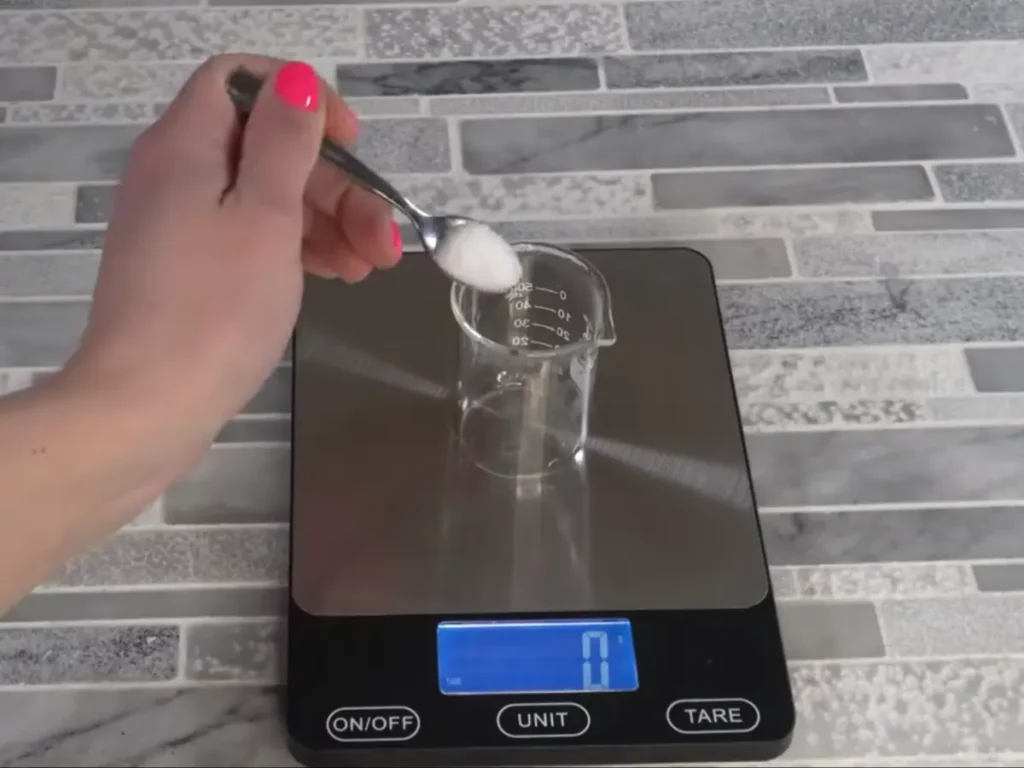
A 50% citric acid solution by weight can be prepared by combining:
- 10 gram of citric acid
- 10 grams of distilled water
Stir until the citric acid has dissolved completely. Label the solution clearly and keep it in a suitable, clean, closed container.

This is a 50% solution by weight. It is not the same as adding 50% citric acid to your finished product.
Adjust the formula gradually
If you need to lower the pH of a batch, follow this general process:
- Measure the starting pH using your chosen, consistent testing method.
- Add a small, accurately measured amount of the diluted pH adjuster.
- Mix thoroughly so the adjustment is distributed throughout the batch.
- Allow the sample to equilibrate as appropriate for the formula.
- Take a fresh sample and measure the pH again.
- Repeat in small increments until you reach your intended target.
Don’t rely on a fixed number of drops. Drop size varies, and different formulations respond differently to the same amount of acid.
For better reproducibility, weigh the pH adjuster whenever practical. This lets you calculate the amount used relative to your batch size.
Why shouldn’t you add a large amount at once?
It can be tempting to add more acid if your first adjustment doesn’t produce the expected result. However, overshooting your target can make it necessary to adjust in the opposite direction, potentially adding unnecessary salts or other ingredients to the formula.
Small, measured adjustments make it easier to control the result.
Also, lowering pH can affect more than the number displayed on your meter. Depending on the formula, it may influence viscosity, ingredient solubility, emulsion stability, or the performance of other ingredients.
If your formula behaves unexpectedly after adjustment, stop and investigate rather than continuing to add pH adjusters.
How to Raise the pH of a Skincare Formula
If the pH is lower than your intended target, you may need an appropriate alkaline pH adjuster.
The correct choice depends on the formulation. Cosmetic formulators may use materials such as sodium hydroxide solutions, arginine, or other suitable neutralizing agents, depending on the ingredients and system.
These materials are not interchangeable, and they don’t all behave the same way.
Use a suitable, diluted pH adjuster
For beginners, the safest approach is to use a pH adjuster appropriate for the formula and follow the supplier’s recommended concentration and handling instructions.
Sodium hydroxide is strongly caustic and can cause severe chemical burns. Preparing or handling its solutions requires suitable protective equipment, careful weighing, and appropriate procedures. It should not be treated as a casual kitchen ingredient.
Do not assume that a 50% solution of every pH adjuster is appropriate. Select the concentration and material based on the formulation and supplier guidance.
Once you have a suitable solution, the general adjustment process is similar to lowering pH:
- Measure the starting pH.
- Add a small, accurately measured amount of the appropriate adjuster.
- Mix thoroughly.
- Allow the sample to equilibrate as needed.
- Retest using the same method.
- Repeat carefully until the formula reaches its target range.
If you are new to formulation, work with a small test batch first. It is much easier to learn how a formula responds before scaling up to a larger quantity.
When Should You Test pH?
Testing pH is not just a final step before pouring a product into its packaging. It can be useful at different points during formulation and product development.
After making the initial batch
Once the product has been mixed thoroughly and is ready for evaluation, take a representative sample and measure its pH.
For an emulsion, allow the product to cool appropriately and follow the testing procedure selected for that formula.
Record the reading rather than relying on memory.
After adjusting the pH
Always retest after making an adjustment. Adding an acid or alkaline solution changes the formula, so you need a new measurement to confirm the result.
Don’t assume that a particular quantity of adjuster will always produce the same change in pH.
After the product has rested
Some formulations can show changes in pH after mixing, cooling, or equilibration. The extent of change depends on the ingredients and the formulation.
For this reason, it may be useful to check the pH again after the product has rested for an appropriate period. Record the timing and testing conditions so that you can compare results consistently.
During stability testing
As part of product development, monitor pH alongside other relevant observations, such as changes in color, odor, consistency, separation, and viscosity.
A changing pH may indicate that something in the formula is changing, although a pH shift alone doesn’t identify the cause.
If you’re developing a product to keep or sell, pH measurements are only one part of evaluating its stability and safety. Water-based products also need an appropriate preservation strategy, and preservation effectiveness may require laboratory testing.
See cosmetic shelf life for more information about evaluating how skincare products hold up over time.
Keep a pH Testing Record
One of the most useful habits you can develop as a skincare formulator is keeping accurate notes.
If a formula turns out beautifully, you want to be able to reproduce it. If something changes between batches, your records can help you identify what happened.
For every test, record:
- Formula name and batch number
- Date of testing
- Testing method and dilution ratio, if applicable
- pH meter identification and calibration details
- Initial pH reading
- Type and concentration of pH adjuster used
- Amount of adjuster added
- Final pH reading
- Any changes in appearance or consistency
- The time elapsed between making the batch and testing it
For example, your notes might say that a 100-gram lotion batch had an initial diluted-sample pH of 6.0. You then added a measured amount of a suitable citric acid solution, mixed the lotion thoroughly, and retested the sample.
Record the actual amount used and the resulting reading. Don’t assume that the same quantity will work for a future batch, even if the formula is otherwise identical.
These records become especially helpful when you’re refining a formula or troubleshooting an unexpected change.
Common pH Testing Mistakes to Avoid
Even a simple pH test can produce misleading results if the sample or equipment isn’t handled correctly.
Using an uncalibrated meter
A digital reading isn’t automatically reliable. Calibrate your meter as directed and use suitable buffer solutions.
Testing a thick cream with unsuitable equipment
A standard liquid electrode may not work well with every cream or gel. Use an appropriate electrode or a validated sample preparation method.
Assuming dilution never changes pH
Dilution can affect pH. If you use the 10% method, document it and interpret the result according to your formulation’s testing requirements.
Adding pH adjuster without measuring it
Counting unstandardized drops makes it difficult to reproduce a formula. Measure the quantity used and record it.
Assuming the right pH guarantees preservation
A product can have an appropriate pH and still be inadequately preserved. Follow the preservative supplier’s requirements and evaluate the complete preservation system.
Ignoring changes after adjustment
A pH adjustment can affect other aspects of the formula. Check the product’s appearance, consistency, and stability instead of focusing exclusively on the meter reading.
Testing a water-free product as if it were a lotion
Pure oils, waxes, and butters do not have a conventional measurable pH. Identify whether your formula contains an aqueous phase before deciding on a testing method.
Frequently Asked Questions About Testing pH in Skincare
Can I use pH strips instead of a digital pH meter?
Yes. pH strips can provide a general indication of pH, especially when the product is a clear, lightly colored liquid. However, they are less precise than a properly calibrated meter and can be difficult to read with opaque or strongly colored products.
For formulation work that requires a narrow pH range, a suitable digital meter is generally preferable.
Can I test the pH of lotion directly?
Sometimes. The answer depends on your pH meter’s electrode and the properties of the lotion. Some electrodes are designed for emulsions and semisolids, while others are intended for liquids.
A diluted sample may be a practical alternative, but the method should be appropriate for the formula and used consistently.
Why do you use 1 gram of lotion and 9 grams of distilled water?
This creates a 10% product dilution by weight. It provides a more manageable sample for certain testing methods and can make it easier to measure thicker products.
However, dilution can change the measured pH. Follow a suitable method for your formulation and don’t assume that the diluted reading always equals the pH of the undiluted product.
Does every skincare product need a pH test?
No. Conventional pH testing applies to aqueous systems. Purely anhydrous products, such as facial oils and water-free body butters, do not have a conventional measurable pH.
Water-based products, including lotions, creams, toners, and many gels, generally need appropriate pH evaluation during formulation.
What should I do if my pH keeps changing?
First, verify that your meter is calibrated and that you are using the same testing method each time. Check whether the product has had enough time to equilibrate and whether the change is reproducible.
If the pH continues to shift, investigate the formula, ingredient compatibility, and storage conditions. A change may indicate a formulation issue, but the reading alone cannot tell you exactly what is wrong.
Can I fix a formula simply by adjusting its pH?
Not necessarily. Adjusting pH can help bring a formula into its intended range, but it won’t automatically fix separation, poor preservation, ingredient incompatibility, or instability.
If a formula repeatedly falls outside its target range or becomes unstable after adjustment, revisit the formulation rather than continually adding more adjuster.
Final Thoughts
Learning how to test pH is an important step in becoming a more confident skincare formulator. It helps you evaluate whether a water-based product falls within its intended range and whether it meets the pH requirements of its ingredients and preservative system.
Start with a suitable testing method, calibrate your meter, measure carefully, and make adjustments gradually. Most importantly, keep accurate records so you can understand how your formula responds and repeat successful batches more reliably.
pH testing is one part of good formulation practice, alongside ingredient selection, proper preservation, stability evaluation, and hygienic manufacturing. When you understand how these pieces work together, you’re better equipped to make skincare products that are consistent and thoughtfully formulated.