
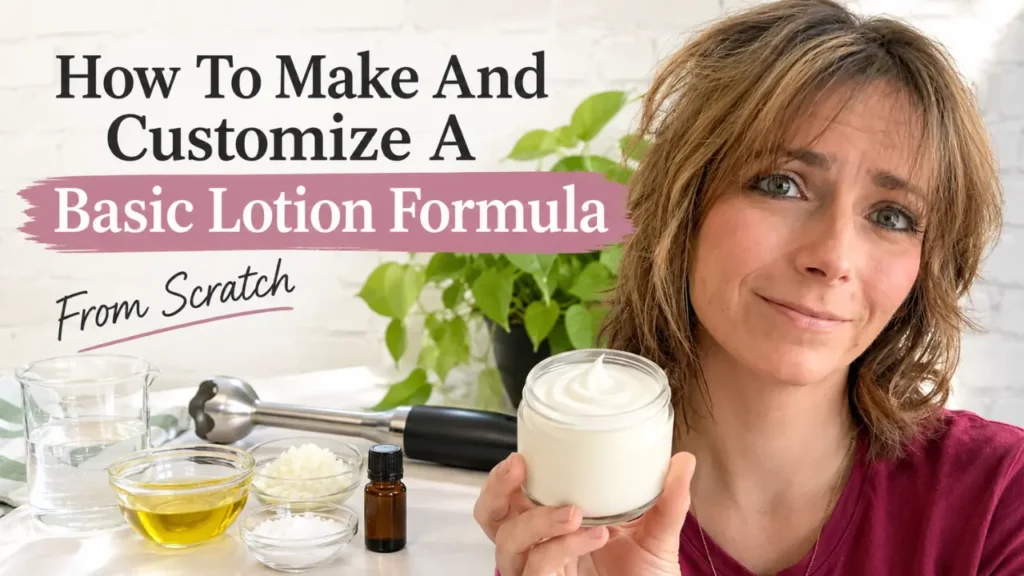
Making your own lotion can feel intimidating when you’re first starting out. There are so many ingredients to choose from, and it isn’t always clear which ones you need, how much to use, or how they work together.
The good news is that you don’t need to understand every cosmetic ingredient before making your first lotion. Starting with a simple formula and learning what each ingredient does is a great way to build your formulation skills.
In this guide, I’ll walk you through a basic lotion formula, explain the purpose of each ingredient, and show you how to customize the formula as you become more comfortable making skincare products.
You’ll learn how to work with percentages, understand the different phases of a lotion, choose ingredients, and make thoughtful changes without losing sight of how the formula works as a whole.
The goal isn’t just to follow a recipe. It’s to understand the basics of lotion formulation so you can eventually create your own products with confidence.
What Is a Lotion?
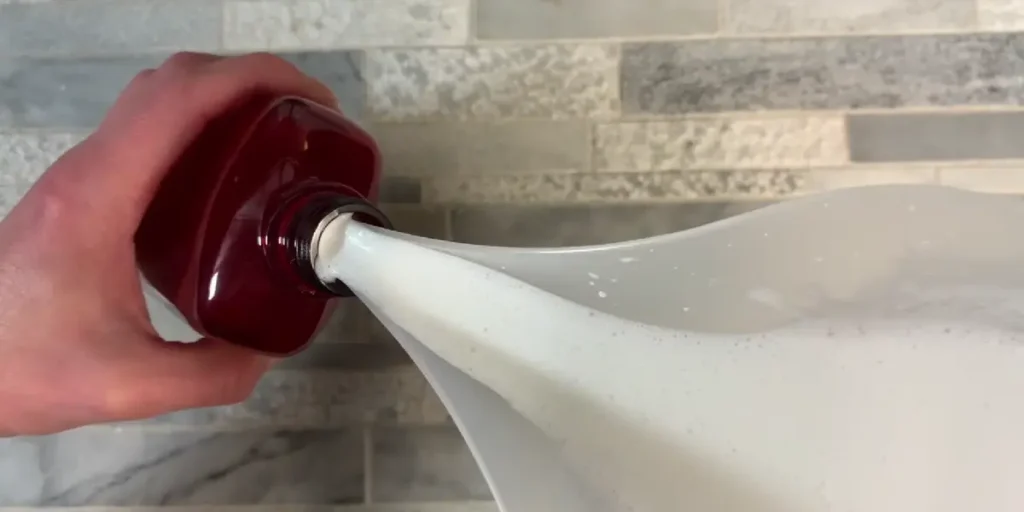
Most everyday moisturizing lotions are oil-in-water emulsions. This means tiny droplets of oil are dispersed throughout a continuous water phase.
Oil and water naturally separate, so we use an emulsifier to help bring the two phases together and stabilize the mixture.
A basic lotion typically contains:
- Water: Forms the main liquid phase of the lotion.
- Emollients: Soften the skin and influence the lotion’s spreadability and after-feel.
- Emulsifier: Helps the oil and water form a stable emulsion.
- Thickener or co-emulsifier: Helps adjust the viscosity and texture.
- Preservative: Helps protect the water-containing product against microbial growth.
- Optional ingredients: Fragrance, humectants, botanical extracts, and other cosmetic ingredients.
Not every lotion needs every ingredient category in the same amount. Some emulsifiers provide more thickness than others, and some formulas need additional ingredients to achieve the desired texture.
The ingredients you choose will influence how the finished lotion feels, how easily it spreads, and how well the emulsion holds together.
If you want to learn more about the science behind emulsions, read my guide to Emulsions: What Are They and How Do They Work?.
Prefer to watch How to Make and Customize a Lotion Formula
Affiliate disclosure: This post may contain affiliate links. If you purchase something through one of these links, I may earn a small commission at no additional cost to you. These commissions help support Summer Rain and allow me to continue creating free tutorials and recipes.
Understanding the Phases of a Lotion
When formulating a lotion, we generally divide the ingredients into three phases: the water phase, the oil phase, and the cool-down phase.
Organizing ingredients this way helps you understand when to add them and how to prepare the formula.
Water phase
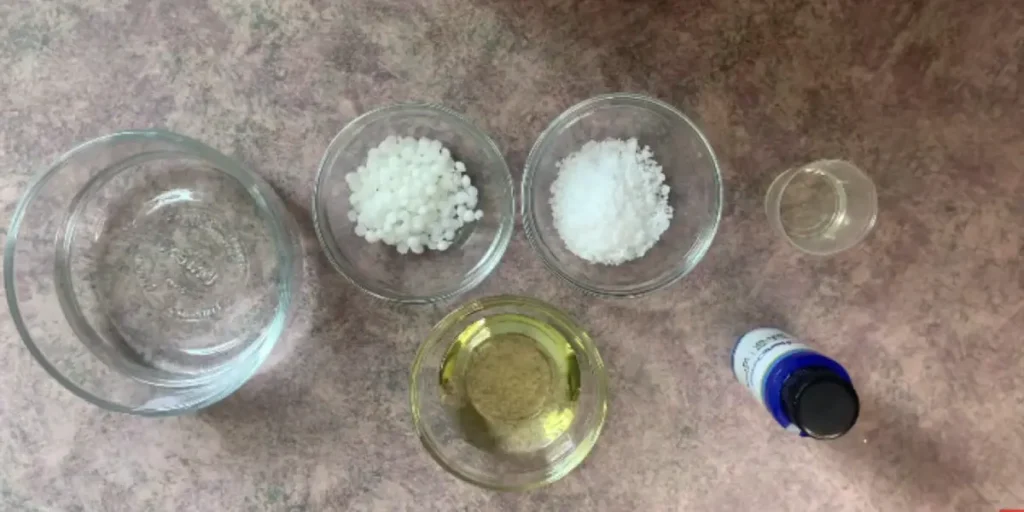
The water phase contains distilled water and other ingredients suitable for the water phase.
Water usually makes up the largest percentage of a lotion. It dissolves water-soluble ingredients and provides the continuous phase in which the oil droplets are dispersed.
For this beginner formula, we’ll keep the water phase simple and use distilled water.
I recommend distilled water rather than tap water because it reduces variability from minerals and other impurities. Distilled water is not sterile, however, so clean equipment, good handling practices, and appropriate preservation are still important.
You can sometimes replace part of the water with a suitable hydrosol, but this can introduce additional considerations involving ingredient compatibility and preservation.
Oil phase
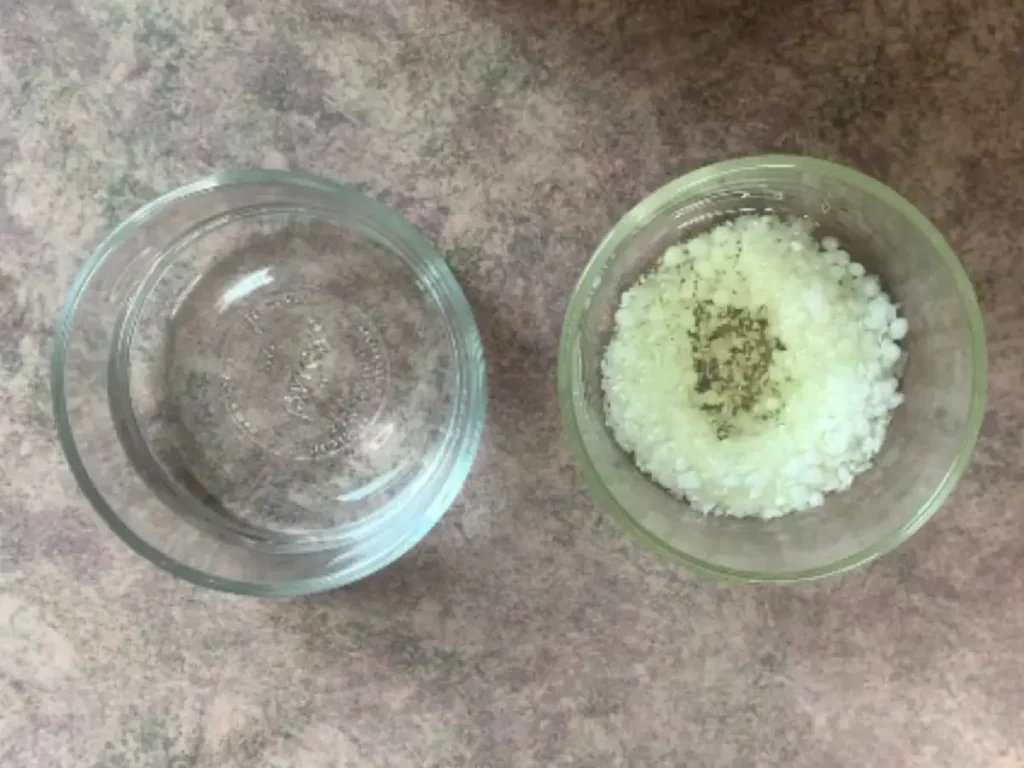
The oil phase contains the oils, emulsifiers, butters, and other ingredients that need to be heated or melted together.
For our basic lotion, the oil phase contains:
- Avocado oil
- Emulsifying Wax NF
- Stearic acid
Each ingredient has a different purpose.
Avocado oil acts as an emollient, Emulsifying Wax NF helps stabilize the oil and water mixture, and stearic acid contributes thickness and structure.
Cool-down phase
The cool-down phase contains ingredients that should be added after the lotion has cooled sufficiently.
This commonly includes preservatives, fragrance, and certain heat-sensitive ingredients.
The appropriate addition temperature depends on the ingredients you choose. Always check the supplier’s instructions for your specific preservative and fragrance rather than assuming every ingredient can be added at the same temperature.
For this formula, we’ll use an Oatmeal, Milk and Honey fragrance oil and a preservative at the amounts shown in the recipe.
Understanding Lotion Formulation Percentages
| Phase | Ingredient | Percentage | Weight |
|---|---|---|---|
| A — Water | Distilled water | 78.5% | 235.5 g |
| B — Oil | Avocado oil | 10% | 30 g |
| B — Oil | Emulsifying Wax NF | 5% | 15 g |
| B — Oil | Stearic acid | 4% | 12 g |
| C — Cool-down | Oatmeal, Milk and Honey fragrance oil | 2% | 6 g |
| C — Cool-down | Preservative | 0.5% | 1.5 g |
| Total | 100% | 300 g |
Before we get started, let’s talk about percentages.
Cosmetic formulas are generally written in percentages by weight. This makes it easier to reproduce a formula and scale it to different batch sizes.
For example, if a lotion contains 10% avocado oil, that means 10% of the total formula weight is avocado oil.
In a 100 g batch, you would use 10 g of avocado oil. In a 200 g batch, you would use 20 g.
The calculation is:
Ingredient weight = total batch weight × percentage ÷ 100
Every ingredient in the finished formula must be included, and the percentages should add up to 100%.
Why use percentages instead of ounces or grams?
Imagine you have a lotion formula that makes 9 ounces, but you only want to make a small test batch.
If the formula is written in percentages, you can calculate the amount of each ingredient for your new batch without having to redesign the recipe.
Percentages also make it easier to compare formulas and understand how changing one ingredient affects the overall composition.
For a more detailed explanation, read my guide to How to Scale a Skincare Formula to Any Batch Size.
Water is often the balancing ingredient
In many lotion formulas, distilled water is adjusted to bring the formula to 100%.
For example, if you add a new ingredient at 2%, you would generally reduce another ingredient or combination of ingredients by a total of 2 percentage points.
In a simple formula, that often means reducing the water.
However, you should not automatically substitute every ingredient at the same percentage without checking compatibility, recommended use levels, and the effect on the emulsion.
A formula that adds up to 100% is mathematically complete, but that doesn’t automatically mean it will be stable or properly preserved.
If you want to learn more about building formulas from scratch, visit my guide to Skincare Formulation for Beginners.
Ingredients for Our Basic Lotion Formula
Now let’s look at the ingredients in this particular formula and why they work together.
Avocado oil
Avocado oil is the emollient in this formula. Emollients help soften the skin and influence how a lotion spreads and feels after application.
Different carrier oils produce different results. Some feel lighter, while others provide a richer, more substantial after-feel.
Avocado oil is a useful ingredient to experiment with as you become more comfortable making lotions. You can eventually compare it with other carrier oils to see how each one affects the finished product.
When substituting oils, remember that the change may affect more than skin feel. The oil phase can influence the emulsion’s viscosity and stability, so any revised formula should be evaluated.
Emulsifying Wax NF
Emulsifying Wax NF is the primary emulsifier in this formula.
An emulsifier helps oil and water form a more stable mixture by helping stabilize the interface between the dispersed oil droplets and the surrounding water.
Without an appropriate emulsifier, a conventional lotion made from oil and water would tend to separate.
Emulsifying Wax NF is commonly used in lotions and creams because it helps create an oil-in-water emulsion and contributes to the finished product’s texture.
Different emulsifiers have different properties, recommended use levels, and processing requirements. You cannot assume that every emulsifier will work at the same percentage.
For more information, read Emulsifying Wax NF: What Is It and How to Use It.
Stearic acid
Stearic acid is used in this formula as a thickener and co-emulsifier.
It contributes structure and helps create a thicker, creamier consistency. It can also work alongside the primary emulsifier to influence the structure of the emulsion.
Stearic acid is not a direct substitute for an emulsifying wax. It has a different role in the formula, and changing its percentage can alter the finished texture.
This is an important point when learning to formulate: two ingredients may both influence viscosity without being interchangeable.
If you want to make a lighter lotion, a richer cream, or a different texture, you need to consider how the emulsifier and structuring ingredients work together.
Fragrance oil
Fragrance is optional. It adds scent but is not necessary for the lotion to function as a moisturizer.
For this recipe, we’re using Oatmeal, Milk and Honey fragrance oil.
Make sure your fragrance is suitable for leave-on skin products and that the 2% usage level is permitted by the supplier’s instructions and applicable fragrance safety restrictions. A fragrance oil intended for candles or rinse-off products is not automatically suitable for lotion.
If you prefer an unscented lotion, you can omit the fragrance and increase the water by the same percentage.
Preservative
Because this lotion contains water, it needs an appropriate preservative to help control bacteria, yeast, and mold.
The recipe uses 0.5% preservative. The specific preservative must be suitable for the formula and used according to its supplier’s instructions, including the recommended concentration, addition temperature, and pH requirements.
Preservatives are not interchangeable. Always check the guidance for the exact product you are using.
A preservative also does not replace clean manufacturing practices or appropriate testing. A lotion can look and smell normal without necessarily being microbiologically safe.
Read more in my guide to Why Preservatives Matter in DIY Skincare.
Basic Lotion Formula – Beginner
This is the original beginner lotion formula used in my accompanying video. We’ll keep the ingredients and proportions the same so you can follow along while watching the process.
Ingredients
| Ingredient | Percentage | Weight |
|---|---|---|
| Distilled water | 78.5% | 235.5 g |
| Avocado oil | 10% | 30 g |
| Emulsifying Wax NF | 5% | 15 g |
| Stearic acid | 4% | 12 g |
| Oatmeal, Milk and Honey fragrance oil | 2% | 6 g |
| Preservative | 0.5% | 1.5 g |
| Total | 100% | 300 g |
Note: Confirm that your specific preservative is appropriate at 0.5% and that your fragrance oil is suitable for leave-on lotion at 2%. Follow the suppliers’ usage and processing guidelines.
The ingredient weights are rounded to two decimal places to match the original recipe.
Equipment
- Digital scale
- Double boiler
- Heat-safe container for the oil phase
- Heat-safe container for the water phase
- Stick blender or immersion blender
- Thermometer
- Suitable container for the finished lotion
A scale is essential for making repeatable formulas. Weight measurements are more reliable than measuring cups and spoons, especially when working with ingredients that have different densities.
How to Make the Lotion
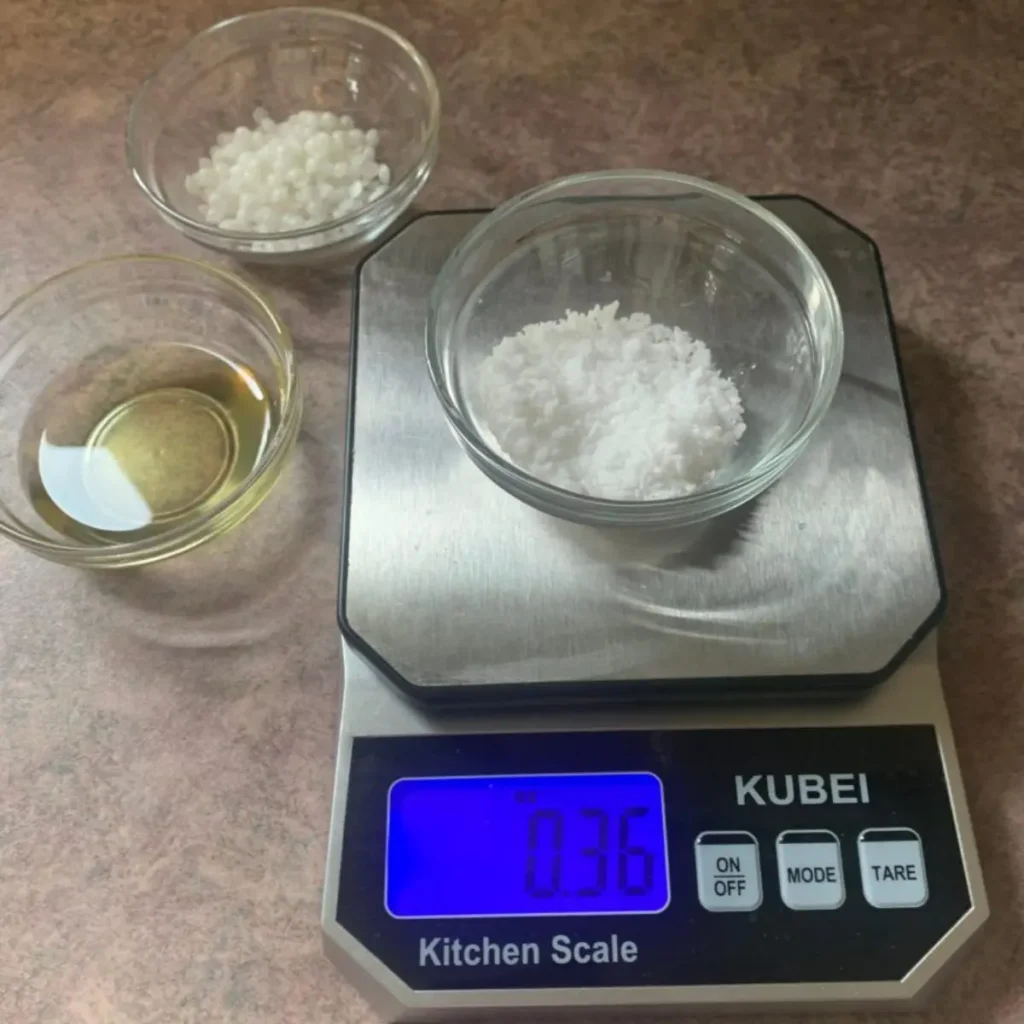
Step 1: Weigh your ingredients
Weigh out all your ingredients according to the formula.
Keep the water phase and oil phase separate. The preservative and fragrance will be added later, after the lotion has cooled sufficiently.
Step 2: Heat the water phase
Place the distilled water in a suitable heat-safe container and place it in a double boiler.
Water can evaporate during heating, which changes the final proportions of your formula. For more precise formulation work, weigh the water phase before and after heating and replace any lost water as appropriate.
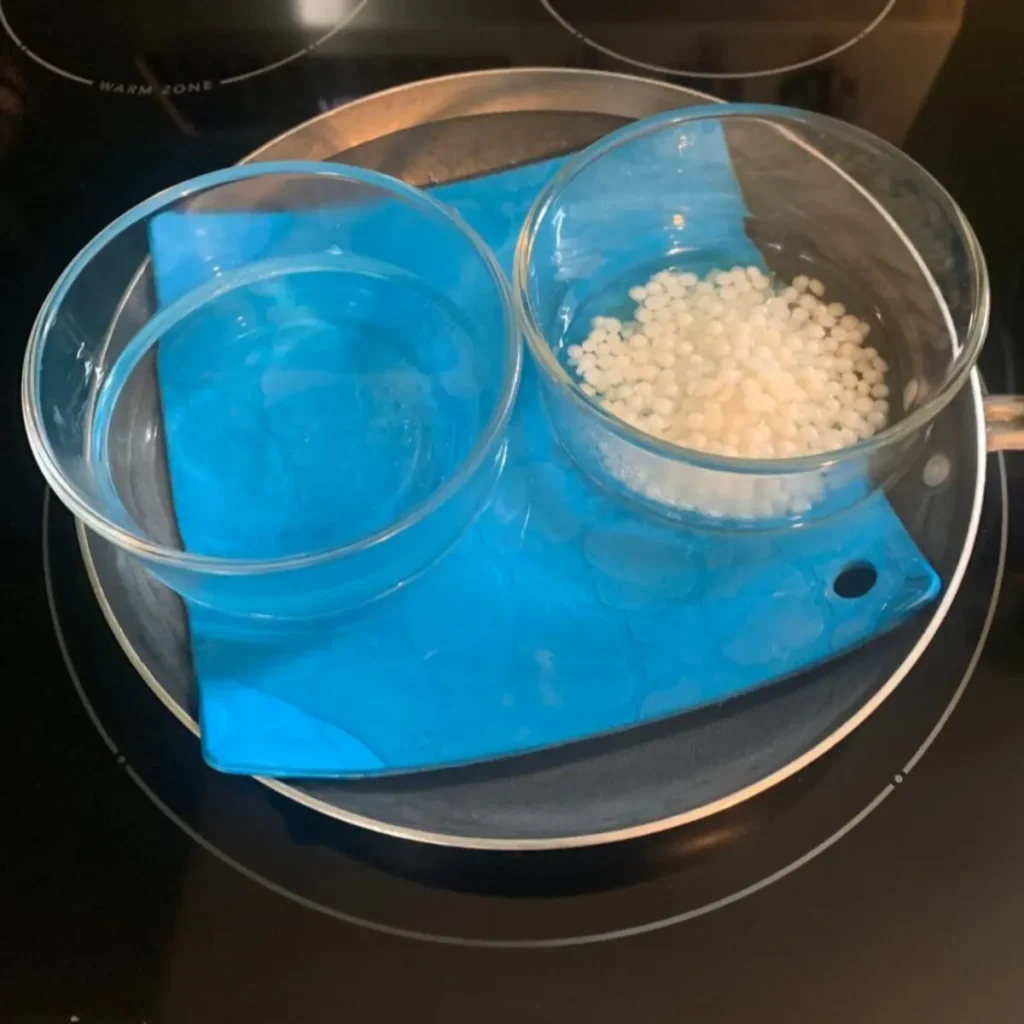
Step 3: Heat the oil phase
Put the avocado oil, Emulsifying Wax NF, and stearic acid into a separate heat-safe container.
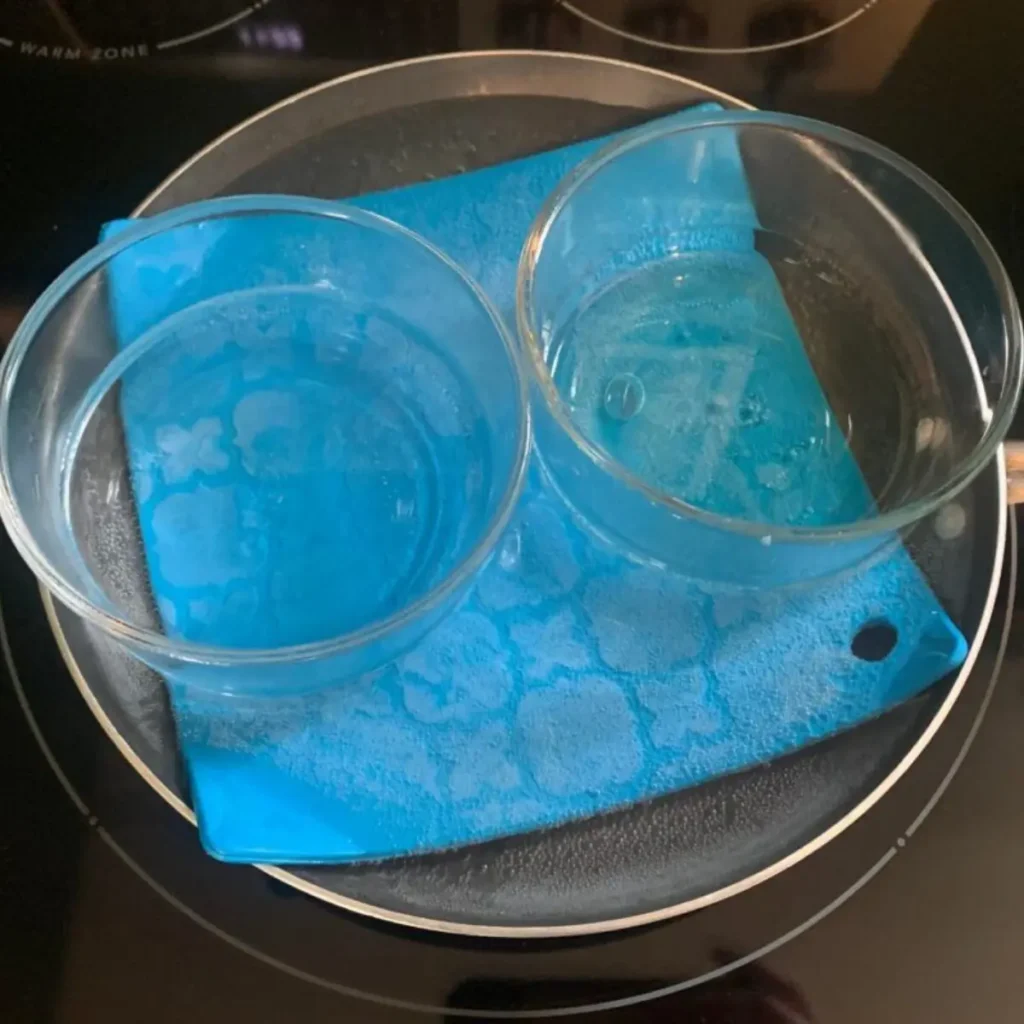
Place the container in the double boiler and heat until the solid ingredients have melted completely and the oil phase is uniform.
Heating both phases helps prepare the ingredients for emulsification. If the oil phase cools too much before combining, the wax and stearic acid may begin to solidify, making it harder to form a uniform emulsion.
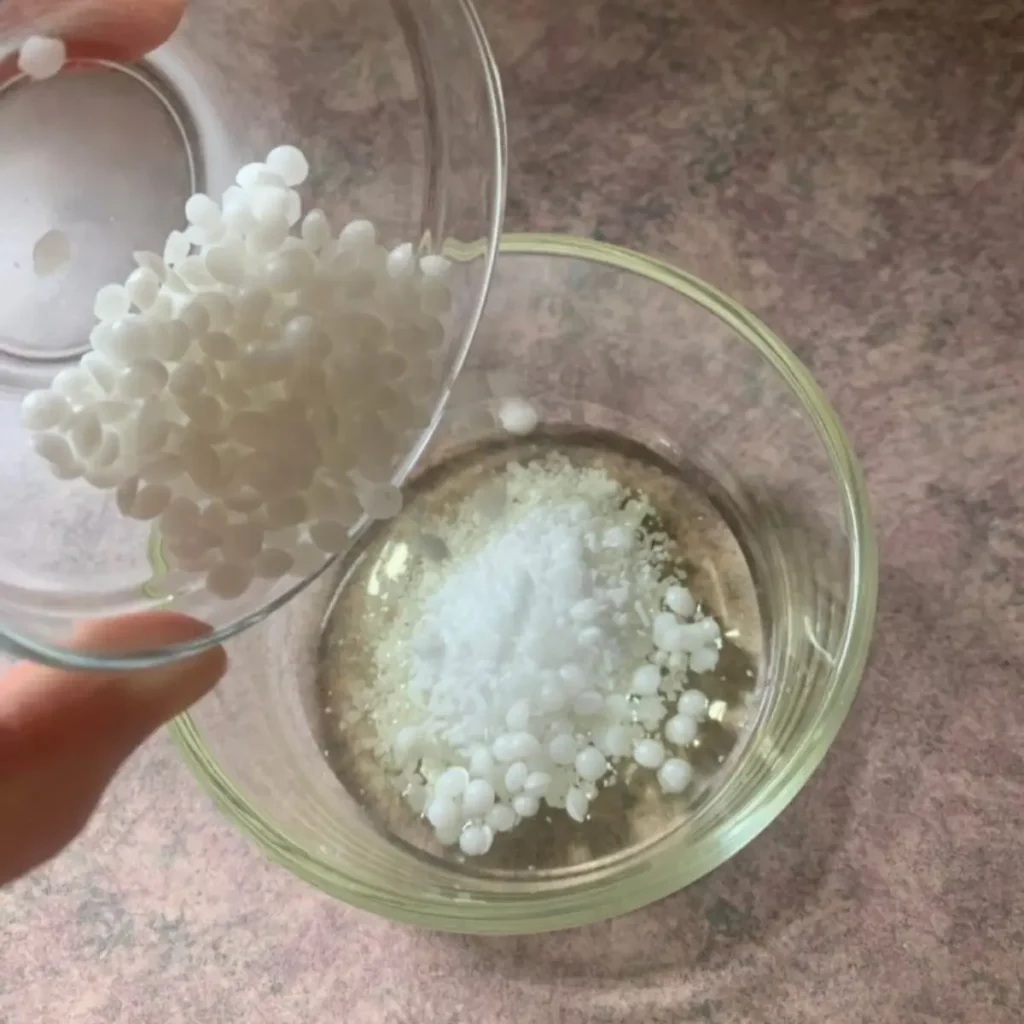
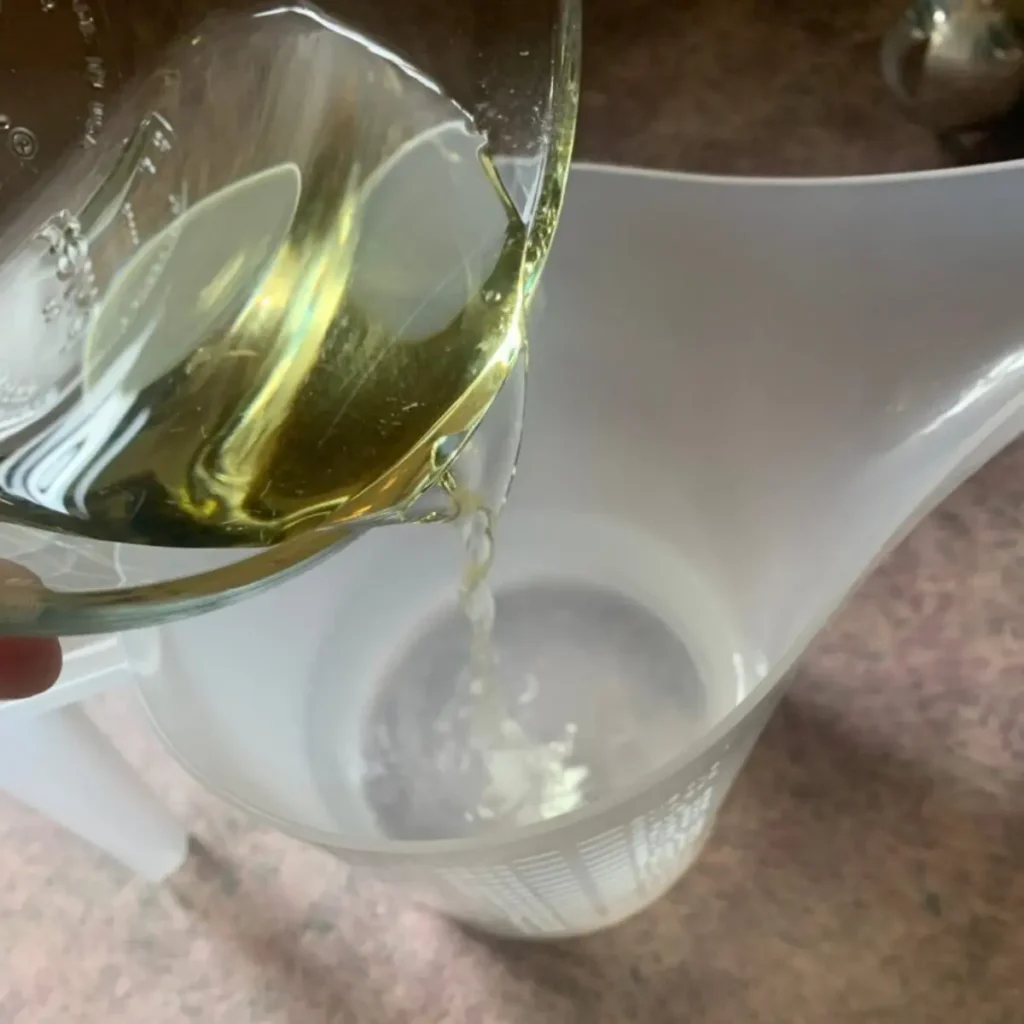
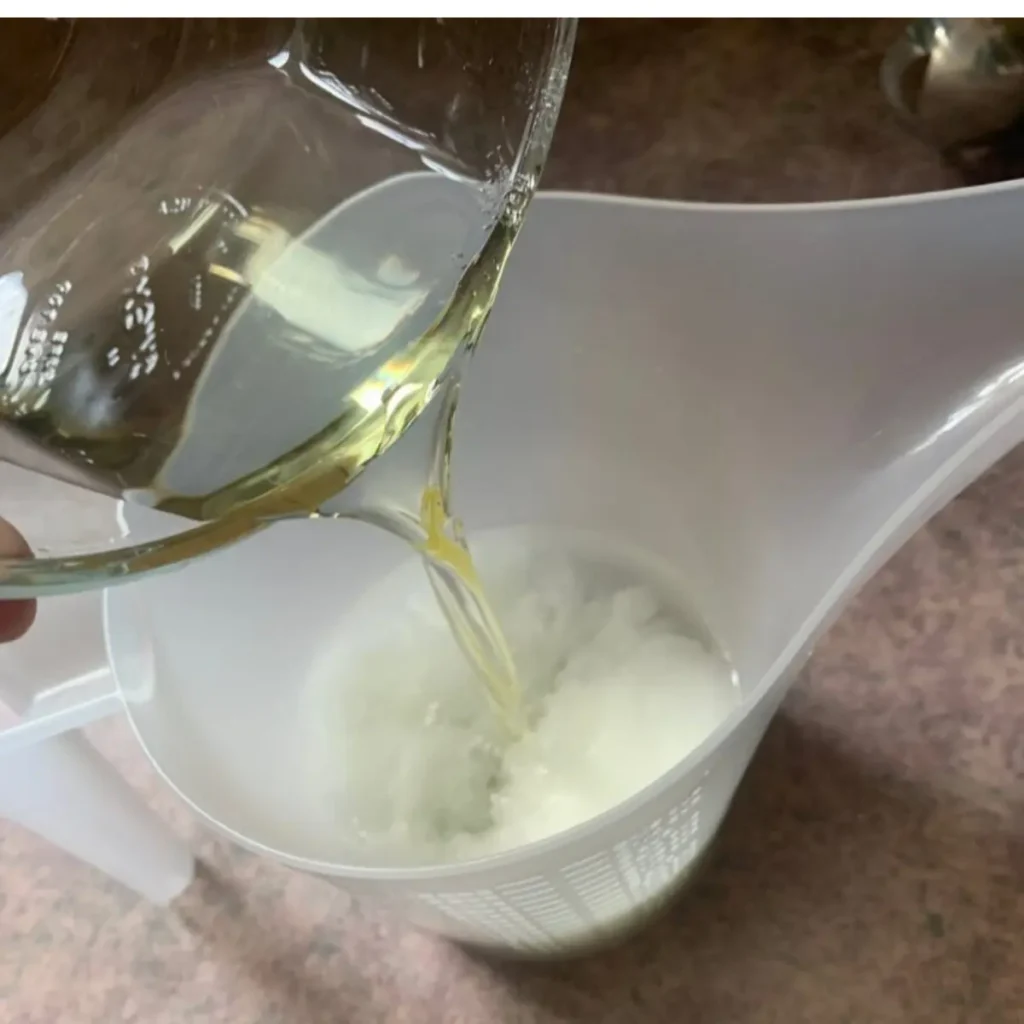
Step 4: Combine the water and oil phases
When the oil phase is completely melted, remove both containers from the heat.
Combine the oil and water phases into a mixing container.
The goal is to disperse the oil phase throughout the water phase to form an oil-in-water emulsion.
Step 5: Blend the lotion
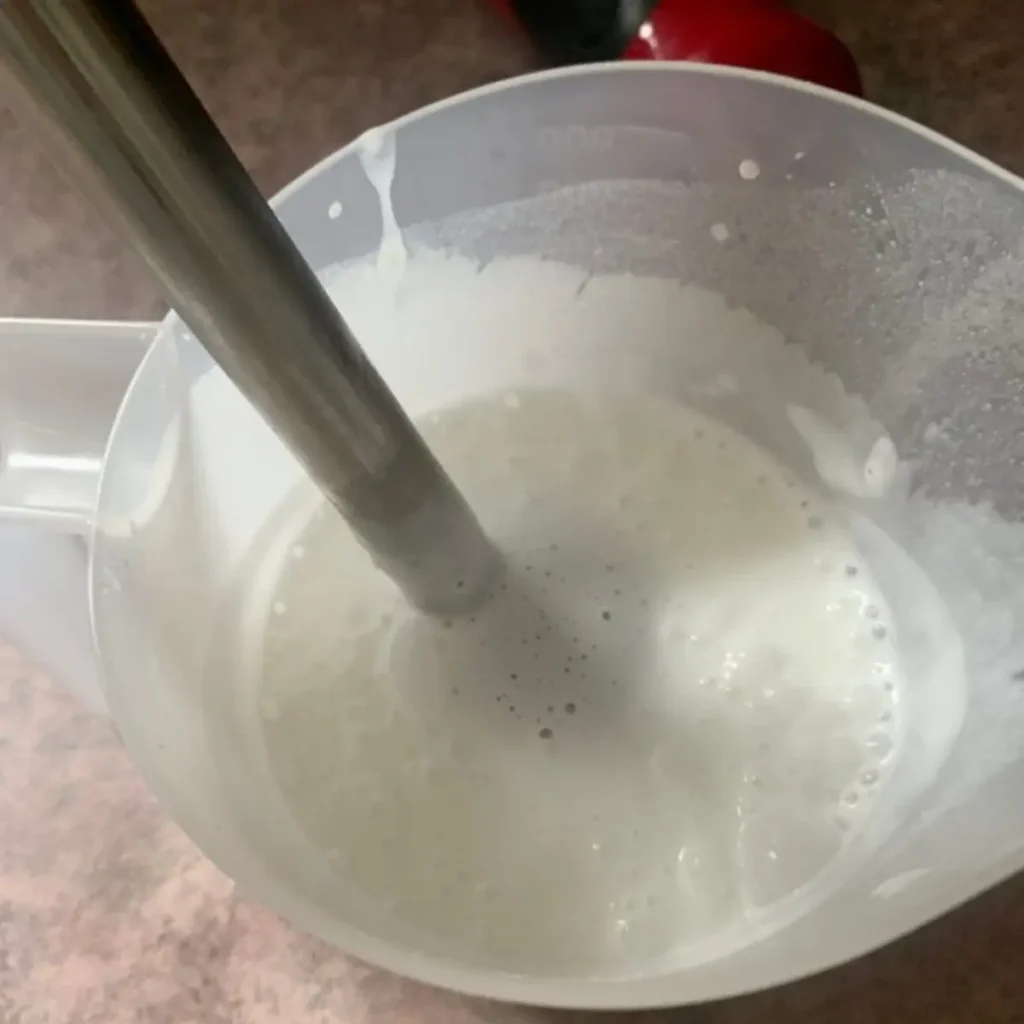
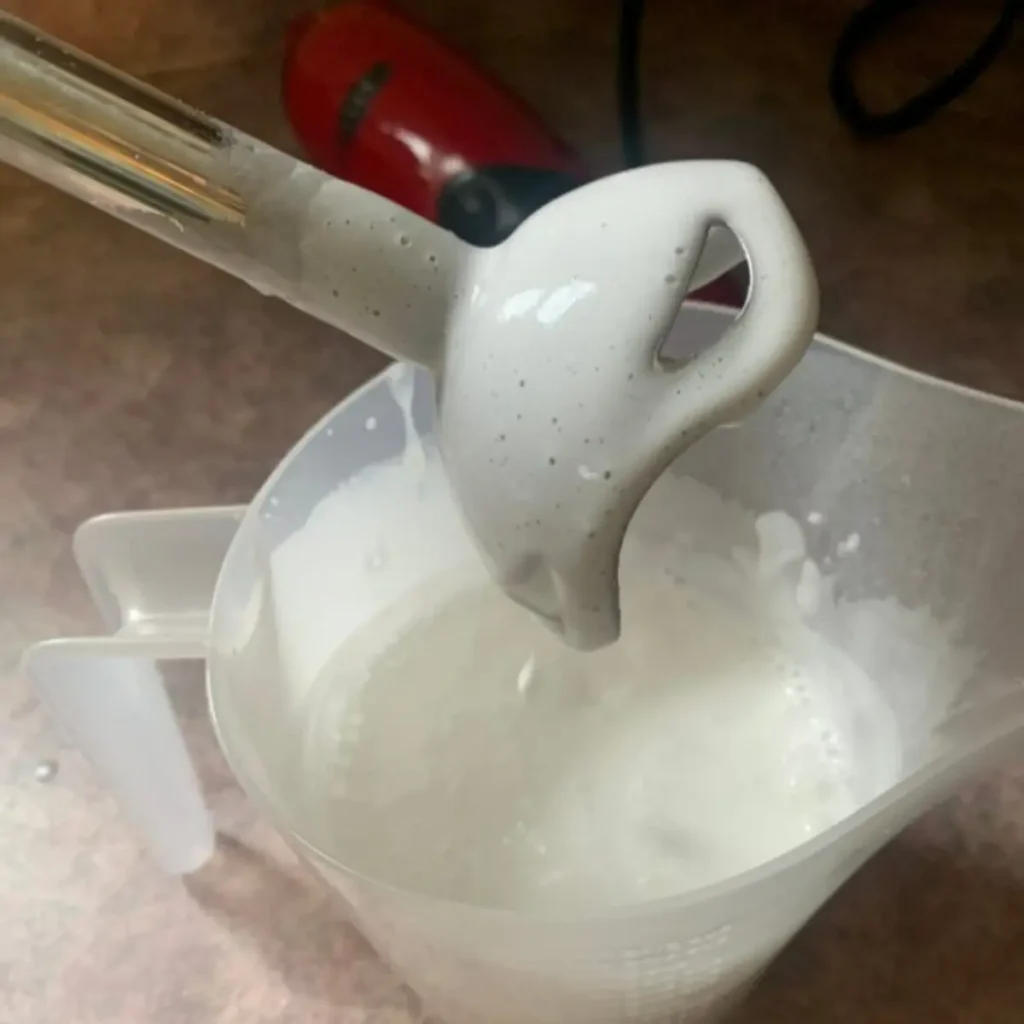
Using an immersion blender, mix the phases well.
Keep the blender head submerged as much as possible to reduce air incorporation.
The mixture should become opaque as the emulsion forms. The exact consistency at this stage will depend on the formula, temperature, and mixing method.
Step 6: Allow the lotion to cool
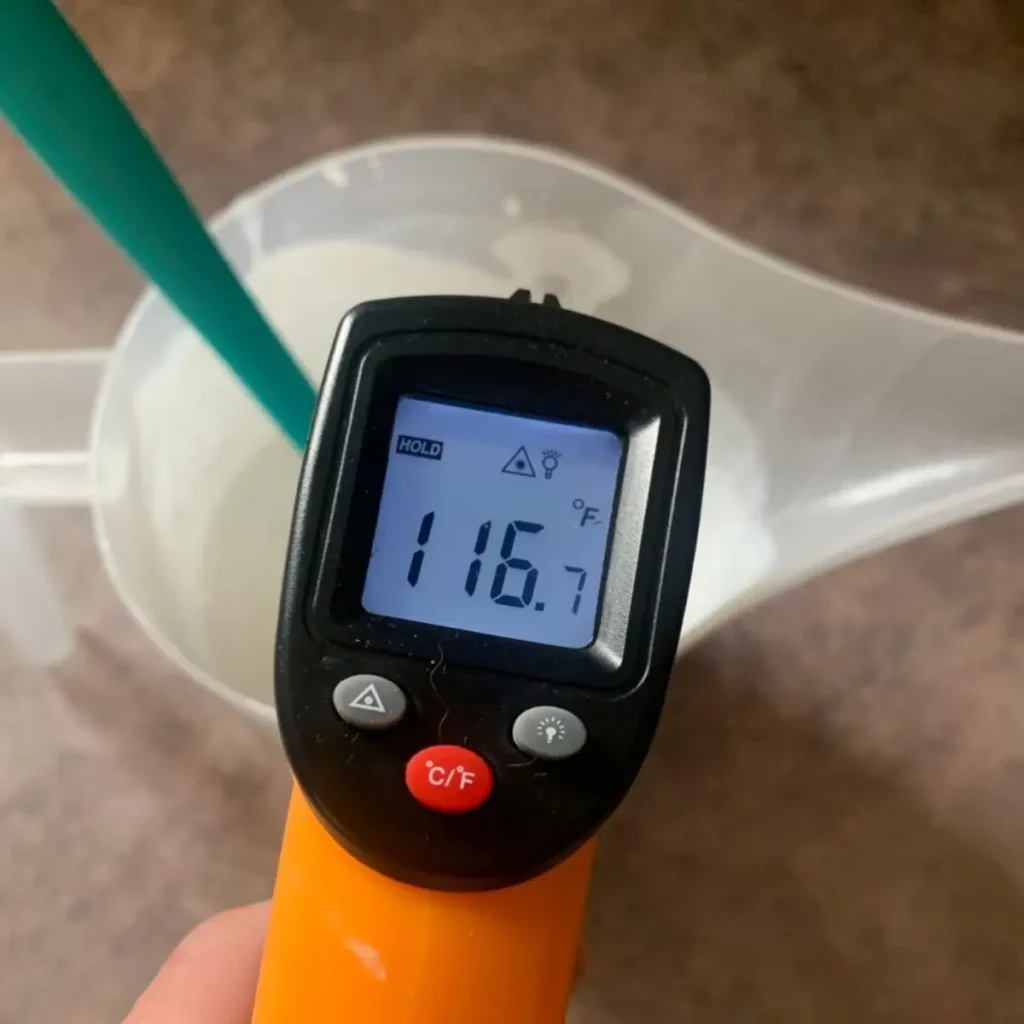
Allow the lotion to cool a little, below 120°F, before adding the cool-down ingredients.
As the lotion cools, the Emulsifying Wax NF and stearic acid contribute to the developing texture and viscosity.
The lotion may appear thinner while it is warm. Allow it to cool completely before judging its final consistency.
Step 7: Add the preservative and fragrance
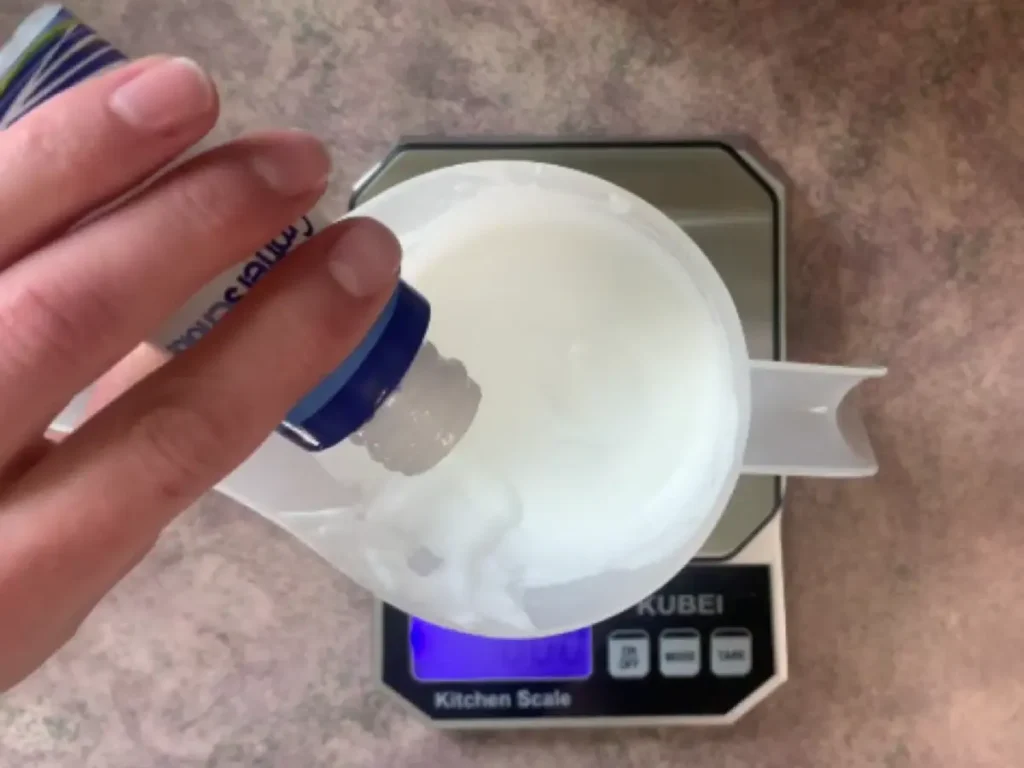
Add the preservative and fragrance oil, then mix again with the stick blender until they are evenly incorporated.
The original video uses an addition temperature below 120°F. Confirm that this temperature is appropriate for the particular preservative and fragrance you are using, and follow their supplier instructions if they specify a lower limit or other processing requirements.
Step 8: Transfer the lotion to its container
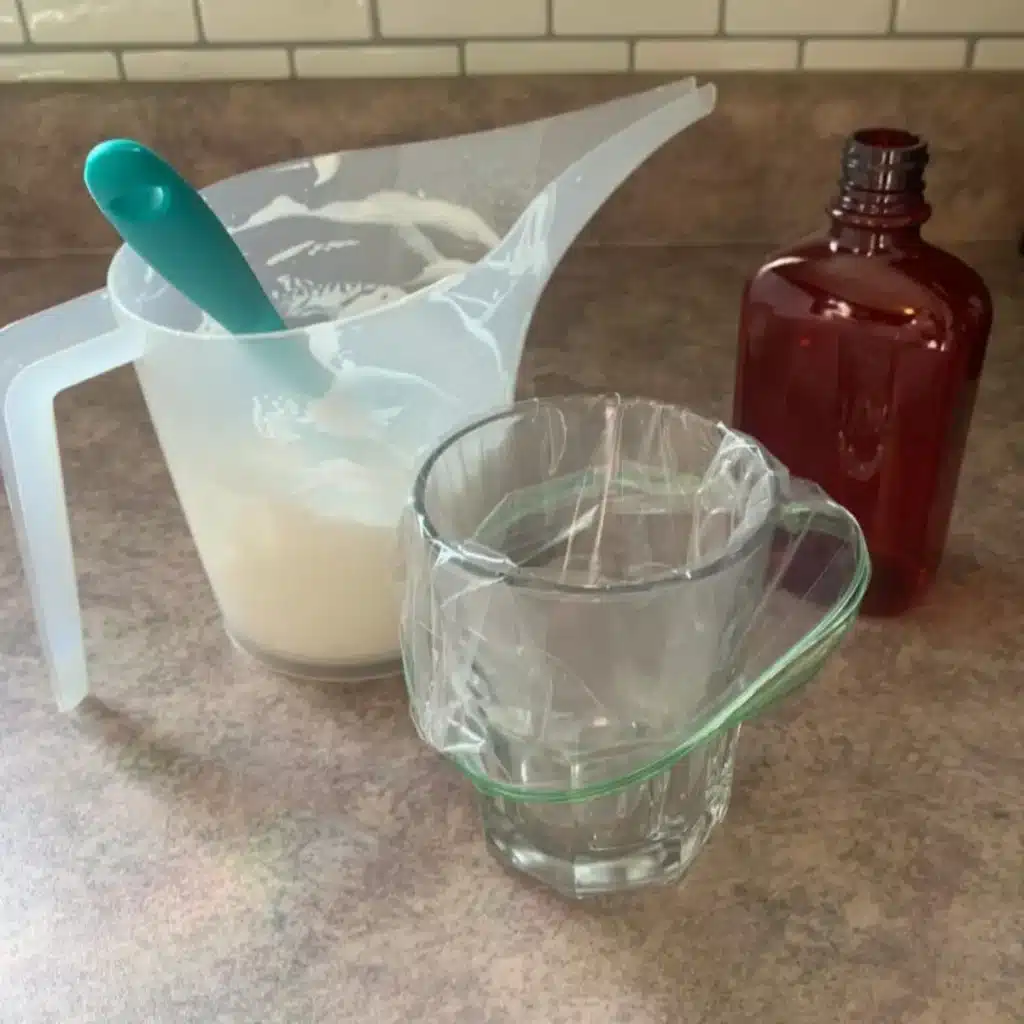
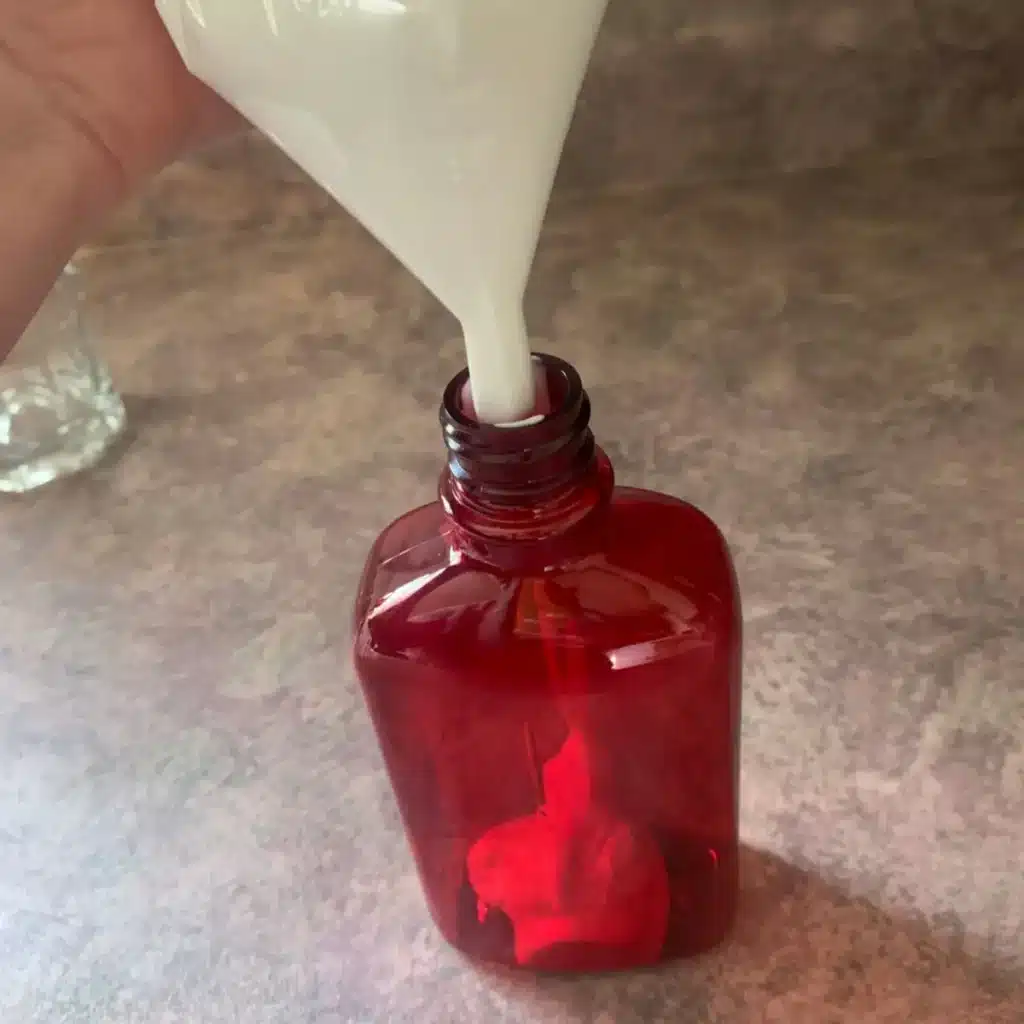
Pour the lotion into a suitable container while it is still fluid enough to transfer easily.
Leave the lid off until the lotion has cooled completely to room temperature.
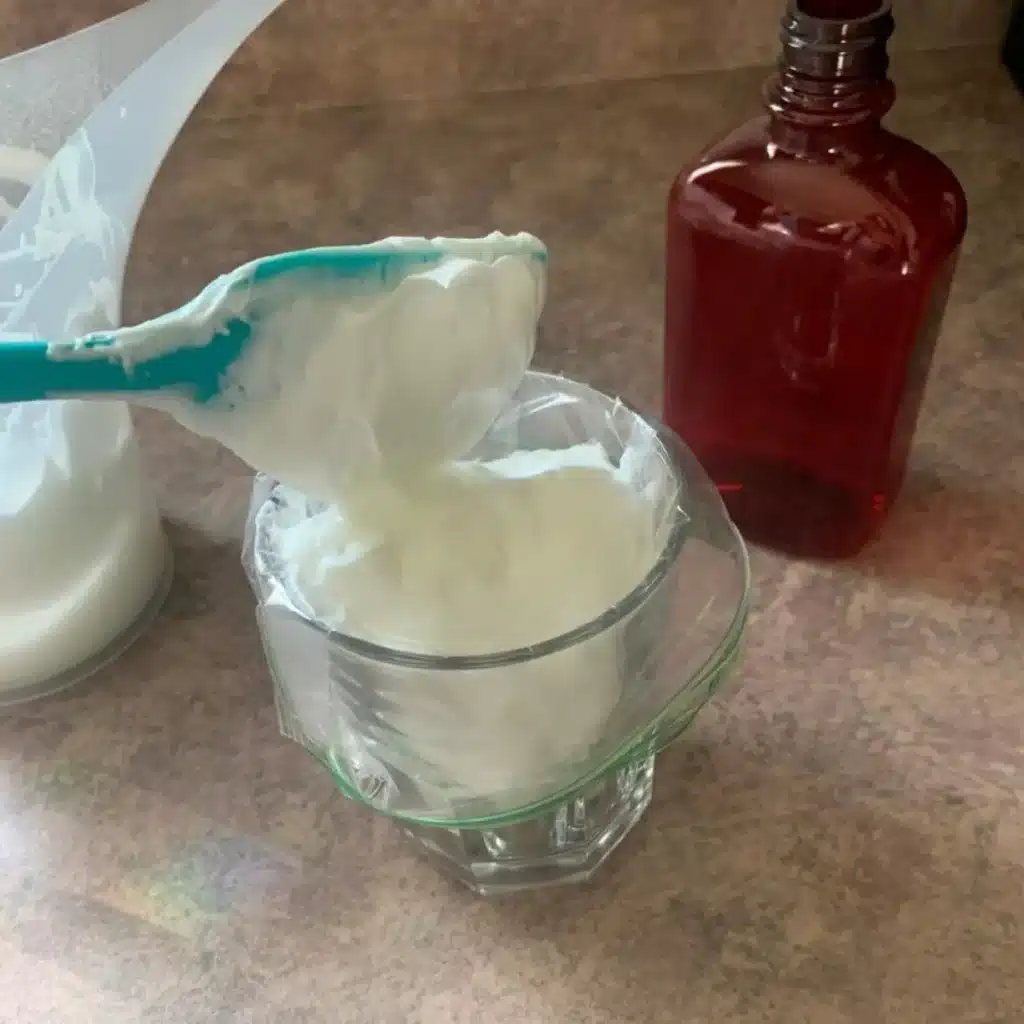
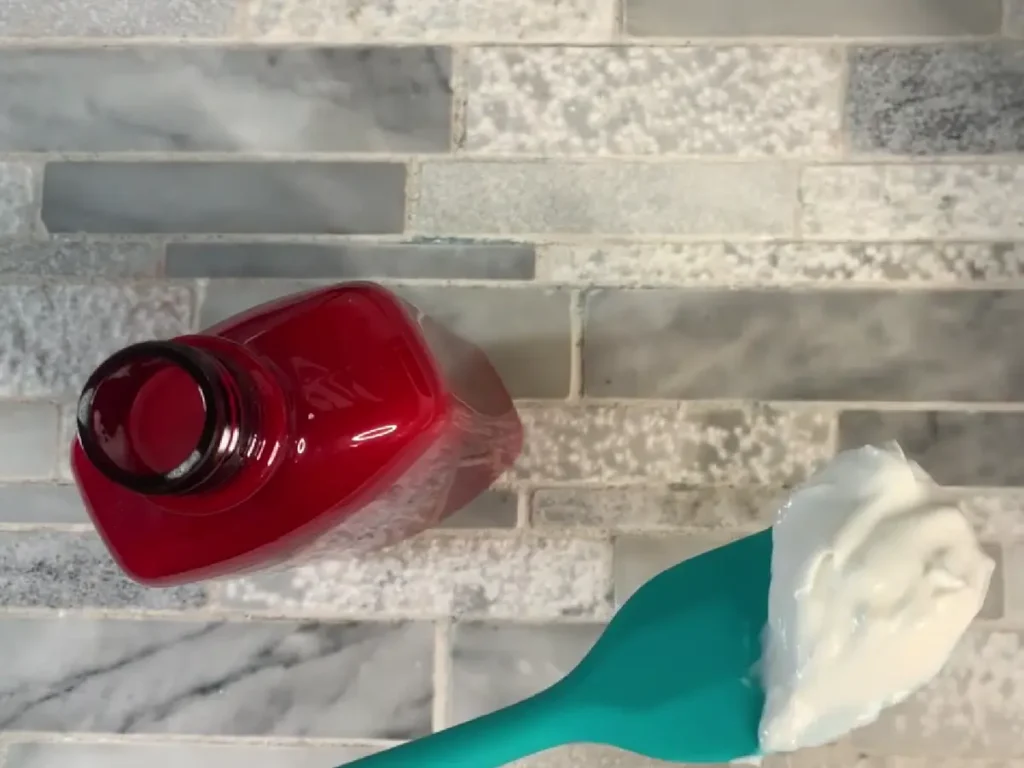
As the lotion cools, it will thicken. Depending on its consistency, you may find it easier to pour it directly into the container while warm or transfer it using a piping bag once it has thickened.
Choose packaging that suits the finished lotion’s viscosity and dispensing requirements.
Step 9: Evaluate the finished lotion
Once the lotion has cooled, check its appearance and consistency.
Record the batch details, including the ingredient amounts and processing observations. If you are developing the formula further, you should also establish an appropriate pH-testing procedure and evaluate stability and preservation.
Changes in odor, color, texture, or appearance can indicate a problem, but they cannot prove that a lotion is safe. Before assigning a shelf life or selling a product, appropriate stability and preservative efficacy testing are needed.
For more information, read How Do You Determine the Shelf Life of Homemade Cosmetics?.
How to Customize Your Basic Lotion Formula
Once you’ve made the basic formula, you can start experimenting with different ingredients and textures.
I recommend changing one ingredient at a time. This makes it easier to see how each change affects the finished lotion.
Want a different carrier oil?
You can experiment with other carrier oils, such as jojoba oil, sweet almond oil, or fractionated coconut oil.
For an initial comparison, you might keep the oil percentage the same and change only the oil.
However, different oils have different properties, so the finished lotion may feel different or behave differently during storage. Evaluate the revised formula rather than assuming it will be identical.
Want to use a different emulsifier?
Emulsifiers have different recommended use levels and different effects on texture and stability.
If you want to replace Emulsifying Wax NF with another emulsifier, check the supplier’s instructions and reformulate the oil phase as needed. Do not assume that the same percentage will produce the same result.
You may also need to reconsider the amount of stearic acid or other structuring ingredients.
Want a thicker lotion?
Stearic acid contributes to the thickness of this formula, but adding more is not automatically the best solution.
The emulsifier system, oil phase, and structuring ingredients all influence viscosity. A change intended to make the lotion thicker can also change its skin feel or stability.
Before making changes, consider what is contributing to the existing texture and whether the emulsifier system is appropriate for the desired result.
Want a lighter lotion?
You can experiment with the oil phase to change the spreadability and after-feel.
Try changing one carrier oil at a time and evaluate the results. If you reduce the total oil phase, you must also consider whether the emulsifier and other ingredients remain appropriate for the revised formula.
Want to add a new ingredient?
First, determine what the ingredient does and which phase it belongs in.
For example, a suitable hydrosol may replace part of the water phase, while a compatible oil-soluble ingredient may belong in the oil phase.
Check its recommended use level, solubility, temperature requirements, pH requirements, and compatibility with the other ingredients.
Then recalculate the formula so the total remains 100%.
How to calculate a formula change
Let’s say you want to add 2% of a new ingredient to a formula that currently contains 78.5% distilled water.
If the other ingredient percentages remain unchanged, you would reduce the water from 78.5% to 76.5%.
This keeps the total at 100%.
However, that mathematical adjustment does not establish that the new formula will be stable. You still need to consider the ingredient’s function and its compatibility with the emulsifier and preservative.
For more help understanding ingredient percentages, see my guide to How to Scale a Skincare Formula to Any Batch Size.
Formula vs. Recipe: What’s the Difference?
You may have noticed that we use percentages throughout this guide.
A recipe tells you how much of each ingredient to use for a particular batch size. A formula describes the proportions of the ingredients, usually as percentages.
For example, a recipe might tell you to use 0.90 oz avocado oil in a 9 oz batch. The formula tells you that avocado oil makes up 10% of the total.
The percentage is more useful when you want to scale the batch or make controlled changes.
Once you understand the percentages, you can calculate the ingredient weights for a 100 g test batch or a larger batch without having to start over.
A formula also makes it easier to compare ingredient ratios and understand how a change affects the whole product.
The important thing to remember is that percentages make calculations easier, but they do not guarantee a stable or safe product. Ingredient compatibility, processing, preservation, and testing still matter.
Common Lotion Formulation Mistakes
When you’re starting out, there are a few things worth keeping in mind.
Not heating both phases appropriately
The oil phase needs to be fully melted, and the phases need to be at compatible temperatures before combining. If the solid ingredients begin to harden too soon, it may be more difficult to create a uniform emulsion.
Forgetting about water evaporation
Water can evaporate during heating. If you don’t account for the loss, the proportions of the remaining ingredients will change.
For more precise formulation work, weigh the water phase before and after heating and replace lost water as appropriate.
Changing too many ingredients at once
If you change the oil, emulsifier, thickener, and fragrance all at once, it becomes difficult to tell which change caused a difference in the finished product.
Make one change at a time, record what you did, and evaluate the results.
Assuming a thicker lotion is always better
A lotion’s ideal viscosity depends on its intended use and packaging.
A lightweight hand lotion may be easier to dispense from a pump, while a richer body lotion may work better in a squeeze tube or jar.
Texture is something you formulate for, rather than simply maximizing.
Forgetting preservation
Any water-containing lotion intended to be stored and used over time needs an appropriate preservative system.
Do not rely on refrigeration, a small batch size, or a product’s appearance as substitutes for suitable preservation and testing.
Frequently Asked Questions
Can I make lotion without an emulsifier?
A conventional oil-in-water lotion needs a suitable emulsifier or emulsifying system to help stabilize the oil and water phases.
Without one, the phases are likely to separate.
Can I substitute another oil for avocado oil?
You can investigate other carrier oils, but different oils can change the lotion’s skin feel and may affect the behavior of the emulsion.
For a controlled experiment, change one oil at a time and evaluate the revised formula.
Can I leave the fragrance out?
Yes. Fragrance is optional. If you omit the 2% fragrance in this formula, increase the distilled water from 78.5% to 80.5% to maintain a total of 100%.
Why does my lotion get thicker as it cools?
The emulsifier and stearic acid contribute to the developing structure and viscosity as the lotion cools. The finished consistency may not be apparent while the mixture is still warm.
Allow the lotion to cool completely before evaluating its texture.
How do I know if my lotion is stable?
You can observe changes in appearance, texture, color, and odor over time, but these observations alone do not establish stability or microbial safety.
Appropriate stability testing and preservative efficacy testing are needed before assigning a reliable shelf life or treating the product as ready for sale.
Can I sell a lotion I make at home?
Before selling a homemade lotion, you need to establish appropriate product safety, preservation, stability, and packaging compatibility and comply with applicable cosmetic regulations and labeling requirements.
A lotion that looks and feels good is not automatically ready for sale.
Keep Learning About Lotion Formulation
Making a basic lotion is a useful first step, but understanding how ingredients work together will help you develop your own formulas.
Here are a few guides to continue learning:
- Skincare Formulation for Beginners — Learn the fundamentals of choosing ingredients and building a formula.
- Emulsifying Wax NF: What Is It and How to Use It — Understand the primary emulsifier in this recipe.
- Emulsions: What Are They and How Do They Work? — Learn why oil and water need help forming a stable mixture.
- Humectants, Occlusives, and Emollients Explained — Understand the differences between common moisturizing ingredients.
- Why Preservatives Matter in DIY Skincare — Learn why water-containing skincare products need appropriate preservation.
- How Do You Determine the Shelf Life of Homemade Cosmetics? — Understand the factors that influence shelf life.
- How to Scale a Skincare Formula to Any Batch Size — Learn to calculate ingredient weights for different batch sizes.
The best way to learn formulation is to start with a simple recipe, understand what each ingredient contributes, and make deliberate changes as you gain experience.
Keep good notes, work with percentages, and evaluate your results. With practice, you’ll become more confident in choosing ingredients and developing lotions that suit your preferences.

Basic Lotion Formula – Beginner
Equipment
- Scale
- Double boiler
- Hand blender
- Infared thermometer
Ingredients
Water Phase
- 7.06 ounce | 78.5% Distilled Water
Oil Phase
- 0.90 ounce | 10% Avocado Oil
- 0.45 ounce | 5% Emulsifying Wax NF
- 0.36 ounce | 4% Steric Acid
Cool Down Phase
- 0.18 ounce | 2% Oatmeal, Milk and Honey Fragrance Oil
- 0.05 ounce | .5% Preservative
Instructions
- Weigh out all of your ingredients.
- Place the water phase ingredients on a double boiler.
- Put your oil phase ingredients into a heat safe container and place on a double boiler.
- When the oil phase is completely melted, remove both adds from the heat.
- Combine the oil and water phase.
- Using a stick blender, mix well.
- Allow to cool a little bit, below 120° F.
- Add the preservative and fragrance oil.
- Mix again with the stick blender.
- Pour the lotion into your container. Leave the lid off until it is completely cooled to room temperature. If your lotion is still warm and thin enough, you can pour it into the container. As it cools and thickens up, you might need to pipe it into the container.
Pingback: Emulsifying Wax NF: What is It and How to Use It - Summer Rain