
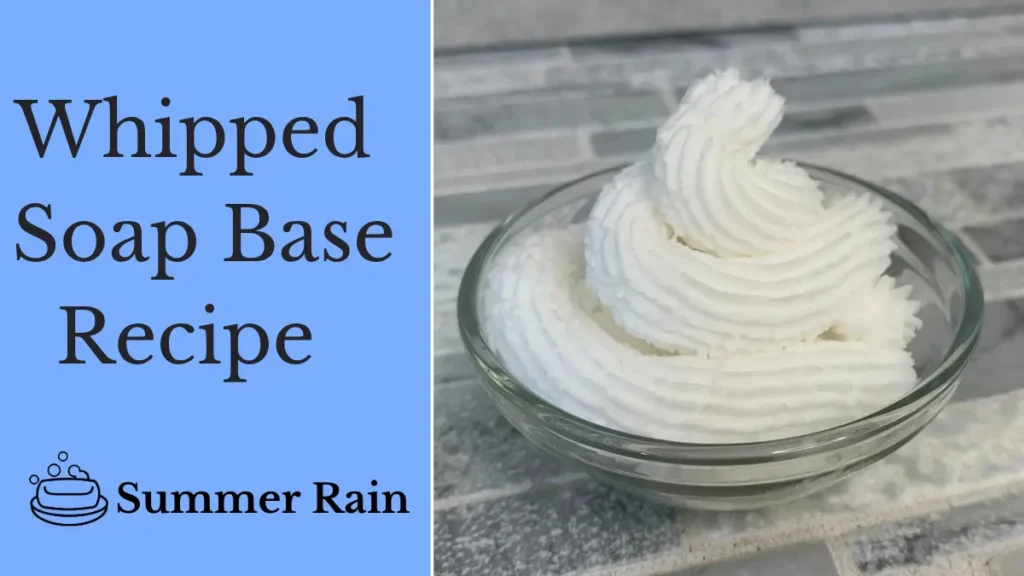
If you love those fluffy, frosting-like bath products you see in handmade skincare, there is a good chance they started with a whipped soap base.
A whipped soap base is a versatile cleansing base that you can customize with fragrance, color, exfoliants, and other ingredients to create products such as whipped soap, foaming sugar scrubs, and decorative bath products.
And while you can buy premade foaming bath whip, making your own gives you a better understanding of what goes into the product and lets you control the formula from the beginning.
This whipped soap base recipe uses sodium coco sulfate (SCS), caprylyl/capryl glucoside, stearic acid, glycerin, water, and a broad-spectrum preservative.
The finished base is soft and pliable rather than a traditional bar of soap. Once it has cooled, it can be whipped into a light, fluffy texture and used as the starting point for other DIY bath products.
In this guide, I’ll show you how to make whipped soap base from scratch, explain what each ingredient does, how to whip the finished base, how to customize it, and how to troubleshoot the most common problems.
What Is Whipped Soap Base?
Whipped soap base is a soft, surfactant-based cleansing product that can be whipped into a light and fluffy texture.
You may also see it called:
- Foaming bath whip
- Foaming bath butter
- Whipped soap base
- Whipped soap
The terminology can be confusing because this isn’t technically soap in the traditional soapmaking sense.
True soap is made through saponification, where oils or fats react with an alkali such as sodium hydroxide or potassium hydroxide.
This recipe uses surfactants instead, so it is better described as a surfactant-based cleanser.
That doesn’t make it any less useful. It simply means it is a different type of cleansing product.
If you’re new to surfactants, my Surfactants in Skincare: What They Are and How They Work is a good place to start.
Prefer to watch How to Make Whipped Soap Base?
Affiliate Disclosure: This post may contain affiliate links. If you purchase something through one of my links, I may earn a small commission at no additional cost to you.
What Can You Make With Whipped Soap Base?
This is where whipped soap base gets fun.
Once you have a batch made, you can turn it into several different bath products.
You can:
- Add fragrance and color for a simple whipped cleanser
- Add sugar to make a foaming sugar scrub
- Pipe it into jars for a decorative bath product
- Customize the texture for different projects
- Use it as the cleansing portion of other whipped bath formulas
One of the easiest projects to make with it is a whipped foaming sugar scrub.
I have an older Foaming Sugar Scrub Recipe as well as the newer Whipped Foaming Sugar Scrub Recipe using the newer foaming bath butter formula.
Why Make Whipped Soap Base From Scratch?
Premade foaming bath whip is convenient, so there is nothing wrong with buying it.
I like making the base from scratch because it gives me control over the ingredients and lets me understand how the finished product is built.
It also teaches several useful formulation concepts:
- Surfactants
- Humectants
- Fatty acids
- Water-based formulations
- Preservation
- Heating and cooling phases
- Viscosity
- Whipping and aeration
- Batch scaling
Once you understand what each ingredient contributes, you can start making intentional changes rather than simply adding ingredients because a recipe says to.
Whipped Soap Base Formula
This recipe makes a 500 g batch.
I recommend weighing everything on a digital scale rather than using cups or measuring spoons. Small changes in a formula like this can affect the final texture.
| Ingredient | Percentage | 500 g Batch |
|---|---|---|
| Distilled Water | 10% | 50 g |
| Vegetable Glycerin | 20% | 100 g |
| Caprylyl/Capryl Glucoside | 9% | 45 g |
| Sodium Coco Sulfate (SCS) | 53.7% | 268.5 g |
| Stearic Acid | 6.8% | 34 g |
| Liquid Germall Plus | 0.5% | 2.5 g |
| Total | 100% | 500 g |
This is an unscented, uncolored base.
That is intentional.
Keeping the base plain gives you the flexibility to customize smaller portions later rather than committing the entire batch to one fragrance or color.
Important note about the preservative
Liquid Germall Plus is included here at 0.5%.
Always check the current supplier/manufacturer instructions for the preservative you’re using, including its recommended usage rate, pH range, and processing temperature.
If you use a different preservative, do not automatically substitute it at the same percentage. Adjust the formula according to that preservative’s requirements and make sure the finished formula still totals 100%.
Understanding the Ingredients
The ingredient list is short, but every ingredient has a job.
Sodium Coco Sulfate (SCS)
Sodium coco sulfate is the primary surfactant in this formula.
It provides the cleansing action and contributes to the rich foam that makes whipped soap so satisfying to use.
SCS is derived from coconut and is commonly available as either noodles or a powder.
Why it’s used
SCS provides:
- Cleansing
- Foam
- The primary surfactant structure of the formula
Because SCS is present at a relatively high percentage, you’ll want to handle the dry material carefully and avoid creating unnecessary dust when weighing or transferring it.
Caprylyl/Capryl Glucoside
Caprylyl/capryl glucoside is a liquid nonionic surfactant.
It works alongside the SCS rather than replacing it.
Why it’s used
It contributes to:
- Cleansing
- Foam
- The overall surfactant blend
- Incorporation of oils or fragrance in later customized formulas
It also changes the texture and processing characteristics of the base, which is one reason I wouldn’t simply swap it for another surfactant without reformulating.
Stearic Acid
Stearic acid is a fatty acid that helps give this whipped soap base structure.
That’s particularly important because we’re trying to create a product that can eventually be whipped into a soft, fluffy texture and hold that structure.
Why it’s used
Stearic acid helps:
- Increase firmness
- Give the base structure
- Improve its ability to hold a whipped texture
- Create a richer, more substantial skin feel
It can also give the finished base a slightly waxy or velvety feel.
Vegetable Glycerin
Vegetable glycerin is a humectant.
Humectants help attract and hold water.
In this formula, glycerin also contributes to the pliable texture of the base.
The relatively high glycerin level helps keep the finished base soft enough to work with rather than turning it into a hard, brittle product.
If you want to learn more about humectants and other ingredient functions, see What Each Ingredient Does in Skincare Formulation.
Distilled Water
Water is the main liquid phase of this formula.
I recommend distilled water for DIY water-based products because it gives you a much more controlled starting point than tap water.
Tap water can contain minerals and microorganisms that you don’t want introducing into a carefully formulated product.
Liquid Germall Plus
Because this recipe contains water, it needs a broad-spectrum preservative.
Liquid Germall Plus helps protect the finished product from microbial growth.
This isn’t an optional ingredient if you plan to store the finished base.
A product can look perfectly normal while still having microbial contamination, so you shouldn’t rely on smell or appearance to determine whether a water-based product is safe.
You can learn more about why preservation matters in Why Preservatives Matter in DIY Skincare.
Equipment You’ll Need
- Digital scale
- Crockpot
- Spatula
- PH Meter
- Hand mixer
- Tall mixing bowl or container
- Sanitized storage container
A tall mixing container is especially helpful once you begin whipping the finished base.
The mixture can expand considerably as air is incorporated.
How to Make Whipped Soap Base From Scratch
Step 1: Prepare Your Workspace
Before you start heating anything, clean and sanitize your equipment and storage container.
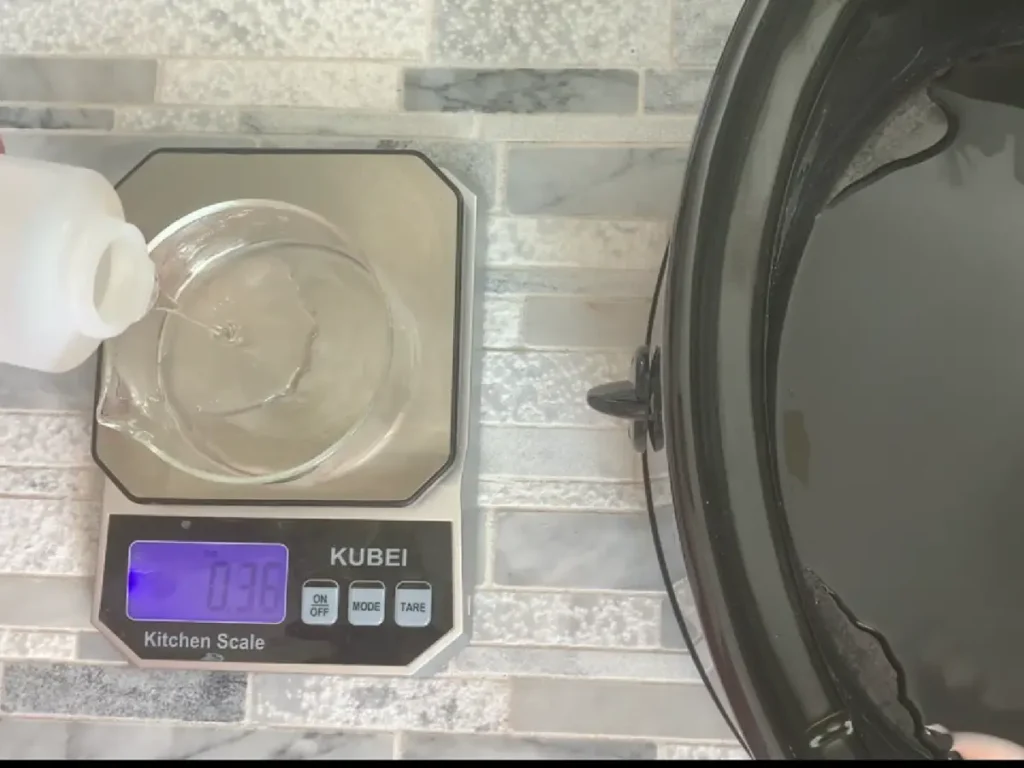
Weigh every ingredient separately.
This is especially important with formulation projects because it is much easier to catch a mistake before everything has been combined.
Step 2: Combine the Water, Glycerin and Caprylyl/Capryl Glucoside
Add the distilled water, vegetable glycerin, and caprylyl/capryl glucoside to your crock pot.
Mix gently.
Step 3: Add the SCS
Slowly add the sodium coco sulfate.
Mix carefully to distribute it through the liquid portion.
Because SCS is a dry surfactant, avoid vigorous stirring that creates unnecessary dust or foam.
Step 4: Add the Stearic Acid
Add the stearic acid to the mixture.
The stearic acid needs to melt completely before the formula can become uniform.
Step 5: Heat the Formula
Place the ingredients into a crock pot.
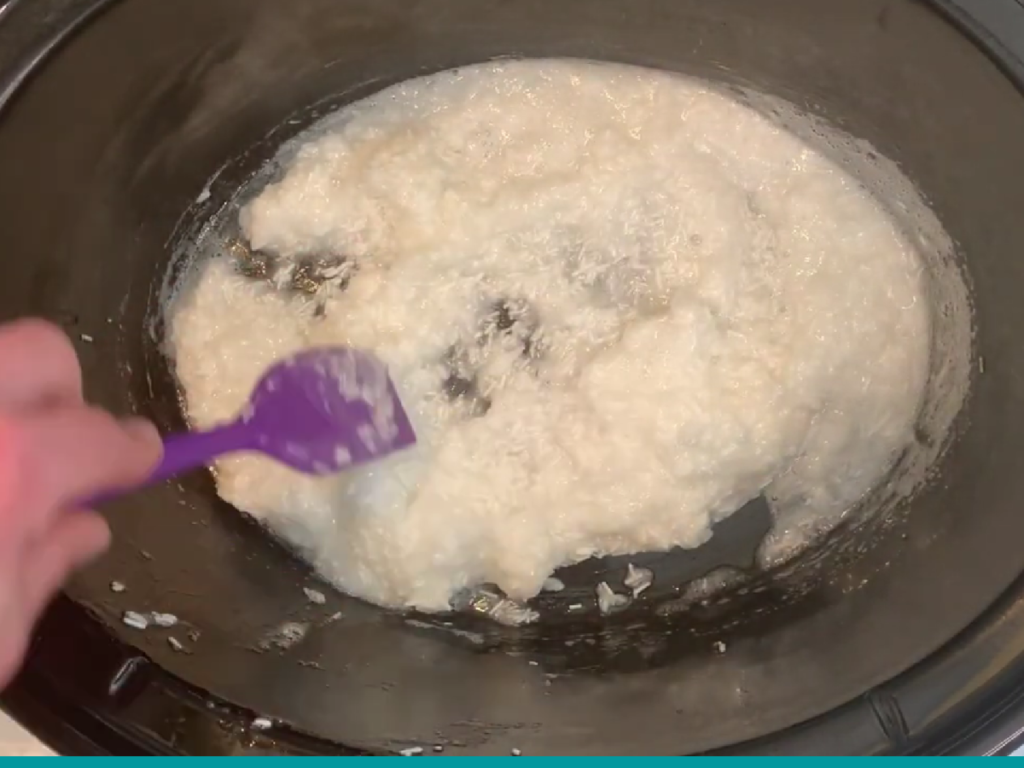
Heat gently while stirring periodically.
The goal is to melt the stearic acid and fully incorporate the ingredients.
This can take some time because of the amount of solid surfactant in the formula.
Don’t rush this step by using excessive heat.
You want the mixture melted and uniform, not overheated.
Step 6: Cool the Base
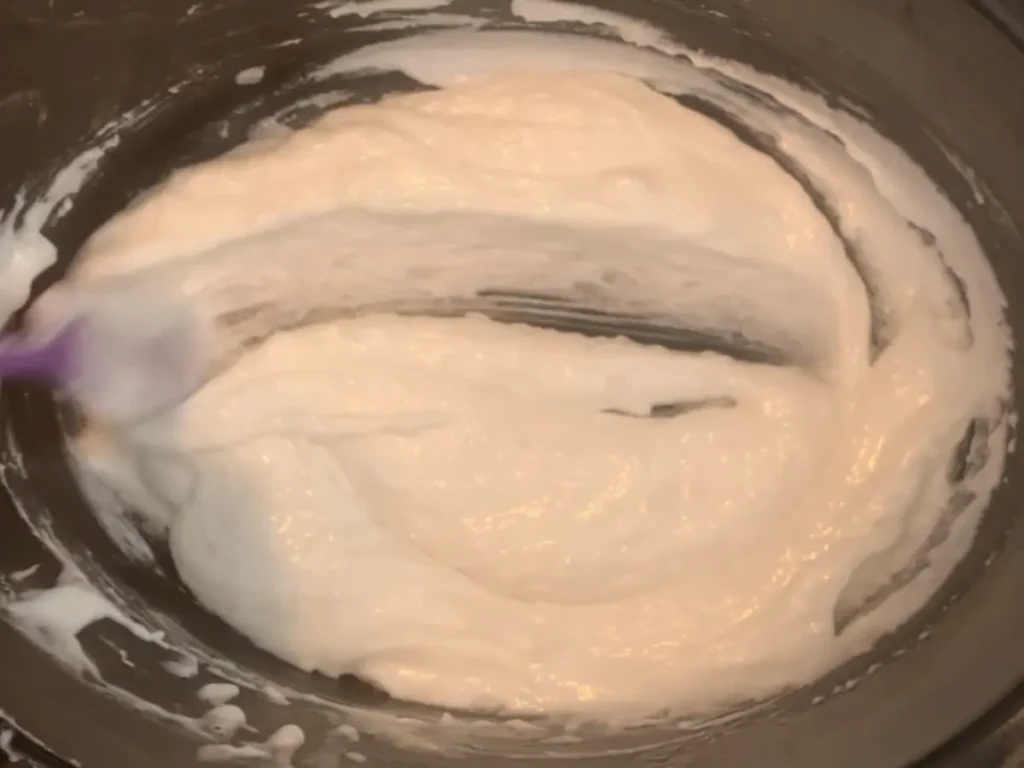
Once everything has melted and the formula is uniform, remove it from the heat.
Allow the mixture to cool.
The texture will change considerably as it cools.
It may look much too soft or fluid while it is warm. That’s normal.
The stearic acid and other ingredients contribute more structure as the formula cools.
Step 7: Add the Preservative
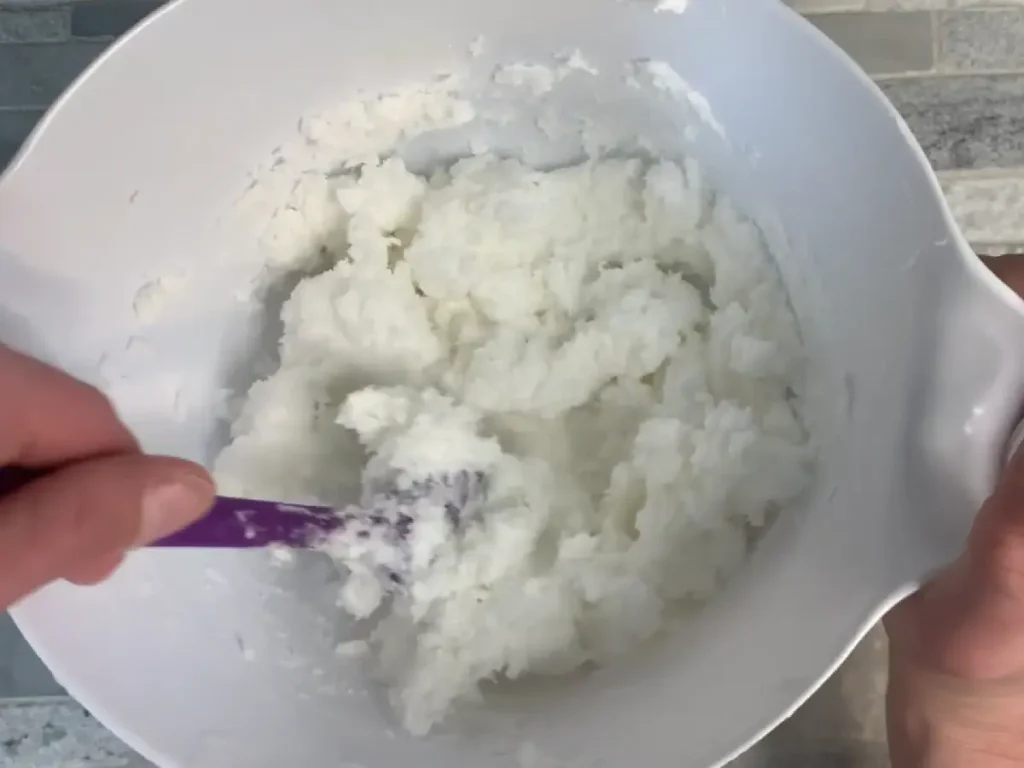
Once the mixture has cooled to the temperature recommended by your preservative manufacturer, add the Liquid Germall Plus.
Mix thoroughly.
Don’t add the preservative while the mixture is still excessively hot. Follow the supplier’s processing instructions for your specific preservative.
Step 8: Allow the Base to Finish Cooling
Let the base cool completely before whipping.
This is important.
If you try to whip the mixture while it is still warm, you may end up with a much softer product that doesn’t hold the texture you’re looking for.
Patience here makes a difference.
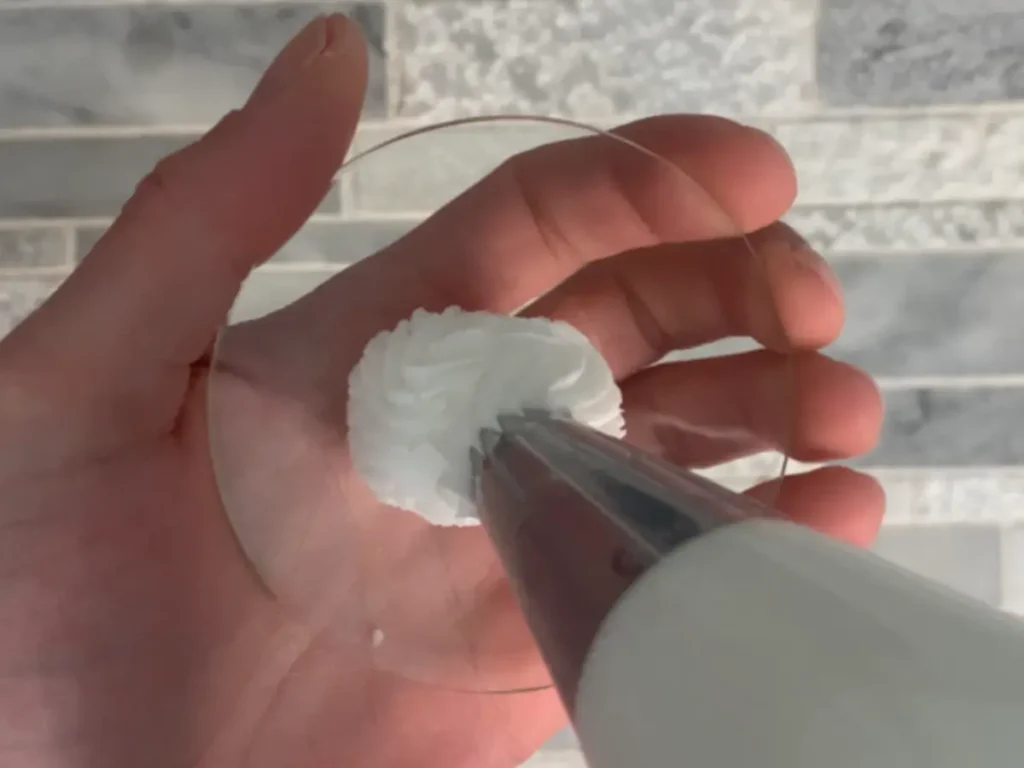
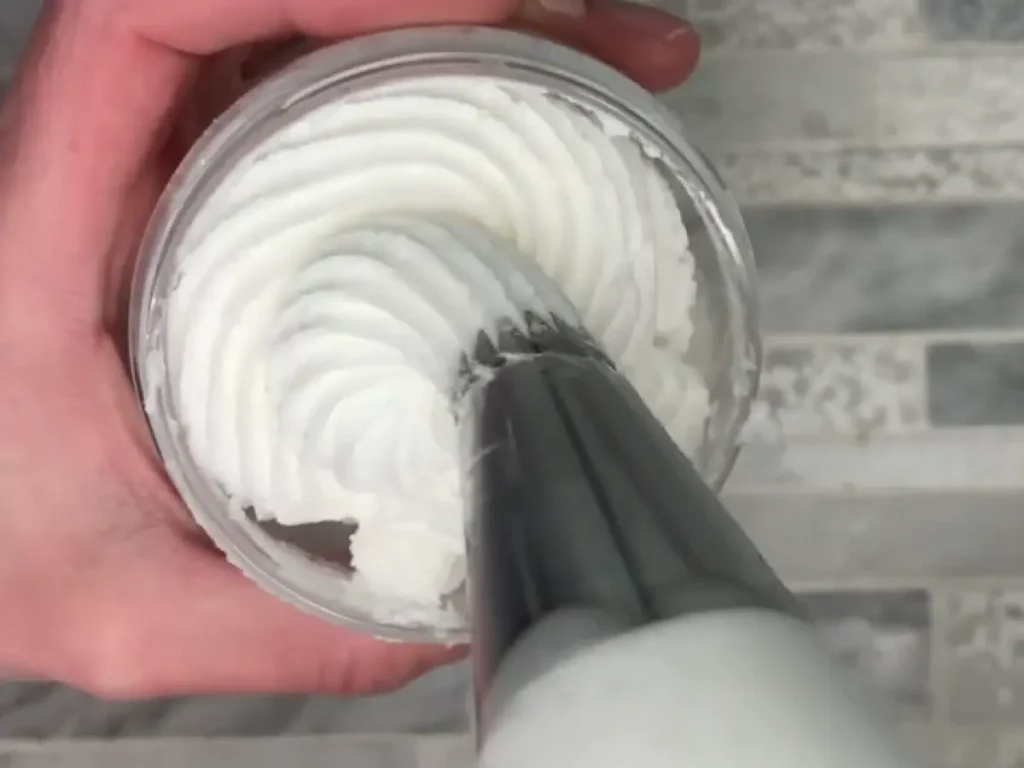
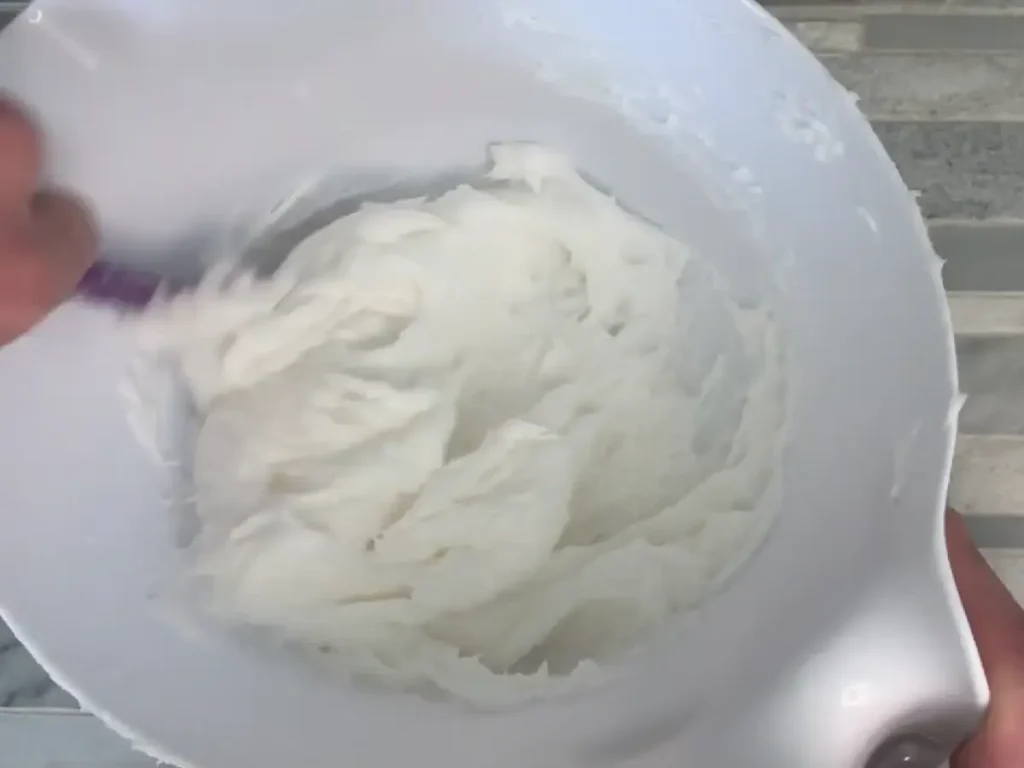
Step 9: Whip the Soap Base
Once completely cool, transfer the base to a tall mixing bowl if necessary.
Using a hand mixer, whip the base until it becomes light and fluffy.
This is when the transformation happens.
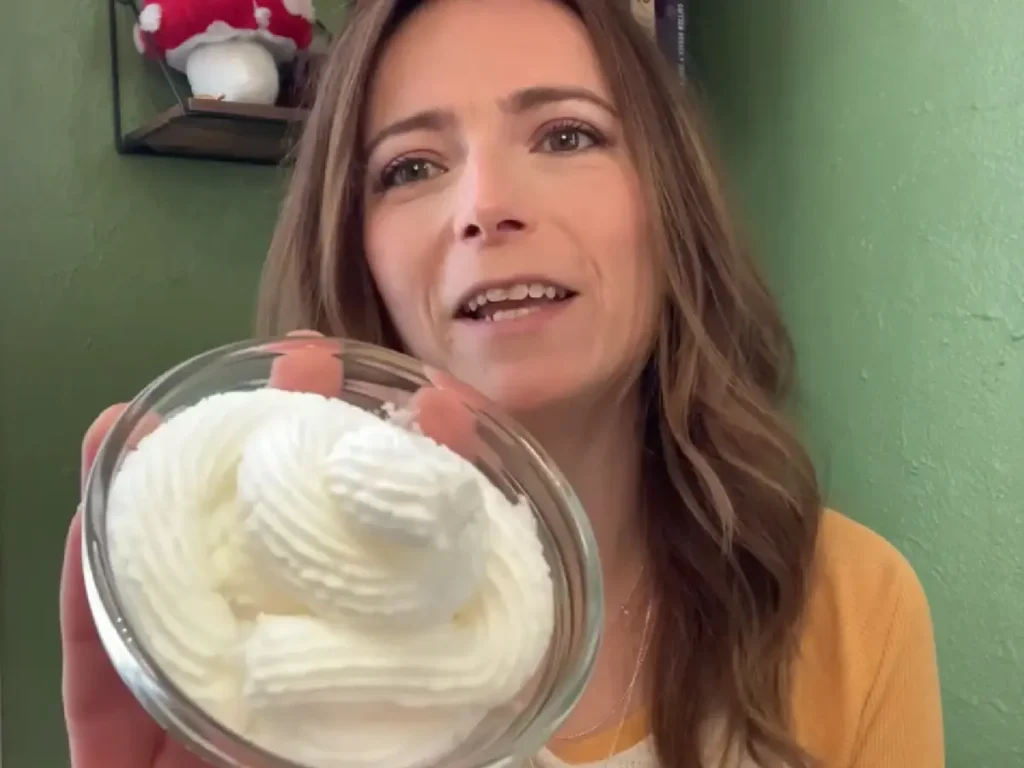
The dense base becomes airy and much lighter as you incorporate air.
You can stop when you’ve reached the texture you want for your particular project.
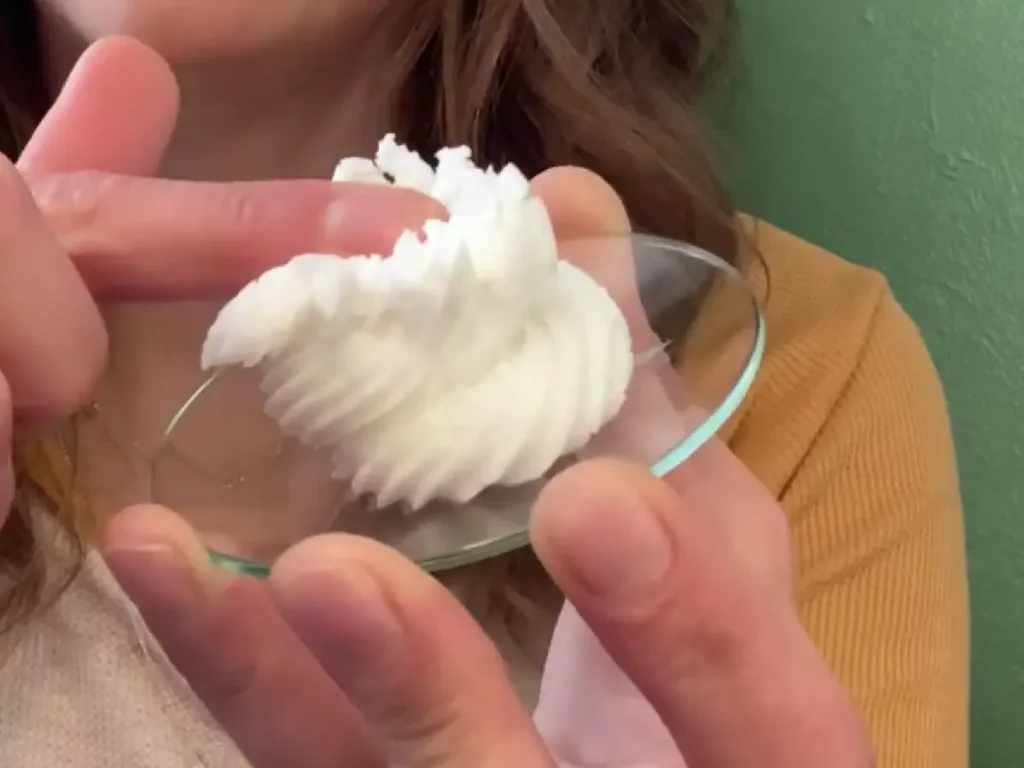
For piping, you’ll generally want enough structure that the whipped base holds its shape.
How Do You Get Whipped Soap to Hold Its Shape?
The trick isn’t simply whipping it longer.
The base needs enough structure before you begin whipping.
That’s why the formula includes stearic acid.
Temperature also matters.
A base that is too warm will be softer and less stable.
A base that hasn’t cooled completely may not whip into the same fluffy texture as a fully cooled batch.
Your mixing technique matters too.
Start slowly and increase the speed as the mixture becomes lighter.
Don’t immediately turn the mixer to its highest setting.
If you’re specifically looking for a whipped soap that pipes like frosting and holds a decorative shape, I have a separate Whipped Soap That Holds Its Shape recipe designed around that goal.
Adding Fragrance and Color
I prefer to leave the base unscented and uncolored.
That makes it much easier to customize later.
If you’re dividing the batch into several projects, you can give each portion a different fragrance or color.
Fragrance
Use a fragrance oil that is approved for the intended cosmetic application.
Always follow the fragrance manufacturer’s recommended usage rate.
Don’t assume that a fragrance that works at 2% in one product can automatically be used at 2% in every product.
Mica
Mica can be used to add color.
Add a small amount at a time and mix thoroughly.
You generally need much less mica than you think.
Can You Add Sugar to Whipped Soap Base?
Yes.
Whipped soap base makes an excellent starting point for foaming sugar scrubs.
The whipped soap provides the cleansing and foam, while the sugar provides the exfoliation.
For a ready-to-follow recipe, see my Whipped Foaming Sugar Scrub Recipe.
Can You Add Oils and Butters?
You can create customized whipped soap formulas that contain oils and butters, but I don’t recommend simply stirring a large amount of oil or butter into this finished base.
Adding oils changes the formula.
It can affect:
- Texture
- Whipping
- Foam
- Stability
- Preservation
- Skin feel
If you’re adding a small amount of an ingredient for a specific formulation, treat it as a reformulation rather than an automatic modification.
Why Did My Whipped Soap Turn Out Too Soft?
Several things can affect the final texture.
The mixture was whipped while warm
Allow the base to cool completely before whipping.
The stearic acid wasn’t completely melted
If the stearic acid isn’t fully incorporated, the finished texture may be uneven.
The formula was changed
Changing the amount of water, surfactant, glycerin, or stearic acid can change the structure.
Too much fragrance or other liquid was added
Additional liquid can soften the finished product.
If you’re experimenting, make a small test batch and change only one thing at a time.
Why Isn’t My Whipped Soap Fluffy?
If the base remains dense, first check the temperature.
Make sure it is completely cooled.
Then whip it again with a hand mixer.
If it still won’t become light and fluffy, look at the formula itself.
A change in:
- Surfactant percentage
- Stearic acid
- Glycerin
- Water
- Added oils
- Fragrance
can all affect how the base behaves.
This is one of the reasons I recommend making the original formula successfully before starting to customize it.
Why Did My Whipped Soap Collapse?
A whipped product can lose volume if the base doesn’t have enough structure to support the air you’ve incorporated.
Heat can also soften the finished product.
If your whipped soap looks beautiful immediately after mixing but gradually loses its shape, try making a smaller test batch and pay close attention to the cooling stage and any additional liquids you’ve added.
If your goal is specifically a decorative piped product, use a formula designed for shape retention rather than trying to make every whipped soap base behave like frosting.
How Should You Store Whipped Soap Base?
Store the finished base in a clean, closed container away from excessive heat and moisture.
Because this is a water-containing product, avoid introducing water into the container during use.
If you’re making the base specifically to use in later projects, label the container with:
- Product name
- Date made
- Formula version
- Fragrance, if added
- Batch size
Keeping simple batch records is a good habit to develop as you move into more serious formulation.
How Long Does Whipped Soap Base Last?
There isn’t one guaranteed shelf life for every homemade whipped soap base.
Shelf life depends on the complete formulation, preservative system, manufacturing process, packaging, storage, and how the product is used.
Using a preservative is essential, but adding a preservative doesn’t mean you can automatically assign an arbitrary expiration date.
If you want to understand how all of these factors work together, read How Do You Determine the Shelf Life of Homemade Cosmetics?.
If you’re making products to sell, proper preservation and stability testing become even more important.
Can I Make a Smaller Batch?
Absolutely.
This is one of the reasons I prefer percentages.
For example, to make a 100 g batch:
| Ingredient | Percentage | 100 g Batch |
|---|---|---|
| Distilled Water | 10% | 10 g |
| Vegetable Glycerin | 20% | 20 g |
| Caprylyl/Capryl Glucoside | 9% | 9 g |
| Sodium Coco Sulfate | 53.7% | 53.7 g |
| Stearic Acid | 6.8% | 6.8 g |
| Liquid Germall Plus | 0.5% | 0.5 g |
| Total | 100% | 100 g |
The percentages don’t change when the batch size changes.
Only the weights change.
If you’re new to working with percentages, my Percentages vs. Grams in Skincare Formulation guide walks through the math.
Common Substitutions
Can I replace SCS with another surfactant?
Not as a simple 1:1 substitution.
Different surfactants have different properties and recommended usage rates.
Replacing SCS changes the formula, so you would need to reformulate rather than simply swap one ingredient for another.
Can I replace glycerin?
Possibly, depending on the ingredient and the role you want it to perform.
However, a replacement can change the texture and processing characteristics of the base.
If you’re experimenting, make a small test batch first.
Can I replace stearic acid?
Stearic acid is an important structural ingredient in this particular formula.
Replacing it with another thickener or fatty acid will change how the product behaves.
I would treat that as a new formulation rather than a direct substitution.
Can I use a different preservative?
Yes, but the preservative needs to be appropriate for the formula.
Do not assume that every broad-spectrum preservative uses the same percentage or works across the same pH range.
Always follow the manufacturer’s instructions.
Whipped Soap Base vs. Foaming Bath Butter
You may notice that Summer Rain has more than one whipped cleansing base.
That’s intentional.
This recipe is an older-style SCS-based whipped soap base that uses SCS, caprylyl/capryl glucoside, glycerin, and stearic acid.
My newer Foaming Bath Butter (Whipped Soap Base) From Scratch uses a different formulation built around SCI, shea butter, fractionated coconut oil, and other ingredients.
They’re related products, but they aren’t the same formula.
If you want a richer, butter-based whipped cleanser, use the newer Foaming Bath Butter recipe.
If you want to learn how this simpler SCS-based whipped soap base is made, you’re in the right place.
Frequently Asked Questions
Is whipped soap actually soap?
Not technically.
Traditional soap is produced through saponification using oils or fats and an alkali. This recipe uses surfactants, so it is a surfactant-based cleanser.
The term “whipped soap” is commonly used because of the product’s appearance and how it is used.
What is whipped soap base made from?
This recipe uses distilled water, vegetable glycerin, sodium coco sulfate, caprylyl/capryl glucoside, stearic acid, and a broad-spectrum preservative.
The formula can then be customized with ingredients such as fragrance and color.
Is whipped soap the same as foaming bath butter?
Not necessarily.
The names are often used interchangeably, but different formulas can produce products with different textures and ingredient profiles.
Always look at the actual formula rather than assuming two products are identical because they have similar names.
Can I use whipped soap base by itself?
Yes.
Once the base has been properly made, preserved, and cooled, it can be whipped and used as a cleanser.
You can also customize it for other bath products.
Can I use whipped soap base for a sugar scrub?
Yes.
The base provides cleansing and foam while the sugar provides exfoliation.
You can start with my Whipped Foaming Sugar Scrub Recipe for a complete formula.
Why does whipped soap need stearic acid?
Stearic acid provides structure and helps the base develop a firmer texture that can support the whipped form.
Without enough structure, a whipped product may not hold its shape as well.
Can I use a stand mixer instead of a hand mixer?
Yes, provided you use an appropriately sized bowl and keep the mixture contained.
A hand mixer is convenient for smaller batches because you can see and control the texture as you whip.
Can I pipe whipped soap?
Yes.
A properly cooled and whipped base can be transferred to a piping bag and used for decorative designs.
If piping and shape retention are your main goals, see my Whipped Soap That Holds Its Shape recipe.
Can I sell whipped soap?
If you plan to sell it, you need to consider cosmetic regulations, labeling, ingredient safety, preservation, manufacturing practices, and product testing that apply to your location.
A recipe working successfully in your kitchen doesn’t automatically establish a validated commercial shelf life.
More Whipped Soap Projects
Once you’ve made your own whipped soap base, you can use it as the starting point for other projects.
Try:
Whipped Soap That Holds Its Shape
Foaming Bath Butter From Scratch
Final Thoughts
Whipped soap base is one of those DIY projects that becomes much easier once you understand what each ingredient is doing.
The SCS provides the main cleansing and foam. Caprylyl/capryl glucoside helps round out the surfactant system. Glycerin keeps the base pliable, while stearic acid gives it structure. Distilled water provides the liquid phase, and the preservative protects the finished water-containing product.
Once the base has cooled, you can whip it into that soft, fluffy texture that makes whipped soap so much fun to work with.
And that’s really the advantage of making the base yourself.
You’re not limited to one finished recipe. You have a starting point that you can use for different projects, from a simple whipped cleanser to a fluffy foaming sugar scrub.
Start with the base as written, learn how it behaves, and then make your changes one at a time.
That’s when making DIY skincare starts to feel less like following a recipe and more like learning how to formulate.
Printable Whipped Soap Recipe

How to make your own Whipped Soap Base using just 6 ingredients! (includes recipe)
Equipment
- Scale
Ingredients
- 1.6 ounce | 10% Distilled Water
- 3.20 ounce | 20% Vegetable glycerin
- 1.50 ounce | 9% Caprylyl Capryl Glucoside
- 8.60 ounce | 53.7% Sodium Coco Sulfate
- 1.09 ounce | 6.8% Stearic Acid
- 0.08 ounce | 0.5% Germall Plus
Instructions
- Weigh all of your ingredients on a kitchen scale and place them into a crock pot on the high setting. (If you prefer, you can also use a double boiler).
- Allow you ingredients to melt completely, this is going to take a while. Periodically come in a stir the surfactant mixture up.
- Remove from the crockpot and allow to cool.
- Once the whipped soap base is cooled down, add your preservative and mix well.
- Package.
Pingback: DIY Whipped Rainbow Sugar Scrub - Summer Rain