
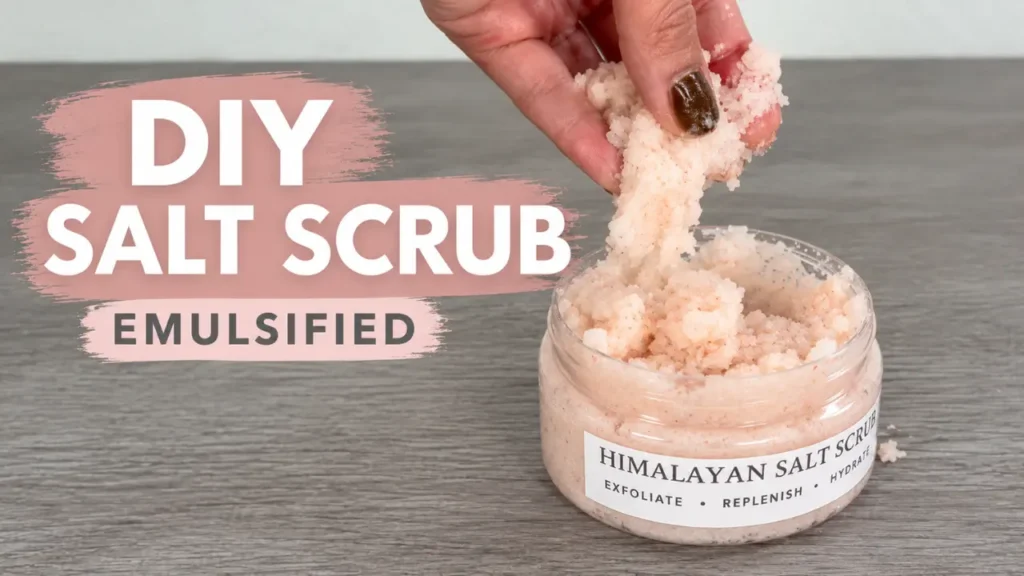
If you love a good salt scrub but don’t love the oily mess that some homemade scrubs can leave behind, an emulsified Himalayan salt scrub is worth trying.
This emulsified Himalayan salt scrub combines fine Himalayan salt and finely ground Epsom salt with fractionated coconut oil, emulsifying wax, and stearic acid to create a creamy, scoopable body scrub.
Unlike a traditional oil-and-salt scrub, an emulsified scrub changes when it comes into contact with water. The emulsifying wax helps the oil and water combine, giving the scrub a creamy feel as you rinse it away.
When you first add the salts, they are going to sink to the bottom. Don’t worry. Your scrub isn’t ruined, and you don’t need to keep stirring it constantly.
As the mixture cools, the emulsifying wax and stearic acid begin to thicken the base. Once it has cooled enough to become thicker but is still slightly warm and workable, you can mix the salts throughout the scrub.
That cooling step is what helps you end up with a thick, evenly distributed salt scrub instead of a jar with all the salt sitting on the bottom.
If you’re new to making your own skincare products, this recipe is also a great introduction to how emulsifiers can change the texture and rinse-off properties of a product.
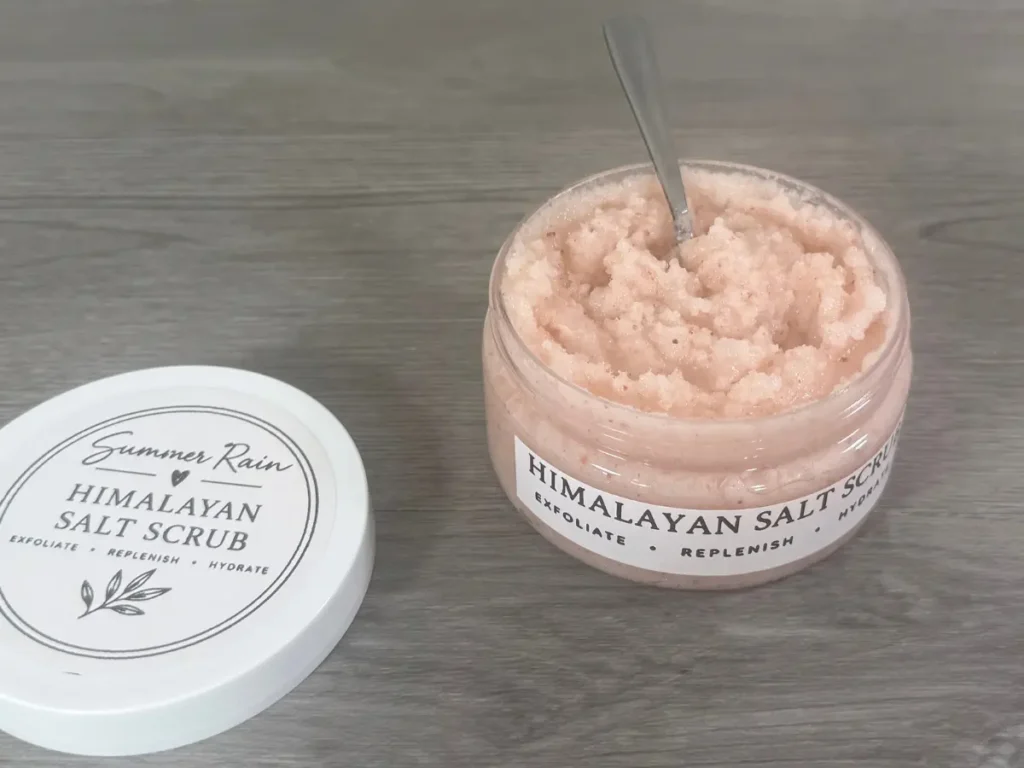
What Is an Emulsified Himalayan Salt Scrub?
An emulsified salt scrub is a body scrub made with exfoliating salt, oils, and an emulsifier.
A traditional salt scrub is usually made by combining salt with a carrier oil. It’s incredibly simple, but the finished scrub can leave quite a bit of oil on your skin and in your shower.
An emulsified salt scrub works differently.
The emulsifying wax allows the oil phase to interact with water when you rinse the scrub from your skin. The result is a creamy rinse rather than simply washing away the salt and leaving a heavy layer of oil behind.
If you’re wondering exactly how that works, I have a more detailed guide explaining what an emulsion is in skincare and why it matters.
Understanding emulsions is especially helpful if you plan to make lotions, creams, emulsified scrubs, or other products where oil and water need to work together.
Prefer to Watch How to Make Emulsified Himalayan Salt Scrub?
Affiliate disclosure: This post may contain affiliate links. If you purchase something through one of these links, I may earn a small commission at no additional cost to you. These commissions help support Summer Rain and allow me to continue creating free tutorials and recipes.
Why Make an Emulsified Himalayan Salt Scrub?
There are plenty of simple salt scrub recipes, so why bother making an emulsified version?
For me, it’s all about the texture and rinse-off experience.
This recipe creates a scrub that is:
- Creamy and scoopable
- Easy to make
- Made with fine exfoliating salts
- Less oily-feeling than a simple oil-and-salt scrub
- Designed to rinse more cleanly
- Easy to customize with a suitable fragrance
- Great for an at-home body-care routine
The finished scrub is thick enough to scoop from a jar and spreads easily over damp skin.
And when water hits the scrub, the emulsifying wax helps transform the oily portion into a creamy mixture that rinses away.
Ingredients
| Ingredient | Percentage | Purpose |
|---|---|---|
| Fractionated Coconut Oil | 35% | Lightweight emollient and carrier oil |
| Emulsifying Wax NF | 15% | Helps emulsify the oil when the scrub is rinsed with water |
| Stearic Acid | 8% | Adds structure and thickens the scrub |
| Fine Himalayan Salt | 32% | Physical exfoliant |
| Fine Epsom Salt | 9% | Physical exfoliant |
| White Thyme & Rosemary Fragrance Oil | 1% | Adds fragrance |
| Total | 100% |
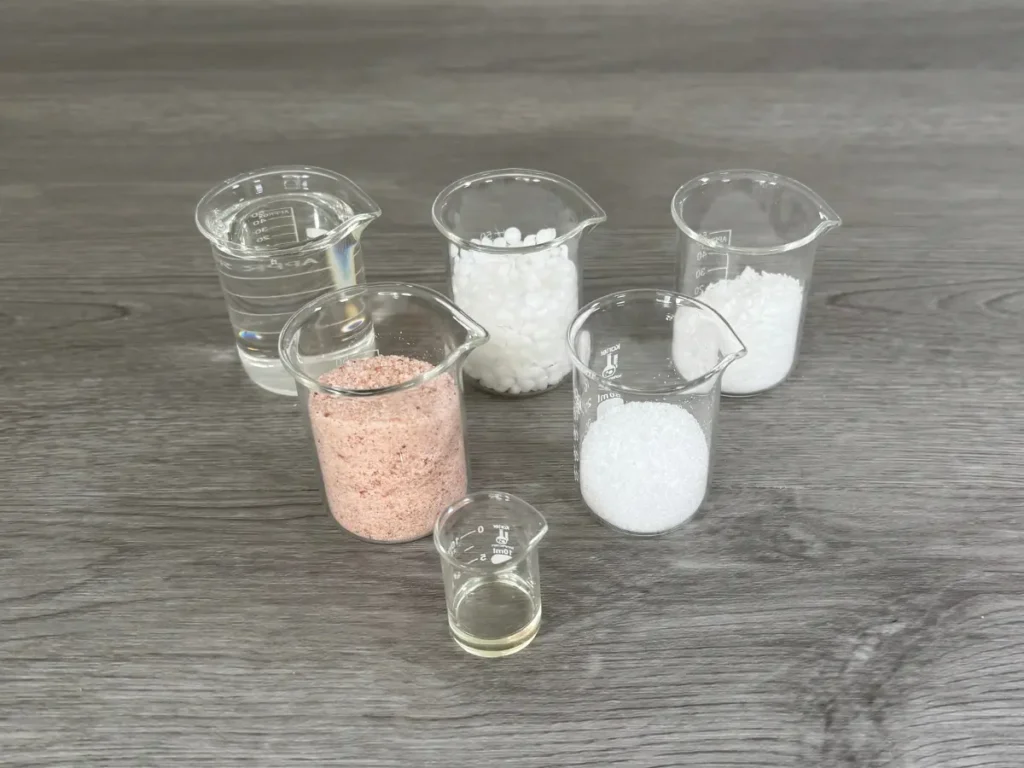
Fractionated Coconut Oil
Fractionated coconut oil is the primary oil in this recipe.
I like it for salt scrubs because it has a lightweight feel and remains liquid at room temperature. It gives the salt something to disperse through without making the finished scrub excessively heavy.
If you’re experimenting with your own skincare formulations, understanding the purpose of each ingredient is much more useful than simply following a list of ingredients.
You can learn more in my guide to what each ingredient does in skincare formulation.
Emulsifying Wax NF
Emulsifying wax is what makes this an emulsified salt scrub rather than a traditional oil-and-salt scrub.
It helps the oil phase interact with water when you rinse the product from your skin.
When the scrub meets water, the emulsifying wax helps create that creamy rinse-off effect.
If you’re new to emulsifiers, my guide to emulsifiers in skincare and how they work goes into more detail about what they do and why they’re important in skincare formulation.
Stearic Acid
Stearic acid helps give the scrub body and structure.
It works alongside the emulsifying wax to create a thicker, more substantial texture.
I reduced the stearic acid slightly from my first test because I wanted the scrub to remain creamy and spreadable rather than becoming overly stiff or waxy.
Fine Himalayan Salt
Himalayan salt provides the primary exfoliation in this recipe.
For a body scrub, I recommend using fine Himalayan salt rather than coarse crystals.
Salt particle size makes a noticeable difference in how a scrub feels against the skin. Large crystals can have sharper edges and may feel much more aggressive.
The goal here isn’t to make the most abrasive scrub possible. You want enough exfoliation to smooth the feel of the skin while using a light touch.
Fine Epsom Salt
Epsom salt makes up the second part of the exfoliating salt blend.
I grind the Epsom salt with a mortar and pestle before adding it to the recipe. This helps break down larger crystals and gives the finished scrub a more uniform texture.
You don’t need to turn the salt into a powder. You’re simply looking for a finer, more consistent particle size.
White Thyme & Rosemary Fragrance Oil
White Thyme & Rosemary fragrance oil gives this scrub its fresh, herbal scent.
This is such a relaxing scent, it really fits this scrub perfectly!
You can substitute another cosmetic fragrance if you’d like, but always check the fragrance manufacturer’s usage instructions and IFRA certificate for the appropriate usage rate for your intended product.
Emulsified Himalayan Salt Scrub Recipe
| Ingredient | Percentage | 300 g Batch |
|---|---|---|
| Fractionated Coconut Oil | 35% | 105 g |
| Emulsifying Wax NF | 15% | 45 g |
| Stearic Acid | 8% | 24 g |
| Fine Himalayan Salt | 32% | 96 g |
| Fine Epsom Salt | 9% | 27 g |
| White Thyme & Rosemary Fragrance Oil | 1% | 3 g |
| Total | 100% | 300 g |
I recommend weighing your ingredients with a digital scale rather than measuring them by volume.
Working in percentages also makes it easy to scale a recipe up or down.
If you’re new to formulation percentages, my guide to percentages versus grams in skincare formulation explains why weighing ingredients is so useful when making skincare products.
How to Make an Emulsified Himalayan Salt Scrub
1. Prepare the salts
Start by preparing your salts before you begin heating the oil phase.
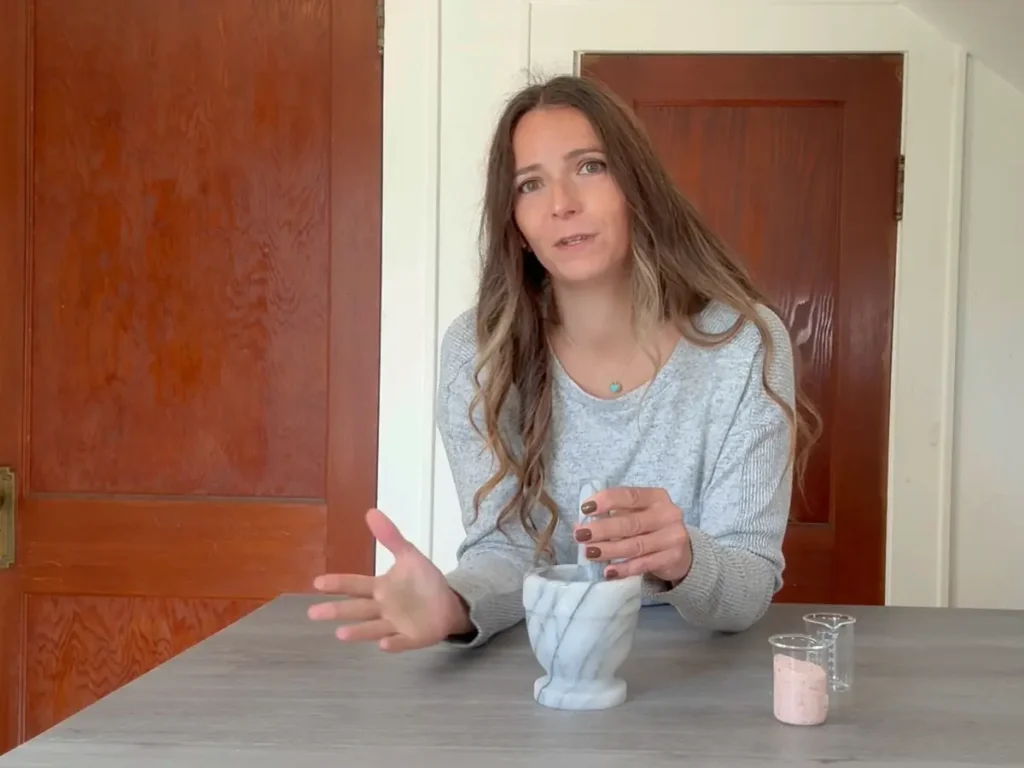
Place the Epsom salt into a clean mortar and grind it with the pestle until the crystals are fine and relatively uniform.
Next, check your Himalayan salt. If there are any unusually large crystals, grind them a little more. For this recipe, fine Himalayan salt is preferable to coarse salt.
The particle size is important because these crystals are going directly onto your skin.
2. Melt the oil phase
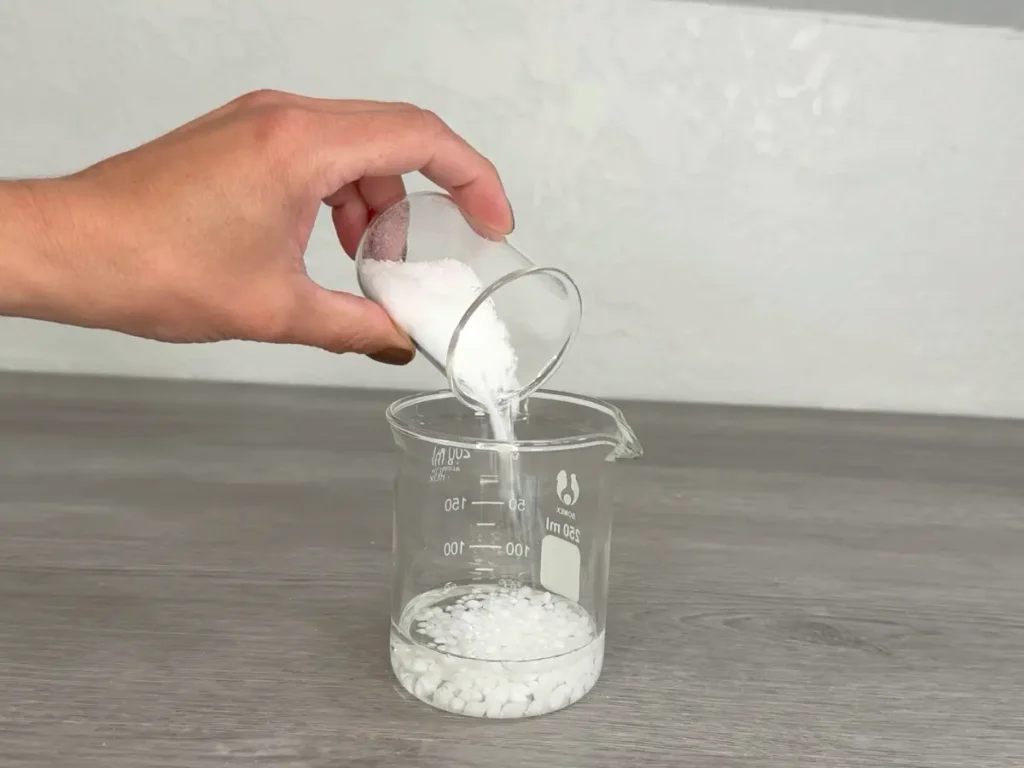
Add the fractionated coconut oil, emulsifying wax, and stearic acid to a heat-safe container.
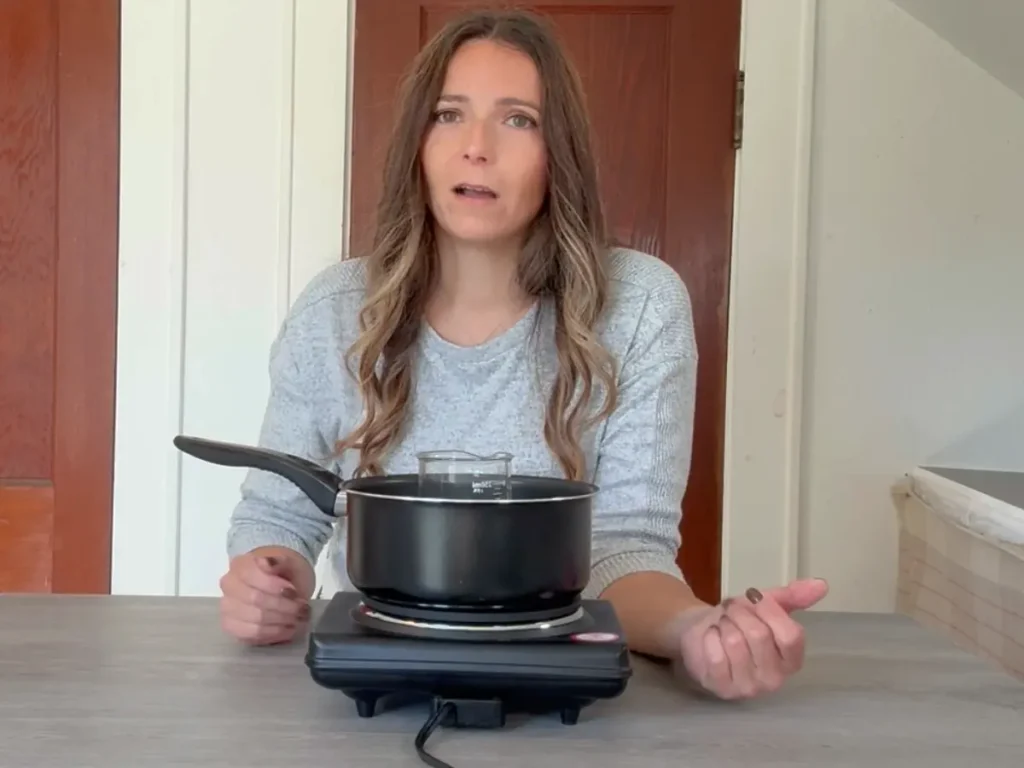
Heat the mixture until the emulsifying wax and stearic acid have completely melted.
Stir until you have a smooth, uniform mixture.
3. Add the fragrance
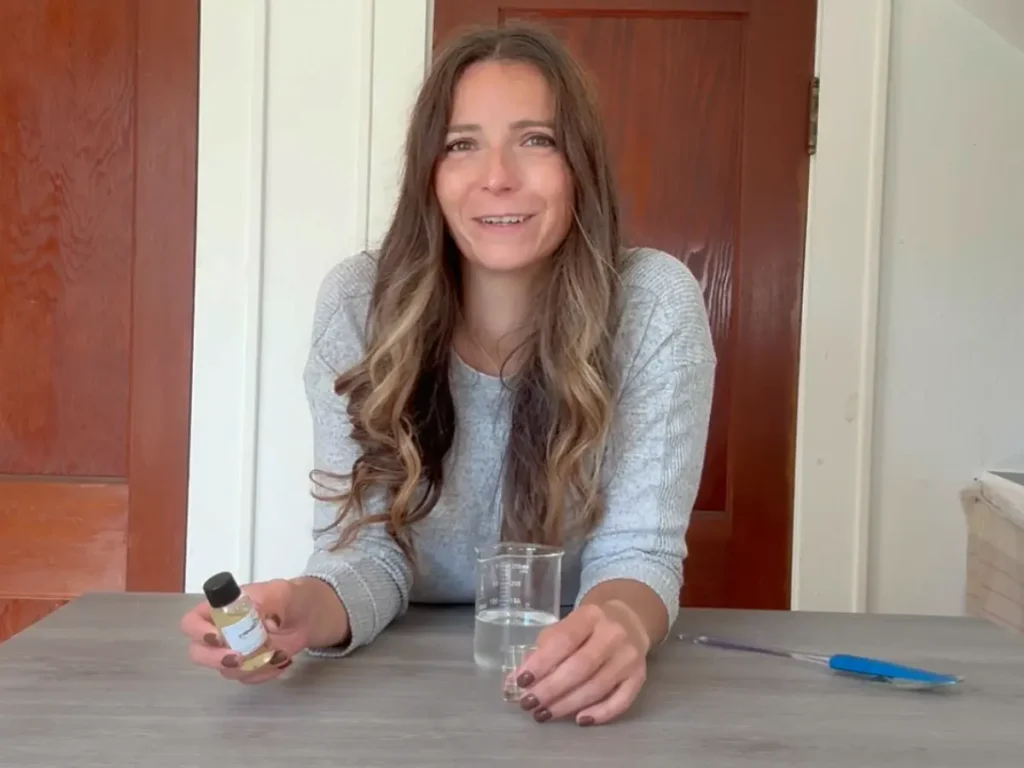
Allow the melted mixture to cool somewhat before adding the fragrance.
Add the White Thyme & Rosemary fragrance oil and mix thoroughly.
4. Add the salts
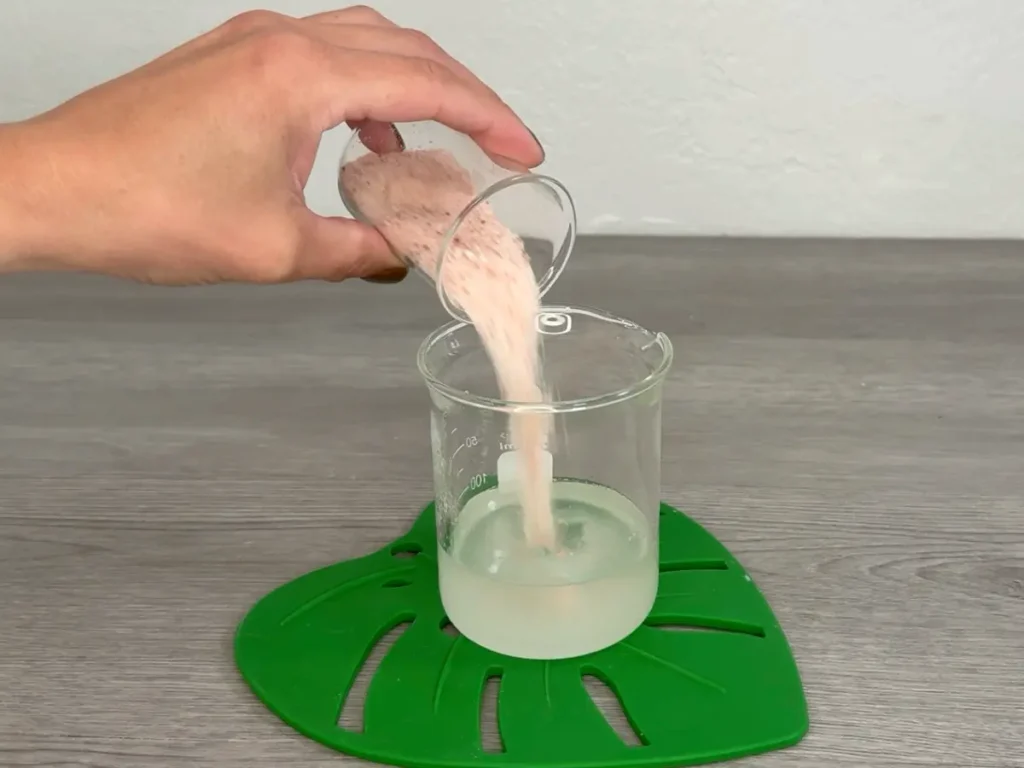
Now add the Himalayan salt and finely ground Epsom salt.
I recommend adding them gradually rather than dumping everything in at once.
Stir thoroughly as you add the salts.
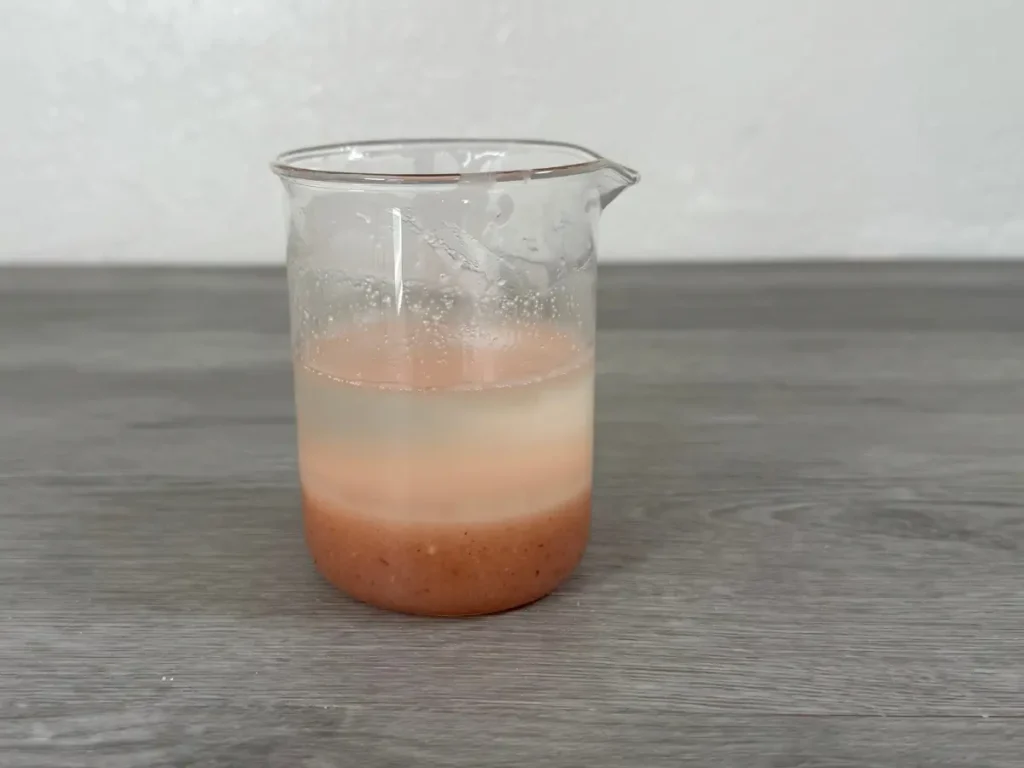
And this is where things can look a little strange.
The salts are going to sink.
Don’t worry.
At this point, the base is still too fluid to hold the salt in place.
5. Let the mixture cool further
This is the most important step in the recipe.
Set the mixture aside and allow it to cool further, stirring occasionally.
As the temperature drops, the emulsifying wax and stearic acid will begin to thicken the mixture.
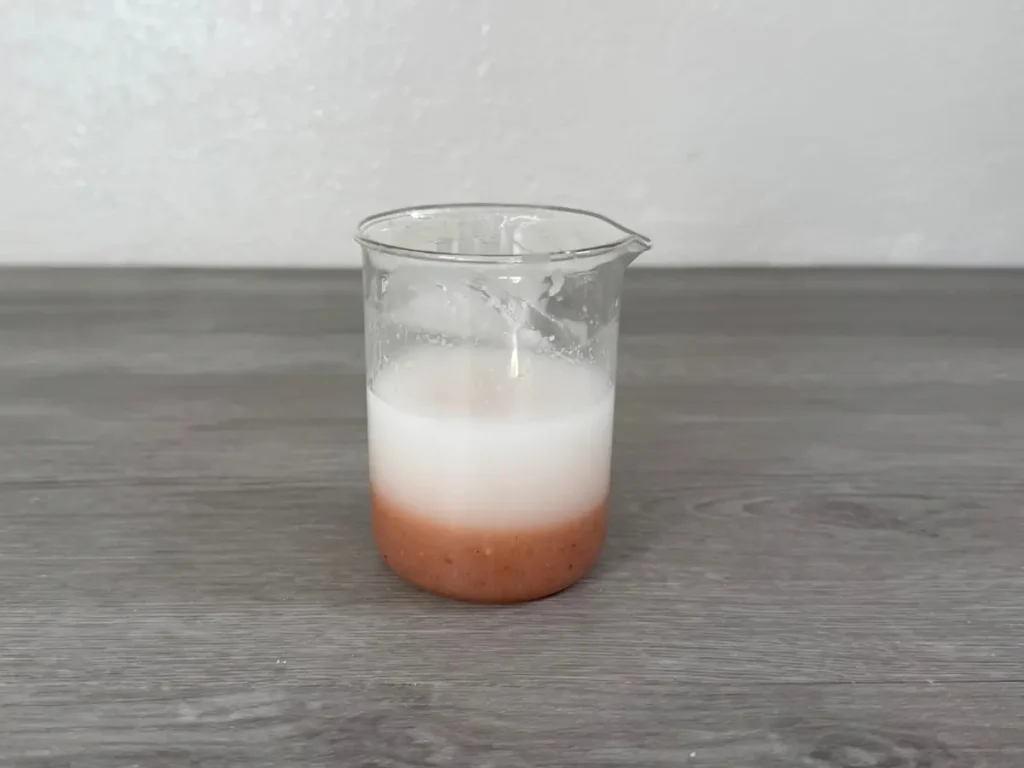
Eventually, you’ll notice a significant change in texture and color.
The scrub will become thicker and less fluid. It will go from being clear to white.
You want to reach the point where the mixture is still slightly warm but thick enough that the salts can remain suspended when you stir them in.
This is the sweet spot.
6. Mix the salts into the thickened base
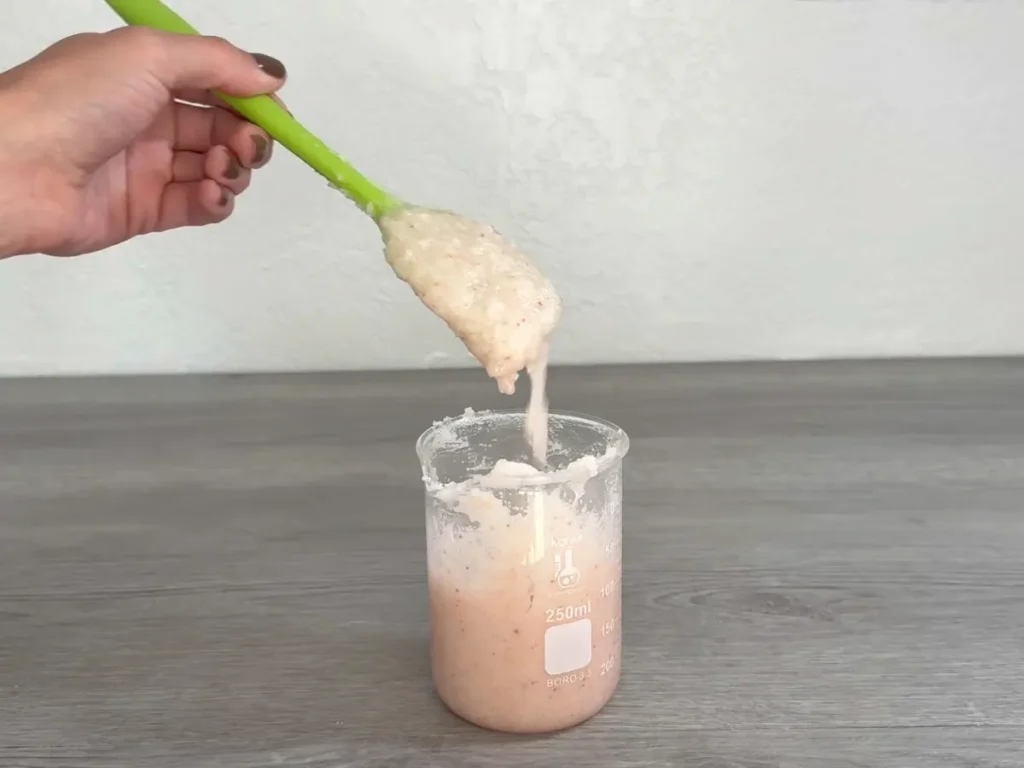
Once the mixture has thickened, stir it thoroughly.
You’ll notice that the salts behave differently now.
Instead of immediately dropping to the bottom, they should begin staying distributed throughout the thicker base.
Continue mixing until the Himalayan salt and Epsom salt are evenly incorporated.
If the mixture is still very fluid, give it more time to cool. Remember, the final consistency will be a bit thicker. It thickens as it cools.
7. Transfer to your container
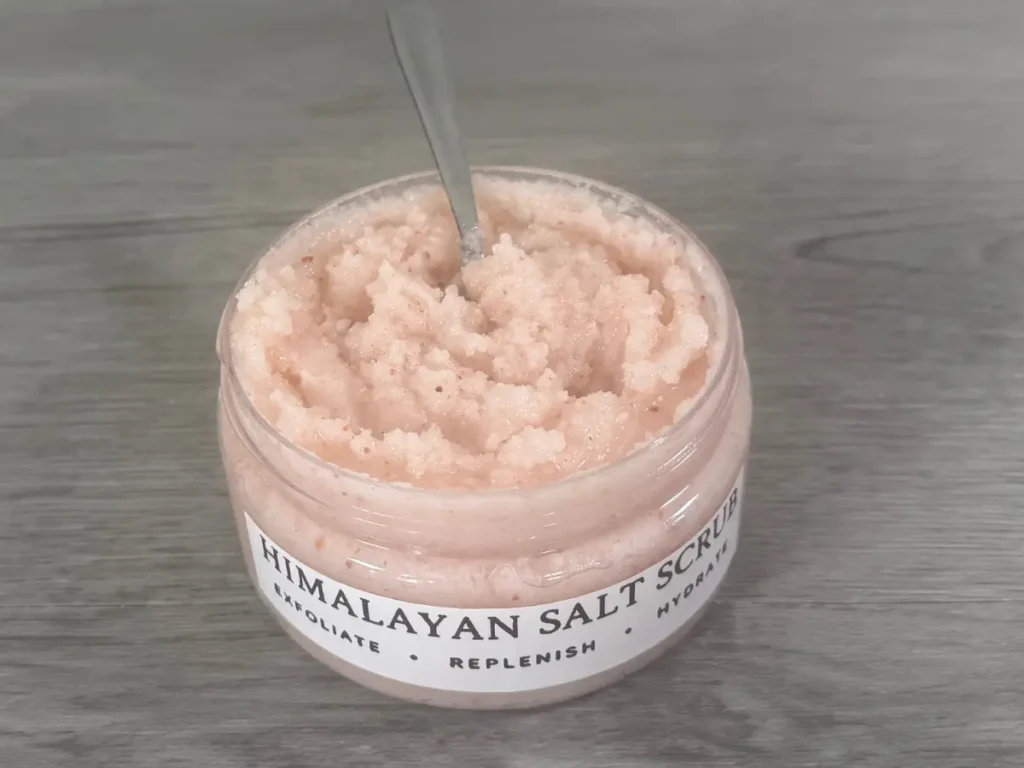
Once the salts are evenly distributed, transfer the finished scrub into a clean, dry, wide-mouth container.
Allow it to cool completely before sealing the container.
The final texture should be thick, creamy, and scoopable.
Why Does the Salt Sink to the Bottom?
If you’re making an emulsified salt scrub for the first time, this is probably the part that will make you wonder if you’ve done something wrong. You haven’t!
The salts are simply heavier than the melted oil phase.
When the mixture is warm and fluid, the salt doesn’t have enough structure around it to remain suspended.
As the mixture cools, the emulsifying wax and stearic acid begin to create a thicker structure.
Once the mixture reaches the right consistency, the salt can stay distributed throughout the scrub.
How to Use an Emulsified Himalayan Salt Scrub
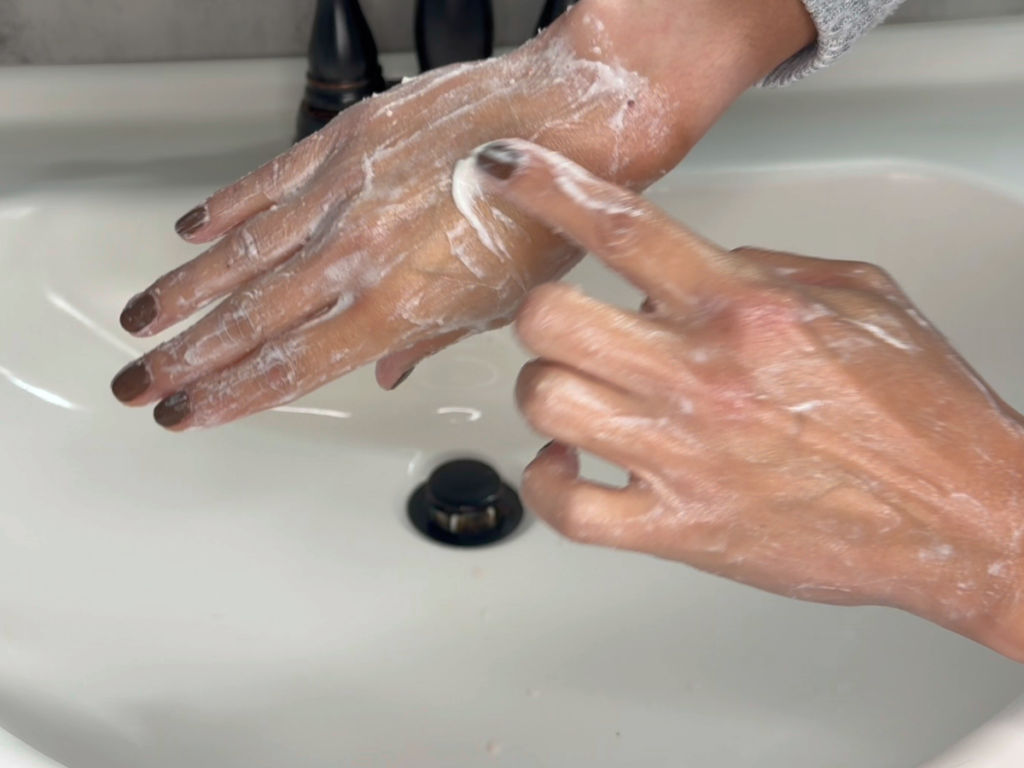
Scoop a small amount of scrub from the container and massage it gently over damp skin.
You don’t need to press hard.
Use gentle circular motions and let the salt provide the exfoliation.
Rinse thoroughly with warm water.
As water hits the scrub, the emulsifying wax helps the oil and water interact, creating a lotion like consistency.
Pat your skin dry with a towel rather than aggressively rubbing your skin.
This scrub is intended for the body, not the face.
Avoid using it on broken, irritated, sunburned, or freshly shaved skin.
How Often Should You Use a Salt Scrub?
How often you use one depends on your skin and how it responds to exfoliation.
Start with occasional use (1-2 times a week) and pay attention to how your skin feels afterward.
If your skin feels uncomfortable, irritated, tight, or overly dry, give your skin more time between uses.
The goal is smoother-feeling skin, not aggressive scrubbing.
Why Fine Salt Is Better for This Recipe
The size of your salt crystals can make a big difference in the finished scrub.
Coarse salt crystals can have sharp edges and may feel uncomfortable against the skin, particularly if you apply too much pressure.
You can find more information on my Exfoliating Explained post.
Can I Use Coarse Himalayan Salt?
I wouldn’t recommend it for this particular recipe.
Coarse Himalayan salt will create a much more aggressive scrub, and the larger crystals may feel sharp or scratchy.
For a more comfortable body scrub, start with a fine grade.
Can I Use a Different Oil?
You can experiment with other cosmetic oils, but keep in mind that changing the oil can change the texture and skin feel of the finished scrub.
Fractionated coconut oil gives this recipe a lightweight feel, which is one reason I chose it.
If you want to start creating your own formulations rather than simply changing ingredients randomly, my Skincare Formulation for Beginners guide is a good place to start.
It covers the basics of building a formulation and understanding how ingredients work together.
You might also be interested in How to Choose the Right Oil for Your Skin guide.
Can I Change the Fragrance?
Yes, as long as the fragrance is intended for cosmetic use and is approved for your intended application.
The fragrance in this recipe is only 1%, but that doesn’t mean every fragrance can automatically be used at 1%.
Always check the supplier’s IFRA documentation for the specific fragrance you’re using.
Does This Salt Scrub Need a Preservative?
This recipe does not contain intentionally added water, so it is an anhydrous formulation.
That is different from a lotion or cream that contains water and requires a properly designed preservative system.
However, an anhydrous product can still become contaminated if water is repeatedly introduced into the container.
And because this is a shower product, water contamination is something to think about.
To help keep the product cleaner:
- Keep the container closed between uses.
- Don’t leave the jar sitting in the direct shower spray.
- Use clean, dry hands or a scoop.
- Don’t add water directly to the container.
- Discard the product if you notice an unexpected change in appearance, smell, or texture.
If you want to learn more about why preservation is important in homemade skincare, read Why Preservatives Matter in DIY Skincare.
How to Store Homemade Salt Scrub
Store your finished salt scrub in a clean, dry, airtight container.
A wide-mouth cosmetic jar works particularly well because the thick scrub is easy to scoop out.
Try to keep the container away from direct heat and excessive moisture.
Because you’re using the scrub in the shower, I recommend keeping it somewhere where the jar won’t constantly be exposed to water.
Troubleshooting Your Emulsified Himalayan Salt Scrub
Why is all my salt sitting at the bottom?
The mixture is probably still too warm and fluid.
Allow it to cool further and stir again.
This is normal during the making process.
Why won’t my salt stay mixed?
Give the scrub more time to cool and thicken.
The key is finding the point where the base is thick enough to support the salt but is still warm enough to stir easily.
Why is my scrub too hard?
Your mixture may have cooled too much before you finished incorporating the salts, or the particular combination of emulsifying wax and stearic acid may be producing a firmer texture than you want.
For future batches, try incorporating the salt while the mixture is slightly warm and workable.
Why is my scrub too oily?
Make sure you’re following the percentages in the recipe.
The emulsifying wax is important to the finished rinse-off behavior, so simply adding more oil isn’t the solution if the texture isn’t what you want.
Why does my scrub feel too rough?
Check your salt particle size.
Large Himalayan salt crystals or Epsom salt that hasn’t been ground sufficiently can make the scrub feel much more aggressive.
Also remember to use a light touch when applying the scrub.
If you’re interested in understanding how changing individual ingredients affects the texture and performance of a formulation, What Each Ingredient Does in Skincare Formulation is a helpful next step.
More DIY Body Scrub Recipes
And if this recipe has you interested in making more of your own skincare products, don’t stop here. Start with my Skincare Formulation for Beginners guide and learn how the ingredients you’re already using can help you create your own formulas.
If you enjoyed making this emulsified salt scrub, you may also want to try another DIY body scrub:
Trying different scrub formulas is a great way to see how changing the exfoliant, oils, emulsifiers, and other ingredients affects the finished product.
Emulsified Himalayan Salt Scrub Printable Recipe
Equipment
- Scale
Ingredients
- 105 grams Fractionated Coconut Oil
- 45 grams Emulsifying Wax NF
- 24 grams Stearic Acid
- 96 grams Fine Himalayan Salt
- 37 grams Fine Epsom Salt
- 3 grams White Thyme & Rosemary Fragrance Oil
Instructions
- Place the Epsom salt into a clean mortar and grind it with the pestle until the crystals are fine.
- Add the fractionated coconut oil, emulsifying wax, and stearic acid to a heat-safe container.
- Heat the mixture until the emulsifying wax and stearic acid have completely melted.
- Allow the melted mixture to cool somewhat. Add the fragrance oil and mix well.
- Add the Himalayan salt and finely ground Epsom salt.
- Allow to cool until white color. Once the mixture has thickened, stir it thoroughly.
- Once the salts are evenly distributed, transfer the finished scrub into a clean, dry, wide-mouth container.