
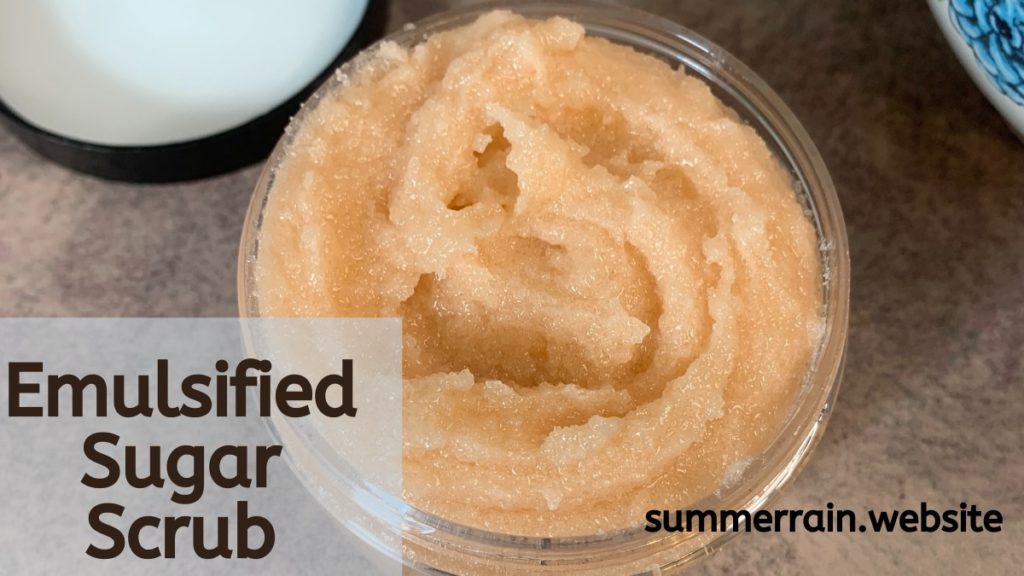
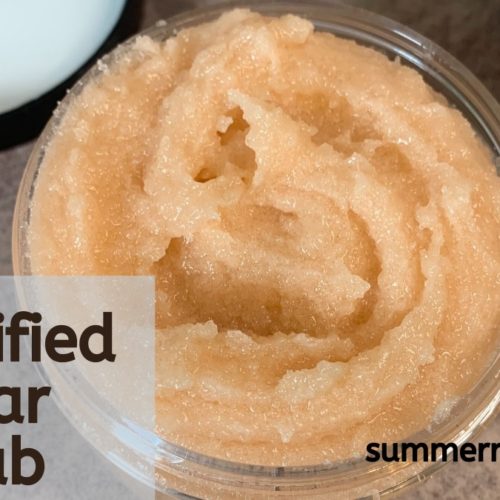
If you love making sugar scrubs but don’t love the oily residue that some scrubs leave behind, an emulsified sugar scrub is worth trying.
Unlike a traditional sugar scrub made mostly with sugar and oil, an emulsified scrub contains an emulsifying wax that helps the oils and other ingredients work together. When you add water while using the scrub, it transforms into a creamy, lotion-like mixture that spreads easily over your skin and rinses away much more cleanly.
That is one of the reasons I prefer an emulsified sugar scrub over a traditional oil-based scrub.
This version uses grapeseed oil, emulsifying wax NF, stearic acid, sugar, fragrance, and Liquid Germall Plus to create a creamy scrub that feels moisturizing without leaving your skin covered in oil.
And once you understand how the formula works, it’s easy to start creating your own versions with different oils, fragrances, and colors.
Prefer to Watch?
If you’d rather see how this emulsified sugar scrub comes together, watch the video below.
Affiliate disclosure: This post may contain affiliate links. If you purchase something through one of these links, I may earn a small commission at no additional cost to you. These commissions help support Summer Rain and allow me to continue creating free tutorials and recipes.
Then keep reading for the complete formula, ingredient breakdown, step-by-step instructions, and tips for making a successful emulsified scrub.
What Is an Emulsified Sugar Scrub?
An emulsified sugar scrub is a sugar scrub that contains an emulsifier.
The emulsifier allows the oil phase and the other components of the scrub to work together instead of behaving like a simple mixture of sugar and oil.
When the scrub comes into contact with water in the shower, it changes from a thick, scoopable scrub into a creamy, lotion-like consistency.
That makes it easy to spread over your skin, while the sugar provides the exfoliation.
After rinsing, you are left with skin that feels soft and smooth without the heavy oily coating that you can sometimes get from a traditional sugar scrub.
Why I Like Emulsified Sugar Scrubs
There are a few things that make this type of scrub different from a basic sugar-and-oil recipe.
It feels creamy when you use it.
Water activates the emulsifying system, giving the scrub a lotion-like feel.
It rinses more easily.
The emulsified oils can rinse away more cleanly instead of simply sitting on the surface of your skin.
The oils don’t simply pool at the top.
A properly formulated emulsified scrub is more uniform than a basic sugar-and-oil scrub.
It feels more like a finished body-care product.
The combination of sugar, oils, emulsifier, and stearic acid creates a rich, creamy texture that makes the scrub feel more substantial.
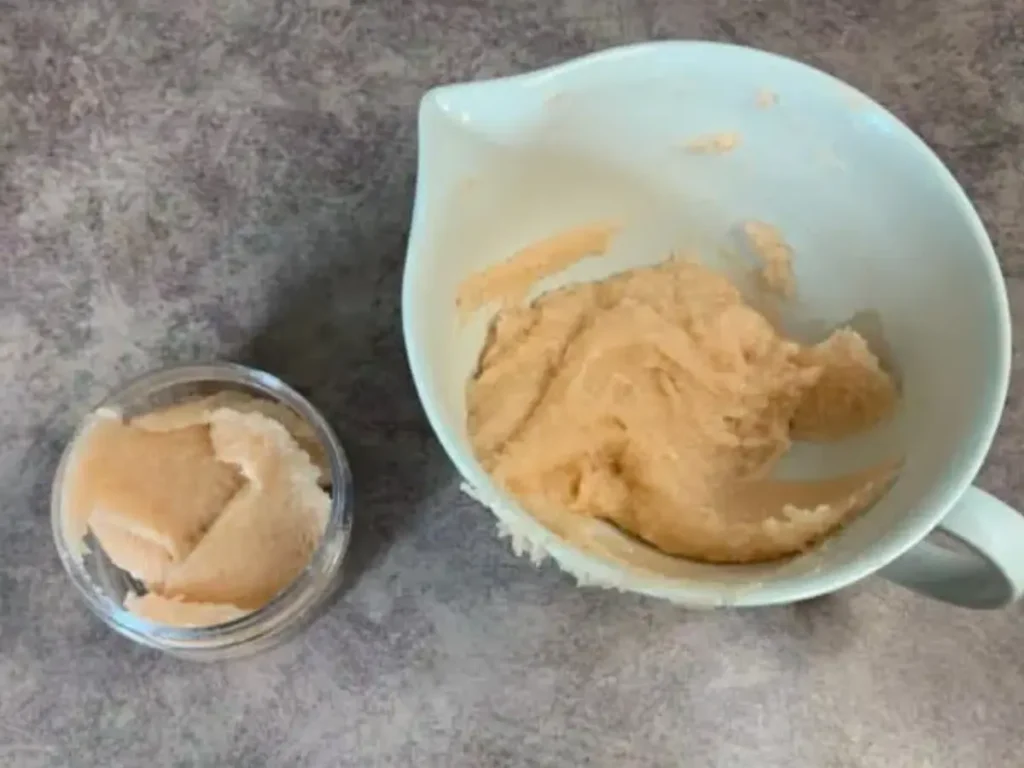
How Does an Emulsified Sugar Scrub Work?
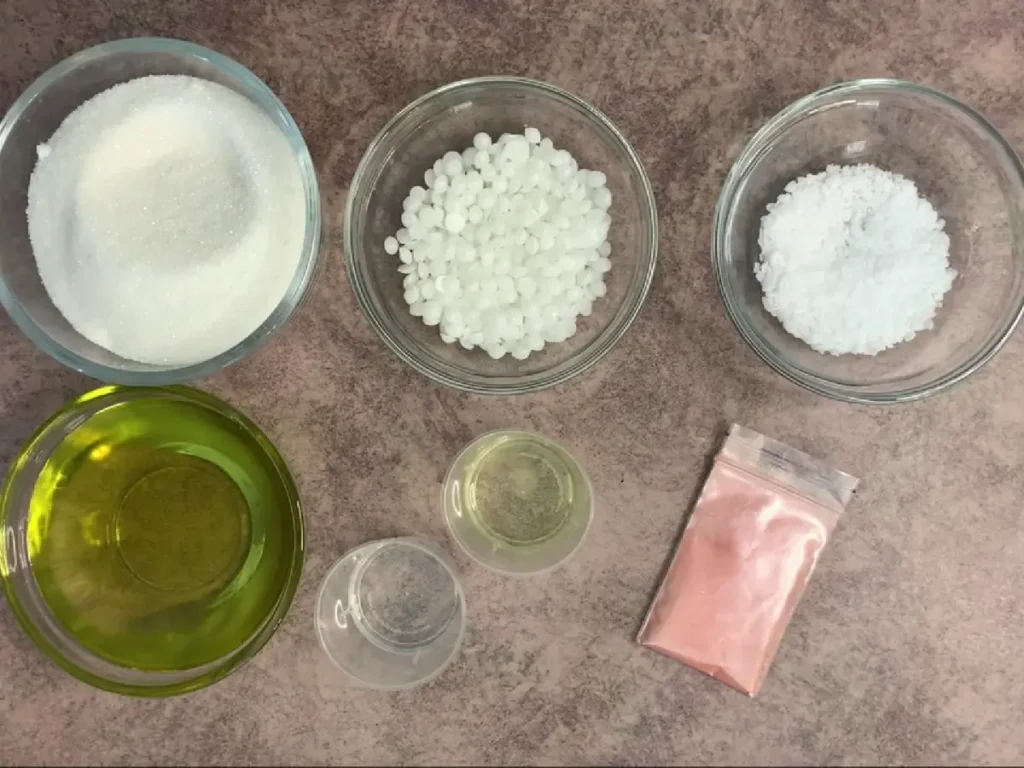
The easiest way to understand this formula is to look at the roles of the ingredients.
The sugar is your exfoliant.
The grapeseed oil provides the oil phase and gives the scrub its conditioning feel.
The emulsifying wax NF helps create the emulsified structure that allows the scrub to become creamy when water is introduced.
The stearic acid works alongside the emulsifying wax to help create the thick, rich consistency of the finished scrub.
Then you have your fragrance for scent and Liquid Germall Plus for preservation.
The result is very different from simply mixing sugar and oil together.
Emulsified Sugar Scrub Formula
Here is the formula for this version of the scrub.
| Ingredient | Percentage | Purpose |
|---|---|---|
| White granulated sugar | 55.5% | Exfoliant |
| Grapeseed oil | 30% | Provides the oil phase and conditioning feel |
| Emulsifying Wax NF | 10% | Helps create the emulsified structure |
| Stearic acid | 3% | Helps thicken and support the emulsified texture |
| Lilac & Lemon fragrance oil | 1% | Adds fragrance |
| Liquid Germall Plus | 0.5% | Preservative |
The total formula is 100%.
8 Ounce Batch
The original recipe is designed as an approximately 8-ounce batch.
| Ingredient | Weight |
|---|---|
| White granulated sugar | 4.44 oz |
| Grapeseed oil | 2.40 oz |
| Emulsifying Wax NF | 0.80 oz |
| Stearic acid | 0.24 oz |
| Lilac & Lemon fragrance oil | 0.08 oz |
| Liquid Germall Plus | 0.04 oz |
For the most accurate results, I recommend weighing the ingredients with a digital scale rather than measuring by volume.
If you’re new to working with percentages, my guide to percentages vs. grams in skincare formulation explains how percentage-based formulas work.
Ingredient Breakdown
White Granulated Sugar
Sugar is the exfoliant in this formula.
I like regular white granulated sugar because it is inexpensive, easy to find, and gives the finished scrub a noticeable but relatively simple exfoliating texture.
The size of your sugar crystals will affect how the scrub feels on your skin.
If you change the type of sugar, you may notice a difference in the finished texture and how aggressive the exfoliation feels.
For this recipe, I recommend starting with regular white granulated sugar so you know what the intended texture feels like.
Grapeseed Oil
Grapeseed oil is the carrier oil used in this recipe.
It contributes to the conditioning feel of the scrub and makes up a significant part of the oil phase.
You don’t necessarily have to use grapeseed oil every time you make an emulsified sugar scrub.
Once you understand the basic formula, you can experiment with other carrier oils.
Just remember that changing an ingredient can change the texture and feel of the finished product.
If you’re learning about formulation, my guide on what each ingredient does in skincare formulation is a helpful place to start. You might also find my How to Choose the Right Oil for Your Skin post helpful.
Emulsifying Wax NF
Emulsifying Wax NF is one of the most important ingredients in this recipe.
It helps create the emulsified structure that makes this scrub behave differently from a traditional sugar-and-oil scrub.
When water is introduced during use, the emulsifying system allows the oil and water to combine temporarily, creating that creamy, lotion-like feeling.
This is what gives an emulsified scrub its characteristic rinse-off experience.
If you’re interested in learning more about emulsifiers, see Emulsifiers in Skincare: What They Are and How They Work.
Stearic Acid
Stearic acid helps give the scrub its thick, rich consistency and works alongside the emulsifying wax.
It is not being added simply to make the recipe harder. In this formula, it contributes to the texture of the finished scrub and helps create the creamy consistency you notice during use.
Lilac & Lemon Fragrance Oil
Lilac & Lemon gives this scrub its fresh, sweet fragrance.
The formula uses the fragrance at 1%.
If you want to substitute a different fragrance, don’t automatically use it at the same percentage.
Always check the supplier’s current usage information for the specific fragrance and the type of product you are making.
Fragrance usage rates can vary considerably.
Liquid Germall Plus
Liquid Germall Plus is the preservative used in this formula at 0.5%.
A sugar scrub may look like a mostly oil-based product, but that doesn’t mean contamination isn’t a concern.
This product is designed to be used in the shower, where water can easily be introduced during use. A preservative helps protect the finished product against microbial growth.
It is also important to remember that a preservative is only one part of making a safe product. Clean equipment, appropriate packaging, good manufacturing practices, and proper formulation all matter.
For more information, see Why Preservatives Matter in DIY Skincare.
How to Make Emulsified Sugar Scrub
Step 1: Weigh Everything
Before you begin, weigh all of your ingredients.
Because this is a percentage-based formula, a digital scale is the easiest way to get accurate and repeatable results.
Make sure your equipment and work surface are clean and dry.
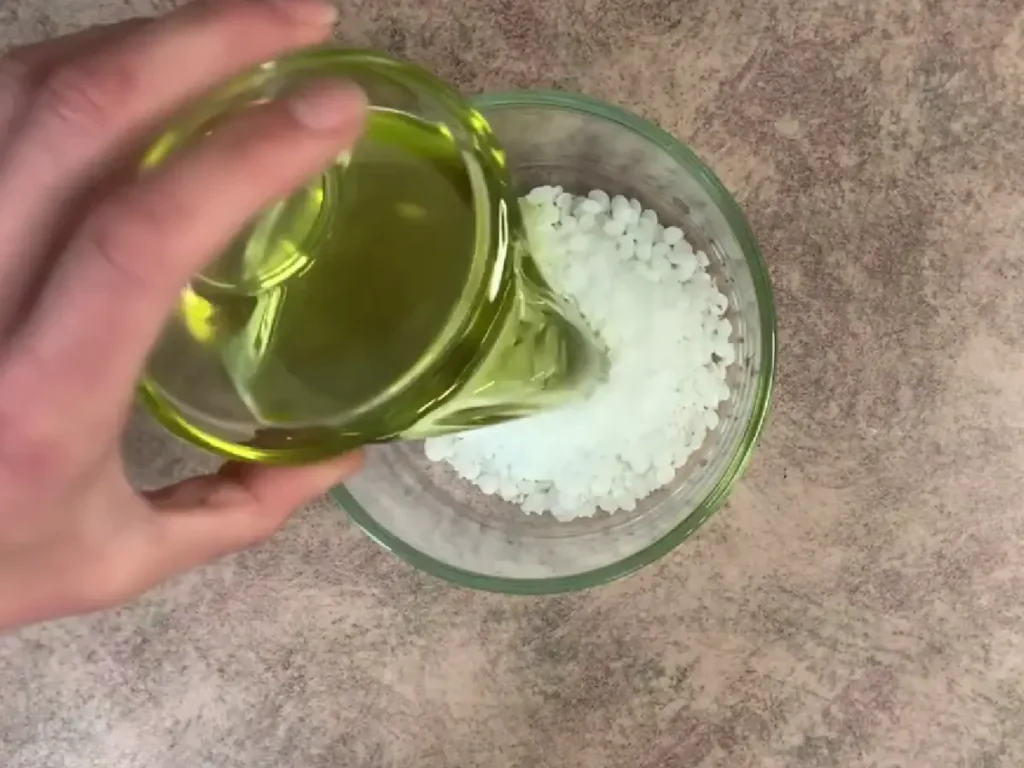
Step 2: Combine the Oil Phase
Add the following ingredients to a heat-safe container:
- Grapeseed oil
- Emulsifying Wax NF
- Stearic acid
The emulsifying wax and stearic acid need to be melted before the sugar is incorporated.
Step 3: Melt the Ingredients
Place the container in a double boiler and heat gently until the emulsifying wax and stearic acid have completely melted.
Stir as needed to help everything combine.
You want the mixture to be completely melted and uniform before moving on to the next step.
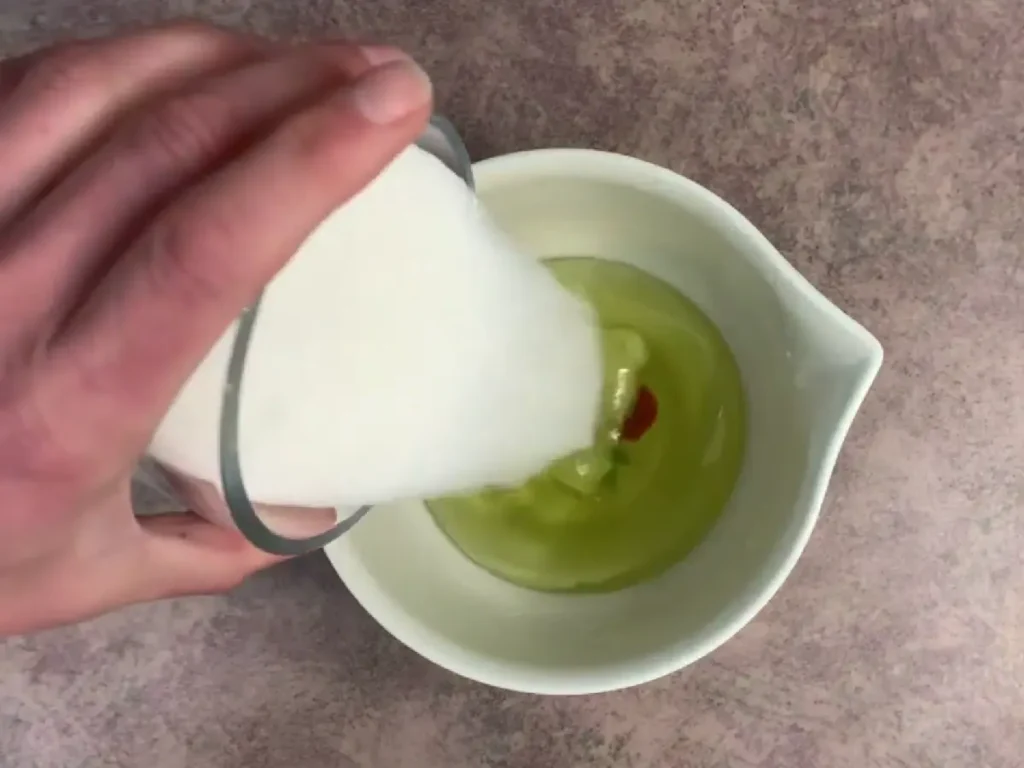
Step 4: Add the Sugar
Once the heated ingredients are completely melted, add the granulated sugar.
Mix thoroughly.
At this point, the mixture will begin to develop the thick, scrub-like consistency you’re looking for.
Make sure the sugar is evenly distributed throughout the mixture.
Step 5: Add the Fragrance and Preservative
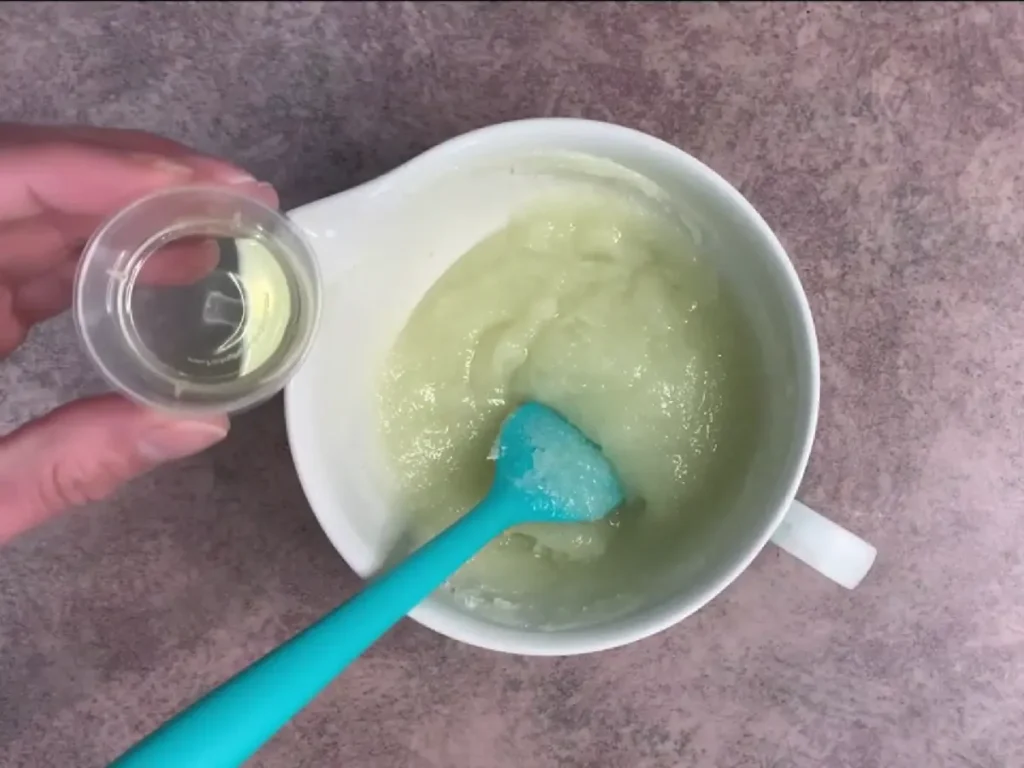
Add the Lilac & Lemon fragrance oil and Liquid Germall Plus.
Mix thoroughly so both are evenly incorporated.
Follow the supplier’s recommended usage instructions for your specific fragrance and preservative.
Step 6: Allow the Scrub to Cool
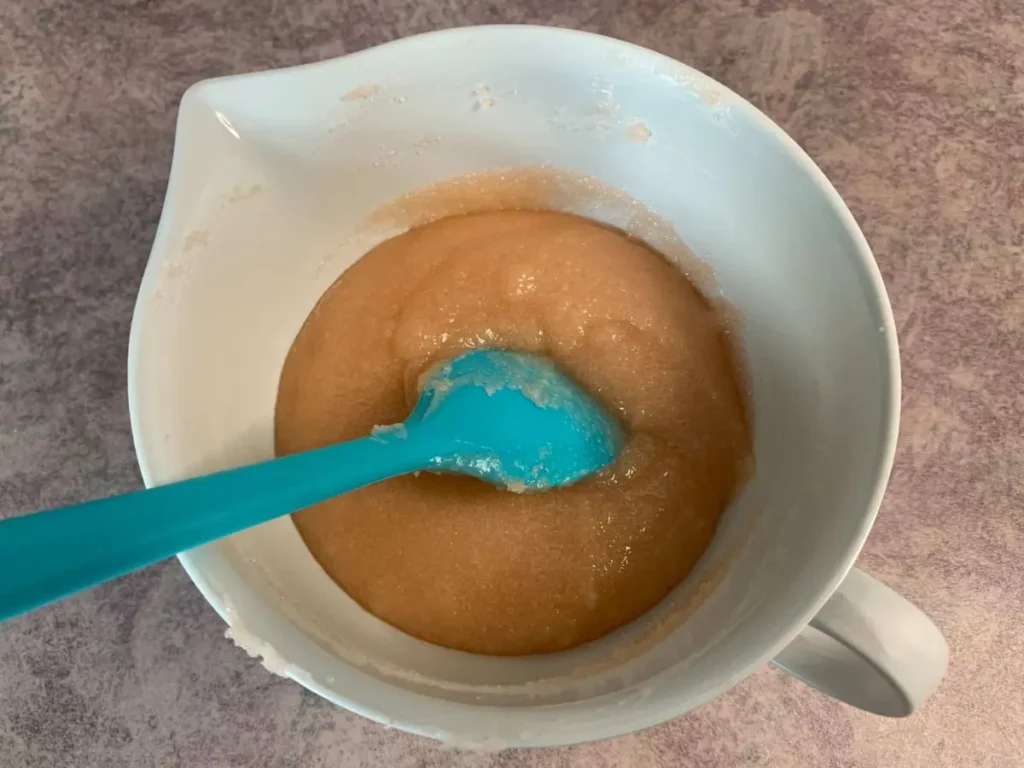
Let the scrub cool.
As it cools, the texture will continue to change and become thicker.
Once it has cooled completely, give it another thorough mix.
This helps ensure the final texture is uniform throughout the batch.
Step 7: Package Your Scrub
Transfer the finished emulsified sugar scrub into a clean, dry container.
A wide-mouth cosmetic jar works particularly well because the scrub is thick and needs to be scooped out.
Try to keep water from being introduced directly into the container during use.
What Should an Emulsified Sugar Scrub Feel Like?
One of the easiest ways to tell that you’re getting the characteristic texture of an emulsified scrub is during use.
Straight from the jar, the scrub should be thick enough to scoop.
When you massage it onto wet skin, the water combines with the emulsifying system and the scrub becomes much creamier.
Instead of feeling like you’re rubbing oil and sugar over your skin, it develops a lotion-like consistency.
That’s the part I especially like about emulsified sugar scrubs.
How to Use an Emulsified Sugar Scrub
In the shower, wet your skin first.
Scoop out a small amount of scrub and massage it gently over your skin using circular motions.
As the scrub comes into contact with water, you’ll notice the texture change.
Continue massaging gently, then rinse thoroughly.
You don’t need to apply a lot of pressure to get exfoliation from the sugar.
Avoid using the scrub on broken, irritated, or freshly shaved skin.
This is a body scrub, so I would not use this particular formulation on the face.
Why Does My Emulsified Sugar Scrub Become Creamy With Water?
That’s one of the defining characteristics of an emulsified scrub.
The formula contains an emulsifying system made with Emulsifying Wax NF and stearic acid.
When the finished scrub comes into contact with water during use, that system allows the oil and water to temporarily combine, changing the way the scrub feels.
Instead of remaining an oily mixture, it becomes creamy and lotion-like.
This is also why an emulsified scrub can rinse differently from a traditional sugar scrub.
Can I Use a Different Carrier Oil?
Yes, you can experiment with other carrier oils.
Grapeseed oil is simply the oil used in this particular formula.
Different oils can change the way the finished scrub feels, so I recommend changing one variable at a time when you’re experimenting.
That way, you can actually tell what caused the difference in texture or skin feel.
Some oils will also have different stability characteristics, so take that into consideration when modifying a formula.
Can I Change the Fragrance?
Yes.
You can replace the fragrance with another fragrance that is approved for use in this type of product.
However, don’t assume that every fragrance can be used at 1%.
Always check the supplier’s current usage rate for the fragrance and the specific product category.
Can I Add Mica?
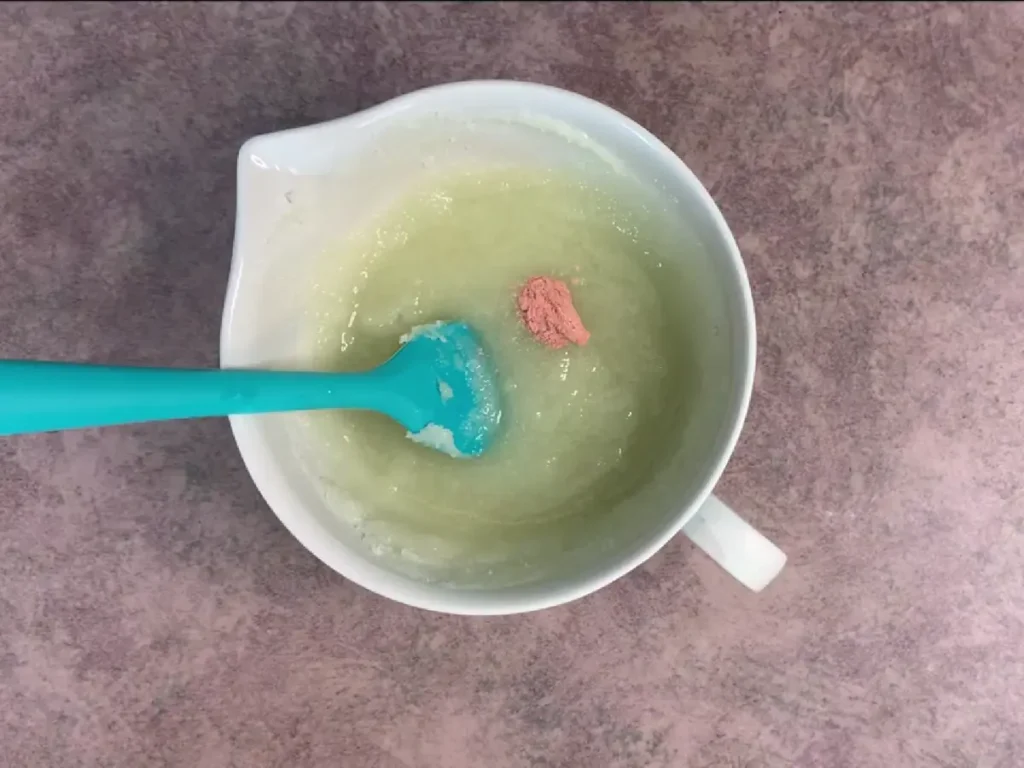
Yes, if you want to add color.
Mica is not necessary for the function of the scrub, so it can be treated as an optional addition.
If you add mica, use a small amount and mix it thoroughly.
Remember that mica can affect the appearance of the product during use, particularly if you use a large amount.
Tips for Making a Better Emulsified Sugar Scrub
Use a scale
This is especially important when working with a formula that contains an emulsifier and preservative.
Weighing your ingredients gives you much more consistent results than measuring by volume.
Make sure the heat-phase ingredients are completely melted
If the emulsifying wax or stearic acid has not fully melted, you may not get the texture you’re expecting.
Take the time to make sure the heated phase is completely uniform before adding the sugar.
Mix thoroughly
The ingredients need to be evenly distributed throughout the scrub.
Don’t rush the mixing process, particularly after adding the sugar, fragrance, and preservative.
Let it cool completely
The texture of an emulsified scrub changes as it cools.
Don’t judge the final consistency while the mixture is still warm.
Allow it to cool completely and then mix again before packaging.
Keep water out of the jar
Even though the scrub is designed to be used with water, you don’t want to introduce shower water directly into the container.
Scoop out what you need and keep the container closed between uses.
This helps reduce unnecessary contamination.
How to Store Emulsified Sugar Scrub
Store the finished scrub in a clean, dry, airtight container.
Keep it away from unnecessary heat and moisture and follow the storage recommendations for the ingredients you’re using.
Because homemade cosmetic products can be affected by formulation, packaging, storage conditions, and contamination during use, don’t assign a shelf life simply because the product still looks or smells normal.
You can learn more about this in How Do You Determine the Shelf Life of Homemade Cosmetics?.
Can You Make This Sugar Scrub Without an Emulsifier?
Technically, you can make a sugar scrub without an emulsifier, but it would no longer behave like this recipe.
A simple sugar-and-oil scrub will have a different texture and rinse-off experience.
The emulsifier is an important part of what makes this particular scrub creamy when water is introduced.
If what you’re looking for is a traditional oil-based scrub, you don’t need to use this same structure.
If you want the creamy, lotion-like rinse-off experience, the emulsified structure is what makes that possible.
Emulsified Sugar Scrub vs. Traditional Sugar Scrub
The biggest difference comes down to how the scrub behaves when water is introduced.
| Emulsified Sugar Scrub | Traditional Sugar Scrub |
|---|---|
| Contains an emulsifying system | Usually sugar + oil |
| Becomes creamy with water | Remains more oil-based |
| Rinses more cleanly | Can leave more oil behind |
| Requires more formulation steps | Usually simpler to make |
| Requires heating to melt the emulsifier | May not require heating |
| More complex formulation | Simpler beginner formula |
Neither approach is inherently better for every person.
They simply create different types of products.
If you enjoy the creamy, lotion-like feel and cleaner rinse of an emulsified scrub, this type of formula is worth trying.
Is This a Good Beginner Formulation?
I would consider this a good next step after learning the basics of simple sugar scrubs.
It is not as simple as combining sugar and oil because you’re working with a heated phase, an emulsifying system, and a preservative.
But it is also a great way to start understanding why formulation is more than simply mixing ingredients together.
You’re getting to see how an emulsifier changes the behavior of a product and how the different ingredients work together to create a specific texture and user experience.
If you’re new to formulation, start with my Skincare Formulation for Beginners guide.
Frequently Asked Questions
What is an emulsified sugar scrub?
An emulsified sugar scrub is a sugar scrub that contains an emulsifying system. When water is introduced during use, the scrub becomes creamy and lotion-like, making it easy to spread and rinse.
What does emulsifying wax do in a sugar scrub?
Emulsifying wax helps create the structure that allows the oil phase and water to combine during use. It is what helps give an emulsified sugar scrub its creamy rinse-off feel.
Why use stearic acid in a sugar scrub?
Stearic acid helps thicken the scrub and contributes to the rich, creamy consistency of the finished product while working alongside the emulsifying wax.
Does an emulsified sugar scrub need a preservative?
For this formulation, yes. The product is intended to be used with water and can be exposed to water during use, so the formula includes Liquid Germall Plus at 0.5%.
Can I use another oil instead of grapeseed oil?
Yes. You can experiment with other carrier oils, although changing the oil can change the finished texture and skin feel.
Can I use another fragrance?
Yes, provided the fragrance is approved for use in the type of product you’re making. Always check the supplier’s current usage rate.
Why does my emulsified sugar scrub feel like lotion in the shower?
That’s the intended behavior. Water activates the emulsifying system, allowing the oil and water to temporarily combine and giving the scrub its creamy, lotion-like feel.
Can I use this emulsified sugar scrub on my face?
I recommend keeping this formulation as a body scrub. Facial skin can be more sensitive, and facial exfoliating products should be formulated specifically for facial use.
More DIY Sugar Scrub Recipes
If you enjoy making sugar scrubs, check out my DIY Sugar Scrub Recipes for more ideas and different types of sugar scrub formulations.
If you’re learning how individual ingredients work, my guide to What Each Ingredient Does in Skincare Formulation is another useful resource.
You may also want to learn more about Emulsifiers in Skincare: What They Are and How They Work.
Emulsified Sugar Scrub Printable Recipe
Emulsified Sugar Scrub Recipe
Equipment
- Scale
- Double boiler
Ingredients
- 4.44 ounce | 55.5% White Granulated Sugar
- 2.40 ounce | 30% Grapeseed Oil
- 0.80 ounce | 10% Emulsifying Wax NF
- 0.24 ounce | 3% Stearic Acid
- 0.08 ounce | 1% Lilac & Lemon Fragrance Oil
- 0.04 ounce | 0.5% Preservative
Instructions
- Weigh out all of your ingredients.
- Put the shea butter, emulsifying wax, steric acid and grapeseed oil into a heat safe container.
- Melt on a double boiler until completely melted.
- Add in the sugar and mix well.
- Add fragrance oil and preservative, then mix well.
- Allow the scrub to cool completely then mix again.
- Package.
Hi there:
I would love to try this receipe. I notice you said add the
shea butter which was not included in the ingredients receipe. How much shea do you put in for this scrub?
Thank you so much for your help.
You forgot the Shea…
You could add shea butter if you would like 🙂
Pingback: Foaming Bath Butter (Whipped Soap Base) From Scratch - Summer Rain