

If your hair is looking a little greasy but you aren’t ready to wash it, homemade dry shampoo is an easy way to refresh your roots between washes.
You only need two simple ingredients to make the basic version, and you can customize the color with a little cocoa powder or activated charcoal to better match your hair.
I started making my own dry shampoo because I don’t wash my hair every day. I typically wash it once a week, and by the end of the week, my roots are definitely ready for a refresh. Since I also spend time recording videos for my blog, having something quick and easy to use between washes is helpful.
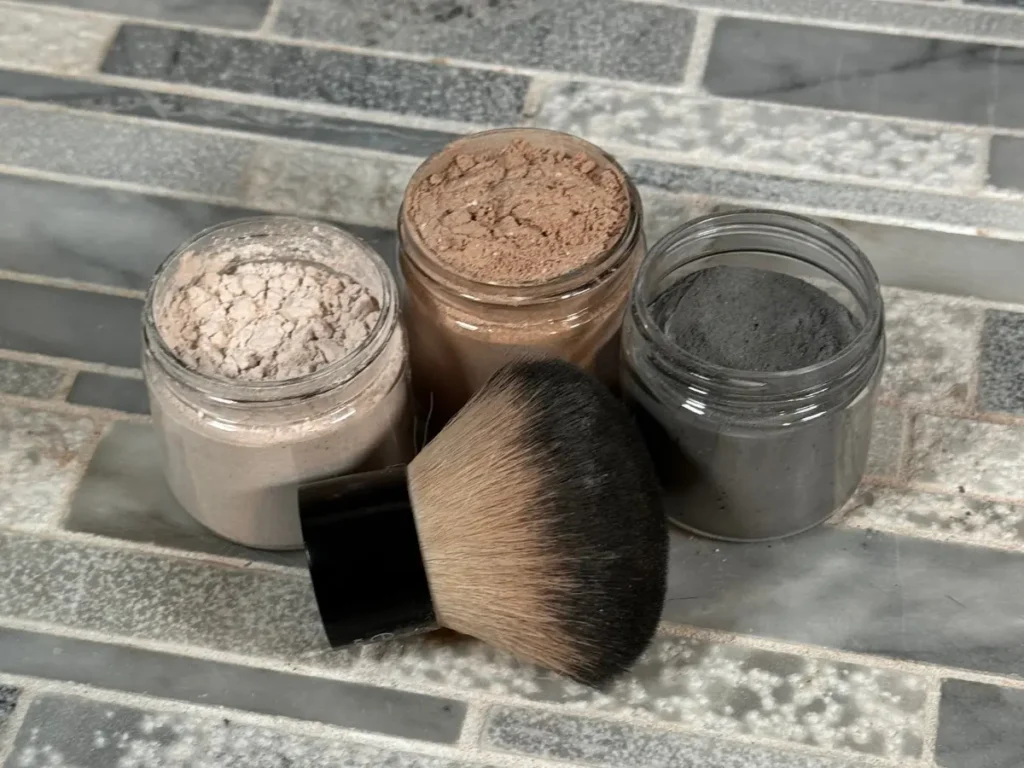
Store-bought dry shampoos are convenient, but making your own is inexpensive and gives you control over the ingredients. Plus, you probably already have the main ingredients in your kitchen!
In this tutorial, I’ll show you how to make dry shampoo, how to customize it for different hair colors, and how to apply it without leaving a powdery residue.
Prefer to watch this project instead of reading it?
Some of the links are affiliate links because I am an associate, and I earn a small commission on them. There is no additional cost to you; I earn a commission if you click through and make a purchase.
Why Make Your Own Dry Shampoo?
Dry shampoo is designed to absorb excess oil at the roots of your hair. It doesn’t actually clean your hair the way regular shampoo does, but it can help reduce the appearance of greasy roots and make your hair look fresher between washes.
Making your own has a few advantages:
Simple ingredients: The basic recipe uses just two ingredients.
Budget-friendly: You can make several applications from a small amount of ingredients.
Customizable: Adjust the color to better blend with your natural hair.
Easy to make: There is no heating, special equipment, or complicated mixing involved.
Convenient: Keep a small container in your bathroom for those days when you need a quick refresh.
When it’s time for a proper wash, you can also try my homemade shampoo bar recipe.
Dry Shampoo Ingredients
The basic dry shampoo recipe uses an absorbent powder to help soak up excess oil. You can then adjust the color depending on your hair.
Cornstarch
Cornstarch is the main ingredient in this homemade dry shampoo.
It is a fine, absorbent powder that helps soak up excess oil around your roots. When you apply a small amount to oily areas, it helps reduce the greasy appearance of your hair without needing to wash it.
Cornstarch also has a light color, making it a good starting point for blond, silver, and light-colored hair.
You can also use arrowroot powder as an alternative if you prefer.
Cocoa Powder
Cocoa powder is an optional ingredient that helps darken the color of your dry shampoo.
If you have medium brown or darker brown hair, adding a little unsweetened cocoa powder can help the powder blend more naturally with your roots.
Start with a very small amount and gradually add more until you get a shade that works for your hair.
Use unsweetened cocoa powder rather than sweetened!
Activated Charcoal
Activated charcoal is another optional colorant for darker hair.
It is a very fine black powder, so you only need a tiny amount to noticeably change the color of your dry shampoo.
Activated charcoal can be useful for very dark brown or black hair when cocoa powder alone isn’t dark enough.
Be careful when working with it because the fine powder can become airborne and easily stain clothing, countertops, and other surfaces.
How to Customize Homemade Dry Shampoo for Your Hair Color
One of the nice things about making your own dry shampoo is that you can adjust the color to suit your hair.
You don’t want to apply a white powder to dark roots and end up with a dusty appearance. A little customization can make a big difference.
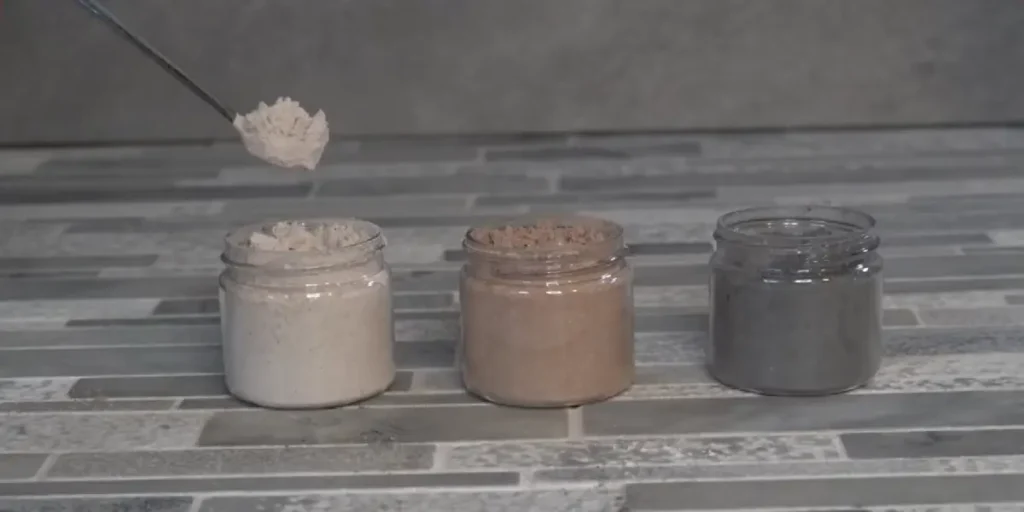
Here are some starting points:
| Hair Color | Suggested Ingredients |
|---|---|
| Light blonde | Cornstarch or arrowroot powder |
| Gray or silver | Cornstarch or arrowroot powder |
| Dark blonde | Cornstarch with a small amount of cocoa powder |
| Light to medium brown | Cornstarch mixed with cocoa powder |
| Dark brown | Cocoa powder with cornstarch |
| Black | Cornstarch with a very small amount of activated charcoal |
I recommend mixing a small batch first and testing it on a section of hair. You can always add more cocoa powder or activated charcoal, but removing too much colorant is not as easy.
How to Make Dry Shampoo at Home
Making this recipe couldn’t be easier. There is no heating or complicated preparation involved.
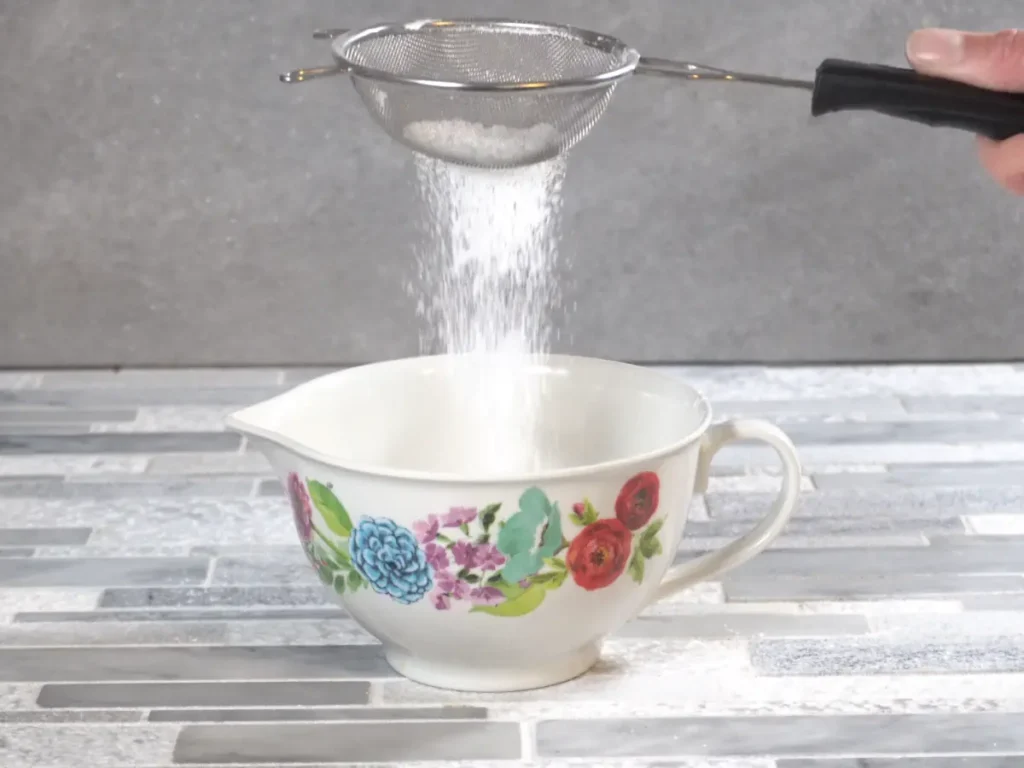
Step 1: Sift the mixture
Use a fine-mesh strainer to remove any clumps and create a smooth, even powder.
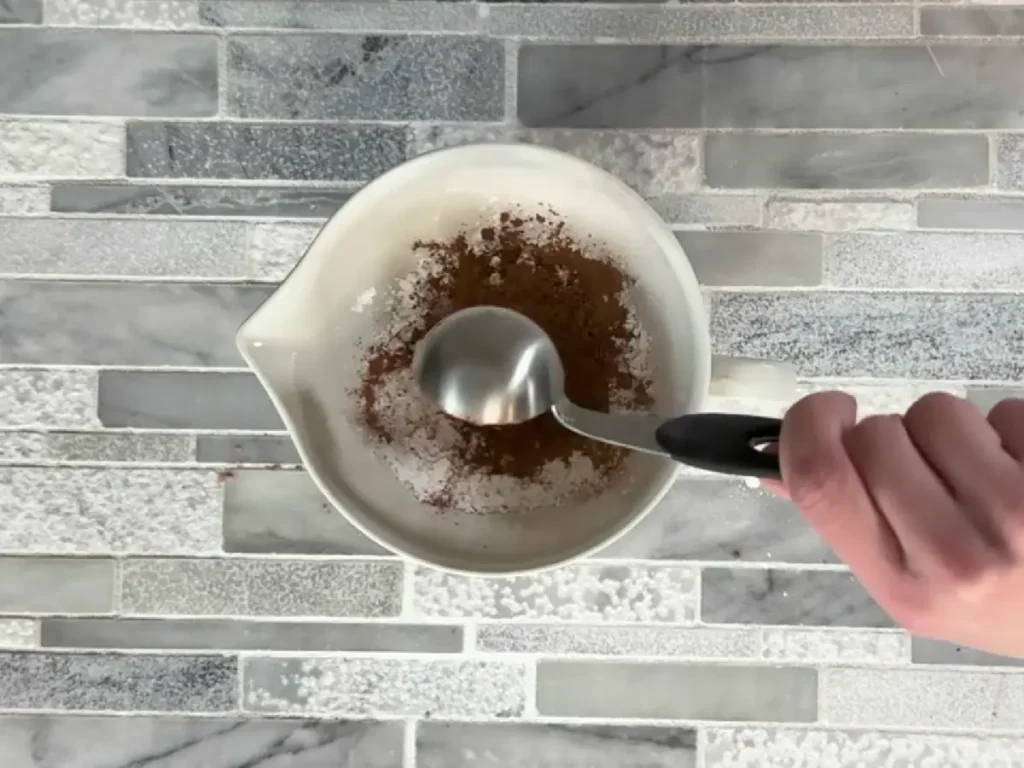
Step 2: Combine the ingredients
Measure your cornstarch into a small, clean, dry bowl.
If you are making a darker version, add a little unsweetened cocoa powder or activated charcoal.
Step 3: Mix thoroughly
Stir the ingredients until the color is evenly distributed.
You don’t want concentrated pockets of cocoa powder or charcoal because they can leave darker spots when applied to your hair.
Step 4: Transfer to a storage container
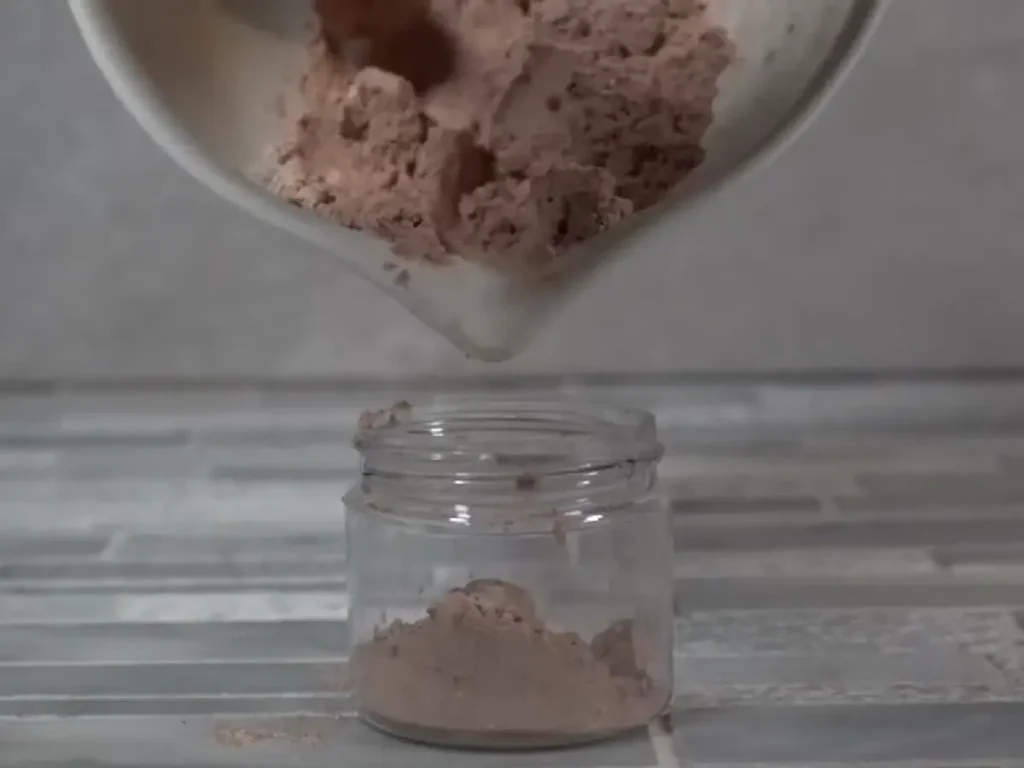
Place your finished dry shampoo in a clean, completely dry, airtight container.
You can use a small jar or another container that makes it easy to access the powder with a makeup brush.
That’s it! Your homemade dry shampoo is ready to use.
How to Apply Dry Shampoo Correctly
Applying dry shampoo properly is just as important as making it. One of the biggest mistakes is using too much powder at once.
A little goes a long way, especially if you have fine hair or are using a darker-colored mixture.
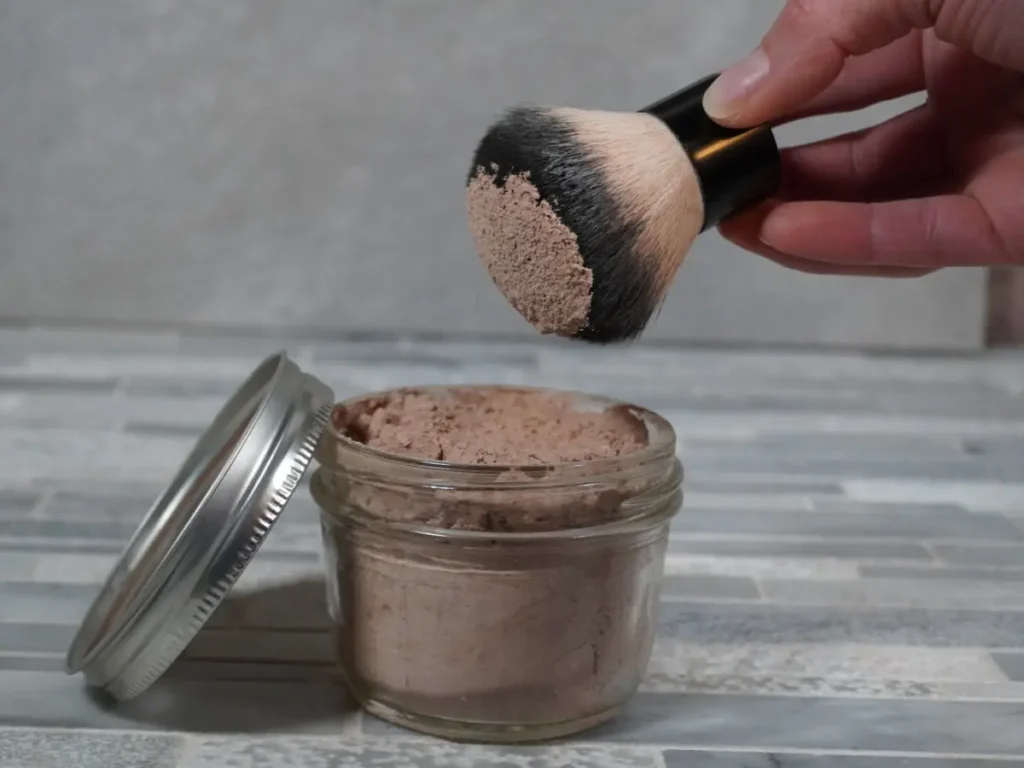
I like using a kabuki makeup brush because it gives me more control over where the powder goes.
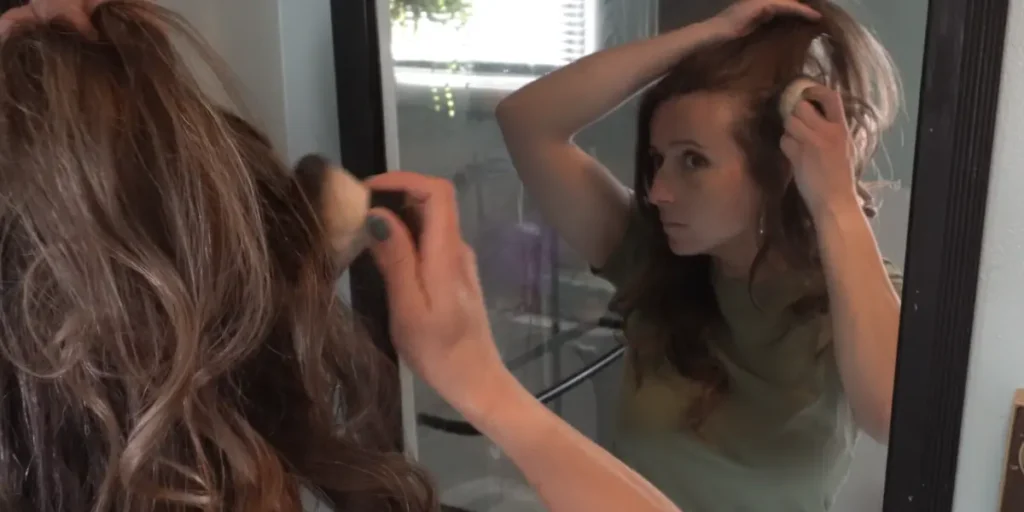
Here’s how I apply it:
Step 1: Dip your kabuki brush into the dry shampoo.
Step 2: Gently tap the brush against the edge of the container to remove excess powder. You only want a light coating on the brush.
Step 3: Part your hair and lightly apply the powder directly to your roots, concentrating on the areas that tend to get oily.
Step 4: Use your fingertips to gently work the powder into your roots and distribute it through your hair.
Step 5: Give the powder a little time to absorb excess oil, then brush or style your hair as usual.
If you can still see powder in your hair, use your fingers or a brush to distribute it further.
You can always add a little more if needed, but starting with less helps prevent a powdery buildup.
Tips for Making and Using Homemade Dry Shampoo
A few small details can make your homemade dry shampoo easier to use and help you get better results.
Sift your ingredients: Use a fine-mesh strainer to remove clumps and create a smooth powder.
Add color gradually: Cocoa powder and activated charcoal can change the color quickly. Start with a small amount and adjust as needed.
Apply sparingly: Too much dry shampoo can leave visible residue and make your hair feel heavy.
Use a makeup brush: A kabuki brush makes it easier to apply the powder directly to your roots without making a mess.
Keep it dry: Moisture can cause the powder to clump, so always use a dry brush and store the mixture in an airtight container.
Avoid inhaling the powder: Work gently when mixing and applying fine powders, especially activated charcoal.
How Long Does Homemade Dry Shampoo Last?
When stored in a clean, airtight container and kept away from moisture, homemade dry shampoo should last approximately 6 months.
Because this recipe contains only dry ingredients and no added water, it doesn’t require a conventional preservative.
However, always use clean, dry utensils when handling the mixture. If moisture gets into the container or you notice an unusual smell, discoloration, or changes in texture, discard it and make a fresh batch.
Frequently Asked Questions
Can I use homemade dry shampoo every day?
I wouldn’t recommend relying on dry shampoo every day. It absorbs excess oil, but it doesn’t remove dirt, sweat, or product buildup the way regular shampoo does.
Use it occasionally between washes rather than as a replacement for washing your hair. If you find yourself needing it constantly, it may be time to adjust your washing routine.
Is cornstarch or arrowroot powder better for dry shampoo?
Both work well as absorbent powders in homemade dry shampoo. Cornstarch is inexpensive and readily available in most kitchens, while arrowroot powder is another fine-textured option.
You can use either one as the base for this recipe.
Can I use cocoa powder in dry shampoo?
Yes! Unsweetened cocoa powder is a useful way to darken homemade dry shampoo for brown hair.
Start with a small amount and mix thoroughly. You want the finished powder to blend with your roots without leaving noticeable brown residue.
Can I use dry shampoo on black hair?
Yes. You can experiment with a small amount of activated charcoal to darken the mixture. Add it gradually because it is highly pigmented and can easily make the mixture too dark.
Test a small amount on your hair before applying it more broadly.
Does homemade dry shampoo actually clean your hair?
No. Dry shampoo absorbs some of the excess oil that makes your roots look greasy, but it doesn’t wash away dirt, sweat, or styling products.
Think of it as a quick refresh between regular washes rather than a substitute for shampoo.
How should I store homemade dry shampoo?
Store your dry shampoo in a clean, airtight container in a cool, dry location. Keep moisture out of the mixture and use a clean, dry makeup brush when applying it.
I recommend making a small batch so you can use it while it is fresh.
Printable Dry Shampoo Recipe
How to make Dry Shampoo at home! (recipe for EVERY hair color)
Equipment
- Sifter
Ingredients
- 2 T Cornstarch
- Dash of essential oils (optional)
Blonde Hair
- 1 t Cocoa powder
Brown Hair
- 1 T Cocoa powder
Black Hair
- 1 t Cocoa powder
- 1 t Activated charcoal
Instructions
- Sift all ingredients.
- Mix the cornstarch with the cocoa powder and/or activated charcoal.
- Store in an airtight container.
Video
Summer Rain Community
If you enjoy making your own bath, body, and hair care products, explore more DIY projects here at Summer Rain.
You can also follow along for new recipes, tutorials, and behind-the-scenes projects.
Facebook: https://facebook.com/summerrain.website/
Pinterest: https://www.pinterest.com/summerrainblog/