

One of the most common questions when making soy candles is how much fragrance oil to add. You want enough fragrance to create a candle with a beautiful scent, but adding more oil doesn’t always mean a stronger-smelling candle. So how do you determine how much you need?
Understanding fragrance load helps you calculate the right amount of fragrance oil for your soy wax, make consistent batches, and troubleshoot problems such as weak scent throw or oil sweating.
In this guide, I’ll explain what fragrance load means, how to calculate it, how to choose a suitable percentage for your soy wax, and what to do if your candle doesn’t smell as strong as you’d like.
What Is Fragrance Load in Soy Candles?
Fragrance load is the amount of fragrance oil added in relation to the weight of the soy wax. It’s expressed as a percentage.
For example, an 8% fragrance load means adding 8 g of fragrance oil for every 100 g of soy wax.
The percentage is calculated using the weight of the wax, not the combined weight of the wax and fragrance oil.
This is important because candle recipes often list fragrance load as a percentage. Once you understand how that percentage works, you can scale a recipe to make a single test candle or a larger batch.
Why Is Fragrance Load Important?
Choosing an appropriate fragrance load is an important part of making soy candles. The amount of fragrance oil can affect scent performance, the appearance of the finished candle, and how consistently it burns.
It helps you get the best scent throw
Scent throw describes how well a candle releases its fragrance. Cold throw is the scent you notice when the candle is unlit, while hot throw is the fragrance released as it burns.
Adding more fragrance oil doesn’t automatically improve either one. Soy wax, fragrance oil compatibility, wick selection, mixing, and curing can all affect the finished result.
If your soy candle smells weak when burning, increasing the fragrance load isn’t necessarily the answer.
Read my guides on how to make a strong-scented soy candle and how to increase hot throw in soy candles for more troubleshooting advice.
It helps prevent formulation problems
Using more fragrance oil than your soy wax can accommodate may contribute to problems such as oil sweating, inconsistent burning, or a candle that doesn’t perform as expected.
Always check the recommended fragrance load for your specific soy wax. Typically it is up to 10% for soy wax. Different soy wax formulations have different specifications, so a percentage that works for one wax may not be appropriate for another.
It helps you make consistent batches
Once you’ve found a fragrance load that works well with your chosen soy wax and fragrance oil, recording your measurements makes it easier to repeat the recipe.
Keeping notes on your fragrance percentage, wick, curing time, and burn-test results also helps you identify what changes improve your candle.
How to Calculate Fragrance Load for Soy Wax
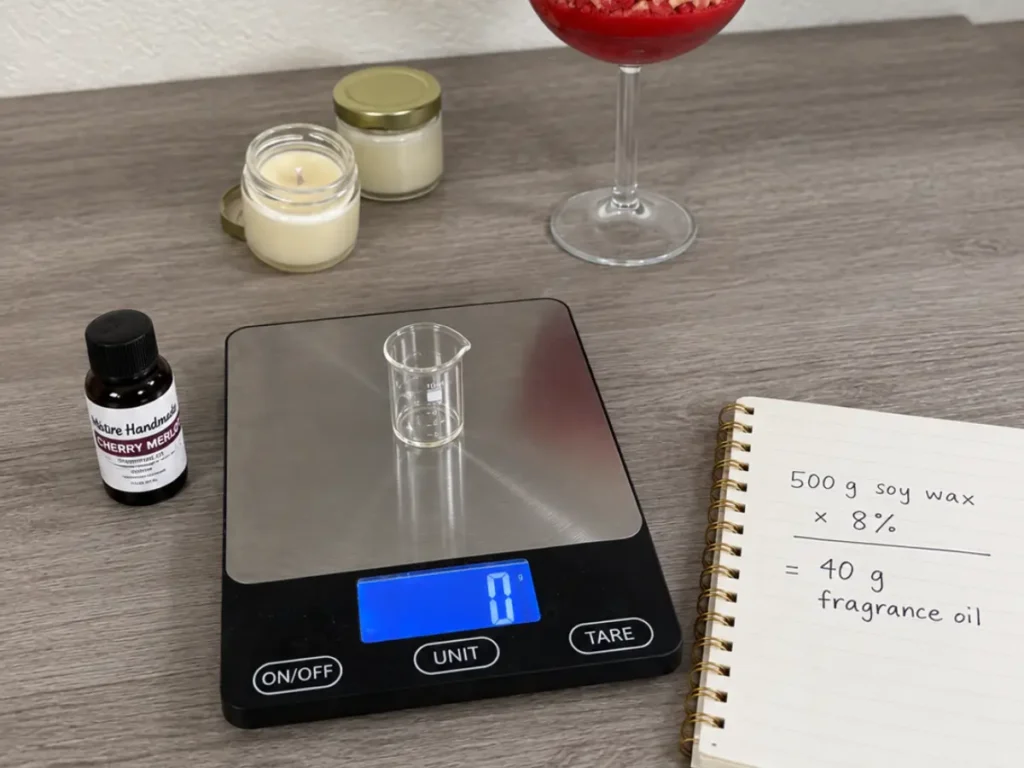
Calculating fragrance load is simple. You need to know the weight of your soy wax and the percentage of fragrance oil you want to use.
To calculate the amount of fragrance oil, multiply the weight of your soy wax by your desired fragrance percentage expressed as a decimal.
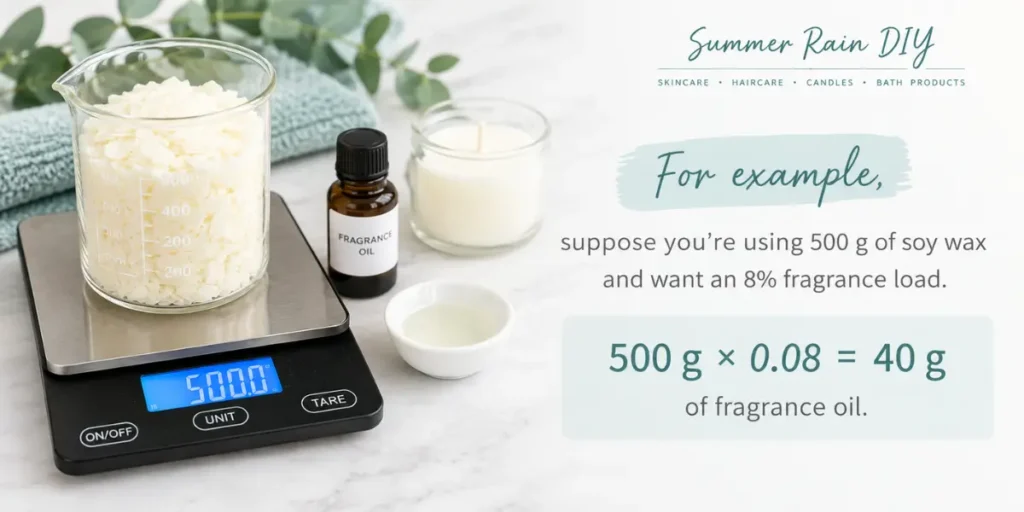
For example, suppose you’re using 500 g of soy wax and want an 8% fragrance load.
500 g × 0.08 = 40 g of fragrance oil.
You would use:
- 500 g soy wax
- 40 g fragrance oil
To convert a percentage to a decimal, divide it by 100. For example, 6% becomes 0.06, 8% becomes 0.08, and 10% becomes 0.10.
That’s all you need to calculate fragrance oil for most soy candle recipes.
Soy Candle Fragrance Load Chart
Use this chart to see how much fragrance oil you would need for different amounts of soy wax. This is assuming you wax has a max fragrance load of 10%.
| Soy wax weight | 6% fragrance load | 8% fragrance load | 10% fragrance load |
|---|---|---|---|
| 100 g | 6 g | 8 g | 10 g |
| 200 g | 12 g | 16 g | 20 g |
| 500 g | 30 g | 40 g | 50 g |
| 1,000 g | 60 g | 80 g | 100 g |
These are calculation examples, not recommendations for every soy wax. Before choosing a fragrance percentage, check the manufacturer’s recommended fragrance load for your particular wax and the supplier’s specifications for your fragrance oil.
You can use the same method for small test batches and larger batches. The amount of fragrance oil changes with the weight of the soy wax.
How to calculate fragrance oil in ounces
If you prefer to work in ounces, you can use the same calculation. Just weigh both the soy wax and fragrance oil using the same unit.
For example, if you’re using 16 oz of soy wax and want an 8% fragrance load, you would need 1.28 oz of fragrance oil.
You don’t have to convert everything to grams if you’re comfortable working in ounces. I personally like to use grams because it is more accurate when working in smaller batches.
What Is the Maximum Fragrance Load for Soy Wax?
There isn’t one maximum fragrance load that applies to every soy wax.
The maximum fragrance load for soy wax is typically around 6–10% by weight, depending on the specific wax. Some soy waxes allow higher percentages, but you should always follow the maximum fragrance load specified by your wax manufacturer.
Some soy waxes are designed to accommodate higher fragrance loads than others. However, a stated maximum is a limit, not a guarantee that every fragrance oil will perform well at that percentage.
Before making a batch, check:
- The maximum fragrance load specified by your soy wax manufacturer.
- The fragrance oil supplier’s recommendations and applicable usage restrictions.
- Whether your chosen fragrance performs well in that particular soy wax.
- How the finished candle looks and burns during testing.
If your wax allows a particular fragrance load, you can test different percentages within the recommended limits to see which gives you the best overall results.
Don’t assume that using the maximum amount will produce the strongest hot throw. A lower fragrance load may perform just as well or better with a particular wax and fragrance combination.
Does More Fragrance Oil Make Soy Candles Smell Stronger?
Not necessarily. Increasing fragrance load is only one variable in candle formulation.
If a soy candle has weak hot throw, consider the following factors before adding more fragrance oil.
Fragrance oil selection
Not every fragrance oil performs equally well in soy wax. Some fragrances have a stronger cold throw but a less noticeable hot throw, while others perform better when the candle is burning.
When testing a new fragrance, follow the supplier’s recommendations and evaluate the finished candle rather than judging it by the fragrance oil alone.
I like to use quality fragrance oils, I strongly recommend Nurture Handmade and Northwood Candles. There are a lot more reputable sites, these are just my two favorite places to get fragrance oil.
Wick size
The wick affects how the candle burns and how the melt pool develops. An unsuitable wick can affect fragrance release and overall candle performance.
If you’re experimenting with different fragrance loads, keep the wick consistent during your initial comparisons. This helps you determine whether the fragrance percentage is making a difference.
Mixing and temperature
Follow your soy wax manufacturer’s recommended temperature for adding fragrance oil and its mixing instructions. The appropriate temperature can vary between wax formulations.
Mix the fragrance thoroughly and consistently so you can compare batches fairly.
Curing time
Soy wax candles benefit from a curing period before testing. Soy wax candles, waiting 1–2 weeks before evaluating scent throw is a good starting point. Testing too soon may not give you an accurate picture of the candle’s hot throw.
Follow the wax supplier’s guidance and compare candles after the same curing period.
For more help, see my guide on how to increase hot throw in soy candles.
What Happens If You Add Too Much Fragrance Oil to Soy Wax?
Adding more fragrance oil than your soy wax can accommodate may lead to several problems.
Oil sweating
Oil sweating occurs when oily droplets appear on the candle’s surface. Excess fragrance oil can contribute to this problem, although temperature changes and other formulation factors can also play a role.
If you notice sweating, check your fragrance load against the wax manufacturer’s recommendations. Also consider how the candle was mixed, cooled, and stored.
Poor burning performance
A fragrance load that is unsuitable for your wax can affect how the finished candle performs. Problems may include an inconsistent burn or a candle that does not behave as expected during testing.
Don’t assume the fragrance percentage is the only cause. Wick selection, container size, and the properties of the fragrance oil also matter.
Inconsistent results
If you keep increasing the fragrance load without recording your results, it becomes difficult to determine what is actually improving or worsening your candles.
Change one variable at a time and record your observations. That makes troubleshooting much more useful.
How to Weigh Fragrance Oil for Soy Candles
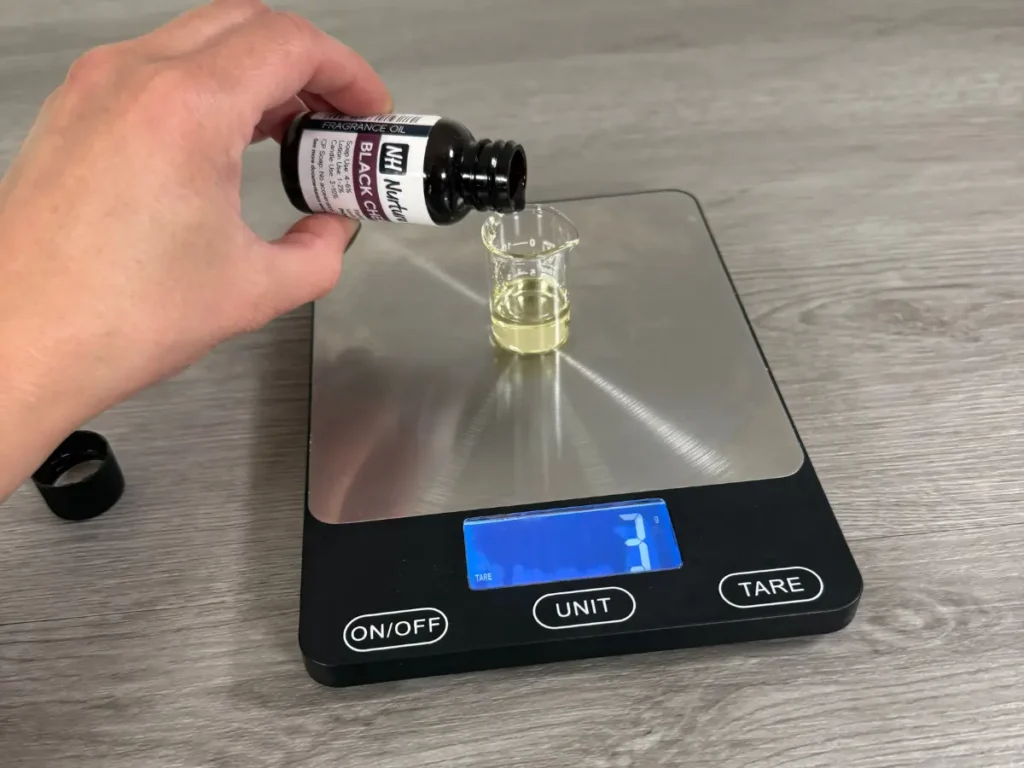
For consistent results, use a digital scale to weigh both the soy wax and fragrance oil.
Weighing is more reliable than measuring fragrance oil by teaspoons or fluid ounces because fragrance oils can have different densities.
Follow these steps:
Weigh the amount of soy wax required for your recipe.
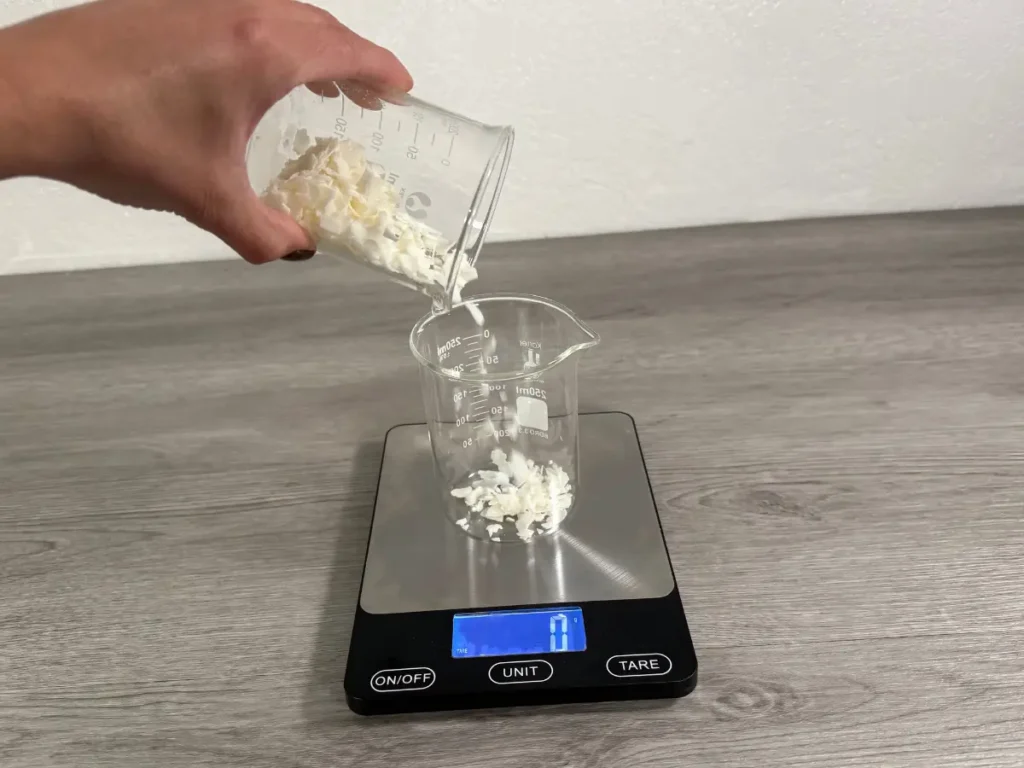
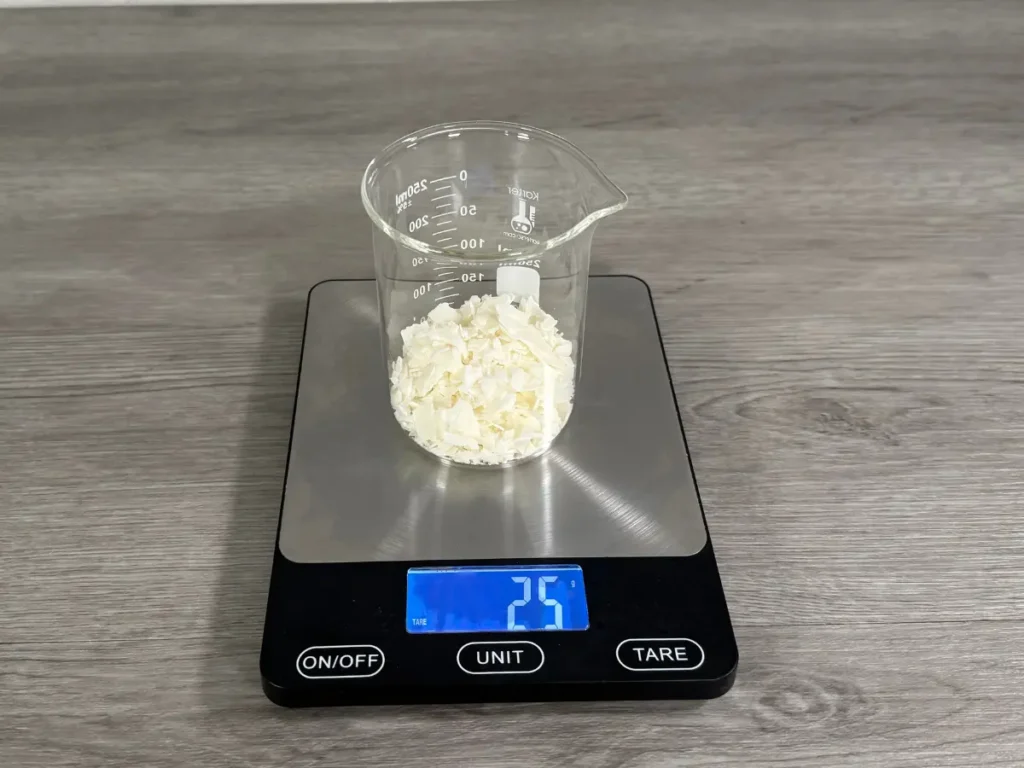
Calculate the fragrance oil needed for your chosen percentage.
25 grams x 8% = 2 grams
Weigh the fragrance oil separately.
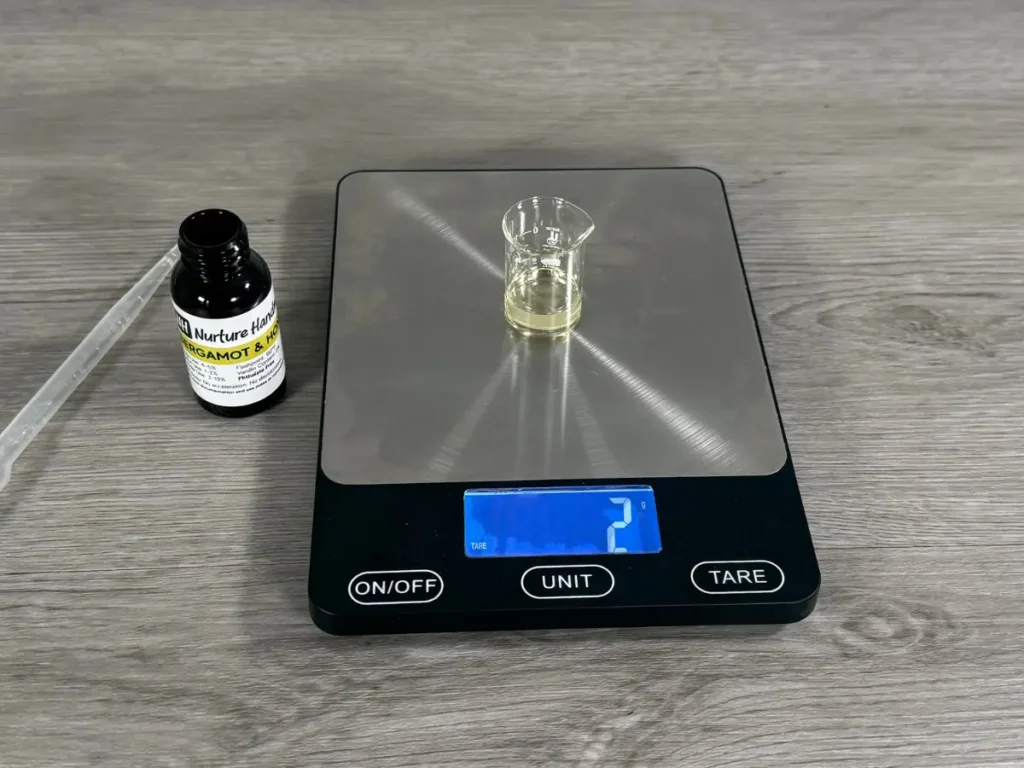
Add it at the temperature recommended by your soy wax manufacturer.
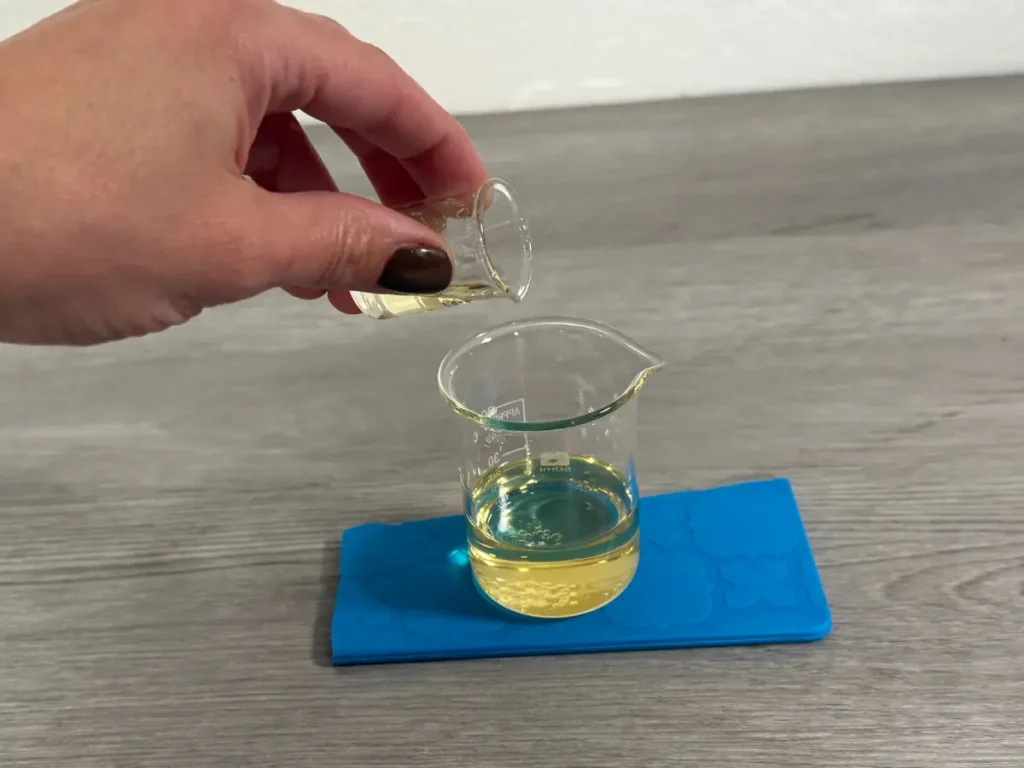
Mix it into the wax. Like a very good mix.
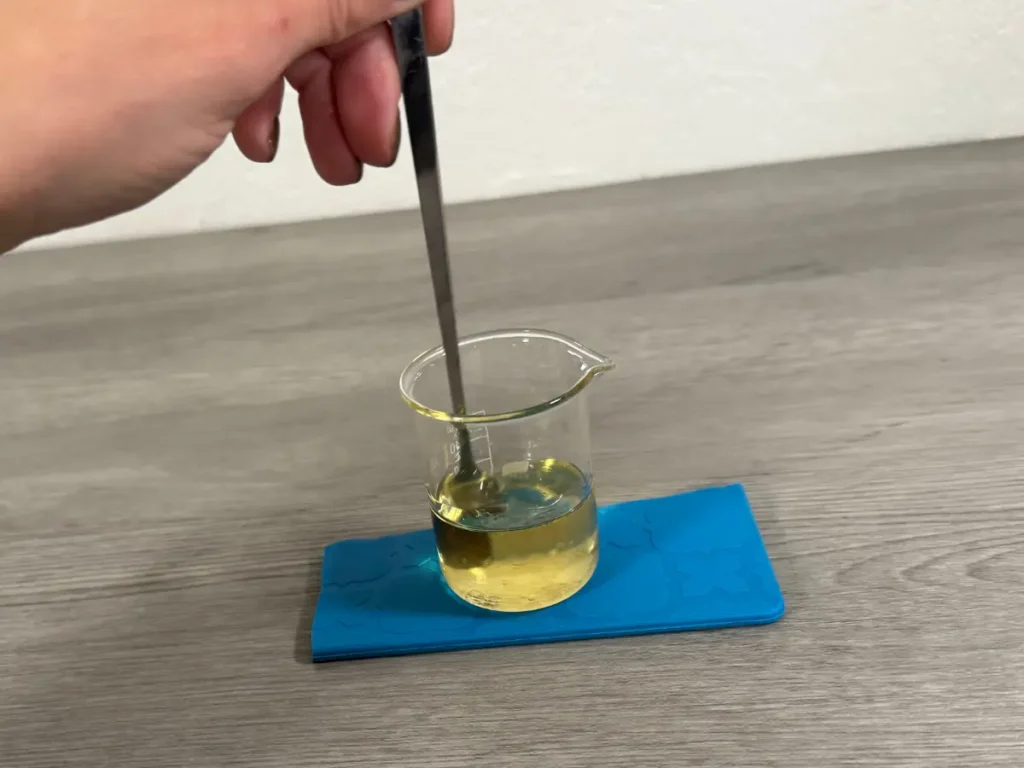
Record your measurements and evaluate the finished candle after the recommended curing period.
If you’re just starting out, my guide to candle-making supplies for beginners covers the basic equipment you need.

How to Test Different Fragrance Loads in Soy Candles
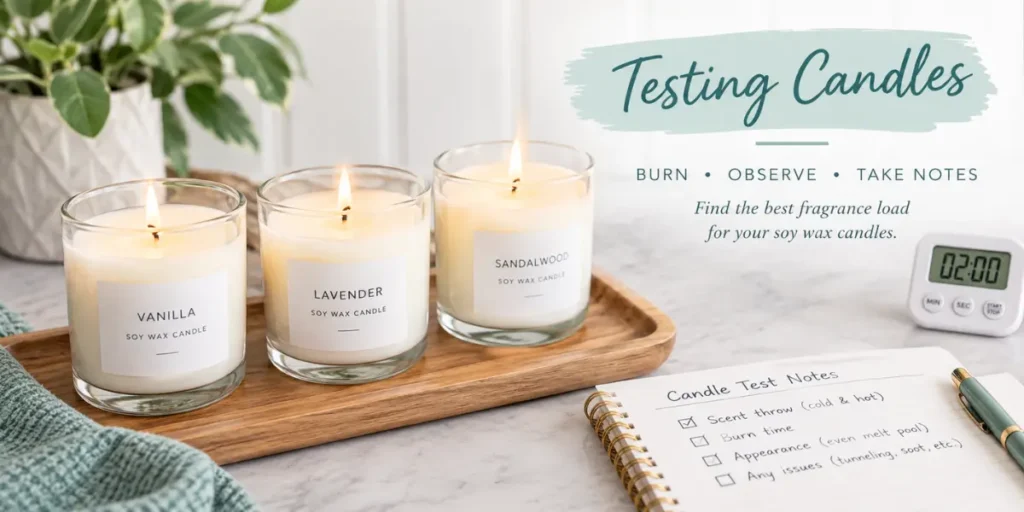
Testing is the best way to learn how a particular fragrance performs in your soy wax.
Once you’ve confirmed the manufacturer’s recommended limits, you can compare suitable fragrance loads using small test batches.
For the most useful comparison:
- Use the same soy wax and fragrance oil for each test.
- Keep the container, wick, wax weight, and pouring process consistent.
- Change only the fragrance load between test batches.
- Allow each candle the same recommended curing period.
- Evaluate cold throw and hot throw.
- Burn-test each candle and record how it performs.
Pay attention to more than scent strength. Look for sweating, changes in appearance, wick performance, and any differences in burning behavior.
A candle that smells strong but performs poorly is not necessarily a better formula.
Keep your results in a notebook or spreadsheet. Over time, your records can help you identify which fragrance loads work best for your soy wax and the fragrance oils you use most often.
Frequently Asked Questions
What is a good fragrance load for soy candles?
The appropriate fragrance load depends on the specific soy wax and fragrance oil. I normally use fragrance at 8%. I find that being in the middle gives me the best scent throw for cold and hot throw.
Check the manufacturer’s recommended range, then test suitable percentages to find a combination that gives you good scent performance and reliable burning.
Can I use a 10% fragrance load in soy candles?
Only if the specifications for your particular soy wax and fragrance oil allow it. A 10% fragrance load is not appropriate for every soy wax, and using the maximum permitted amount does not guarantee stronger scent throw.
Should I calculate soy candle fragrance load by weight or volume?
Calculate fragrance load by weight. Weigh your soy wax and fragrance oil using the same unit, such as grams or ounces.
Why does my soy candle smell strong when cold but weak when burning?
Cold throw and hot throw measure different aspects of scent performance. A candle may smell strong when unlit but release less noticeable fragrance when burning.
Fragrance selection, wick performance, curing, and the suitability of the fragrance load can all influence the result. See my guide on how to make a strong-scented soy candle for more information.
Why is my soy candle sweating fragrance oil?
Sweating can occur when fragrance oil separates or appears on the candle’s surface. Excess fragrance may contribute, but temperature changes and other formulation factors can also play a role.
Check the recommended fragrance load for your soy wax and review your mixing and cooling process.
Does soy wax need to cure before testing fragrance throw?
Some soy wax and fragrance combinations benefit from curing before evaluation. Follow your wax manufacturer’s guidance and compare candles after the same curing period so your results are more meaningful.
Can I use the same fragrance percentage for every fragrance oil?
Not necessarily. Different fragrance oils can behave differently in the same soy wax. Follow the relevant supplier recommendations and test each new fragrance rather than assuming it will perform exactly like the last one.
Final Thoughts
Calculating fragrance load for soy candles is straightforward once you understand that the percentage is based on the weight of the wax.
Multiply your soy wax weight by your desired fragrance percentage expressed as a decimal to calculate how much fragrance oil you need. Then confirm that the amount is suitable for your specific wax and fragrance oil.
Remember that a higher fragrance load doesn’t automatically mean a stronger-smelling candle. Careful testing, consistent measurements, and good record-keeping will help you find the right balance for your soy candles.