
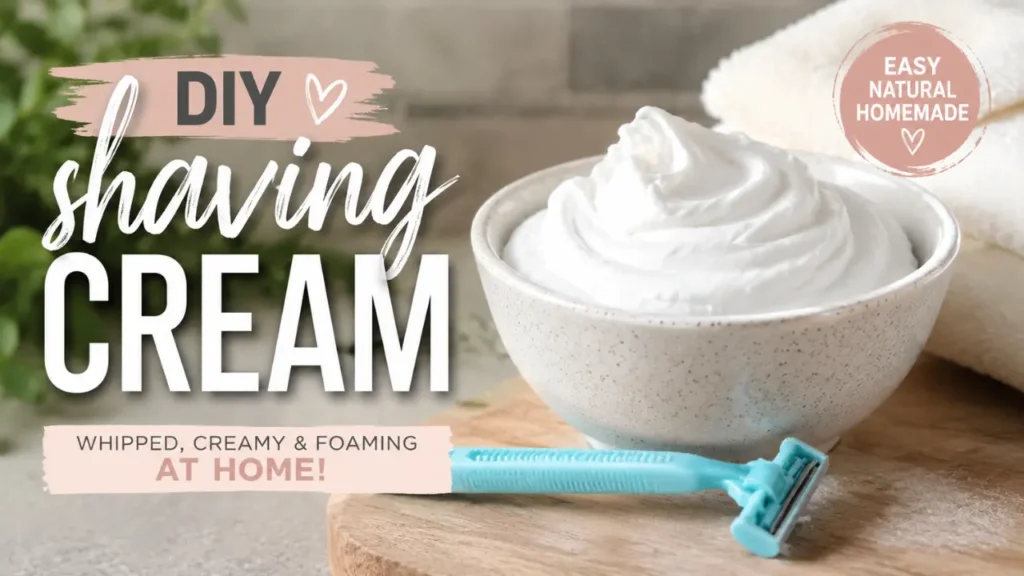
There is something quite wonderful about the moment you first whip this up — it turns dense and creamy in your hand, with just the faintest, softest foam, entirely unlike the thin, aerosol lathers you may be used to with traditional shaving cream. That rich texture comes from a foaming bath butter base, and you have two lovely ways to get there: whip up your own following How to Make Foaming Bath Butter (Whipped Soap Base) From Scratch, or, if you’d rather skip a step, purchase a ready-made base here — either path leads to the same delightfully creamy shave. Today, we’re simply dressing that base up: a touch of castor oil and bentonite clay for glide and cushion, and whatever scent feels like yours this season.
Prep time: 10 minutes | Total time: 15 minutes | Yield: 100 g | Difficulty: Beginner
Prefer to watch how to Make DIY Shaving Cream Tutorial
Some links on this website are affiliate links, meaning I may earn a small commission if you click and make a purchase. This comes at no additional cost to you.
Why Creamy Beats Foamy
A quick note before you dive in: this shaving cream is meant to be dense and creamy, with only a slight foam — not the big, airy lather you’d get from a can. That’s intentional. A creamy texture clings to stubble and cushions the blade, giving you a closer, more comfortable shave than foam alone ever could.
Why You’ll Love This Recipe
- Comes together in minutes, since your base is already made
- Rich, dense lather built for shaving — not just bubbles, but true glide
- Bentonite clay adds a soft cushioning barrier between the blade and your skin
- No new water added, so your original preservative system stays intact
- Easily scaled up for gifting, or divided into smaller jars for travel
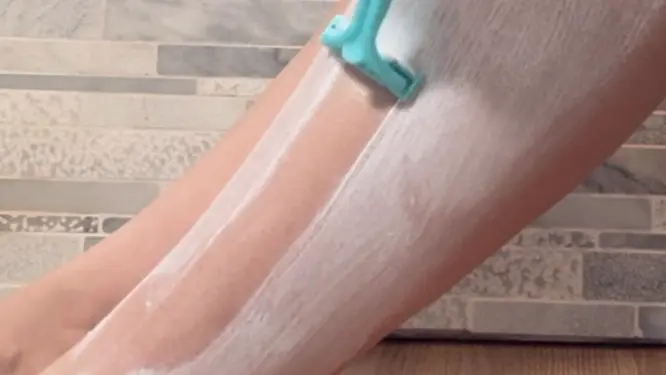
Shaving Cream Formula
This recipe is written as a percentage of a 100 g batch, so it scales beautifully no matter how much bath butter you have on hand.
| Ingredient | Percentage | Weight (100 g batch) |
|---|---|---|
| Foaming Bath Butter (pre-made) | 91% | 91 g |
| Castor Oil | 3% | 3 g |
| Bentonite Clay | 5% | 5 g |
| Fragrance Oil | 1% | 1 g |
| Total | 100% | 100 g |
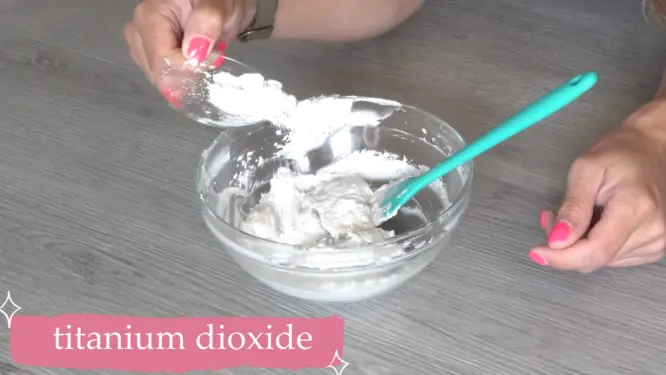
A note on color: Bentonite clay carries a natural greyish cast, which is lovely and earthy but not always what you picture in a shaving cream. Titanium dioxide can be whisked in separately to brighten and even out the color — start with just a pinch (around 0.5 g) and add more to taste until you reach the shade you love. Because it’s there purely for appearance, it is not counted toward your 100% total.
Instructions
Weigh your bath butter. Measure 91 g of your foaming bath butter into a mixing bowl. If it’s been sitting a while, you may notice it’s settled or firmed up a bit — that’s completely normal.
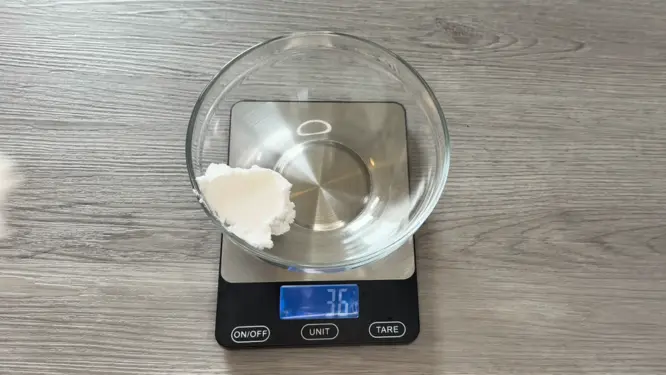
Give it a good whip first. Before adding anything else, run your hand mixer through the base until it’s light and fluffy again — you’ll feel it go from dense and slightly grainy back to soft, billowy peaks. This step matters more than it seems — starting from a properly whipped base is what gives the finished shaving cream its silky, cloud-like texture.
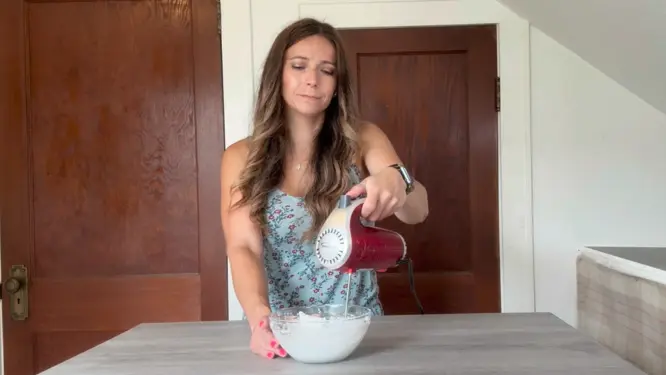
Add the fragrance oil and castor oil, then mix well — this is a good spot to really hit it with the hand mixer, letting the oils fully work into the whip until everything looks glossy and uniform.
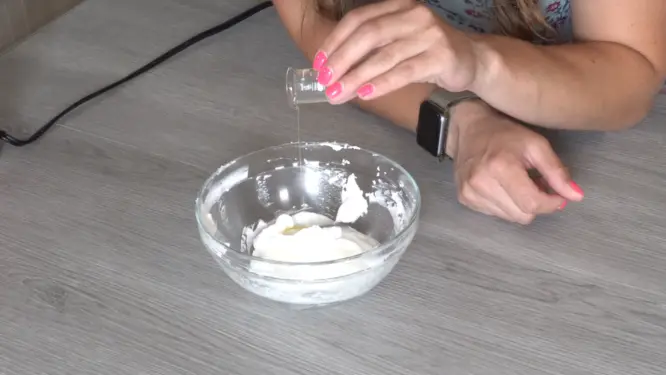
Add the bentonite clay and mix again until it’s fully incorporated and the texture turns a soft, even stone-grey.
Add the titanium dioxide a small pinch at a time, mixing well between additions, until the color brightens to whatever shade of white or ivory you love most.
Jar it up. Transfer to a clean, sanitized container and label it clearly — this is a shaving cream now, distinct from your original bath butter.
Tips for Best Results
- Fold, don’t beat, once the clay goes in — overworking it at this stage can knock too much air back out of your whip.
- Preservation stays simple here. Since you’re not introducing any new water, you aren’t diluting your original preservative system, so this stays just as shelf-stable as your base batch — typically 6–12 months when stored properly.
- Store it the same way you would your bath butter: somewhere cool and dry, away from direct sunlight, and out of standing water in the shower.
- If it feels tacky rather than slick, a touch more castor oil can help, though it’s best added in small increments (no more than an extra 1–2%) to avoid over-softening the whip.
- Test your fragrance’s IFRA usage rate before adding it — 1% is a safe starting point for many fragrance oils, but always confirm against the manufacturer’s data sheet.
Why We Use Bentonite Clay (And What It’s Doing for Your Shave)
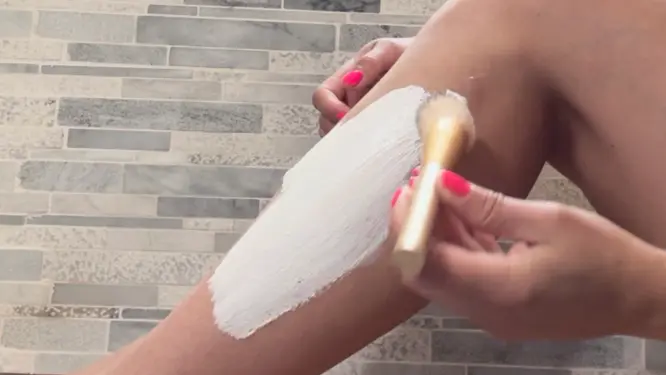
Bentonite clay is the quiet hero of this recipe. Beyond softening the grey tone it lends, its real job here is slip — by that, we mean it forms a fine, cushioning layer between the razor’s edge and your skin. That barrier is what allows the blade to glide smoothly across the surface for a close shave, rather than dragging directly against skin, which is so often what leads to nicks and that all-too-familiar razor burn. It’s a small addition with an outsized effect on comfort.
Substitution: Kaolin clay may be used in its place for a milder, lighter-colored alternative, though it offers a touch less cushioning than bentonite.
Why Each Ingredient Is Used & Substitutions
Foaming Bath Butter (base) — This is the heart of the formula: a whipped, SCI-based cleansing base that already brings gentle foam, moisture, and a light, fluffy texture to the table. Everything else in this recipe simply tailors that base for the specific demands of shaving.
Castor Oil — A classic in traditional wet-shaving preparations, prized for the lubricity it lends. It helps the razor travel smoothly across skin rather than catching or skipping.
Substitute: sweet almond oil or sunflower oil offer a lighter glide, though with somewhat less lubricity than castor oil.
Bentonite Clay — Adds the cushioning slip described above.
Substitute: kaolin clay, for a milder, lighter effect.
Fragrance Oil — Purely for the pleasure of scent, with no effect on performance. I am using a Lemon Pound Cake fragrance oil that has sugar, lemon, and orange top notes that will tantalize your senses, while the middle notes of butter, bakery batter, and coconut will make your mouth water. End with a subtle hint of vanilla for the perfect scent!
Substitute: a skin-safe essential oil, checked against its own usage guidelines, or simply left out for a fragrance-free version.
Titanium Dioxide — Used only to brighten the natural grey of the clay to a shade you prefer; it plays no functional role in the shave itself.
Substitute: none needed — simply omit if you’re fond of the clay’s natural earthy tone.
Store-Bought vs. This Recipe
- Store-bought: thin, often aerosol-based, frequently loaded with synthetic foaming agents and sulfates
- This recipe: dense, creamy, whipped by hand, with only a slight foam and no harsh detergents
- The result: a closer, more cushioned shave with far less risk of razor burn
Styling & Gifting Ideas
This shaving cream jars up beautifully for gifting, particularly for Father’s Day, birthdays, or a thoughtful holiday stocking stuffer. A few ideas:
- Amber glass jars with a simple kraft label lend a classic apothecary feel.
- Pair it with a wooden shave brush and tuck both into a small gift box lined with tissue for a complete, ready-to-use set.
- Seasonal scent variations: a bright cedar or sandalwood fragrance oil feels especially fitting for autumn and winter gifting, while something lighter and citrus-forward suits a spring or summer batch.
- Label by batch date, just as you would your bath butter, so the person receiving it always knows how fresh their jar is.
Frequently Asked Questions
Can I use this shaving cream recipe with any foaming bath butter, or only the one from your site? Any well-made SCI-based foaming bath butter should work beautifully as the base here, provided it’s fully whipped and properly preserved before you begin.
Will adding castor oil and clay affect how well this base foams? Slightly, yes — but that’s actually a good thing for shaving. A denser, creamier lather clings to stubble and cushions the blade far better than a big, airy foam would.
Do I need to add titanium dioxide, or is it purely optional? It’s entirely optional. The clay’s natural grey tone doesn’t affect performance at all — the titanium dioxide is there only if you’d prefer a brighter, whiter finished product.
How long will this shaving cream keep? Because no new water is introduced, your original preservative system remains just as effective — expect the same 6–12 month shelf life as your base bath butter, stored properly.
Can I scale this recipe up for a larger batch? Yes — simply multiply each ingredient’s percentage by your desired total weight. For a 500 g batch, for example, your bath butter (91%) would be 455 g, and so on down the list.
Is homemade shaving cream better than store-bought? It can be, particularly if you’re prone to razor burn or sensitive skin — you control every ingredient, skip the synthetic foaming agents found in many aerosol cans, and get a noticeably creamier, more cushioning lather.
Why isn’t my shaving cream very foamy? That’s by design — a dense, creamy lather with just a slight foam clings to stubble and cushions the blade far better than a big, airy foam would, which is exactly what you want for a close, comfortable shave.
More From the Series
- Learn the base recipe: How to Make Foaming Bath Butter (Whipped Soap Base) From Scratch
- Get that crisp, pipeable texture: How to Make Whipped Soap That Holds Its Shape (Pipes Like Frosting)
- Choosing the right oil for your skin type: Carrier Oils in Skincare: How to Choose the Right Oil for Your Skin
- The science behind this base: Humectants, Occlusives and Emollients Explained
Printable Shaving Cream Recipe
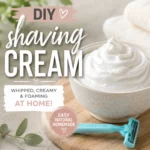
DIY Shaving Cream (Whipped, Creamy & Foaming DIY Recipe)
Ingredients
- 91 grams Foaming Bath Butter Base
- 3 grams Castor Oil
- 5 grams Bentonite Clay
- 1 grams Fragrance Oil
Instructions
- Weigh your bath butter. Measure 91 g of your foaming bath butter into a mixing bowl. If it's been sitting a while, you may notice it's settled or firmed up a bit — that's completely normal.
- Give it a good whip first. Before adding anything else, run your hand mixer through the base until it's light and fluffy again — you'll feel it go from dense and slightly grainy back to soft, billowy peaks. This step matters more than it seems — starting from a properly whipped base is what gives the finished shaving cream its silky, cloud-like texture.
- Add the fragrance oil and castor oil together, then mix well — this is a good spot to really hit it with the hand mixer, letting the oils fully work into the whip until everything looks glossy and uniform.
- Add the bentonite clay and mix again until it's fully incorporated and the texture turns a soft, even stone-grey.
- Add the titanium dioxide a small pinch at a time, mixing well between additions, until the color brightens to whatever shade of white or ivory you love most.
- Jar it up. Transfer to a clean, sanitized container and label it clearly — this is a shaving cream now, distinct from your original bath butter.