
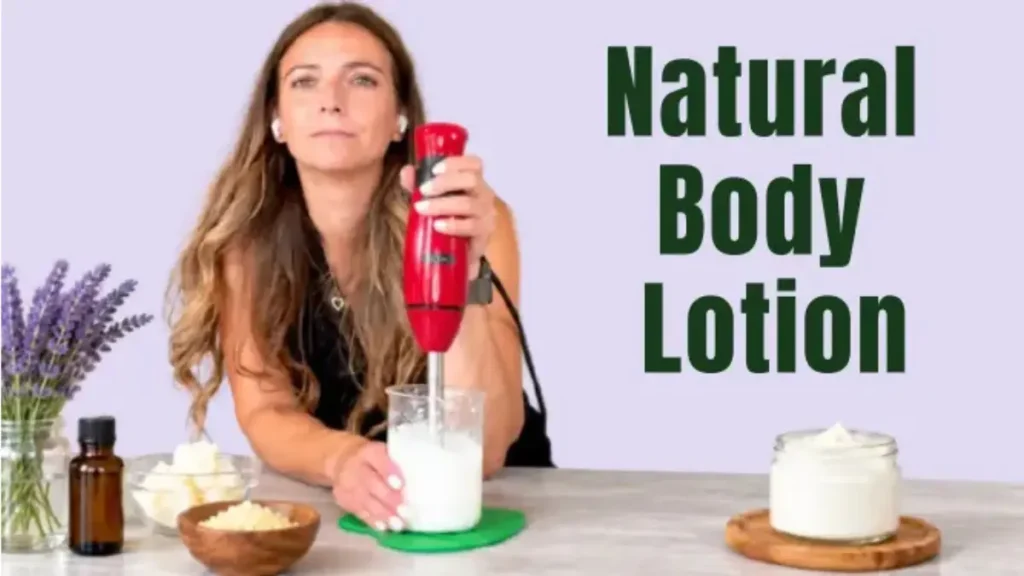
Natural body lotion is one of the easiest ways to give your skin real hydration without a long list of synthetic ingredients. It’s lightweight, fast-absorbing, and comes together in under 30 minutes with just eight ingredients.
This recipe uses Olivem 1000, a naturally derived, self-emulsifying wax made from olive oil, so there’s no synthetic emulsifying wax anywhere in the formula. If you’d rather start with something even simpler first, check out this Beginner Lotion Recipe before working up to this one.
What Is Natural Body Lotion?
Natural body lotion is a water-and-oil emulsion made almost entirely from plant-derived ingredients, held together with a naturally sourced emulsifier instead of a synthetic one. It absorbs quickly, leaves skin soft rather than greasy, and is fully customizable to your skin type.
They are ideal for:
- Dry skin on the hands, arms, and legs
- Applying right after a shower to lock in moisture
- Sensitive skin, since you control every ingredient
- Vegan skincare, since there’s no beeswax or lanolin in this formula
If you’re new to DIY skincare, start with this Beginner Lotion Recipe, it only uses a handful of ingredients.
Natural Body Lotion Recipe (200g Batch)
| Ingredient | Percentage | Weight (200g Batch) |
|---|---|---|
| Distilled Water | 67.5% | 135g |
| Vegetable Glycerin | 4% | 8g |
| Shea Butter | 5% | 10g |
| Jojoba Oil | 7% | 14g |
| MCT Oil | 10% | 20g |
| Olivem 1000 | 5% | 10g |
| Germall Plus | 0.5% | 1g |
| Essential Oil | 0.5% | 1g |
| Vitamin E Oil | 0.5% | 1g |
| Total | 100% | 200g |
If you need help understanding how to adjust percentages in skincare recipes, check out this Percentage vs Grams in Skincare Formulation guide.
What Each Ingredient Does (and Why We Use It)
Distilled Water
What it does: Forms the water phase and hydrates the skin directly. Why we use it: Distilled water is free of the minerals and impurities found in tap water, which keeps the formula stable and helps the preservative work as intended.
Substitutions:
- A hydrosol like rose water or chamomile water
- Replace up to half with aloe vera juice for a soothing boost
Vegetable Glycerin
What it does: Acts as a humectant, drawing moisture to the skin’s surface. Why we use it: It’s lightweight, plant-derived, and keeps the lotion hydrating without feeling sticky at this percentage.
Substitutions:
- Propanediol
- Sodium lactate (small usage rate adjustment needed)
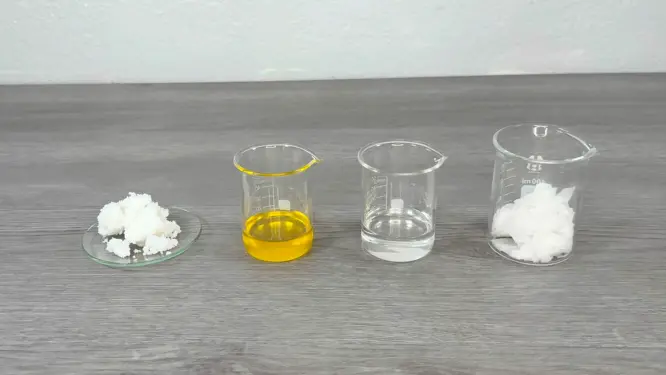
Shea Butter
What it does: Softens skin and helps reinforce the skin’s natural barrier. Why we use it: It’s rich in vitamin A and E, adding richness to the lotion without making it heavy at 5%.
Substitutions:
- Mango butter (softer feel)
- Cocoa butter (firmer, more structure)
Jojoba Oil
What it does: Closely mimics the skin’s own sebum and absorbs quickly. Why we use it: Gives the lotion a silky, fast-absorbing finish instead of a greasy one.
Substitutions:
- Fractionated coconut oil
- Sweet almond oil
MCT Oil
What it does: A lightweight, fast-absorbing carrier oil. Why we use it: Keeps the overall lotion feeling non-greasy while still providing plenty of slip during application.
Substitutions:
- Grapeseed oil
- Additional fractionated coconut oil
Olivem 1000
What it does: A naturally derived, self-emulsifying wax that binds the water phase and oil phase together. Why we use it: It removes the need for a synthetic emulsifying wax entirely, and leaves behind a smooth, naturally moisturizing finish.
Substitutions:
- Not a direct swap — other emulsifiers (like Emulsifying Wax NF) use different usage rates and would change this formula
Germall Plus
What it does: A broad-spectrum preservative. Why we use it: Any recipe with water in it needs a preservative to protect against bacteria, mold, and yeast. Germall Plus is paraben-free and formaldehyde-free at this 0.5% usage rate.
Substitutions:
- Optiphen Plus
- Leucidal Liquid SF (efficacy varies — research usage rates carefully before substituting)
Essential Oil
What it does: Adds scent. Why we use it: Personalizes the lotion and makes it feel like a finished product. Lavender, geranium, and frankincense are gentle, popular choices for body lotion.
Substitutions:
- Fragrance oil at the same usage rate
- Omit entirely and replace with additional distilled water
Vitamin E Oil
What it does: Acts as an antioxidant. Why we use it: Helps slow the oils in this recipe from going rancid, extending the shelf life of the finished lotion.
Substitutions:
- Optional, but recommended
Watch the Full Video Tutorial on Making Natural Body Lotion
How to Make Natural Body Lotion
Step 1: Weigh and Combine the Water Phase
Weigh the distilled water and vegetable glycerin into a heat-safe container.
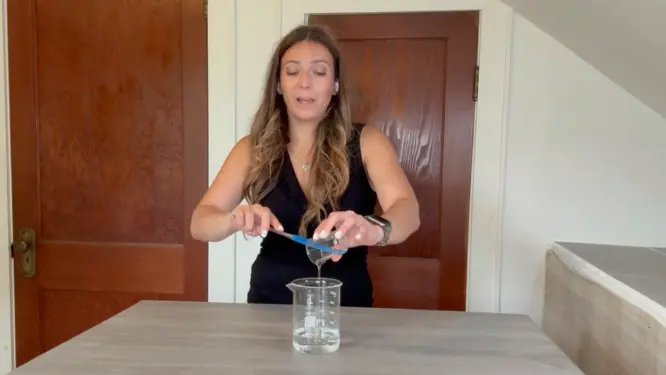
Step 2: Weigh and Melt the Oil Phase
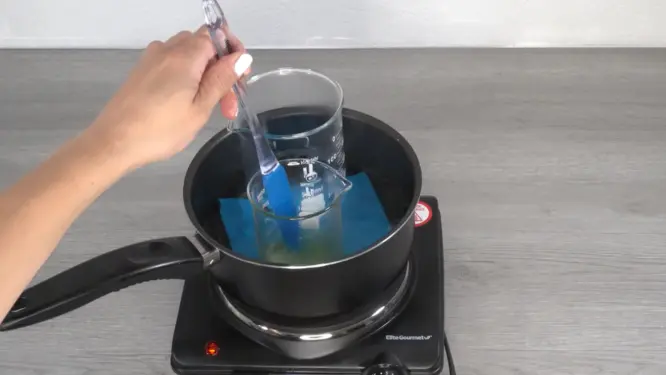
Weigh the shea butter, jojoba oil, MCT oil, and Olivem 1000 into a second heat-safe container. Melt both the water phase and the oil phase using a double boiler, stirring occasionally, until fully liquid.
Step 3: Combine the Two Phases
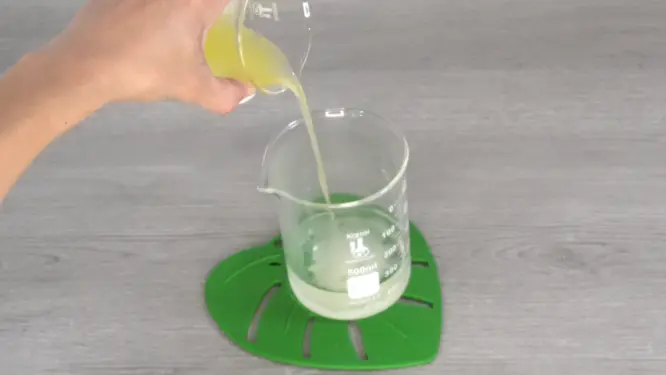
Pour the oil phase into the water phase. Since this recipe relies on Olivem 1000 to emulsify, both phases should be a similar temperature when combined.
Step 4: Blend Until Emulsified
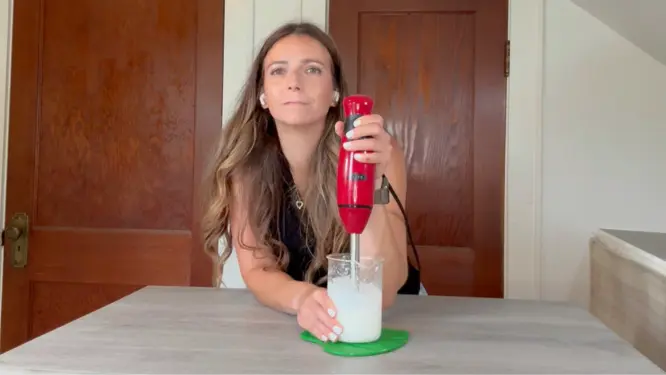
Use an immersion blender to blend for 2-3 minutes.
Step 5: Cool the Mixture
Let the lotion cool, stirring occasionally, until it drops below 120°F. Check with an infrared thermometer — this step matters, since adding the preservative while too hot can reduce its effectiveness.
Step 6: Add the Cool Down Phase
Add the Germall Plus, essential oil, and vitamin E oil once the mixture is below 120°F. Mix Well.
Step 7: Pour and Package
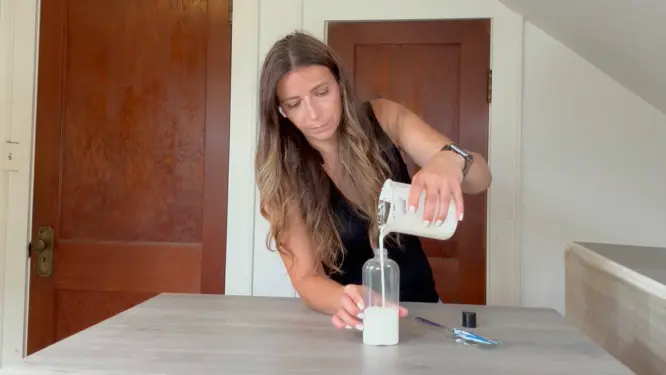
Pour into your bottle or jar while the lotion is still pourable. Leave the lid off until fully cooled to room temperature.
Tips for Best Results
- Blend a little longer than you think you need to — an underblended emulsion is the most common cause of separation
- Keep both phases at a similar temperature before combining for the smoothest texture
- Sanitize every container and tool with rubbing alcohol before you start, since this recipe includes water
How to Adjust This Recipe
- Too thick or heavy: Reduce Olivem 1000 slightly to 4%, or increase the distilled water percentage
- Too thin or runny: Increase Olivem 1000 to 6%
- Too greasy: Reduce the MCT oil slightly and increase the distilled water to compensate
- Separating after a few days: The emulsion likely wasn’t blended long enough while both phases were still warm — use a high-shear immersion blender, not a whisk
Final Thoughts
This natural body lotion recipe is designed to give you a lightweight, fast-absorbing everyday lotion without reaching for a synthetic emulsifying wax.
It stays stable at room temperature, absorbs quickly without feeling greasy, and is easy to scale up or down once you’re comfortable with the percentages.
Once you’ve made this one, it’s easy to start customizing it further — swap the essential oil, adjust the Olivem 1000 for a thicker or thinner feel, or add a small percentage of a different carrier oil to suit your skin.
Printable Natural Body Lotion Recipe Card
Natural Body Lotion Recipe
Ingredients
- 135 grams Distilled Water
- 8 grams Vegetable Glycerin
- 10 grams Shea Butter
- 14 grams Jojoba Oil
- 20 grams MCT Oil
- 10 grams Olivem 1000
- 1 gram Germall Plus
- 1 gram Essential Oil
- 1 gram Vitamin E Oil
Instructions
Weigh and Combine the Water Phase
- Weigh the distilled water and vegetable glycerin into a heat-safe container.
Weigh and Melt the Oil Phase
- Weigh the shea butter, jojoba oil, MCT oil, and Olivem 1000 into a second container. Heat both phases on a double boiler until the oil phase is completely melted.
Combine the Two Phases
- Pour the oil phase into the water phase.
Blend Until Emulsified
- Immersion blend for 2-3 minutes.
Cool the Mixture
- Let cool, stirring occasionally, until below 120°F.
Add the Cool Down Phase
- Add the Germall Plus, essential oil, and vitamin E oil. Mix Well.
Pour and Package
- Pour into your bottle or jar and let cool fully before capping.
Pingback: Shea Butter - Summer Rain