
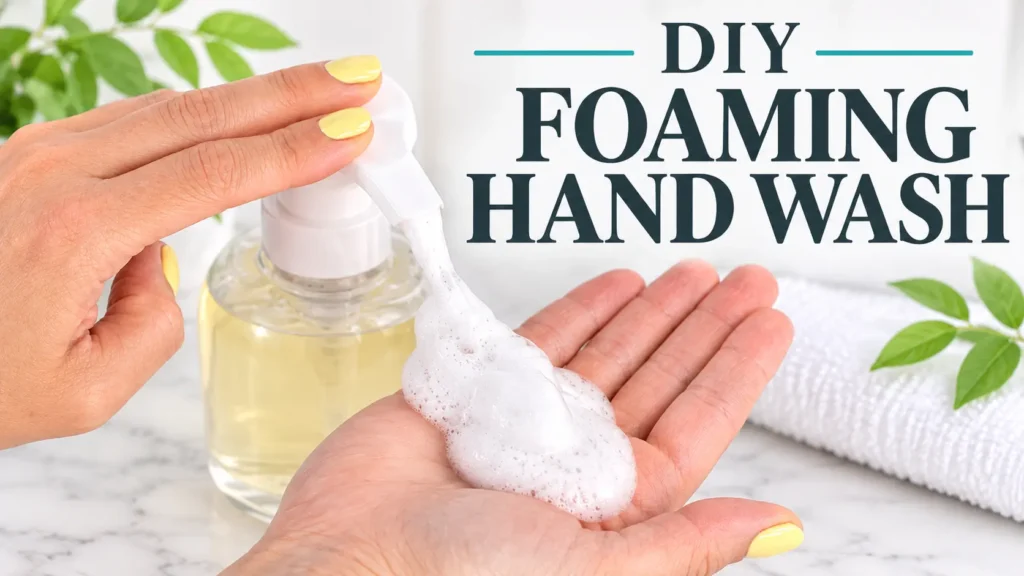
Making your own foaming hand wash is a great way to learn the basics of formulating a simple cleansing product at home. Unlike traditional liquid soap, this recipe uses surfactants to create a gentle cleanser that dispenses as a light, airy foam.
I formulated this hand wash using Cocamidopropyl Betaine and Disodium Laureth Sulfosuccinate. These two surfactants work together to cleanse the skin and produce a rich foam, while vegetable glycerin helps give the finished wash a more comfortable feel.
If you want to know more about surfactants check out my Surfactant Explained Guide.
One thing I like about making my own hand wash is that I can choose the fragrance and understand exactly what goes into the finished product. You can keep the apple fragrance used in my recipe or substitute another fragrance oil that is suitable for rinse-off products.
If you’ve never worked with surfactants before, don’t worry. I’ll walk you through what each ingredient does, how to combine everything, and what to know before filling your foaming dispenser.
What Is Foaming Hand Wash?
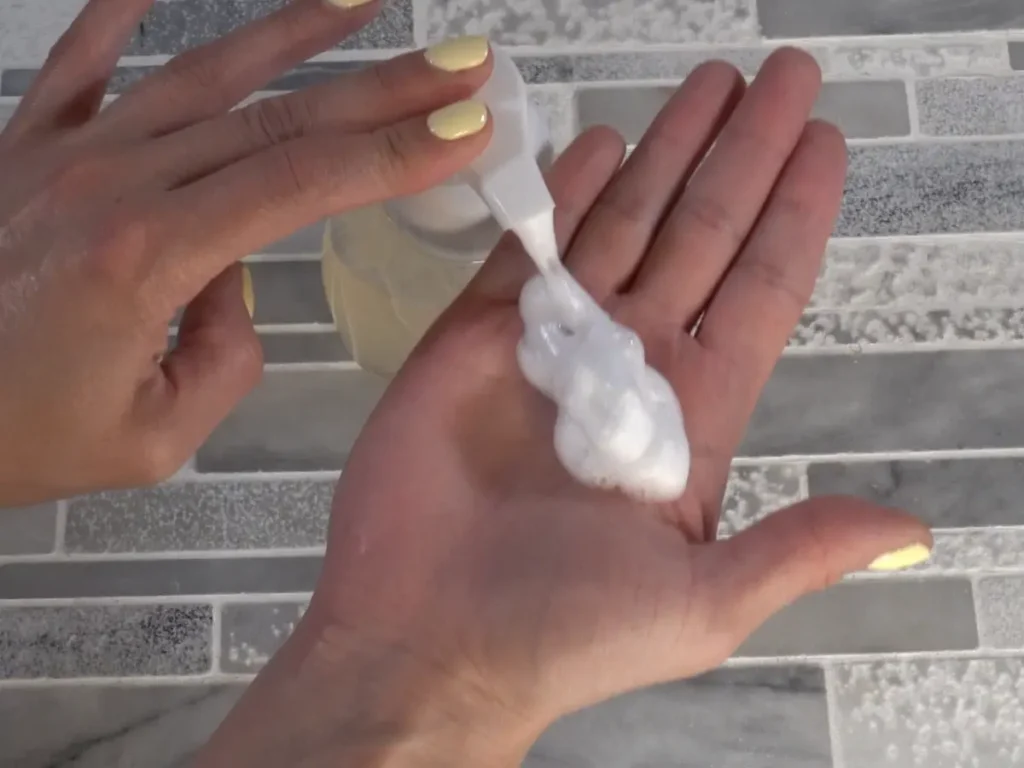
Foaming hand wash is a type of liquid cleanser that is dispensed through a special foaming pump bottle. Instead of dispensing a regular stream of liquid, the pump mixes the diluted cleanser with air as you press down, creating foam.
The important thing to understand is that the bottle itself creates the foam. You don’t need to whip air into the mixture or use a special foaming ingredient to make it work.
This recipe uses two surfactants, which are cleansing ingredients that help lift away dirt, oils, and everyday residue from the skin. They also help create the foam that makes this type of hand wash so easy to use.
Is foaming hand wash the same as liquid soap?
Not exactly. Traditional soap is made through a chemical reaction called saponification, which happens when oils or fats are combined with sodium hydroxide or potassium hydroxide. This recipe doesn’t use that process.
Instead, it uses pre-made surfactants to create a cleansing formula. This makes it a different type of product and a useful starting point if you’re interested in learning how to formulate other cleansing products.
Prefer to Watch This Project Instead of Reading It?
Some links on this website are affiliate links, meaning I may earn a small commission if you click and make a purchase. This comes at no additional cost to you.
Why Make Your Own Foaming Hand Wash?
There are several reasons to try making hand wash at home.
- Choose your own fragrance: Use the apple fragrance in this recipe or select another fragrance oil approved for rinse-off products.
- Understand your ingredients: You know which surfactants, humectants, and preservatives are included in your formula.
- Make refills: Once you have your ingredients, you can prepare additional batches for your foaming dispenser.
- Learn formulation basics: This is a good opportunity to work with surfactants and learn how different ingredients contribute to a finished product.
This recipe makes approximately 8 ounces of foaming hand wash, depending on your final batch weight and the bottle you use.
Ingredients for Homemade Foaming Hand Wash
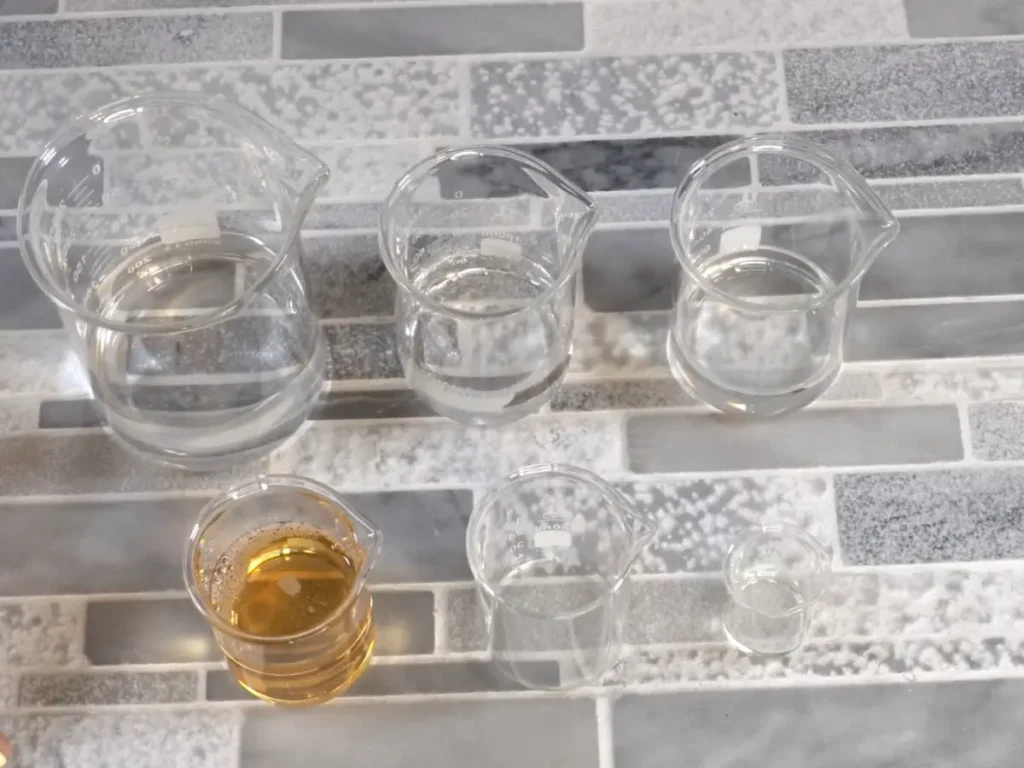
When formulating a hand wash, each ingredient has a specific purpose. The surfactants provide the cleansing action, glycerin helps attract moisture, water provides the liquid base, and the preservative protects the finished product from microbial growth.
I recommend weighing everything rather than measuring by volume. Working with percentages also makes it easier to scale a recipe up or down without changing the proportions. Learn more on my How to Scale a Recipe Guide.
Understanding Each Ingredient
| Ingredient | Purpose |
|---|---|
| Cocamidopropyl Betaine | Mild amphoteric surfactant that supports cleansing and foam |
| Disodium Laureth Sulfosuccinate | Anionic surfactant that provides cleansing and lather |
| Vegetable Glycerin | Humectant that attracts water |
| Distilled Water | Liquid base |
| Apple Fragrance Oil | Adds fragrance |
| Germall Plus | Broad-spectrum preservative |
| Total |
Cocamidopropyl Betaine
Cocamidopropyl Betaine is an amphoteric surfactant commonly used in shampoos, body washes, and other cleansing products.
It helps create foam, contributes to the cleansing properties of the formula, and works well alongside other surfactants. I like using it in cleansing formulations because it can help improve the overall feel of a product.
Disodium Laureth Sulfosuccinate
Disodium Laureth Sulfosuccinate is an anionic surfactant that provides cleansing and helps produce lather.
It works alongside Cocamidopropyl Betaine to create the cleansing system in this recipe. Combining surfactants is common when formulating shampoos, body washes, and hand cleansers because each surfactant contributes different properties to the finished product.
Vegetable Glycerin
Glycerin is a humectant, meaning it attracts water. It is commonly used in skincare and cleansing products to help improve the way a product feels on the skin.
It also adds some viscosity to water-based formulas. Keep in mind that more glycerin isn’t necessarily better.
Distilled Water
Distilled water makes up the liquid base of this formula. It dissolves and dilutes the other ingredients, allowing the finished mixture to work properly in a foaming dispenser.
I recommend distilled water instead of tap water because it contains fewer minerals and other impurities that can interfere with a formulation.
Apple Fragrance Oil
I used an apple fragrance oil to give this hand wash a fresh scent.
You can substitute another fragrance oil, but make sure it is approved for use in rinse-off products and that your usage rate follows the supplier’s recommended maximum for that application. I always use a high quality fragrance oil from a reputable source.
Germall Plus
Because this is a water-based product, a preservative is necessary.
Water-based products can support the growth of bacteria, yeast, and mold. Germall Plus is a broad-spectrum preservative used to help protect formulations against microbial contamination.
Use it according to the manufacturer’s instructions, including its recommended usage rate, temperature limitations, and pH requirements. Do not leave it out or assume that adding fragrance will preserve the product.
Foaming Hand Wash Recipe
| Ingredient | Percentage | Weight (grams) |
|---|---|---|
| Cocamidopropyl Betaine | 20% | 40g |
| Disodium Laureth Sulfosuccinate | 15% | 30g |
| Vegetable Glycerin | 20% | 40g |
| Distilled Water | 43.5% | 87g |
| Apple Fragrance Oil | 1% | 2g |
| Germall Plus | 0.5% | 1g |
| Total | 100% | 200g |
Supplies You’ll Need
You don’t need a lot of equipment to make foaming hand wash, but accurate measurements and clean equipment are important.
- Digital kitchen scale that measures in grams
- Clean glass or stainless steel mixing container
- Silicone spatula or mixing spoon
- Small containers for weighing ingredients
- pH meter or suitable pH testing strips
- Clean foaming hand wash dispenser
- Gloves and appropriate protective equipment
Make sure your mixing equipment and finished bottle are thoroughly cleaned and sanitized before beginning. Allow everything to dry before use.
How to Make Foaming Hand Wash
The process is fairly simple, but I recommend taking your time when combining the ingredients. Surfactants can create a lot of bubbles during mixing, and excessive stirring can make it difficult to see the consistency of your finished product.
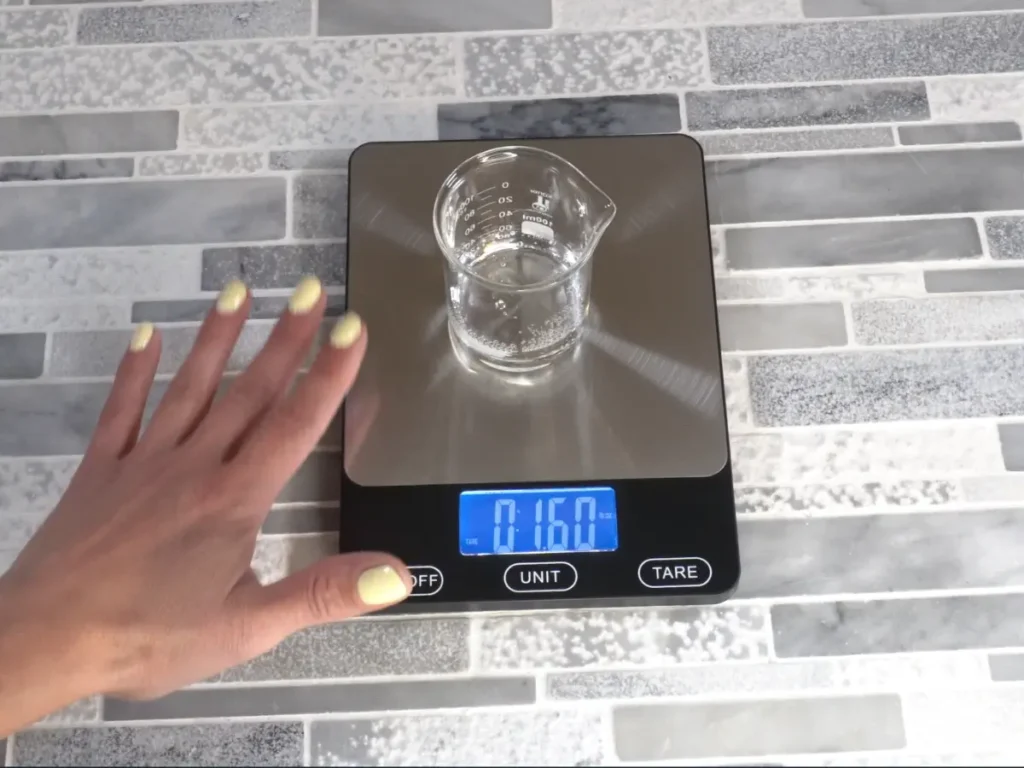
Step 1: Weigh your ingredients
Using a digital scale, weigh each ingredient separately according to the recipe percentages above.
Working by weight gives you more consistent results than using measuring cups or spoons. It also makes it much easier to make larger or smaller batches.
Step 2: Combine the water and glycerin
Add the distilled water to your mixing container. Add the vegetable glycerin and stir until evenly combined.
Step 3: Add the surfactants
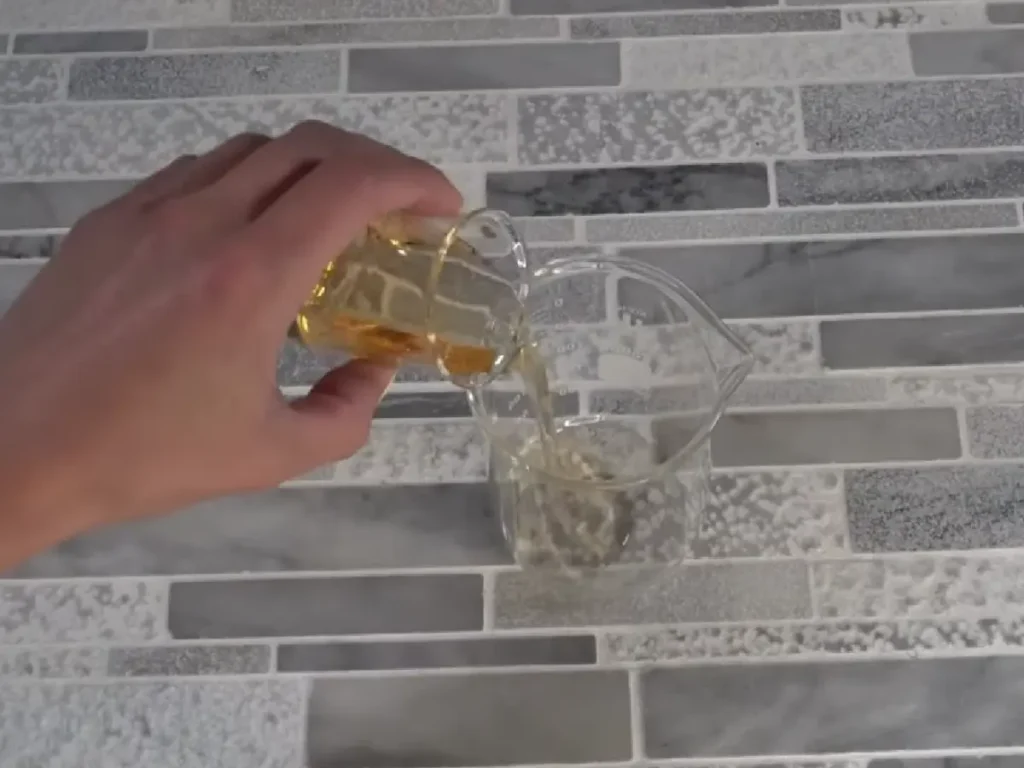
Slowly add the Cocamidopropyl Betaine and Disodium Laureth Sulfosuccinate.
Stir gently after adding each ingredient. Try not to whisk or vigorously mix the formula because you don’t want to introduce unnecessary air.
Step 4: Add the fragrance
Add your apple fragrance oil and gently stir until incorporated.
Make sure the fragrance oil is compatible with your surfactant system. Some fragrance oils can cause cloudiness, separation, or changes in viscosity.
Step 5: Add the preservative
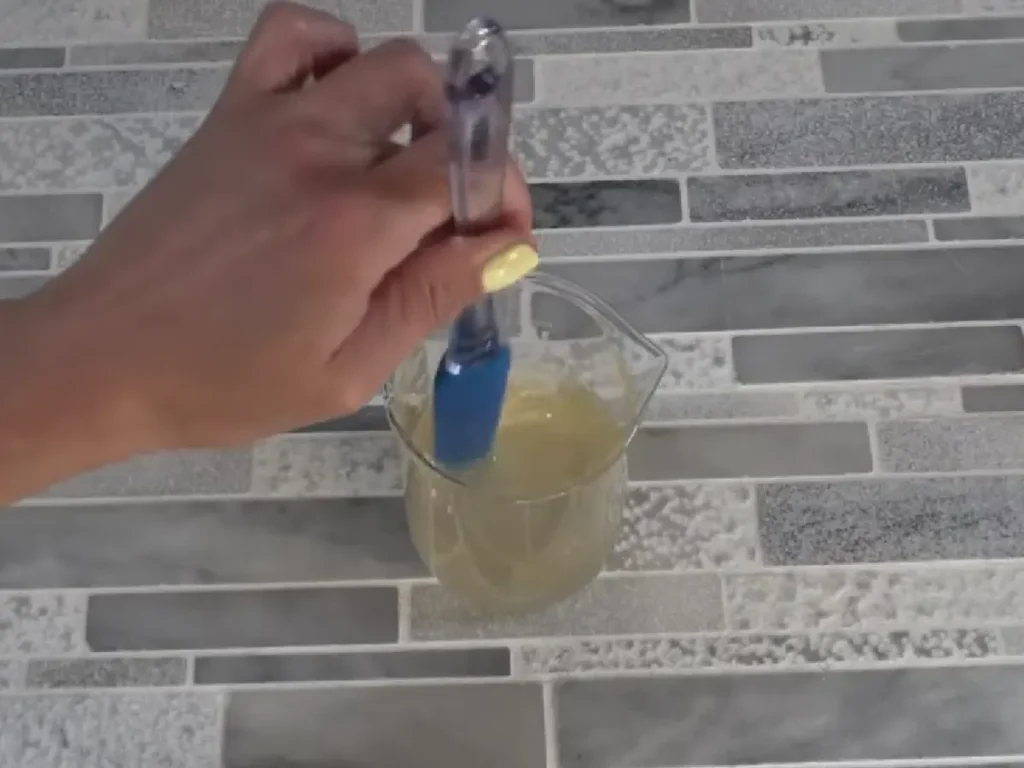
Add the Germall Plus according to the supplier’s temperature and usage instructions. Mix thoroughly so that it is evenly distributed throughout the batch.
Step 6: Check the finished formula
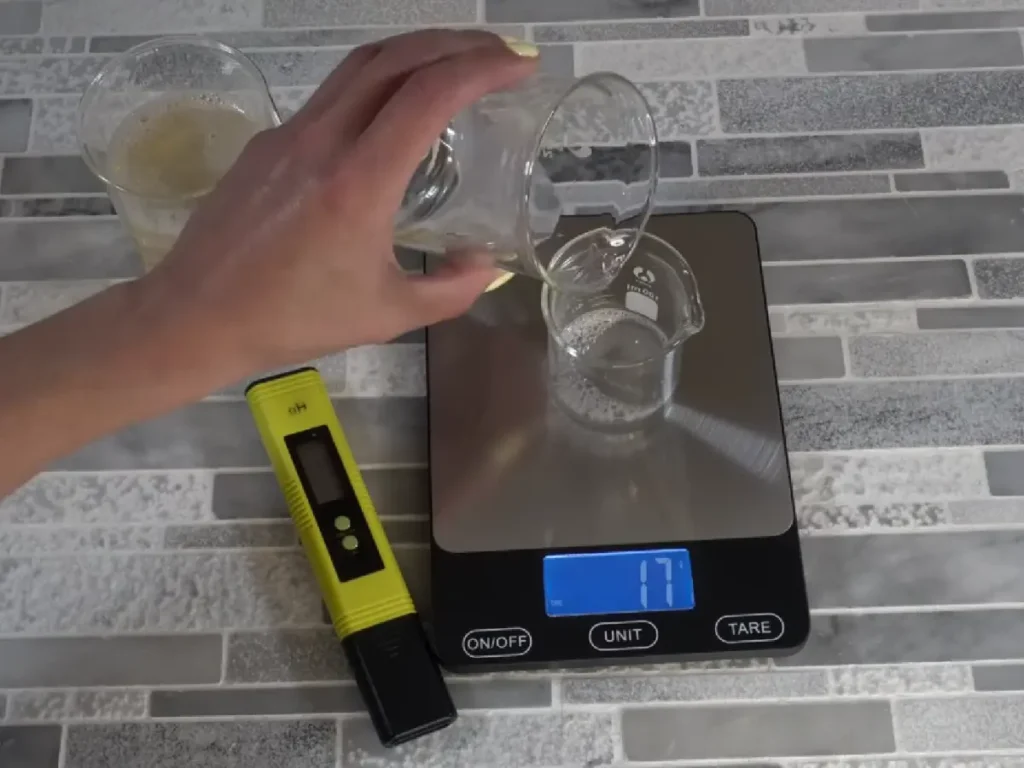
Check the pH using a calibrated pH meter or suitable testing strips. Make sure the finished product falls within the preservative manufacturer’s approved pH range and is appropriate for a rinse-off hand cleanser. For this hand soap we are going for a pH of 5.0–5.5.
That is a skin safe range and within the preservative recommended pH range of 3–8.
Learn more about pH in my Ph Guide.
Step 7: Fill your foaming dispenser
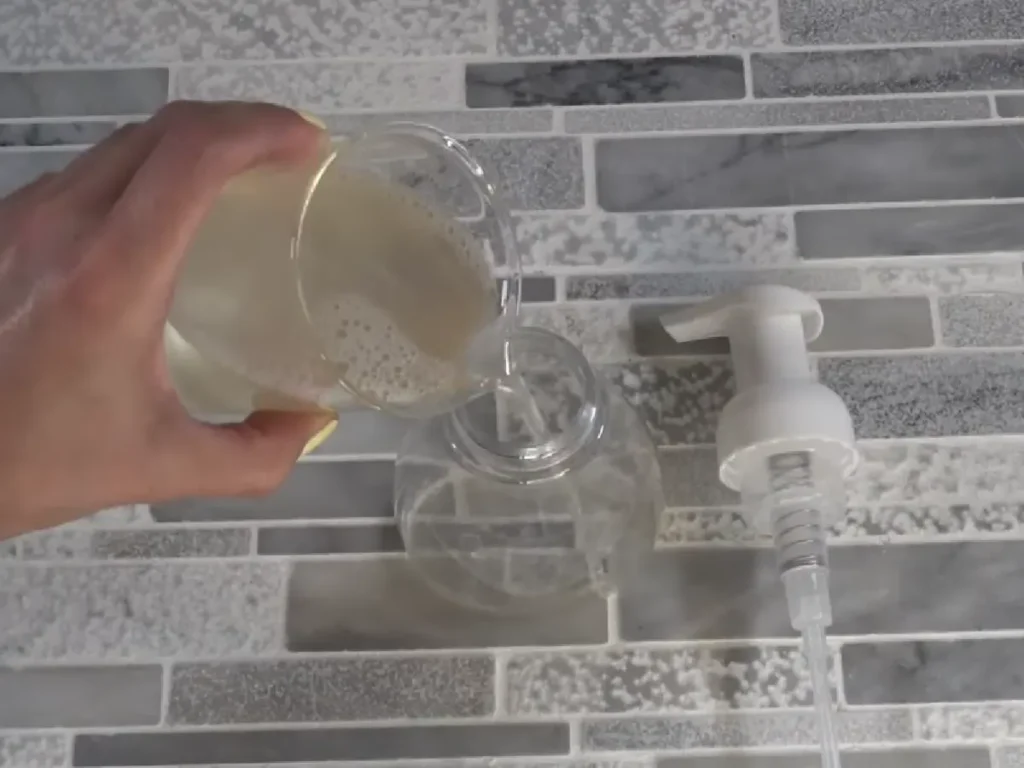
Once the mixture is uniform and any excess bubbles have settled, transfer it into a clean foaming pump bottle.
Your homemade foaming hand wash is ready to use once it has been properly checked and packaged.
Tips for Making Foaming Hand Wash
A few things can make a difference when working with surfactant-based products.
- Mix slowly: Stirring too quickly can create excess bubbles that make it difficult to work with the formula.
- Use a foaming dispenser: A regular lotion or liquid soap pump will not create the same type of foam.
- Check fragrance compatibility: Some fragrance oils can affect the appearance and stability of a surfactant formula.
- Measure by weight: Even small differences in preservative and fragrance amounts can affect the finished product.
- Test your formula: Check the pH, appearance, and stability before making a larger batch.
Frequently Asked Questions
Can I use regular liquid soap bottles for this recipe?
No. This formula is designed for a foaming dispenser. The special pump mixes air with the liquid as it dispenses, creating the foam.
Can I use a different fragrance oil?
Yes, provided the fragrance oil is suitable for rinse-off products and used within its approved usage limits. Some fragrances may cause cloudiness or separation, so test compatibility before making a larger batch.
Can I leave out the preservative?
No. This is a water-based formulation, so it needs an appropriate broad-spectrum preservative. Without one, bacteria, yeast, and mold can grow even if the product looks and smells normal.
Can I use essential oils instead of fragrance oil?
Essential oils may be an option, but they are not automatically interchangeable with fragrance oils. You need to consider their skin safety limits, compatibility, and ability to remain properly dispersed in the formula.
How long does homemade foaming hand wash last?
Shelf life should be 3-6 months. For a product intended for extended storage or sharing, preservative efficacy testing is recommended.
Final Thoughts
Making foaming hand wash is a simple way to start learning about surfactants and how they work together in a cleansing formulation.
I like that this recipe introduces ingredients you’ll see in many other DIY cleansing products, including shampoos, body washes, and facial cleansers. Once you understand what each ingredient contributes, it becomes easier to understand how to build and customize other formulas.
If you try this recipe, I’d love to hear how it turned out and which fragrance you decided to use!
DIY Foaming Hand Wash: Create Your Own Luxurious, Skin-Pampering Cleanser at Home
Equipment
- Scale
Ingredients
- 20% | 1.6 ounce Cocamidopropyl Betaine
- 15% | 1.2 ounce Disodium Laureth Sulfosuccinate
- 20% | 1.6 ounce Vegetable Glycerin
- 43.5% | 3.48 ounce Distilled Water
- 1% | 0.08 ounce Apple Fragrance Oil
- 0.5% | 0.04 ounce Germall Plus
Instructions
- Start with the surfactants: In your bowl, measure and combine the cocamidopropyl betaine and disodium laureth sulfosuccinate. Stir slowly until they're fully integrated. This forms your cleansing base without excess air.
- .Incorporate the glycerin: Pour in the vegetable glycerin bit by bit, stirring carefully to blend. It might feel a tad thick, but that's good—it adds that moisturizing body early on.
- Add water and fragrance: Gradually introduce the distilled water while stirring continuously for even dilution. Once smooth, mix in the fragrance oil. Go slow to keep bubbles minimal and the scent well-distributed.
- Check and tweak the pH: Dip in your pH strip or use a meter. Aim for 5.5-6.9 (skin-neutral). If it's too alkaline (above 7), add a drop of citric acid solution and stir; if too acidic (below 5), use a pinch of sodium hydroxide. Retest until perfect—this ensures gentleness and stability.
- Finish with the preservative: Stir in the Germall Plus until dissolved. Give it one final mix.
- Let it rest and bottle: Allow the mixture to sit for 30 minutes so any minor bubbles settle. Funnel into your foaming pump bottle, and you're set! Prime the pump a few times for optimal foam.