
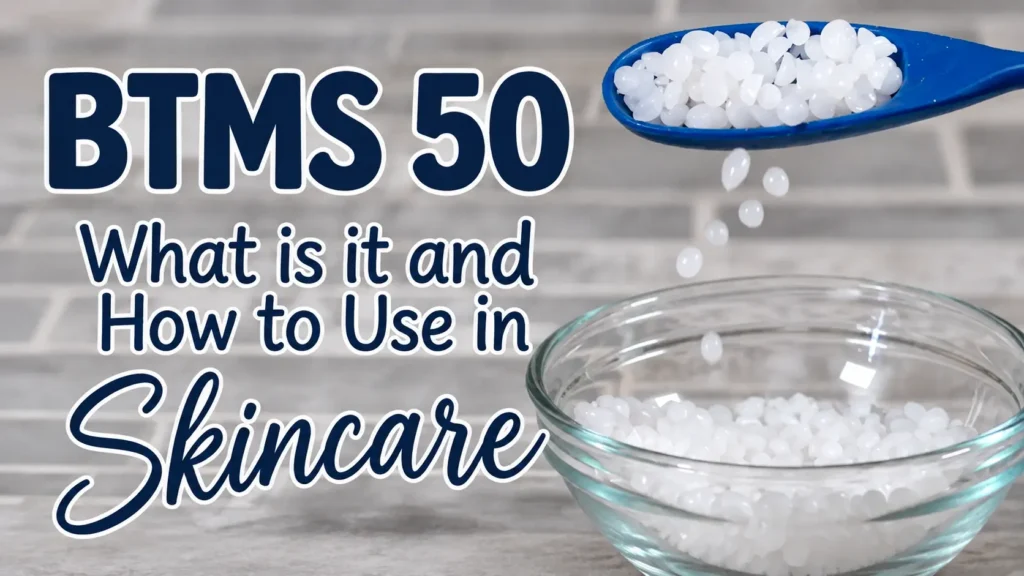
BTMS-50: What It Is, What It Does, and How to Use It in Haircare and Skincare
BTMS-50 is a popular ingredient in DIY haircare and skincare formulations. It is especially useful for making hair conditioners, conditioning shampoo bars, hair masks, and certain lotions and creams. If you want to create products that leave hair feeling softer, smoother, and easier to detangle, BTMS-50 is an ingredient worth understanding.
In this guide, we’ll cover what BTMS-50 is, how it works, how to use it in your formulas, and which DIY recipes you can make with it.
What Is BTMS-50?
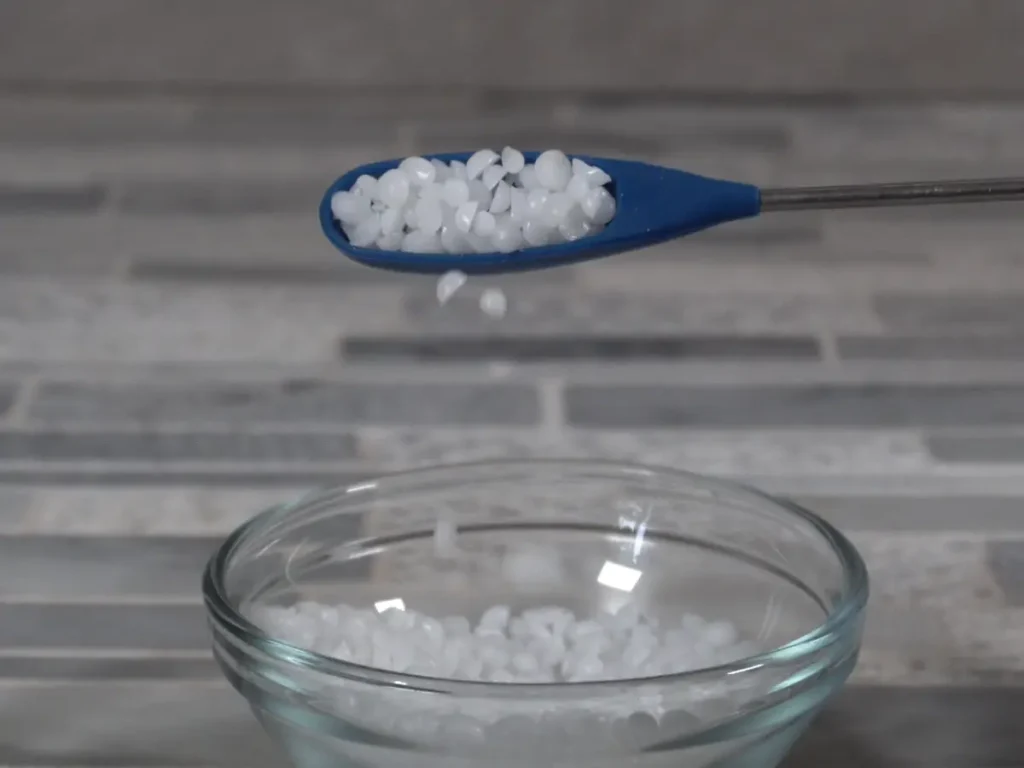
BTMS-50 stands for Behentrimonium Methosulfate (and) Cetyl Alcohol (and) Butylene Glycol, although the exact INCI listing can vary by supplier. Always check the ingredient declaration for the specific product you purchase.
BTMS-50 is a cationic conditioning emulsifier. It is commonly used in haircare products because it helps condition hair, reduce static, improve slip, and make detangling easier. It can also help combine oil and water in certain skincare emulsions.
The “50” generally refers to the approximate concentration of the active conditioning ingredient in the raw material, rather than the percentage you should automatically use in a finished product.
Unlike a traditional emulsifying wax used primarily to stabilize lotions, BTMS-50 also provides conditioning benefits. This makes it particularly useful when formulating products intended to improve the feel and manageability of hair.
What Does BTMS-50 Do?
BTMS-50 serves several purposes in cosmetic formulations.
Conditions Hair
BTMS-50 contains a positively charged conditioning ingredient that has an affinity for the negatively charged areas of hair. This helps improve the feel of the hair and reduces friction between strands.
The result can be softer-feeling hair that is easier to comb and manage.
Helps Detangle Hair
One of the biggest benefits of BTMS-50 is its ability to improve wet and dry combability. It helps reduce friction, making it easier to work through knots and tangles without excessive pulling.
This makes it useful in rinse-out conditioners, hair masks, and conditioning shampoo bars.
Reduces Static and Flyaways
Conditioning ingredients can help reduce static electricity and improve the smoothness of hair. BTMS-50 is particularly helpful in formulas designed for dry, frizzy, or difficult-to-manage hair.
Helps Emulsify Oil and Water
BTMS-50 can function as an emulsifier, helping oil and water form a more uniform mixture. This makes it useful in certain lotions, creams, and hair conditioners.
However, it is not interchangeable with every emulsifier. The appropriate choice depends on the product type, the complete formula, and the stability requirements.
Adds Slip and Improves Texture
BTMS-50 can help give conditioners and hair masks a smooth, slippery feel that makes them easier to distribute through the hair.
In solid shampoo bars, it can also contribute conditioning properties and affect the texture of the finished bar.
Where Can You Use BTMS-50?
BTMS-50 is most commonly associated with haircare, but it can be used in several types of formulations.
| Product | Why Use BTMS-50? |
| Hair conditioner | Improves slip, softness, and detangling |
| Hair mask | Provides conditioning for dry or damaged-feeling hair |
| Syndet shampoo bar | Adds conditioning and helps improve combability |
| Shampoo bar with conditioning ingredients | Provides conditioning alongside cleansing surfactants |
| Lotion or face cream | Can emulsify oil and water in compatible formulas |
| Emulsified scrub | May be useful in compatible rinse-off emulsions, depending on the formula |
For beginners, I recommend starting with a hair conditioner or a shampoo bar recipe that has already been formulated and tested.
How Much BTMS-50 Should You Use?
The appropriate percentage depends on the product you are making and the role BTMS-50 plays in the formula.
These are general starting ranges for formulation development, not universal usage limits. Always check the specifications for your particular raw material and evaluate the finished product.
| Product Type | General Starting Range |
| Rinse-out hair conditioner | 3–10% |
| Deep conditioner or hair mask | 3–10% |
| Solid conditioning or syndet shampoo bar | 3–8% |
| Lotion or cream | 2–5% |
| Emulsified rinse-off product | Depends on the complete formula |
Higher percentages do not automatically produce a better product. Too much conditioning material can make hair feel coated or heavy, while too little may not provide the desired conditioning or emulsion structure.
The ideal amount also depends on the other ingredients, including fatty alcohols, oils, butters, surfactants, and water.
If you are new to cosmetic formulation, learn how to work with percentages before changing an existing recipe. My guide, How to Convert a Recipe to a Formula, explains how to calculate ingredient percentages and resize batches.
How to Use BTMS-50
BTMS-50 is generally incorporated into the heated phase of a formulation so it can melt and distribute evenly.
Step 1: Weigh Your Ingredients
Use a digital scale to measure your ingredients by weight. Cosmetic formulas should be measured accurately rather than estimated with teaspoons or tablespoons.
Step 2: Add BTMS-50 to the Appropriate Phase
For a conditioner or lotion, BTMS-50 is generally added to the oil phase along with compatible oils, butters, and fatty alcohols.
For a solid shampoo bar, follow the specific recipe instructions because the surfactants and other ingredients affect how the mixture melts and comes together.
Step 3: Heat Until Melted
Heat the appropriate ingredients using a double boiler or another suitable controlled heating method. Follow the raw material supplier’s processing recommendations and avoid unnecessary overheating.
Step 4: Combine the Phases
For an emulsion, combine the heated water and oil phases according to the formulation instructions. Mix thoroughly using the recommended mixing equipment.
Step 5: Cool and Add Heat-Sensitive Ingredients
Once the mixture has cooled to the appropriate temperature, add ingredients designated for the cool-down phase, such as a compatible preservative or certain proteins.
For water-containing products, use a suitable broad-spectrum preservative at the correct concentration and pH. BTMS-50 does not preserve a product against microbial growth.
Step 6: Check the Finished Product
Allow the product to cool fully before evaluating its final texture. For water-based formulations, check the pH when appropriate, and assess stability rather than assuming the product is safe because it looks and feels correct.
BTMS-50 vs. BTMS-25
BTMS-50 and BTMS-25 are related conditioning ingredients, but they are not identical.
| Feature | BTMS-50 | BTMS-25 |
| Active conditioning material | Generally a higher concentration | Generally a lower concentration |
| Conditioning effect | Often provides more conditioning per gram | Often provides less conditioning per gram |
| Formulation adjustments | May require a lower amount to achieve a similar effect | May require a higher amount, depending on the product |
| Interchangeability | Not a direct gram-for-gram replacement | Not a direct gram-for-gram replacement |
The exact composition of each product depends on the supplier. Check the INCI declaration and technical documentation before substituting one for the other.
If you substitute BTMS-25 for BTMS-50, you may need to adjust the amount used and rebalance the remaining formula. Do not assume the finished product will have the same texture, conditioning performance, or stability.
Can You Use BTMS-50 in Lotion?
Yes, BTMS-50 can be used in certain lotion and cream formulations. It helps emulsify the oil and water phases and may contribute a different skin feel than other emulsifiers.
However, BTMS-50 is a cationic ingredient, so compatibility with other ingredients matters. It is not necessarily the best choice for every facial moisturizer or body lotion.
If you want to learn more about how emulsifiers work, read my guide to Emulsifiers in Skincare: What They Are and How They Work.
You can also read Emulsions: What Are They and How Do They Work? to explore the fundamentals of combining oil and water.
Common BTMS-50 Formulation Problems
My Hair Feels Heavy or Coated
The formula may contain too much conditioning material for your hair type, or the combination of oils, butters, and conditioning ingredients may be too rich.
Try reducing the conditioning load in a revised, properly tested formula rather than changing several ingredients at once.
My Conditioner Is Too Thin
The texture of a conditioner depends on the entire formula, including the emulsifier, fatty alcohols, oils, and water phase. BTMS-50 alone does not guarantee a particular thickness.
Review the percentages and processing method before adjusting the formula.
My Lotion Separates
Separation can result from an unsuitable emulsifier level, incompatible ingredients, poor processing, or an unstable formula.
Read Why Some DIY Skincare Separates and How to Fix It for more information about emulsion stability and troubleshooting.
Can I Skip the Preservative?
No, not if your product contains water and requires preservation. BTMS-50 is not a preservative. Water-containing conditioners and lotions need an appropriate preservation system, and the finished formula must be evaluated for safety.
DIY Recipes That Use BTMS-50
Ready to try BTMS-50 in your own formulations? These Summer Rain DIY recipes use it and are good places to explore how the ingredient works in different products.
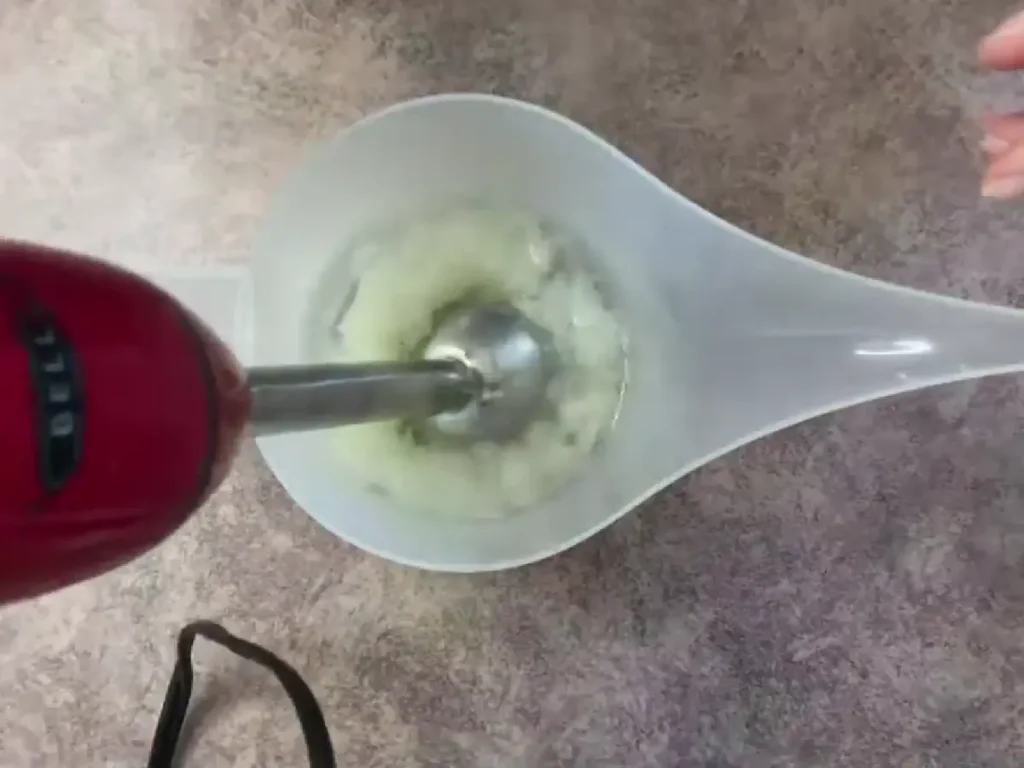
Beginner Hair Conditioner
How to Make Hair Conditioner From Scratch
This beginner-friendly conditioner introduces BTMS-50 in a traditional conditioner formula. The recipe combines it with cetyl alcohol, oils, and a water phase to create a product designed to improve hair softness and manageability.
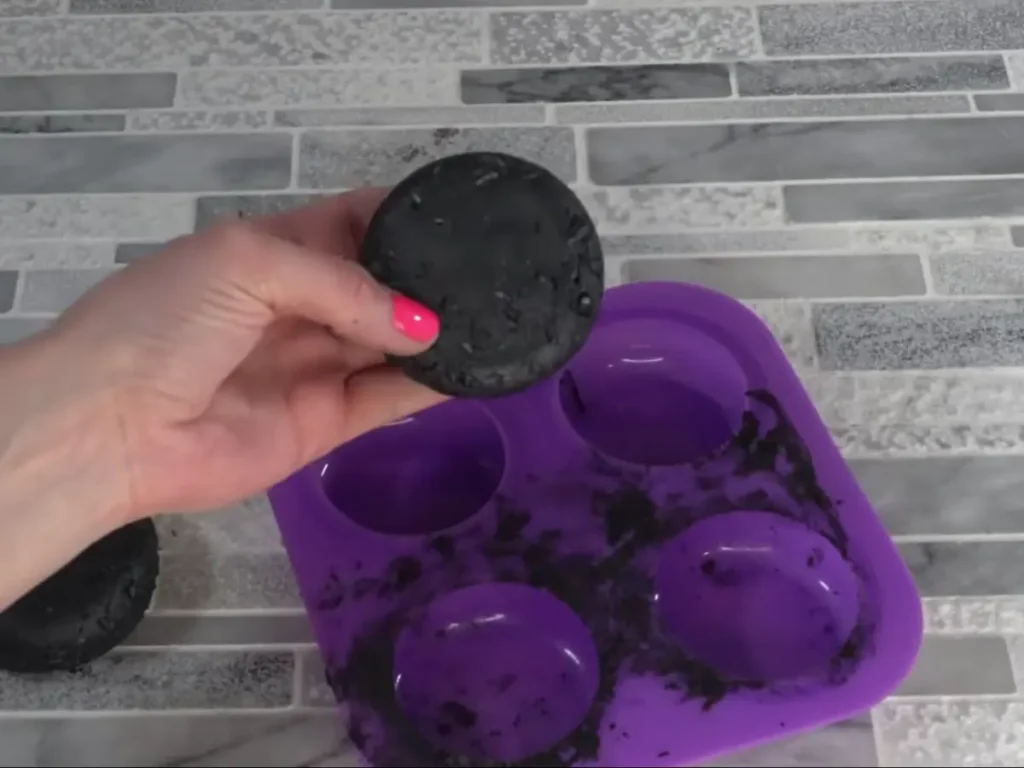
Activated Charcoal Shampoo Bar
How to Make DIY Activated Charcoal Detox Shampoo Bar
This syndet shampoo bar includes BTMS-50 alongside cleansing surfactants, cetyl alcohol, cocoa butter, and other ingredients. It demonstrates how a conditioning ingredient can be incorporated into a solid cleansing product.
Syndet Shampoo Bar
This shampoo bar recipe uses BTMS-50 for conditioning and slip alongside surfactants. It is another useful example of incorporating BTMS-50 into a solid haircare formula.
DIY Hair Mask
DIY Hair Mask to Strengthen and Soften Hair
This hair mask uses BTMS-50 with oils and butters to create a conditioning treatment designed to leave hair feeling softer and smoother.
DIY Face Cream
DIY Face Cream to Combat Dry Winter Skin
This face cream uses BTMS-50 with cetyl alcohol, mango butter, and olive oil to emulsify the water and oil phases.
These recipes show why BTMS-50 is a versatile ingredient, particularly for haircare. Always follow each recipe’s full instructions, including its preservation and pH requirements, rather than treating the ingredient as a standalone solution.
Frequently Asked Questions
Is BTMS-50 a natural ingredient?
BTMS-50 is commonly marketed for use in formulations with plant-derived components, but its composition and sourcing depend on the specific product. The term “natural” does not have one universal meaning for cosmetic ingredients, so review the supplier’s ingredient declaration and sourcing information if this is important to you.
Is BTMS-50 a preservative?
No. BTMS-50 is a conditioning emulsifier, not a broad-spectrum preservative. Water-containing products generally require an appropriate preservative system.
Can beginners use BTMS-50?
Yes. Beginners can work with BTMS-50 by following a tested recipe, weighing ingredients accurately, and learning the basics of emulsification, preservation, and pH.
A pre-formulated recipe is a better starting point than trying to build a conditioner from scratch without understanding the function of each ingredient.
Can I use BTMS-50 in a shampoo bar?
Yes. BTMS-50 is used in some syndet shampoo bar formulas to provide conditioning and improve slip. The finished bar must still have a suitable cleansing system, texture, pH, and stability.
Is BTMS-50 the same as emulsifying wax?
No. BTMS-50 is a cationic conditioning emulsifier that is especially useful in haircare. Other emulsifying waxes may be designed primarily to emulsify oils and water in lotions and creams. They differ in composition, compatibility, and performance, so they should not automatically be substituted for each other.
Final Thoughts
BTMS-50 is a useful ingredient to understand if you want to make your own hair conditioners, hair masks, and conditioning shampoo bars. It helps improve slip, detangling, and the feel of hair while also functioning as an emulsifier in compatible formulas.
Start with a tested recipe, understand what each ingredient contributes, and make small, measured adjustments only when you are ready to evaluate the results.
For more ingredient guides and formulation tutorials, visit the Summer Rain DIY Formulation Hub.