
When you first start making skincare products, one of the most confusing parts of formulation is figuring out which ingredients belong together. Why does glycerin usually go into the water phase? Why do emulsifiers and cetyl alcohol need to be heated? And why should some preservatives and active ingredients be added after a lotion has cooled?
The answer comes down to formulation phases.
Phases are groups of ingredients that are combined at a particular stage of making a product. They help you organize your formula, determine which ingredients need to be heated, and understand when to add ingredients that could be damaged by heat.
If you have ever looked at a lotion recipe and wondered why the ingredients are divided into Phase A, Phase B, and Phase C, this guide will help you understand what those labels mean and how to decide where an ingredient belongs in your own formulations.
By the end, you will understand the difference between the water phase, oil phase, and cool-down phase, how to work with pH adjustments, and what to look for when using an unfamiliar ingredient.
What Are Skincare Formulation Phases?
In cosmetic formulation, a phase is a group of ingredients that are combined together before, during, or after the main mixing process.
For example, a basic lotion contains water, oils, an emulsifier, and a preservative. These ingredients cannot all be treated the same way.
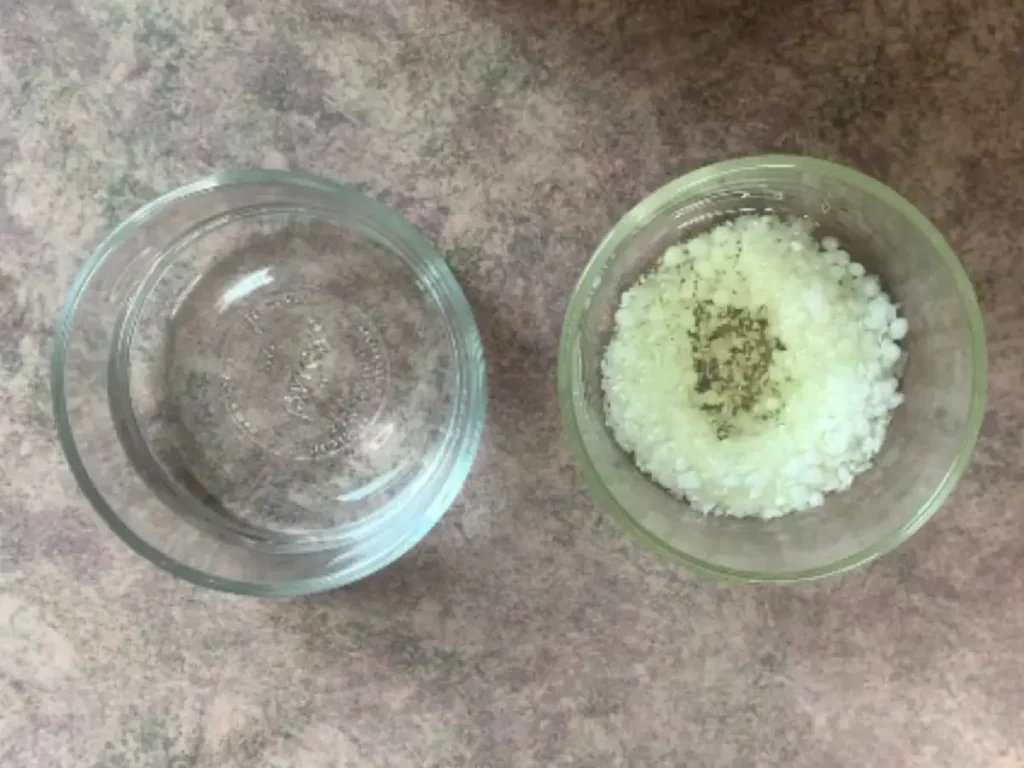
The water and oil phases are usually heated separately so that solid ingredients melt and both phases reach a suitable temperature for emulsification. They are then combined and mixed to create a lotion. Ingredients that are sensitive to heat are generally added later, once the mixture has cooled sufficiently.
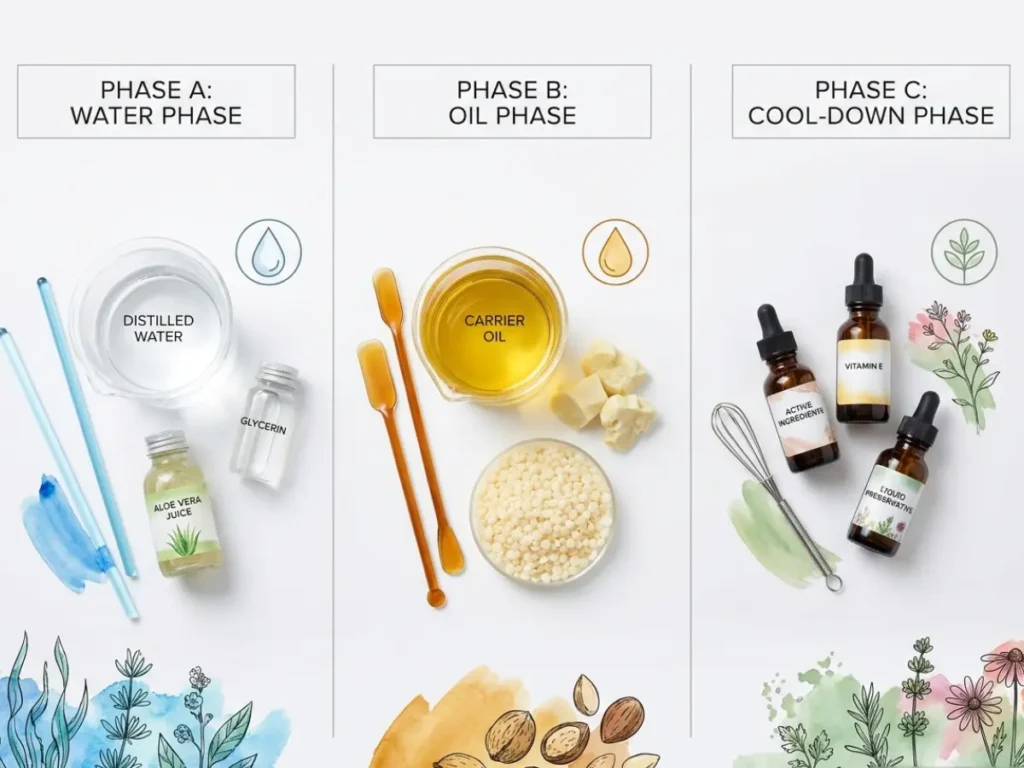
Most beginner lotion and cream formulas use three main phases:
- Phase A: Water phase. Ingredients that form the water-based portion of the formula.
- Phase B: Oil phase. Oils, butters, emulsifiers, and other ingredients that need to be melted together.
- Phase C: Cool-down phase. Ingredients added after heating, often because they are heat-sensitive or need to be incorporated at a lower temperature.
Some formulas also identify a separate finishing phase for pH adjustments and other final additions. These phases are a convenient way to organize a recipe, but the labels themselves are not universal. One supplier might call an ingredient Phase C, while another formula may assign it to Phase A or B.
The phase letters are less important than understanding the ingredient’s properties and the instructions for using it.

Phase A: The Water Phase
The water phase contains the water-based ingredients in your formula. In a lotion or cream, this phase forms the aqueous portion of the emulsion.
It is often heated to approximately 158–176°F (70–80°C), depending on the emulsifier and the requirements of the formula.
What ingredients belong in Water Phase?
Common examples include:
| Ingredient | Why it may belong in the water phase |
| Distilled water | Forms the primary water-based portion of the formula. |
| Hydrosols | Water-based ingredients that may replace some or all of the distilled water. |
| Water-soluble aloe juice | Can contribute to the water phase when compatible with the formula and heating process. |
| Glycerin | A water-soluble humectant that helps attract and retain moisture. |
| Propanediol | A water-soluble ingredient used as a humectant and solvent. |
| Panthenol | A water-soluble conditioning ingredient commonly used in skincare. |
| Niacinamide | A water-soluble active ingredient that can be incorporated according to its supplier’s temperature and pH guidance. |
| Xanthan gum | A water-phase thickener, usually dispersed properly before added to water phase. |
This is a general guide rather than a rule that every ingredient must follow in every formula. For example, some botanical extracts and aloe ingredients are not intended to be heated for extended periods. Always check the supplier’s recommended method of incorporation.
Why are water-phase ingredients heated?
Heating helps bring the water phase to the temperature needed for emulsification. When you are making a lotion with a heat-and-hold method, you typically heat the water and oil phases separately to suitable temperatures before combining them.
Trust me this is important, I will never forget the time I kept forgetting to heat my water phase. It was a mess!
This also gives you an opportunity to hydrate certain ingredients and dissolve heat-stable, water-soluble materials.
However, not every water-soluble ingredient needs to be heated. Some are better added during cool-down, and others need a specific preparation method.
For example, hyaluronic acid is commonly hydrated separately or dispersed using a supplier-recommended method to prevent clumping. Adding the powder directly to hot water is not automatically the best approach.
Does every water-soluble ingredient belong in Phase A?
No. Solubility is important, but it is only one part of the decision.
A water-soluble ingredient may be unsuitable for the heated water phase if it is sensitive to heat or if its supplier recommends adding it during cool-down.
The same applies to ingredients that dissolve in both water and other solvents. You need to know the ingredient’s recommended use level, solubility, temperature limits, and compatibility with the rest of the formula.
Phase B: The Oil Phase
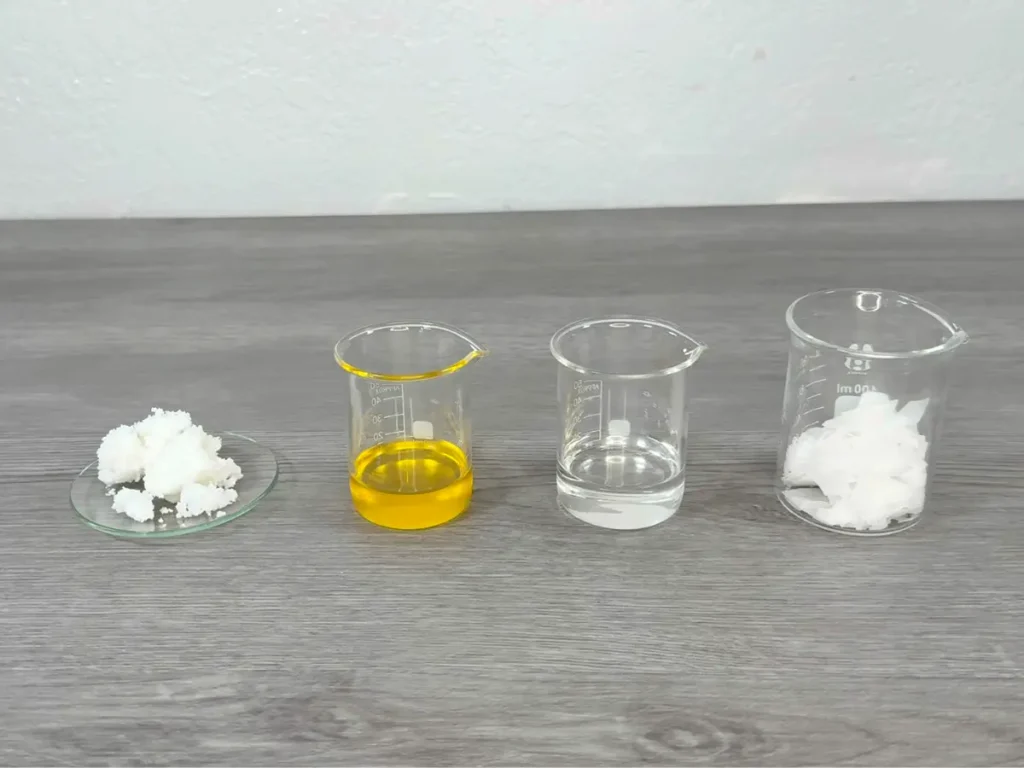
The oil phase contains the oils, butters, emulsifiers, and other oil-compatible ingredients used to create the oil portion of a lotion or cream.
In a traditional heated emulsion, this phase is usually heated to approximately 158–176°F (70–80°C), or to the temperature specified by the emulsifier manufacturer.
The goal is to melt the solid ingredients and create a uniform oil phase that can be combined with the water phase.
What ingredients belong in The Oil Phase?
| Phase | Ingredients | Purpose |
| Oil Phase | Carrier oils | Provide emollience and help soften the skin. |
| Oil Phase | Butters | Add richness, structure, and a thicker skin feel. |
| Oil Phase | Waxes | Add firmness and help create a protective barrier. |
| Oil Phase | Emulsifying wax | Helps combine the oil and water phases in lotions and creams. |
| Oil Phase | Fatty alcohols | Add thickness, improve texture, and contribute to emulsion stability. |
| Oil Phase | Oil-soluble ingredients | Provide specific functions depending on the ingredient. |
Here are some common oil phase ingredients:
| Ingredient | Why it may belong in the oil phase |
| Jojoba oil | An oil-compatible emollient that helps soften the skin. |
| Sweet almond oil | A liquid emollient used to improve skin feel. |
| Fractionated coconut oil | A lightweight liquid emollient. |
| Shea butter | A solid fat that needs to melt before incorporation into a typical heated emulsion. |
| Cocoa butter | A solid fat that contributes richness and firmness. |
| Olivem 1000 | An emulsifying wax that helps stabilize oil-in-water emulsions. |
| Emulsifying Wax NF | An emulsifier used in many lotion and cream formulations. |
| BTMS-50 | A cationic conditioning emulsifier used in suitable hair and skin formulations. |
| Cetyl alcohol | A fatty alcohol that can help thicken emulsions and improve their texture. |
| Stearic acid | A fatty acid used in appropriate formulations to increase consistency and modify texture. |
Why are oils and emulsifiers heated?
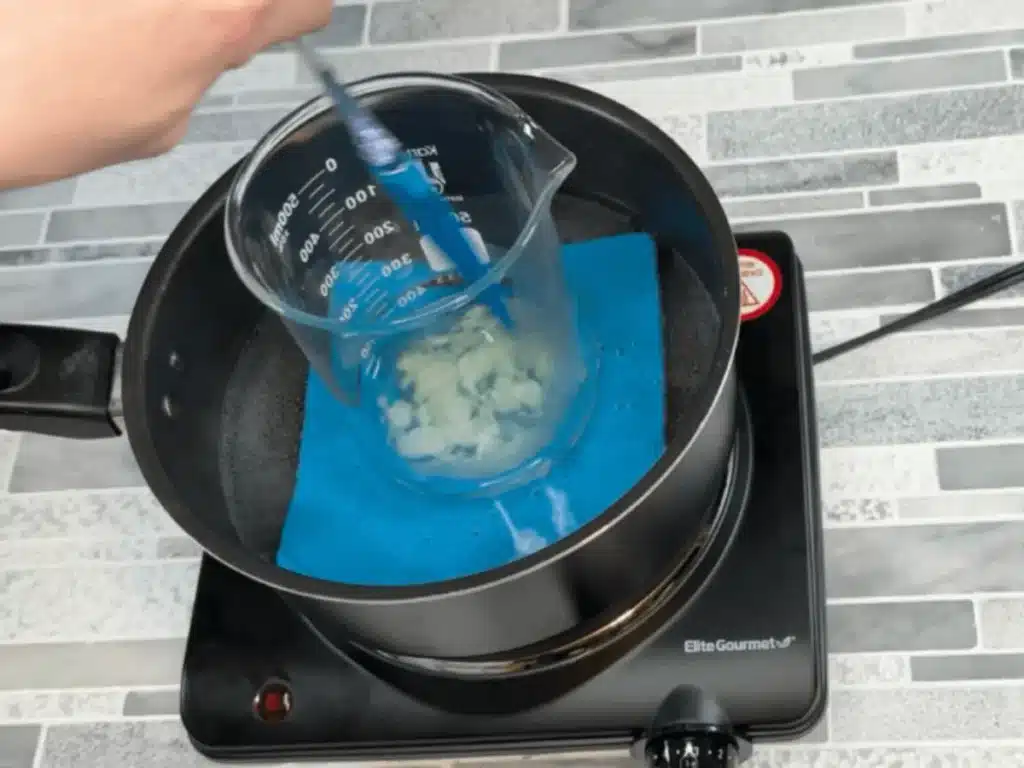
Many emulsifiers, fatty alcohols, butters, and waxy ingredients are solid at room temperature. They need to melt and become evenly distributed before the oil phase can be combined with the water phase.
Consider Olivem 1000. It contains cetearyl olivate and sorbitan olivate and is used to form oil-in-water emulsions. Heating it with the oil-phase ingredients helps it melt and distribute properly.
When the heated oil phase is combined with the water phase under suitable mixing conditions, the emulsifier helps form and stabilize droplets of oil dispersed throughout the water.
The way an emulsion forms and develops its final texture depends on the emulsifier, the oil phase, the water phase, the processing temperature, and the mixing method.
Do all oil-soluble ingredients belong in Phase B?
Not necessarily.
Some oil-soluble ingredients are heat-sensitive and should be added during cool-down if their supplier permits that method. Essential oils, fragrance oils, and certain specialty actives may fall into this category.
Vitamin E is another useful example. Tocopherol is oil-soluble and is commonly added to the oil phase or during cool-down, depending on the formula. It can help slow the oxidation of oils, but vitamin E is not a broad-spectrum preservative and does not protect a water-containing lotion against microbial growth.
When deciding where an oil-soluble ingredient belongs, check both its solubility and its temperature requirements.
Phase C: The Cool-Down Phase
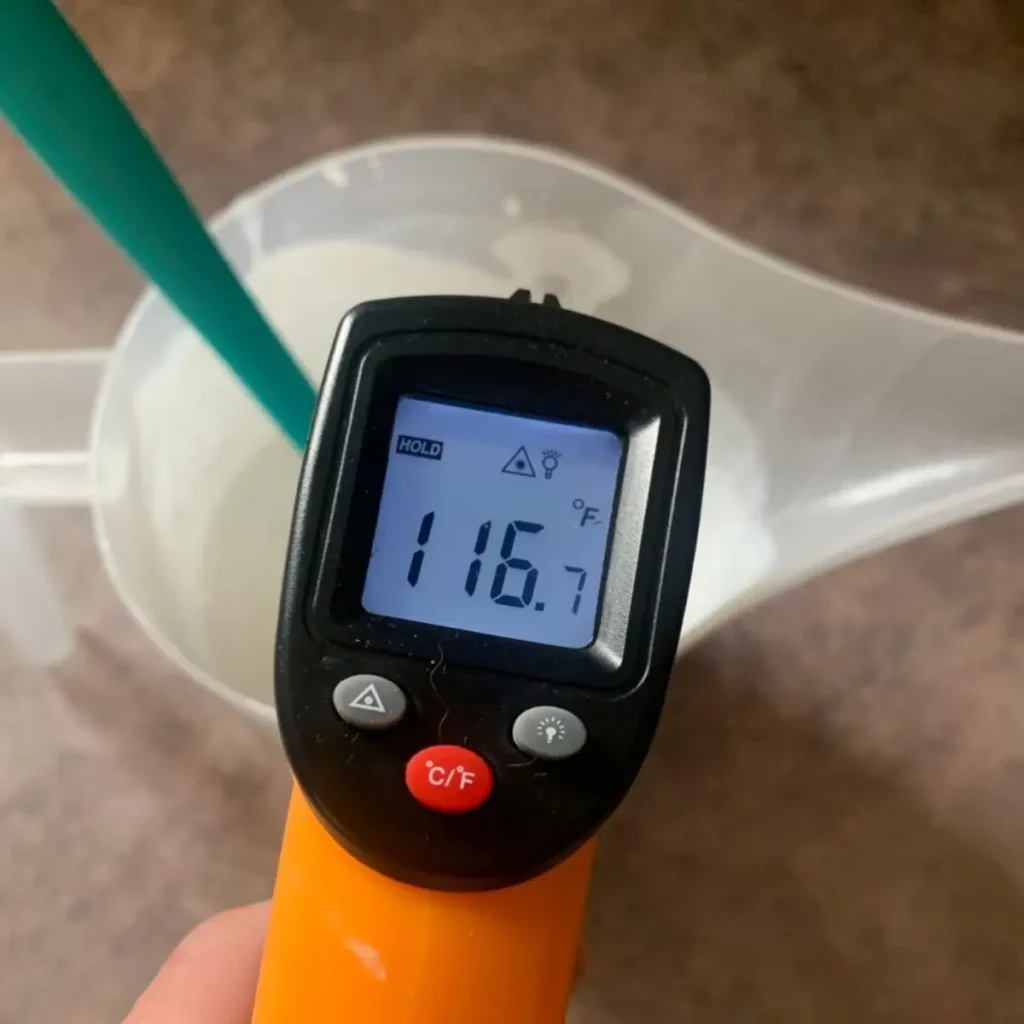
The cool-down phase contains ingredients that should be added after the main heating and emulsification process.
In many lotion formulas, ingredients are added during cool-down when the product reaches below 120°F. The exact temperature depends on the ingredient and the formulation.
This phase is particularly important when working with preservatives, fragrances, and heat-sensitive active ingredients.
What ingredients belong in Cool Down Phase?
| Ingredient | Why it may belong in the cool-down phase |
| Liquid Germall Plus | A broad-spectrum preservative generally added during cool-down according to its supplier’s instructions. |
| Geogard ECT | A preservative whose recommended processing conditions and final pH requirements must be checked before use. |
| Fragrance oil | Added during cool-down to limit unnecessary heat exposure |
| Essential oils | Added during cool-down, subject to the supplier’s temperature and usage guidance. |
| Panthenol | May be added during cool-down |
| Botanical extracts | Often added during cool-down, depending on the extract’s solvent, stability, and instructions. |
| Peptides | Frequently require specific temperature, pH, and compatibility conditions. |
| Other heat-sensitive actives | Added according to their individual processing requirements. |
Notice that some ingredients can appear in more than one phase. Panthenol, for example, may be incorporated into the heated water phase or added during cool-down depending on the material and formula.
That does not mean the ingredient can be placed anywhere without consideration. It means you need to follow the instructions for the exact ingredient you are using.
Why can’t you add everything during cool-down?
Some ingredients need heat to melt, dissolve, hydrate, or form the intended structure of the product.
For example, adding a solid emulsifier after a lotion has cooled will not necessarily allow it to melt and distribute correctly. Likewise, adding cetyl alcohol at the end of the process will not provide the same result as properly melting it into the oil phase.
Cool-down is intended for ingredients that can be incorporated at a lower temperature, not as a substitute for the earlier formulation steps.
Why is the preservative added during cool-down?
Many preservatives have temperature limits or processing recommendations that help maintain their effectiveness. Adding a preservative at the appropriate stage reduces unnecessary heat exposure and helps ensure it is incorporated as intended.
For example, Liquid Germall Plus is generally added during cool-down, following the supplier’s temperature and use-level instructions.
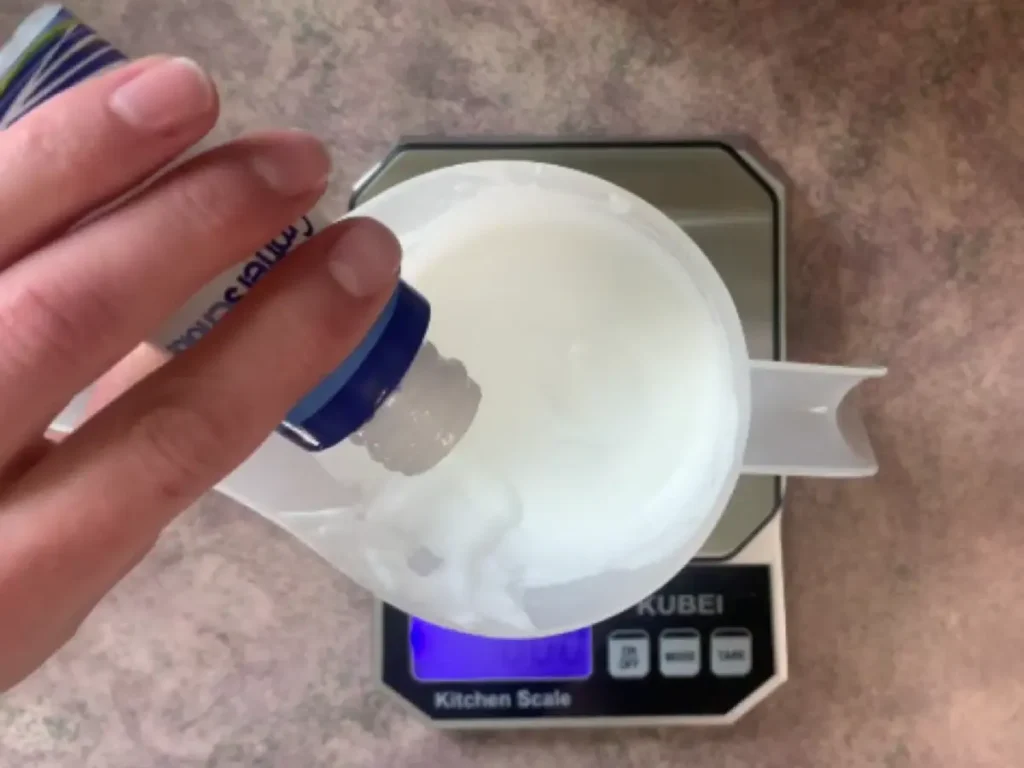
However, preservatives are not interchangeable. Different preservatives have different recommended use rates, pH ranges, compatibility requirements, and processing instructions.
A preservative must be suitable for the finished formula, used at the appropriate concentration, and incorporated correctly. Adding one during cool-down does not automatically make a product adequately preserved.
Phase D: Final Adjustments
Some formulas use a separate Phase D for finishing steps. Others include these steps under Phase C or simply list them as final adjustments.
This is where you may adjust the pH, make certain final additions, or bring the formula to its intended final weight.
What belongs in Adjustments Phase?
Common examples include:
- A diluted citric acid solution to lower pH.
- A suitable diluted base, such as sodium hydroxide solution, to raise pH when appropriate.
- Additional water to bring the formula to its intended final weight, when the process and formula allow for it.
Lactic acid may also be used in appropriate formulations to lower pH, but the correct adjustment method depends on the formula and the ingredients involved.
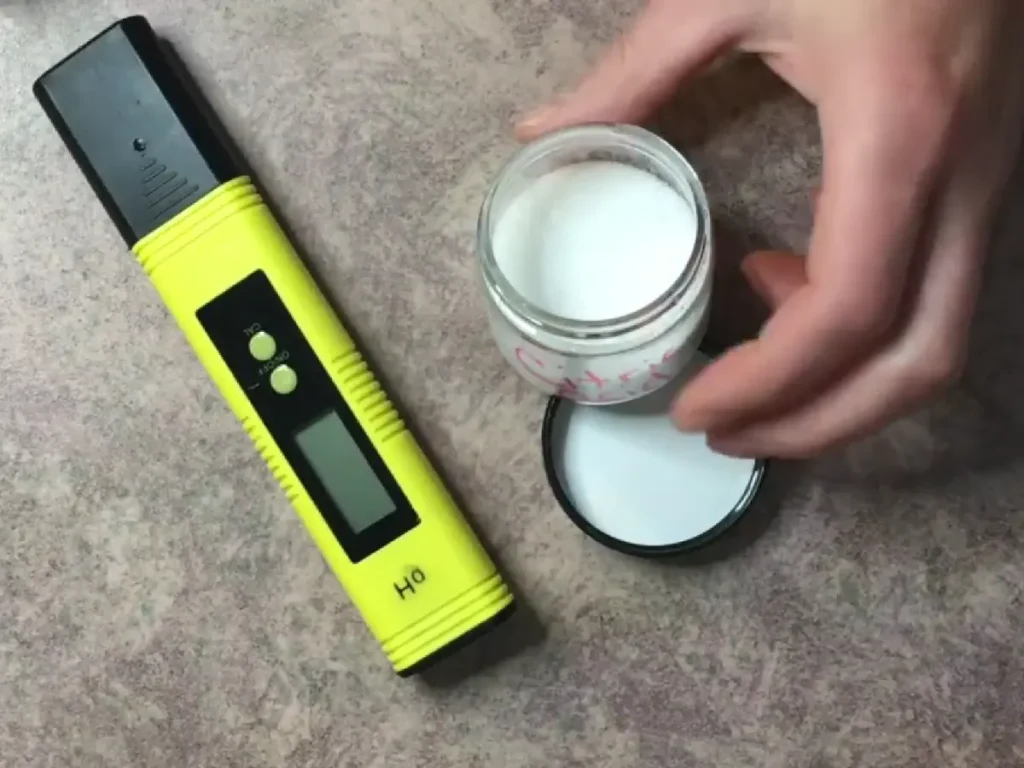
Why does pH matter?
The pH of a water-containing skincare product can affect preservative performance, active ingredient stability, ingredient compatibility, and skin feel.
A pH between 4.5 and 5.5 is suitable for some skincare products, but it is not a universal target for every lotion, serum, or cream.
The appropriate pH depends on the intended product, its active ingredients, and the requirements of the preservative system. For example, some preservatives work across a broader pH range than others.
To adjust pH, make small additions of a suitable diluted solution, mix thoroughly, and measure again. Avoid guessing how much acid or base is needed.
How to Determine Which Phase an Ingredient Belongs In
Once you understand the purpose of each phase, you can use a simple decision-making process when working with a new ingredient.
Step 1: Find out what the ingredient dissolves in
Start by checking the ingredient’s solubility.
Ask yourself:
- Is it water-soluble?
- Is it oil-soluble?
- Does it need a particular solvent?
- Does it need to be dispersed rather than dissolved?
Water-soluble ingredients are often suitable for the water phase, while oil-soluble ingredients are often suitable for the oil phase.
But solubility alone does not determine the final answer. An ingredient may need to be added during cool-down even if it is water-soluble or oil-soluble.
Step 2: Check its temperature requirements
Look at the supplier’s recommended processing temperature.
Can the ingredient tolerate the temperature used for the heated phases? Does it need to be added below a certain temperature? Does it require a particular hydration or dissolution method?
If an ingredient is heat-sensitive, it may need to be added during cool-down. Do not automatically assume that every ingredient must be added below 113°F (45°C); the correct limit depends on the specific ingredient.
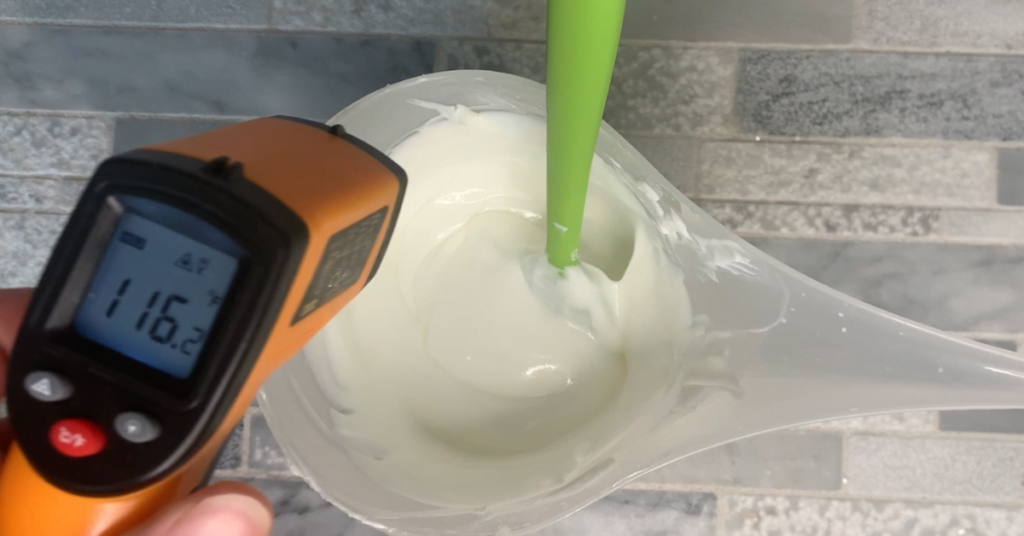
Step 3: Understand what the ingredient does
The ingredient’s function can help you determine how it should be incorporated.
For example:
- Emulsifiers: Usually need to be incorporated according to their melting and processing requirements.
- Fatty alcohols: Commonly melted into the oil phase when used to thicken a heated emulsion.
- Humectants: Often incorporated into the water phase, but the specific ingredient may have different instructions.
- Preservatives: Added according to the preservative manufacturer’s recommended method, temperature, and pH requirements.
- Fragrances: Incorporated at a temperature appropriate for the fragrance and the finished product.
- pH adjusters: Used during final adjustments when the formula’s pH can be measured reliably.
Step 4: Read the supplier’s documentation
This is the step you should never skip when formulating with a new ingredient.
Look for the recommended use rate, solubility, processing temperature, pH range, compatibility notes, and any special instructions for incorporation.
An ingredient supplier’s technical documentation is generally more useful than assuming an ingredient belongs in a phase simply because it is commonly used there.
Step 5: Check that the ingredients work together
Even when every ingredient is assigned to the correct phase, the finished product may not work as intended.
Check that the emulsifier is appropriate for the oil phase, the preservative is suitable for the formula, the active ingredients are compatible with the pH, and the total ingredient percentages add up correctly.
A formula needs to be designed as a whole. Correct phase placement is an important part of formulation, but it does not guarantee stability or preservation on its own.
Example: Assigning Phases in a Basic Lotion
Let’s put these ideas into practice with a simple oil-in-water lotion.
Imagine a formula containing distilled water, glycerin, jojoba oil, Olivem 1000, cetyl alcohol, Liquid Germall Plus, and fragrance.
The phases might look like this:
| Phase | Ingredients | Purpose |
| Phase A: Water | Distilled water, glycerin | Provides the water-based portion and humectant. |
| Phase B: Oil | Jojoba oil, Olivem 1000, cetyl alcohol | Provides the emollient portion, emulsification, and added thickness. |
| Phase C: Cool-down | Liquid Germall Plus, suitable fragrance | Adds the preservative and fragrance at the appropriate stage. |
| Phase D: Finishing | Suitable pH adjustment, if needed | Brings the finished formula into its intended pH range. |
This is an example of how to organize a formula, not a complete recipe. The percentages, processing temperatures, mixing method, preservative requirements, and final pH still need to be established.
How would you make this lotion?
1. Prepare the water phase.
Weigh the distilled water and glycerin according to the formula. Heat them as directed by the formulation method.
2. Prepare the oil phase.
Weigh the jojoba oil, Olivem 1000, and cetyl alcohol. Heat until the solid ingredients have melted and the phase is uniform.
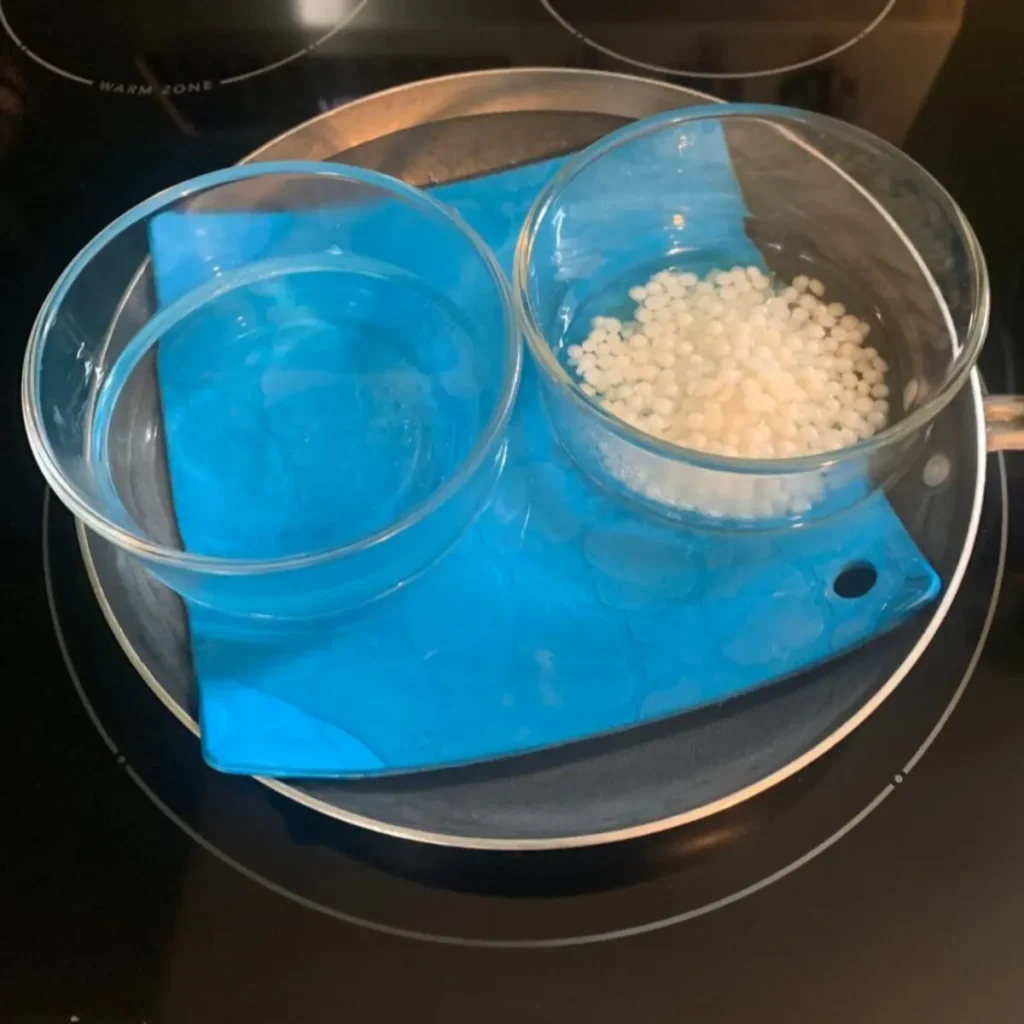
3. Combine the phases.
Bring both phases to the temperatures required by the emulsifier and method. Combine them while mixing as directed. Continue mixing as appropriate while the emulsion forms and cools.
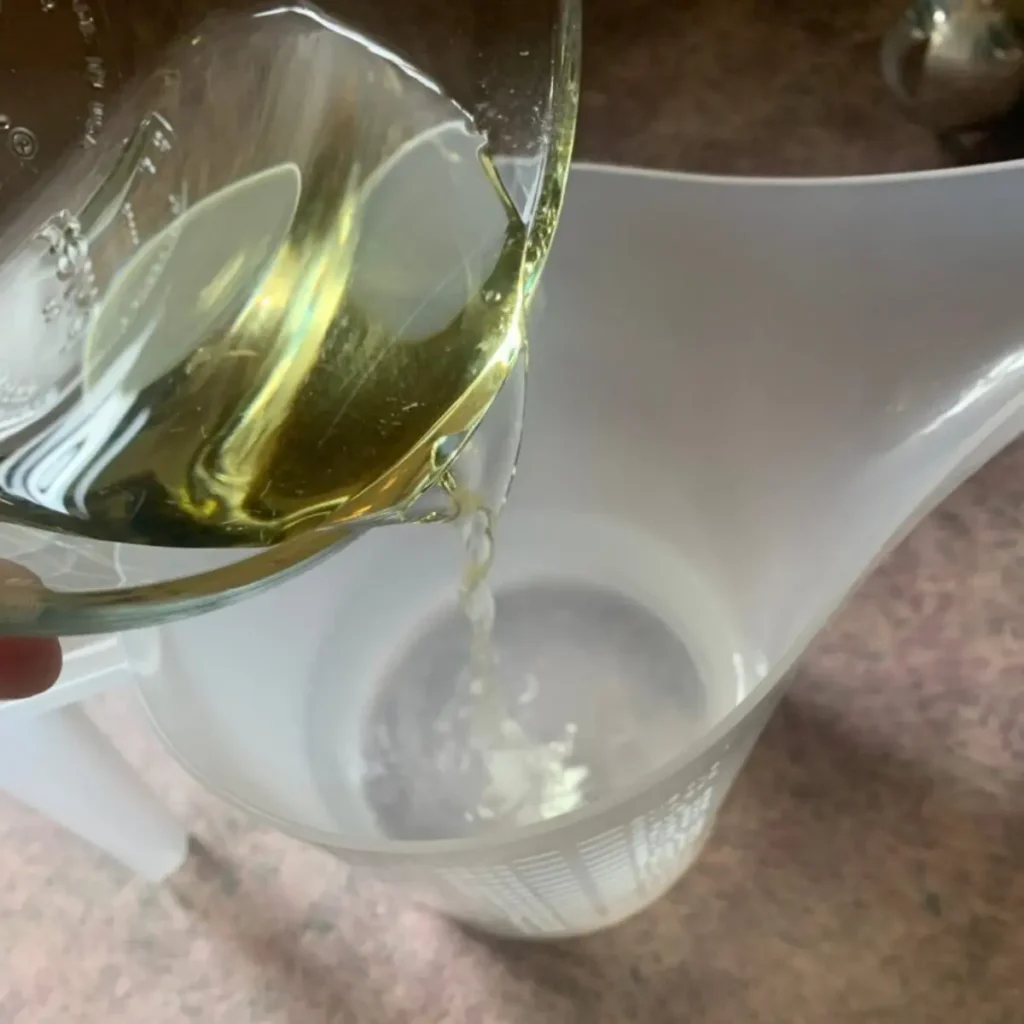
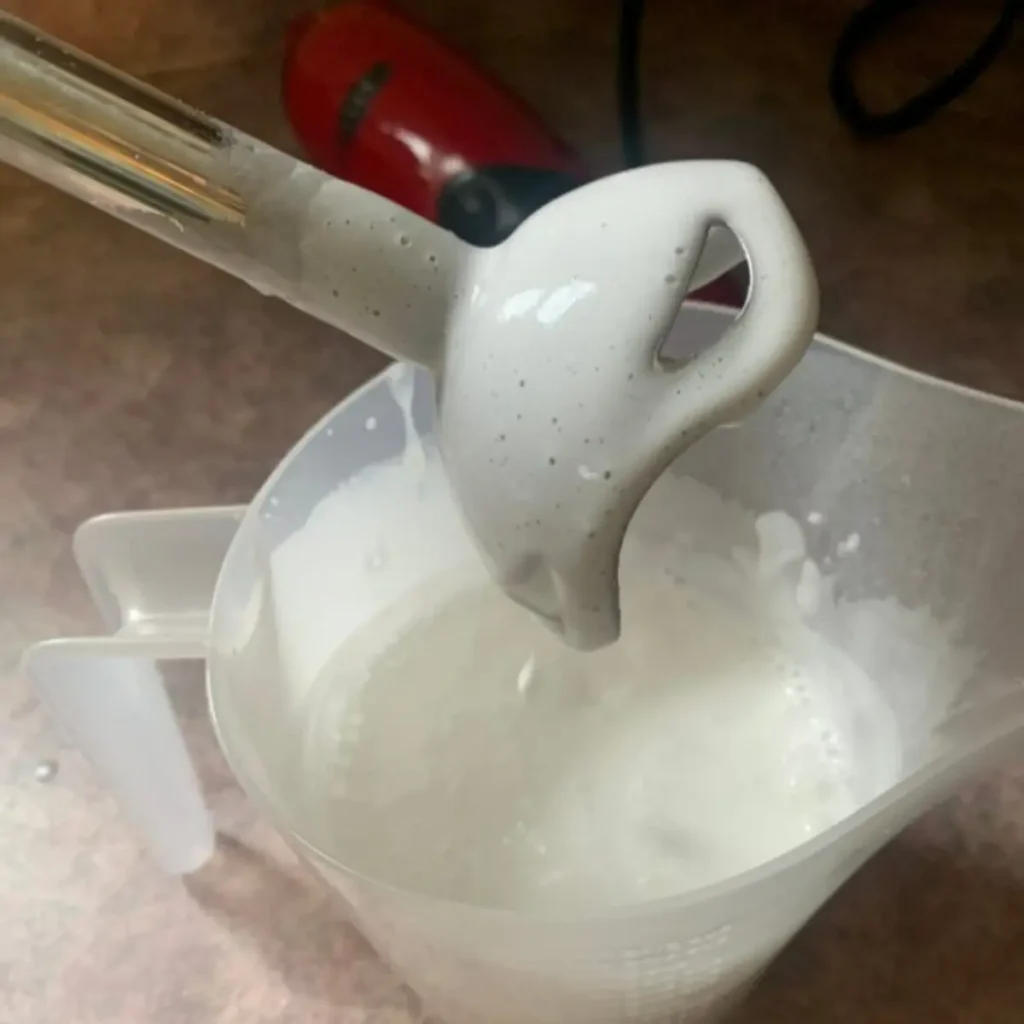
4. Add the cool-down ingredients.
When the product reaches the appropriate temperature, add Liquid Germall Plus and the fragrance, following their individual instructions.
5. Check the finished product.
Measure the final pH using a suitable method, make adjustments if necessary, and bring the batch to its intended final weight if the formula requires it. Allow the product to finish cooling and developing its texture before evaluating the result.
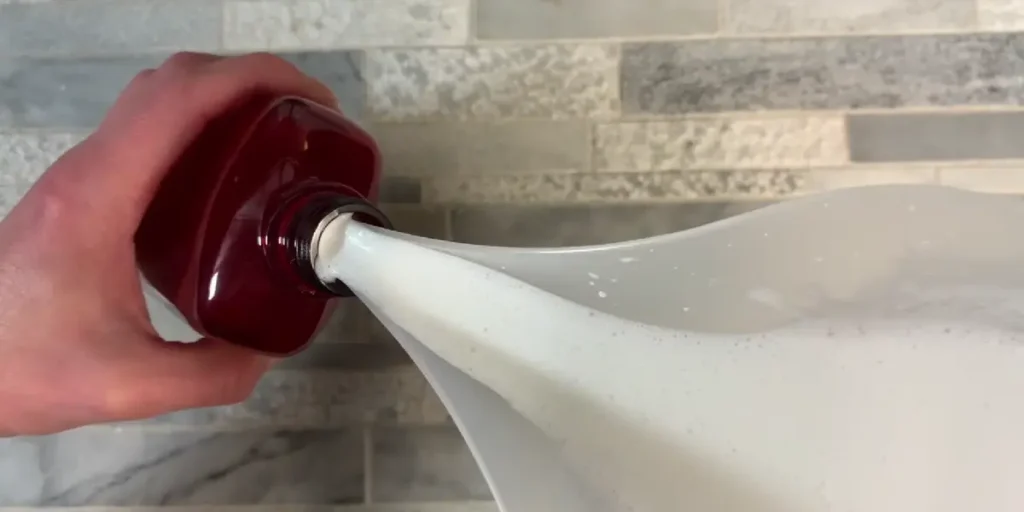
For a more detailed explanation of the formulation process, see How to Make a Basic Lotion.
Common Mistakes When Working With Formulation Phases
Understanding phases makes formulation easier, but there are a few mistakes worth avoiding.
Assuming water-soluble always means Phase A
A water-soluble ingredient may be heat-sensitive or require a special method of incorporation. Check its processing instructions before adding it to the heated water phase.
Putting every oil-soluble ingredient into the heated oil phase
Some oil-soluble ingredients are better added during cool-down. Fragrance, certain active ingredients, and other specialty materials may have temperature limits.
Adding the preservative without checking its instructions
Different preservatives have different use levels, temperature requirements, pH ranges, and compatibility considerations. Choose a preservative appropriate for the complete formula rather than treating all preservatives as interchangeable.
Assuming every lotion needs a pH of 4.5–5.5
That range is not appropriate for every formulation. Determine the target pH based on the product, its ingredients, and the preservative system.
Examples:
A lotion preserved with Liquid Germall Plus: This preservative has a broad effective pH range, so the formula does not automatically need to be adjusted to 4.5–5.5. Follow the supplier’s specifications and consider the other ingredients in the formula.
A lotion containing exfoliating acids: Ingredients such as lactic acid or glycolic acid may require a lower pH to function as intended. The target depends on the acid, its concentration, and the purpose of the product.
A lotion containing pH-sensitive ingredients: Some ingredients work best within a particular pH range. The formula needs to accommodate those requirements while remaining compatible with the preservative.
A formula using a pH-dependent preservative: Some preservatives, such as sodium benzoate and potassium sorbate, are more effective under acidic conditions. The target pH must account for the preservative’s effective range.
A lotion containing niacinamide: Niacinamide is generally compatible with a moderately acidic to near-neutral pH range, so targeting 4.5–5.5 is not always necessary. The complete formula and supplier guidance should determine the target.
Forgetting about processing losses
Water can evaporate during heating, which changes the final batch weight and ingredient percentages if the loss is not accounted for. When your method calls for it, check the batch weight and replace evaporated water as directed by the formula.
Thinking correct phases guarantee a stable product
Phase placement is only one part of formulation. Emulsifier selection, oil-phase percentage, mixing, cooling, pH, preservation, packaging, and stability testing all influence the finished product.
Frequently Asked Questions
Do all skincare products have three phases?
No. Three phases are common in heated lotions and creams, but not every skincare product needs them.
A simple anhydrous balm, facial oil, or oil-based serum may not need a water phase or an emulsifier. A water-based serum may not require a heated oil phase. Some products use different processing methods or additional phases for specialized ingredients.
Can an ingredient go into more than one phase?
Yes. The correct phase can depend on the specific ingredient grade, its solubility, its temperature sensitivity, and the formulation method.
For example, an ingredient might be suitable for either the heated water phase or cool-down, depending on the supplier’s directions. Always follow the requirements for the ingredient you actually have.
What happens if I add an ingredient to the wrong phase?
The result depends on the ingredient and the formula. It might dissolve poorly, form clumps, lose some of its effectiveness, affect the texture, or interfere with emulsion stability.
In some cases, a different phase may work perfectly well. That is why ingredient documentation and the intended processing method matter more than following phase letters blindly.
Does Phase C always have to be below 120°F?
No. This is a common cool-down temperature range, not a universal rule. Some ingredients have lower maximum temperatures, while others can tolerate more heat.
Follow the specific requirements for the preservative, fragrance, active ingredient, and emulsifier in your formula.
Can I change the order of the phases?
Sometimes, but not without understanding why the original method uses that order. Some ingredients need to melt or dissolve before the phases are combined. Others need to be added later to avoid unnecessary heat exposure.
Follow the recommended method for your emulsifier and ingredients, and test any changes rather than assuming the same result will occur.
How do I know whether my finished lotion is properly preserved?
You cannot determine adequate preservation just by looking at the lotion, smelling it, or checking its pH.
Use a suitable broad-spectrum preservative at the recommended level, confirm that it is compatible with the formula, and follow appropriate preservation testing practices. A preservative does not replace good manufacturing hygiene, and a stable-looking emulsion is not necessarily microbiologically safe.
Final Thoughts
Once you understand formulation phases, ingredient lists become much easier to interpret. Instead of memorizing that certain ingredients belong in Phase A, B, or C, you can work out where they belong by looking at their solubility, heat stability, function, and supplier instructions.
Start with those four considerations whenever you work with an unfamiliar ingredient. Then check that the full formula is compatible, correctly preserved, and designed to produce the texture and performance you want.
The goal isn’t simply to put ingredients into the right groups. It’s to understand why they are added at each stage so you can make better formulation decisions and develop your own skincare recipes with confidence.