
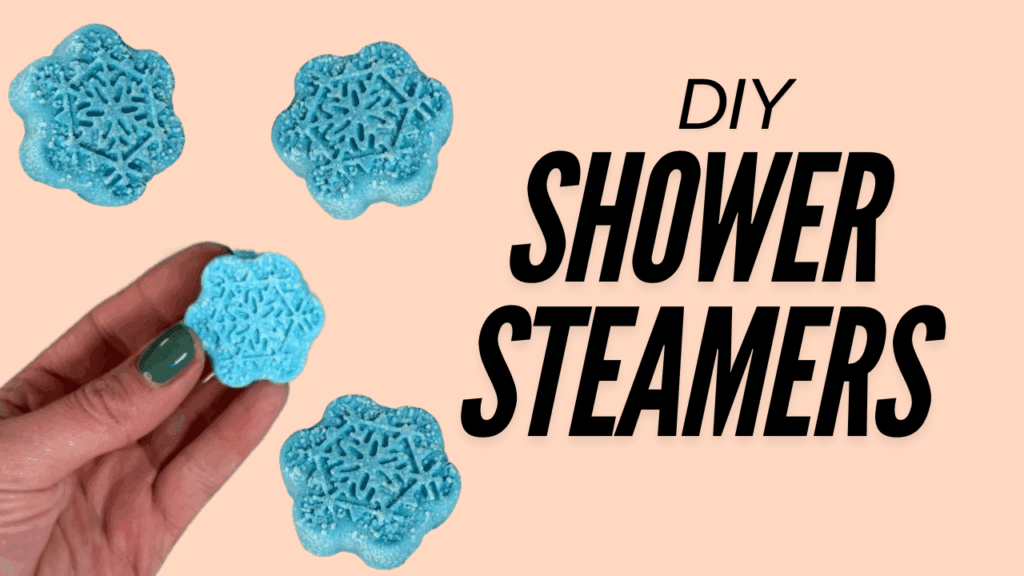
If you love the idea of a spa-like shower but don’t want to spend a lot of money on fancy products, these affordable shower steamers are one of my favorite DIYs to make.
They’re simple to put together, use just a handful of ingredients, and you can customize the fragrance and color to create your own shower steamer blends. This particular combination of lavender and sage has a fresh, herbal scent that makes an ordinary shower feel a little more special.
And if you’ve ever tried making shower steamers before, you probably already know that the hardest part isn’t mixing the ingredients. It’s getting the moisture just right.
Too little moisture and your shower steamers crumble. Too much and they can start fizzing before they ever make it into the shower.
I’m going to show you exactly what consistency you’re looking for so you can make shower steamers that hold together, dry properly, and actually work in the shower.
Why You’ll Love These DIY Shower Steamers
There are a few reasons I keep coming back to this recipe:
- They’re quick and easy to make.
- You only need a few basic ingredients.
- You can use different molds and fragrance blends.
- They’re a great alternative to bath bombs if you don’t have a bathtub.
- You can adjust the strength of the fragrance by changing where you place the steamer in your shower.
- Once you understand the basic technique, you can create lots of different shower steamer recipes.
The real trick is learning how much moisture to add. Once you get that part down, the rest is easy.
Shop This DIY
Want to make these shower steamers?
Prefer to Watch the Tutorial?
If you’d rather see how I make these shower steamers, I’ve also made a video tutorial showing the process from mixing the ingredients to molding the finished steamers.
Some links on this website are affiliate links, meaning I may earn a small commission if you click and make a purchase. This comes at no additional cost to you.
Ingredients and Supplies
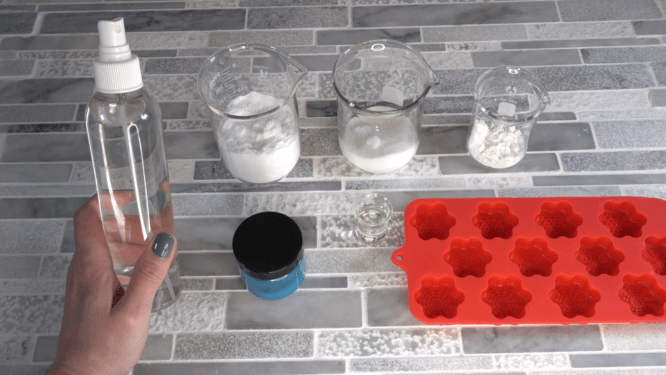
Baking Soda
Baking soda makes up most of the recipe and works with the citric acid to create the fizzing reaction when the shower steamer gets wet.
Citric Acid
Citric acid reacts with the baking soda when water is introduced. This is what gives the shower steamer its characteristic fizz.
Cornstarch
Cornstarch helps give the mixture some structure and helps the finished steamers hold their shape.
Lavender and Sage Fragrance Oil
I’m using a lavender and sage fragrance oil for this recipe. It has a fresh, herbal character that works really well for a shower steamer.
When choosing a fragrance oil for your own recipe, always check the supplier’s usage recommendations and intended application. Shower steamers are not the same as products intended to be applied directly to the skin.
Blue Mica Powder
Blue mica is completely optional. I like using a small amount because it gives the steamers some color without changing the basic recipe.
You can leave it out completely or use a different mica color.
Witch Hazel or Rubbing Alcohol
You’ll use this in a spray bottle to add just enough moisture to bind the mixture.
This is the part where you want to go slowly. You don’t want to pour the liquid into the bowl.
Silicone Mold
I’m using a snowflake mold, but you can use almost any silicone mold you have.
Small circles, flowers, hearts, and other simple shapes work well too.
The Shower Steamer Formula
| Ingredient | Weight | Percentage |
|---|---|---|
| Baking Soda | 138 g | 69% |
| Citric Acid | 44 g | 22% |
| Cornstarch | 10 g | 5% |
| Lavender & Sage Fragrance Oil | 8 g | 4% |
| Blue Mica Powder | Optional | — |
| Witch Hazel or Rubbing Alcohol | As needed | — |
| Total Batch Size | 200 g | 100% |
Note: Blue mica is optional and can be adjusted to achieve your desired color. Witch hazel or rubbing alcohol is used sparingly, just enough to help the mixture hold together when molding.
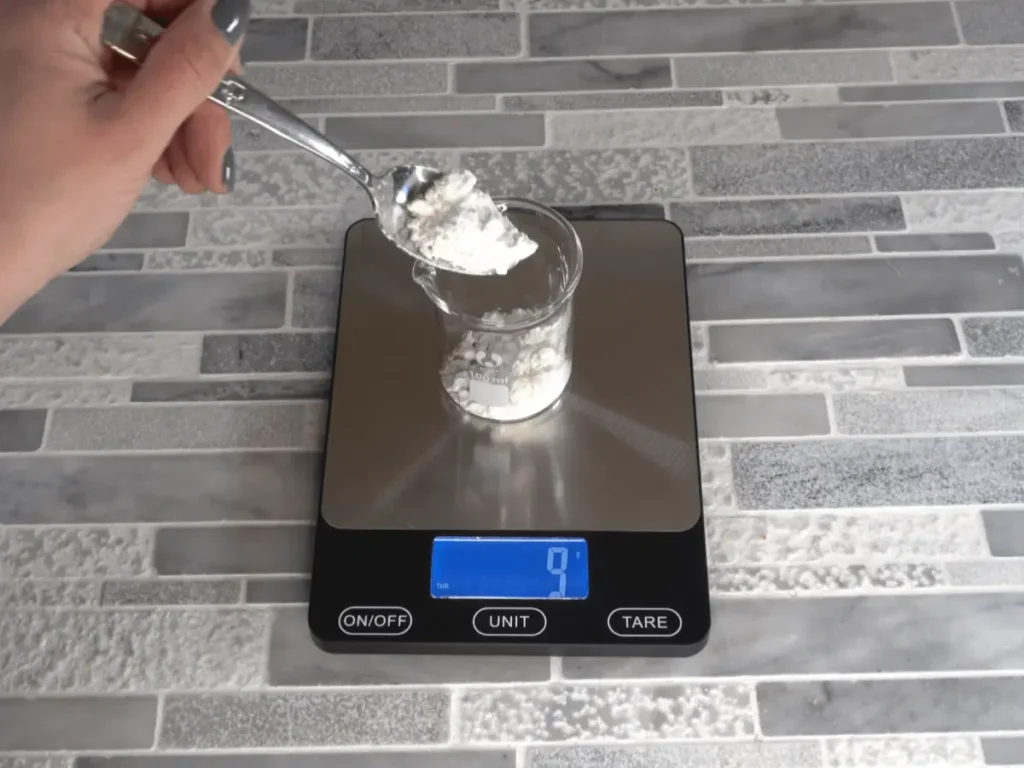
I recommend weighing the ingredients with a digital scale rather than measuring by volume. Small differences in the amount of each ingredient can affect how the finished shower steamers behave.
How to Make Shower Steamers
Step 1: Weigh and Combine the Dry Ingredients
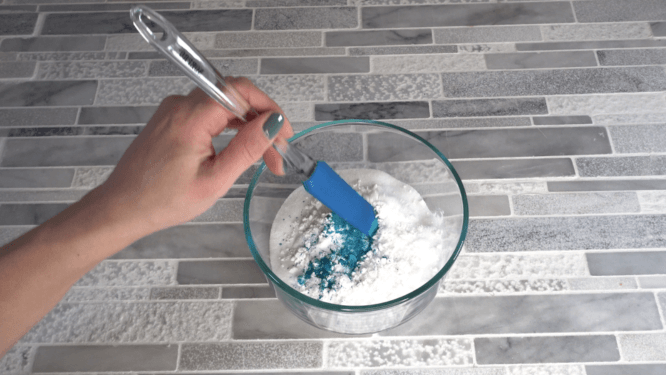
Start by weighing your baking soda, citric acid, and cornstarch.
Add them to a large mixing bowl along with your mica powder, if you’re using it.
Break up any clumps and mix everything thoroughly.
You want the color and dry ingredients evenly distributed before adding any liquid.
Step 2: Add the Fragrance Oil
Add the lavender and sage fragrance oil to the dry ingredients.
Mix thoroughly until the fragrance is evenly distributed throughout the mixture.
If you’re mixing by hand, I recommend wearing gloves.
This is also the point where you can customize the recipe with a different fragrance blend.
Just make sure the fragrance you’re using is appropriate for the intended application and follow the supplier’s recommended usage rate.
Step 3: Add the Moisture Slowly

This is the most important step when making shower steamers.
Put your witch hazel or rubbing alcohol into a fine-mist spray bottle.
Lightly mist the mixture a few times, then stir thoroughly.
Repeat this process slowly.
Do not spray a large amount of liquid into the bowl all at once.
What Consistency Should Shower Steamers Be?
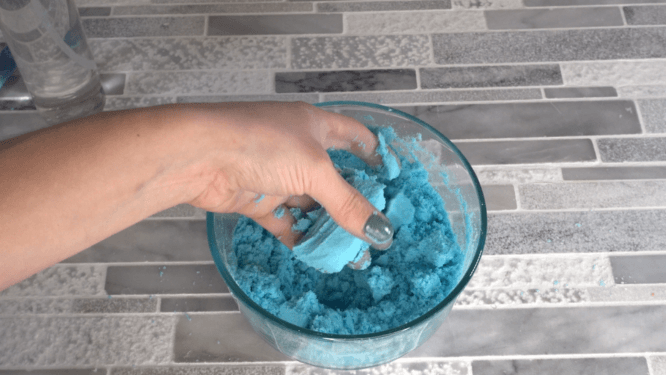
You’re looking for a consistency similar to damp sand.
Take a small amount of the mixture and squeeze it in your hand.
It should hold together when compressed, but it shouldn’t feel wet.
If you drop the mixture back into the bowl, it should maintain some of its shape rather than immediately falling apart.
This is the sweet spot.
Don’t Make This Mistake
The biggest mistake you can make when making shower steamers is adding too much liquid too quickly.
Remember that your mixture contains baking soda and citric acid. Once moisture is introduced, those ingredients can begin reacting.
If you add too much liquid, you’ll notice the mixture starting to fizz or puff.
If that happens, stop spraying immediately and mix everything thoroughly.
Adding moisture slowly gives you much more control.
Step 4: Press the Mixture Into Your Mold
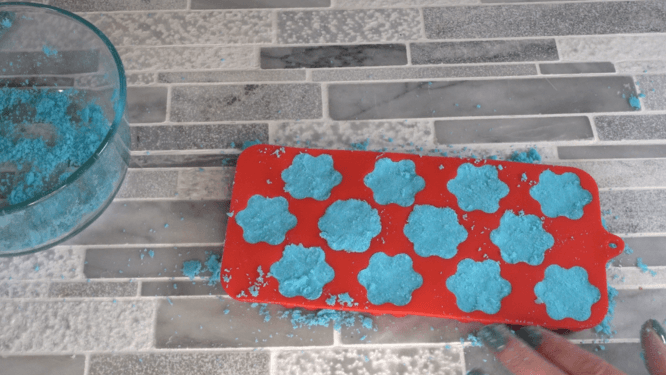
Once your mixture reaches the right consistency, press it firmly into your silicone mold.
Really pack it in.
The more firmly you compress the mixture, the better your finished shower steamers will hold together.
Once the mold is filled, smooth the surface.
If you want to add a little extra decoration, you can dust a very small amount of mica into the mold before adding the mixture.
Step 5: Let the Shower Steamers Dry
Leave the filled molds somewhere cool and dry for approximately 12 to 24 hours.
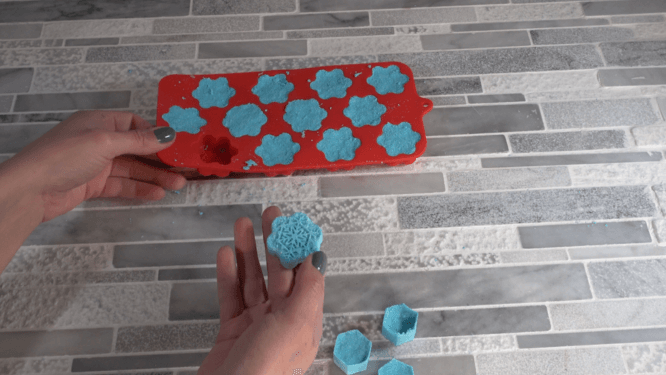
Try to avoid humid areas while they’re drying.
Humidity can introduce moisture to the mixture and cause the baking soda and citric acid to begin reacting prematurely.
Once the steamers are completely dry and firm, gently remove them from the mold.
Step 6: How to Use a Shower Steamer
Place one shower steamer on the floor of your shower where it will receive some water, but don’t put it directly underneath the strongest stream.
You want water to gradually activate the steamer rather than completely wash it away immediately.
For a stronger fragrance experience, move it slightly closer to the water.
For a lighter experience, place it farther away.
Important: Shower Steamers Are Not Bath Bombs
These shower steamers are designed specifically for use in the shower.
Do not use this recipe as a bath bomb.
The fragrance oil level in this formula is intended for a rinse-off shower environment rather than soaking in bath water.
Troubleshooting Shower Steamers
Why Are My Shower Steamers Crumbling?
If your shower steamers crumble when you remove them from the mold, your mixture probably didn’t have quite enough moisture or wasn’t compressed firmly enough.
Next time, add a few additional light sprays of witch hazel or rubbing alcohol and mix thoroughly before checking the consistency again.
Don’t add a lot at once.
Why Did My Shower Steamers Puff Up?
Puffing usually means the mixture got too wet and the baking soda and citric acid started reacting.
The solution is to use less moisture.
Spray lightly, mix thoroughly, and check the consistency frequently.
Why Are My Shower Steamers Soft?
Give them more drying time.
Depending on the humidity in your home and the size of your molds, they may need longer than 12 hours to become completely firm.
Why Did My Shower Steamers Start Fizzing While I Was Making Them?
Too much moisture was probably added too quickly.
Stop spraying and mix the ingredients thoroughly.
When you continue, use a much lighter mist.
How Do I Keep Shower Steamers From Reacting During Storage?
Moisture is the enemy of finished shower steamers.
Make sure they’re completely dry before storing them and keep them in an airtight container in a cool, dry location.
How to Customize Your Shower Steamers
Once you understand the basic recipe, there are so many ways to make these your own.
Change the Fragrance
Try different fragrance combinations to create different shower experiences.
Citrus, floral, mint, herbal, and woodsy fragrances can all work beautifully in shower steamers.
Just remember to check the fragrance supplier’s usage information for the intended application.
Change the Color
You can coordinate the mica color with your fragrance.
Try yellow for citrus blends, green for herbal scents, pink for floral fragrances, or leave them white for a simple look.
You only need a small amount of mica.
Change the Mold
The mold doesn’t affect the basic recipe, so this is an easy way to change the look of your steamers.
Snowflakes are fun for winter, while flowers, hearts, and geometric shapes work year-round.
How to Make Stronger or Lighter-Scented Shower Steamers
One of the easiest ways to control the scent while you’re using a shower steamer is to change its placement.
For a stronger fragrance, place the steamer closer to where the water hits.
For a slower, lighter experience, move it farther away from the direct stream.
You don’t necessarily need to change the recipe to change how strong the shower smells.
Frequently Asked Questions
How long do homemade shower steamers last?
If they are completely dry and protected from humidity, homemade shower steamers can remain usable for quite some time. Their longevity will depend on storage conditions, fragrance, and how well they are protected from moisture.
Can I use essential oils instead of fragrance oil?
You can formulate shower steamers with essential oils, but don’t simply substitute essential oils at the same amount without considering their specific properties and recommended usage.
Always check the safety and usage information for the essential oil you’re using.
Can I make shower steamers without mica?
Absolutely.
Mica is only there for color. Leaving it out won’t affect the basic function of the shower steamer.
Can I use a different mold?
Yes. Silicone molds are ideal because they make it easy to remove the finished steamers.
Choose a mold with cavities that aren’t extremely complicated or delicate.
Why do my shower steamers dissolve so quickly?
If the steamer is sitting directly under the shower stream, it will dissolve much faster.
Move it farther away from the main flow of water if you want it to last longer.
Can I use these as bath bombs?
No. This recipe is formulated as a shower steamer rather than a bath bomb.
More Shower Steamer Recipes to Try
If you enjoyed making these, I have a few more shower steamer recipes you can try.
DIY Menthol Crystal Shower Steamers
If you want a completely different type of shower steamer, try my DIY Menthol Crystal Shower Steamers. Menthol gives these a very different experience from the lavender and sage version.
DIY Aromatherapy Shower Steamers
You can also check out my Aromatherapy Shower Steamers tutorial if you want to experiment with different fragrance combinations.
DIY Shower Steamers: Recipe and Video Tutorial
If you’re new to making shower steamers, this is a post on Troubleshooting Shower Steamers
Complete Your DIY Shower Routine
Once you’ve made your shower steamers, why not make another simple DIY for your self-care routine?
My Vegan Lotion Dots are one of my favorite easy solid lotion recipes. They’re small, portable, and melt onto your skin as you use them.
If you’re building a collection of homemade body care products, they’re a great project to make alongside your shower steamers.
[Link to your Vegan Lotion Dots post.]
Final Thoughts
I love DIY projects that don’t require a huge list of ingredients or complicated equipment, and these shower steamers are exactly that.
The recipe itself is simple. The trick is learning to add the moisture slowly enough that you don’t accidentally activate the baking soda and citric acid before the steamers ever reach the shower.
Once you get that wet-sand consistency right, making them becomes much easier.
And the best part is that you can change the fragrance, color, and mold to create completely different versions from the same basic formula.
If you make these lavender and sage shower steamers, I’d love to see what you create.
Happy making!
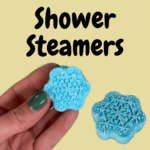
Best Affordable Shower Steamers Recipe
Ingredients
- 138 grams | 69% Baking soda
- 44 grams | 22% Citric acid
- 10 grams | 5% Cornstarch
- 8 grams | 4% Lavender and Sage fragrance oil
- Blue mica powder
- Witch hazel
- Silicone mold
Instructions
- In a large mixing bowl, combine the baking soda, citric acid, corn starch, and mica powder. Break up any clumps with your fingers or a whisk. Mixing thoroughly at this stage helps prevent uneven color or texture later.
- Pour in your lavender and sage fragrance oil and mix until it’s fully combined. You will want to wear gloves if mixing by hand.
- Now comes the tricky part — adding just enough moisture. Using your spray bottle, lightly mist the mixture a few times, stirring between sprays.You’re looking for that wet sand consistency — damp enough to hold its shape when squeezed, but not so wet that it starts fizzing. If you drop it from a few inches, the shape should hold.
- Once your mixture is holding together like damp sand, it’s time to mold. Press the mixture firmly into your silicone mold. The tighter you pack it, the better it holds once dry.
- Set the molds in a cool, dry place for 12 to 24 hours. Avoid moisture while they dry, since humidity can cause them to react early.