
If you love making homemade body scrubs but don’t enjoy the oily residue that traditional sugar scrubs can leave behind, this DIY emulsified sugar scrub is a fun alternative.
This formula combines sugar for exfoliation, shea butter and sweet almond oil for conditioning, and vegetable glycerin for humectant properties. Polysorbate 20 helps disperse the small amount of oil and fragrance when the scrub comes into contact with water, making it easier to rinse away.
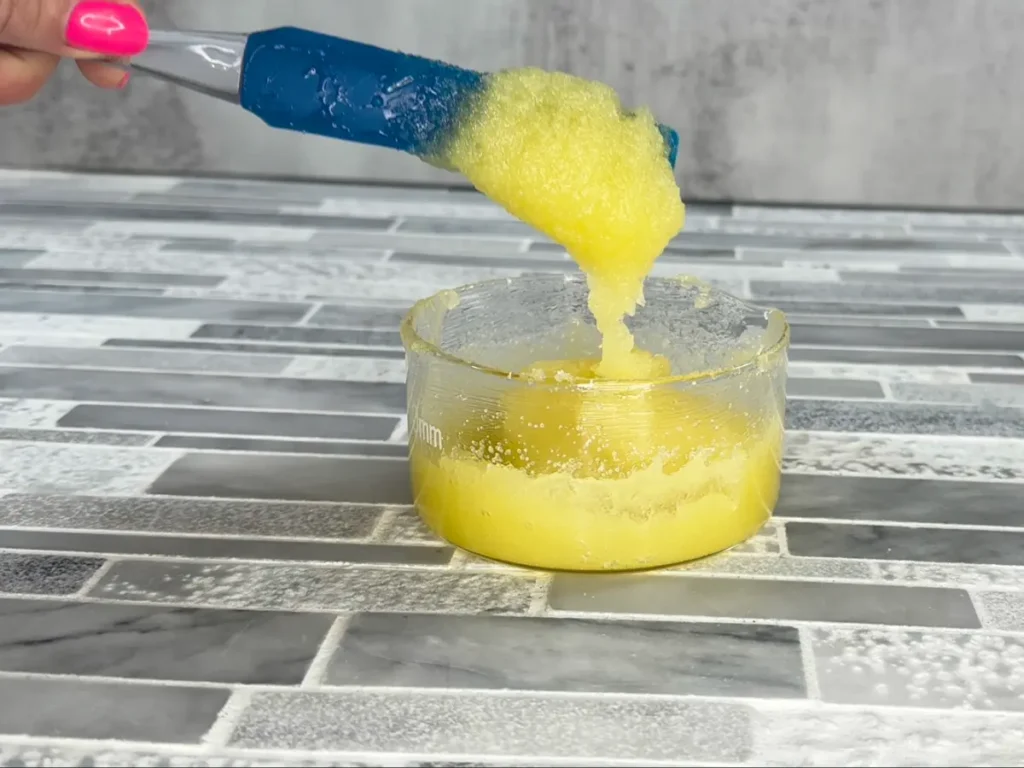
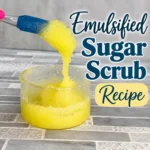
The result is a thick, creamy sugar scrub with a frosting-like consistency that’s easy to scoop and spread over the skin.
In this tutorial, I’ll walk you through each ingredient, explain what it contributes to the formula, show you how to make the scrub, and share substitution ideas so you can start experimenting with your own formulations.
If you’re new to making skincare products, you may also enjoy my Skincare Formulation for Beginners guide.
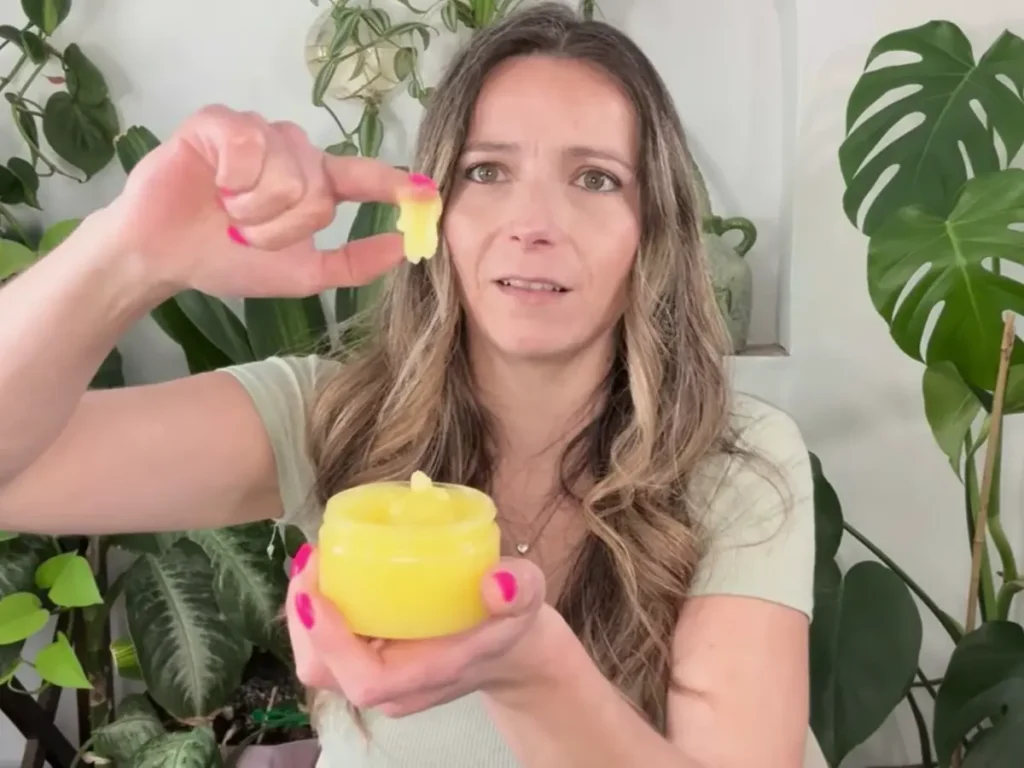
Watch the Video Tutorial
Watch the full tutorial to see how I melt the ingredients, combine the formula, and fold in the sugar to create the finished scrub. water during rinsing. This creates a scrub that feels rich during use but washes clean—no oily skin, no slippery tub.
Some links on this website are affiliate links, meaning I may earn a small commission if you click and make a purchase. This comes at no additional cost to you.
What Is an Emulsified Sugar Scrub?
An emulsified sugar scrub is a rinse-off exfoliating product that combines an exfoliant, such as sugar, with conditioning ingredients like oils and butters.
Unlike a traditional oil-based sugar scrub, an emulsified scrub contains an ingredient that helps the oils disperse when they come into contact with water.
This makes rinsing easier and can reduce the oily residue left behind on your skin and shower surfaces. No more ring on the tub!
There are a few different ways to formulate this type of product. Some use traditional emulsifying waxes, while others use solubilizers or surfactants to help disperse oils during rinsing.
In this recipe, I’m using Polysorbate 20.
What to expect from this formula:
- A thick, scoopable consistency
- Sugar particles for physical exfoliation
- A conditioning feel from shea butter and sweet almond oil
- Glycerin for humectant properties
- Easier rinsing compared with a traditional oil-only scrub
Emulsified Sugar Scrub Formula
This formula is written in percentages as well as grams. Percentages are particularly helpful when you want to make a larger or smaller batch without changing the proportions of your ingredients.
| Ingredient | Percentage | Weight |
|---|---|---|
| Vegetable glycerin | 36% | 82 g |
| Shea butter | 4% | 9 g |
| Sweet almond oil | 2% | 4.5 g |
| Polysorbate 20 | 2% | 4.5 g |
| Fragrance oil | 2% | 4.5 g |
| Granulated sugar | 54% | 122 g |
| Total | 100% | 226.5 g |
A note about percentages: Always formulate using weight rather than volume. A digital scale will give you much more consistent results than measuring ingredients in tablespoons or cups.
If you want to learn how to calculate percentages and resize recipes, read my guide on how to formulate skincare products using percentages and grams.
What Each Ingredient Does
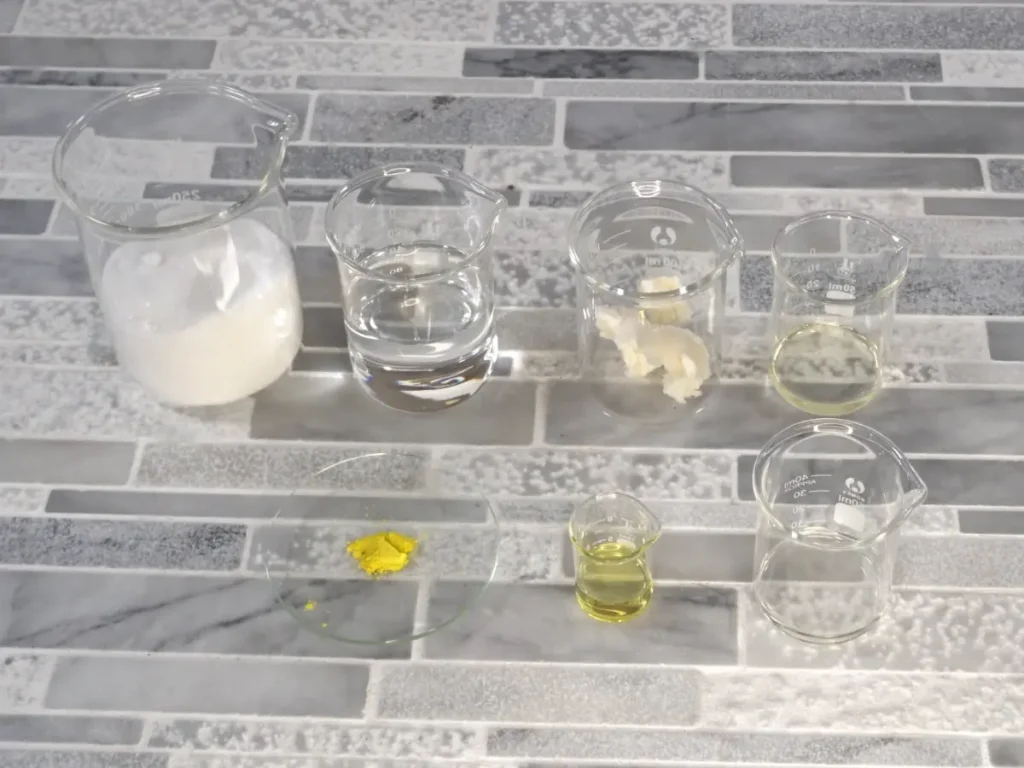
Understanding the purpose of each ingredient makes it easier to troubleshoot a formula and make informed substitutions.
Vegetable Glycerin
Glycerin is a humectant, meaning it attracts and holds water. It is commonly used in skincare formulations to help improve skin hydration.
In this scrub, glycerin also contributes to the consistency and feel of the finished product.
One thing to understand about glycerin is that it can feel sticky or tacky, especially when used at higher concentrations. At 36%, it makes up a substantial portion of this formula, so it has a noticeable effect on the finished texture.
If you want to understand how humectants work alongside oils and butters, see my guide to humectants, occlusives, and emollients.
Shea Butter
Shea butter is an emollient that helps soften and condition the skin.
It is a solid butter at room temperature but melts with body heat. In this recipe, it contributes richness and helps give the scrub a more luxurious feel and helps make it a bit thicker.
Shea butter is also useful in body butters, lotions, and other moisturizing products.
If you enjoy working with shea butter, you might also like my DIY whipped shea butter recipe.
Sweet Almond Oil
Sweet almond oil is a lightweight emollient that helps soften the skin and improves the spreadability of skincare products.
It adds a small amount of oil to this formula without making the scrub as oil-heavy as a traditional sugar scrub.
You can also experiment with other liquid oils, such as jojoba oil or fractionated coconut oil. Keep in mind that different oils have different skin feels and may affect how the finished scrub rinses.
Read more about choosing the right oil for your skincare formulations.
Polysorbate 20
Polysorbate 20 is a nonionic surfactant commonly used as a solubilizer.
Its job is to help disperse small amounts of oil-soluble ingredients, such as fragrance or sweet almond oil, into water.
In this scrub, it helps the oily ingredients disperse during rinsing.
It is important to understand that Polysorbate 20 is not the same as a traditional emulsifying wax. It also does not automatically guarantee a completely residue-free rinse. The amount needed depends on the oils, fragrance, and overall formulation.
If you’re interested in learning more about how emulsifiers work, read my guide to emulsions and how they work.
Fragrance Oil
Fragrance oil adds scent to the finished scrub.
Choose a fragrance specifically approved for use in rinse-off body products. Always check the supplier’s IFRA documentation for the applicable product category and maximum usage rate.
The maximum permitted fragrance level varies depending on the fragrance. Don’t assume every fragrance can be used at 2%.
You can also leave the fragrance out if you prefer an unscented scrub.
Granulated Sugar
Sugar is the exfoliating ingredient in this recipe.
When massaged gently over the skin, the sugar particles help loosen and remove dead surface skin cells, leaving the skin feeling smoother.
Regular granulated sugar works well for this type of scrub. Avoid using sugar with very large or sharp particles, as those can damage your skin.
Sugar provides the physical exfoliation in this recipe; the oils, butter, and glycerin contribute to the skin feel.
Equipment You’ll Need
Before getting started, gather your equipment:
- Digital scale that measures in grams
- Heat-safe mixing container
- Double boiler or water bath
- Silicone spatula
- Small mixing bowls
- Clean, dry storage jars
- Thermometer
How to Make Emulsified Sugar Scrub
Preparation time: Approximately 10–15 minutes, plus cooling time.
Step 1: Prepare Your Equipment
Clean and thoroughly dry your equipment, work surface, and storage containers.
Because this formula does not include an added water phase, keeping moisture out during preparation and storage is especially important.
Weigh each ingredient separately before beginning.
Step 2: Melt the Shea Butter and Sweet Almond Oil
Add the shea butter and sweet almond oil to a heat-safe container.
Place the container in a double boiler and gently heat until the shea butter has completely melted.
Avoid overheating the ingredients. You only need enough heat to melt the butter.
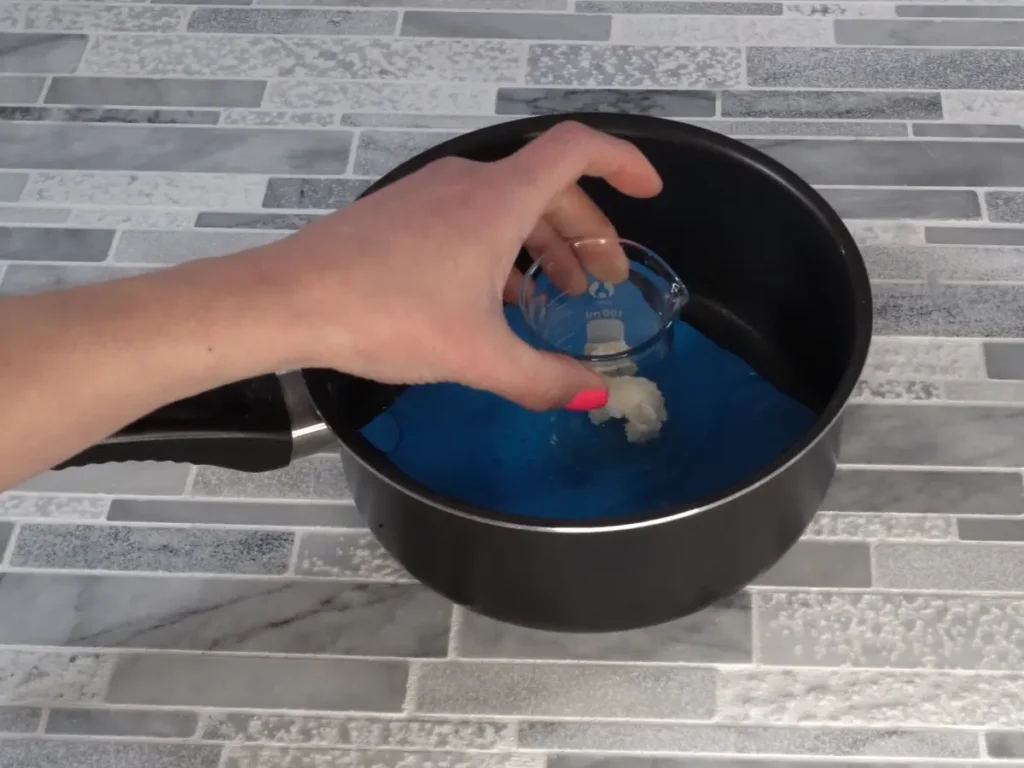
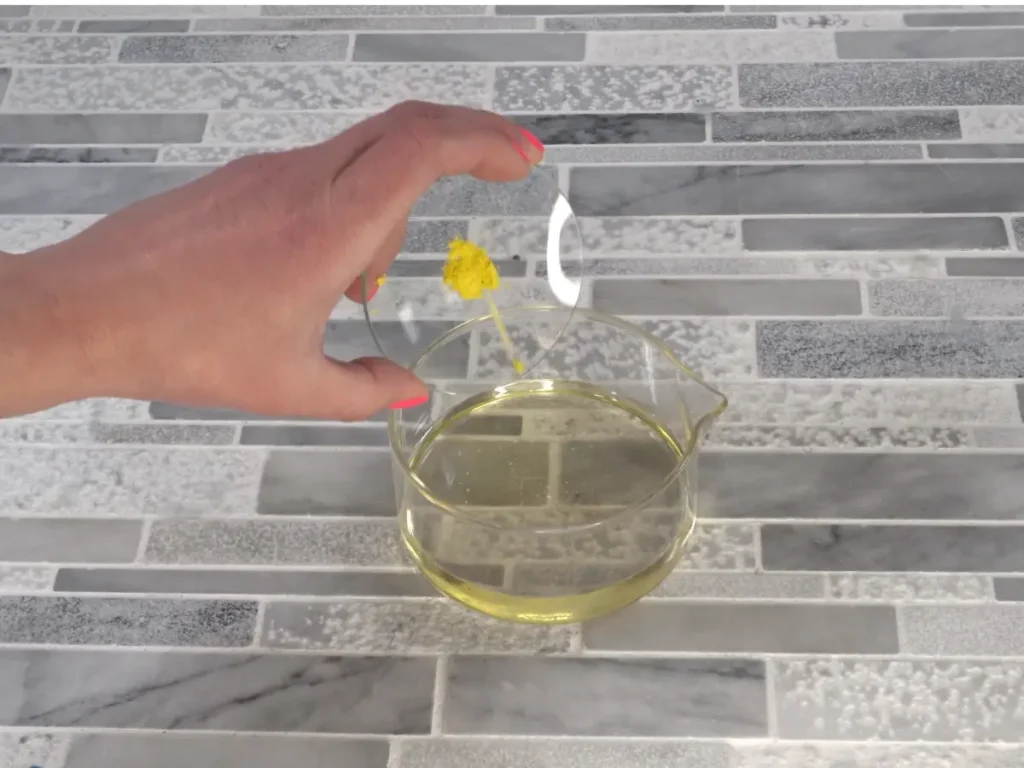
Step 3: Add the Glycerin, Polysorbate 20, Colorant and Fragrance
Remove the container from the heat.
Add the vegetable glycerin and Polysorbate 20. Stir until the ingredients are evenly combined.
Once the mixture has cooled sufficiently for your chosen fragrance oil and mica powder and mix thoroughly.
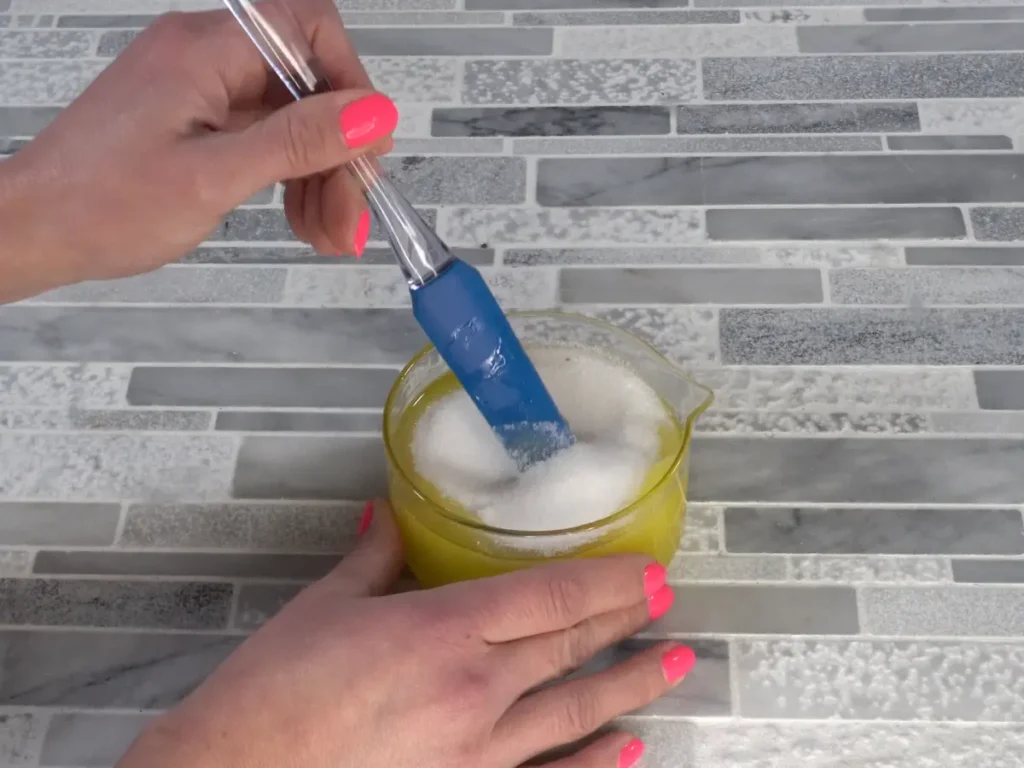
Step 4: Add the Sugar
Slowly add the granulated sugar while stirring.
Continue folding the ingredients together until the sugar is evenly distributed throughout the mixture.
The finished scrub should have a thick, scoopable consistency.
It will be thinner until the scrub cools completely.
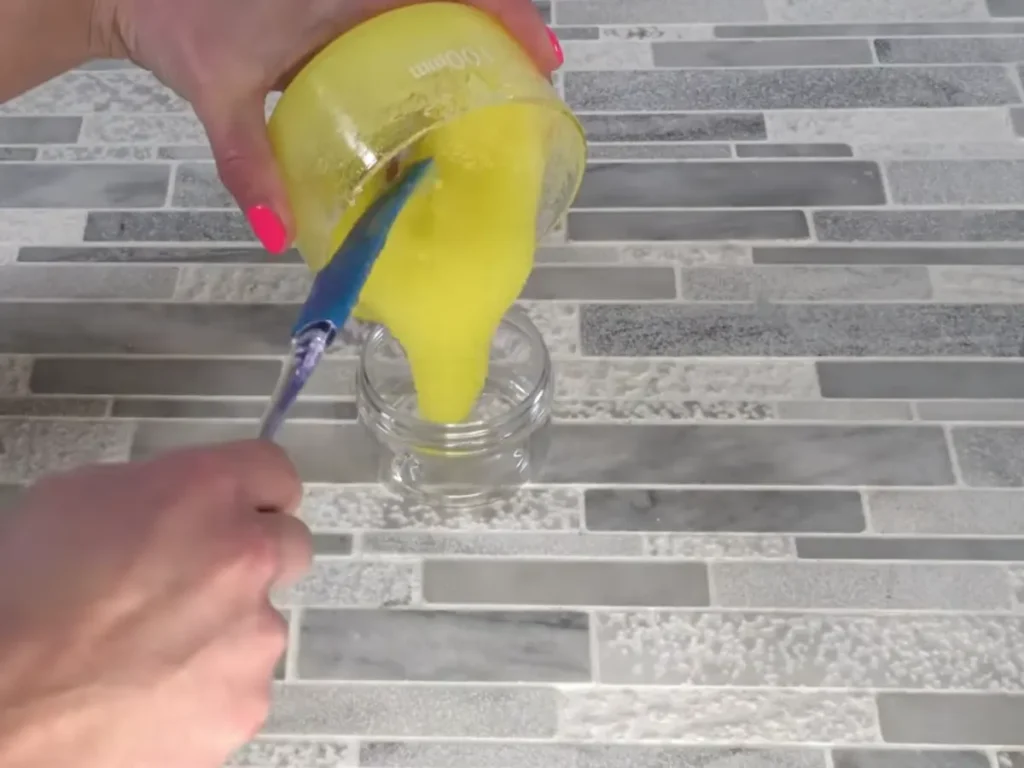
Step 5: Transfer to Containers
Transfer the scrub into clean, completely dry containers.
Allow it to cool to room temperature before sealing.
Label your containers with the product name, date made, and ingredient information.
How to Use Emulsified Sugar Scrub
To use your homemade sugar scrub:
- Wet your skin with warm water.
- Scoop a small amount of scrub into your hands.
- Gently massage over the body using circular motions.
- Rinse thoroughly with water.
- Pat your skin dry.
Avoid using the scrub on your face, broken skin, irritated areas, or freshly shaved skin.
Because this is a physical exfoliant, gentle pressure is all you need. Scrubbing harder does not provide better results.
Follow with a moisturizer if your skin needs additional conditioning.
You can use this type of scrub as part of your body-care routine, adjusting frequency based on how your skin responds.
Ingredient Substitutions and Customization
One of the best parts of making your own skincare products is being able to experiment with different ingredients.
However, substitutions are not always a simple one-for-one replacement. Different ingredients have different properties, and changing one ingredient can affect the texture, stability, and rinse-off performance of the finished product.
Here are some options to consider.
| Original Ingredient | Possible Alternative | What to Consider |
|---|---|---|
| Shea butter | Mango butter | Generally produces a softer butter feel |
| Shea butter | Cocoa butter | Firmer butter with a different melting profile |
| Sweet almond oil | Jojoba oil | Different skin feel and composition |
| Sweet almond oil | Fractionated coconut oil | Lightweight liquid oil |
| Granulated sugar | Brown sugar | Different particle size and moisture content |
| Fragrance oil | No fragrance | Omit if you prefer an unscented product |
If you change the oil, butter, or solubilizer, make a small test batch first and evaluate the texture and rinse-off performance.
How to Store Homemade Sugar Scrub
This recipe does not contain an added water phase or a conventional broad-spectrum preservative.
That does not mean it is protected from contamination once you begin using it.
Water can enter the container when the scrub is used in the shower, and repeated contact with wet hands can introduce microorganisms.
For better handling:
- Use clean, completely dry containers.
- Store the jar away from direct water exposure.
- Use a clean, dry scoop instead of wet fingers.
- Avoid introducing shower water into the container.
- Discard the product if you notice unexpected changes in appearance, smell, or texture.
For more information, read Why Preservatives Matter in DIY Skincare and How to Determine the Shelf Life of Homemade Cosmetics.
Troubleshooting Your Emulsified Sugar Scrub
Why Is My Sugar Scrub Too Sticky?
Glycerin is a humectant, but it can also create a tacky feeling when used at higher concentrations.
This formula contains 36% glycerin, so some stickiness may be noticeable. But I tend to find it such a lovely scrub consistency.
If you want a less sticky product, you may need to reformulate with a different balance of ingredients rather than simply adding more sugar.
Why Does My Sugar Scrub Feel Greasy?
The amount and type of oils and butters, along with the solubilizer level, affect how a scrub rinses.
If your scrub leaves too much residue, evaluate the oil-to-solubilizer balance and test small adjustments.
Remember that Polysorbate 20 is not a universal solution for every oil combination.
Why Is My Sugar Scrub Too Runny?
The consistency of a sugar scrub depends on the proportions of liquid ingredients, solid ingredients, and the type of sugar used.
Make sure you are weighing everything accurately.
If you change the amount of sugar, remember that you are also changing the overall formula percentages.
More DIY Body Scrub Recipes
If you enjoy making homemade exfoliating products, here are a few more recipes to try:
- How to Make a Himalayan Salt Scrub That Rinses Clean – A salt-based exfoliating scrub.
- Whipped Foaming Sugar Scrub – A fluffy, foaming scrub made with a foaming bath butter base.
- Foaming Sugar Scrub Recipe – Another way to create a creamy exfoliating product.
Frequently Asked Questions
What is the difference between a regular sugar scrub and an emulsified sugar scrub?
A traditional sugar scrub generally uses sugar mixed with oils and butters. An emulsified or rinse-off scrub uses an additional ingredient to help disperse oils when water is added, making it easier to rinse away.
Can I use brown sugar instead of white sugar?
Yes, brown sugar can be used in some scrub formulations. However, it has different particle characteristics and can contain more moisture than regular granulated sugar. Test the finished product before making larger batches.
Does homemade sugar scrub need a preservative?
This particular formula does not have an added water phase, but that doesn’t mean contamination is impossible. Water can enter the jar during shower use. If you introduce water into the formula, you need to develop an appropriate preservation system.
Can I use essential oils instead of fragrance oil?
Essential oils can be used in some rinse-off skincare products, provided they are appropriate for the intended application and used within their applicable safety limits. Check the relevant usage documentation before adding them.
Can I make a larger batch?
Yes. Use the percentages in the formula table to calculate the amount of each ingredient needed.
For example, to make a 500 g batch, multiply each percentage by 500 g.
Final Thoughts
Making your own emulsified sugar scrub is a great way to experiment with different ingredients and learn more about skincare formulation.
The combination of sugar, glycerin, shea butter, and sweet almond oil creates a rich, exfoliating product, while Polysorbate 20 helps the oily ingredients disperse during rinsing.
Once you understand what each ingredient contributes, you can begin experimenting with different oils, butters, and fragrances to create your own variations.
If you’re interested in learning more about creating your own skincare products, start with my Skincare Formulation for Beginners guide.
Printable Emulsified Sugar Scrub Recipe
How to Make Emulsified Sugar Scrub (Easy DIY Recipe + Step-by-Step Tutorial)
Equipment
- Scale
Ingredients
Heat Phase
- 9 g | 4% Shea Butter
- 4.5 g | 2% Sweet Almond Oil
Cool Down Phase
- 82 g | 36% Vegetable Glycerin
- 4.5 g | 2% Polysorbate 20
- 4.5 g | 2% Fragrance Oil
- 122 g | 54% Sugar
Instructions
- In a double boiler on low heat, melt shea butter and sweet almond oil
- Remove from heat and stir in Polysorbate 20, vegetable glycerin and fragrance oil until uniform
- Slowly fold in sugar until a thick, frosting-like texture forms
- Transfer to jars, seal tightly, and label with the date
Pingback: DIY Solid Perfume Recipe (Easy Beeswax Perfume You’ll Love) - Summer Rain