
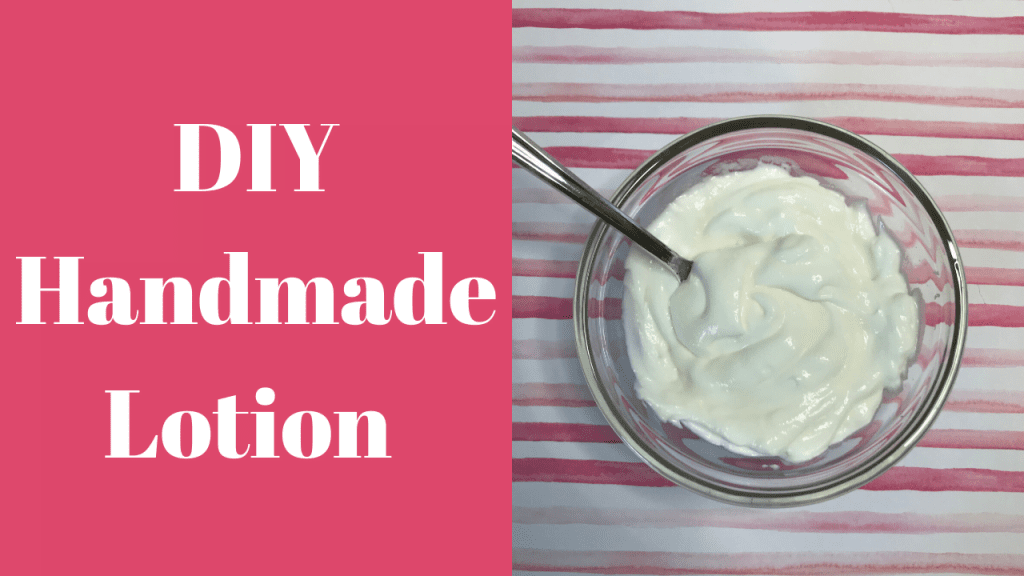
Making homemade lotion is a great way to start learning how cosmetic formulation actually works. Unlike a body butter, which is made primarily from oils and butters, lotion is an emulsion—a mixture of water and oil that needs to be properly formulated and preserved.
This homemade lotion recipe makes a rich, moisturizing lotion for the hands and body. It uses ingredients such as shea butter, olive oil, lanolin, glycerin, and aloe vera, and it can be customized once you understand what each ingredient does.
If you’re completely new to making skincare, don’t worry. You don’t need to understand everything before making your first batch. Start small, follow the formula carefully, and learn from each batch you make.
Important: This is a water-containing cosmetic product, so proper preservation, sanitation, accurate weighing, and good manufacturing practices are essential.
What You’ll Learn
In this guide, I’ll show you:
- How lotion works
- The difference between the water, oil, and cool-down phases
- What each ingredient contributes to the formula
- Why you need an emulsifier
- Why lotion needs a broad-spectrum preservative
- How to make this homemade lotion
- How to customize the formula
- Common lotion-making problems and how to troubleshoot them
- How to scale the recipe for different batch sizes
Prefer to Watch? How to Make Homemade Lotion
If you’d rather watch me make the lotion, check out the video below.
What Is Lotion?
Lotion is an emulsion of water and oil.
Water and oil naturally separate, so you need an emulsifier to bring them together and keep the finished product stable.
A basic lotion contains four important components:
- A water phase
- An oil phase
- An emulsifier
- A preservative
You may also add ingredients such as humectants, botanical ingredients, fragrance, essential oils, antioxidants, thickeners, and other skin-conditioning ingredients.
This is what makes lotion different from something like a body butter or lotion bar.
A body butter can be made entirely from oil-soluble ingredients. Lotion contains water, which changes everything about how the product needs to be formulated, manufactured, and preserved.
If you’re interested in learning more about how cosmetic emulsions work, start with my guide to humectants, occlusives, and emollients.
What Makes a Good Lotion?
There isn’t one perfect lotion because what feels good depends on the person using it.
Some people like a lightweight lotion that absorbs quickly. Others want something richer and more protective.
A good lotion should:
- Have a stable emulsion
- Feel pleasant on the skin
- Spread easily
- Provide the type of moisturization you’re looking for
- Remain stable during normal storage
- Be properly preserved
- Use ingredients at appropriate percentages
This is also why you shouldn’t think of a lotion recipe as a list of ingredients that can always be randomly substituted.
Every ingredient has a job.
Once you understand those jobs, you can start creating your own formulas instead of simply following recipes.
Why Does Lotion Need a Preservative?
This is one of the most important things to understand when making homemade skincare.
Lotion contains water.
Water-containing products can support the growth of bacteria, yeast, and mold. That’s why a properly formulated lotion needs an appropriate broad-spectrum preservative.
Vitamin E is not a preservative.
Vitamin E is an antioxidant. It can help slow oxidation and protect oils from becoming rancid, but it does not provide the same protection against microbial growth as a broad-spectrum preservative.
Essential oils also should not be relied upon as the preservative system for a lotion.
If you’re making lotion at home, preservation isn’t an optional extra. It is part of the formulation.
You can learn more about this in my guide:
Why Preservatives Matter in DIY Skincare
How Does Lotion Work?
When you apply lotion to your skin, several different types of ingredients can contribute to how your skin feels.
The three terms you’ll hear frequently in skincare formulation are humectants, emollients, and occlusives.
Humectants
Humectants help attract and hold water.
One of the most familiar examples is vegetable glycerin.
Glycerin is a popular ingredient in lotions because it can help increase the skin’s water content and contribute to a hydrated feeling.
However, more isn’t necessarily better. Too much glycerin can make a lotion feel sticky or tacky.
Other humectants include ingredients such as aloe vera and certain other water-soluble ingredients.
Learn more:
Humectants, Occlusives & Emollients Explained
Emollients
Emollients help soften and smooth the skin.
Oils, butters, and some other lipid-based ingredients can contribute to the emollient properties of a lotion.
In this formula, olive oil and shea butter contribute to the emollient feel.
Different oils can give dramatically different results, which is one reason choosing your oils is an important part of formulation.
You can learn more in my guide to choosing carrier oils for skincare.
Occlusives
Occlusive ingredients help reduce water loss from the surface of the skin by forming a protective layer.
Lanolin is an example of an ingredient that can provide occlusive properties.
Some butters and other lipid-based ingredients can also contribute to the protective feel of a formula.
A good lotion can combine all three approaches to create a product that feels moisturizing without relying on one type of ingredient alone.
Understanding the Three Phases of This Lotion
Rather than thinking of this as a recipe where you simply throw everything into a bowl, think about the formula in three phases.
Water Phase
The water phase contains ingredients that are water-soluble or primarily associated with the water portion of the formula.
For this recipe, that includes:
- Distilled water
- Vegetable glycerin
- Aloe vera
Distilled Water
Distilled water is the primary ingredient in this lotion.
I use distilled water because it provides a consistent starting point and avoids introducing the minerals and impurities that can be present in tap water.
When you’re making cosmetics, consistency matters.
Water quality is just one part of making a stable product, but starting with a consistent water source makes your formulation more predictable.
Vegetable Glycerin
Vegetable glycerin is a humectant that helps attract and hold water.
It can be a wonderful addition to lotions, but I prefer using it at a moderate percentage because higher amounts can make a finished lotion feel sticky.
Aloe Vera
Aloe vera is a water-soluble ingredient that can add skin-conditioning properties to the formula.
The aloe vera used in this recipe is a concentrated aloe ingredient, so make sure you’re using the type specified by your supplier and follow the supplier’s instructions for dilution and use.
Oil Phase
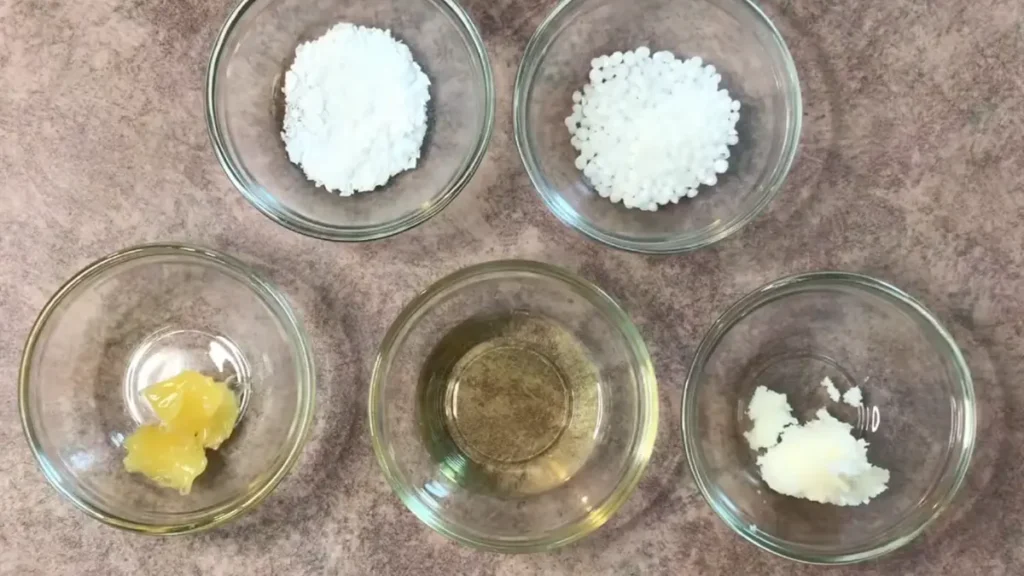
The oil phase contains the oil-soluble ingredients.
In this formula, that includes:
- Shea butter
- Olive oil
- Lanolin
- Cetyl alcohol
- Emulsifying wax
Shea Butter
Shea butter is a rich plant butter that contributes emollient and skin-conditioning properties.
It also adds richness and body to the finished lotion.
If you replace shea butter with another butter, don’t assume the finished lotion will feel exactly the same. Different butters have different melting points, textures, and sensory characteristics.
Olive Oil
Olive oil is an emollient oil that contributes to the skin feel of the lotion.
It is also easy to find, making it a practical ingredient for beginners.
Once you’re comfortable with the formula, you can experiment with other liquid carrier oils.
Just remember that changing an ingredient can change the texture and sensory characteristics of the finished lotion.
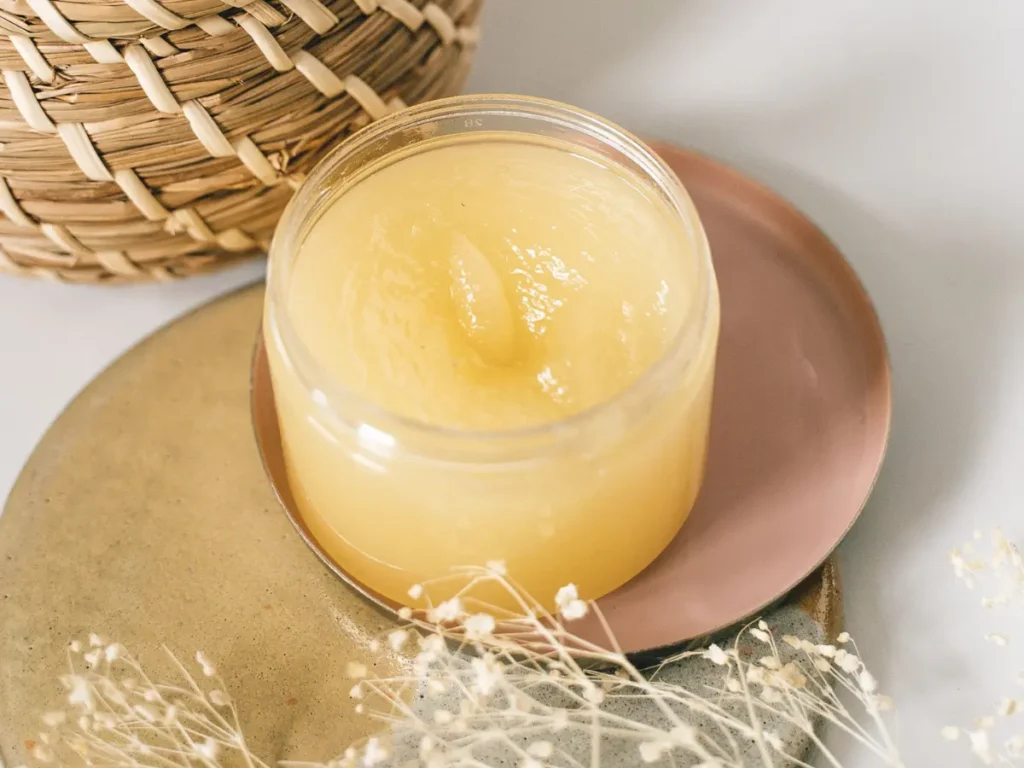
Lanolin
Lanolin is derived from sheep’s wool and is technically a wax rather than an oil.
It contributes emollient and occlusive properties and gives this lotion a richer, more protective feel.
If you don’t want to use lanolin, you can formulate a different version of the lotion using another suitable emollient or wax. However, this should be treated as a formula adjustment rather than a simple one-for-one substitution.
Cetyl Alcohol
Cetyl alcohol is a fatty alcohol.
Don’t let the word “alcohol” scare you. Fatty alcohols such as cetyl alcohol are very different from drying alcohols such as ethanol.
Cetyl alcohol can:
- Increase viscosity
- Improve the texture of the lotion
- Add slip
- Contribute to the stability of the emulsion
It is one of the ingredients that can make a lotion feel smoother and more substantial.
Emulsifying Wax
This is the ingredient that allows us to combine the water and oil phases into a lotion.
Water and oil don’t naturally stay mixed. The emulsifier helps create and stabilize the emulsion so that the finished product doesn’t simply separate into an oily layer and a watery layer.
This is why you can’t simply take an oil-based body butter recipe and add water to it.
You need an appropriate emulsification system.
Cool-Down Phase
The cool-down phase contains ingredients that should be added after the heated phases have cooled sufficiently.
For this recipe, that includes:
- Broad-spectrum preservative
- Fragrance oil
Broad-Spectrum Preservative
I’m using Optiphen Plus in this formula.
Always follow the current supplier’s recommended usage rate and processing instructions for the preservative you are using. Do not assume that every preservative can be used at the same percentage or added at the same temperature.
The preservative is one of the most important ingredients in a water-containing product.
Fragrance
You can use a skin-safe fragrance oil or an appropriate essential oil, depending on the formula and the product you’re making.
I’m using a fragrance oil called Pleasure, which has a fresh floral scent. Always go with a good-quality fragrance oil. I recomend Nurture Handmade Fragrance Oils.
If you change the fragrance, always check the supplier’s recommended usage rate and applicable skin-safety information.
More fragrance isn’t automatically better. Too much can make a product irritating and can create other formulation problems.
How to Customize This Lotion
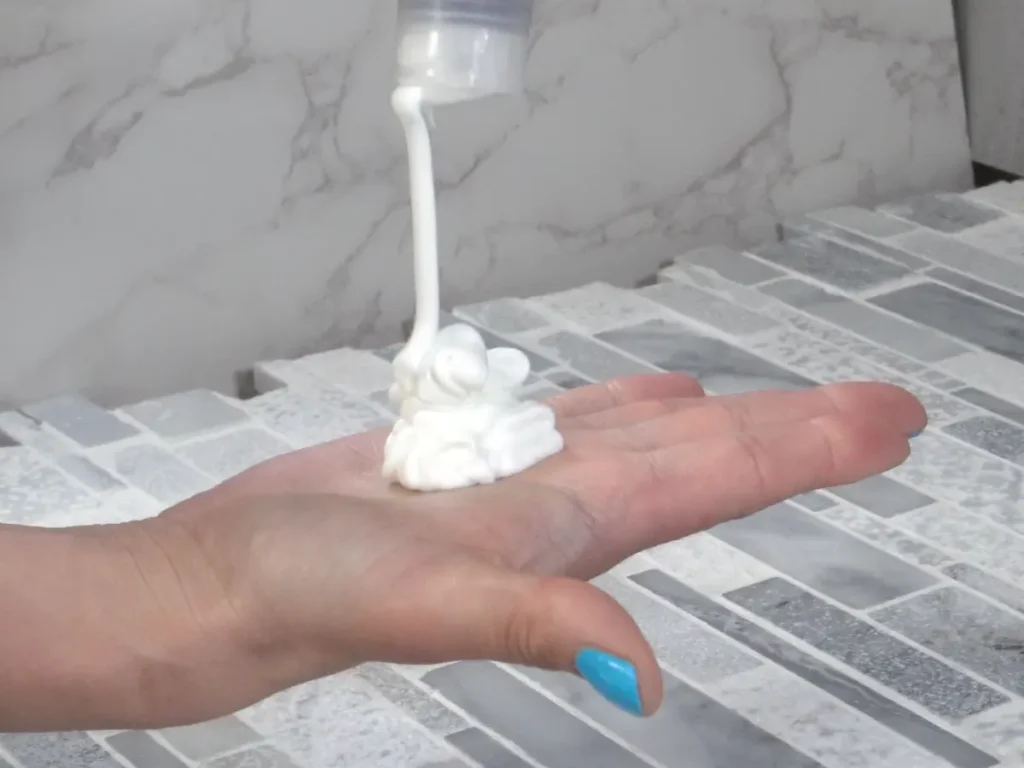
This is where making your own skincare becomes really fun.
You don’t have to use the exact same ingredients in every lotion you make. However, you shouldn’t randomly replace ingredients just because they look similar.
Instead, ask:
What job does this ingredient perform?
For example:
Want to change the olive oil?
Look for another suitable liquid emollient.
Different carrier oils can change the weight, absorption, and overall skin feel of the lotion.
Start by learning about different carrier oils in skincare.
Want to change the shea butter?
You can experiment with another cosmetic butter, but expect the texture to change. Another easy change is refined vs unrefined shea butter.
Different butters have different melting points and sensory properties.
Don’t want to use lanolin?
You can create a lanolin-free version, but you’ll need to consider what you want the replacement ingredient to contribute to the formula.
Lanolin isn’t simply “another oil.”
Don’t have cetyl alcohol?
Cetyl alcohol contributes thickness, slip, and texture.
This means replacing it requires more thought than simply choosing another random ingredient.
Cetearyl alcohol is one possible option, but it can produce a different texture and may require reformulation.
Want a lighter lotion?
You can experiment with the oil phase, butter level, and thickener system.
Reducing rich ingredients isn’t the only way to make a lighter lotion. The choice of emollients and the overall structure of the formula matter too.
Want a richer lotion?
You can experiment with the emollient phase and the consistency of the formula.
However, don’t simply keep adding oils. Increasing one ingredient means changing the percentages of the formula, so the entire formula needs to remain balanced.
Why I Recommend Making a Small Test Batch
When you’re developing or changing a skincare formula, start small.
There is no reason to make a huge batch of lotion when you’re trying a new ingredient for the first time.
A small test batch allows you to evaluate:
- Texture
- Thickness
- Absorption
- Skin feel
- Scent
- Emulsion stability
- Packaging
If you don’t like the result, you’ve only used a small amount of ingredients.
This is also why I recommend learning to formulate in percentages.
Once you have a formula written in percentages, you can scale it to different batch sizes without having to guess.
A Good Scale Matters
When making skincare, weigh your ingredients rather than measuring them by volume.
A scale is much more accurate than measuring ingredients with teaspoons, cups, or drops.
I especially recommend a scale that measures to at least 0.01 g when you’re making small test batches.
Once you start working with percentages, you’ll also find that scaling formulas becomes much easier.
Equipment You’ll Need
You don’t need a huge collection of equipment to make lotion at home.
You’ll need:
- Accurate digital scale
- Heat-safe containers
- Double boiler or water bath
- Immersion blender
- Spatula
- Infrared thermometer
- Finished product container
Ingredients
- Distilled Water
- Vegetable Glycerin
- Aloe Vera
- Shea Butter
- Olive Oil
- Lanolin
- Cetyl Alcohol
- Emulsifying Wax
- Broad-Spectrum Preservative
- Fragrance Oil
Homemade Lotion Formula
For learning and testing, I recommend working with a 100 g batch.
Working in percentages makes it much easier to scale the formula.
| Phase | Ingredient | Percentage | 100 g Batch |
|---|---|---|---|
| Water | Distilled Water | 75% | 75 g |
| Water | Vegetable Glycerin | 3% | 3 g |
| Water | Aloe Vera | 1% | 1 g |
| Oil | Shea Butter | 3% | 3 g |
| Oil | Olive Oil | 6% | 6 g |
| Oil | Lanolin | 3% | 3 g |
| Oil | Cetyl Alcohol | 2% | 2 g |
| Oil | Emulsifying Wax | 4% | 4 g |
| Cool Down | Broad-Spectrum Preservative | 1% | 1 g |
| Cool Down | Fragrance Oil | 2% | 2 g |
| Total | 100% | 100 g |
Important: The preservative percentage and processing conditions should always be checked against the specific preservative manufacturer’s current recommendations. The same applies to fragrance or essential oil usage rates.
How to Make Homemade Lotion
Before beginning, clean and sanitize your work area, equipment, and containers using an appropriate method.
Prepare the Water Phase
Weigh the distilled water, glycerin, and aloe vera according to the formula.
Place the water phase ingredients into a suitable heat-safe container.
Prepare the Oil Phase
In a separate heat-safe container, weigh the shea butter, olive oil, lanolin, cetyl alcohol, and emulsifying wax.
Heat Both Phases
Heat the water and oil phases using a double boiler or controlled water bath.
The oil phase needs to become completely melted before you begin emulsifying.
Stir the oil phase as needed while it heats.
Combine the Phases
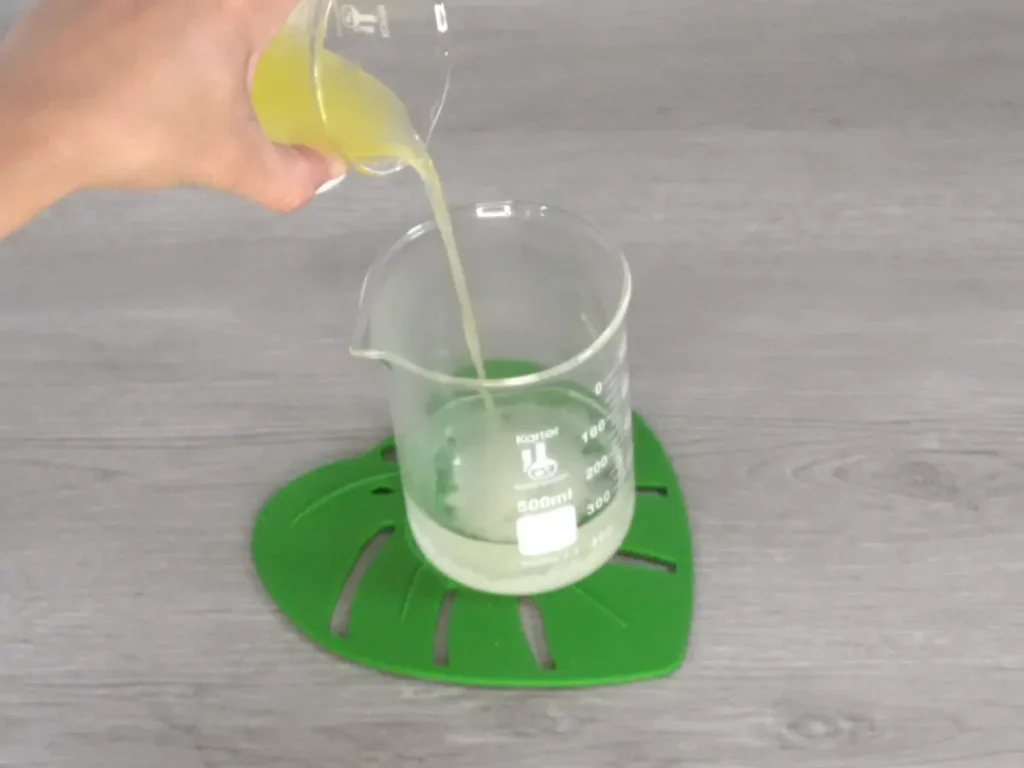
Once the phases are ready, when the oil phase is fully melted. Then you can combine the water phase and oil phase.
Use an immersion blender to begin emulsifying the mixture.
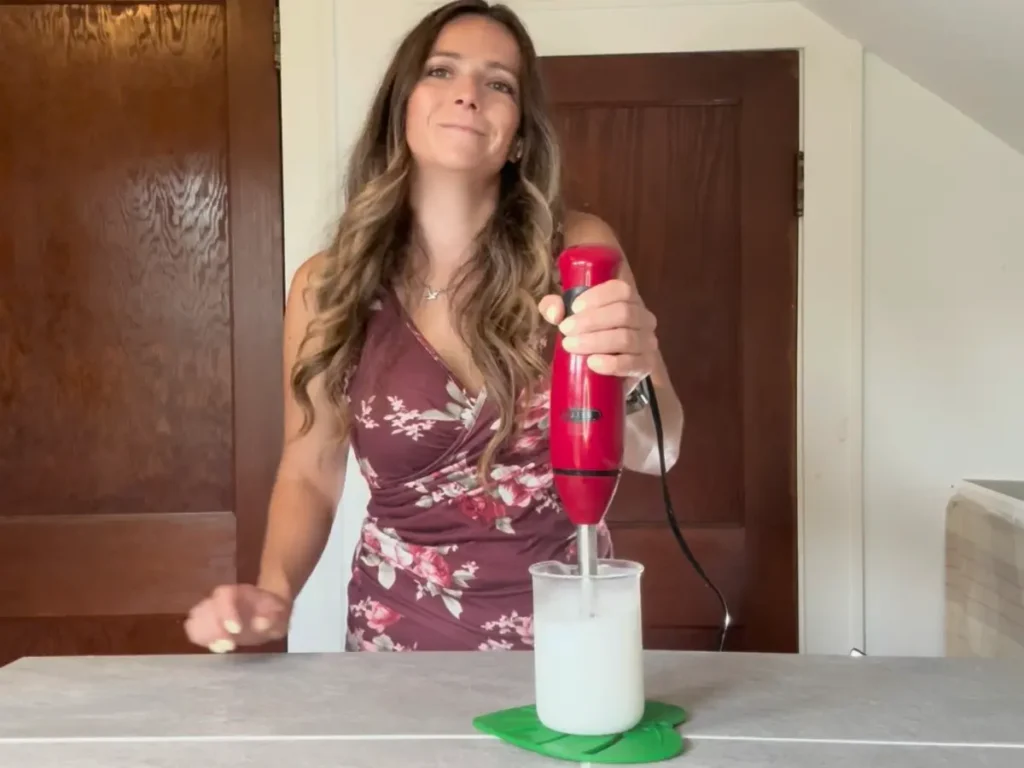
Blend thoroughly, while taking care not to introduce excessive air into the lotion.
The mixture will change in appearance and become more lotion-like as the emulsion develops.
Cool the Lotion
Continue mixing as needed while the lotion cools.
When the mixture reaches the appropriate temperature for your preservative and other cool-down ingredients, add them according to their supplier instructions.
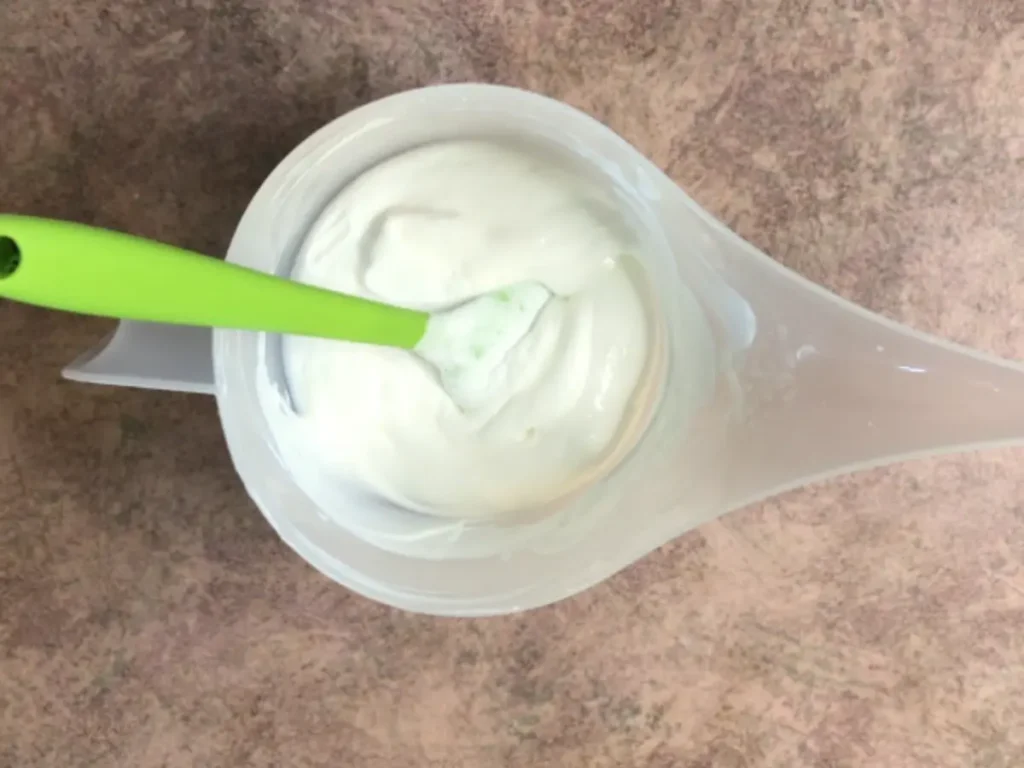
Add the Preservative and Fragrance
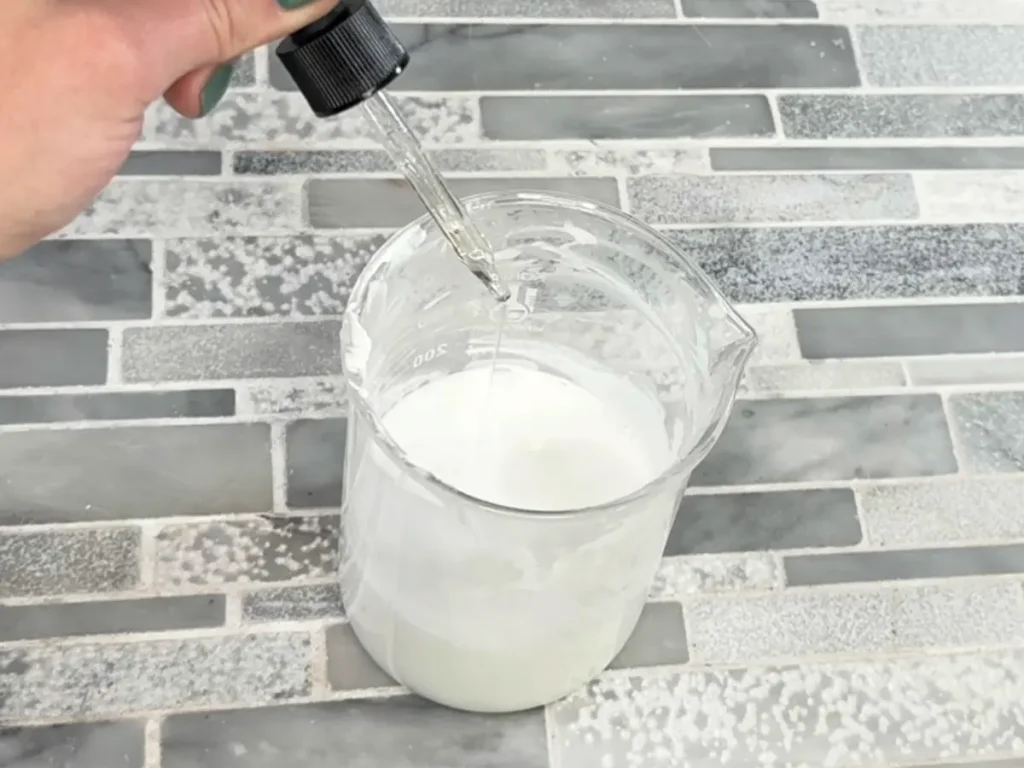
Add your broad-spectrum preservative and fragrance.
Mix thoroughly so the ingredients are evenly distributed throughout the lotion.
Package Your Lotion
Once everything is thoroughly incorporated, transfer the lotion into your sanitized containers.
Allow the lotion to finish cooling before evaluating the final texture.
Keep in mind that the consistency will continue changing as the product cools.
Common Homemade Lotion Problems
Making your first lotion doesn’t always go perfectly.
Here are some of the most common problems beginners run into.
Why Did My Lotion Separate?
If the finished lotion separates, possible causes include:
- The emulsion wasn’t properly formed
- The phases weren’t prepared correctly
- The emulsifier wasn’t used at an appropriate level
- The formula isn’t balanced
- The ingredients aren’t compatible
- The mixing process wasn’t sufficient
- The product wasn’t processed correctly
A separated lotion isn’t something you should simply remix and assume is safe to use.
If you’re having repeated separation problems, go back to the formula and evaluate the entire emulsion rather than simply adding more emulsifier.
Why Is My Lotion Too Thick?
Thickness can be affected by:
- Fatty alcohols
- Butters
- Emulsifier choice
- Total oil phase
- Cooling
- The amount of water in the formula
If your lotion is too thick, look at the entire formula rather than immediately removing one ingredient.
Why Is My Lotion Too Thin?
A lotion can be too thin if the formula doesn’t provide enough structure or if the emulsion hasn’t developed properly.
The type and amount of emulsifier, fatty alcohols, oils, butters, and water can all affect the final consistency.
Why Does My Lotion Feel Greasy?
A greasy lotion can be caused by the type and amount of oils and butters used.
Try experimenting with different emollients rather than simply reducing the entire oil phase.
Different oils can have very different sensory properties.
Why Is My Lotion Sticky?
Too much humectant can contribute to a sticky or tacky feeling.
Glycerin is a great example.
It can be an excellent ingredient in the right amount, but increasing it doesn’t necessarily make the lotion better.
Can I Use Vitamin E Instead of Preservative?
No.
Vitamin E is an antioxidant, not a broad-spectrum preservative.
It can help slow oxidation of oils, but it does not replace a preservative system in a water-containing lotion.
The same principle applies to essential oils. Even though some essential oils have antimicrobial properties, that doesn’t make them a reliable preservation system for a homemade lotion.
Can I Use Tap Water?
I recommend using distilled water.
Tap water can contain minerals and other components that vary depending on your water supply.
Using distilled water gives you a more consistent starting point when making your formula.
Can I Substitute Ingredients?
Sometimes, yes—but substitutions should be based on function, not simply on whether two ingredients look similar.
For example, replacing one liquid oil with another liquid oil may be relatively straightforward compared with replacing a fatty alcohol or emulsifier.
Before making a substitution, ask:
What is this ingredient doing in my formula?
Is it:
- Providing water?
- Providing oil?
- Acting as a humectant?
- Providing emollience?
- Providing occlusion?
- Thickening?
- Stabilizing the emulsion?
- Emulsifying?
- Preserving?
- Adding fragrance?
Once you understand the function, you can make much more informed formulation decisions.
Want to Learn More About Making Skincare?
If you’re getting interested in making your own skincare products, don’t stop with this one lotion recipe.
The next step is learning why the ingredients work.
Start here:
Learn About Humectants, Occlusives & Emollients
Humectants, Occlusives & Emollients Explained
Learn how these three groups of ingredients contribute to the way skincare products moisturize and feel on your skin.
Learn How to Choose Carrier Oils
Carrier Oils in Skincare: How to Choose the Right Oil
Different oils can completely change the feel of a lotion, body butter, or other skincare product.
Learn Why Preservatives Matter
Why Preservatives Matter in DIY Skincare
If you’re making products that contain water, understanding preservation is essential.
Learn About Shelf Life
How to Determine the Shelf Life of Homemade Cosmetics
Making a product and knowing how long it remains safe and stable are two different things.
Try Another Homemade Body Care Recipe
Once you’ve made lotion, you can start experimenting with other types of body care.
Try one of these next:
Lotion Dots — a smaller, more portable alternative to traditional lotion.
Body Butter — an anhydrous product made without water.
Solid Perfume — a simple fragrance product made with wax and oils.
The more formulas you make, the more you’ll start to recognize what each ingredient contributes to the finished product.
Final Thoughts
Making homemade lotion can seem complicated at first because you’re working with water, oils, an emulsifier, and a preservative all in one formula.
But once you understand what each part does, it becomes much less intimidating.
Don’t worry about creating the perfect formula on your first attempt.
Start with a small batch. Weigh everything accurately. Keep good notes. Follow your preservative and ingredient supplier’s instructions. Then evaluate the finished product and make one change at a time when you’re ready to experiment.
That’s how you go from simply following a lotion recipe to actually learning how to formulate skincare.
Homemade Lotion Recipe Made With Natural Ingredients
Equipment
- Scale
- Double boiler
- Heat Safe Container
- Container with pouring spout
- Immersion Blender
- Infrared thermometer
Ingredients
Water Phase
- 6.00 ounce | 75% Distilled Water
- 0.24 ounce | 3% Vegetable Glycerin
- 0.08 ounce | 1% Aloe Vera
Oil Phase
- 0.24 ounce | 3% Shea Butter
- 0.48 ounce | 6% Olive Oil
- 0.24 ounce | 3% Lanolin Wax
- 0.16 ounce | 2% Cetyl Alcohol
- 0.32 ounce | 4% Emulsifying Wax
Cool Down Phase
- 0.08 ounce | 1% Broad Spectrum Preservative
- 0.16 ounce | 2% Fragrance Oil
Instructions
- Disinfect all of your supplies with either a 5% bleach solution or with rubbing alcohol.
- Weigh out your oil phase ingredients and place them in a heat safe container. Do the same for your oil phase ingredients in a separate heat safe container.
- Place both in a double boiler or heat bath until the oil phase ingredients are melted. You will want to stir the oil phase ingredients regularly.
- Pour your water phase ingredients into the container you will be mixing in. Add the oil phase ingredient.
- With an immersion blender, mix for a few minutes.
- When the temperature is below 120° F, add your preservative and fragrance oil.
- Mix again with the immersion blender to full incorporate everything.
- Pour into your containers and enjoy!
What other body care products would you like to learn more about? Give me your suggestions for future posts!!
Hey,
nice product. what can i use in the place lanolin and Cetyl Alcohol.
Thanks
Instead of the lanoin, you can always just increase the shea butter or olive oil. Cetyl alcohol is a thickener and it can be hard to swap out. You could try cetearyl alcohol, but this can result in a heavier lotion.
Hey,
nice product. what can i use in the place of lanolin and Cetyl Alcohol.
Thanks