
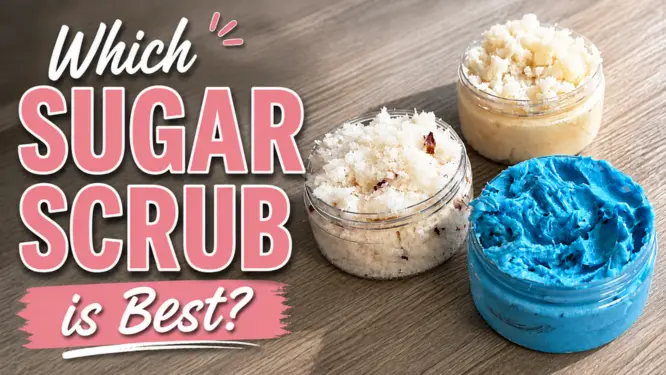
Sugar scrubs are one of the easiest DIY body products to make, but there is much more you can do with them than simply mixing sugar and oil together.
Once you understand what each ingredient does, you can change the exfoliant, oils, scent, color, texture, and even the entire type of scrub you make.
In this guide, I’ll show you the basics of making sugar scrubs, how to customize them, and the different types of sugar scrubs you can make at home.
Whether you want a simple sugar and oil scrub, a fluffy whipped scrub, a foaming scrub, or a creamy emulsified scrub, you’ll find a recipe to try below.
Some of the links are affiliate links, because I am an associate and I earn a small commission on them.

What Is a Sugar Scrub?
A sugar scrub is a body exfoliant made with sugar and other ingredients that help the scrub glide across the skin.
Sugar provides the physical exfoliation, while oils, butters, soap bases, emulsifiers, and other ingredients can be used to change the texture and feel of the finished product.
The fun part about making your own sugar scrub is that you don’t have to make every recipe exactly the same.
You can start with a basic formula and customize it to create completely different products.
Start With the Type of Sugar Scrub You Want to Make
Before choosing your ingredients, think about what you want your finished scrub to do.
Want a simple sugar scrub?
A traditional sugar scrub is the easiest place to start. It uses sugar, a carrier oil, and fragrance or essential oil.
This type of scrub is quick to make and doesn’t require a complicated base.
Want a fluffy scrub that also cleanses?
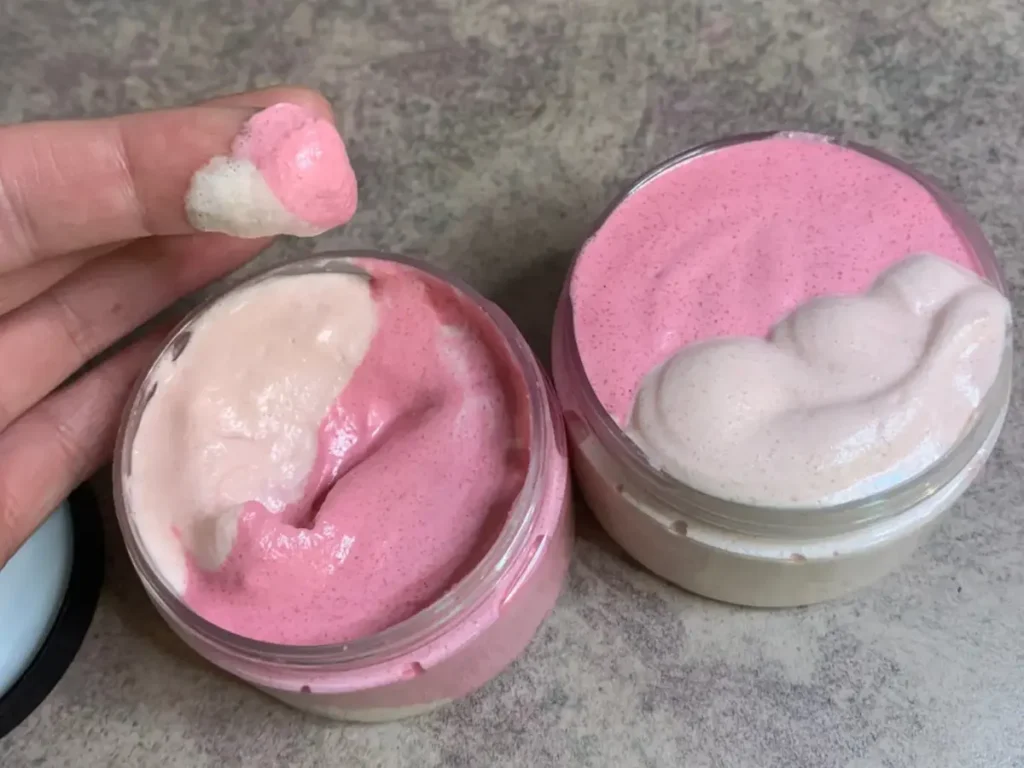
A whipped sugar scrub combines sugar with a whipped soap base. The result is light and fluffy, while the soap base allows the scrub to cleanse and exfoliate at the same time.
Learn How to Make Whipped Sugar Scrub
Want a scrub that foams?
A foaming sugar scrub uses a whipped soap base so you get exfoliation and cleansing in the same product.
Try the Foaming Sugar Scrub Recipe
I also have a newer version made with foaming bath butter that creates a fluffy, whipped texture.
Try the Whipped Foaming Sugar Scrub
Want a creamy scrub that rinses clean?
An emulsified sugar scrub is a different approach. The emulsifier helps combine the oils and creates a creamy texture when the scrub comes in contact with water.
This is a great option if you like the moisturizing feel of an oil-based scrub but don’t want as much oil left behind on the skin.
Learn How to Make Emulsified Sugar Scrub

Want something less messy?
Sugar scrub cubes are a fun alternative to a jar of loose scrub.
They are pre-portioned, easy to use in the shower, and combine exfoliation with a solid cleansing base.
Learn How to Make Sugar Scrub Cubes
How Do You Customize a Sugar Scrub?
Once you understand the basic ingredients, you can start changing your scrub to create different textures, scents, colors, and experiences.
Think of your sugar scrub as a combination of several parts.
Choose Your Exfoliant
Sugar is the most common exfoliant in these recipes, but you don’t necessarily have to use the exact same type of sugar every time.
Fine granulated sugar gives you a relatively gentle exfoliating texture and works well for many body scrubs.
Brown sugar can also be used and has a softer texture.
You can experiment with different types of sugar, but avoid using extremely coarse particles that may feel too abrasive on the skin.
If you want to use a completely different exfoliant, you can also explore other types of body scrubs.
Learn More About Making a Sea Salt Body Scrub

Choose Your Oil
In a simple sugar scrub, the carrier oil helps the sugar glide across the skin and gives the scrub its moisturizing feel.
You don’t have to use the same oil every time.
Some oils you can experiment with include:
- Grapeseed oil
- Sweet almond oil
- Fractionated coconut oil
- Olive oil
- Apricot kernel oil
- Jojoba oil
Different oils can give your scrub a different skin feel, so this is one of the easiest ingredients to change.
If you want to learn more about choosing oils for DIY skincare, check out How to Choose the Right Oil for Your Skin.

Add a Fragrance
Fragrance is one of the easiest ways to completely change a sugar scrub.
The same basic scrub can become:
- Lavender
- Peppermint
- Vanilla
- Coffee
- Citrus
- Floral
- Fruity
- Seasonal
When using fragrance oils or essential oils, always make sure they are appropriate for the intended cosmetic use and follow the supplier’s recommended usage rate.
You don’t need to change the entire recipe to create a new product. Sometimes changing the scent is enough.

Add Color
Mica powder can be used to add color to many sugar scrub formulas.
You can keep the scrub completely natural-looking, use a single color, or divide the batch and create multiple colors.
This is especially fun with whipped sugar scrubs because you can pipe different colors together to create swirls and layered designs.
Remember that mica is generally added for appearance rather than function, so you only need a small amount.

Add Botanicals
Dried botanicals can give your scrub a beautiful appearance and help create a particular theme.
Some possibilities include:
- Lavender
- Dried rose petals
- Mint
- Herbs
- Dried tea
Keep in mind that botanicals can change how a product feels during use, so don’t add them simply because they look pretty.
For a beginner-friendly scrub, I recommend keeping the botanical pieces small and using ingredients that are appropriate for cosmetic use.

How the Base Changes the Scrub
One of the biggest changes you can make isn’t the fragrance or color — it’s the base itself.
Oil-Based Sugar Scrub
Sugar + carrier oil gives you the simplest type of scrub.
This is a good place to start if you’re new to making body scrubs.
Whipped Sugar Scrub
A whipped soap base changes the texture completely.
Instead of a loose sugar and oil mixture, you get a light and fluffy scrub that can be scooped or piped into a container.
See the Whipped Sugar Scrub Recipe
Foaming Sugar Scrub

Adding a cleansing base means your scrub can exfoliate and cleanse at the same time.
See the Foaming Sugar Scrub Recipe
Emulsified Sugar Scrub
An emulsified formula gives you a creamier product and helps the oils rinse away more easily when water is introduced.
See the Emulsified Sugar Scrub Recipe
Sugar Scrub Cubes
Instead of keeping your scrub in a jar, you can create individual solid portions.
Learn How to Make Sugar Scrub Cubes
Sugar Scrub Ingredient Guide
Here are some of the most common ingredients you’ll see in sugar scrub recipes and what they do.
Sugar
Sugar is the exfoliant.
The size and type of sugar you choose affects how the scrub feels during use.
Carrier Oils
Carrier oils provide slip and help prevent the scrub from feeling too dry or harsh.
Different oils can be substituted depending on the formula and the skin feel you’re looking for.
Soap or Foaming Bases
Whipped soap bases and foaming bath butter can turn a basic sugar scrub into a cleansing product.
They also change the texture, making it possible to create fluffy or pipeable scrubs.
Emulsifiers
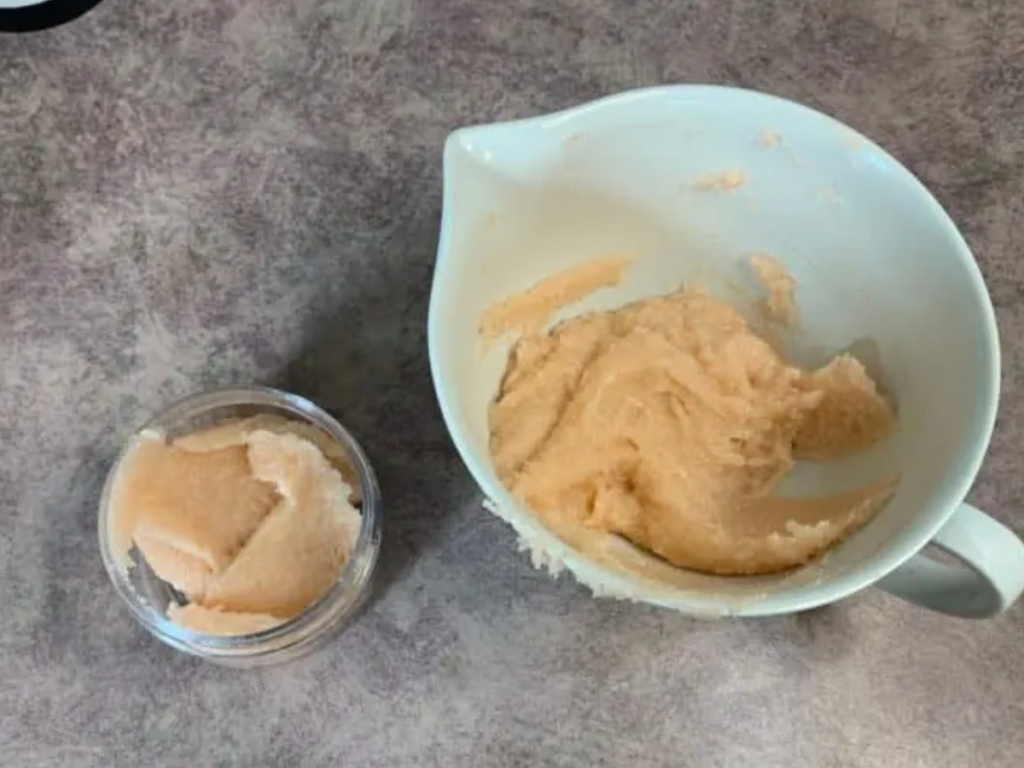
Emulsifiers are used in emulsified sugar scrubs to help combine oils and water when the product is used.
They can also change the way the scrub feels and rinses from the skin.
If you want to understand emulsifiers better, read Emulsifiers in Skincare: What They Are and How They Work.
Fragrance or Essential Oils
These provide scent, but they need to be used at appropriate levels for the finished product.
Always check the supplier’s usage information before adding fragrance or essential oils to a formula.
Mica
Mica is primarily used to add color and visual appeal.
It can be especially useful when you’re creating themed or seasonal sugar scrubs.
Sugar Scrub Recipe Ideas
Now that you understand the different ways you can customize a scrub, here are some recipes to try.
Simple Sugar Scrub
Start with the classic combination of sugar, carrier oil, and fragrance.
Get the Simple Sugar Scrub Recipe
Whipped Sugar Scrub
Create a light and fluffy scrub using a whipped soap base and sugar.
Get the Whipped Sugar Scrub Recipe
Foaming Sugar Scrub
Make a scrub that both cleanses and exfoliates.
Get the Foaming Sugar Scrub Recipe
Emulsified Sugar Scrub
Make a creamy scrub designed to give you a smoother, less-oily rinse.
Get the Emulsified Sugar Scrub Recipe
Whipped Foaming Sugar Scrub
Use foaming bath butter to create a fluffy, cleansing sugar scrub.
Get the Whipped Foaming Sugar Scrub Recipe
Sugar Scrub Cubes
Turn your scrub into individual solid portions that are easy to use in the shower.
Get the Sugar Scrub Cube Recipe
Can I Change Ingredients in a Sugar Scrub Recipe?
Sometimes, but you need to understand what role the ingredient plays before replacing it.
Changing the fragrance or mica is usually straightforward because they are primarily there for scent or appearance.
Swaping an oil is often possible, but different oils have different properties and can change the texture and feel of the finished scrub.
Changing the exfoliant can have an even bigger effect because different exfoliants have different particle sizes and levels of abrasiveness.
And if you’re changing an emulsifier, preservative, surfactant, or other functional ingredient, you should not assume that it can simply be swapped one-for-one.
This is where learning basic formulation becomes important.
If you’re ready to move beyond following recipes and start understanding how your formulas work, start with the DIY Skincare Formulation for Beginners.
How Often Should You Exfoliate?
There isn’t one perfect exfoliation schedule for everyone.
How often you use a scrub depends on the exfoliant, the product you’re using, the area of the body, and how your skin responds. I exfoliate about 1 time per week.
If a scrub feels irritating, uncomfortable, or overly abrasive, stop using it and give your skin time to recover.
Gentler products can generally be used differently than more aggressive exfoliants, so pay attention to how your finished product feels rather than assuming that more exfoliation is better.

Sugar Scrub Safety & Storage
Sugar scrubs are often used in the shower, which means water can easily be introduced into the container during use.
For simple anhydrous scrubs, keeping water out of the container is important.
Use clean, dry hands or a dry scoop when possible, and keep the container closed between uses.
If your formula contains water or ingredients that introduce water into the product, preservation becomes an important part of the formulation.
If you’re making products for yourself, it’s still worth understanding why preservation matters. Remember the skin is our largest organ. If you’re making products to sell, don’t rely on a general shelf-life estimate — your specific formula should be properly evaluated.
Learn more about Why Preservatives Matter in DIY Skincare.
Ready to Make Your Own Sugar Scrub?
The best thing about making sugar scrubs yourself is that you don’t have to stop at one recipe.
Start with a simple sugar scrub, then experiment with different oils, fragrances, colors, and exfoliants.
Once you’re comfortable with the basics, try changing the entire structure of the product with a whipped, foaming, emulsified, or solid sugar scrub.
Start with a recipe:
And if you’re ready to learn more about making your own skincare products, explore the DIY Skincare & Bath Recipes for Beginners and start building your formulation skills one project at a time.
Sugar Scrub Recipes
Equipment
- Scale
Ingredients
Rose Sugar Scrub Recipe
- 6.40 ounce | 80% Granulated Sugar
- 1.48 ounce | 18.5% Grapeseed Oil
- 0.12 ounce | 1.5% Rose Fragrance Oil
Coffee Sugar Scrub Recipe
- 5.60 ounce | 70% Granulated Sugar
- 1.48 ounce | 18.5% Sweet Almond Oil
- 0.80 ounce | 10% Coffee Grounds
- 0.12 ounce | 1.5% Morning Coffee Latte Fragrance Oil
Instructions
- Weigh out your ingredients.
- Put the sugar into a mixing bowl.
- Add the carrier oil and essential oils to your sugar and mix well.
- Add your herbs and mix.
- Package and Enjoy!