
Vegetable Glycerin: Uses, Benefits & How to Use It in Skincare
Vegetable glycerin is one of the most useful ingredients to have on hand when you’re making skincare products from scratch. It is a humectant, meaning it helps attract and hold water, making it useful in lotions, creams, facial products, body products, and other water-based formulations.
Glycerin is also very different from ingredients such as jojoba oil or sweet almond oil. It is water-soluble rather than oil-soluble, so it belongs in the water phase of a formulation.
If you’re learning how to formulate skincare, understanding what glycerin does and how much to use can help you avoid some of the most common formulation mistakes.
Vegetable Glycerin at a Glance
| Property | Vegetable Glycerin |
|---|---|
| Common name | Vegetable Glycerin |
| INCI name | Glycerin |
| Ingredient type | Humectant |
| Solubility | Water-soluble |
| Skin feel | Smooth, slightly sticky at higher amounts |
| Main function | Attracts and helps retain water |
| Common uses | Lotions, creams, body products, facial care, hair care |
| Oil-soluble? | No |
| Water-soluble? | Yes |
| Broad-spectrum preservative needed? | Depends on the finished formula |
What Is Vegetable Glycerin?
Vegetable glycerin, also called glycerol, is a clear, colorless, viscous liquid commonly used in cosmetics and personal-care products.
It is often made from vegetable oils through processes that separate glycerin from the fats and oils.
The glycerin used in cosmetic products is not an oil, even though it can originate from vegetable fats.
Its most important role in skincare formulation is as a humectant.
What Does Vegetable Glycerin Do in Skincare?
Glycerin attracts water.
When you add it to a properly formulated skincare product, it can help increase the product’s ability to hydrate and improve the way the skin feels after application.
Glycerin can help:
- Increase hydration
- Reduce a dry or tight skin feel
- Improve the feel of lotions and creams
- Add humectancy to facial and body products
- Help hair products provide moisture
- Improve the texture of some water-based formulas
Glycerin is especially useful when you’re making products that contain a significant water phase.
Is Vegetable Glycerin a Moisturizer?
Glycerin is commonly called a moisturizer, but humectant is the more useful formulation term.
Humectants attract water.
Emollients, such as jojoba oil or sweet almond oil, help soften and condition the skin.
Occlusives help reduce water loss from the skin.
A well-designed moisturizer can use all three types of ingredients.
You can learn more about how these ingredients work together in Humectants, Occlusives and Emollients Explained.
Is Vegetable Glycerin an Oil?
No.
This is an important distinction when you’re making your own skincare products.
Glycerin is a water-soluble humectant, while carrier oils such as sweet almond oil and jojoba oil are oil-soluble emollients.
Because glycerin is water-soluble, it generally belongs in the water phase of an emulsion rather than the oil phase.
Adding glycerin to the oil phase won’t make it dissolve into the oils.
How Is Vegetable Glycerin Used in DIY Skincare?
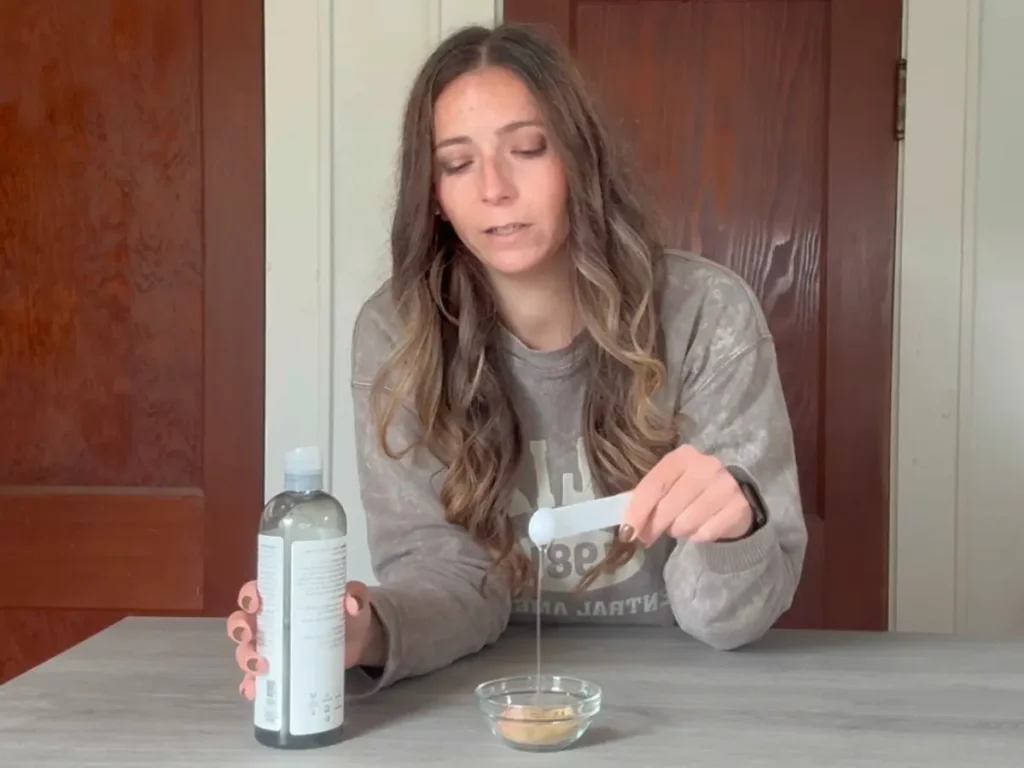
Glycerin can be used in many different types of formulations.
Lotions and Creams
Glycerin is a common addition to lotions and creams because it adds humectancy to the water phase.
It can work alongside emollients and occlusives to create a more complete moisturizing product.
The amount you use affects the finished texture, so more isn’t necessarily better.
Facial Products
Glycerin can be used in products such as facial moisturizers, hydrating serums, masks, and other water-based skincare products.
Because it is water-soluble, it is particularly easy to incorporate into formulas with a water phase.
Body Products
Glycerin can add hydration to body lotions, creams, gels, and other water-containing products.
It can be particularly useful in formulas designed for skin that feels dry or tight.
Hair Care
Glycerin is also commonly used in hair products.
As a humectant, it can help improve the moisturizing feel of products such as conditioners, leave-in products, and hair masks.
Hair products require their own formulation considerations, though, so the amount of glycerin shouldn’t simply be copied from a skincare recipe.
Soap and Cleansing Products
Glycerin is also associated with soap because glycerin is naturally produced during traditional soapmaking.
Additional glycerin can also be used in some cleansing formulations, although the appropriate amount depends on the specific product.
How Much Vegetable Glycerin Should You Use?
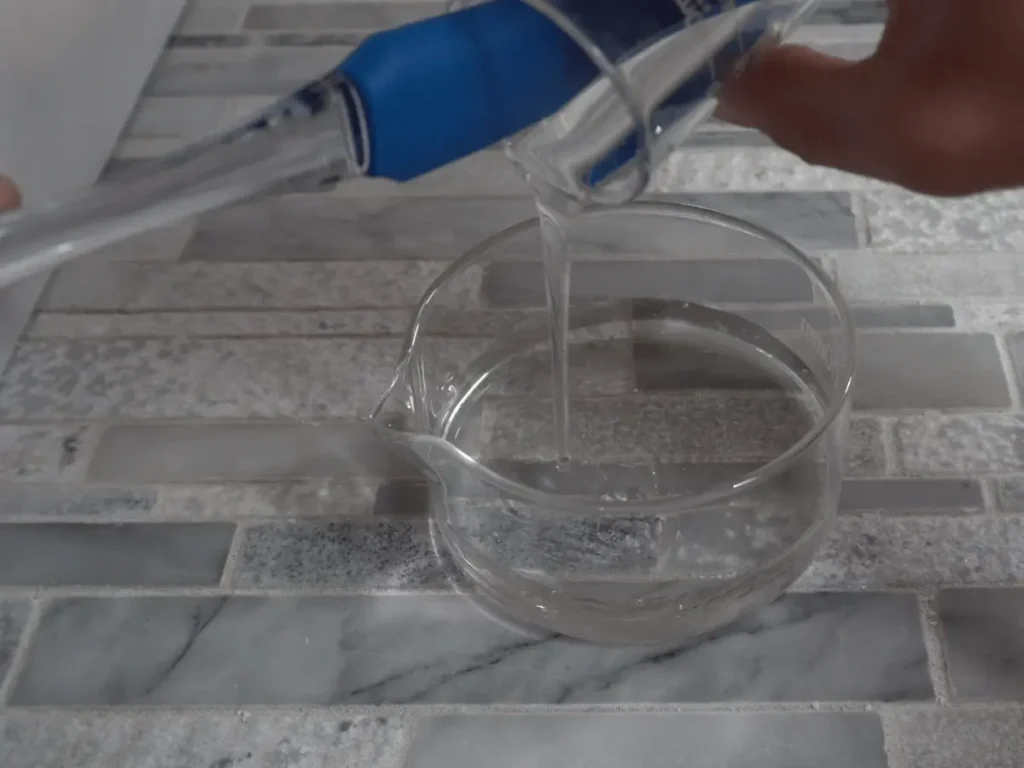
There isn’t one percentage that works for every formula.
Glycerin is effective at relatively low percentages, and using too much can make a product feel sticky or tacky.
For many leave-on skincare formulations, around 1–5% is a useful starting range, depending on the product and the desired skin feel.
Some formulas may use more, but increasing glycerin doesn’t automatically mean increasing the quality of the product.
The finished texture matters.
If a lotion feels sticky after application, glycerin is one of the ingredients worth looking at.
Why Does Too Much Glycerin Feel Sticky?
Glycerin is naturally thick and has a noticeable tacky feel.
At a low level, that may not be noticeable once a product is applied.
At higher levels, however, glycerin can make a formula feel sticky, especially when combined with other humectants or certain film-forming ingredients.
This is one reason formulation is about balance.
You aren’t trying to add as much of a beneficial ingredient as possible. You’re trying to use enough to achieve the desired effect without creating an unpleasant product.
Can Vegetable Glycerin Be Used by Itself on the Skin?
You technically can apply glycerin to the skin, but pure glycerin is generally not the most pleasant way to use it.
It is extremely thick and sticky compared with a finished lotion or serum.
Glycerin is usually more useful when incorporated into a properly formulated product where it can work with water and other ingredients.
Instead of thinking of glycerin as a standalone moisturizer, think of it as one part of a larger formulation.
Can Vegetable Glycerin Be Used in an Oil-Based Product?
Glycerin and oils don’t mix naturally.
Glycerin is water-soluble, while oils are oil-soluble.
If you’re making a completely anhydrous product such as a body oil, adding glycerin isn’t a simple way to increase hydration because it won’t dissolve into the oil.
If you want to use glycerin, it generally needs to be incorporated into a formulation containing an appropriate water phase.
Does Vegetable Glycerin Need a Preservative?
Glycerin itself isn’t a broad-spectrum preservative for a finished skincare product.
Whether your product needs preservation depends on the entire formulation.
A lotion, cream, serum, or other product containing water generally requires an appropriate broad-spectrum preservative.
You cannot simply add glycerin and assume the product is protected from bacteria, yeast, and mold.
This is especially important with DIY skincare because products containing water can support microbial growth even when they look and smell perfectly normal.
Does Vegetable Glycerin Expire?
Yes. It is typically good for 2-5 years.
Like other cosmetic ingredients, glycerin should be stored according to the supplier’s recommendations and used within its recommended shelf life.
Keep the container closed when you’re not using it and avoid introducing water or other contaminants into the bottle.
Because glycerin is hygroscopic, it can attract moisture from the surrounding environment, so keeping the container tightly closed is particularly important.
What Does Hygroscopic Mean?
You may see glycerin described as hygroscopic.
This means it readily attracts and absorbs moisture from its surroundings.
This property is part of what makes glycerin such a useful humectant in skincare.
It also means you don’t want to leave your bottle open unnecessarily.
Vegetable Glycerin vs. Other Humectants
Glycerin isn’t the only humectant used in skincare.
Other examples include:
- Sodium lactate
- Propanediol
- Hyaluronic acid
- Honey
- Sorbitol
They don’t all behave exactly the same way.
Some have different skin feels, usage rates, solubility characteristics, or formulation considerations.
Glycerin remains popular because it is versatile, widely available, and effective at relatively low concentrations.
Common Vegetable Glycerin Mistakes
Using too much
More glycerin isn’t automatically better.
Too much can make a product feel sticky or tacky.
Treating glycerin like an oil
Glycerin is not a carrier oil and doesn’t belong in the oil phase simply because it may be used alongside oils.
It is water-soluble.
Adding it to an oil-only recipe
Glycerin won’t simply dissolve into a bottle of carrier oil.
If you want to use glycerin, the formulation needs to accommodate a water-soluble ingredient.
Assuming glycerin preserves a product
It doesn’t replace a proper broad-spectrum preservative in a water-containing product.
Forgetting about the rest of the formula
Glycerin’s final feel depends on everything else in the formulation.
A product containing 3% glycerin can feel completely different from another product containing the same amount because of differences in water content, oils, polymers, other humectants, and emulsifiers.
Frequently Asked Questions
Is vegetable glycerin good for dry skin?
Glycerin can be very useful in products formulated for dry skin because it is a humectant that helps attract water and improve the skin’s hydrated feel.
It works particularly well when combined with emollients and occlusives.
Is vegetable glycerin safe for skin?
Cosmetic-grade glycerin is widely used in skincare products. As with any ingredient, individual irritation or sensitivity is possible.
Use a glycerin product according to its intended formulation and discontinue use if irritation occurs.
Can I add glycerin to lotion?
Yes. Glycerin is commonly incorporated into lotions and creams as part of the water phase.
Can I add glycerin to body butter?
That depends on the formula.
A traditional anhydrous body butter contains no water, so glycerin doesn’t simply blend into it. If you want to incorporate glycerin, you’re moving toward a different type of formulation that needs to account for the water-soluble ingredient and preservation requirements.
Is glycerin the same as glycerol?
Yes. Glycerin and glycerol refer to the same chemical compound. “Glycerin” is the name commonly used for the cosmetic ingredient.
Is vegetable glycerin an oil?
No. Vegetable glycerin is a water-soluble humectant, not a carrier oil.
Can glycerin replace hyaluronic acid?
Not exactly.
Both can function as humectants, but they have different properties and formulation characteristics. You don’t necessarily need both in every formula.
Does glycerin dry out the skin?
You’ll sometimes see claims online that glycerin “pulls water out of the skin.” The reality is more complicated than that.
Glycerin is a well-established humectant, but how a humectant behaves depends on the entire formulation and the environment. A well-formulated product doesn’t need to avoid glycerin simply because it is a humectant.
Final Thoughts
Vegetable glycerin is a simple ingredient, but understanding where it belongs in a formulation makes a big difference.
Remember the basics:
- Glycerin is a humectant.
- It is water-soluble.
- It is not a carrier oil.
- It generally belongs in the water phase of an emulsion.
- Too much can make a product sticky.
- It does not replace a broad-spectrum preservative.
When you’re building a skincare formula, glycerin is one of those ingredients that works best as part of a balanced formulation. Pairing a humectant like glycerin with appropriate emollients and occlusives can give you a much more complete product than relying on any one ingredient alone.