
Vitamin E oil is a popular ingredient in DIY skincare, haircare, body butters, lip products, and other oil-based formulations. But what does it actually do, and how much should you use?
Vitamin E is best known as an oil-soluble antioxidant that helps protect oils and butters from oxidation. This makes it useful in formulas containing ingredients that can become rancid over time, such as sweet almond oil, certain plant oils, and some natural butters.
However, vitamin E oil is often misunderstood. It is not a broad-spectrum preservative, and adding it to a homemade lotion does not protect the product from bacteria, yeast, or mold.
In this guide, we’ll cover what vitamin E oil is, how it works, recommended usage rates, how to add it to your formulas, and which DIY skincare recipes you can make with it.
Vitamin E Oil at a Glance
| Property | Details |
| Common name | Vitamin E oil |
| Common INCI name | Tocopherol; check the specific product label |
| Ingredient type | Oil-soluble antioxidant |
| Main purpose | Helps slow oxidation of oils and butters |
| Solubility | Oil-soluble |
| Water-soluble? | No |
| Typical formulation phase | Oil phase or cool-down phase, depending on the formula |
| Suitable for | Lotions, body butters, balms, lip products, cuticle oils, scrubs |
| Preservative? | No |
| Does it emulsify oil and water? | No |
What Is Vitamin E Oil?
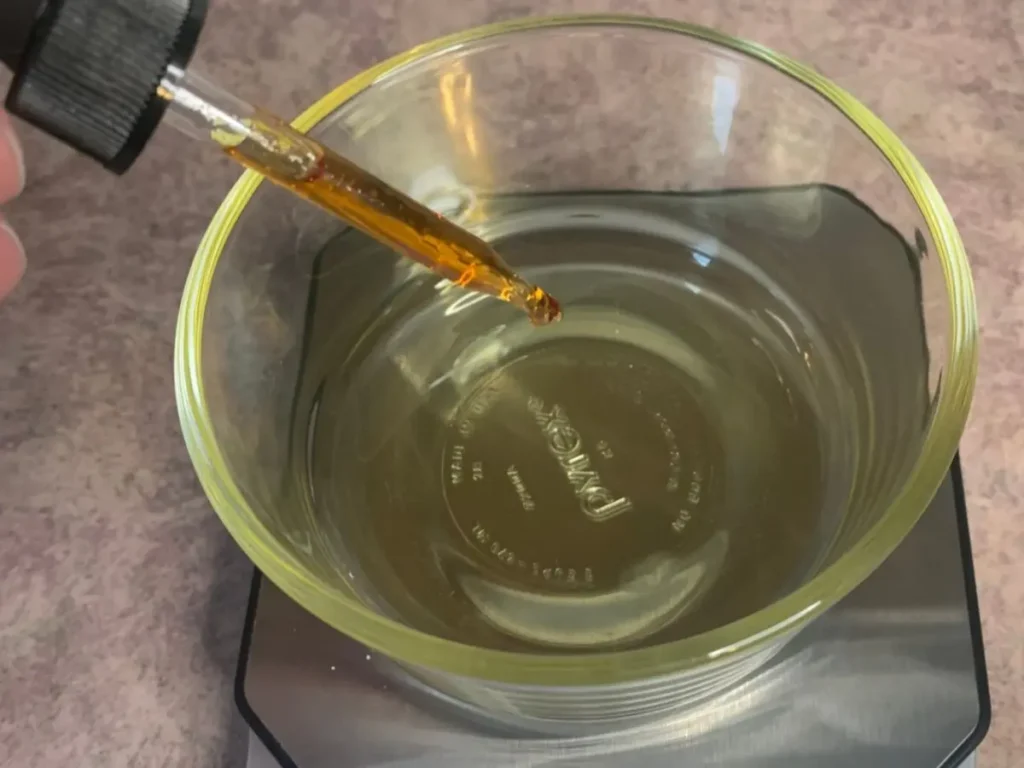
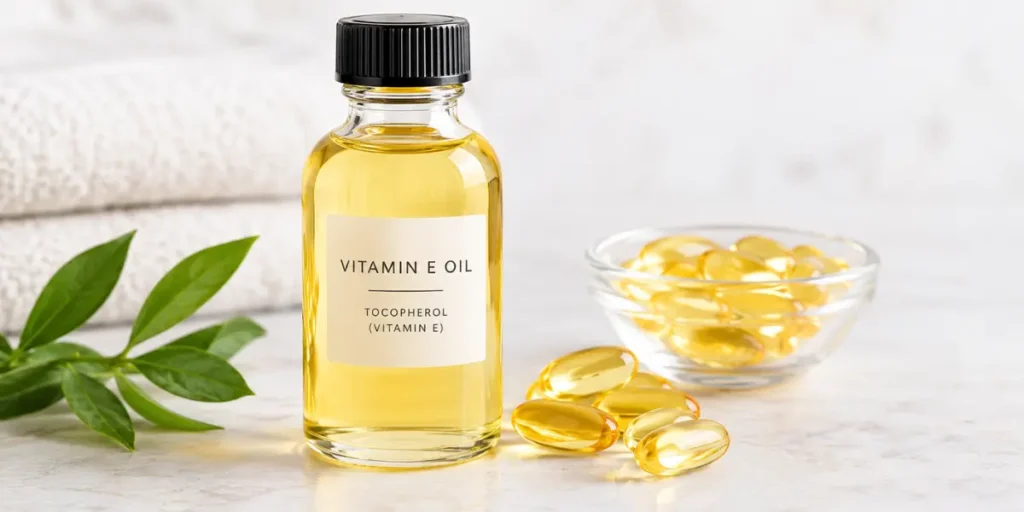
Vitamin E is a fat-soluble vitamin found naturally in various plant oils. In cosmetic formulations, it is commonly used as an antioxidant to help slow the oxidation of oils and butters.
You may see vitamin E sold as tocopherol, mixed tocopherols, or tocopheryl acetate. These names are related, but the ingredients are not interchangeable in every formulation.
- Tocopherol: A form of vitamin E commonly used as an antioxidant in cosmetic formulas.
- Mixed tocopherols: A blend of different forms of tocopherol, often used to help protect oils from oxidation.
- Tocopheryl acetate: A vitamin E derivative frequently used in skincare for its skin-conditioning properties. It is not a direct substitute for tocopherol when your main goal is protecting oils from oxidation.
- Vitamin E oil blends: Some products sold as vitamin E oil contain vitamin E diluted in a carrier oil. Check the ingredient list and concentration before calculating your usage rate.
When buying vitamin E for formulation, look at the ingredient’s INCI name, concentration, and supplier recommendations rather than relying on the words “vitamin E oil” alone.
What Does Vitamin E Oil Do in Skincare?
1. Helps protect oils and butters from oxidation
Plant oils contain fatty acids that can react with oxygen over time. This process, called oxidation, can cause oils to develop unpleasant odors, change color, and eventually become rancid.
Vitamin E helps slow this process by acting as an antioxidant. It is particularly useful in formulations containing oxidation-prone oils.
For example, you might add it to a body butter containing sweet almond oil or a cuticle oil containing several carrier oils.
Keep in mind that vitamin E can help slow oxidation, but it does not stop oxidation indefinitely or guarantee a particular shelf life.
2. Provides skin-conditioning benefits
Vitamin E is also used in skincare products for its skin-conditioning properties. It can be included in creams, lotions, balms, and other leave-on products.
The benefits of a finished product depend on the entire formulation, including the type and concentration of vitamin E used. Adding more does not automatically make a product more effective.
3. Works in anhydrous formulations
Anhydrous means a formula contains no water. Examples include body butters, lip balms, massage oils, cuticle oils, and many solid lotion products.
These formulas can benefit from antioxidants because their oils and butters may oxidize during storage.
Vitamin E is particularly straightforward to incorporate into anhydrous formulas because it is oil-soluble.
4. Helps protect the oils in multiphase skincare products
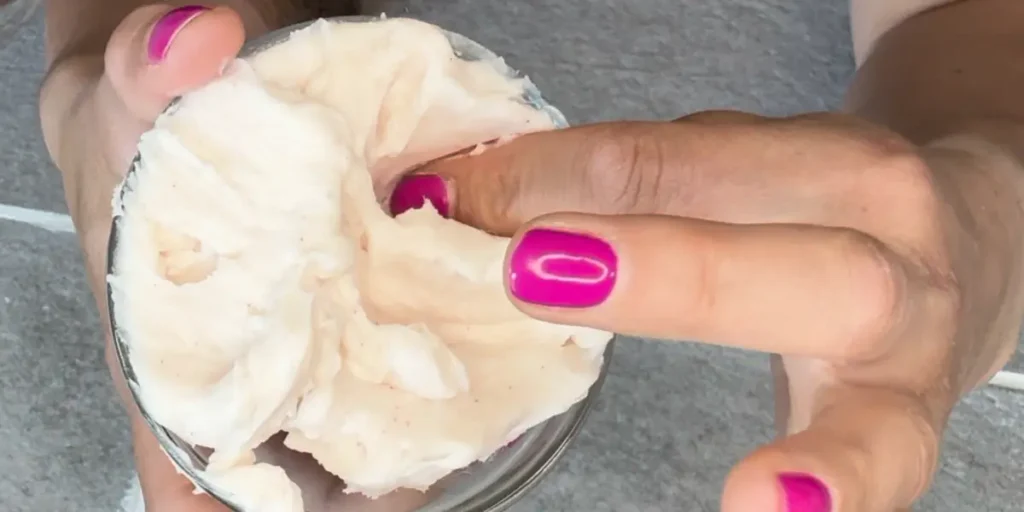
Vitamin E can also be useful in emulsions such as lotions and creams, which contain both water and oil.
In these formulas, vitamin E helps slow oxidation in the oil portion. However, the product still needs an appropriate preservative because water-containing products can support microbial growth.
For more information, read Why Some DIY Skincare Separates and How to Fix It.
How Much Vitamin E Oil Should You Use?
The appropriate usage rate depends on the type of vitamin E you have, its concentration, the formula, and the manufacturer’s recommendations.
For many DIY formulations, vitamin E is used at a relatively low percentage. The following are practical starting points, not universal limits.
| Product type | Example starting point |
| Body butter | 0.5–1% |
| Cuticle oil | 0.5–2% |
| Lip balm or lip mask | 0.5–1% |
| Oil-based body scrub | 0.5–1% |
| Lotion or cream | 0.2–1% |
How to Calculate Vitamin E for a Formula
Vitamin E should be included as a percentage of the total batch weight. If you are making a 100-gram formula and want to use 0.5% vitamin E, you would need 0.5 grams.
| Batch size | At 0.5% | At 1% |
| 30 g | 0.15 g | 0.30 g |
| 100 g | 0.50 g | 1.00 g |
| 200 g | 1.00 g | 2.00 g |
| 500 g | 2.50 g | 5.00 g |
For more help with calculations, read Percentages vs. Grams in Skincare Formulation.
When Should You Add Vitamin E Oil?
Vitamin E is oil-soluble, so it belongs in the oil portion of your formulation. The exact stage depends on the product and the instructions for your specific ingredient.
- Body butters and balms: Add it to the melted oils and butters or during a suitable cool-down stage.
- Cuticle oils: Mix it directly into your carrier oils.
- Lotions and creams: Add it to the oil phase or during cool-down if the ingredient specifications and formula allow.
- Scrubs: Add it to the oil mixture, following the recipe’s instructions.
For heat-sensitive ingredients, limiting unnecessary exposure to high temperatures is sensible. Follow the ingredient supplier’s temperature recommendations when available.
Remember to include vitamin E in your total formula percentage. If you add 1% vitamin E to a finished formula, reduce another ingredient by 1% to keep the formula at 100%.
Vitamin E Oil Is Not a Preservative
This is one of the most important things to understand when formulating DIY skincare.
Vitamin E is an antioxidant, not a broad-spectrum antimicrobial preservative.
The two ingredients solve different problems:
| Ingredient | Main purpose |
| Vitamin E | Helps slow oxidation of oils and butters |
| Broad-spectrum preservative | Helps protect suitable formulations against bacteria, yeast, and mold |
| Chelating agent | Helps bind certain metal ions that can affect formula stability and preservative performance |
A lotion containing water still needs an appropriate preservative, even when vitamin E is included. An oil-only product has a different preservation profile, but it can still become contaminated through water exposure or poor handling.
For more information, read Why Preservatives Matter in DIY Skincare.
You can also read Humectants, Occlusives, and Emollients Explained to learn how other skincare ingredients work.
What Ingredients Work Well With Vitamin E Oil?
Vitamin E is compatible with many oil-based cosmetic ingredients. These are some useful combinations for DIY formulation.
Plant oils
Vitamin E can help slow oxidation in formulas containing oils such as:
- Sweet almond oil
- Jojoba oil
- Fractionated coconut oil
- Castor oil
- Apricot kernel oil
The benefit varies according to the oil’s composition and oxidation stability. Jojoba oil, for example, is naturally quite oxidation-resistant, so the need for additional antioxidant protection may differ from that of more oxidation-prone oils.
Butters and waxes
Vitamin E also fits into formulas containing shea butter, cocoa butter, mango butter, and beeswax. It is especially relevant when a product contains both butters and more oxidation-prone liquid oils.
Vitamin E does not replace the structural role of waxes or the moisturizing and textural properties of butters.
Emulsifiers and other formulation ingredients
You can use vitamin E in many emulsified lotions and creams, alongside ingredients such as emulsifying waxes and fatty alcohols. These ingredients perform different jobs: an emulsifier helps combine water and oil, while vitamin E helps slow oxidation.
Read Emulsifiers in Skincare: What They Are and How They Work for more information.
Can You Substitute Something Else for Vitamin E Oil?
Whether you can substitute vitamin E depends on why it is in the formula.
- If the goal is antioxidant protection: Another suitable cosmetic antioxidant may be an option, but it will have its own usage rate and formulation requirements.
- If the goal is skin conditioning: Another oil-soluble skin-conditioning ingredient may provide a different effect, but it will not necessarily provide the same antioxidant protection.
- If the formula contains only a small amount of vitamin E: You may be able to omit it from some formulas, provided you understand that the oils may be more susceptible to oxidation.
Do not assume that adding more carrier oil in place of vitamin E provides equivalent antioxidant protection.
How to Store Vitamin E Oil
Store vitamin E according to the manufacturer’s instructions, usually in a tightly closed container protected from excessive heat, light, and air.
For products made with vitamin E:
- Use clean, dry equipment and containers.
- Avoid introducing water into oil-only products.
- Keep finished products away from excessive heat and direct sunlight.
- Watch for changes in odor, color, and texture.
- Do not assume vitamin E guarantees a specific shelf life.
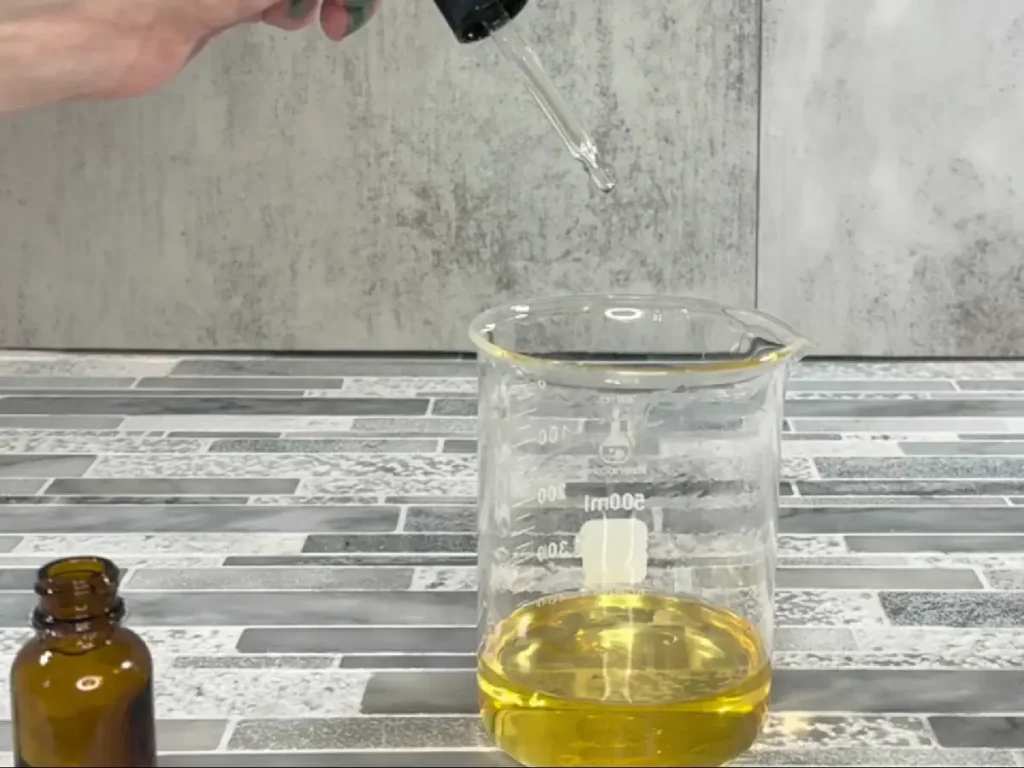
I like to put mine into a dropper. That makes it easier to measure small amounts and not waste it.
The stability of your finished product depends on the complete formula, raw material quality, packaging, processing, and storage conditions.
Where to Buy Vitamin E Oil
For DIY skincare, look for a cosmetic-grade ingredient with a clearly identified INCI name and concentration. Confirm that it is suitable for your intended product rather than purchasing an unspecified vitamin E blend.
Common Mistakes When Using Vitamin E Oil
1. Using it instead of a preservative. Vitamin E does not protect water-containing products from microbial growth.
2. Adding too much. More vitamin E does not automatically mean better antioxidant protection. Follow the usage guidance for your specific ingredient.
3. Confusing tocopherol with tocopheryl acetate. These forms have different properties and are not automatically interchangeable.
4. Forgetting to adjust the formula. Adding vitamin E without reducing another ingredient changes the total percentage.
5. Assuming it prevents every kind of rancidity. Vitamin E slows oxidation but cannot prevent all degradation or guarantee indefinite stability.
6. Assuming it extends shelf life by a set amount. Shelf life depends on the complete formula and storage conditions, not vitamin E alone.
Frequently Asked Questions About Vitamin E Oil
Is vitamin E oil good for DIY skincare?
Vitamin E is a useful ingredient for many DIY skincare products, particularly those containing oils and butters. It helps slow oxidation and can contribute skin-conditioning benefits.
Does vitamin E oil preserve homemade lotion?
No. Vitamin E is an antioxidant, not a broad-spectrum preservative. A lotion containing water needs an appropriate preservative system.
Can I use vitamin E oil in body butter?
Yes. Vitamin E is commonly incorporated into body butters to help slow oxidation of the oils and butters. Use a suitable cosmetic-grade ingredient at its recommended concentration.
Can I add vitamin E oil to lip balm?
Yes, provided the ingredient is suitable for lip products and used at an appropriate level. If you are making a lip product, ensure every other ingredient, including fragrance or flavor, is suitable for that use.
Does vitamin E oil dissolve in water?
No. Vitamin E is oil-soluble. It needs to be incorporated into the oil portion of a formula or otherwise dispersed using a suitable formulation method.
Can vitamin E oil go rancid?
Vitamin E itself can degrade, and commercial products may contain carrier oils that can oxidize. Follow storage instructions and replace ingredients that show signs of deterioration.
Is vitamin E oil the same as vitamin E capsules?
Not necessarily. Oral supplements may contain different forms of vitamin E, carrier oils, and other additives. For consistent cosmetic formulation, choose an ingredient with a clear specification and intended cosmetic use.
Can I use vitamin E oil every day?
Vitamin E is found in many leave-on skincare products, but suitability depends on the finished product, concentration, and individual skin tolerance. Patch-test new products and discontinue use if irritation occurs.
Summer Rain DIY Recipes That Use Vitamin E Oil
DIY Cuticle Oil: Easy, All-Natural Recipe
Emulsified Salt Scrub: Formulating for Beginners
How to Make Natural Body Lotion
Mastering Homemade Body Lotions: DIY Skincare Made Simple
Whipped Green Tea and Mint Body Butter
Cinnamon Roll Sugar Lip Scrub Stick
Related Summer Rain DIY Formulation Guides
Add these internal links to help readers move from learning about vitamin E into your wider formulation content.
- Skincare Formulation for Beginners: How to Make Effective DIY Skincare Products
- Percentages vs. Grams in Skincare Formulation
- Humectants, Occlusives, and Emollients Explained
- Emulsifiers in Skincare: What They Are and How They Work
- Why Some DIY Skincare Separates and How to Fix It
- Understanding and Decoding Cosmetic Labels
Final Thoughts
Vitamin E oil is a versatile ingredient for DIY skincare formulation, especially when you want to help protect oils and butters from oxidation. It can be incorporated into everything from cuticle oils and lip masks to body butters, scrubs, and lotions.
The most important thing to remember is that vitamin E is an antioxidant, not a preservative. Choose the appropriate form, use a suitable concentration, and build your formula around the needs of the entire product.
If you’re new to formulation, start with one of the recipes linked above and pay attention to where vitamin E is added and how it fits into the total formula.